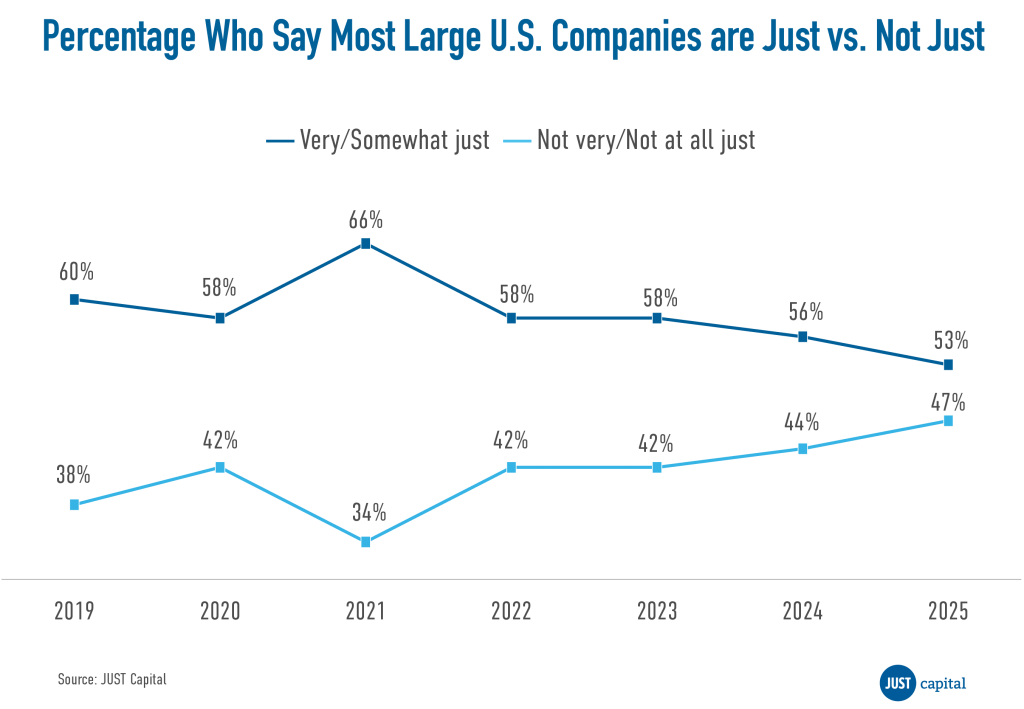
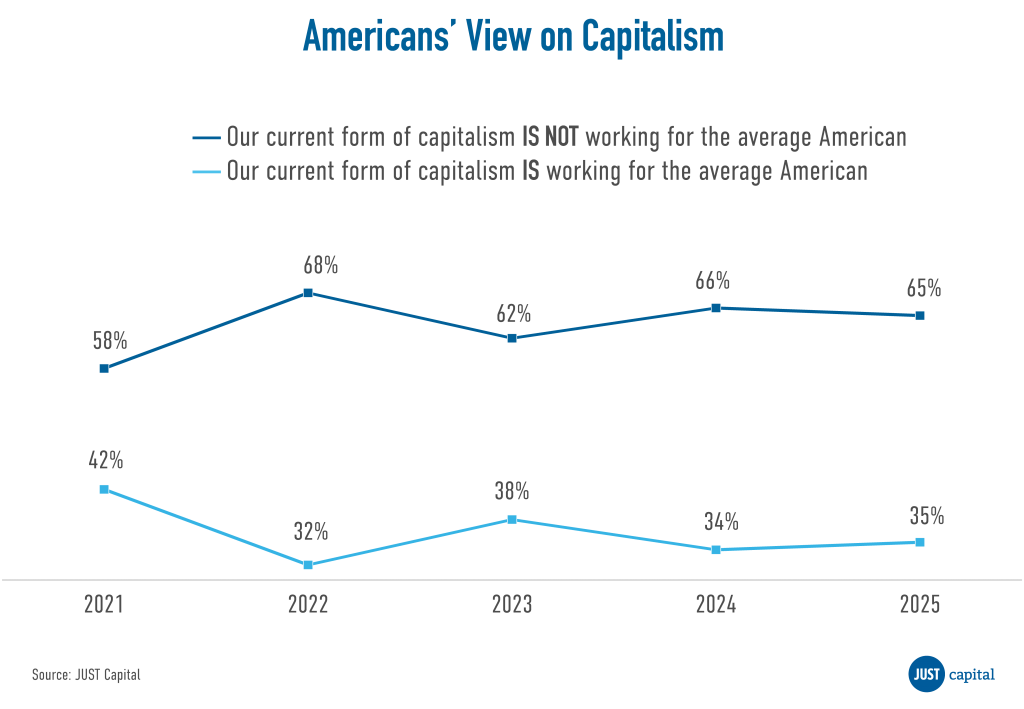
1. Only 53% of Americans believe large U.S. companies are very or somewhat just, the lowest percentage since we began this polling in 2019. Only 35% believe our current form of capitalism is working for the average American.
2. This is at odds with the expectations of the public. 80% believe business can be a force for positive social change and 89% agree it’s important that companies promote an economy that serves all Americans.
3. When we dig deeper, Americans care most about worker-related issues such as providing a fair and living wage, supporting worker well-being, and offering advancement and training opportunities, alongside employee benefits.
4. As AI and automation become even more dominant in 2026, leaders have a significant challenge ahead to innovate and grow their business while continuing to invest in and cultivate their workforce. Our recently released research on perceptions of AI amongst corporate leaders, investors, and the American public aims to help them identify key considerations for responsible AI deployment at scale.
Perceptions of performance on just business behavior peaked during the height of the Covid-19 pandemic in 2021. Since then, the gap between those who view companies as just versus unjust has narrowed to its smallest margin in seven years, suggesting declining confidence in corporate behavior.
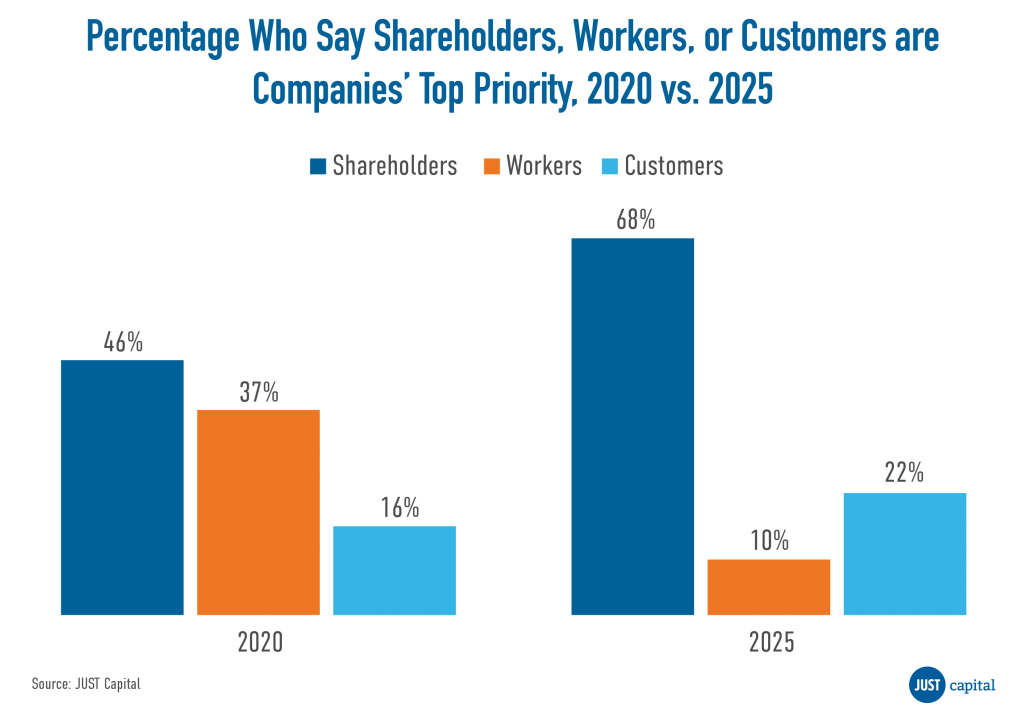
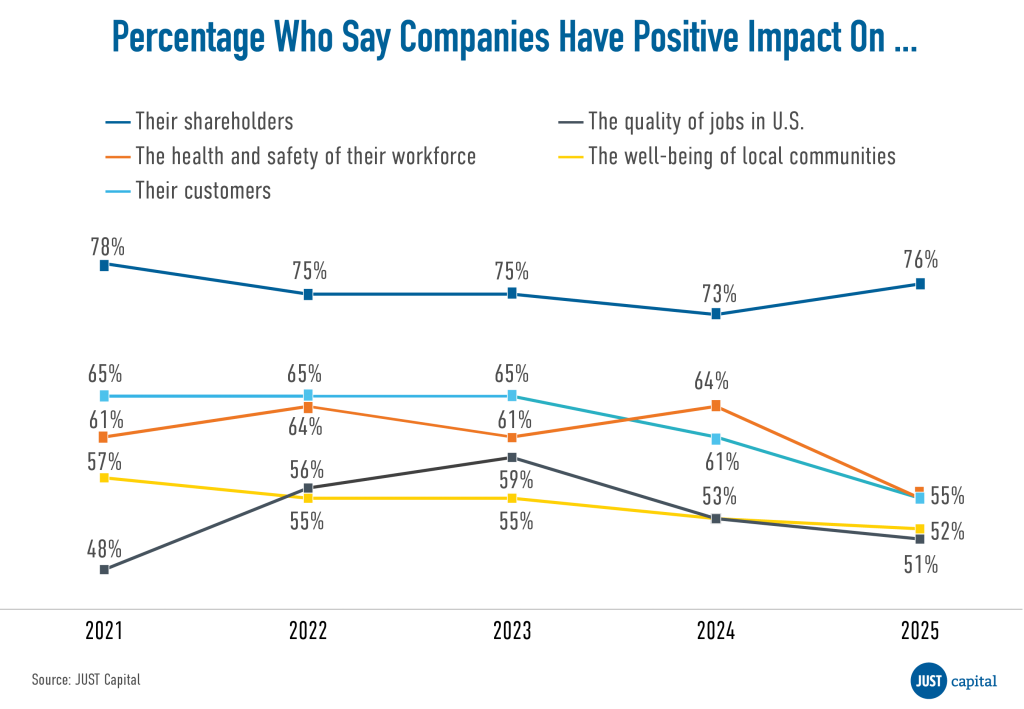
The public indicates belief that companies are overwhelmingly focused on shareholders at the expense of their workers and customers. The shift since 2020 is stark: while shareholder prioritization has remained constant or even intensified in the public’s view, they believe attention to workers and customers has languished.
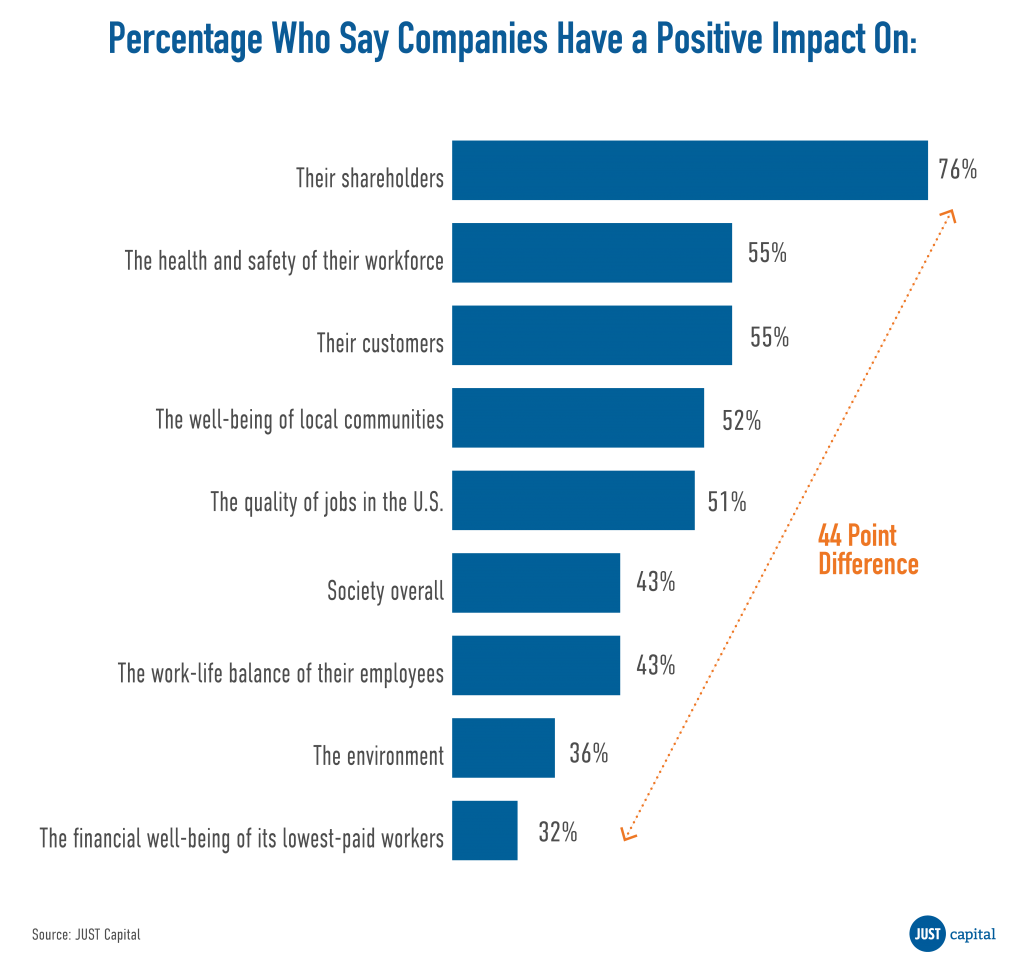
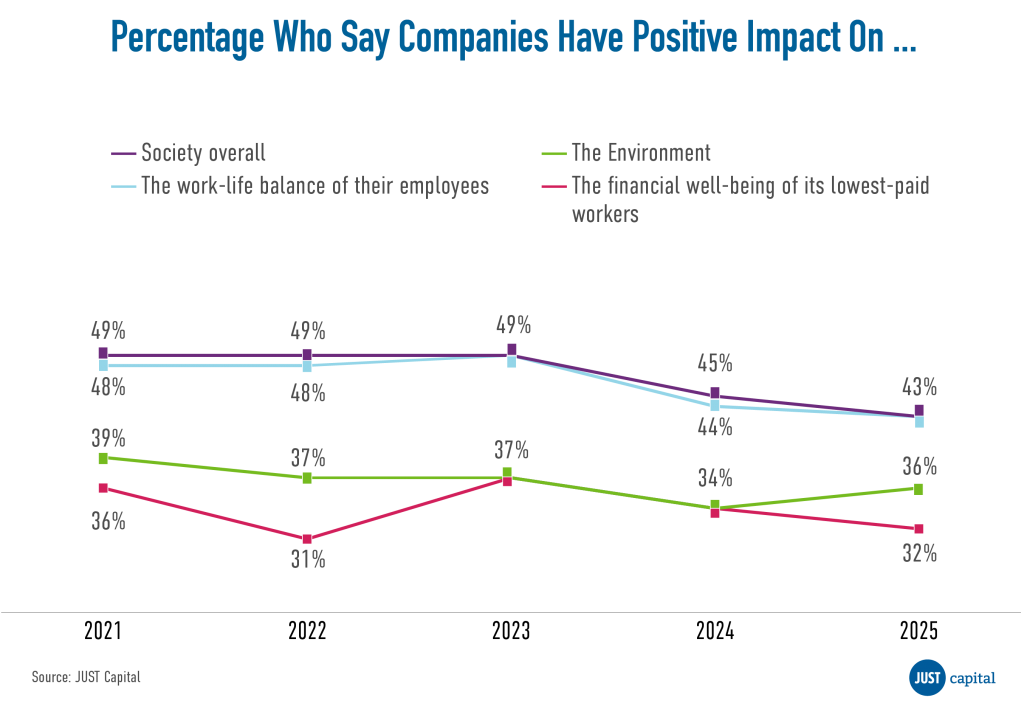
76% of Americans say companies positively impact shareholders compared to other stakeholders, to society, and even compared to quality jobs. The starkest gap appears in perceptions of impact on the financial well-being of a companies’ lowest-paid workers.
Over time, the erosion of public confidence has accelerated, with Americans increasingly convinced that companies prioritize investors to the exclusion of all other stakeholders.
When asked whether capitalism is working for the average American, the majority of respondents say no. This negative sentiment has persisted for four years, with 2021 marking the narrowest gap between those who agree and disagree that the system is working.
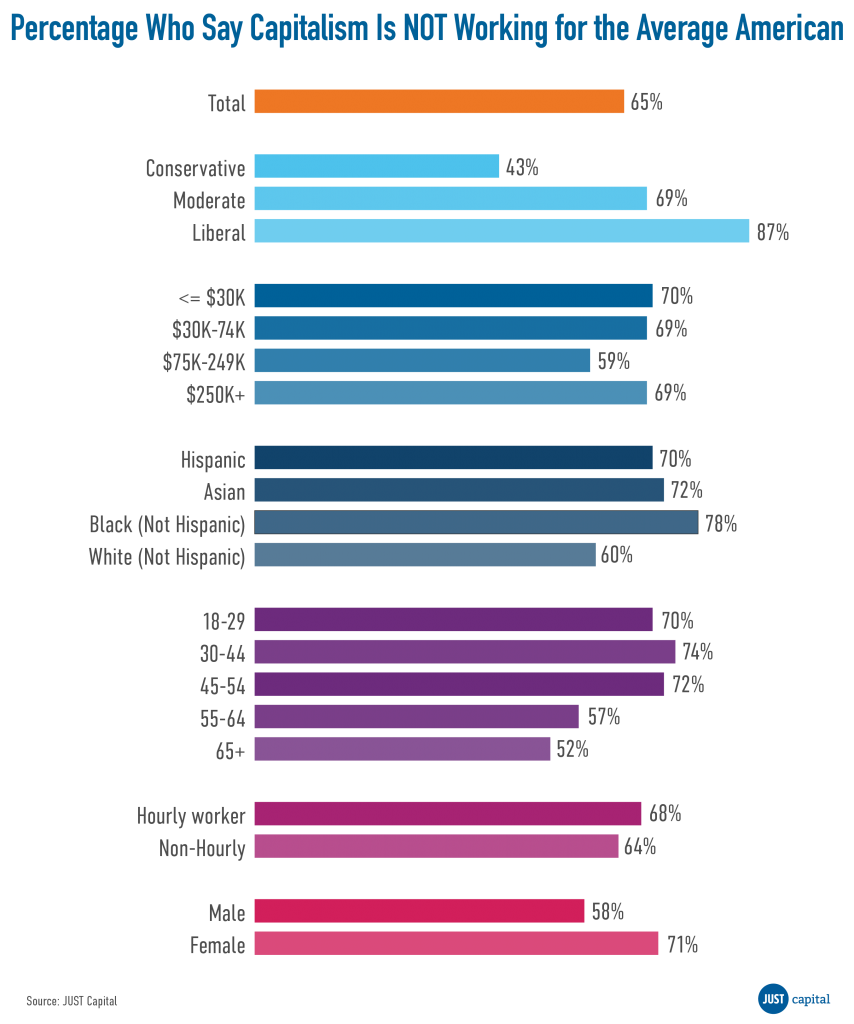
This sentiment is remarkably consistent across demographics. In nearly every group — regardless of age, income, race, or political affiliation — the majority believe capitalism is NOT working for the average American. The exception is Conservatives, who have a lower, yet still substantial share who express doubts about capitalism’s effectiveness to generate shared prosperity.
Eighty percent of Americans think that business can be a force for positive change. The public also has high expectations of corporate America across a variety of factors, such as the ethical use of AI in business operations, the relationship between transparency and trust, and the desire for companies to operationalize value creation rather than simply making public commitments. What is additionally striking is the consistent level of agreement on these sentiments across political ideologies.
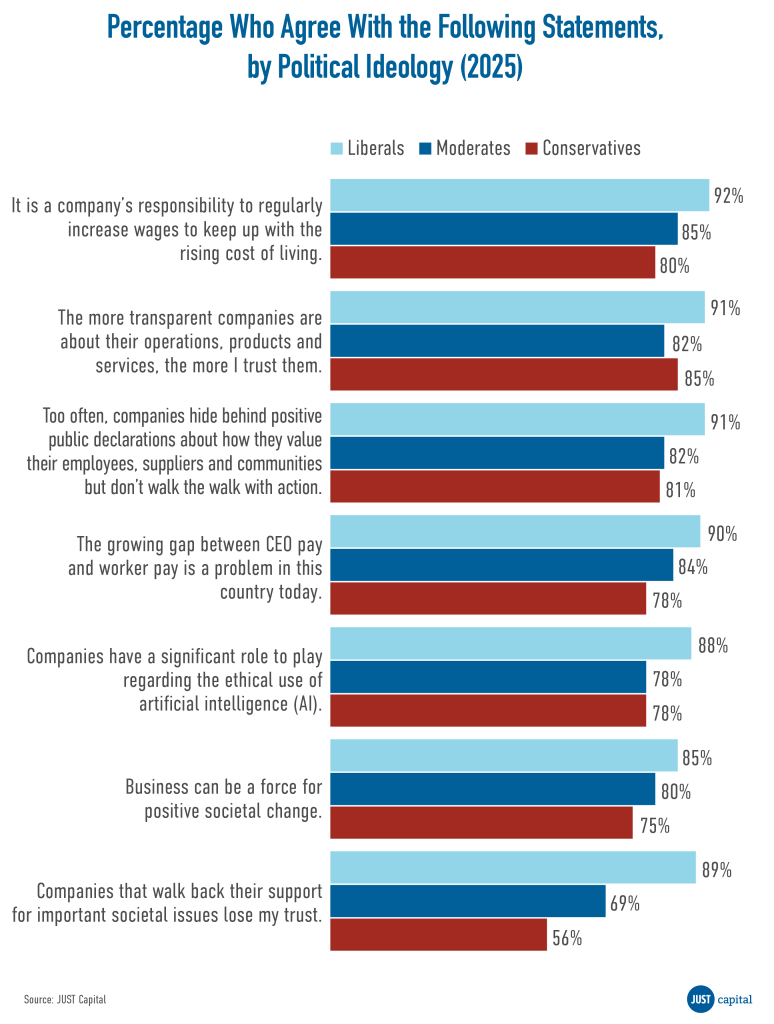
Although the public is looking for action over verbal commitment, there is an opportunity for leaders to better communicate how they are positively serving their workers, customers, and communities.
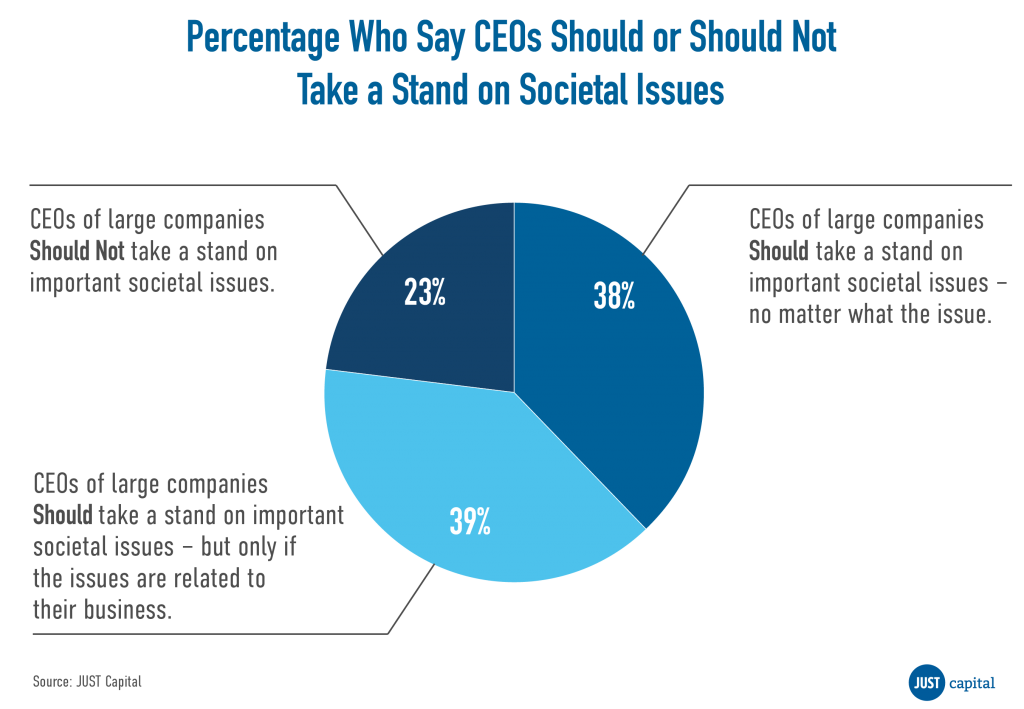
While a quarter of Americans say that CEOs should stay away from taking a stand on any societal issues, three-quarters say that they do have a role to play in societal issues, especially when they concern issues related to their business.
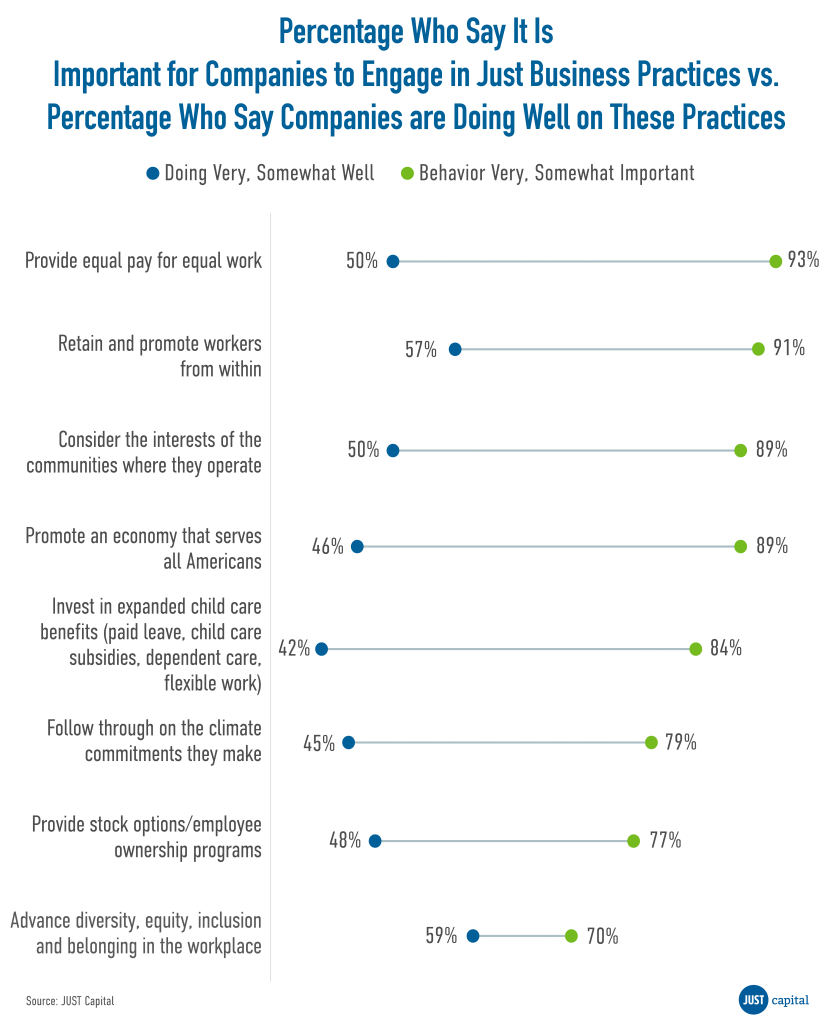
While 70 to 93 percent of Americans say it’s important for companies to engage in various responsible business practices, their evaluations of actual corporate performance indicate skepticism that expectations are being met. The largest gaps between expectation and perceived performance emerge in two critical areas: ensuring equal pay for equal work and contributing to an economy that serves all Americans.
Overall, Americans continue to prioritize worker-related issues, with four of the five worker issues ranking in the top six out of 17 total issues. Customer-related issues are also prioritized in the top 10.
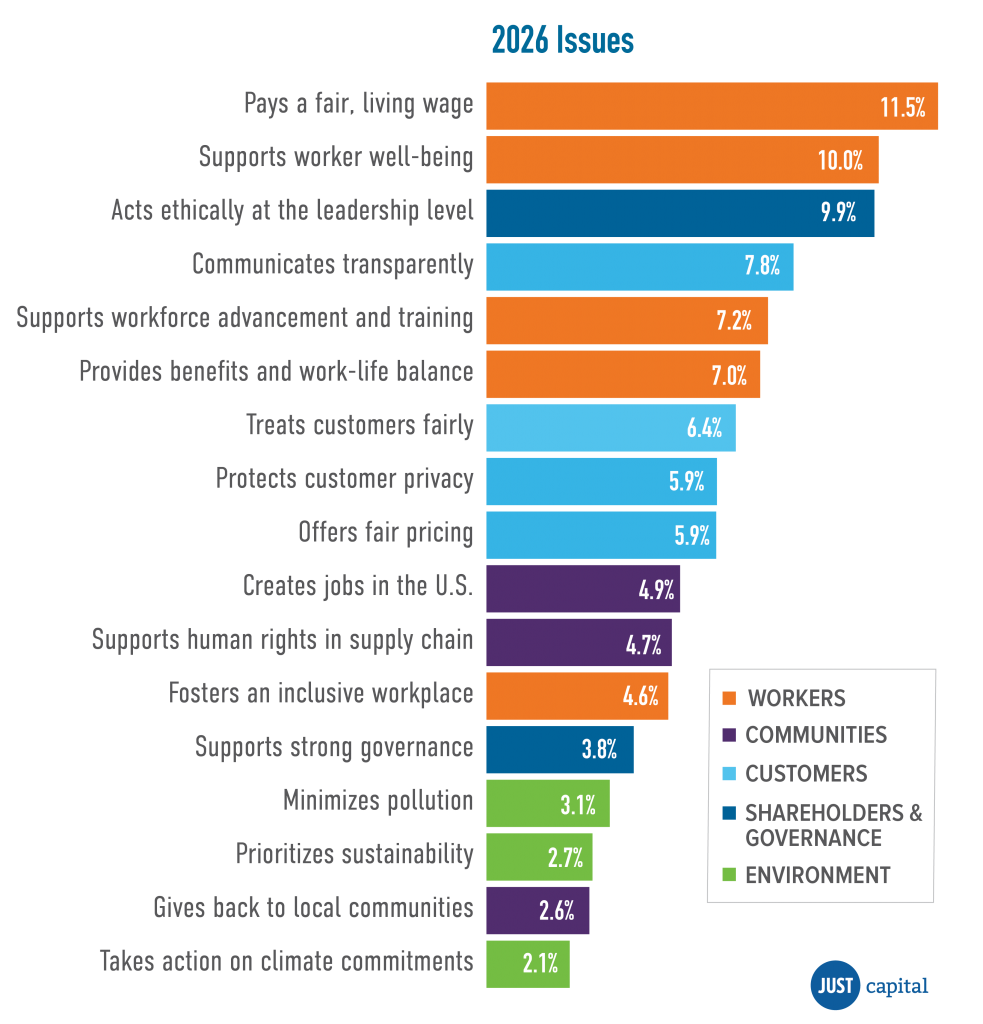
When we dig deeper, we find a remarkable consistency across demographic groups in the three highest-ranked Issues: Pays a fair, living wage, supports worker well-being, and acts ethically at the leadership level. These findings signal that the public continues to be united around the issues they want companies to prioritize.
Over the past seven years, “Pays workers fairly and offers a living wage that covers the cost of basic needs at the local level” has consistently ranked 1st across nearly every demographic cohort. At 11.5%, this issue’s weight remains relatively stable from last year, but is lower than at its peak of 21% in 2023, suggesting that while a fair, living wage continues to be fundamental to public perceptions of just corporate behavior, its degree of importance has declined in favor of other worker issues.
“Supports worker well-being and provides safe and healthy working conditions,” which rises to the second-highest ranked issue. This elevation likely reflects heightened concern about maintaining positive, supportive work environments that prioritize workers’ humanity.
Likewise, “Invests in its workforce by providing training, education, and career development opportunities” takes the #5 spot, and comprises 7.2% of the model, up from 6.9% the year before. The rise in worker training priorities likely reflects the growing desire among workers for upskilling in an AI-driven economy — a trend corroborated by findings in our AI survey.
“Conducts business ethically and honestly, and takes responsibility for wrongdoings” ranks #3 overall, followed by “Honest and transparent in communications with customers about its products, services, and operations,” at #4. Both issues made the top 4 last year, and their sustained prominence takes on new significance in the age of AI. As systems become more opaque and complex, the public’s insistence on ethical conduct and transparency suggests a fundamental demand: companies must demystify their AI practices and be accountable for decisions that affect their stakeholders’ lives.
Finally, the biggest mover this year is “Protects the privacy of customers, including their data,” which moved to #8 from #10 last year. As we found in our AI survey, the public fears that rushed AI adoption, combined with weak security protocols, could expose personal information to breaches, misuse, or unauthorized access.
The results of the survey reflect an ongoing call from the American people for a “back to basics” business approach. The public clearly defines just business behavior as companies paying fair wages, providing good benefits and training, creating safe and fulfilling workplaces, offering opportunities to advance, treating customers fairly, and supporting the communities in which they operate.
As AI and automation become even more dominant in 2026, leaders have a significant challenge ahead to innovate and grow their business while continuing to invest in and cultivate their workforce. Our recently released research on perceptions of AI amongst corporate leaders, investors, and the American public aims to help them identify key considerations for responsible AI deployment at scale.
Americans’ Views on Business Survey
Since 2015, JUST Capital has surveyed close to 200,000 Americans to assess how well they think companies are doing when it comes to creating value for all their stakeholders and building a more just economy that truly works for all. The 2025 Americans’ Views on Business Survey was fielded among 2,004 Americans – a sample representative of the U.S. adult population – between August 18 through September 2, 2025. Our quantitative research partner is SSRS, an objective, nonpartisan research institution that provides scientifically rigorous statistical surveys of the U.S. population.
The People’s Priorities Survey
Just Capital’s definition of just business behavior begins by hearing from a diverse, representative sample of Americans through small-group qualitative discussions to understand what they expect from a “just” business. This year, the major themes we translated into issues came from open-ended responses to the following question:
Q1. Think now about the largest companies in the U.S., with hundreds or thousands of employees. We would like to know what you would consider to be “just” business behavior for these companies as it relates to various groups of people. By “just” we mean “fair or good” behavior.
Before answering this question, however, we provide respondents a clear definition of the concept: A just company demonstrates a commitment to doing right by its workers, its customers, the environment, the community, its shareholders, and the business itself.
Respondents were prompted to answer this question from the point of view of one of five stakeholders (Workers, Customers, Communities, The Environment, or Shareholders).
Q1.1 For example, actions you would expect a just company to take related to its Workers
Our polling team then distills the major themes from these discussions into discrete statements, which we define as “Issues.” Subsequently, we conduct a quantitative survey of 2,000 U.S. adults in which they rank the relative importance of these 17 Issues.
We conducted the survey online with a probability-based sample attained through the statistical sampling methods employed by SSRS. The SSRS Opinion Panel is a nationally representative probability-based web panel, and findings are generalizable to the general adult population.
The survey is drawn from a probability sample, ensuring we capture diverse perspectives from a cross-section of Americans. This includes representation across demographic dimensions (race/ethnicity, gender, income, and age), as well as other characteristics such as political ideology.
The full survey was conducted from August 18 through September 2, 2025 among a general population sample of 2,004 English- and Spanish-speaking U.S. adults ages 18 and older, with an oversample of 470 Hispanic and 253 non-Hispanic Black respondents. Panelists were sent an email invitation to take the survey online as well as up to eight reminder emails throughout the field period. The survey program was optimized so that respondents could complete it using a desktop or laptop computer as well as a mobile device. In total, 610 respondents completed the survey on a computer and 1,394 completed it on a mobile device.
The margin of error is +/- 2.0% at the 95% confidence level. Results were weighted to U.S. census parameters for age, gender, education, race/Hispanic ethnicity, and census division to ensure representativeness of the U.S. population. All margins of error include “design effects” to adjust for the effects of weighting.
