Does Gen Z Feel Ready To Thrive In an AI-Powered Economy?
As colleges and universities kick off their fall semesters, Just Capital surveyed current students and recent graduates on their experiences and expectations related to AI. The findings reveal both economic anxiety and opportunity, particularly as it relates to readiness for the job market they’re entering or soon to enter.
Key Findings
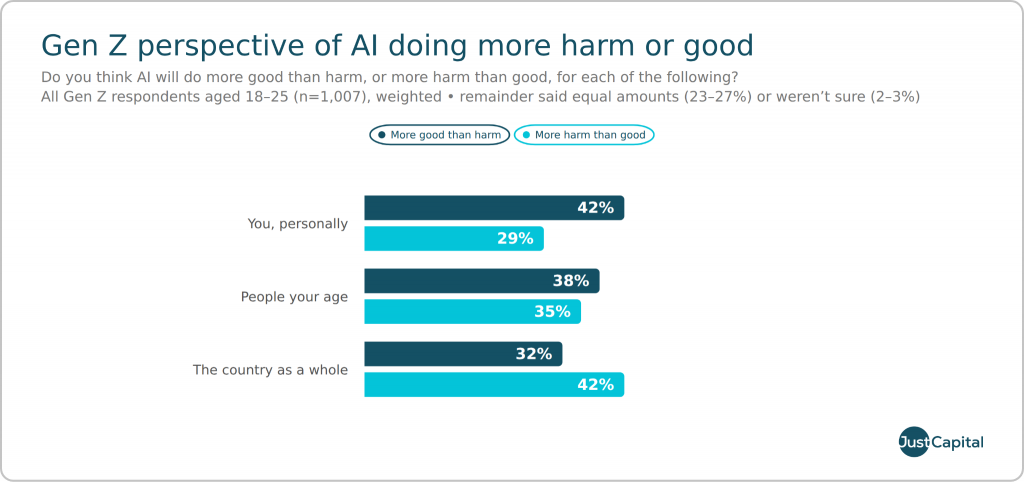
1. Respondents aged 18-25 express a tentative optimism as it relates to AI’s impact on their own lives, but they are concerned about the impacts on the country as a whole.
Asked whether AI will do more good than harm for them personally, 42% say AI will do more good than harm. 27% say it will do an equal amount of good and harm.
When asked about the country as a whole, the sentiment turns more negative — 42% expect more harm compared to 32% who expect more good overall.
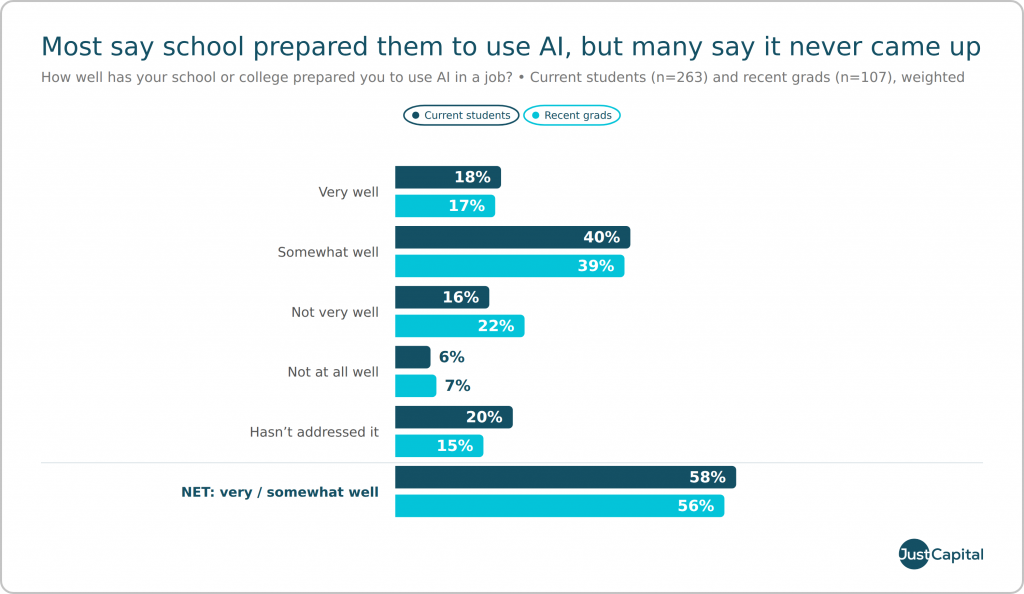
2. Young people are not feeling fully equipped to participate in the economy of the future.
49% of students and recent grads said school did not prepare them to use AI, including 18% who say it was never addressed.
47% of recent grads are concerned that AI will reduce their ability to get an entry-level job in the field.
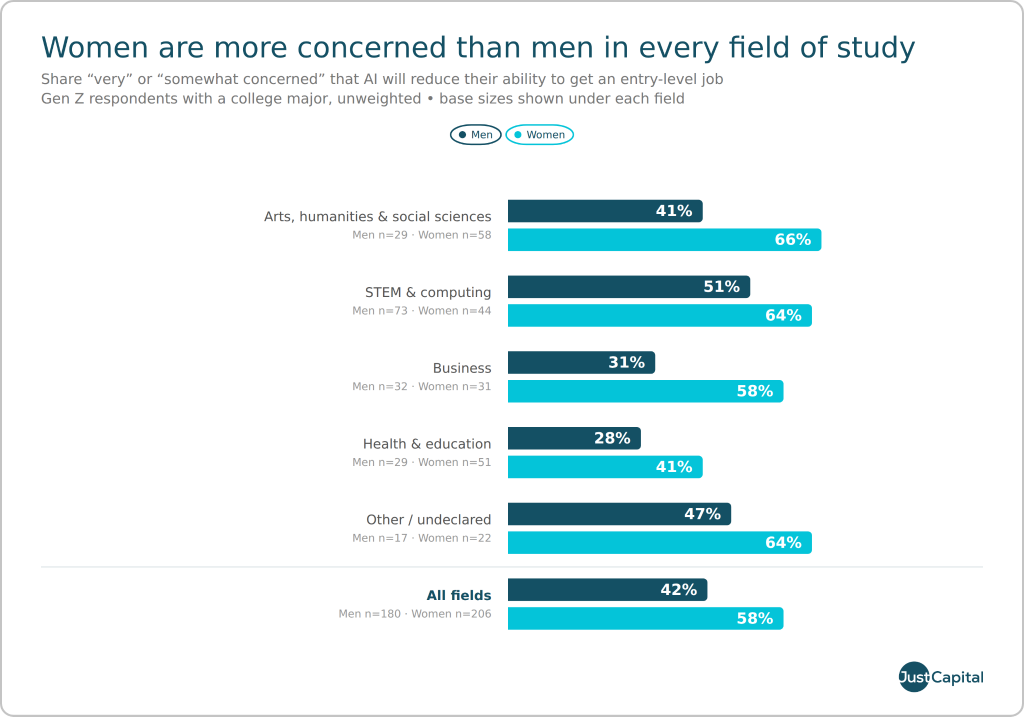
3. Young women experience particularly low levels of optimism.
Young men were more likely to say they are not concerned about AI cutting entry-level jobs in their field (56% vs 45% of young women).
Gender had a stronger impact on optimism toward entry-level work than area of study.
4. Entrepreneurship is an area of interest.
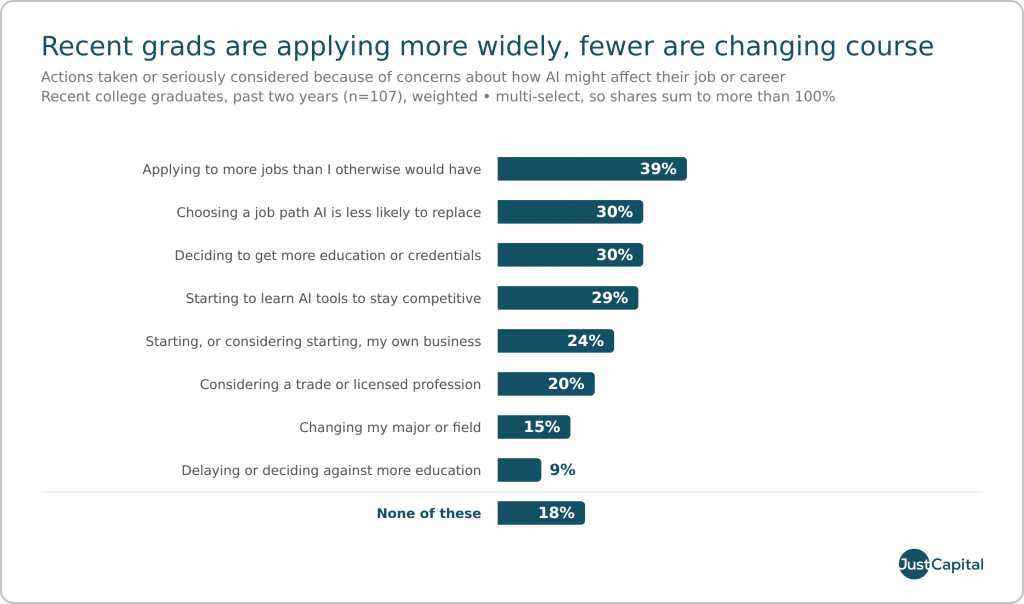
Nearly one in four (24%) of recent grads are starting or considering starting their own business because of concerns about AI, and 36% say they would use AI-freed time to start something on the side.
5. They see non-technical skills as almost as valuable as AI skills.
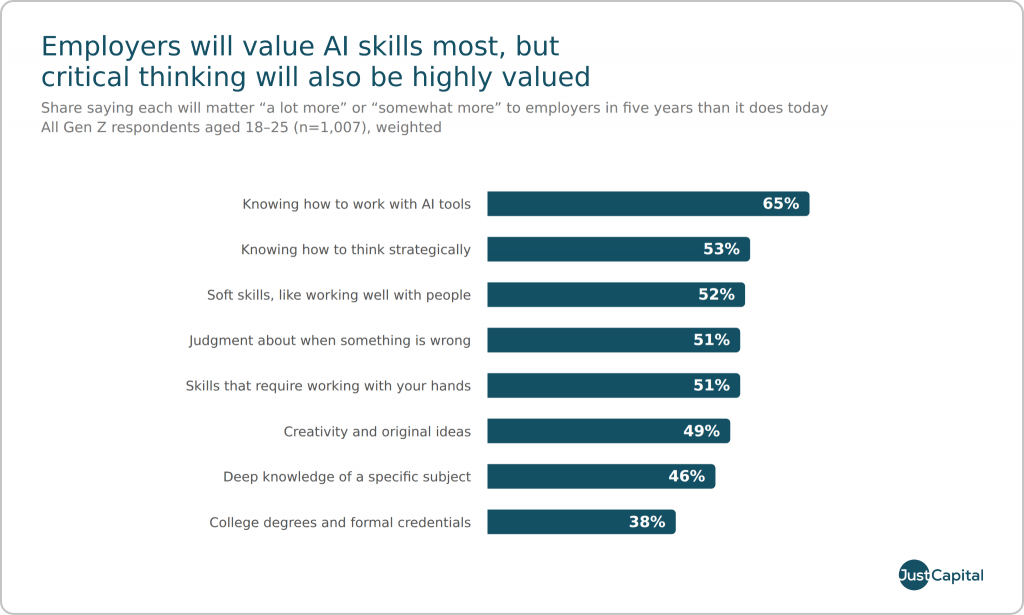
65% of all respondents say knowing how to work with AI tools will matter more to employers in 5 years.
Working well with people (52%) and knowing how to think strategically (53%) are perceived to be important in the future.
Only 38% say college degrees and formal credentials will matter more.
Methodology
This survey was conducted online within the United States by The Harris Poll on behalf of Just Capital from August 24–28, 2026 among 1,007 U.S. adults ages 18 to 25. The sampling precision of Harris online polls is measured by using a Bayesian credible interval. For this study, the sample data is accurate to within +/- 3.1 percentage points using a 95% confidence level. This credible interval will be wider among subsets of the surveyed population of interest. Complete survey methodology, including weighting variables and subgroup sample sizes, is available upon request.