
AI deployment has become a defining strategic priority for the private sector, promising to enhance productivity, innovation, and competitiveness. Ensuring the technology drives prosperity and progress for every American is a top national priority. As companies race to adopt AI, significant questions are emerging about what it means to pursue these new business imperatives in ways that empower American workers, strengthen local communities, create good jobs, protect consumers, and build trust in business and capitalism.
Today, Just Capital released new findings from a survey of corporate leaders and a combined report of these corporate perspectives alongside previously released surveys of investors and the American public. The inaugural American Public, Investor, and Executive Perspectives on Responsible AI Deployment report and the organization’s ongoing research initiative aim to identify key considerations for responsible AI deployment at scale.
Just Capital will conduct quarterly pulse surveys through 2026 and beyond, providing ongoing insight for corporate leaders, investors, and policy makers as perspectives continue to evolve on what exactly responsible AI deployment means and how to pursue it.
The research identified key areas of agreement between the three audiences:
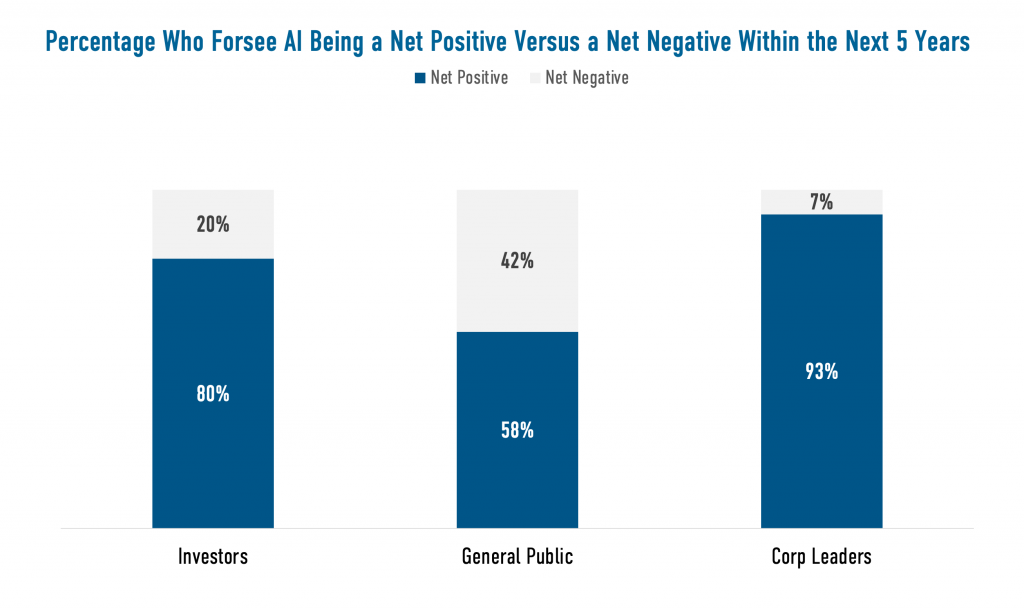
Majorities of all three groups believe AI will be a net positive for society within the next five years. Corporate leaders’ enthusiasm (93%) outpaces the general public (58%) and investors (80%).
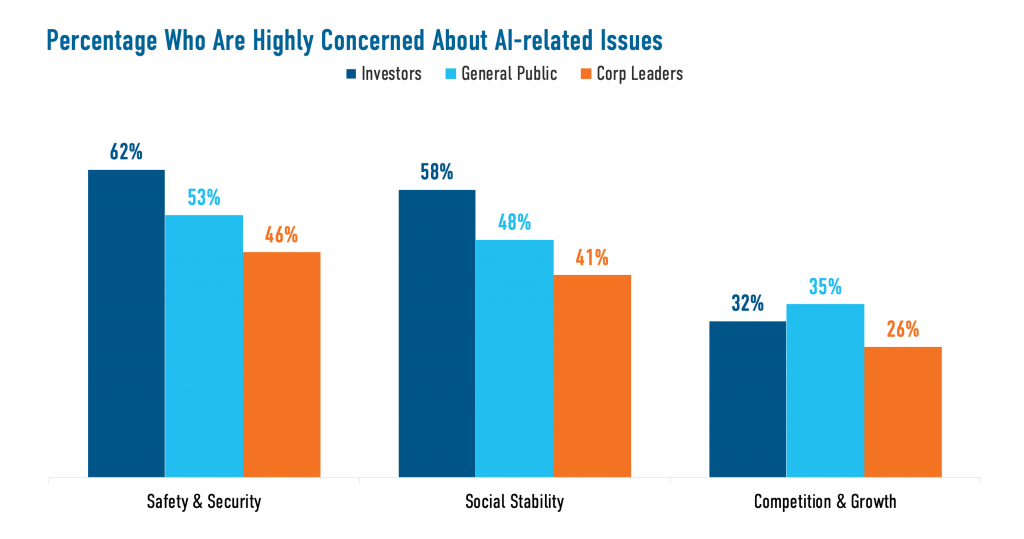
Majorities or pluralities of each group rate AI safety and security a top concern (general public: 53%, investors: 62%, corporate leaders: 46%).
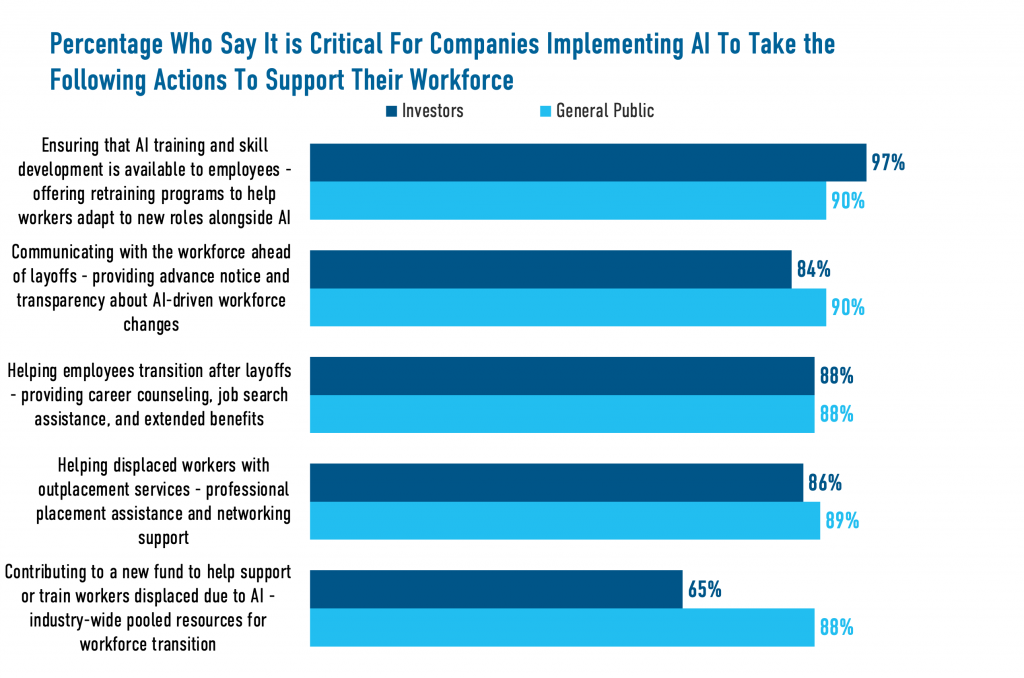
Significant majorities of the general public (90%) and investors (97%) say it is critical that companies ensure that AI training and development is available to employees, and roughly three-quarters of corporate leaders say they are planning to implement AI training to support their workers.
Some diverging views also emerged including:
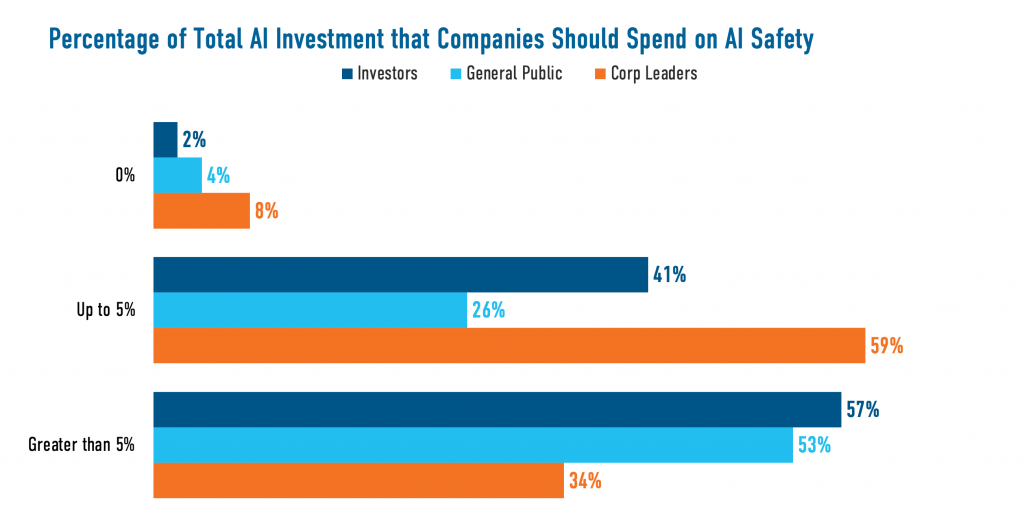
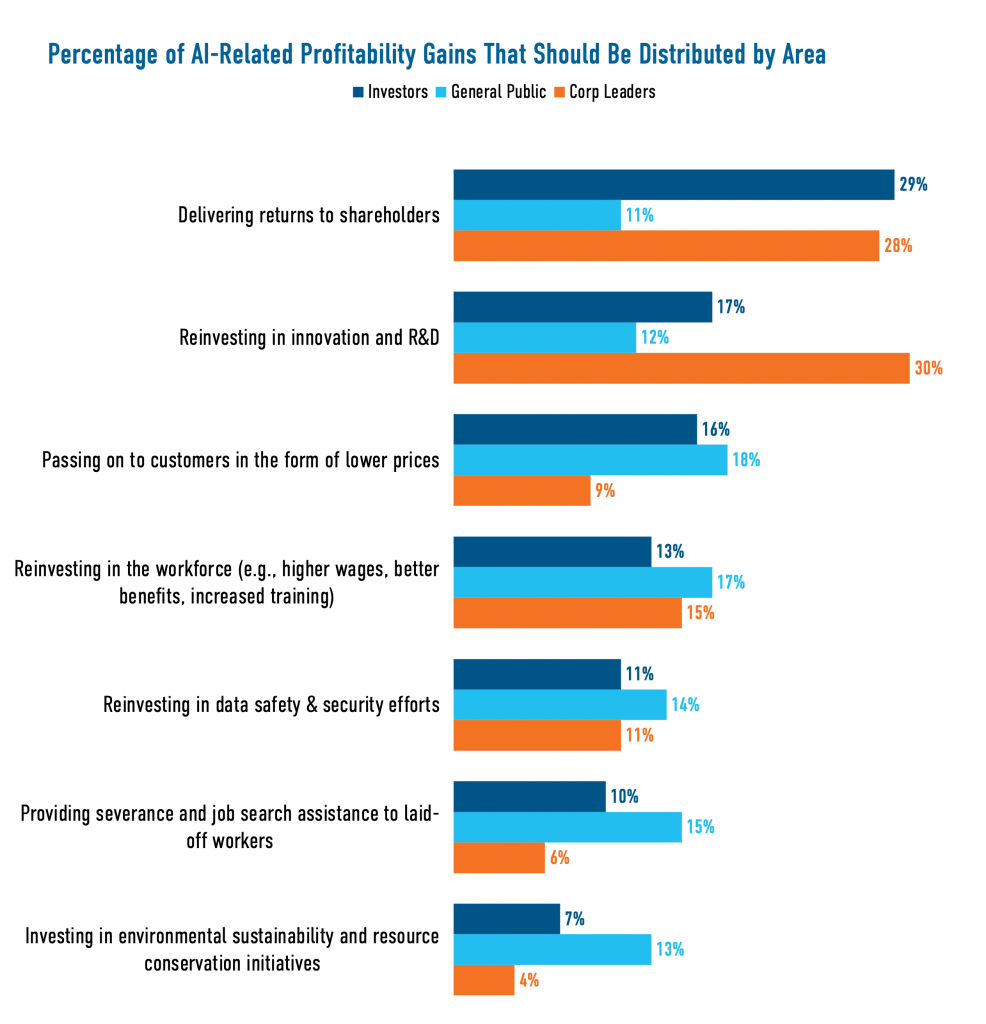
The Degree of Expected Investment in Safety and Workforce Support: Investors and the public expect companies to spend more than 5% of total AI investment on safety, while corporate leaders say they plan to allocate between 1 and 5%. When asked about how they plan to redistribute AI-related profitability gains, executives evince less emphasis on worker training efforts (17%) than on delivering gains to shareholders (28%) and reinvesting in R&D (30%).
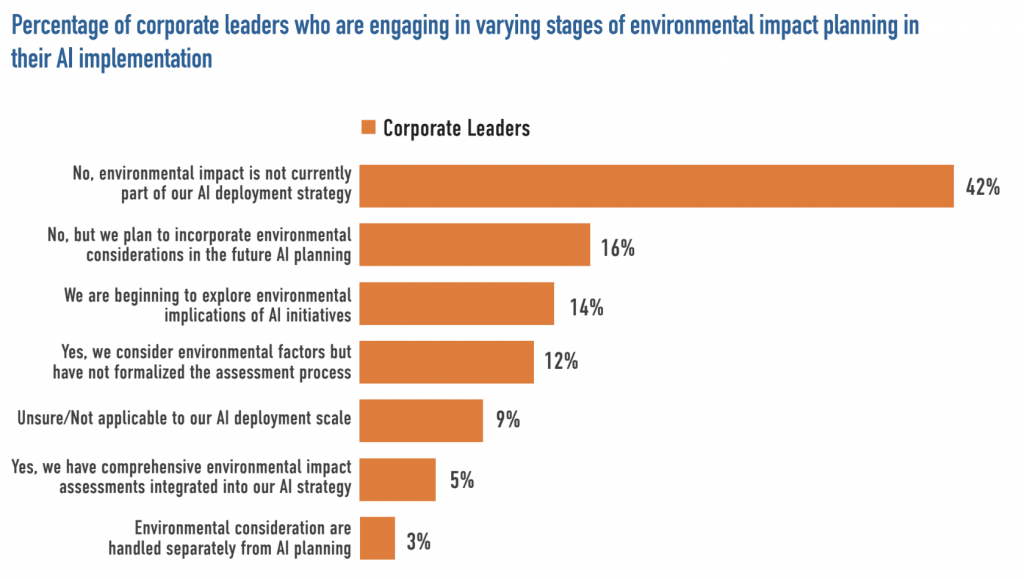
Environmental planning: Roughly a third of both the public and corporate leaders say increased corporate AI usage will have negative impacts on the environment. Currently, only 17% of leaders are including environmental impact planning in their AI roadmap, and 42% say it is not a part of their strategy.
“This is a defining period for every business leader. How to deploy AI the right way in order to create value for their companies, their shareholders, and all their major stakeholders – not to mention for society at large – is the strategic question of the moment,” says Just Capital CEO Martin Whittaker. “The insights in this initial report and the quarterly tracking we will do moving forward are designed to help leaders navigate this transformation, make responsible decisions, and ultimately win in an AI-powered economy.”
The surveys were conducted in partnership with The Harris Poll, Robinhood Foundation, and Gerson Lehrman Group. The complete report, including detailed findings and methodology, is available here.
