
It’s been a busy week to say the least. MLK Day, the inauguration of President Trump, a flurry of executive orders and announcements, the World Economic Forum in Davos, not to mention the most snow in Houston, Charleston, and New Orleans in 130 years and more L.A. fires.
But let’s start with the newly-released 2025 Edelman Trust Barometer, which centers on a “crisis of grievance”. It’s disturbing reading. According to the report, optimism for the next generation is lacking, over half of young adults approve of hostile activism, and there’s been an “unprecedented global decline in employer trust”. Grievances against government, business, and particularly the rich are widespread, and with greater grievance comes more suspicion of AI and more belief in politics as a zero-sum game.
Interestingly, only business is seen as both ethical and competent. CEOs are considered justified for acting on social issues if they can have a major impact and improve business performance. Priority issues included providing good paying jobs, employee training and reskilling, and nurturing workplace civility. Tackling affordability, climate change, misinformation and discrimination were identified as areas where business should go further.
All of this dovetails neatly with Just’s own recent survey work. Though global in nature – as this week’s Davos agenda demonstrates (see below) – the themes in the Edelman report are especially resonant in the U.S. They will likely shape the second Trump Presidency. They also give U.S. corporations an incredible opportunity to step up and lead, not only in providing the pathways to economic security that Dr. King espoused, but to heal division and rebuild trust within society itself.
Be well,
Martin

With Davos in full swing, here are some of the biggest news stories coming from the conference:
CNBC has written an extensive summary of how CEOs are talking about the number one issue at Davos this year: AI. Coverage includes some of the biggest takeaways and quotes on which workforces the technology threatens, what regulation can help or hurt the industry, and more.
The other major theme of Davos? Growth. HP CEO Enrique Lores is optimistic about Trump administration deregulation policies and their capacity to drive growth, echoing similar comments from the CEOs of BNY, TCW Group, and more.
Coca-Cola CEO James Quincey believes global inflation will finally moderate in 2025.
The AP runs down a list of some of the largest companies announcing layoffs, including BP’s recent announcement that the company is eliminating nearly 4,700 jobs worldwide as a cost-cutting measure.
TikTok is back – for now. The Washington Posts writes on Trump’s executive order, which allows the app to function for another 70 days while searching for a U.S. buyer.
Fortune examines the trend of Gen Z creating companies and getting into self-employment at a higher rate – and earlier age – than previous generations, and what that means for the future of employment.
Reuters reports that Goldman Sachs CEO David Solomon is being offered an $80 million dollar stock bonus to stay on as the head of the company for another five years.
The FTC is suing PepsiCo for allegedly giving one big-box retailer more favorable pricing than others. CNBC has the story.
Nearly 18,000 Costco workers are preparing to strike on February 1st if their new union contract demands are not met, per CBS News.
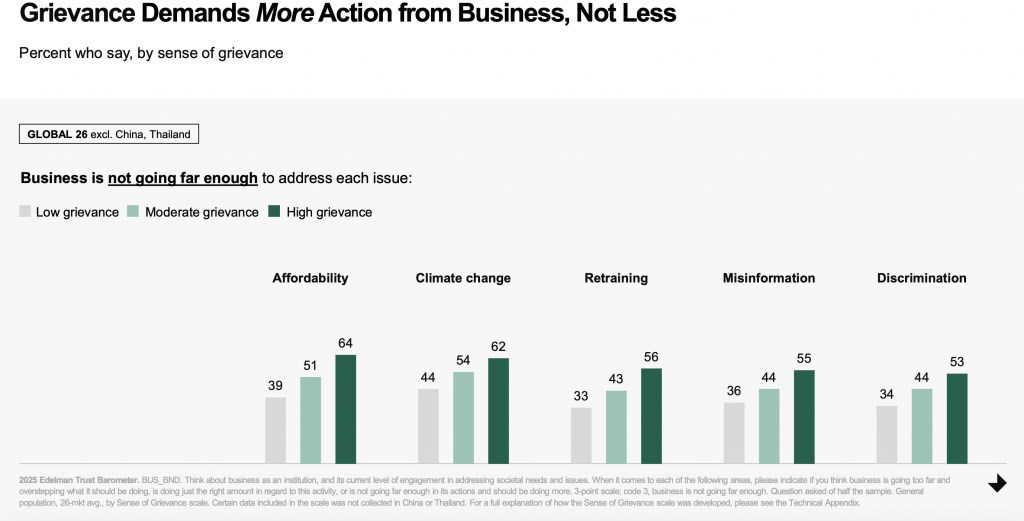
This chart comes from the Edelman Trust Barometer, and shows that employees across the world are demanding more action from businesses on affordability, climate change, retraining to adapt to technological changes, and more. Explore all the details inside.

In the last few days, massive LA wildfires have caused thousands of residents to flee their homes for safety. Accuweather is predicting that the total damage from the fire is already totaling nearly $57 billions, and is certain to grow. And while that sum is enormous, it says nothing about the lives and livelihoods lost in the destruction.
In the wake of such devastation, companies are stepping in to help out the affected communities. We’ll be updating this tracker daily over the next week as more businesses come forward to provide aid.
Here is what we have seen so far: (Updated 1/21/24)
Airbnb is working with the LA government to offer free housing to evacuees.
Amazon has pledged $10 million to disaster response groups dealing with the fires.
AT&T is offering free talk, text, and data to residents in affected billing zipcodes on Feb 6th.
Bank of America commits $1 million to the Red Cross to assist those impacted by the wildfires.
Disney is committing $15 million to immediate response and rebuilding efforts.
Fox Corporation is donating $1 million to the Red Cross for relief efforts.
Instacart is waiving delivery fees for all grocery and daily essential deliveries in affected areas.
Kroger is raising $1 million for people impacted by the fires.
Lockheed Martin is donating $1 million to Los Angeles relief and recovery efforts.
Planet Fitness gym has opened its facilities from now until Jan. 15, providing access to wi-fi, showers, facilities, and more.
Skechers gives $1 million to relief efforts.
Sweetgreen is delivering free meals to firefighters, first responders, and those displaced by the fire.
Verizon is waiving domestic call/data/text usage from until January 16th for those affected, and is deploying wi-fi and charging stations at shelters.
Uber is offering free rides of up to $40 for those evacuating, while Lyft will offer two rides up to $25 each ($50 total).
U-Haul is opening its facilities for 30-days of free self-storage to those who have to flee their homes.
Walmart is committing $2.5 million to relief efforts.
On a local level, many restaurants around LA are offering free meals to evacuees.

Just Capital announces today the appointment of former PayPal CEO Dan Schulman as chairman of its board of directors.
Schulman replaces Just Capital Co-Founder Paul Tudor Jones II, who will remain on the board and continue to partner with Just Capital’s advisors and directors to realize its goal of becoming the most trusted and objective authority on ranking, recognizing, and incentivizing corporate stakeholder leadership.
“Paul Tudor Jones II’s vision when he co-founded JUST Capital ten years ago is an inspiration to us all,” said Dan Schulman. “Under his leadership, the organization has changed the conversation about how business in America is done. The role of JUST Capital is becoming ever more important in today’s world. I look forward to partnering with Paul and the rest of the board to help guide the kind of corporate leadership that the world so urgently needs.”
Schulman was the CEO of PayPal for more than nine years and previously held leadership roles at American Express, Sprint Nextel Corporation, Priceline Group, and AT&T. He is a board member of Verizon, Cisco, Lazard, and the Cleveland Clinic. He is vice chair of the Valor Capital Group, a life member of the Council on Foreign Relations, and co-chairs the World Economic Forum’s Steering Committee to promote global financial inclusion.
“Dan Schulman’s track record working at some of the largest U.S. companies makes him the perfect person to carry Just Capital forward as chairman,” said Paul Tudor Jones II. “I couldn’t be prouder of what we’ve achieved and look forward to working alongside Dan and the entire JUST Capital team to drive change at scale and better the lives of all Americans in doing so.”
Over the past 10 years, Just Capital has amplified the voices of more than 180,000 Americans and incentivized hundreds of the largest U.S. companies to take concrete actions that benefit millions of workers, families, and communities. With partners like CNBC and Forbes, the organization has built the Just Capital Rankings into a sought-after designation that improves brand value and has launched investable indices that demonstrate the clear case for stakeholder-driven business. As of August 30, 2024, Just Capital’s flagship indexes, the JUST 100 Index (JUONETR) and Just U.S. Large Cap Diversified Index (JULCD), have outperformed their benchmarks by 51% and 12.9%, respectively, since inception.
“As stakeholder metrics become more relevant in C-suites and boardrooms, Just Capital is delighted to work hand-in-hand with Dan Schulman to hone our strategy to directly support leaders in managing risk, measuring and improving performance, and creating impact at scale,” said CEO Martin Whittaker. “When many are questioning the merits of capitalism and faith in the American Dream is being tested, our vision is clear. We know that just business is better business.”

Amidst the current caregiving and mental health crises, employees are increasingly seeking paid leave benefits to safeguard their well-being, and that of their families. In response, some companies are strategically crafting policies that cater to diverse employee needs, fostering equity and inclusion within their organizations, and integrating more resiliency into their workforces.
Right now, the vast majority of companies fall short of meeting workers’ expectations on paid leave benefits. JUST Capital’s research suggests only 9% of companies offer 12 or more weeks of parental leave for both caregivers, while their 2022 polling found that 64% of Americans believe it is necessary for companies to provide 12 weeks of paid leave for all parents. Worse, just 23% of private industry workers had access to any paid family leave through their employer in 2021, according to the Bureau of Labor Statistics. While 77% of workers in private industry are able to access paid sick leave as of February 2023, low-wage workers are significantly less likely to have paid sick leave compared to high-wage workers (38% vs. 96%, respectively).
JUST Capital tracks companies’ practices around paid family leave, paid sick leave, and other core caregiving policies, and we have observed the emergence of cutting-edge benefits that support employees across various life stages as businesses discover that supporting their employees’ well-being is not only socially responsible, but a smart investment. Paid leave policies improve worker retention and productivity, while minimally increasing operating costs (sometimes producing cost savings). In studies of California’s paid leave program, about 90% of businesses reported either a positive or neutral effect on productivity and almost all businesses (99%) identified positive or neutral effects on employee morale.
Paid leave initiatives are also pivotal in advancing equity within the workforce. Women – particularly mothers – often bear the brunt of caregiving responsibilities, leading to detrimental career choices and perpetuating the gender earnings gap, sometimes known as the “motherhood penalty.” In an analysis of states with paid leave policies, the rate of women leaving their jobs after welcoming a child dropped by 20% in the first year, and up to 50% after 6 years.
Nine years of polling has shown that paid leave policies are a key way for companies to differentiate themselves as a JUST employer. Below, we examine companies leading on implementing paid leave policies to support their diverse workforces, and the results for their employees and their business.
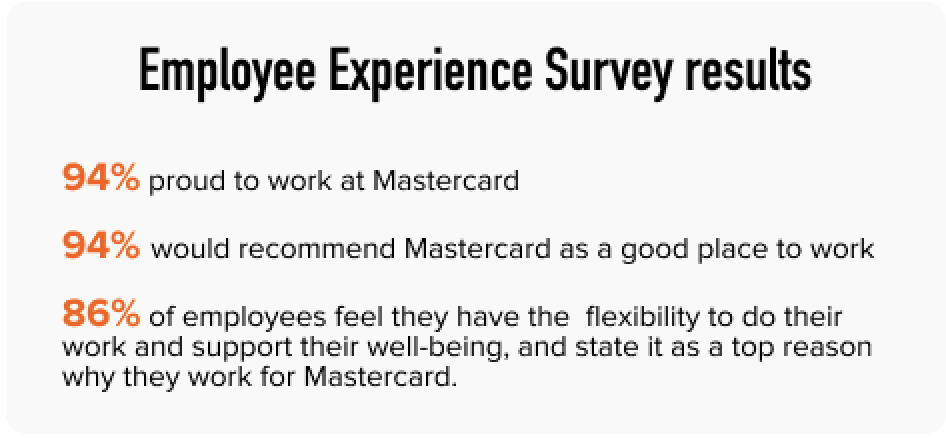
Mastercard offers a bereavement leave policy, acknowledging the need for employees to take the time to grieve and attend to personal matters without the added stress of work responsibilities. Mastercard considers bereavement leave as part of their holistic wellbeing and flexibility offerings, which they continuously revisit to ensure they best support employees and company. Over the years, bereavement leave has expanded and evolved, and in their current policy, employees can take up to 20 days paid time off, which applies to both full- and part-time employees. Recent updates to the policy include expanded time for death of a parent (including in-laws and step-parents) and in the event of a stillbirth or miscarriage.
We have received overwhelmingly positive feedback from employees, who attribute this benefit as a good example of our culture of decency. Feedback has also come in other forms, such as through the employee-led blog on the Mastercard homepage, called “Our Voices.” One employee reflected on their experience using the benefit to grieve the death of their grandparent and support their family, stating that Mastercard is a
Caring and inclusive workplace that values our lives and identities beyond our business hour deliverables.
Mastercard
Cisco has implemented a Critical Time Off policy that goes beyond traditional leave structures. This policy allows employees to take additional time off during significant life events such as the illness of a family member or personal emergencies. Cisco understands that certain situations require extra time and attention, and the Critical Time Off policy is designed to provide the necessary flexibility and support.
Three years ago, Adobe instituted Global Wellbeing Days, enabling their global community to collectively prioritize their wellbeing, disconnect, and recharge without worrying about work. In 2024, Adobe is offering six Global Wellbeing Days. These designated days serve as opportunities for employees to engage in activities and initiatives focused on improving their overall well-being.
At Adobe, we believe that taking time off is essential to the health and wellbeing of every employee. When our employees experience support both in and outside of the workplace, they are better equipped to unleash their creativity and innovate.
With Global Wellbeing Days, we’ve witnessed the profound impact of our community coming together for a collective day of rest. Employees use the time to reconnect with loved ones, focus on their health, or build community with other Adobe colleagues. For instance, the Adobe Golf network arranges golf outings on Global Wellbeing days, while some employees join fellow Adobe colleagues for activities like hikes, local pickleball games, and bike rides. Others choose to spend quality time with their family and pets.
Adobe
Medtronic, a leader in medical technology, understands the commitment of employees serving in the military reserves. To honor and support their dedication to national service, Medtronic provides paid time off for employees to fulfill their military reserve obligations. If reservists get deployed, Medtronic ventures far beyond what’s legally required. Medtronic holds reservists jobs for up to five years and provides differential compensation to cover the difference between their base pay and military pay. Benefits are covered for employees on military leave for up to 24 months. Their Family Care Leave policy includes up to six weeks paid leave for employees who are caregivers in a family where someone (such as a partner) is called to active military duty.
We’ve heard overwhelmingly positive feedback from workers who have utilized our military reserve leave. For them, it’s about more than just time off; it’s about peace of mind knowing that their service is valued and supported. We’ve had employees express deep gratitude for feeling recognized for their military commitments and the flexibility we offer.
Beyond military leave, we’re also proud to offer our employees caregiving support through Wellthy, a care concierge platform that works with families to ease their care burdens. Employees are matched with a dedicated Care Coordinator, who can help manage care in any capacity, big or small. This includes Wellthy’s deep expertise in veterans’ benefits, which can help veterans and their caregivers navigate benefits and coverage offered through the VA and other providers.
Our broader paid leave policies, including our military reserve leave, have significantly impacted our workforce in terms of retention, recruitment, and overall employee satisfaction. By prioritizing paid leave for military reservists, we demonstrate our commitment to supporting our employees’ diverse needs and honoring their service to the country. This approach not only strengthens our workforce by retaining experienced and dedicated individuals but also enhances our reputation as an employer of choice.
Our Family Care Leave, available globally — and expanded leave of up to 24 weeks paid for birthing parents in the U.S. — sets us apart in the marketplace. Combined with our Mission, which provides employees with a profound sense of purpose, our commitment to evolving benefits to meet employee needs is consistently highlighted as a top draw for candidates. …
Overall, our comprehensive approach to paid leave and talent development not only fosters a supportive and inclusive workplace culture but also positions us as a talent destination where diverse, top talent can come, grow, and thrive.
Denise King, Vice President, Global Benefits and Payroll, Medtronic
Pinterest recognizes the physical and emotional challenges that accompany miscarriage or stillbirth and is committed to supporting its employees during these difficult times. The company has a bereavement leave policy in place that covers Miscarriages and Stillbirth, acknowledging the need for employees to take the time they need to heal and cope with such personal losses.
Pinterest also provides a Family Care leave offering up to 12 weeks of full pay should employees need it to care for a seriously ill family member including a child under the care of a Neonatal Intensive Care Unit (NICU) post-birth. This is in addition to Pinterest’s 20 weeks of bonding leave for new parents.
At Pinterest, we’ve seen that people do their best work when they are most inspired, and feel seen and supported. We strive to create benefits that meet the real-world needs of our employees by supporting them through the different stages of family planning and child care, and by putting emotional wellbeing at the forefront. By listening to our employees, we’ve been able to shape our policies to support them when unexpected challenges arise. As our company continues to grow, we will keep working to create benefits that provide choices that are best for our employees’ careers and lives.
Adobe launched its U.S. sabbatical program to celebrate and honor employees’ innovation and contributions, recognizing them as the company’s greatest assets. Once employees reach five years of tenure, their initial sabbatical lasts four weeks. At 10 years, it extends to five weeks, and at 15 years, six weeks, remaining at this duration every five years thereafter. The Sabbatical Program is designed to provide employees with the time and space they need to rest and reflect, fostering creativity and innovation upon their return to work.
Adobe’s industry-leading paid leave policies foster a healthier, happier, and more engaged workforce by enabling employees to reinvigorate their creativity and return to work refreshed, primed to forge innovative ideas, and explore uncharted paths. In our annual employee survey, 87% of respondents expressed a willingness to recommend Adobe as an employer, while 89% stated they feel proud to work here. Upon returning from sabbatical, most employees shared in our sabbatical survey that they felt refreshed and welcomed as they transitioned back into their roles, noting that the time off fueled their motivation to do their best work upon return.
We are evaluating our wellbeing and benefits offerings each year by pulsing employee sentiment and benchmarking against the industry to remain competitive while providing optimal support to our global workforce.
Adobe
Understanding the unique challenges and health considerations that menopause can bring, Sanofi has implemented comprehensive menopause benefits to provide support and resources to its employees. These benefits may include access to menopause education and information, support groups, counseling services, flexible work arrangements, and healthcare coverage for treatments or therapies related to menopausal symptoms.
| “If you feel truly supported throughout your life cycle, whether it is maternity or menopause, you’ll be more engaged. I’m sure the new generation is more demanding on that.” Nathalie Grenache, SVP of People and Culture, Sanofi |
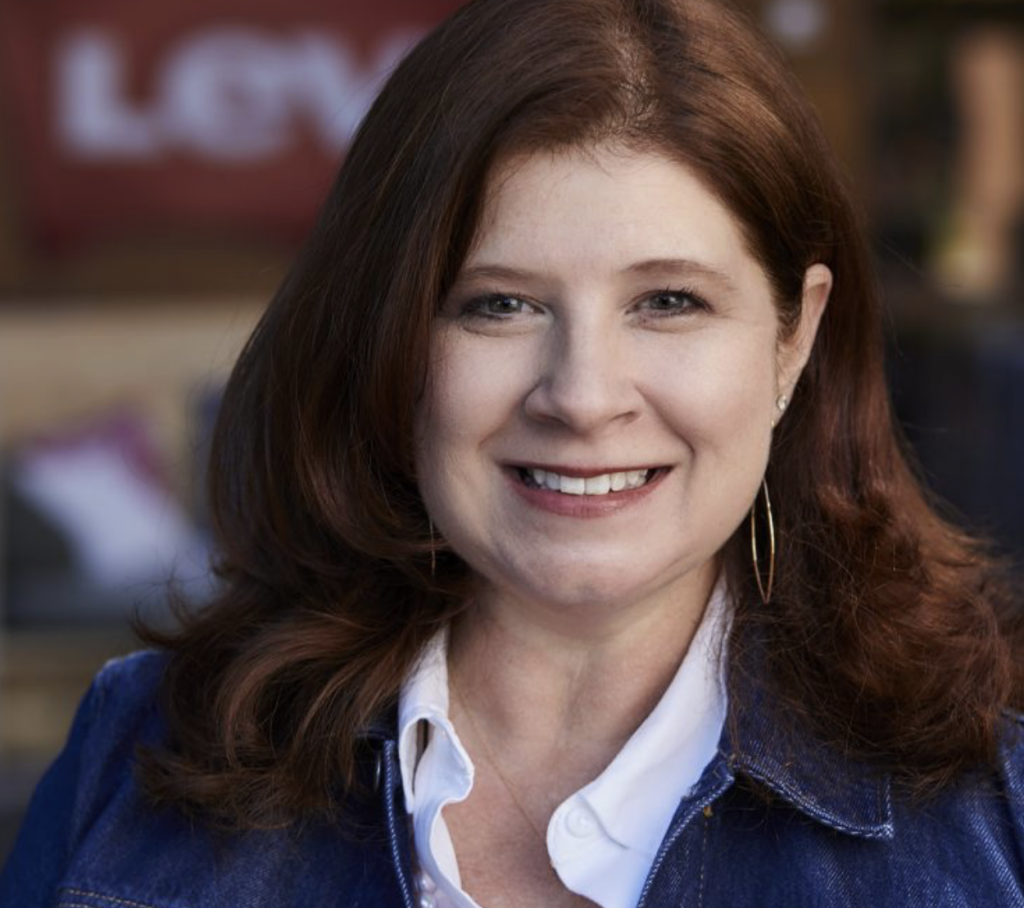
This interview was created in collaboration with the Financial Health Network.
Over the last few years, expectations of how employers treat their workers has undergone noticeable shifts. Employees from across sectors increasingly expect more holistic support from their employer. High-performing employers are taking note, recognizing that a holistic benefits strategy – one that focuses on the whole employee – results in a more stable, financially healthy workforce.
Part of a holistic benefits strategy includes recognizing individual workers as members of families and communities. Access to paid leave is estimated to increase mothers’ labor force participation by approximately 20 percent during the first year following their child’s birth. Furthermore, having access to paid medical leave has led workers to experience less stress from financial insecurity during a health shock. Recently, Levi Strauss & Co. (LS&Co) expanded its paid family leave plan to be more inclusive of its global workforce. Using data and feedback from employees, HR leaders designed a paid leave benefit that provided support to a wide range of employees.
In this interview produced by JUST Capital and Financial Health Network (two of the partners in the Worker Financial Wellness Initiative) we talk with Tracy Layney, Levi Strauss & Co.’s Chief Human Resources Officer, discussing the company’s decision to continue expanding their paid family leave plan.
One of the most important ways that LS&Co. stands up for our values is by standing up for our most important audience: our employees. We see it as our responsibility to create an environment that enables employees to be healthy, happy, and successful at work and at home.
We’ve seen the positive impact of paid leave in our employees’ lives since we introduced paid parental leave in 2016. Access to paid family and medical leave is not only the right thing to do for employees, but it’s the smart thing to do for business. So, in 2020 we expanded the benefit to include paid family leave. Then, at the beginning of this year, we enhanced the standard of our paid leave benefit around the globe to ensure our eligible employees have equitable access to time off work for maternity leave, parental bonding leave, and family care leave.
We had heard strong feedback on the need for paid family leave from our workforce. From a U.S. home office perspective, more than 50% of our population is made up of individuals between the ages of 36 and 55 – part of the so-called “sandwich generation” that is more likely to be caring for both a child and an elder at the same time. We realized that to truly support employee well-being, we must support employees’ ability to care for their closest family members, whether that person is a child, spouse, parent, or domestic partner, without worrying about their job or their paycheck.
Over the past few years, we’ve implemented and advocated for paid family leave and paid sick leave for our employees in certain locations and have seen firsthand the impact this has had on our employees’ lives. Our people make us who we are, and it’s our responsibility to create an environment that enables them to be healthy, happy, and successful, both at work and at home.
We wanted to ensure eligible employees receive the same paid leave benefit regardless of their geographic location, so we created a global core minimum standard. This allows us to provide eligible employees with up to:
Our goal with the enhancement was to create an equitable global core minimum standard, thus providing a stronger safety net for our employees wherever they are located. Our previous policy minimums were contingent on local laws and standards around the world — employees were in theory eligible for a variety of paid leave benefits depending on their region, but it didn’t always work out that way in practice. By raising the minimum standard across the board, many LS&Co. eligible employees will and are currently experiencing an enhancement in this benefit.
Our driving force and our motivation is our employees. At LS&Co., our people make us who we are and it’s our responsibility to create an environment that enables them to be healthy, happy, and successful at work and at home. Companies play a role in being the employer their employee needs in today’s landscape. This includes ensuring their people don’t have to choose between their careers and their health.
Companies should expand access to paid leave because this issue directly affects them, their workforces, and their ability to stay competitive in our modern U.S. economy. I would encourage everyone to foster conversations with their companies and dig deeper into the business rationale behind it.
Paid family leave is a relatively small investment with a very meaningful return, our actual expense is tracking under initial projected expense. Our paid family care policy globally costs us only 36% of what we’d projected, and since our global enhancement in January, we’ve had over 260 leaves across 20 countries.
During COVID, our company saw much lower attrition and impact on women than the average numbers across the U.S. and we believe it is because of our benefits and company culture (It is an expense to rehire and train people – paid leave boosts retention.) We realized that to truly support employee well-being, we must support employees’ ability to care for their closest family members, whether that person is a child, spouse, parent, or domestic partner, without worrying about their job or their paycheck.
Also, showing employees we have their backs cultivates loyalty, supports productivity, and fosters a culture where people do their best work. Comprehensive family and medical leave policies also help further equality and diversity goals, allowing more people to take advantage of professional opportunities that present themselves.
At Levi Strauss & Co., we are committed to offering a wide array of benefits and support for our employees in ways that are both tailored to their unique needs and can help them look after themselves and their loved ones, and one of those ways is through our ongoing mental health and well-being offerings. Most recently, we expanded access to Lyra Health’s emotional well-being support, available to all our employees around the world and their household family members.
Ongoing mental health resources are ingrained in the day-to-day culture and benefits of LS&Co. These include providing accessible, always-on resources that help our people prioritize mental and physical health and manage symptoms of stress, anxiety, and depression, should they arise. We train our managers to lead from the heart and with understanding. There is no one-size-fits-all leadership style, but by making small changes in the way we communicate with our people, we can foster a culture rooted in authenticity and empathy.
