After capturing the attention of economists, employers, investors, and others for nearly a year, the “Great Resignation” may be showing signs of slowing. The latest jobs report from the Department of Labor shows the U.S. has recovered 93% of jobs lost since the beginning of the pandemic, and new research finds that current quit rates are in-line with similar trends seen during periods of economic growth in the 20th century.
Instead, as the economist Bart Hobijn argued in a letter to the San Francisco Fed, we might be better off thinking of the current labor movement as a “Great Renegotiation.” Workers are leaving jobs en masse, but they may be doing so to take a better paying role with greater opportunities for growth and or that better aligns with their values. And those that are staying on the job are fighting for better working conditions, pay, and other factors – seen clearly in recent unionizing efforts at Starbucks and Amazon.
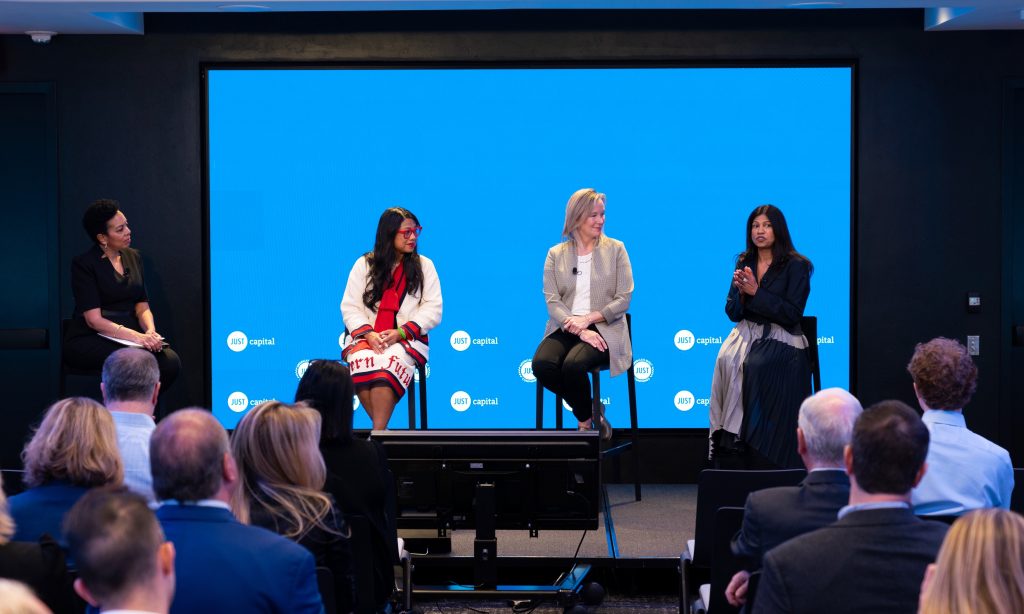
For employers committed to environmental, social, and governance (ESG) principles, this reframe only adds weight to the need to invest in their workforce right now. To find out what companies can do to bolster their employee engagement and retention as well as recruitment efforts, we brought together Chipotle Chief Diversity & Inclusion and People Officer Marissa Andrada, Intel EVP and Chief People Officer Christy Pambianchi, and Prudential SVP of Inclusive Solutions at our event held Monday at Nasdaq, “The Strategic Imperative of the ‘S’ of ESG.”
Sitting down with CNBC’s Sharon Epperson, Andrada, Pambianchi, and Reddy talked about the importance of real-time employee feedback, transparency on workforce metrics, and pathways for growth to their hiring and retention efforts. Read on for key takeaways and watch the full conversation below.
The use of a formal survey to gain employee feedback doesn’t work anymore, Andrada said. She described Chipotle’s “Chip Chats,” where C-suite leaders visit different restaurants to give a five-minute update on company-level efforts and then invite questions from employees. The format went virtual during the pandemic, with the restaurant chain holding sessions every month for any worker at the company to attend – key to engaging its widespread workforce, she noted.
“Sometimes people on the outside don’t understand we are not a franchise business,” Andrada said. “We are company-operated across 3,000 plus restaurants so that’s a huge 100,000-person workforce that work for us hourly.”
Reddy touched upon similar efforts to bridge both formal and informal employee feedback at Prudential. The company sends out both annual and periodic surveys, but is making use of its Business Resource Groups to ensure it’s getting a “real-time pulse on employee sentiment from different demographics.” Reddy shared that 5,000 Prudential employees belong to its business resource groups, nearly a third of its workforce, and that this approach has helped the company pilot new offerings like allowing for more individual choice in benefits.
For Intel, gathering this feedback has been crucial for retention, Pambianchi said. She noted that the company launched an inclusion survey last year and that it’s been focused on defining the unique value it provides as an employer. “I call it re-recruiting the people that do work for you,” she said. “Like renewing your marriage vows – why did I come work here in the first place?”
A key unique value for Intel, Pambianchi said, is its transparency. That’s extended from its founders’ belief in an “open door” policy with executives to sharing its workforce data and demographics. Intel has been disclosing its EEO-1 data, the detailed, intersectional data large companies are required to report annually to the EEOC, for over a decade, she said, and recently started disclosing its pay data in relation to demographics of its workforce.
The move allows for an open and transparent conversation about how the company is doing, she said, and this has been especially beneficial when it comes to compensation. “People want to get paid,” Pambianchi said. “In roles like ours if you’re explaining, you’ve already lost. So it’s just much better to say, here’s the data. We’re doing good here. We’re doing bad here. We’re going to work on getting better. And can you help us?”
Beyond understanding where companies currently stand in relation to wages, Andrada shared that Chipotle’s investing in helping its employees understand their earning potential with the company. “What we hear most importantly for anyone is, ‘How can I live a life?’ and ‘How can I make that pathway to middle class?’,” she said. The company’s increased its wages to an average $15 an hour and offers a bonus program for hourly workers that allows them to earn up to an extra month’s pay annually, Andrada noted, but also introduced a debt-free degree benefit in 2019 to help create a pathway toward economic mobility and growth for its employees.
“I’ve met employees who join us and in as quick as six months or as soon as three years, are making over six figures because they’re leaning into their opportunities with the company,” Andrada said. Investing in workforce development has also taken shape outside of the company, Pambianchi noted, in Intel’s case. The company is investing heavily in increasing access to STEM education for underrepresented communities around the world through its AI For Youth program, she said, as a way of collaborating with communities to help build a more diverse workforce.
Whatever nickname you want to give it, employers are facing a hyper-competitive talent market. There are no easy answers, of course, but Chipotle, Intel, and Prudential are providing examples of how responding to needs of workers with real-time engagement, transparency, and a focus on opportunity can help bolster the “S” in a company’s ESG agenda.
Proxy season is upon corporate America. And this year companies are facing added scrutiny from shareholders on environmental, social, and governance (ESG) issues. A recent report found that ESG proposals are up 22% from last year, with investors filing a record 529 ESG-related resolutions. Major asset managers like State Street, BlackRock, and Vanguard have also set clear ESG priorities in their voting guidelines.
At the same time, companies and investors are facing new challenges to putting their ESG principles into practice. The war in Ukraine has pushed the private sector to consider how to support a rapidly shifting humanitarian crisis, and what it means to protect democracy and rule of law over the long term. Domestically, rising discontent among workers and growth in unionizing efforts are also putting companies’ commitments to their workforce, the ‘S’ in ESG, to the test. And on top of all that, the SEC is moving forward with environmental reporting standards and has indicated those for human capital (the ‘S’) are next.
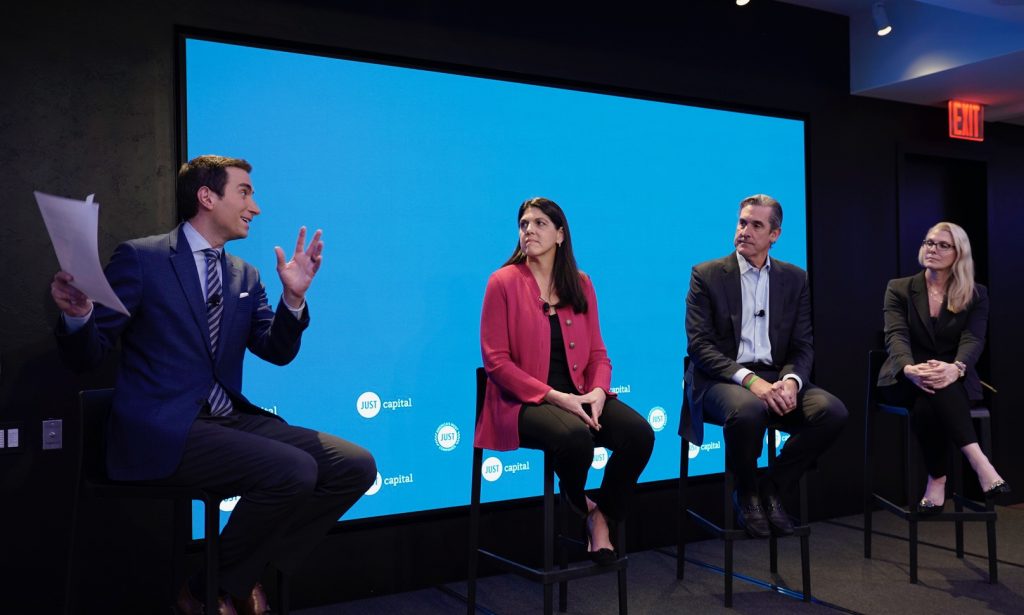
These issues pose new, and evolving, questions to investors’ ESG approaches. To unpack them, we brought together Engine No. 1 CEO Jennifer Grancio, Lord Abbett CEO and Managing Partner Doug Sieg, and Nasdaq SVP and Head of U.S. Listings and Revenue Karen Snow, on Monday at Nasdaq Market Site for our event, “The Strategic Imperative of the ‘S’ of ESG.”
Grancio, Sieg, and Snow sat down with CNBC’s Andrew Ross Sorkin to share how long-term corporate engagement, market-led solutions, and shifting materiality are influencing the direction of ESG investing. Read on for key takeaways and watch the full conversation below.
Engine No. 1’s high-profile battle with Exxon last year thrust the firm into the spotlight as the key ESG activist investor for companies to watch during proxy season. But Grancio noted that Engine No. 1’s strategy is centered around evaluating companies’ long-term actions and performance. She pointed to the firm’s work with GM around electric vehicle (EV) transition as an example.
While, as Sorkin noted, Tesla’s value has outpaced GM’s, Grancio sees this as the market rewarding short-term innovation. She noted that Engine No. 1 looks at GM’s long-term investment in its workforce as a competitive advantage, while emphasizing that Engine No.1 holds this view regardless of the GM workforce’s unionized status. How you treat the workforce of a large public company over time will matter, she said, and she wants to see this approach become standard for shareholders. “As investors we’re looking at companies over a five, 10, 15-year period. We’re not rewarding or punishing people only on what they did over the last quarter or year,” Grancio said.
Sieg echoed her thoughts, adding that Lord Abbett’s ESG approach is grounded in the belief that companies that adhere to ESG principles may not trade better tomorrow, but will be better performing companies in the long run. And he sees long-term investor engagement with these companies as key to this success. “I don’t think divestment is a good idea,” he said. “And I don’t know if activism is a good idea. We need to be able to talk to companies.”
Board diversity has been a key issue for ESG investors in recent years. But last week, a judge struck down a California law that would have required companies based in the state to meet a diversity quota for board membership, deeming it unconstitutional. Snow pointed out that the Nasdaq’s board diversity rule, which requires companies listed on its exchange to disclose their board demographics and have at least two “diverse” board directors or explain why they do not, is about disclosure, not quotas. “It’s about taking leadership now and presenting guidelines that might help investors and others in the community understand what you’re doing,” she said.
Snow pointed out that Nasdaq created its rule with the perspective that a market-led solution would be better than a government-led solution. The rule, which the SEC approved last year, has already seen results, she added. “Prior to our rule, about 25% of the S&P 500 disclosed their board diversity, now over 60% have disclosed – and that’s in a year,” she said. Sieg agreed, adding that long-term behavior change won’t come from mandates, but from an understanding that capital isn’t going to flow unless companies make disclosures and bring investors along on their ESG journeys.
Grancio, Sieg, and Snow each agree that the materiality of ESG factors is increasing. How these factors are weighted in portfolios and incorporated into investment decisions will vary, however. Sieg emphasized that incorporating ESG into portfolios is not an easy process, especially given the gaps in data and disclosure. How ESG factors into Lord Abbett’s decision-making will vary by sector, company, and research analyst, right now, he said, but it’s gaining traction.
“I don’t think ESG will ever be 100% of the decision-making of buy and sell. It just won’t. But five years ago, was it 5%? Today, is it 15-20%?,” he said. “Will it be 35-40%? Yes. Will that be an indicator of better culture, better long-term growth, more innovation? Yes.”
For Engine No.1, bad governance gets weighted more heavily than other factors, Grancio said. Otherwise, the firm is looking at the dollar impact of certain issues for a company, she said, pointing out that the Exxon campaign was really about the company’s long-term financial value. As Grancio put it, she hopes that one day we’re not even discussing ESG, but rather see its elements as core to a business.
Snow added that the weight of these different factors will depend on what’s most important to the investor beyond returns. A company may not be excelling on all ESG issues, she said, but the pressure to get it right is what matters.
That pressure is sure to only increase, and change, as companies enter proxy season. And investors, and other stakeholders will be watching closely to see how they respond to it.

(Christopher Furlong/Getty Images)
State Street Global Advisors is one of the world’s largest institutional investors, with more than $4 trillion in assets under management. It’s also hugely influential on ESG. For a feature this week, its CEO, Cyrus Taraporevala, and proxy voting guidelines lead, Benjamin Colton, sat down with JUST editorial director Rich Feloni for an in-depth discussion on everything from the coming proxy season, corporate “brown-spinning” and the war in Ukraine. It’s a fascinating conversation (a sample: “Demonizing the fossil fuel industry and having this simplistic ‘green is good, brown is bad’ approach was not something we subscribed to”) and I urge you to check it out.
Regarding the awful events in Ukraine, the war itself and the concomitant humanitarian and economic fallout are posing some tough questions for the ESG community.
Are defense companies, which have often been excluded from ESG portfolios, now suitable for inclusion if they’re helping democracies defend themselves? Is any company involved in Russia now considered anathema to ESG investors, even if, like PepsiCo, they’re servicing the Russian people and not the Kremlin? Should ESG investors and companies committed to ESG leadership temporarily support U.S. efforts to produce more domestic energy from fossil fuels, as Tesla CEO Elon Musk has stated? The list goes on.
For some, ESG continues to be a riddle, wrapped in a mystery, inside an enigma. Crises such as the pandemic, and now the conflict in Europe, force us to unravel some of these complexities and determine what we really stand for. For the State Street team, the bottom line is clear: “This is about the best risk-adjusted return.”
If you want to track how corporations are responding to the war in Ukraine, check out our regularly updated list.
Be well,
Martin

Amazon workers can now get degrees at 180 different colleges for free. The board also approved $10 billion in stock buybacks.
Macy’s is spending $5 billion by 2025 to diversify company leadership, raise hourly pay, and increase the use of sustainable materials in its products.
S&P Global launches $1.25 billion bond with interest tied to Scope 3 emissions & supply chain diversity goals.
Uber, Lyft, and DoorDash launch a campaign to prevent efforts to classify their workers as employees, which would allow them to form unions.
Wells Fargo donates $20 million to Houston small businesses in underserved communities.
Martin spoke with Alan Murray at Fortune, and Adele Peters at Fast Company about the different ways companies are responding to Russia’s war in Ukraine and the rapidly evolving humanitarian crisis. Our running list of corporate responses was also featured in FT’s Moral Money and CEO Daily.
From the war in Ukraine to the controversial new Florida Parental Rights in Education bill (see: initial comments and backpedaling from Disney CEO as a case in point), companies are reckoning with when and how to take a stand on critical social issues. The Financial Times Moral Money Forum explores the question in depth featuring insights from JUST advisor Hubert Joly, WFWI partner and PayPal exec Franz Paasche, and JUST polling data lifting up what Americans expect from corporate leaders in this rapidly shifting landscape.
Our latest report on workforce diversity data disclosure and trends has been republished as a resource by Harvard Law School’s Forum on Corporate Governance. The analysis was also featured in CFO Dive.
We’ll have a team at SXSW starting this weekend, so drop us a line if you are planning to be in Austin and would like to meet up! Our chief strategy officer Alison Omens will join Fortune, Color of Change, and SEIU 2015 to discuss the systemic inequities that have been driving millions of women out of the workforce at record pace and what companies need to support their return. Attend the session: “Supporting Working Women Amid the Pandemic” on March 15th at 2:30PM CT. Hope to see you there!

(Drew Angerer/Getty Images)
“Time is life. If we miss our budget for a year, no one will remember it the year after. If we miss the opportunity to do something for the world now, we will all remember it forever.”
“There are limits to what governments can do. Companies may choose to continue to work with Russian business, but they should be held accountable by their shareholders for that decision. To do so requires that they disclose the nature of that association, their rationale for continuing to do business with Russia, and what–if any–economic and financial risks this entails.”
“I put in my two week’s notice. I was walking out the door, and someone who worked in our legal firm downstairs said to me, ‘I just got a job at Intel as an administrative assistant. If you’re looking for a job that pays really well, maybe you should try it, just to get your foot in the door.’”
For International Women’s Day, Barron’s features the 100 Most Influential Women in U.S Finance, featuring JUST board member Mindy Lubber and JUST 100 CEO Jane Fraser.
Employers loved promoting their International Women’s Day platitudes, until, as Fortune reports, a U.K.-based Twitter bot started revealing the gender pay gap at each organization.
Proxy season is upon us and Fortune reports on investors wanting to see more explicit plans on ESG, climate, human capital, and DEI. For additional details check out Broadridge’s 2022 proxy season report detailing key corporate governance and shareholder voting trends.
New survey data from Pew shares top reasons behind the Great Resignation with low pay, no advancement opportunities, feeling disrespected, lack of childcare, and flexibility in the top five.
Almost two-thirds of Americans are now living paycheck to paycheck, according to one report shared by CNBC.
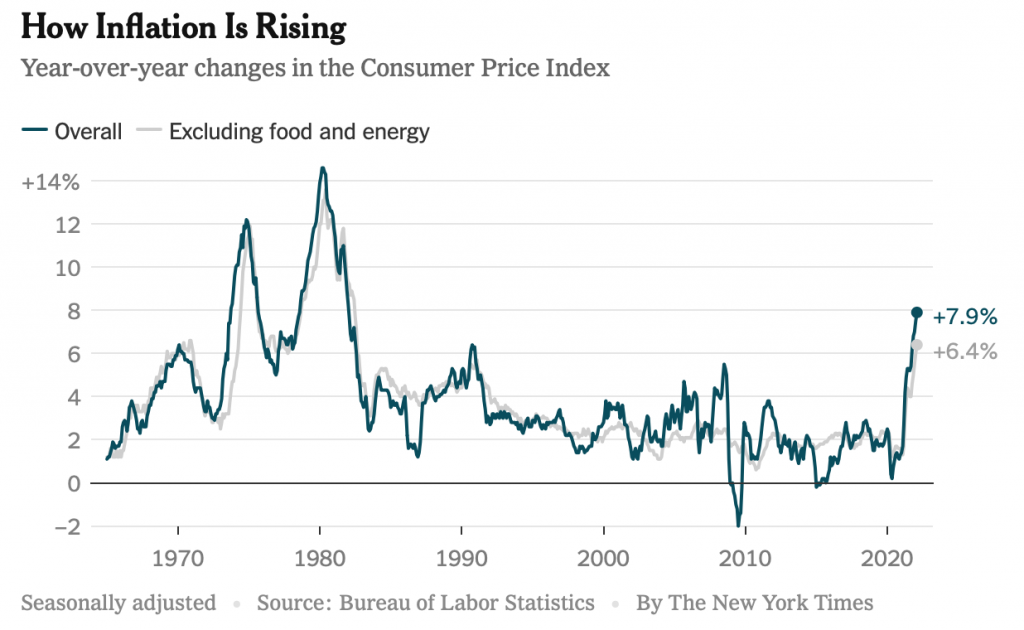
This chart comes from The New York Times article showing the massive spike in inflation currently hitting the U.S., the highest it’s been since 1982. Learn more here.
Jean Oelwang
CEO, Virgin Unite
JUST Capital Board Member
Jean Oelwang released her new book, Partnering: Forge the Deep Connections that Make Great Things Happen , this week. The book offers new insight on the importance of collaboration over hyper-individualism on the path to making a difference in the world. Jean shares stories of effective partnering which provides tangible takeaways for readers and provides a call to action to build deep connections for better lives, better organizations, and a better world.
Join Jean at SXSW on March 14th to hear key insights from the book firsthand – more information here!
Meta, Facebook’s parent company, saw its stock plunge 26% on Thursday, for a massive market capitalization loss of $250 billion. The fall came a day after an earnings call that gave investors cause to worry about the company’s transition to a focus on the virtual reality-driven metaverse.
There are multiple reasons analysts have cited for this, primarily around growth and strategic direction. However, several are tied to the decline of Meta’s standing over the last couple of years within the ESG (environmental, social, governance) space, including in our own Rankings of America’s Most JUST Companies.
As CNBC’s Eric Rosenbaum asked in a piece last month about the 2022 Rankings, “Can any ESG investor own Facebook?” He pointed to Meta’s fall all the way from #21 in our 2021 Rankings to #712 on account of “unique and extraordinary actions.” His CNBC colleague Kristina Partsinevelos noted in a recent television segment, Meta and its previous incarnation of Facebook can be seen as a prime example of the importance of “G” in ESG.
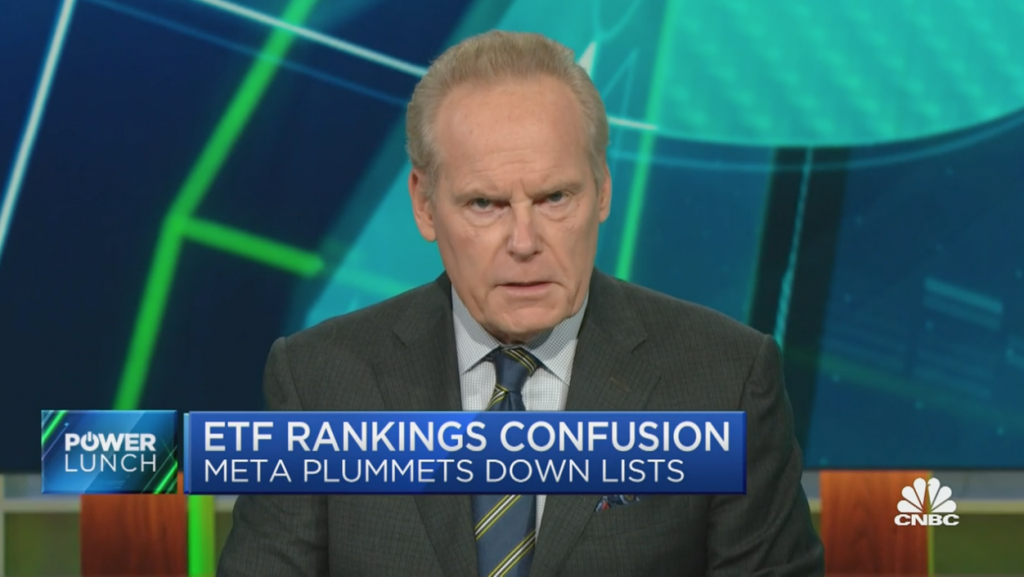
In JUST’s model specifically, Meta actually performed well across issues that took into account investments in workers, communities, and the environment. Its governance, broadly speaking – on account of scandals concerning lack of transparency and misleading information to shareholders and customers – so far outweighed its positive stakeholder scores that our Research team incorporated significant penalties. Meta ended up ranking it #901 out of 954 companies on Customer Issues and ranked #666 on Shareholder and Governance Issues.
Facebook told CNBC it takes its responsibilities around customer privacy and its impact on the potential spread of misinformation seriously, and indeed Meta is still included heavily in ESG funds from the likes of Vanguard and Flexshares. For others, however, the governance concerns required intervention. As CNBC’s reports noted, MSCI downgraded Meta’s ESG rating to B, its second to lowest score; S&P dropped the company from its ESG index in 2019 over privacy concerns; and ESG investor Trillium dropped it over a year ago on account of what it deemed a reluctance to address its biggest scandals.
On top of all this, analysts also noted that the market seems to be losing confidence that Meta’s long-term plan built on the metaverse is going to work. As Mike Isaac put it in the New York Times, regarding Meta CEO Mark Zuckerberg’s ability to innovate his way past a challenge, “In the past, Mr. Zuckerberg might have been given the benefit of the doubt that he would be able to do so. But on Thursday at least, faith was in short supply on Wall Street.”
Meta, née Facebook, may have been able to weather the storm of scandals past thanks to its ability to deliver on expectations. As for its current predicament, it faces the not insignificant challenge of rebuilding trust with the public and convincing the street about its future. Perhaps it’s time for Meta to formally and fully embrace the stakeholder model?
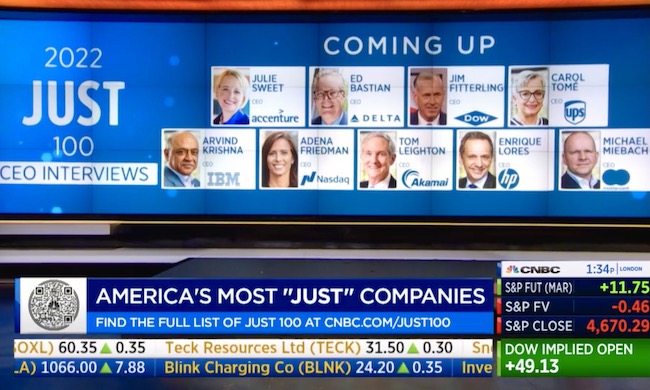
This week, we released our 2022 Rankings of America’s Most JUST Companies in collaboration with CNBC. Leading the list is the JUST 100, a group of the 100 top-performing companies across industries. Executives from JUST 100 companies joined CNBC anchors throughout the week to discuss what’s driving their top scores, and why embracing a stakeholder-oriented approach has built trust with employees, investors, and others, ultimately helping to generate greater value for their companies over the long term.
Below we’ve captured key insights from some of these conversations. You can tune into Squawk Box, Power Lunch, and Closing Bell to catch the remaining JUST 100 launch week interviews live, and find a full collection of coverage at CNBC’s JUST 100 page.
JUST Capital co-founder Paul Tudor Jones and Accenture CEO Julie Sweet kicked off the conversations with Andrew Ross Sorkin on Squawk Box. Jones made the point that the companies in the JUST 100 are leading on the most important metrics to the American public, which are “generally pocketbook issues and work related,” and that this a boon for their bottom lines. “You can’t have a value proposition for investors and shareholders in the long run unless you’re taking care of and providing a value proposition for the other stakeholders, employees, customers, communities, the planet,” he said.
Jones raised that companies in the JUST 100 earn nearly 4.5% more and pay 19% more in dividends than the rest of the Russell 1000 and Sweet spoke to how Accenture’s seen that growth firsthand. She noted that the company hired 50,000 people last quarter and has added $140 billion in market cap since the onset of the pandemic. “We are a talent magnet and we believe that that is very much related to the fact that people want to go to companies that create value, have the right pay equity, pay the right salaries, but also lead with values who have sustainability,” Sweet said.
The company’s proactive transparency on diversity, equity, and inclusion (DEI) metrics have also helped to boost recruitment, Sweet noted. She brought up that when Accenture first disclosed the demographic breakdown of its U.S. workforce in 2015 its “numbers weren’t great,” but that recruitment “improved in all of our diverse categories because transparency builds trust.”
“Our core business strategy is to not only do this for our stakeholders but also for our clients and we believe that our results are intertwined completely with our commitment to being a just company and that’s why these types of metrics are so important,” she said.
Watch the full interview below.
Friedman joined Andrew Ross Sorkin on Squawk Box to discuss Nasdaq’s appearance in the JUST 100, and how it earned the number two spot in the capital markets field for its work prioritizing Shareholders & Governance. Friedman focused on the importance of disclosure to investors and the economy more broadly and how choosing to disclose DEI metrics at Nasdaq before the data was “better” helped to bolster employee engagement and recruitment.
“As we move ESG from this notion of ‘let me get started in my ESG journey’…it’s now a matter of tracking progress. We’re moving into what I would say is the second phase of ESG, which is how quickly companies can move along and make a difference and have an impact. The only way we can measure that is if it’s disclosed,” Friedman said.
Watch the full interview below.
Krishna joined Closing Bell’s Sara Eisen to break down how IBM ranked first in the computer services industry. He raised that the company’s ESG efforts have been a significant talent driver, comparing what applicants are looking for in an employer today to the premium that more consumers are willing to pay for sustainable products. Krishna also shared that IBM’s focus on ESG hasn’t come at a cost to its revenue growth and urged more business leaders to operate with this mindset for the benefit of all stakeholders, including shareholders.
“It’s an ‘and,’ and an ‘and.’ It’s not an ‘instead of’ or and it’s not a ‘putting these [ESG goals] ahead.’ However, in order to get revenue growth, we have to be able to attract employees. In order to attract employees, we have to be perceived as just and equitable,” he said. “DEI plays a role, it allows us to get more employees across all kinds of communities. We believe that actually being sustainable is not instead of profit. When we recycle, we use clean energy, and we use less energy, our energy bills go down. It’s an ‘and,’ it’s not an ‘or.’ And thinking about that way benefits everybody, including investors.”
Watch the full interview below.
Lores joined Sara Eisen on Closing Bell to discuss HP’s number-two rank among computer services companies, and how it earned the number one spot for both Workers and the Environment in the industry. He raised that HP’s commitment to DEI starts at the very top, and that the company “has one of the most diverse boards in America.” This board, in turn, helps HP make better decisions and have better discussions, he said. Lores also spoke on the company’s sustainability work, saying that it’s work to manage environmental impact ties directly into its core business and has helped boost its bottom line.
“We think that more and more customers want to buy products from companies they trust, from companies that represent the values that they have. Clearly by using recyclable materials, both in our printers and in our PCs, we think we are doing the right thing, but also we are generating a competitive advantage,” he said.
Watch the full interview below.
Tomé joined Becky Quick and Andrew Ross Sorkin on Squawk Box to talk about UPS’ number two-rank in the transportation industry. She raised that UPS’ dedication to serving all of its stakeholders has helped foster a strong sense of purpose among its workforce and stave off the effects of The Great Resignation for the company. UPS also ranked second among transportation companies for its Shareholders & Governance performance, and Tomé said that its shareholders have taken an increasing interest in the company’s ESG efforts and disclosures.
“We’re getting more questions coming from the investor group, and we welcome those questions because ESG has been important to us since our founding days 115 years ago,” she said. “And we’ve declared that we’ll be carbon neutral by 2050 so we’re getting more questions as to ‘well how are you going to do that?’ So we’ve laid out a roadmap and we’re talking about the investments that we’re making and the return we expect to get on those investments.”
Watch the full interview below.
Fitterling joined Sara Eisen on Closing Bell to discuss how Dow Chemical’s dedication to DEI and work to expand benefits during the pandemic helped it rank first in the chemicals industry overall and first in the sector for Workers. Fitterling said that the company’s extended paternity leave, paid sick leave, and dependent care offerings. He also noted that Dow has closed its gender pay gap and ties compensation for its HR executives to DEI representation goals.
“We’re working hard to try to make sure that women know that they have a place – and it is a good place for women to have a career – it is a safe environment, and to have the kind of flexibility and create the kind of culture that they want to be part of. And we’re seeing improvements there,” Fitterling said.
Watch the full interview below.
Bastian joined Andrew Ross Sorkin on Squawk Box to talk about Delta’s number-one rank among transportation companies in the JUST 100. Bastian said that for Delta, which is ranked first for both Customers and Workers in the field, it’s all about people. He noted that through the Great Resignation and the rising labor movement across the country, during which a push to unionize Delta has resurged, his top priority is to “take care of our people.” It’s that investment in Delta’s workforce, Bastian said, that’s allowed the company to grow and thrive.
“You don’t get there…if you don’t have happy employees. If you don’t have employees that want to serve, that feel respected, feel trusted, feel backed up. And that’s the proof in the pudding,” he said.
Watch the full interview below.
Miebach joined Kelly Evans on Power Lunch to talk about how Mastercard earned its number two ranking among commercial support services companies broadly and in its performance on Workers. Miebach, who stepped into the CEO role in January 2021, discussed how Mastercard has listened to what its employees need in terms of workplace flexibility. The company is moving toward a hybrid model, he said, but is also offering incentives like “work four weeks from anywhere in the world” to give employees additional options.
“I think what is being recognized is really the close connection between a pretty clear strategy, consistent performance on one hand, and catering to the topics that really matter to all of our stakeholders, not just shareholders – inclusive growth, protecting the environment, and responsible use of technology,” he said on the company’s rank.
Watch the full interview below.
Akamai’s Tom Leighton joined Kelly Evans on Power Lunch to discuss how the cloud services-provider earned its number three rank for Workers in the internet industry. Leighton shared that Akamai has led with flexibility for employees through the pandemic, providing extra paid time off for “wellness days” and allowing eligible employees to work remotely permanently.
“Lives have really been upended with the pandemic, and so we want to do everything we can to help our employees get through it successfully,” he said. This flexibility and a commitment to DEI and workforce training have helped Akamai maintain strong retention and recruitment rates during the tight labor market, Leighton noted.
Watch the full interview below.
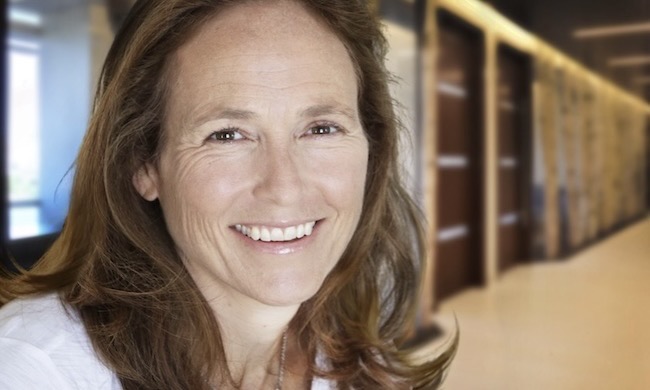
JUST Capital is pleased to announce that Holly Gordon, Chief Impact Officer at Participant, has joined our Board of Directors. Gordon is the eighth board member JUST has welcomed over the past year, and brings with her a wealth of experience and expertise in narrative change, strategic partnerships, and creative production.
Gordon joined Participant – the production company behind films including American Factory, Just Mercy, and Roma – in 2017 and leads its social impact strategy, helping accelerate the company’s work to tell stories that inspire positive social change through strategic partnerships and global, multi-year campaigns. Prior to Participant, Gordon co-founded Girl Rising, a global girls’ education campaign, and served as an Executive Producer of the award-winning documentary that sparked the initiative. In 2012, Forbes named Girl Rising the Most Dynamic Social Initiative of the year.
Gordon brings a crucial eye to JUST’s efforts to redefine corporate success beyond solely financial performance. Our new partnership with CNBC will work to arm executives and investors with the data and analysis needed to understand, and incentivize, corporate leadership in a stakeholder-driven economy. And, as our polling has shown, help provide the American public with the transparency and accountability they’re looking for from corporate America.
“Over the years at JUST, we’ve come to understand that moving from a shareholder-focused model of success to an integrated, stakeholder-driven model is just as much a narrative shift as it is an economic one,” JUST Capital CEO Martin Whittaker said. “We’re thrilled to have Holly’s expertise on our board to help accelerate a wider change, backed up by the right data and insights, in how we view corporate leadership.”
Gordon is a member of Fast Company’s League of Extraordinary Women and one of Newsweek’s/The Daily Beast’s 125 Women of Impact. In 2015, she was named a Presidential Leadership Scholar. Gordon currently also serves on the boards of MAKERS and Girl Rising.
“We’re honored to have Holly’s leadership on our board at such a critical time for JUST as an organization and for the stakeholder capitalism movement broadly. We look forward to working together to build greater understanding of what stakeholder-driven corporate leadership through the pandemic recovery looks like,” Laurel Britton, chair of our Board’s Nominating and Governance Committee, said.
