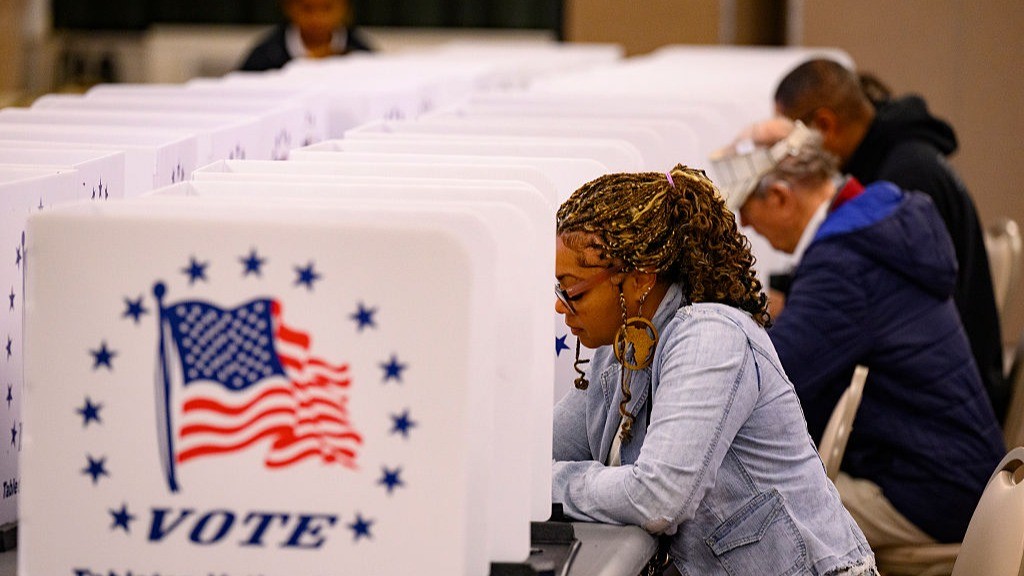
Tuesday’s election results were a clear statement by Americans that they want our current economic and political systems to work better for them. The AP Voter Poll of midterm voters in all 50 states found about 4 in 10 named the economy the country’s most important issue; roughly half called the cost of living and government corruption “crucial” to their vote for Congress; 8 in 10 said inflation had caused their household severe or moderate hardship.
Our data have been showing this for a while. The vast majority of Americans want capitalism to work better for them and believe business can be a force for positive change. We’ve also surfaced exactly what society really needs and wants when it comes to AI. 65% of Americans say everyone should participate in the wealth AI creates. 63% want AI-driven gains reinvested in workers. 56% of voters said AI and data centers were a crucial or major factor in how they voted. The environment is the only area where our National AI Monitor scores AI negative (−12 in September), driven by data centers, water, electricity and grid strain. Tuesday demonstrated that: of 41 local data-center measures in ten states, every reported result but one went against development. Convincing Americans to trust in AI will require much greater stakeholder alignment going forward.
Business can take the lead on this, and many companies aren’t waiting around. Verizon has launched a $70M AI skills initiative. Goldman Sachs is spending $500 million to extend 10,000 Small Businesses to another 10,000 firms, with an AI institute built with Anthropic, Google, Meta and OpenAI. Amazon, like Microsoft, has dropped NDAs in data-center negotiations and pledged $1 billion over five years to host communities. Walmart, Mastercard, Meta, and CoreWeave have all initiated major programs to benefit key stakeholders in recent weeks. Our Corporate AI Tracker, launching later this year, will capture all of this and help connect the dots between what Main Street is experiencing and what companies are actually doing.
It’s still early, but I suspect the election will shift how companies engage on the public’s economic priorities and perhaps embolden some to lean in more proactively. Most crucially, I expect much greater attention to be paid to how society’s needs can be brought into greater alignment with government, business and investor priorities as it relates to the AI transition.
Be well,
Martin
This newsletter was written mostly by humans with a bit of help from AI.
42% of Gen Z expect AI to do more harm than good to the country overall, compared to 32% who expect more good than harm. Explore the data here.
The Wall Street Journal looks at the sweeping success of anti-data-center initiatives across the country this election day, and how an exit poll poll of more than 79,000 registered voters found that “56% said data centers were either a crucial or major factor in their picks for Congress”.
Politico speaks to the AI strategists trying to figure out how to understand the outcome of the election in real-time.
SourceCode unpacks their latest polling, revealing how tech leaders need to pivot for their messages to better resonate with Americans.
Semafor reports on dedicated “war rooms” Anthropic and ChatGPT set up to ensure Americans have accurate information about the midterm elections.
The Wall Street Journal shows how major pharmaceutical executives are skeptical of AI companies’ claims that AI will cure diseases like cancer.
The Washington Post looks at how Google AI researchers are trying to get out of their employment contracts so they can speak publicly on the risks of what they are working on.
The Economist reveals many Americans are putting off conversations about raises – fearing it will put them at risk of AI replacement – but encourages workers to push for wage increases they deserve.
Fortune looks at how soaring healthcare costs are secretly restricting an increase in wages, while at the same time Americans are paying more than ever for their health insurance premiums.
The New York Times does a deep dive into what Americans can no longer afford due to increased cost of living, and the responses are stark: not just niceties, but essentials like medicine.
Canva is laying off 22% of their workforce.

Post-election, the Nasdaq sank 4% as investors pulled out of tech and ai-focused stocks. The Wall Street Journal has the story.
