
Another week, another devastating hurricane. Since we covered how certain companies are stepping up to help those affected last week, this week I thought we’d switch gears and highlight some important worker matters.
The new Employment Rights Bill in the UK places employee benefits firmly on the agenda in that country and, if passed into law, will presumably affect many of the companies we cover that do business there. The bill covers a range of issues – including sick pay, parental and bereavement leave, protections for pregnant women and new mothers, flexible scheduling, and more – that are increasingly embraced by corporations ranked highly in our worker category. Could it be a portent of things to come in the U.S.? Hard to say, but these are subjects that routinely show up in our polling as being important to the public.
An element of this that enjoys almost universal support is employee financial well-being. Here, we’re starting to see a lot of leadership. NiSource, Oneok, and M&T Bank are but three examples of companies taking explicit action on wealth building for their staff. One specific option being leveraged (albeit gradually) by certain large employers – including Walgreens, Chipotle, Verizon, and Abbott Labs – is the student loan 401(k) matching program made possible by the Secure Act 2.0. This Act enables employers to support their talent pipeline by helping young workers pay down their student debt by making retirement plan contributions, even if the employees themselves are not making contributions on their own. According to the Forbes Edge report, roughly 300,000 of Walgreens’ employees are being offered the program, including over half of the firm’s pharmacists.
Finally, our upcoming Q3 investor performance report underscores why all this should matter to investors. Companies that lead in our workers stakeholder delivered strong performance over this period (with a long-short spread of 1.17%), and year-to-date our flagship JULCD index is beating its benchmark by 0.46% and the JUST 100 is hammering its bogey by 7.38%.
Be well,
Martin
(Walmart)
“The first thing on our mind was, how do we secure the health and well-being of all of our associates? How do we safeguard the well-being of our associates? And then I will also say: How do we safeguard the well-being of any customer or member that’s coming in?”
The Washington Post reports that over a dozen states are suing TikTok, claiming that the app intentionally uses harmful, addictive features to hook young children onto the app.
McDonald’s is suing some of the America’s largest beef producers, claiming that companies like Tyson, JBS, and more colluded to fix prices, forcing companies to pay artificially high prices for meat. CNBC has the story.
NPR reveals that the U.S. had a stunningly high jobs report for the month of September. Examine the details here.
CNBC reports that the DOJ is considering breaking up Google as an antitrust remedy after they were found to be a monopoly.
Forbes examines the tangible benefits that good bosses to an organization and the productivity costs bad bosses incur on their companies.
The Deal looks at new research on executive ESG compensation to determine whether or not the fact that leadership nearly always hits ESG bonus goals is a product of focus or of setting easy hills to climb.
Bloomberg reports that Toyota is curbing its DEI policies after a coordinated social media campaign against the company.
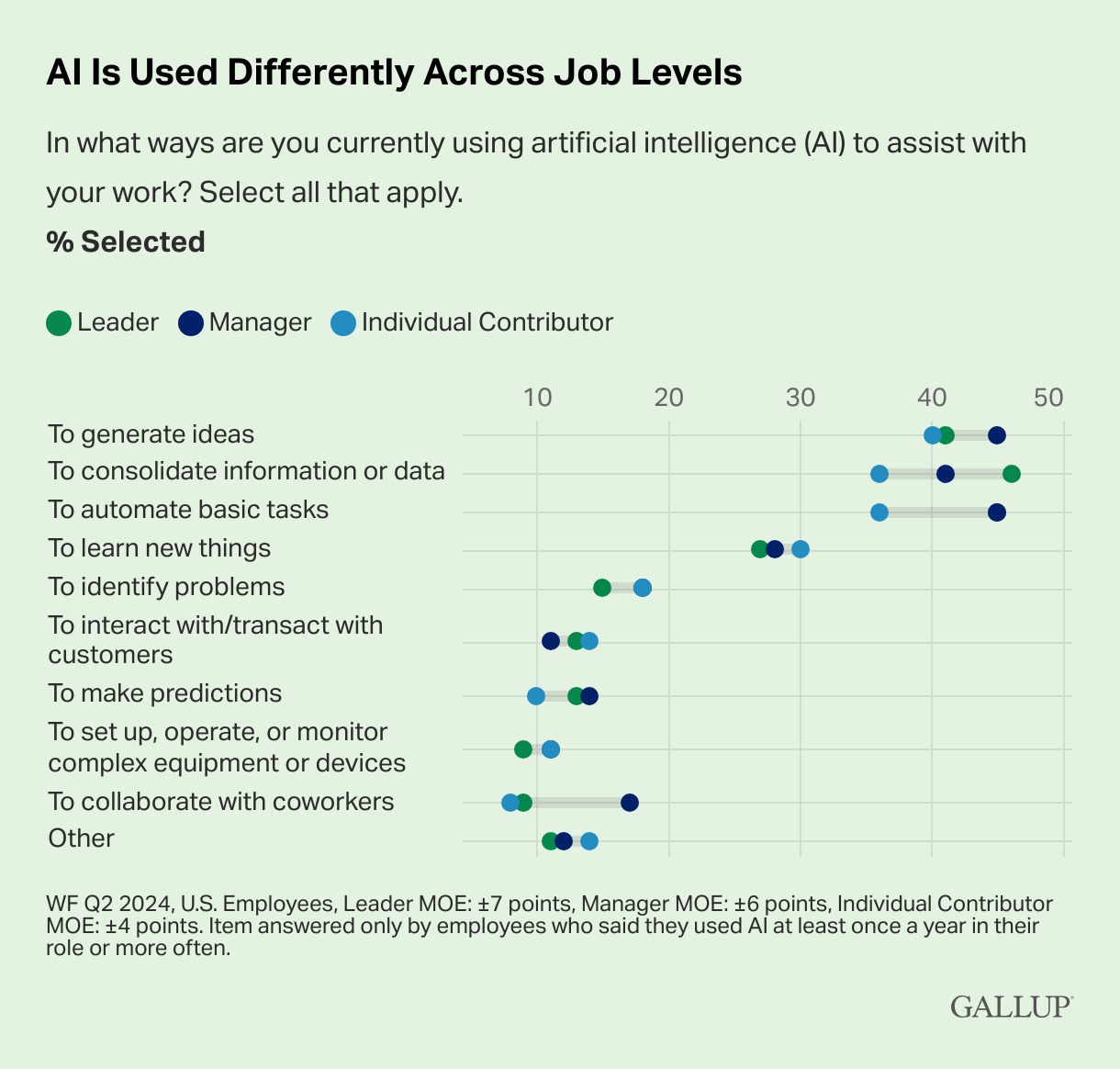
This chart comes from a recent Gallup deep-dive on corporate AI use, and shows what kinds of tasks employees at different levels are using the technology for, revealing that managers are adopting it at a much higher rate than their counterparts.

Moving the needle on corporate justness often requires a patient, deliberate, hands-on approach. This was evident recently, when the JUST team – in conjunction with the Gates Foundation and several partners – brought together 14 executives from big companies for a groundbreaking 4-day summit to advance workforce innovation and well-being.
Occasionally, though, external events compel companies to move swiftly to help their stakeholders, whether that means their employees, their customers, the communities they operate in, or society at large. Hurricane Helene is such an event.
It starts with financial support. Many companies we track – including Bank of America, Lockheed Martin, Wells Fargo, Truist, Target, and others – have made sizable donations to local charities, the American Red Cross, and other organizations to help provide essential needs and resources to those most affected.
Others also deploy their corporate capabilities. AirBnB, for example, is providing free temporary housing to displaced families. Amazon’s Disaster Relief and Response Team is leveraging the firm’s logistics, cloud computing and transportation assets to support organizations on the ground and to ensure critical help and supplies get to those in need. Walmart, Kroger, Home Depot, and Lowes, all of which have employees directly in harm’s way, are using their stores and warehouses as distribution centers for food, water, charging stations, generators, chainsaws, portable AC units, and more.
As the saying goes, crisis doesn’t create character, it reveals it. For many business leaders, Hurricane Helene has given them the chance to show what they’re made of.
Be well,
Martin
“I love trying to add purpose to the things I do because it gives me meaning. But I never advocate for people to insert purpose into their own businesses. It can end up as performative. A business can be a great social good on its own, and I don’t like adding gimmicky, fake missions. If you care about an issue, and you find a way to use market forces to channel that impact, it can do good. But often corporate communications departments are like, how do we add these as a feature? And it can be fake and doesn’t help.”
The Corporate Racial Equity Alliance, comprised of JUST Capital, PolicyLink, and FSG, have developed Business Standards for 21st Century Leadership to define business leadership that values people, planet, and the bottom line. Following our May 2024 release of draft standards 1-8, we have now released standards 9-14 for public feedback. The newly released draft standards focus on corporate impact on communities and society.
To lend your perspective on the topics of corporate impact on communities and society at large, please take our online survey by October 31. Stakeholder engagement in the development of these standards is key to our success. We hope you’ll join us and share your feedback.
It’s official: OpenAI is planning to become a for-profit business, causing several other executives to leave, and putting up more legal and logistical roadblocks. Mashable has the story. Meanwhile, Axios looks at some of the underlying causes of this shift.
Fortune reveals that shareholder proposals on diversity, pay equity, and plastic pollution got less support this season, but anti-ESG proposals also got less support. Learn more.
Board Member Peter Georgescu writes how, with a hollowing middle class, stakeholder capitalism is the best hope for a brighter future in his latest Forbes piece.
The Washington Post looks at the longshoreman strike, and the impact it could have on goods moving into the U.S.
The Wall Street Journal takes a look at the slow migration from salary-based pay to incentivized-bonus pay for many jobs, and how now, a majority of Americans work in positions where a chunk of their pay isn’t guaranteed.
Reuters examines the fallout that occurs when a Dollar Store closes in a low-income community.
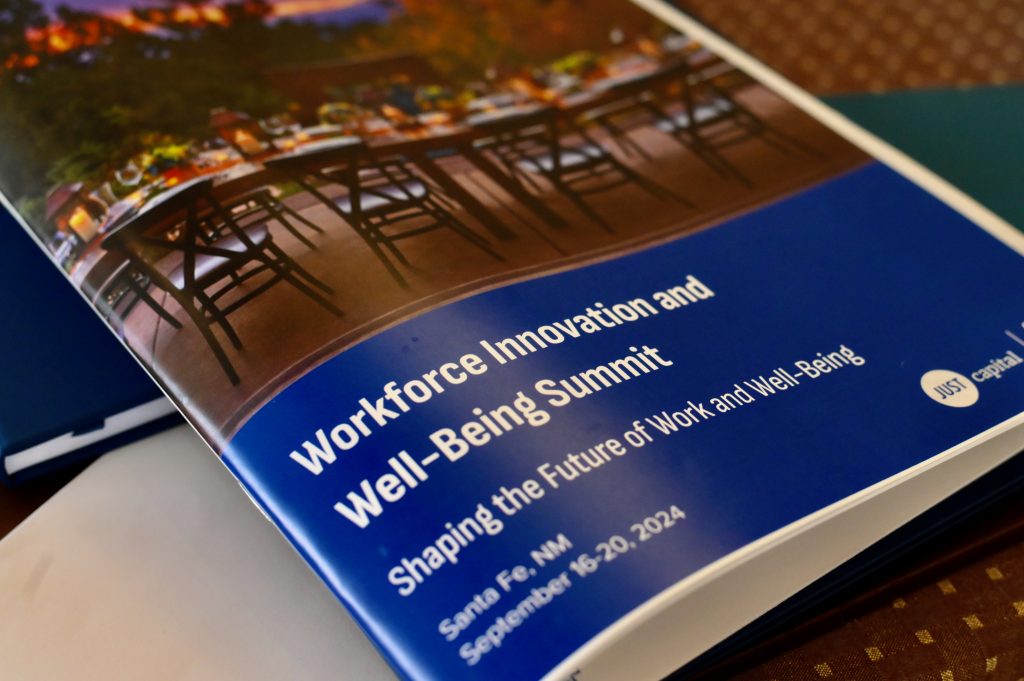
Two weeks ago marked significant milestones for Just Capital: we hosted a week-long Workforce Innovation and Well-being Summit for executives driving vital initiatives at some of America’s largest companies, and we welcomed the trailblazing former PayPal CEO, Dan Schulman, as our new board chair.
With Dan at the helm, Just is proud to continue a close working relationship that began when we partnered with PayPal to launch the Worker Financial Wellness Initiative. This initiative, which aims to make employee financial wellness a C-suite priority, laid the groundwork for our ongoing efforts to advance workforce well-being and innovation.
Building on the foundation of our Worker Financial Wellness Initiative, the Summit brought together committed, visionary corporate leaders from industries that collectively employ almost one million U.S. workers, and represent over $4.2 trillion in market cap. In collaboration with partners like IDEO, Jobs for the Future, Financial Health Network, Good Jobs Institute, Guild, and Syndio, the Summit fostered peer dialogue and leveraged expert insights to develop actionable strategies aligned with each leader’s workforce priorities.
Rooted in a focused, hands-on, interactive approach developed by Just in partnership with IDEO, the goal of this Summit was to help executives bridge the gap between visionary goals and practical, incremental strategies. Rich, provocative discussions, alongside context-specific strategies and tools gave participants the opportunity to strategize, think big, and connect with peers.
Participants found immense, immediately applicable value in their experience. From our attendees:
This was easily the most valuable event I’ve been to in this role and one of the top 3 in my career.
High value for me as timing was right in the midst of strategic planning for my team/company. Felt like I was able to spend some dedicated deep work time on the most important work while being surrounded by credible partners and peers.
I am leading the People and Culture work stream for a massive company transformation and this was helpful to crystallize my approach, KPIs, potential allies, etc.
It was an excellent event from start to finish: Carefully curated attendance list; Everyone was able to build on and add value to each other.

These reflections fuel our commitment to creating spaces and opportunities for impactful collaboration.
Those spaces – and Just’s theory of change – will always recognize the complex landscape corporate leaders must navigate. From addressing Americans’ declining trust in corporations to grappling with economic uncertainty, talent shortages, and regulatory compliance, the challenges are multifaceted. And we know that solutions with staying power must meet workforce priorities and enable the advancement of related business imperatives. That’s precisely why JUST Capital is focused on supporting leaders in pursuit of operational excellence, healthy workplace culture, and workforce sustainability – bridging the gap between data and reality, while enhancing our ability to measure just business practices.
That approach is anchored in the strong, compelling financial performance of companies prioritizing stakeholder value. As of September 30, 2024, Just Capital’s flagship indexes, the Just 100 Index (JUONETR) and Just U.S. Large Cap Diversified Index (JULCD), have outperformed their benchmarks by 51.1% and 11.96%, respectively, since inception. These figures underscore the growing evidence that just business practices are not only ethically sound, but financially prudent.
As we reflect on the success of the Summit and look to the future, I’m confident in the power of bringing together diverse perspectives to tackle shared challenges. One of our participants echoed these sentiments:
We’ve never shied away from challenges. We’ve been built by them.
As the leaders left Santa Fe, they did so with a newfound sense of confidence, urgency, and direction: the roughly half of attendees who entered the Summit likely to implement workforce well-being initiatives in the near-term jumped to 80% by the Summit’s end.
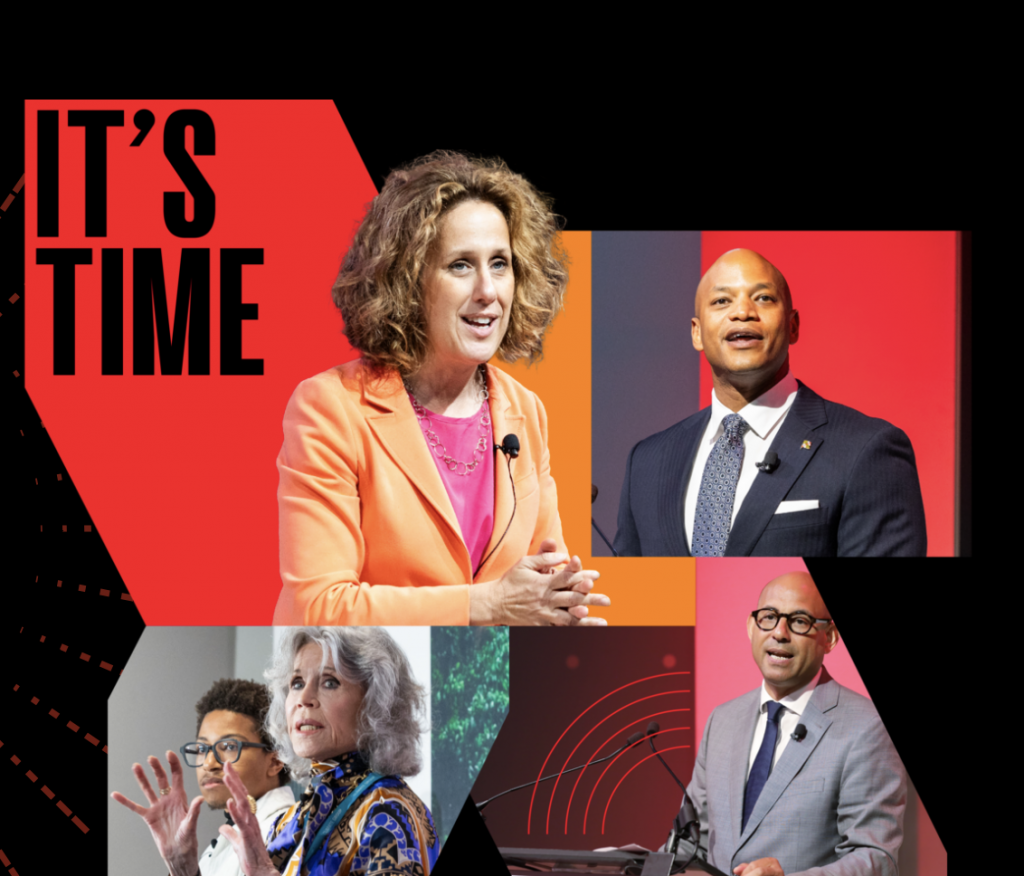
If you can make it around the barricades, past the acronyms, and beyond the countless cocktails and canapes, you realize Climate Week in New York City provides an opportunity to address some serious questions.
Are we actually on track to combat climate change? Who’s moving the needle? Who is holding everyone to account? And who, ultimately, will foot the bill for whatever future we have in store?
There’s certainly a lot of capital flowing into the climate space. According to CREO Syndicate, a nonprofit organization on whose board I serve, “Annual global climate finance flows doubled from 2020 to 2022, reaching $1.4 trillion or 1% of global GDP, but will need to increase sixfold to average $8.6 trillion through 2030, and $10.7 trillion through 2050, to reach net zero.” Whether all of this investment will generate a market rate of return (or mitigate greenhouse gas emissions for that matter) remains to be seen, but compared to, say, a decade ago, these numbers are impressive.
There’s also a lot of business action on the issue. As our list of Top 10 Companies for the Environment shows, companies like Hewlett Packard Enterprise, McCormick and Co, Accenture, and Trane are supplying the world with advanced climate solutions that tie directly back to market performance and profitability. This week’s announcement by Microsoft (another JUST 100 leader) that it will use the Three Mile Island nuclear facility to supply the emissions-free power it needs to grow brings home how seriously companies are taking their climate commitments and how complex the path forward really is.
Where is the public – as consumers, as taxpayers, as voters – on all this? I’d say it’s a mixed bag. Despite what many of the international visitors I talked to this week think, Americans do care about the climate. But as our polling shows, it’s hard to prioritize it when you’re struggling to make ends meet. For millions around the world, a changing climate threatens their livelihoods, their communities, their futures. Yet many feel similarly threatened by some of the policies proposed to address the issue. Getting to grips with these realities is essential. In the meantime, it’s the private sector that will continue to lead.
Be well,
Martin
“We only have one environment and we must protect it. The planet will adapt without us – we are not as important as we think we are.”
California kicked-off climate week by launching the first-of-its-kind lawsuit against ExxonMobil for its alleged role in the plastic pollution crisis. The Guardian has the story.
Bloomberg takes a deep-dive into how corporations have lost or regained Americans’ trust, as part of an ongoing series on lack of faith in institutions.
Forbes predicts that average salary increases are going to decline next year. Explore why.
Fast Company explains why corporate America’s retreat from DEI is shortsighted, and Retail Dive highlights the leading DEI programs that serve business goals.
Bloomberg looks at the immense pay package garnered by ousted Nike CEO John Danahoe, and whether it was a just amount for a man who presided over the company losing over $40 billion in market value.
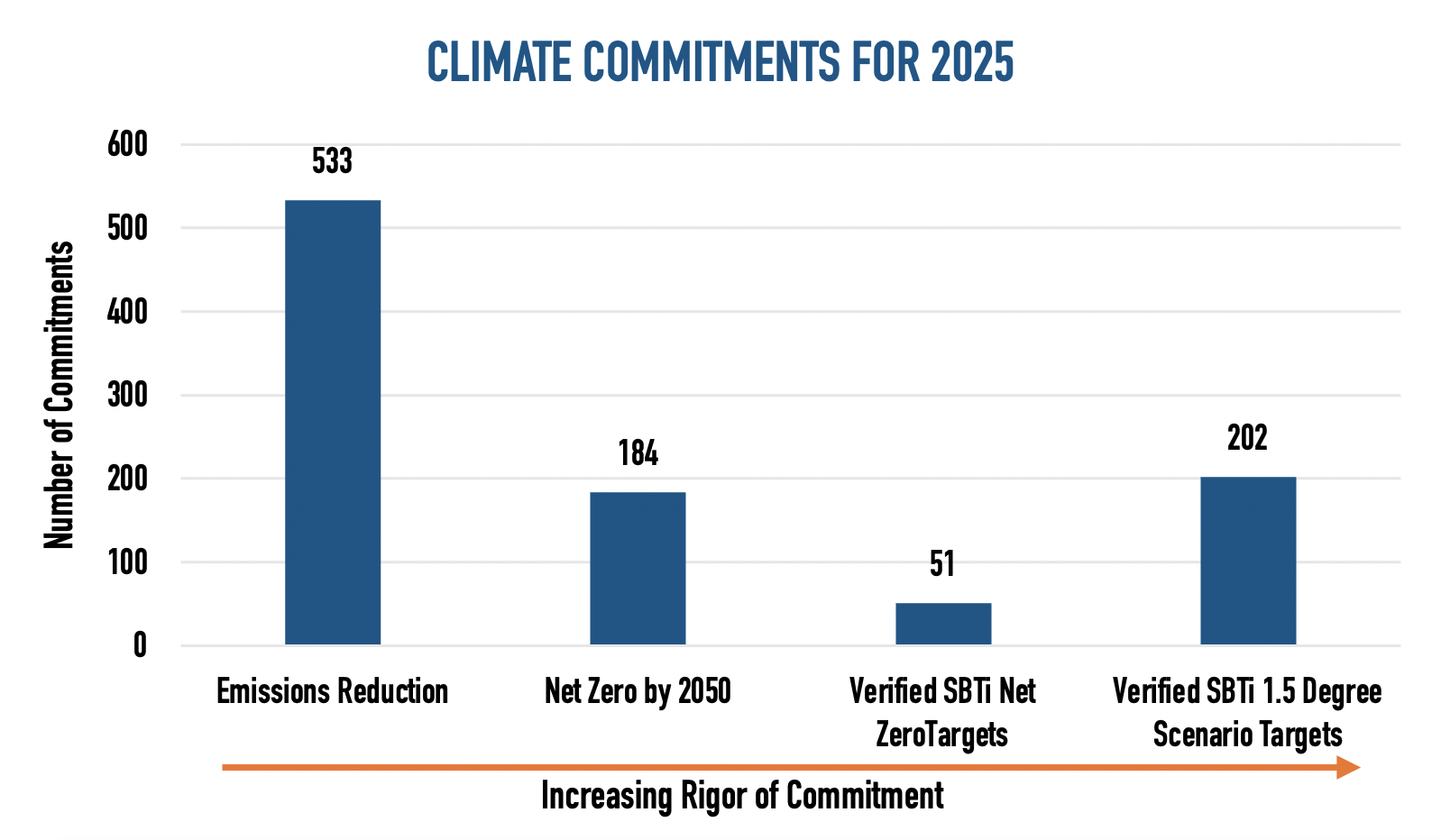
For climate week, we analyzed preliminary 2025 data on climate commitments, showing what level of disclosure and commitment Russell 1000 companies are providing, which will factor into our 2025 Rankings. So far, we are seeing a remarkable increase on SBTi scenario commitments compared to last year’s data.
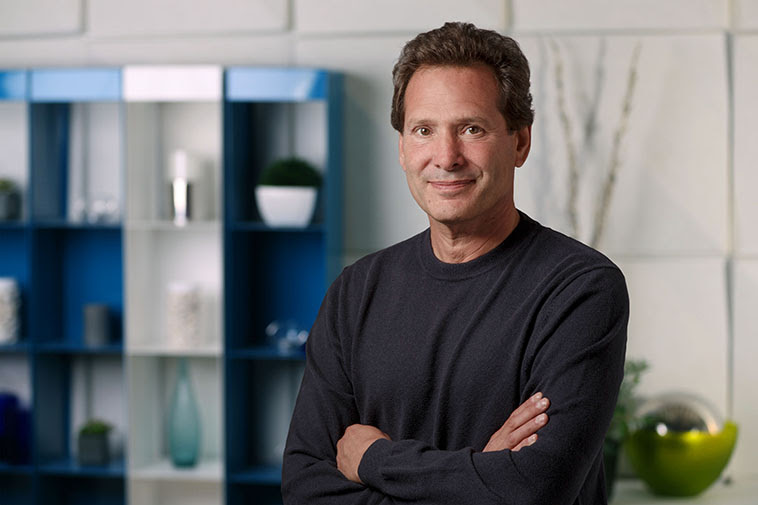
Big news in the JUST world. After a decade in the seat, our Co-Founder and inspiration Paul Tudor Jones II is stepping down as board chair and handing the baton to one of corporate America’s most respected business leaders, former PayPal CEO Dan Schulman.
Paul, who will remain an active board member, puts it perfectly: “Dan’s track record of leadership at some of the largest U.S. companies makes him the perfect person to carry JUST Capital forward as chair.” Having worked with JUST during his 10-year tenure at PayPal (on our Worker Financial Wellness Initiative), Dan is no stranger to the organization. Indeed, his interview on CNBC’s Squawkbox with Paul in the fall of 2019 stands out to me as one of the most important moments in the organization’s history.
The move comes at an important moment for America and the world. In a period of deep and seemingly endless political division, business has a unique opportunity to lead, to bring people and ideas together, and to champion the things Americans really care about: their hopes, their dreams, their futures. Companies that do this well, as our data shows, will achieve success in many ways, financial and otherwise. CEOs that do this well – as Dan has demonstrated – will cement their legacy for years to come.
I hope the prospect of Dan, Paul, and the rest of our board working together in service of this ideal fills you with as much excitement as it does me.
Read the full announcement of Dan’s appointment.
Be well,
Martin
“Paul Tudor Jones II’s vision when he co-founded JUST Capital ten years ago is an inspiration to us all. Under his leadership, JUST Capital has changed the conversation about how business in America is done. The role of JUST Capital is becoming ever more important in today’s world. I look forward to partnering with Paul and the rest of the board to help guide the kind of corporate leadership that the world so urgently needs.”
The Atlantic expresses skepticism over Microsoft’s claims that AI can enrich fossil fuel companies AND help fight climate changes, in addition to other paradoxes.
ESGDive reveals that the SEC has sunset its climate and ESG enforcement task force. More info on the implications here.
A Forbes piece looks at the problems with “no taxes on tips” and “no taxes on overtime hours” policies put forth by this year’s Presidential campaigns.
USA Today reports that grocery chain Aldi is increasing its minimum wage to $18 and $23 an hour for in-store workers and warehouse workers, respectively, in anticipation of hiring 13,000 additional workers this holiday season. Meanwhile, Amazon is increasing pay for hourly workers to $22 an hour.
Reuters reports on the ongoing Boeing strike – where 30,000 workers voted down their latest contract – and how long the strike could last given existing instability at the company.
Instagram announced changes to help curb inappropriate contact and content to users under 18, as well as features to make the app less addictive to teens. The New York Times has the story.

This chart comes from a piece of analysis from Axios that shows the gender wage gap increased for the first time in 20 years. Explore why.

A major survey on Global CEO Confidence released by EY last week provides some fascinating insights into the way corporate leaders around the world view the competitive and economic landscape right now.
Cautious optimism is one way to summarize it. CEOs are “rethinking, reimagining and reshaping their companies” to be fit for a highly unpredictable future. They place great importance on being data-driven, on resilience, on understanding how the drivers of total shareholder return are shifting. They know that “capitalizing on disruption” – whether by AI, other emerging technologies, shifting societal values, geopolitical risk or otherwise – will be crucial to long- and short-term value creation.
Such confidence is critical for a stakeholder mentality to take root. And as the FT’s Gillian Tett noted in her opinion piece last week, “[Milton] Friedman’s shareholder-first mantra went hand in hand with an assumption that the issues that really mattered for companies were those recorded on their balance sheets.” Clearly, this is no longer the case. The biggest risks to shareholder value today often arise from social, environmental, governance, and political sources.
I like to think that through JUST’s polling, data, insights and rankings we can help companies understand and navigate this increasingly complex landscape of stakeholder expectations. A critical phase of this – ensuring we’ve captured the latest policies and practices from the companies we rank – kicks off September 17th with the opening of our annual Data Review Period. Companies can register to participate here. By building CEO confidence in planning, strategy and decision making on stakeholder performance, we can help equip them to deal with whatever lies ahead.
Be well,
Martin
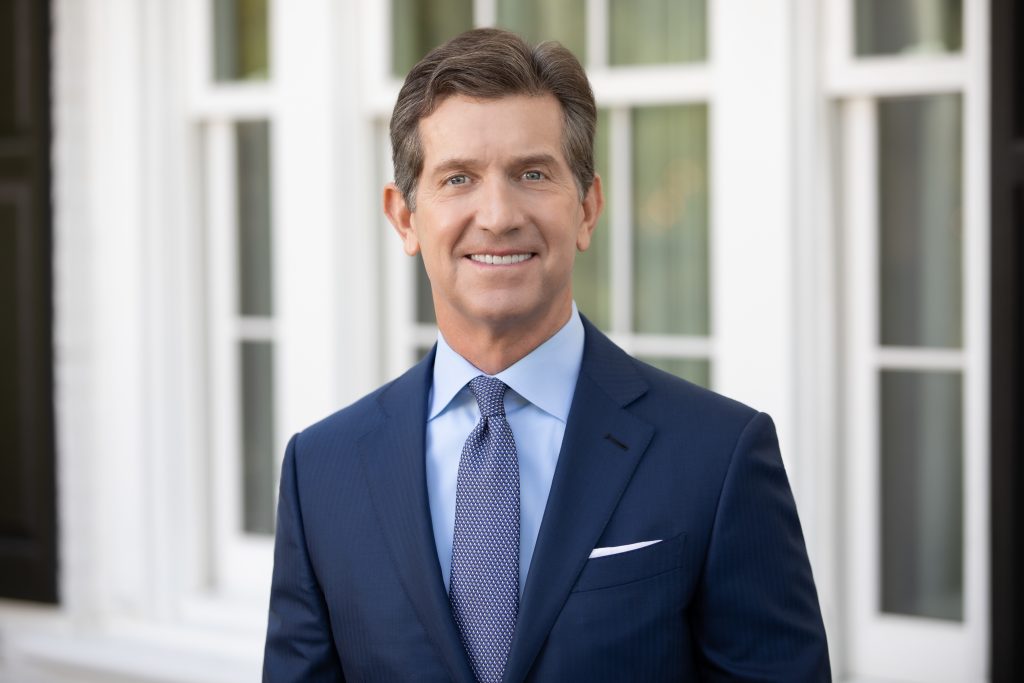
“In addition to thinking about the return we need to have for our shareholders and the sustainability that this provides to the business, that can also be really complemented by taking care of our employees who make those products possible and the communities where we work and live. How can we make sure that like they’ve helped us along the way, we’re giving back to them.”
JPMorgan Chase
JPMorgan Chase offers a minimum hourly wage of $20, which exceeds the Russell 1000 average and represents the third highest minimum wage among banks. The company also supports new parents with 16 weeks of paid parental leave for both primary and secondary caregivers and families with various caregiving services.
Cigna
Cigna prioritizes transparency by sharing highly detailed workforce demographic data by gender, race/ethnicity, and job category, reinforcing its focus on fostering an inclusive environment. Additionally, Cigna supports its employees’ work-life balance with key benefits including 18 days of paid time off and seven days of paid sick leave annually, paid parental leave, flexible scheduling opportunities, and emergency backup dependent care support.
Dayforce
Dayforce sets a high standard in the Software industry with its generous and inclusive parental leave policy, offering 17 weeks of paid leave to all caregivers. This is the highest offering at parity among the Top 10 companies and far surpasses the Russell 1000 average of 11 and 8 weeks of paid parental leave for primary and secondary caregivers, respectively.
Read about more leading policies here.
Bank of America, 2023’s Most JUST Company (and #1 for Workers in 2024) is once again raising wages – bringing its minimum wage to $24 an hour, with a plan to hit $25 in 2025. Axios dives into the details.
In other news on wages, the U.S Construction industry dropped to its lowest level of unemployment ever recorded, with wages up across the board. CB has the full story.
However, MSN counters this news by reporting on the 15 cities that are no longer viable for minimum wage workers due to rising cost of living.
NPR chronicles one Wisconsin CEO’s journey to create viable child care options for his 900 employees, and the hurdles the company faced.
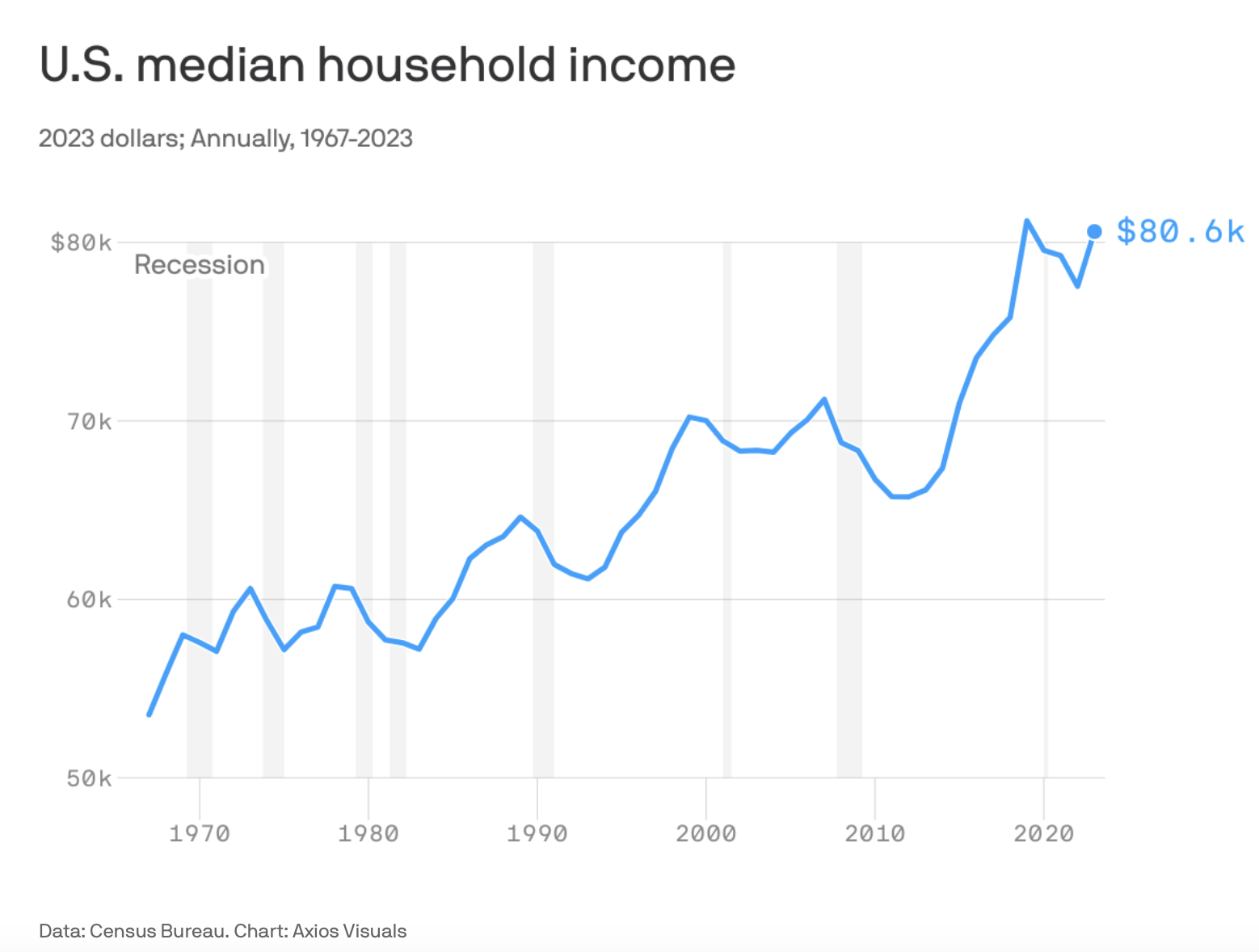
This chart comes from Axios’ latest newsletter, and shows that for the first time in 4 years, the median U.S. income has actually gone up. Learn more inside.
