
While this year’s proxy season may be over, Engine No. 1’s work to transform shareholder activism is just getting started. A little over a month ago, the hedge fund declared victory in a proxy battle with ExxonMobil aimed at changing the company’s approach to the clean energy transition through its board leadership. With just a 0.02% stake in the company, Engine No. 1 won the support of institutional investors including BlackRock, CalSTRS, State Street, and Vanguard to elect three of its four new proposed directors to the board.
Now, the firm is now bringing this activist engagement strategy to the public. Engine No. 1 recently launched its first exchange-traded fund: the Transform 500 ETF. The ETF is a market cap-weighted fund of the 500 largest companies in the United States. The Transform 500 ETF doesn’t exclude or re-weight companies by performance against certain environmental, social, or governance (ESG) metrics. Rather, it delivers impact through how it engages with the companies it’s invested in and votes its shares.
And while Engine No. 1 may have introduced the ETF on the back of its win over Exxon, for founder Chris James, this was the plan from the outset. When first leaving his job in 2019 to start Engine No. 1, James intended to launch it with an ETF. Two years and one significant success in shareholder activism later, Engine No. 1’s brought James’ vision to the market under the ticker, VOTE. The firm’s also making the ETF easily accessible to a large chunk of retail investors in partnership with Betterment.
Betterment launched in 2010 as the first automated, online investment platform – and now manages $30 billion on behalf of 650,000 clients. The company offers three ESG portfolios, all of which will include the Transform 500 ETF. Betterment developed its first ESG portfolio in 2017 and, in the years since, interest has soared. Morningstar data shows asset flows into U.S. sustainable open-end and exchange traded funds reached a record $51.1 billion in 2020, up by more than double 2019’s total and nearly 10 times higher than 2018 flows. ESG asset flows are booming, but the wider corporate and economic change they target hasn’t kept up.
With the Transform 500 ETF, Engine No. 1 is looking to change that. “What’s really happening or different by shifting exposures as opposed to really changing companies?,” Yasmin Dahya Bilger, Engine No. 1 Managing Director and Head of ETFs said on the pitfalls of traditional ESG investing in a recent LinkedIn Live conversation with JUST CEO Martin Whittaker. Engine No. 1 Managing Director, Michael O’Leary, and Betterment SVP of Operations, Boris Khentov, joined Dahya Bilger to discuss how the new ETF’s approach could transform retail ESG investing and make shareholder activism a mainstream mechanism for change.
You can watch the full conversation here and read on for our key takeaways.
Engine No. 1 sees the Transform 500 ETF as a way to invite the everyday investor to “take your seat at the table.” The ETF is not only leading with a different strategy, it’s making a complex process only major shareholders tend to be well-versed in, proxy voting, the business of retail investors. That decision, Dahya Bilger and O’Leary noted, was one the firm made to address the need for a more tangible way for individual investors to see impact with their dollars.
“I think people don’t even know that their money has a voice,” Dahya Bilger said. “They don’t even realize that they are in charge, they are the shareholder, they have decision-making capacity that hasn’t been harnessed.” The Transform 500 ETF, as its VOTE ticker makes clear, is designed to democratize shareholder engagement. And that’s part of what made a partnership with Engine No. 1 an appealing decision for Betterment.
Khentov brought up the fact that for an individual investor, this is an opportunity to be part of a broader movement. “We all just want to be part of something that’s bigger than ourselves, ultimately. With our money, it’s no exception,” he said. He raised the recent “meme stock” trend among retail investors as an example of the power of collective action. It’s not just data, he thinks, that will get retail investors on board with an ESG approach. It’s narrative.
“There’s a way for us to pool our dollars and be heard, and have an impact,” Khentov said. “And who doesn’t want to be a part of something like that? When we saw this Exxon proxy battle…we knew that our customers and investors generally would want to be part of that. It’s such a transformational thing to be able to say, ‘My portfolio in my 401k was part of that.’”
He also sees the product potential in an ETF like the Transform 500. Values-driven investing, he said, is just the latest mandate from Betterment clients. He sees Engine No. 1’s ETF strategy as the drive behind a new category of product. In the same way Betterment helped make retail investing more accessible and approachable ten years ago, the Transform 500 ETF could have a similar effect on proxy voting and shareholder activism.
Right now, O’Leary said, it can be hard for individuals to know how the shares that make up their retirement plans, or other accounts are being voted in these proxy battles. And, more often than not, mandated reporting shows that they’re not voting in favor of ESG proposals. With the Transform 500 ETF, Engine No. 1 is aiming to set a new standard for transparency and accountability among investors on proxy voting, O’Leary said.
It’s why the firm’s pushing forward campaigns like Reenergize Exxon and exploring others on issues like fair wages and racial equity that JUST polling shows are top of mind for Americans. It’s also why the ETF’s campaigns will focus not on engaging all 500 companies it’s invested in, O’Leary noted, but the ones where it sees the most potential for impact with these campaigns.
Both Dahya Bilger and O’Leary made the point that this is just the start for Engine No. 1’s ETF strategy. Dahya Bilger emphasized that the firm built its ETF business for the long term and for scale. “We’re not playing for a niche part of the market. We’re actually going for what is effectively in most portfolios, people’s core,” she said. What will be key to its success, however, is building broad support among other investors.
“When you are an investor in a public company, you are only ever as strong as your coalition,” O’Leary said. If support for Engine No. 1 in the battle against Exxon is any indication, corporate America should prepare to face a new fuel to the proxy fight: retail investors.
If you want to stay in the loop for more discussions with foremost experts in the ESG investing space as soon as they go live, be sure to follow Martin Whittaker on LinkedIn.
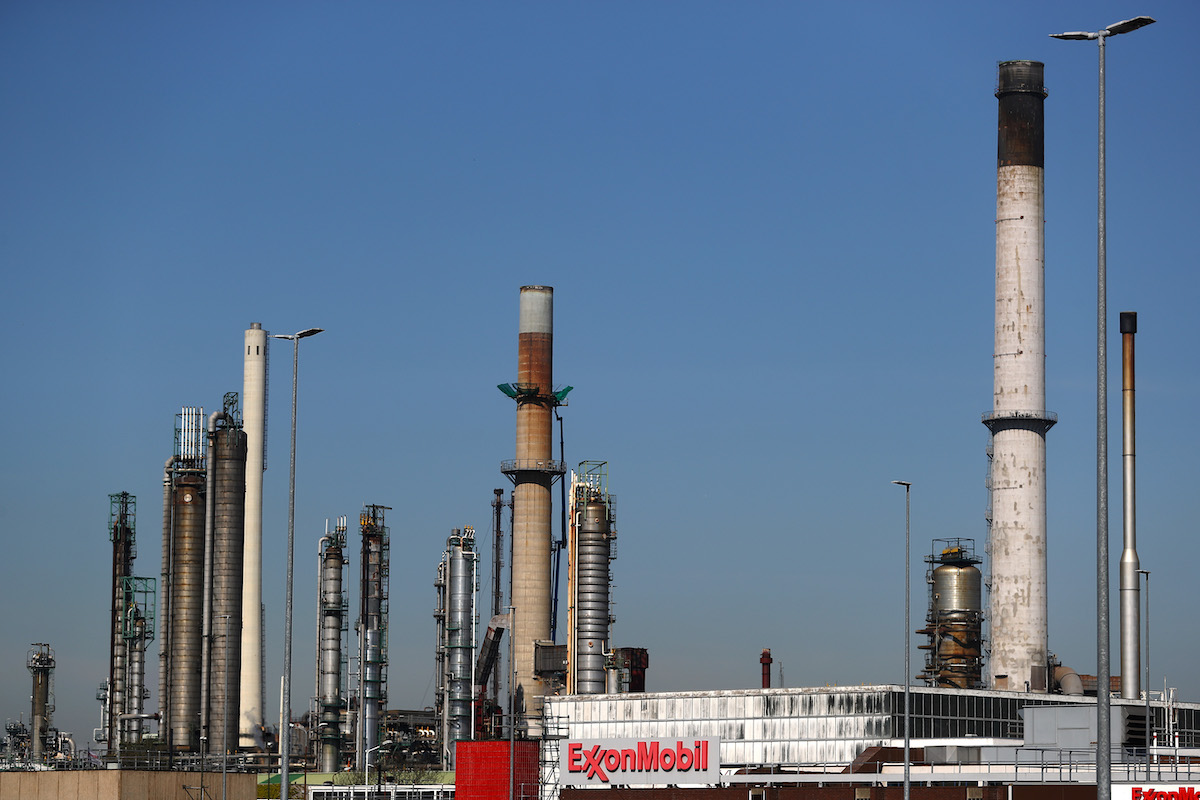
(Dean Mouhtaropoulos/Getty Images)
Last week, a six-month-old hedge fund with a 0.02% stake in ExxonMobil – Engine No. 1 – changed the face of shareholder activism forever. At Exxon’s annual meeting, the activist investor won two of four contested board seats as part of its $30 million Reenergize Exxon campaign.
At the time of writing, former Andeavor CEO Gregory Goff and former Neste executive vice president Kaisa Hietala have been confirmed, with X (formerly Google X) senior strategist Alexander Karsner’s fate still to be determined. Some investors told reporters that Exxon had tried to sway their vote during an unscheduled hour-long break during the meeting, but ultimately the support of major shareholders BlackRock, Vanguard, and State Street was critical for the victory.
We connected with Engine No. 1’s principals about why they pursued moving Exxon toward more alternative energy, how the vote went down, and what they learned along the way. Here’s the full unedited exchange.
JUST Capital: When did you decide that this would be Engine No. 1’s first campaign, and what gave you the indication that you could win even a partial victory? Did you even think you’d be successful when you started out?
Engine No. 1: ExxonMobil was an obvious target in some ways. Even amongst the Oil Majors it is an outlier with respect to how little it has done to evolve its business in a changing industry and world.
Ten years ago, ExxonMobil was the largest company in the world by market capitalization and the #1 company in the Dow Jones Industrial Average (DJIA). Today, its market capitalization has been cut in half and it has been kicked out of the DJIA; neither is true of its closest competitor, Chevron.
We always believed we had a compelling case for change and we were fortunate to find nominees with the transformative energy experience that ExxonMobil’s Board needs to help set a path to greater long-term value creation, so we knew if we executed we would have a good chance to be successful.
We have multiple strategies within Engine No. 1 that we will offer, but the urgency of the ExxonMobil situation led us to introduce the firm through our active engagement strategy.
What was your pitch to institutional investors? What did you learn from these discussions about what worked and what didn’t?
We were aware that there was investor dissatisfaction with the company, and that came through in our discussions with institutions. For years investors have been pushing for companies to begin addressing the long-term business risks of climate change, and gradually but purposefully repositioning their businesses for the energy transition.
We made the case that the Board needed individuals with successful and transformative energy experience as it seeks to navigate through the transition to a cleaner economy. We were grateful that every independent proxy advisory firm that opined on the campaign, including ISS, Glass Lewis, Egan-Jones, and PIRC, recommended that shareholders vote on our proxy card.
We were also very fortunate to have overwhelming support from institutional investors, particularly from the California State Teachers’ Employees Retirement System.
Why did you choose to focus the vote on changing the board, versus another approach, like a commitment to reducing emissions, as Chevron shareholders did?
We think you need not only a mandate for change but also the ability to successfully execute on that mandate, which we believe requires a Board with relevant industry experience. ExxonMobil did not have a single independent board member with energy experience when we began our campaign. We believe change begins at the top and that ExxonMobil required individuals who knew its industry inside and out to help it evolve.
There is certainly value to asking companies to commit to reducing emissions, but almost all of those resolutions are voluntary and non-binding. We believe individuals with energy experience need to get into the boardroom and take a good look under the hood before effectively helping to implement a plan that best positions ExxonMobil for success for decades to come.
Having gone through it, what do you think of the annual general meeting proxy voting process overall?
ExxonMobil’s actions around and at the annual meeting were beneath such an iconic company. We will have more to say about this at a later date.
What are some of the key things you didn’t know at the start about the journey that you learned along the way? What do you now consider to be some keys to mounting a successful proxy battle?
We didn’t know how far ExxonMobil would go to avoid simply having new board members with relevant industry experience. That was a real red flag for us, and we believe was also helpful in making our case to shareholders.
How do you respond to critics of anything that could be considered ESG, including aggressive pushes for clean energy, as getting too political for business?
Climate change is not political, it’s a scientific fact. And it’s having real economic impacts and will continue to do so. The same is true of the technologies that are changing the energy industry. Businesses need to change, to adapt with the times and technology. There’s nothing ideological about that.
How do you see this result in the context of the wider push for more corporate accountability, shareholder democracy, and stakeholder value creation?
Ideally it adds to the growing list of reasons why companies need to be focused on creating investor value over the long term, which we believe includes thinking about their long-term relationship with their customers, their employees, society, and in this case, the planet.
What’s next for Engine No. 1?
You will see more of the entirety of the firm as time goes on, including our other strategies.
You can learn more about the campaign and Engine No.1’s strategy in this interview JUST did with the campaign’s head Charlie Penner and CalSTR’s Aeisha Mastagni in April. CalSTRS is one of the country’s largest pension funds, and was an early backer of Engine No.1’s full board slate.
Finally, we note it’s been reported Engine No. 1 has filed for an ETF that focuses on, among other things, how companies treat their employees and the environment, as a means of more active engagement. It is a topic close to our hearts and a development we will be following closely.
(Disclosure: Exxon board member Ursula Burns and Engine No. 1’s Jennifer Grancio are JUST Capital advisors.)
With proxy season underway, ExxonMobil is preparing for battle. The oil and gas giant, with a roughly $233 billion market cap, is facing a challenge from activist investment firm, Engine No. 1. The firm’s mission centers on the idea that “companies that think long-term will perform better over the long term.” And, to Engine No. 1’s Charlie Penner, Exxon is not seizing that opportunity.
“Going into 2020 with a breakeven price of $90 per barrel on your projects compared to the rest of your peers who are at $60 per barrel, that’s bad strategy,” he told JUST Capital CEO Martin Whittaker in a recent LinkedIn Live interview. “Spending tens of billions of dollars on most recently, debt finance, on projects that are returning, on average, 6% of capital employed, that’s bad strategy.”
Engine No. 1 launched its “Reenergize Exxon” campaign in December 2020 after Exxon was removed from the Dow after a 92-year tenure. Earlier this year, the company reported a loss of $22.4 billion over 2020 – its worst performance in 40 years. That said, Exxon is quick to point out the way its stock has recovered from the worst of last year, and how it has continued to grow its dividend for more than 70 years. While the two sides disagree strongly over strategy and capital management, the crux of Engine No. 1’s campaign centers around a slate of four new board candidates, up for vote at the Irving, Texas-based company’s annual shareholders meeting on May 26.
Ahead of that vote, Engine No. 1 has an important ally in its corner: the California state teachers’ pension fund, CalSTRS. CalSTRS, the second largest U.S. pension fund with $291.7 billion under management, plans to vote for Engine No. 1’s slate. For the fund’s Aeisha Mastagni, who was also in the interview, its support comes down to “our responsibility to mitigate risk inside our portfolio and promote investor confidence” for its 975,000 members and beneficiaries.
Since its launch, Engine No. 1 has spent $30 million on the campaign. And Exxon is projecting to spend at least $35 million more than its typical proxy season spending to fight this push. This week, the company also proposed a plan to capture and store carbon emissions from its Houston facilities, which it says could attract $100 billion to the region. This proposal hinges on government support for a carbon price or tax – initiatives that have struggled to gain traction at both federal and state levels.
These reports come as world leaders meet for a two-day summit on global climate action where President Biden announced a new emissions reduction target for the country. The new goal – aiming to curb emissions by 50-52% below 2005 levels by 2030 – only adds to the urgency of Exxon’s need to adapt to a low-carbon future.
You can watch our full interview and read our key takeaways below, to see why Engine No. 1 chose to take on ExxonMobil for its first campaign, and why CalSTRS decided it wanted to support its selection of board members.
Engine No. 1 and ExxonMobil have been fiercely debating the present and long-term future of the company, but the actual campaign comes down to who will be in the boardroom.
For Penner, taking that route came down to tracing a “lack of evolution and responsiveness to changing industry dynamics to a lack of energy industry expertise on the board.” Since Engine No. 1 launched its campaign, Exxon has added three board members: Michael Angelakis, the CEO of the fund Atairos; Jeff Ubben, veteran activist investor turned founder of the ESG-focused Inclusive Capital; and Wan Zulkiflee, the former CEO of Petronas, the Malaysian state-owned oil and gas company.
In a letter to shareholders last month, ExxonMobil CEO Darren Woods and board member Ken Chenault wrote that Engine No. 1’s “candidates for the Board do not have the experience or knowledge to help lead your company through one of the most complex and challenging transitions the world has ever faced.”
Penner and Mastagni’s rebuttal focuses on Engine No. 1’s slate’s proven experience in leading companies through energy transitions. Prior to Zulkiflee’s appointment, Mastagni said ExxonMobil’s lack of board members with oil and gas or energy expertise, left “a gaping hole and a skillset we thought was clearly missing from this board.” She added that she believed Petronas’ ties were too close to Exxon to consider the addition to represent a new direction.
The four proposed directors Engine No. 1’s putting forward would bring that expertise from 17% to 42%, Penner said. He also stressed that there’s “not really a turnkey solution here” for Exxon, given the risk climate change poses to the energy industry specifically, which is why Engine No. 1’s nominated candidates have experience in “transformative industries.”
Mastagni added that targeting the boardroom is the best option investors have with Exxon at this point. Other tools they might have used, like proxy votes, proposals, and public letters, just haven’t worked, she said. And she made the point that for investors, a seat in the boardroom is the closest they can get to ensuring a company is generating long-term value for its shareholders.
“We as investors, we don’t sit in the boardroom, but we do rely on those individuals that are inside the boardroom to help oversee the strategy and oversee management,” she said. “What we’re trying to do is populate that boardroom with the best collective skillsets that we think can mitigate risk and drive long-term shareholder value.”
Pushing Exxon to address the risk climate change poses to its core business isn’t something Penner wants the company to see as an ask “out of the goodness of people’s hearts.” He raised findings from a CalSTRS study showing that climate change could cause an $83 billion loss to their portfolio. “If the world seriously addresses that, their business model doesn’t make a whole lot of sense,” he said.
He pointed out that Exxon is the world’s fifth largest independent source of greenhouse gas emissions. And as more major global economies commit to net zero emissions by 2050, the fact that Exxon has “no real plan to address the energy transition” is a serious threat to its business, he said.
While U.S. climate policy has shifted under the Biden administration, Penner doesn’t look at Engine No. 1’s push as political. The presidential election outcome didn’t change the long-term trends when it comes to avoiding the worst financial impacts of climate change, he said. Mastagni also made the point that Engine No. 1’s campaign is targeting a long-term time horizon. “An administration is four years. What we’re looking at is much longer than that,” she said.
In that recent letter to shareholders, ExxonMobil strongly pushed against the Reenergize Exxon campaign: “Engine No. 1 has not said where cash flows needed to pay the dividend will come from if we elect their directors and adopt their ill-conceived proposals. To put it bluntly, we have a plan that will grow earnings and cash flow, pay and grow the dividend, fund future growth and position the company to have a meaningful role in the energy transition. Engine No. 1 does not.”
Penner said the framing is alarmist, and said Engine No. 1’s goal is not about completely overhauling Exxon, but positioning it for long-term success. “We’re not trying to say it’s time to shut off the pipes and start putting solar panels up on the roof,” he said. “We understand Exxon is an oil and gas company and will be for quite some time. This is about where their long-term trajectory is headed.”
For CalSTRS, this focus on company longevity is also what’s allowed them to support Engine No. 1’s campaign. “We’re the ultimate long-term shareholder. We’ve been around 100 years and we want to be around another 100 years,” Mastagni said. “And we want the companies in our portfolio to be here 20, 30, 50 years from now.”
Penner also made the point that if Engine No. 1’s candidates are elected to the board, they would represent a third of directors – not the majority. “They’ll have to work collaboratively and constructively with everyone else on the board to affect any level of change,” he said.
Between now and May 26, Engine No. 1 will be in “campaign mode,” Penner said. And if they succeed? “For Exxon, it’s in our minds, it’s the beginning,” he said. “That’s when they start the hard work of repositioning this company for success. For Exxon, we view it as being day one.”
If you want to stay in the loop for more discussions with foremost experts in the ESG investing space as soon as they go live, be sure to follow Martin Whittaker on LinkedIn.
