In a slowing job market and signs of rising unemployment, understanding how companies invest in their workforce has never been more critical. Workers are increasingly asking for meaningful employee benefits and are vocal about their needs for better support, whether it’s for financial wellbeing and the ability to cover their living costs, assistance with caregiving responsibilities, or clear paths for career progression.
JUST Capital’s polling continuously shows how consistent Americans are when it comes to what they want the nation’s largest public companies to prioritize – their workers. Year over year, worker issues including living wage, benefits, career development, worker health and safety, and diversity and inclusion get the highest prioritization and in 2024 comprise 42% of a company’s score in our Rankings of America’s Most JUST Companies.
Investing in workers was a recurring theme in JUST Capital focus groups that will inform the 2025 Rankings. Full findings will be published later this year. Related to how companies can create value for all their stakeholders, one participant shared:
“I feel like a happy employee makes a happy company.” – Male, 40-44, Moderate
And in fact, JUST Capital’s research shows exactly that: investing in workers pays off. Our Workers Leaders Index Concept – which tracks the top 20% of companies in our Rankings that perform best across all five worker-related issues – has outperformed the Russell 1000 Equal Weighted index by 16.46% from December 31, 2021 to July 31, 2024.
As we approach Labor Day, JUST Capital is highlighting the companies leading the way in fostering environments where workers feel valued, supported, and empowered to thrive by actively implementing comprehensive workplace policies that address their workers’ needs head-on. Our analysis found that the top 10 companies for worker issues are outpacing the rest of the Russell 1000 in a number of ways:
JUST Capital is proud to present the list below of Top 10 Companies for Workers with details on how they are leading on the issues that matter most to the American public. The following list is based on performance on Worker Issues from JUST Capital’s 2024 Rankings of America’s Most JUST Companies.
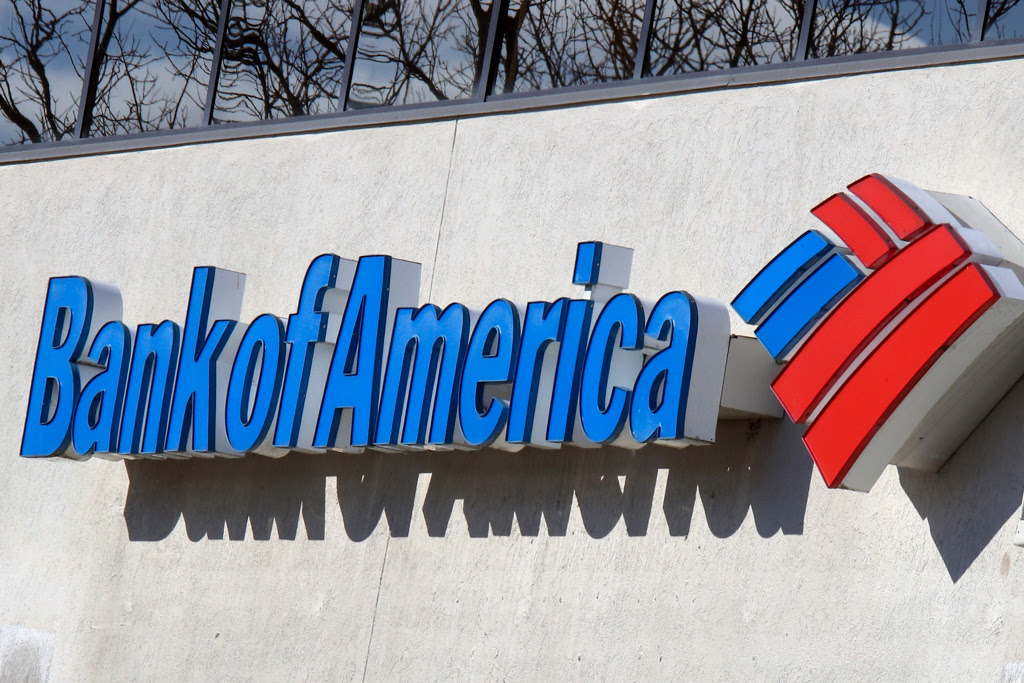
Ranked 2nd in Overall Rankings and 1st for Banks
Bank based in Charlotte, North Carolina
Bank of America invests in its employees’ financial and physical well-being by focusing on competitive wages and comprehensive benefits. The company demonstrates a commitment to paying living wages, with a minimum hourly wage of $23 – one of the highest disclosed among the Top 10 Companies for Workers and well above both the Russell 1000 average of $16.73 and the bank industry average of $18.22. In its commitment to supporting working families, Bank of America offers 16 weeks of paid leave for both primary and secondary caregivers and provides emergency backup care and subsidies for routine day care services. In addition, Bank of America embraces transparency on topics like pay equity and workforce demographics: it’s among the 12.5% of companies that publicly report the results of both their gender and race/ethnicity pay equity analyses and part of the 47% who disclose highly disaggregated workforce demographic data.
Ranked 5th in Overall Rankings and 2nd for Banks
Bank based in New York, New York
Citi demonstrates a strong commitment to fairness and family support through a range of initiatives focused on equity and employee-wellbeing. The company’s dedication to equity is reflected in its pay analysis results, which show that women globally earn over 99% of what men earn. Citi also provides highly disaggregated workforce demographic data by gender, race/ethnicity, and standardized job categories, underscoring its transparency and commitment to an inclusive environment. Supporting its workforce further, Citi offers up to 16 weeks of paid leave to primary caregivers and benefits like preferred access and up to 10% tuition discounts at Bright Horizons child care centers, along with emergency backup dependent care. The company also invests in professional development, providing an average of 38 training hours per employee and offering tuition reimbursement to support employees’ continuous learning.
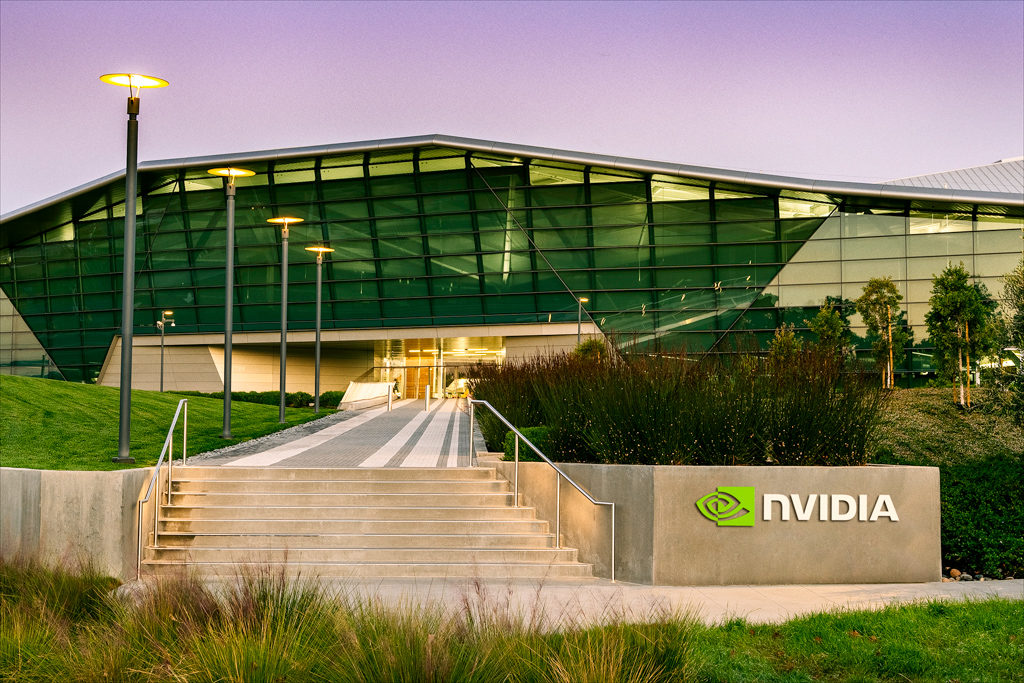
Ranked 18th in Overall Rankings and 4th for Semiconductors & Equipment
Semiconductors & Equipment company based in Santa Clara, California
NVIDIA’s approach to fostering an equitable and supportive work environment is evident in its commitment to both pay equity and comprehensive employee benefits. Notably, the company offers robust parental leave benefits, including 22 weeks of fully paid leave for birth parents, 12 weeks of paid leave for non-birth parents, including fathers and adoptive parents, and support in offsetting childcare costs by providing a 10% discount on childcare at KinderCare centers. Additionally, NVIDIA stands out for its robust pay equity disclosure, as it is one of only 12.5% of companies overall and 23.5% among industry peers to disclose both their gender and race/ethnicity adjusted pay ratios. The company is also one of very few among the Russell 1000 companies we assess to disclose disaggregated pay equity data by different race/ethnicity categories, showcasing a high level of transparency.
Ranked 16th in Overall Rankings and 4th for Banks
Bank based in New York, New York
JPMorgan Chase invests in its employees’ financial well-being by offering a minimum hourly wage of $20, which exceeds the Russell 1000 average and represents the third highest minimum wage among banks. The company also supports new parents with 16 weeks of paid parental leave for both primary and secondary caregivers and families with various caregiving services. JPMorgan Chase’s equity practices are also reflected in its pay gap analysis results, which show nearly equal compensation across gender and racial lines. Additionally, the company maintains transparency in its diversity efforts by disclosing detailed demographic data by gender, race/ethnicity, and job category.
Ranked 6th in Overall Rankings and 1st for Health Care Providers
Health Care Provider based in Bloomfield, Connecticut
Cigna demonstrates its commitment to workplace equity through pay equity analysis, showing near-parity in compensation for female and underrepresented minority employees. The company also prioritizes transparency by sharing highly detailed workforce demographic data by gender, race/ethnicity, and job category, reinforcing its focus on fostering an inclusive environment. Additionally, Cigna supports its employees’ work-life balance with key benefits including 18 days of paid time off and seven days of paid sick leave annually, paid parental leave, flexible scheduling opportunities, and emergency backup dependent care support.
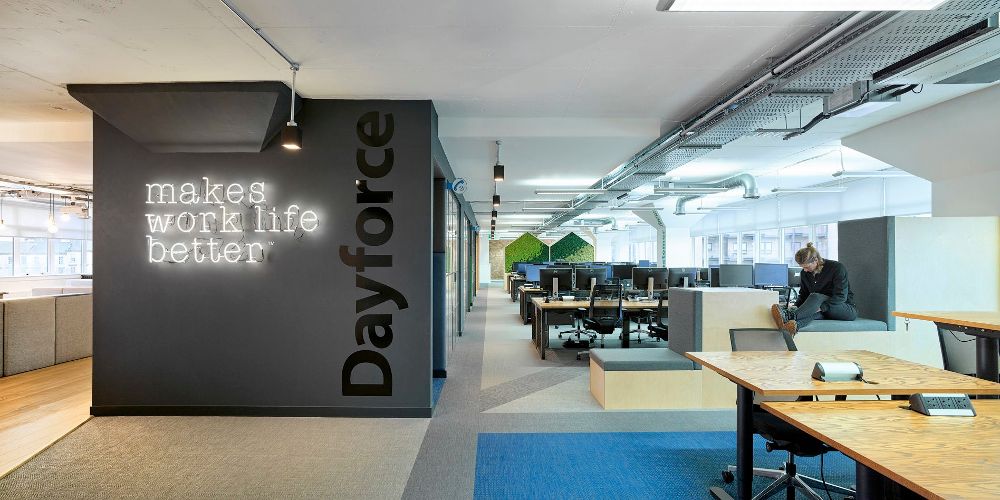
Ranked 51st in Overall Rankings and 6th for Software
Software company based in Minneapolis, Minnesota
Dayforce sets a high standard in the Software industry with its generous and inclusive parental leave policy, offering 17 weeks of paid leave to all caregivers. This is the highest offering at parity among the Top 10 companies and far surpasses the Russell 1000 average of 11 and 8 weeks of paid parental leave for primary and secondary caregivers, respectively. Additionally, Dayforce invests in its employees by providing unlimited paid time off, 10 days of paid sick leave annually, and both backup and subsidized dependent care benefits. Flexible scheduling opportunities further reflect Dayforce’s dedication to fostering a work environment that truly supports its employees’ diverse needs.
Ranked 90th in Overall Rankings and 1st for Consumer & Diversified Finance
Consumer & Diversified Finance company based in Detroit, Michigan
Ally Financial is among the Top 10 companies with the highest minimum wage of $23 per hour. This wage exceeds the Russell 1000 average of $16.73 and the Consumer & Diversified Finance industry average of $19.00, demonstrating a sustained commitment to competitive compensation for hourly employees. The company also supports working parents by offering equal parental leave to both primary and secondary caregivers and providing discounts on childcare to help ease caregiving costs. This combination of competitive wages and comprehensive family support underscores the company’s ongoing investment in its employees’ well-being and stability.
Ranked 9th in Overall Rankings and 2nd for Semiconductors & Equipment
Semiconductors & Equipment company based in Santa Clara, California
Advanced Micro Devices (AMD) demonstrates a strong commitment to employee well-being through a comprehensive range of benefits, supporting their work-life balance and professional development. AMD offers 12 weeks of fully-paid parental leave for the birth, adoption, or foster placement of a child, ensuring equitable support for all parents and new families alike. Also, the company provides up to 20 days of subsidized backup care annually to help employees with their caregiving expenses. In addition to its family-friendly policies, AMD supports employees’ work-life balance with a minimum of 15 days of paid time off, 20 days of paid sick and family time off, and workplace flexibility, enabling employees to choose what best fits their needs. AMD also supports employees’ professional development and encourages continuous learning through its education assistance program which offsets the cost of education.
Ranked 10th in Overall Rankings and 3rd for Semiconductors & Equipment
Semiconductors & Equipment company based in Boise, Idaho
Micron offers a range of robust benefits to support its employees, including 12 weeks of fully-paid parental leave for all expectant parents and at least 17 days of paid time off annually for rest and recovery. Additionally, the company supports career development and skill enhancement through its academic advancement program which provides financial assistance and resources for employees to pursue higher education and professional certifications. What’s more, Micron provides an average of 62 hours of career training per team member annually, significantly exceeding the industry average of 21 hours. Micron also performs regular pay equity analyses to foster a culture of fairness, ensuring sustained pay equity globally for women and people with disabilities, as well as across race/ethnicity and veteran status in the U.S.
Ranked 26th in Overall Rankings and 2nd for Transaction Processing
Transaction Processing company based in San Jose, California
Paypal demonstrates a strong commitment to employee support through its equitable compensation practices, robust professional development opportunities, and comprehensive benefits package. The company regularly conducts pay equity analyses by gender and race/ethnicity, and its latest assessment reveals that it has maintained 100% global gender and U.S. ethnic pay equity, reflecting its ongoing commitment to fairness and inclusivity. In addition to its focus on equitable compensation, PayPal supports employees’ professional development by offering tuition reimbursement to help cover educational costs and an average of 48 hours of training per employee annually, which is 2.4 times more than the industry average. The company also provides a comprehensive benefits package which includes unlimited paid time off, five days of paid sick leave, equal paid parental leave for all parents, and both subsidized and backup dependent care. To further promote work-life balance, Paypal also offers flexible working arrangements like hybrid work to accommodate diverse needs.
To learn more about our methodology, unpack your company’s performance on worker issues in the 2024 Rankings, and gain insights into how to improve on the issues that matter most to the American public, please reach out to corpengage@justcapital.com.
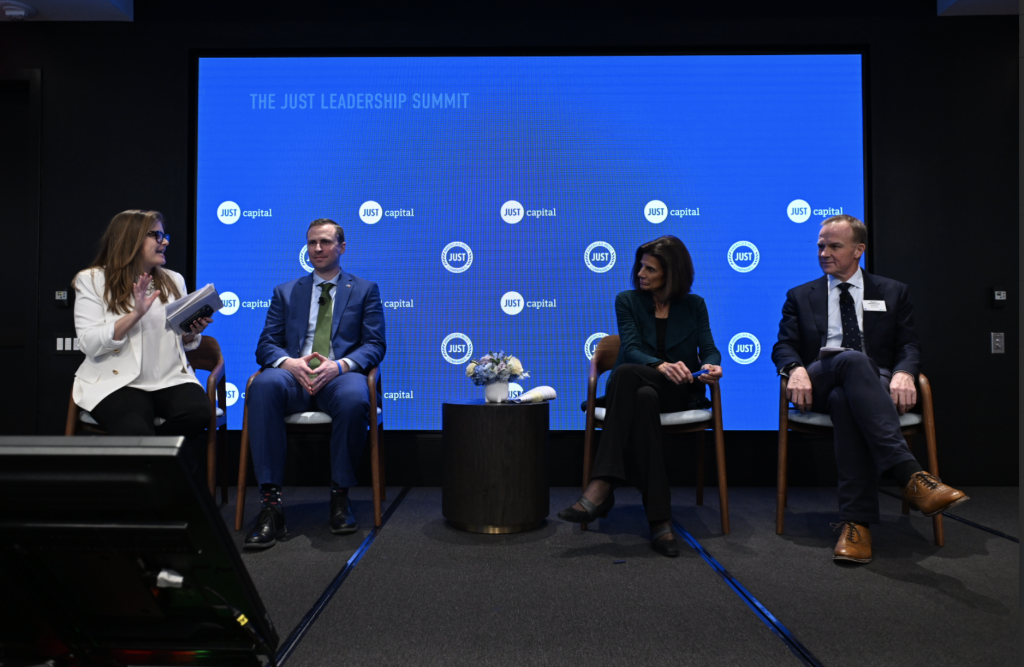
On Monday, February 5, JUST Capital and CNBC unveiled the 2024 JUST 100. The comprehensive list spotlights America’s Most JUST Companies by analyzing how companies comprising the Russell 1000 perform across the 20 Issues the American public believes corporations should prioritize in their business practices.
The event, which took place at the NASDAQ MarketSite and was sponsored by the Stakeholder Impact Foundation and BCG, opened with introductory remarks from JUST Capital CEO Martin Whittaker and a speech from Sushmita Banerjee, Senior Partner and Managing Director at Boston Consulting Group (BCG). Two panel discussions followed. The first featured a macro-level conversation between JUST Capital co-founder Paul Tudor Jones II alongside Hewlett Packard Enterprise (HPE) CEO Antonio Neri, moderated by CNBC’s Andrew Ross Sorkin. JUST Capital’s President Alison Omens then moderated the second panel with HPE Board Chairman Patricia Russo, Avangrid CFO Justin Lagasse and Accenture’s Northeast Market Unit Lead Stuart Henderson where they discussed in further detail what just business behavior actually looks like, what are the challenges and tradeoffs that companies face.
Banerjee set the tone for evening speaking about what she has seen working with some of the most successful companies in the world. “Just companies – in my experience – have leaders who exercise their responsible, ethical muscles every day, versus waiting for their grand moment where they could prove to the world they are doing something great,” she said.
Just actions, Banerjee said, lead to something every business needs to thrive: trust. She highlighted BCG’s Trust Index as an example of how companies can measure and decode trust among stakeholders by focusing on four dimensions: competency, fairness, transparency and resilience.
The companies that top JUST’s rankings prioritize building trust across stakeholders and their business performance benefits. ”When we look at the top 100 companies in JUST’s database, what we see is that they generate 2.5x more value than comparable businesses—their valuation multiples are also up to 47% higher,” Bannerjee said.
Sorkin kicked-off the first panel conversation by prompting Jones to reflect on how far the conversation around stakeholders in American business has come over the last decade.
“If you rewind to 2014, no one would even know what stakeholder business meant,” Jones told the panel. “There was nothing but shareholder governance at that point in time. Of course that was why business was very narrowly focused on nothing but profits. That is one of the reasons why we started JUST Capital.”
Turning to Neri, Sorkin gave the HPE CEO an opportunity to speak on why his company was able to secure the number-one spot in JUST’s 2024 rankings. This year is HPE’s first time at the top of the list after being recognized as a JUST 100 leader every year from 2018 through 2024.
“Our job is to create value and my measure of value is not just shareholder value,” Neri said at JUST’s 2024 Leadership Summit on Monday. “It’s about value for the people who participate in the ecosystem where we deliver business results or other types of outcomes for our customers and employees. Ultimately, stock price is a reflection of how you do things and what you deliver. One of the sayings we have at the company is ‘you have to win the right way.’”
The discussion delved into the correlation between this inclusive approach, business success, and positive societal impact. Additionally, Jones emphasized the need for other companies to adopt a similar mindset, underlining the significance of leadership in today’s dynamic economic and social landscape.
The second panel focused on the strategic investments C-suite leaders have undertaken that have led to top-ranking performances. HPE Board Chairman Patricia Russo, Avangrid CFO Justin Lagasse and Accenture’s Northeast Market Unit Lead Stuart Henderson gave practical examples to illustrate how they approach prioritizing stakeholder value to achieve business success.
“It’s really important that boards have clarity around what a reasonable timeframe is and I want to use an example from Merck,” Russo said. “There was a time when Merk’s TCR was not competitive with other pharma companies, because Merck had decided–as a company committed to science–that they were not going to cut back on R&D in order to get their profits up, they were going to continue to invest in medicines. And today, Merck has the largest cancer drugs on the planet as a result of what they invested in and their stock is now trading at $126 a share. So there is a time-horizon around when value creation for shareholders is the natural follow-on to all the other good things you’re doing for people, customers and communities.”
By aligning their strategies with the values prioritized by all of their stakeholders, these leaders exemplify the potential for businesses to thrive while making meaningful contributions to society. The emphasis on stakeholder value creation showcased the alignment between business success and ethical decision-making, reinforcing that a just approach is morally sound and strategically advantageous in the long run.
When asked what their advice would be to other companies, the panelists each provided their own poignant perspective. Henderson encouraged leaders to steer clear of politics and lean into the business case for transparency, diversity and sustainability, which would deliver good outcomes for shareholders and stakeholders. Lagasse rounded out the panel with a reminder to keep it simple—over-complicating how to empower and enable stakeholders to thrive is where the disconnect comes from. Russo emphasized the importance of focusing on managing human capital just as well as financial capital.
“I don’t get into debates about DEI,” Russo said. “I think the pushback is based on a myth of what it is. If you have a conversation with someone who is rational and intelligent, and you say, ‘Do you believe that different perspectives lead to better discussions?’ the answer will be yes. ‘Do you believe in a work environment where people feel like they can come to work and they can be their best selves because they are part of a team and valued?’ Absolutely. ‘Do you believe we should pay people fairly and the same for the same work?’ Oh, absolutely. Okay, well that’s DEI.”
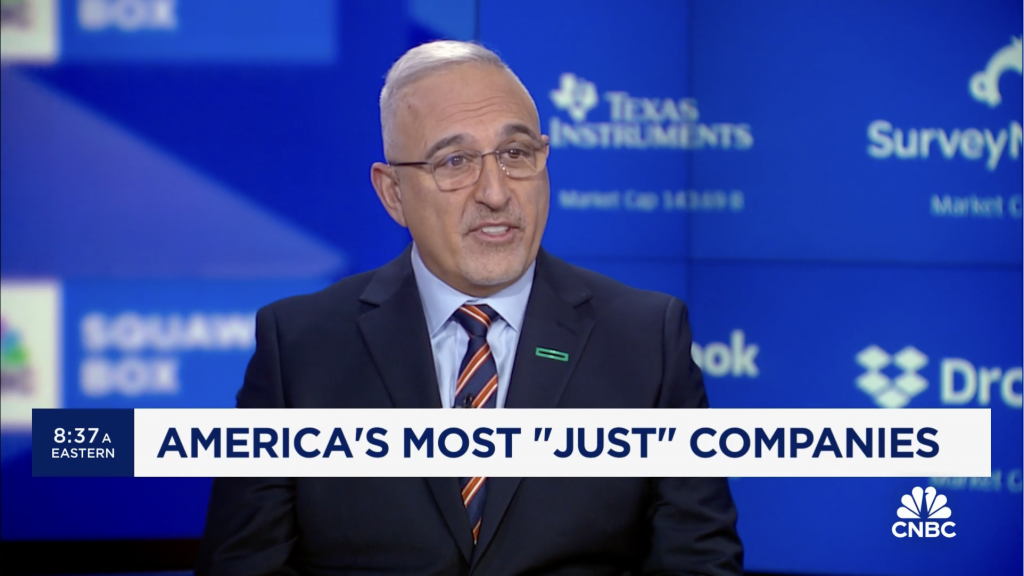
On Monday, JUST Capital and CNBC announced that Hewlett Packard Enterprise (HPE) took the 2024 title for America’s Most Just Company. For HPE CEO Antonio Neri, the recognition is evidence of his team’s meticulous work to deliver positive outcomes on worker, environment, community, and other issues Americans care most about. Neri underscored it’s all about results.
“Our job is to create value and my measure of value is not just shareholder value,” Neri said at JUST’s 2024 Leadership Summit on Monday at the NASDAQ. “It’s value for the people who participate in the ecosystem where we deliver business results or other types of outcomes for our customers and employees. Ultimately, stock price is a reflection of how you do things and what you deliver. One of the sayings we have at the company is ‘you have to win the right way.’”
HPE blazed past its peers and other industry leaders in JUST’s rankings of the Russell 1000 (approximately 937 companies when you account for mergers, acquisitions, and delistings). While HPE has been in the JUST 100 every year from 2018 through 2024, this is HPE’s first time in the top spot.
The company’s standout leadership on issues like fair pay, climate change, and offering apprenticeship programs, such as its Cyber Career Reboot program, helped propel its performance. Other notable data points include the following:
“I take great pride in HPE’s recognition as a leader by JUST Capital on the issues vital to Americans,” Neri said in a previous statement. “Our purpose is to advance the way people live and work, which is evidenced in our commitment to reducing environmental impacts throughout our value chain, supporting our team members with exceptional benefits and talent programs, and investing in our communities and supply chain.”
During a panel discussion on Monday, Neri and JUST Capital co-founder and chairman Paul Tudor Jones responded to questions about the recent pushback against ESG, and underscored that stakeholder issues aren’t about politics, but about promoting better long-term business practices.
“I differentiate between just behavior and ESG, because they do overlap in part, but they are really different,” Jones said. “What we’re doing with our rankings is reflecting what the American public says.”
Neri said he plans to continue investing in areas that JUST Capital ranks, saying it’s good for shareholders, as well as other stakeholders.
That assumption is buoyed by real financial data. The JUST 100 Index has beaten the Russell 1000 Equal Weighted Index by 38.5% since inception and 3.1% YTD. And JUST’s worker-focused index – meaning companies that rank most highly on worker issues – has outperformed the Russell 1000 Equal Weighted Index by 103.75% since 1/1/2018.
“It starts with a purpose,” Neri said on Monday. “What is our purpose? Why do we come to work every day? That purpose is to enhance the way people live and work. And how do we do that? By engineering an experience that will unlock your full potential, whether you are a business, shareholder or employee.”
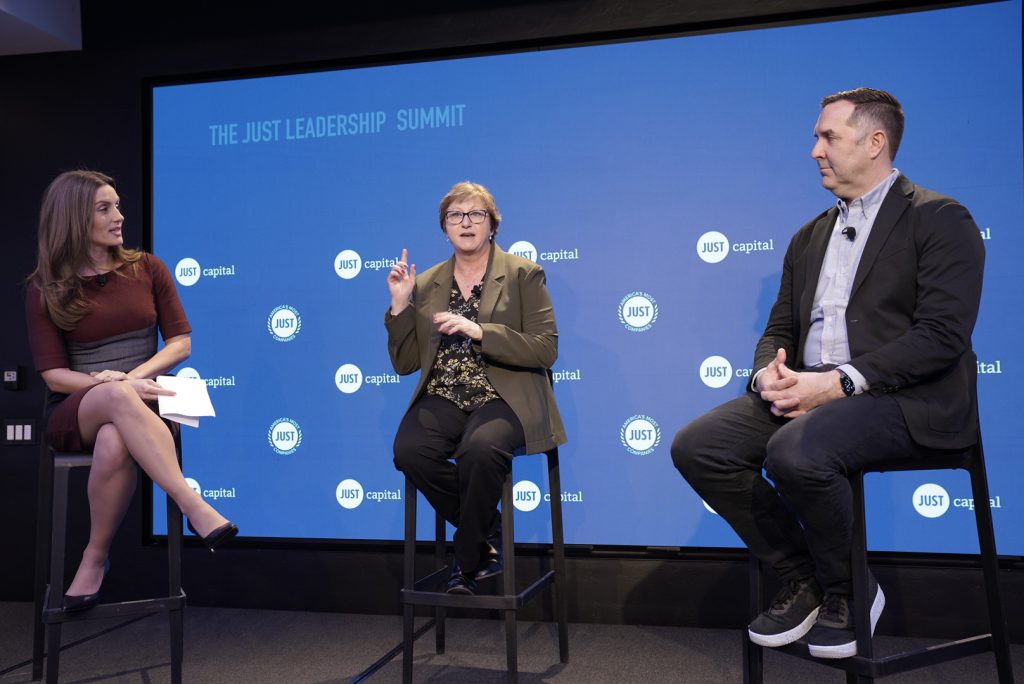
Amidst the rising ESG and sustainability backlash, it’s increasingly important to hear from corporate leaders taking concrete, meaningful steps to drive change on the key issues of our time. At last week’s JUST Leadership Summit, we heard from sustainability leaders of two of the top-performing companies in our 2023 Rankings – American Electric Power (AEP) (#14 overall and #1 in the Utilities industry) and Nike (#97 overall and #1 in the Clothing & Accessories industry).
In a panel moderated by CNBC Reporter Kristina Partsinevelos, AEP Chief Sustainability Officer Sandy Nessing and Nike Chief Sustainability Officer Noel Kinder highlighted the approaches and actions their teams have taken to create a more sustainable future for their companies, for their industries, and the planet overall. Nessing and Kinder spoke in depth about renewable energy and their companies’ efforts to reduce environmental impact, but both emphasized that a transparent, people-based approach is needed to drive lasting, meaningful change.
Watch the full conversation here, and dig into five key takeaways below – all of which provide broad tenets by which corporate leaders in any industry can forge their journey toward a more renewable and equitable future.
Operationalize sustainability
In talking about Nike’s “Move to Zero” goal to become both zero carbon and zero waste across operations, Kinder explained that setting clear targets and measurable outcomes is key, as well as identifying operational milestones to achieve along the way. These milestones represent an undeniable challenge to Nike’s leaders – holding the company accountable not only to its long-term ambitious goals, but to concrete steps on the path toward achieving them. These steps also provide an operational roadmap, detailing the role that teams across the organization can and must play to achieve larger carbon and waste reduction goals. They embed sustainability in all aspects of the company and deputize Nike’s team members to take ownership of the “Move to Zero” journey.
Think about people
For AEP, one of the nation’s largest generators of electricity, coal has historically been central to powering the communities the company serves. Faced with this monumental challenge to her company’s clean energy strategy, Nessing articulated the importance of putting people first – ensuring that the impact of this strategy on AEP’s employees and core communities is carefully considered. As the company prepared to close coal plants, AEP conducted economic analyses to better understand the impacts of doing so, seeing the plants themselves as community ecosystems that shape not only economic development but the lives of the people who live and work there. Nessing shared that almost all employees of closed plants have found jobs within AEP – emphasizing that, with a focus on communities and people, “there is a life after coal.”
Get out of your own echo chamber
As one of the founding members of the Sustainable Apparel Coalition, Nike has worked closely with its suppliers and direct competitors to develop shared practices and approaches to achieving sustainability goals. Key drivers of Nike’s carbon footprint include the materials and energy used to create its products – meaning that collaboration across its supply chain is crucial in the company’s renewable energy journey. This collaboration is often complex and challenging, necessitating discussion with competitors to ensure alignment and shared approaches in working with suppliers. Kinder noted that Nike’s success has been tied to his company’s willingness to step outside of its own “echo chamber” and instead harness the collective voice of its wider industry to drive change.
Look inward as you look outward
Unlike Nike, AEP’s global supply chain is not a major driver of its core operations – but the company profoundly impacts the communities where it operates both at home and abroad. Nessing explained that, as part of AEP’s people-based approach to sustainability, the company has begun to more carefully consider how its operations impact historically marginalized or disadvantaged communities, developing an Environmental & Social Justice Policy that commits to seeking input from impacted communities in its sustainability decision-making. By centering community voice in its clean energy transition, AEP has taken steps to shift its own priorities – ensuring an equitable approach to driving change. In discussing these leading efforts, Nessing noted that this is an “exciting time to be in this industry.”
Be transparent and show your work
Kinder emphasized that sustainability is a “catalyst for innovation,” and that in order for innovation to drive meaningful change beyond the walls of a single organization, transparency is key. With “ESG” currently a contentious term in corporate and investment communities, Kinder and Nessing both agree it’s important not to shy away from the conversation and most importantly, that corporate leaders stay the course. In coming to the table – with employees, investors, communities, partners, competitors, and more – it’s critical for corporate leaders to be able to show their homework, to demonstrate the reasons for their actions and the impacts of change. Nessing noted that AEP has gotten pushback, particularly from some of the company’s local communities. However, this pushback has not led her company to change course, but instead invite everyone into the conversation and share resources to ensure a just and equitable transition.
Watch the full conversation below.
For corporate leaders looking to unpack your company’s performance in the 2023 Rankings and gain insights into how to improve on the issues that matter most to the American public, please reach out to corpengage@justcapital.com.
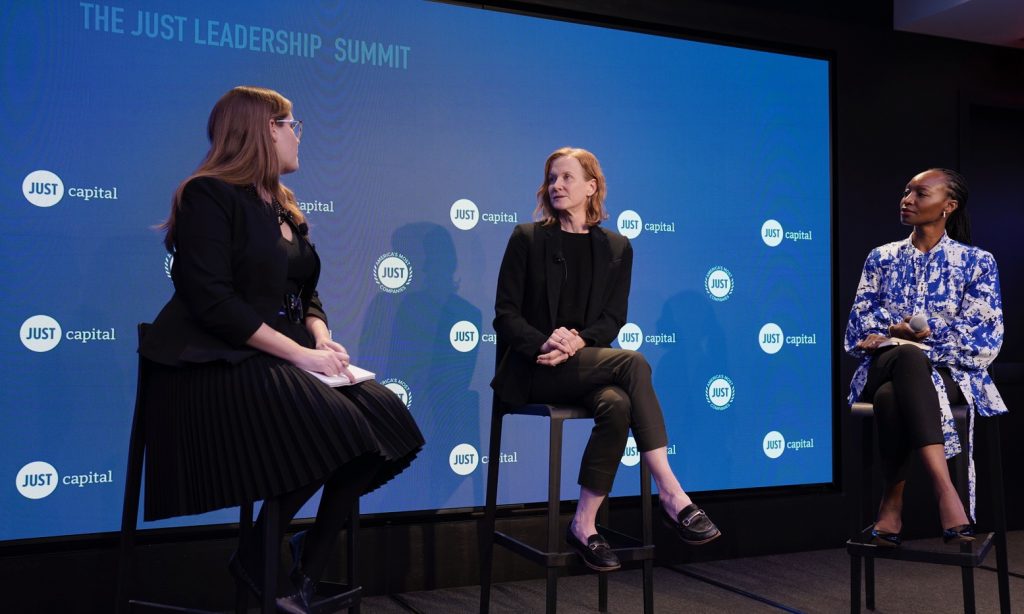
On Monday, March 13 top corporate, investment, and sustainability leaders gathered for the JUST Leadership Summit – an annual event, now in its 8th year, to celebrate corporate leadership and spotlight action from investors and American companies to help build a more just economy. We discussed the broad state of play with Deloitte, why employee stock ownership is a winning strategy with KKR, how JUST jobs build better companies with Two Sigma, and recognized the achievements of this year’s JUST 100, the leaders topping our 2023 Rankings of America’s Most JUST Companies.
Explore the full video from Monday’s event below for insights into how corporate leaders can navigate today’s shifting ESG landscape, put workers first, and create more JUST jobs. A description of each panel, including timestamps, can also be found below.
Welcome Remarks | starts 0:50
An invitation to consider the challenges facing both American workers and corporate leaders today, and an introduction to the Summit’s panels.
Speakers
Driving Stakeholder Value Creation Through a Shifting Landscape | starts 10:10
In the current climate of imminent regulatory shifts and noisy political rhetoric, there are myriad unknowns about what the future of ESG and corporate sustainability strategies will require. Partner Kristen Sullivan shared insights into how Deloitte is advising clients and helping them navigate this moment with intelligence devised to accelerate JUST business practices and create value for investors.
Speaker:
Sharing the Wealth: A Fireside Chat with Pete Stavros | starts 26:40
Pete Stavros sat down with CNBC’s Dominic Chu to talk about today’s investing landscape and how he thinks the innovative strategies being deployed by the organizations he leads – KKR and Ownership Works – can not only improve the lives of millions of workers but also transform strategic business practices in America in the process. Includes a short video on the impacts of Ownership Works.
Speakers:
JUST Jobs Build Better Companies | starts 53:40
JUST Capital previewed our new innovative tool – the JUST Jobs Scorecard – that helps business leaders assess how companies are performing on job quality today and why we should all be investing in JUST Jobs to build better companies.
Speaker:
The Value of Listening to Your Workers | starts 1:01:20
There are multiple approaches to measuring job quality but perhaps no greater tool than listening to the workers themselves. In this session, we discussed how to unlock business value by using cutting edge survey tools and other strategies to engage with and respond to your workforce – an approach well-paired with the disclosure and performance thresholds available in JUST’s new Scorecard in determining where to make workforce investments.
Speakers:
Worker Voice | Chipotle starts 1:19:19 | Verizon starts 1:22:13
We hear directly from two JUST 100 employees – Eddy Caballo, Field Leader at Chipotle and Edwenna “Eddie” Ervin, Senior Engineer Project Manager at Verizon – about the impact their companies’ workforce investments have made in their lives.
JUST Jobs in Practice | starts 1:25:20
High-quality metrics, assessments, and benchmarks are key to understanding JUST Jobs, but then it’s time to put the insights into practice and make strategic investments in your workforce. In this session, we heard from C-suite leaders about specific actions taken and challenges overcome that generated transformative impacts for their workers and business outcomes for their companies.
Speakers:
JUST 100 Industry Leaders Spotlight | starts 1:53:00
JUST 100 Industry leaders are helping to shift norms and scale change across corporate America by influencing their respective sectors to do more in a continuous race to the top. They demonstrate through practice that an integrated stakeholder approach – where climate, sustainability, and equity are inextricably connected – leads to long-term impact and financial outperformance.
Speakers:
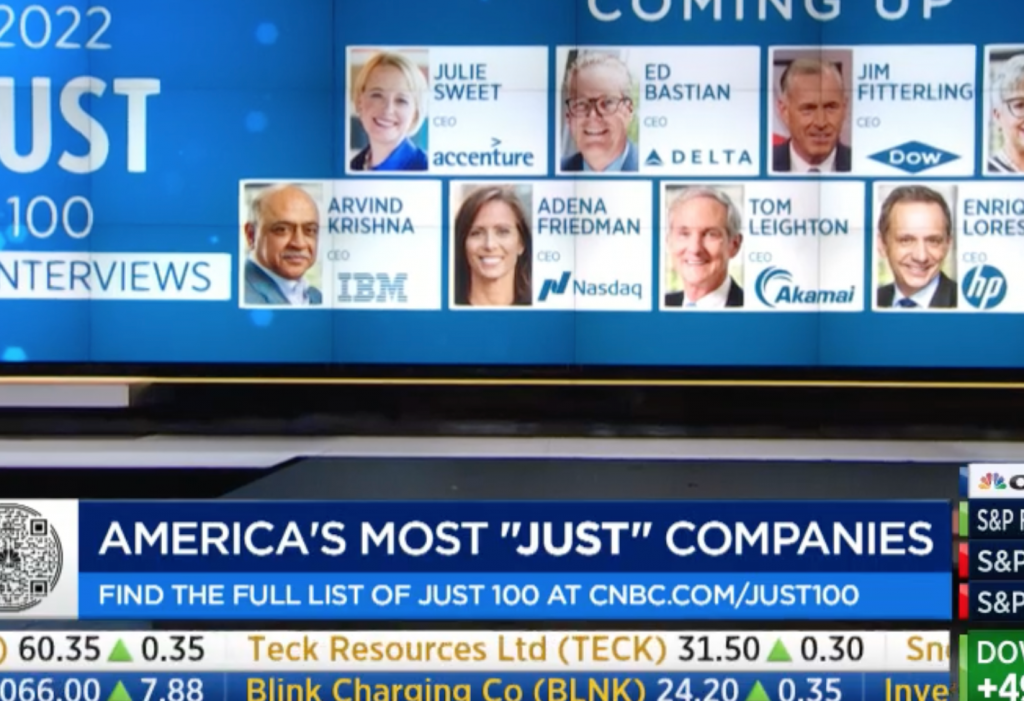
Our annual Rankings of America’s Most JUST Companies release is always an exciting moment, but this year’s launch has been, in many ways, the biggest ever.
With our media partner, CNBC, we’ve showcased a week’s worth of interviews with CEOs in the JUST 100 (and we’ve got several more to go) and dozens of them have promoted their recognition publicly through their various channels. Alphabet took our #1 spot for the first time this year, due in part to exceptional performance on benefits, pay, equity issues, and environmental sustainability, but there are plenty of plaudits to go around.
Issue-wise, worker criteria accounted for fully 40% of the ranking model by weight, and more if you include “Creating U.S. Jobs” in that category. This presents genuine opportunities for real leadership. Delta CEO Ed Bastian told Andrew Ross Sorkin that his airline’s success in this difficult environment is impossible “if you don’t have happy employees – if you don’t have employees that want to serve, that feel respected, feel trusted, feel backed up.”
Speaking on Squawk Box, Nasdaq CEO Adena Friedman highlighted another key issue: disclosure. “We’re moving into what I would say is the second phase of ESG, which is how quickly companies can move along and make a difference and have an impact. The only way we can measure that is if it’s disclosed.”
We agree. In fact, that’s central to our theory of change for stakeholder capitalism as a whole. Ask any CEO, and they will tell you that business success today is driven by how much value they create for all their stakeholders. That grows the pie for everyone, and gets to grips with some of our most intractable societal challenges. But for that to truly work – for markets to really hold companies to account for their performance on stakeholder issues – it has to be supplied with information on company performance it can trust.
That’s where JUST comes in. I hope you dig into the results, and come back to us with any feedback on ways we can improve. In the interim, check out some of the highlights from the CEO interviews on CNBC.
Be well,
Martin Whittaker
This week we’re spotlighting leading policies from the Top 5 companies in the JUST 100:
Alphabet sources 100% of its energy from renewables, a goal the company reached in 2017 and one that only 13 companies in the Russell 1000 have achieved.
Intel remains the only company out of all 954 we rank to release Component 2 of its EEO-1 report, which details pay by intersectional demographic data category as well as job-level – the most comprehensive pay gap analysis disclosure.
Microsoft sets a Science-Based Target in line with a 1.5°C warming scenario, a level of climate commitment that is matched by only 6.8% companies in our 2022 Rankings.
Salesforce encourages employee-led giving and volunteering and matches up to $5,000 of employee donations to charitable causes.
Bank of America is one of 18.5% of the companies in our Rankings that has set public, measurable, and time-bound diversity targets for its workforce.

“We are a disclosure economy. If you really think about the public markets and what the SEC requires, it requires disclosure to allow investors to make an informed choice. And you’re right, there are certain disclosures that companies may say ‘you know what, let me get better first before I disclose.’ In fact, one of the things that Nasdaq did recently was we are disclosing now the diversity composition of our company. And that’s not a required disclosure. And in some respects, you sit there and say ‘well gosh I wish it was better, maybe I want to try and make it a better picture before I disclose it.’ But we made the decision, even though we know that we have work to do, to disclose that to investors and allow them to track our progress. Investors really appreciate the ability to track progress.”
“We are a talent magnet and we believe that that is very much related to the fact that people want to go to companies that create value, have the right pay equity, pay the right salaries, but also lead with values who have sustainability.”
“It’s an ‘and,’ and an ‘and.’ It’s not an ‘instead of’ or and it’s not a ‘putting these [ESG goals] ahead.’ However, in order to get revenue growth, we have to be able to attract employees. In order to attract employees, we have to be perceived as just and equitable. DEI plays a role, it allows us to get more employees across all kinds of communities. We believe that actually being sustainable is not instead of profit. When we recycle, we use clean energy, and we use less energy, our energy bills go down. It’s an ‘and,’ it’s not an ‘or.’ And thinking about that way benefits everybody, including investors.”
In addition to the broadcast interviews showcased above, our media partner CNBC has been unpacking key stakeholder performance stories at CNBC.com/just100.
Squawk Box co-anchor Andrew Ross Sorkin sat down with Martin to discuss trends in disclosure, recent controversies involving Meta and Intel, and the growing gap between CEO and worker pay.
CNBC’s Senior Editor Eric Rosenbaum explores why the no. 1 ESG issue for Americans isn’t climate change, it’s workers. Drawing on insights from JUST and PayPal CFO John Rainey, Rosenbaum explores the challenges around evaluating companies with large contingent workforces, and showcases what good looks like when it comes to investing in workers’ financial well-being. In another piece, Rosenbaum connects the list to emerging ESG trends, exploring the dominant position of tech companies, the high-stakes correlation between market size and just business behavior, and asks tough questions about Meta and ExxonMobil.


This chart showcases the win-win of stakeholder value creation, demonstrating JUST 100 outperformance on key ESG metrics in this year’s Rankings. Learn more here.
