
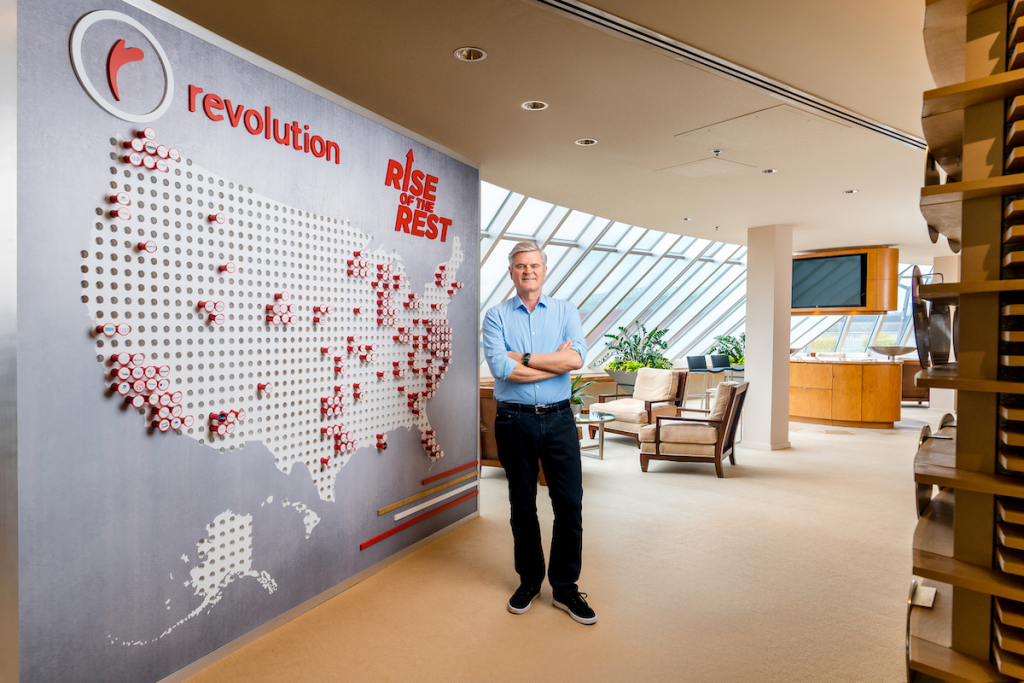

Inflation, a potential recession on the horizon, the lingering effects of a pandemic, a war with global impact, and bitterly divisive politics – it can be easy to be pessimistic about the direction of the United States. But Steve Case won’t indulge that.
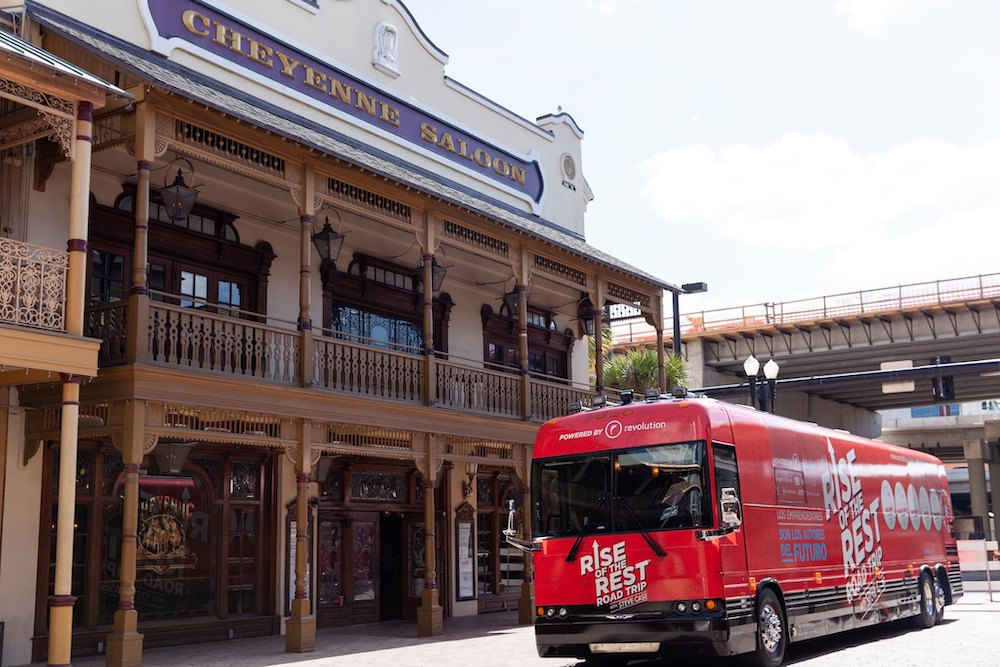
For the past eight years, the AOL cofounder and founding CEO of the venture capital firm Revolution has been touring the United States in a big, bright bus, for the “Rise of the Rest” initiative, which shares its name with Case’s new book. The book is an exploration of his vision for an America boosted by startup economies tied to their communities – namely the ones not in Silicon Valley, New York City, or Boston, where 75% of venture capital in the U.S. goes. And it’s an expression of optimism that can feel exceedingly rare these days, but is one complementary to what we’ve found at JUST.
In the same way that we have found through our polling research that Americans across all the demographics we track agree that worker issues, especially providing a living wage, should be the number-one priority of American businesses, Case is driven by the idea that people across the country ultimately want the chance at a fulfilling career regardless of where they live. And, he says, we’re at the beginning of an era in technology that can help make this happen. Case believes that AOL represented the First Wave of the internet, followed by social media marking the Second Wave, and now we’re at the forefront of the Third Wave, where “internet of things” becomes the internet of everything and opens up transformative opportunities across all industries.
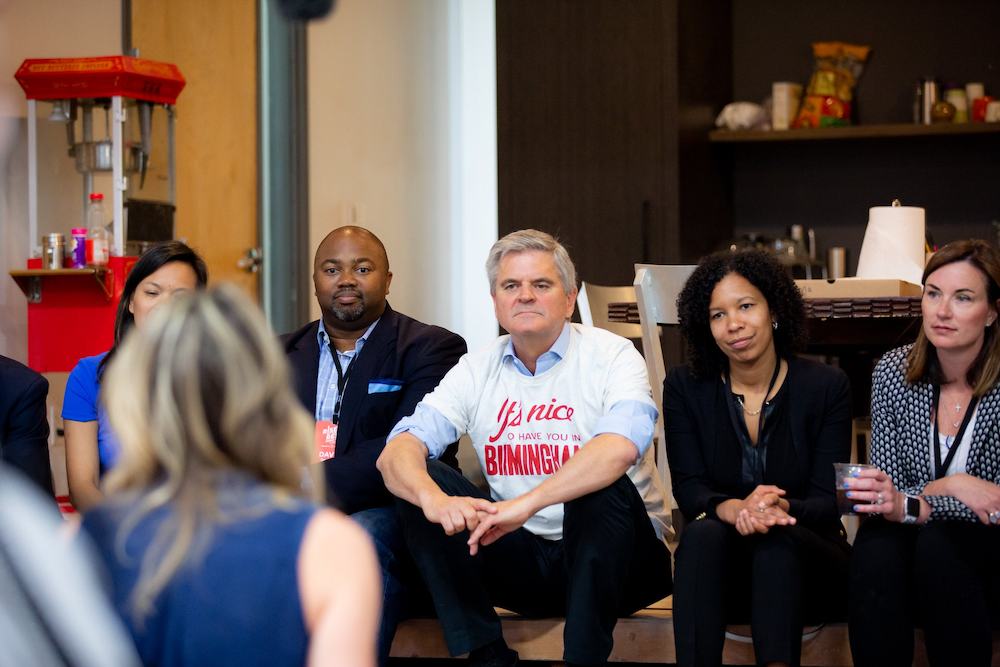
So far, Case and his team have been to 43 cities across the country and made 200 investments through two $150 million funds. They made eight bus tours before COVID forced them to temporarily go virtual, leading to one virtual tour focused on Black founders and another connecting talent from the coasts to opportunities at startups beyond the three primary hubs.
The new book is the next step in introducing his mission to a wider audience. We recently spoke with Case about what he wants to accomplish with it, and explored the overlap of Rise of the Rest with JUST’s own work.
The following transcript has been edited for length and clarity.
How has your perspective on Rise of the Rest – the fund, the tour, the idea – evolved over time?
We’ve seen steady progress each year in terms of interest in these cities, new companies starting and scaling, big exits that get attention, people shifting where they’re living, and people starting to think about investing in other places.
It was steady progress and then COVID has been a tipping point on multiple levels. For some people it was a moment to take a step back and rethink how and where you want to live, and how and where you want to work.
We stressed even when we got started that one of the things we needed to do was shift the talent discussion from being about bemoaning a “brain drain” of people leaving to celebrating a boomerang of people returning. So the pandemic has been helpful on that front.
It’s also been helpful on the venture investing side. Investors who were intrigued with some of what’s happening in rising cities but not necessarily intrigued enough to jump on a plane could now jump on Zoom and then talk to people in those cities. That led to a lot of pitch meetings on Zoom.
On the policy side of things, at the state and local level, a lot more governors and mayors are focusing on startups, and at the federal level, there’s been legislation passed like the Inflation Reduction Act and the CHIPS and Science Act, which includes authorization for investment in regional hubs.
A few weeks ago President Biden was in Columbus talking about regional entrepreneurship at the Intel plant. And then Treasury Secretary Yellen was talking about the idea of leveling the playing field and creating more opportunity for more people and places. So they’re mostly in sync with the arguments we’ve been making.
I’d say that it went from steady progress to an acceleration, which I think bodes well for the next chapter.
It sounds like there was, maybe this is the wrong phrase for it, but a silver lining of the pandemic.
It was such a terrible pandemic and I’d hate to say, “But oh, isn’t this great!” But yes, it was a silver lining, if you are looking for something positive in a difficult two-and-a-half years.
You included in the book some numbers that appear to be backing the Rise of the Rest thesis, in terms of where the money is starting to flow.
You’re referencing the Beyond Silicon Valley report we did with Pitchbook. There’s one data point particularly that was of surprise even to me, which is that in the last decade there have been 1,400 new regional venture firms outside of San Francisco, New York, and Boston. So basically you’ve got our Rise of the Rest footprint.
That’s super interesting and super encouraging because we’ve long said that the entrepreneurs in most parts of the country need more access to that initial capital as a seed stage, and having capital available locally is really important.
Business and community are inextricably linked
With a lot of the companies you highlight from the Rise of the Rest portfolio, it seems like these startups are baking in purpose-driven values and stakeholder issues JUST tracks for corporations. Are you seeing that?
A lot of these Rise of the Rest entrepreneurs are passionate about fixing or addressing some problem in society and opt to do that through the prism of starting a company. That leads to companies like AppHarvest in Kentucky with sustainable agriculture or TemperPack in Richmond, Virginia with sustainable packaging, and I could give you a couple of dozen others.
They are also quite intentional about how their companies also can lift up their community. For example, Jonathan Webb of AppHarvest was deliberately focusing on this and had a strategic reason to do it. Eastern Kentucky, outside of Lexington, is within a 24-hour drive of 70% of the U.S. population. But Jonathan also had a desire to create jobs and bring opportunity to coal country Appalachia, which for several decades had been struggling. So there was that broader societal impact.
On the DEI side, many of these cities are diverse, and we have been intentional about diversity for building our own team and backing entrepreneurs. Right now the Rise of the Rest portfolio, which is about 200 companies, is 41-42% female founders or founders of color, which is still not what it should be, but a lot better than you see in most venture firms.
The corporate and startup worlds of are often linked in ecosystems. One of the examples that you point to is Atlanta, where you have corporations like Delta, Home Depot, and UPS actively engaging their communities, including entrepreneurs there. Why should corporate leaders be paying attention to Rise of the Rest, regardless of where they are in the country?
Because their own success could be accentuated by focusing on Rise of the Rest. If they’re staying close to entrepreneurs who are doing innovative, disruptive things, they’re more likely to see the future as opposed to being overwhelmed by it, and might, if they’re agile, actually be able to partner with or, in some cases, acquire some of these companies to strengthen their competitive position.
Second, every company is ultimately about its people, and part of what JUST has done is highlight that and the benefits of investing and properly rewarding people. How do you attract great people who want to work at your company? Part of that is attracting people that want to live in your community.
Personally I remember my own experience in Cincinnati, where my first job out of college was at Procter & Gamble. At the time there were a few big companies there, but there were really no startups. The downtown area was occupied nine-to-five, was basically dead on evenings and weekends, and there wasn’t a real vibrancy to it. Some of the big companies eventually noticed that, too, and they got together and funded some programs like Cintrifuse, the Hatchery, and others to basically create a more fertile environment for startups. That paid off, and the city is now more interesting to live and work in. It makes it easier for those big companies to attract and keep the people they want to take their companies to the next level.
What Dan Gilbert’s done in Detroit comes to mind.
That’s obviously a great example. I’ll be there on Monday. He helped get the Forbes 30 Under 30 Summit to Detroit, and that’s exact thing we’re talking about. Dan made an effort to get more young people to understand what Detroit is now, with the idea that some people visiting for a conference would see it and some of them would end up deciding to move to Detroit. That’s happened. So it’s an example of this idea of trying to use your position as a corporate leader to have a broader impact in the community.
A mission to unite behind
You’ve got access to a lot of politicians and big influential players across the political spectrum. You’ve been all over the country, talked to people from every corner of America. Given your perspective and optimism, what are you seeing that could better unite the country when it’s so divided?
Well, part of the reason why I wrote the book is I think it’s an optimistic story of an America that’s not something that most people are aware of. There are a lot of things that are negative with inflation, Ukraine, the pandemic, all kind of things. But there’s a more positive, inspirational story that’s not just about certain people or certain places. I felt there’s a reason to be more hopeful, but we have to continue to build on some of the initial foundational efforts over the last decade.
I start and end the book with the idea that it’s not our God-given right as a country to remain the most innovative, entrepreneurial nation in the world. We can’t be complacent about that. We’ve got to lean into the future and I don’t think we can do that successfully if we’re only putting our eggs in a few baskets like Silicon Valley, New York, and Boston. We need to have a more diversified and decentralized approach to innovation.
But my hope is that this book will lead everybody in America to maybe feel a little bit better about our country’s potential future.
So this is based on the idea of economic opportunity for Americans regardless of where they are in the country, whether they want to create something or even just work within their own community with a good paying job?
Yes, one of the big problems is the opportunity gap where some people in some places are doing really well, and a lot of people in a lot of places are struggling and feeling left behind because they have been.
So the idea is that fertile startup ecosystems in more places brings more capital, which creates more jobs, which drives more economic growth, and which will then create more opportunity and more reasons for people to be more optimistic about the future. I think it’s critical that we do that if we are going to have a country that continues to lead the world. Now is the time to get it done.
I think it’s safe to say, then, that you’re bullish in America.
I believe in America! I believe in America, as long as we’re celebrating the next generation of entrepreneurs, how we’re doing it everywhere, not just in a few places.
The days of American workers quitting en masse have slowed. New findings from the Federal Reserve Bank of New York show the quit rate in July at 4.1% – compared to 5.9% in July 2021. Those numbers don’t mean, however, that companies should let up on their retention efforts. The same survey found a year-over-year increase in the percentage of employees actively searching for a new job. And, with a potential recession on the horizon, many companies are looking at what they can offer to avoid becoming another employer implementing layoffs or hiring freezes.
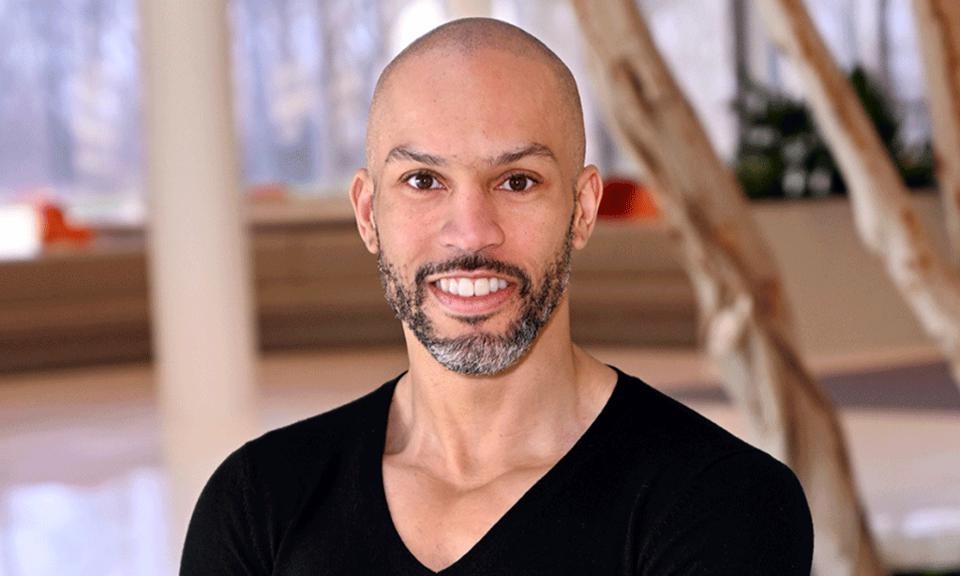
JUST Capital polling shows that, to the bulk of both workers and management, prioritizing diversity, equity, and inclusion (DEI) is a key way to recruit and retain talent. Of the major U.S. companies putting this into practice, Mastercard recently earned the number two spot on our 2022 Workforce Equity and Mobility Ranking. Executive Vice President and Chief Inclusion Officer Randall Tucker sees the company’s rank coming down to its DEI strategy and what’s shaped the company’s commitments and actions – starting with data. “DEI measurement should be no different than showing P&L for sales,” he said.
With $328 billion in market cap, Mastercard’s potential for impact, both within and outside company walls, plays a role in guiding its DEI work as well. We reached out to Tucker to hear how Mastercard has made DEI a priority across its 25,000-strong global workforce. In April, the Purchase, New York-headquartered company announced that bonuses for all employees, not just senior executives, would be tied to environmental, social, and governance (ESG) goals. This policy includes DEI metrics like pay parity, Tucker said, which a majority of Americans we polled see as having a positive impact on long-term business success.
Tucker shared more with JUST on what Mastercard’s learned from evolving its DEI work, and how those insights could benefit other leaders focused on building equity and upward mobility for their employees into company operations.
Mastercard’s approach to DEI is centered around impact and relevance, Tucker said. The company assesses what issues are most pressing to its stakeholders and how, and where, it can have the greatest impact. He pointed to Mastercard’s actions in the wake of the murder of George Floyd as an example. “There was a heightened interest in focusing on racial equity, both in terms of increasing Black representation in leadership roles as well as increasing Black suppliers that we work with and investing in closing the racial wealth and opportunity gap across American cities that have large Black populations,” Tucker said.
That interest resulted in Mastercard’s In Solidarity Initiative, which continues alongside the company’s other DEI work, he said. The five-year, $500 million Initiative includes an investment in Workforce Development Pathways and an Entrepreneurship Center created in partnership with the National Urban League to increase access to opportunity for historically excluded individuals and communities. It also includes an assessment of how Mastercard is supporting its Black employees’ education, skills development, and career advancement. Two years into this commitment, Mastercard has “seen tremendous progress in some areas, including doubling our Black suppliers” and, importantly, shared its progress in annual reports and through regular updates to its employees and board.
These insights help inform the areas the company needs to focus on, Tucker said. Data like detailed workforce demographics, which Mastercard discloses in its EEO-1 data, point out where gaps exist and where to take action. Tucker raised the company’s work on pay equity as an instance of where this focus on data has shaped progress. “Our pay equity numbers are ones we have been very deliberate about over the past few years. It’s an area in which we’ve achieved and maintain that every woman earns $1 for every $1 a man earns, and the same for a person of color as compared with a white employee,” he said. And, now, Mastercard’s taken this a step further by tying all employee bonus compensation to ESG metrics.
The company’s move to codify its commitment to pay equity is one way it’s made DEI a priority of all its employees. It’s also focused on actively bringing its employees into this work and sees their input and feedback as critical to achieving its commitments. Mastercard’s In Solidarity Initiative has a steering committee and advisory committees with employees driving the work and providing feedback along the way, Tucker said. “Part of my job more broadly is checking in with our employees to get a pulse check on how they’re doing and how the work my team is driving is resonating.”
The company views inclusion as a leadership skill that everyone can embody, including the most senior leadership. “We don’t have to contend with some of the most common problems that brands face, thankfully, in that we don’t have to sell our leadership on the importance of DEI – they get it and it’s a priority at Mastercard from the very top down,” Tucker said. Without leadership buy-in, he noted, that the company’s work would fall flat.
While leadership buy-in on DEI is not an issue for Mastercard, it faces other common challenges like distinguishing itself in the “fierce” competition for top talent and adapting its approach to suit a globally distributed workforce.
Making DEI a priority for all employees is a challenge, Tucker said, when you’re “a global brand that has 25,000 employees in many countries across the world with very different needs, hopes and concerns.” The company learned to tailor its approach by adopting a modular and inclusive approach across the five global regions where it operates. “We believe in regional customization to focus on the things that matter most in our five regions versus a one-size-fits-all approach,” he said, “Our DEI has to be inclusive so that no one is left out while also being specific and intentional as to where we need to move the needle to right-size representation and inequities.”
Tucker shared that Mastercard’s created regional and functional DEI strategies with leaders who are subject matter experts guiding the work. “Because what’s relevant to one group or geography is going to be different somewhere else,” he said. The company’s regional DEI action plans aim to create local relevance for the work and meet people where they are.
“Change doesn’t happen overnight, and it also doesn’t happen in a uniform way. The best thing you can do is meet people where they are, be a good listener and keep marching in the right direction – making sure others are marching alongside you,” Tucker said.
Approaching its DEI work as customizable, collaborative, and data-driven has allowed Mastercard to evolve its goals and make progress on key workforce equity and upward mobility metrics. For Tucker, this has further enhanced his deep personal commitment to tackling these issues.
“My motivation comes from an understanding that it is a privilege to be on this perch and to get to drive this work each and every day. If you asked the Randall of 25 years ago, a young gay Black man starting out, estranged from his family, bullied in broad daylight, it would have felt like a fairy tale to know that one day I would be able to step fully into my truth and devote my professional life to leading the charge on creating a more equitable and inclusive and safe workplace and world for others.”
The 2022 Workforce Equity and Mobility Ranking was funded by the Annie E. Casey Foundation. We thank the Foundation for its support. The findings and conclusions presented here are those of the authors alone, and do not necessarily reflect the opinions of the Foundation.
To learn more about how Mastercard and other companies are putting these best practices into action, explore our full 2022 Workforce Equity and Mobility Ranking and complementary Issue Brief. For more information on how we’re engaging with the country’s largest employers on these issues, reach out to our team at programs@justcapital.com.
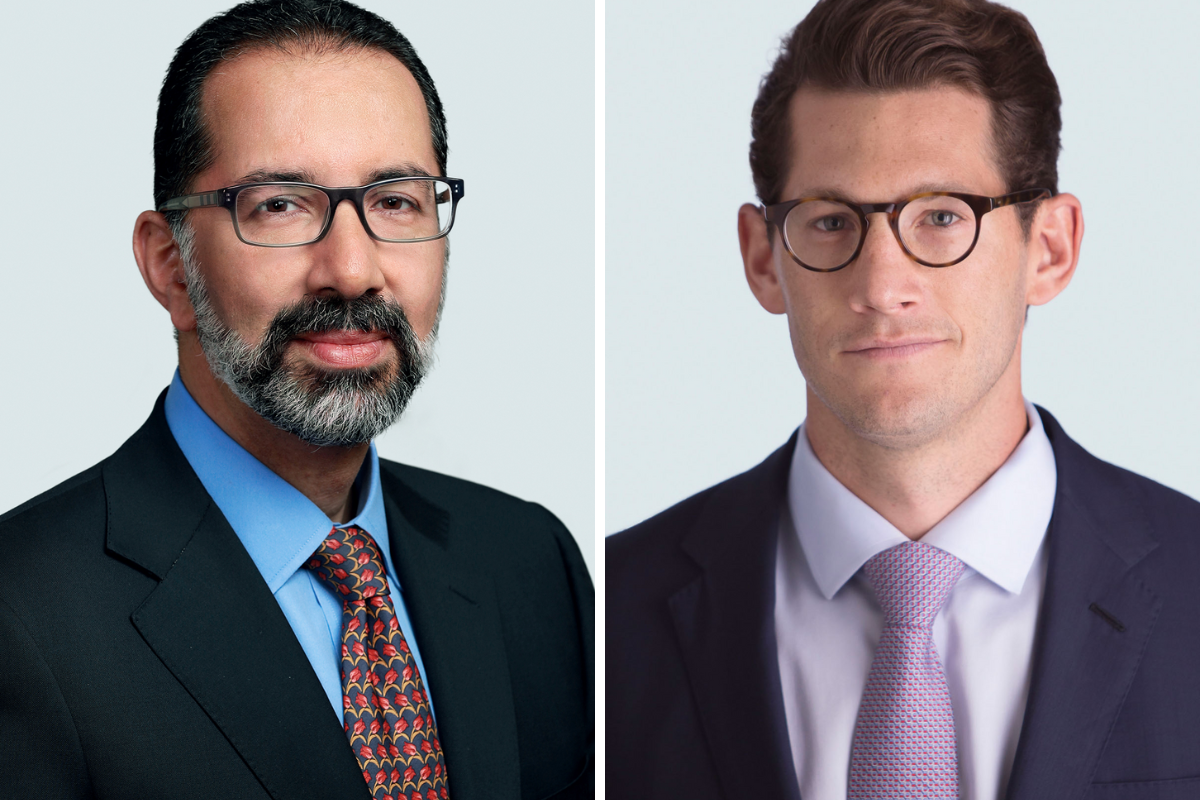
The past few years have marked a generational shift in what it means for investors and companies alike to embrace ESG – environmental, social, and governance – factors, and among the most influential movers has been State Street Global Advisors. When we spoke last week with the giant asset manager’s CEO, Cyrus Taraporevala, and global head of asset stewardship, Benjamin Colton, the world was now contending with the ways the Russia-Ukraine war was going to affect ESG’s role in the future of business.
In his annual proxy voting guidelines letter to board directors of SSGA’s portfolio companies, representing more than $4 trillion in assets under management across 2,100 clients in 58 countries, Taraporevala asked readers to recognize the urgent need for clean energy transition clarity. He and Colton, who oversaw the development of this year’s guidelines, told us in our discussion that even though they sent the letter and guidelines in January, their guidance has not changed.
That’s because even though the war, the COVID pandemic, a reckoning with racial injustice, and alarming climate research have pointed out specific ESG risks, they’ve also highlighted that ESG is core to holistic investment strategy. As Taraporevala told us, “it’s very sloppy shorthand” to say that traditional “financially important metrics are somehow separate from ESG” with an ESG lens constantly shifting to meet an immediate ideological concern.
We discussed with Taraporevala the guiding principle of “value, not values” that he’s used in his six-year tenure as CEO (ending with his retirement later this year) and with Colton why and how SSGA has been a leading investor voice on increasing corporate diversity and transparency around it, and what both want and expect from this year’s proxy voting season, kicking off in April. Watch the full conversation below, and sign up for The JUST Report to get access to exclusive bonus clips not featured in the full interview:
The following interview has been edited for length and clarity.
JUST: I would say it’s safe to say that when you set up these guidelines for the year, that you likely weren’t predicting global conflict with Russia and a war going on in Europe. Does this war change your advisory or overall investment strategy for the near or long term?
Cyrus Taraporevala: When it comes to our proxy guidelines and ESG issues, by definition these are long-term issues that go over many, many, many years. We don’t react to things in the moment. Of course, what’s going on, like so many other things, does change our investment philosophies and tactics in the moment, including the fact that Russian securities are basically untradeable. But that’s separate and distinct. We will do what we need to do for our clients in the moment, but I just want to draw a distinction between the two topics.
JUST: Does there need to be a new set of expectations around the energy transition? With that being so fundamental to long-term climate strategies, and this conflict throwing the entire balance of oil and gas supplies around the world into disarray, how does that affect what you’d be advising to companies? Are these conversations that you’re having?
Taraporevala: In a sad way, because this conflict is terrible and tragic from a human perspective, it actually just reinforces what our proxy letter talked about when it comes to climate. We are pushing our portfolio companies to tell us not whether they want to get to net zero, but also as importantly tell us how are they going to get there. We also spend a lot of time talking about two concepts that I want to make sure you understand.
The first, which is very apropo of what you’re talking about, was this point that demonizing the fossil fuel industry and having this simplistic “green is good, brown is bad” approach was not something we subscribed to. We wrote about it in early January – we weren’t waiting for a war to talk about it. Our view is we are going to need fossil fuels for quite a long time through this transition. We believe the oil and gas companies are going to be part of the solution. They need to be part of the solution, so we need to engage with them. We need to work with them, support them, as they go through their transitions. And green versus brown is too simplistic. Think of it as a color spectrum, if you will. You’ve got dark brown – dare I say, dirty brown – forms of thermal coal, all the way to very light brown, think natural gas. And you’ve got green. You’re going to need some form of the lighter browns for quite a long time. And as I said, it’s sad but true, this recent conflict only reinforces and underscores that.
The second point we made about climate is this notion of what I coined in an op-ed in the FT last year “brown-spin.” Now, we all know what greenwashing is, right? So brown-spinning is basically where the pressure on publicly traded companies is becoming so heavy that they are looking at their highest emitting assets and basically saying, “You know what, I’m just going to sell them, get them off my books. I don’t have to deal with this topic of conversation with my shareholders.” But what does it really accomplish? Ultimately, they’re being sold to either private equity owners or some other form of maybe a state owned enterprise, or a hedge fund, et cetera. And in many cases, the level of emissions for the planet not only stays the same, but actually may increase because the new owner cares even less about it and doesn’t have the same pressures that a public company would have to make a transition on those emitting assets. Tragically for the shareholder of a publicly traded company, it’s often sold at a discount, i.e. the buyer sees a wonderful IRR.
So you have the worst of all worlds. You have the planet no better off, potentially worse off, and you definitely have the shareholder worse off. So what have we really accomplished? The frame I used in op-ed was imagine the world in 2050, where every publicly traded company can say they’re at net zero and have no emissions, but the total amount of emissions in the air and on the planet are the same.
These are themes that we have been talking about for a long time, and again, this current conflict simply underscores them.
JUST: Do you think that as it underscores it, it also sets back the timeline?
Taraporevala: I don’t know about that. I think it’s too early in this moment and probably very speculative depending on what scenario comes to pass. Right now when it comes to this conflict, our focus is on our clients and our people. We have quite a lot of people in Europe, people not too far from Ukraine and Poland, and people all over the world with family ties and loved ones there. The rest will come.
SSGA’s guiding principles
JUST: Can you tell me how the proxy voting priorities have changed over your tenures at SSGA and what stands out as unique about 2022’s guidelines?
Taraporevala: There are three core beliefs that we hold very strongly to.
The first is that strong, capable, and independent boards are truly the linchpin for driving long-term shareholder value, and that has not changed. We are steadfast in that belief.
The second is that when it comes to our asset stewardship activities, it is about value, not values. And this is a difficult one because we all do have values. We’d love to espouse them, but when it comes to other people’s money, which we are the fiduciary for, we have to ask ourselves, how does this drive value? How does it either increase the returns or mitigate the risk? That is our North Star.
And then the third, starting to get to the other part of your question, is we’ve been at this for a long, long time. We’ve been at many of the topics we are talking about in our proxy letter for well over a decade. We have been pushing our portfolio companies to improve their disclosure on topics that we believe, in addition to the more traditional financial metrics, do drive long-term risk-adjusted value. We’ve been pushing them on effective board oversight.
So if you just do a quick checklist of what’s stayed the same, what’s changed, and how has it evolved? You could say broadly on ESG that “G” is the furthest along. That’s where a lot of this started. And really, this goes back to Graham and Dodd. Well-managed companies with good boards do better and should be accorded a premium. There’s nothing particularly “ESG” or new about it. On climate, we have believed for a long time in the systemic risks around the “E.” But I would say certainly the level of focus and emphasis more broadly has increased over the years, and we think will continue to increase over the years. And the “S” is probably the epicenter of where the greatest change has happened over the last several years.
We’ve been ahead of the curve in terms of asking our portfolio companies for more disclosure on human capital management, but I would say all else being equal, the clarity of our expectations has increased. The way we are holding boards accountable, using not just our voice, but even our vote, that has gotten sharper.
When we think about our proxy guidelines, we don’t actually start with what’s going to be unique and super different every year. In some ways that would drive our portfolio companies crazy and is not really in the best long-term value creation interest. They are slow burn issues that take years, and we want to signal to our portfolio companies well in advance that these are the issues we’re going to talk about. We believe consistency is a good thing, because otherwise you just rip some of your portfolio companies around and nothing happens year over year.
Ben Colton: In the past decade, we said that climate change is a material risk for all companies, that it’s an issue that belongs with the board, and we published guidance on effective oversight of climate change and climate-related risk. And this year we’ve escalated it to really articulate what we’re expecting from a climate transition plan. We’re going to have targeted engagement campaigns on some of the most heavy emitting companies in our portfolio.
You can also see this on the social side. When we launched our Fearless Girl campaign, which held companies accountable for having at least one female director on the board, it wasn’t about having a token female director, this was really about diversity in thought – a critical mass of diverse perspectives that lead to benefits of seeing risk differently and having less groupthink, more innovation, and better business outcomes overall. We’ve escalated our expectations for companies not only on gender diversity, but to have directors from underrepresented communities. This year our voting guidelines expect 30% female representation on boards in addition to one director that’s from an underrepresented community, in developed markets, and the expectation of one female director is expanded to all markets.
The other trend that we’re seeing is a lot of blending between the issues. We’re seeing how corporate governance issues are also mixing with environmental and social issues. How does the board oversee a climate transition, or think about risk management related to racial and ethnic diversity, and human capital management? We’re also seeing shareholder proposals asking for more disclosure on how the board is overseeing these issues. And with a just climate transition, that’s a combination between social and environmental issues. How are our companies thinking about the transition and also about their workforce and the communities in which they’re operating in that context? How are they going to reskill and retool their employees when their business lines change? How are they going to think about those communities in which they’re impacting and operating within?
‘Value, not values’
JUST: Something that tie this all together is, Cyrus, what you said about value, not values. Can you unpack that a bit? Every week you’ll see debates around, “Oh, is this ‘woke capitalism,’ are companies getting too ideological?” And you see pushback from either side, from those saying companies aren’t doing enough to those saying they’re doing too much.
Taraporevala: Look, that narrative is definitely out there. But as I said, for us, this is not about politics. This is not about what’s “woke.” This is about the best risk-adjusted return. A huge part of our business is indexed assets. And in many ways, index equities are quasi permanent capital. As long as the company’s in the index, my index managers, unlike my active managers, have to hold that company in their portfolios, which means they don’t have the luxury of saying, “I don’t like what’s going on, let me just press a button, let me get out.”
And for some strange reason, my clients don’t like the S&P 499 worth of returns, they expect the S&P 500 worth of returns. So we have to engage with these companies, we have to think about the long-term risk adjusted returns.
For us, this “value not values” compass really helps us. It’s human, it’s natural, to want to sometimes have your values reflected. But we have to catch ourselves and say, no, no, no, that’s not this topic. We have to focus on value. We don’t subscribe to the idea this is political, and it’s actually a shame that narrative is being framed as such.
JUST: Reading the guidelines and hearing everything that both of you are saying, these arguments are very much tied back to a common sense assessment around risk and value creation. A lot of what this would be considered though, too, is ESG. Is it still useful now in 2022 to consider ESG as an alternative lens to assessing a company, or are lines blurring between what is just smart management, smart investing, and what is ESG?
Taraporevala: We’ve never actually bought into this ESG/non-ESG dichotomy. It’s just not binary. Here’s the way I think about it. An investor puts together a rich mosaic of different data and information that drives her decision about whether or not to invest in a company. (And I’m purposely focusing on the active side for this part of the conversation.) Different investors can look at that same rich mosaic of data and information and reach different conclusions. That’s cool. My equity value managers have a very different portfolio than my equity growth managers. So we are not suggesting the answer needs to be the same, but we do believe that having the right data and information disclosed is important, from which different people can reach different conclusions. That’s the wonderful thing about markets. It’s very sloppy shorthand to say financially important metrics are somehow separate from ESG.
There are traditional financial metrics – think FASB. And there are ESG metrics that also ultimately drive risk-return tradeoffs, so they are very meaningful financially. To us, it’s putting it all together. For example, when we engage with our portfolio companies, we don’t have just our asset stewardship team engaging with companies. We have our portfolio managers on the active side, side by side with our asset stewardship team at meetings with companies, and when the time comes to decide our votes, there’s a discussion and perhaps even a debate among our folks.
My hope, maybe it’s my naive dream, is that in seven to 10 years, and I fear it might take that long, we’re not even talking about ESG as a separate thing.
When I go around the world, I don’t have clients say to me, “Do you think about price to earnings? What about dividend yields? How are you thinking about price to book?” That’s part of the mosaic, right? And just given the newness of ESG, parts of it do feel a little different, and it’s going to take a little time for folks to adjust to it. But again, I go back to governance. I grew up studying Graham and Dodd, and it was always very clear that good companies should be accorded a premium and governance was part of what a good company was. Good management, good boards. So we never said, oh, but that’s separate, let’s take that out of the regular Graham and Dodd analysis and have it in a separate bucket and we’ll come up with different portfolios based on that.
Colton: One of the crucial factors of this ESG discussion is more quality and consistent data, as well. As we have more historical data, as we all coalesce around common standards – we think SASB is a really good starting point – that conversation will continue to evolve as we get more clarity around how we’re measuring outcomes. We joked one time with a company, where they said the quickest way that we’re going to reduce our carbon emissions is by just changing our data provider. And that shouldn’t be the case, but sadly that is the reality.
We can’t even get consistency among the same data points that we’re looking at. But we do think that is improving, and one of the ways to continue to get more consistency is by having asset managers and asset owners be clear on what their expectations are, be clear to companies on what kind of disclosure they want to see and what’s going into their analysis. How are we thinking about net zero as an asset manager and what kind of disclosure do we want to see? We need to understand the guardrails, and the interim goals of achieving those long-term expectations.
What the ‘S’ means in 2022
JUST: You mentioned how much the “S” has changed in recent years. Can you tell me how State Street defines it now?
Colton: Cyrus’s letter three years ago underscored the importance of board oversight responsibility in thinking about corporate culture. That is so closely connected with human capital management. How is the board monitoring, enhancing, and overseeing corporate culture? How are they holding management accountable for identifying hotspots within their organization, or integrating the voice of employees and using not only the risk KPIs, but also synthesizing information? What a company needs to be successful for the next 10 years is probably known somewhere within the organization already. How do we track that information and how does the board utilize their employees to the fullest?
Now we’re also seeing the Great Resignation, and this competitive landscape for talent, and also a work from home environment for many companies. Attracting and retaining talent and creating a corporate culture, maybe in an untraditional way, is more important than ever. These are the types of things that we’re talking about with companies, and we’re trying to be clear on what our expectations are and what kind of disclosure we want to see. And that really comes through in some of those guidance pieces that were attached to Cyrus’s letter this year.
JUST: On that note of how companies are navigating the challenges around labor over the last year, where there really seems to have been a shift in dynamic between workers and management of companies, what are you advising in regards to how much a company should be investing in its workforce while also navigating the fears of inflation and the overall difficulties of this economy?
Taraporevala: We are mainly asking questions of companies – we are not here to dictate. That’s between management and their boards. How are you thinking about it? How important is talent and labor to being able to enable your strategy? Where are you seeing the major pressure points? How is your attrition? How is your ability to attract new talent? How is your ability to attract diverse talent? We hold boards accountable, boards hold management accountable.
JUST: Target announced in their last earnings call they are planning a major investment in their workforce, where starting salaries are going to range from $15-24 an hour. Other companies have made similar investments recently. Do you expect to see more companies investing in their workforce in this moment?
Taraporevala: I’m not commenting on individual companies, but will talk generally.
I don’t really buy into this narrative of companies are now suddenly, over the last one or two years, investing in their workforce. We believe great companies have invested in their workforce for a long, long time. The specific tactics may vary, but investing in the workforce – which is a lot more than just compensation, it’s about helping people think about their careers, it’s about advancing their careers, it’s about mobility, it’s about the culture of the organization to attract, retain, and motivate a great workforce – that’s always been a huge competitive advantage for some companies.
JUST: Ben, broadly speaking, what do you expect of this year’s proxy season? And should we expect some more ESG-centric battles similar to what we saw with Engine No. 1 and ExxonMobil last year?
Colton: That was really about long-term strategy and finding and determining which directors are best suited for overseeing such strategy. What I will say is that as human capital management becomes more and more important, and get more disclosure around those issues or see the lack of disclosure from some companies, I would suspect that you’re going to see the social issues appear more and more in those discussions when you see contested situations, because it really is a material issue for all companies.
JUST: So issues like around pay or gender diversity, equity, inclusion, those types of issues.
Colton: I think broadly human capital management, how a company is looking at their workforce, its composition, all of the issues we’ve underscored as material. I would expect to see companies disclosing more information, and also in those contested situations, that information being further up in the pitch deck, so to speak, than it was in the past.
We filmed this interview and will be releasing clips like the one below, along with a lightly edited full Q&A video, including material not included in the above feature. To make sure you don’t miss any, subscribe to our newsletter and follow us on Twitter and LinkedIn.
