
We appreciate that many of you eagerly await the arrival of our newsletter every Friday morning and so are grateful for your patience and flexibility to let us bring you CNBC’s latest coverage of our newly released report – in honor of Mother’s Day – on how companies are really stepping up to support working moms (and parents overall).
Our Top Companies for Parents report (NBC coverage inside) spotlights some of the leaders, including S&P Global, American Express, Deckers Outdoor Corp., Goldman Sachs, and Splunk Inc. All offer flexible scheduling, as well as benefits such as fully remote or hybrid working arrangements to help parents and working moms in particular navigate work-life balance., They also provide 20 or more weeks of paid parental leave for both primary and secondary caregivers, parental leave parity for all caregivers, backup and subsidized dependent care, and more.
Beyond this, many companies are also doing more to explicitly accelerate progress for women within their workplaces. Deckers, for example, sets quantifiable and time-bound targets to achieve gender parity in leadership positions and its Board of Directors. Goldman Sachs sets hiring goals for women in both entry level positions and senior management. And S&P and AmEx disclose conducting pay equity analyses to ensure fair compensation regardless of gender.
At a time when many forces seek to divide us, this feels like something we can all join together to celebrate. Explore the list here.
Be well,
Martin
(Bright Horizons)
“This is really a wake up call to all employers that they need to move both quickly and substantively to offer these kinds of benefits. The pandemic afforded working parents some flexibility, that in many ways, has started to dissipate or has fully dissipated in this return to a more traditional [work] environment. Employers leaned in during the pandemic, and are now leaning back out, but are not placing supports to compensate for that change.”
The New York Times takes a look at the impact generative A.I. is having on the climate, now that the implications of the technology are becoming clearer.
Nasdaq examines the ways that Artificial Intelligence could be used to improve ESG assessments and keep appetite strong for new funds.
According to Fortune, Millennials need to boost their AI skills to avoid having their jobs swallowed up by Gen-Z.
Harvard Business Review releases a fascinating bit of research that shows that when employees identify with their company, they are far less likely to recognize gender discrimination at their office, or forms of disrespectful conduct that have an underlying bias. Learn more here.
The Washington Post chronicles how corporations are scuttling their DEI language, as many are starting to view it as more of a risk than a benefit, at the same time that McKinsey’s initial research on the benefits of DEI has come under scrutiny for having results that cannot be replicated. Meanwhile, Fortune takes a look at how diversity chiefs at some of America’s largest companies are preparing for an incredibly divisive election season among their staff.
Yahoo reports that Apple’s latest stock buyback plan is the largest made by any U.S. corporation ever, approving $110 billion in repurchases.

This chart comes from a collaboration between The Harris Poll and Bright Horizons examining the state of childcare across the U.S. for working parents. The research was featured in Fortune and includes an interview that you can read here.
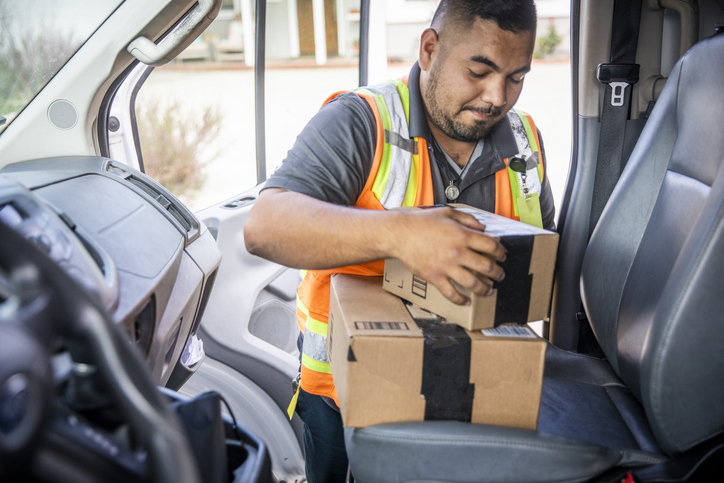
With the price of everything from gas to food remaining stubbornly high – February’s Consumer Price Index numbers released earlier this week showed inflation actually speeding up slightly – workers struggling to make ends meet seem set for further economic pain.
There may be more people in this boat than you think. New analysis co-produced by JUST Capital and Revelio Labs, a workforce intelligence company that we routinely partner with,
found that just over 36% of all U.S.-based Russell 1000 workers are not making a family-sustaining living wage. That means about 6.1 million full-time workers at big publicly-traded corporations do not make enough in the counties where they live (a living wage is location-dependent) to support a family, assuming another full-time working adult and two children. Almost 20% do not earn enough to meet their own basic needs, meaning, a living wage for one full-time employee without dependents.
Solving for every American to get by, and get ahead, is obviously a complex issue with multiple interrelated causes and many (often contested) potential solutions. One thing we know for sure though, is that big employers can make a difference. Increasing wages is part of it, and over the years we’ve engaged hundreds of companies that have done just that. But it’s not the only solution. Lowering the cost of benefits; providing pathways for stock ownership and profit sharing; helping employees with credit support and loan facilities; advancing financial literacy and management skills; even engaging workers on the issue, can all help.
This is what the companies in our Worker Financial Wellness Initiative are focused on, and how many of the companies we rate highly on Workers in our rankings (firms like Cigna, Dayforce, and Ally Financial, for example) approach the problem. There’s also a powerful business case. Our Workers Index, which tracks market performance of our top performing companies on Worker issues overall has outperformed the Russell 1000 by 14.1% over the period from Dec 31 2021-July March 11 2024.
Be well,
Martin
“We want to be a company that attracts top talent to build long-term careers. We do this by not only helping our employees grow professionally, but also supporting their well-being. The Worker Financial Wellness Initiative will cement us as a benefits leader and help us continue to enhance our programs and resources.”
In a new analysis with Revelio Labs, JUST reports that 36% of Russell 1000 workers don’t make a family-sustaining wage.
The Washington Post reports that thanks to the AI boom and the push for more clean-tech across the country, our electric grid is being stressed further than it has ever been, and regulators are looking for ways to increase power and improve our aging grid.
According to Fortune, after being out of the public eye for several months, a photo of Kate Middleton with her family is raising eyebrows for potentially being fabricated by AI, bringing more concern to the power of the technology and those using it.
Boeing is overhauling their pay structure following the safety failures around their 737 Max planes, tying more of their employee and executive incentive pay to safety. Meanwhile, a major story this week is that John Barnett, the whistleblower who was first to raise safety concerns with these aircrafts, was found dead the day after he testified in a deposition, NPR reports.
Business Insider reports that starting April 1, restaurant chains that have at least 60 restaurants nationally will be required to pay workers in California at least $20 an hour — 25% higher than the state’s general minimum wage. The question on everyone’s mind: Will local mom & pop coffee shops and eateries also have to raise prices to compete, and will they be able to?
The Tik Tok ban bill has officially passed the House vote and now goes to the Senate. The Washington Post has the story.
The Wall Street Journal reports that Dollar Tree will be eliminating 1,000 stores nationwide thanks to rising inflation, store theft, and merger woes.
In only a few short days since its announcement, the SEC’s landmark climate rule already faces litigation from across the political spectrum. The Verge has the details.
The anti-poverty nonprofit Oxfam America, the nonpartisan Pre-Distribution Initiative, and the philanthropic investment firm Omidyar Network publish a new report on how investors can foster a more inclusive form of capitalism.
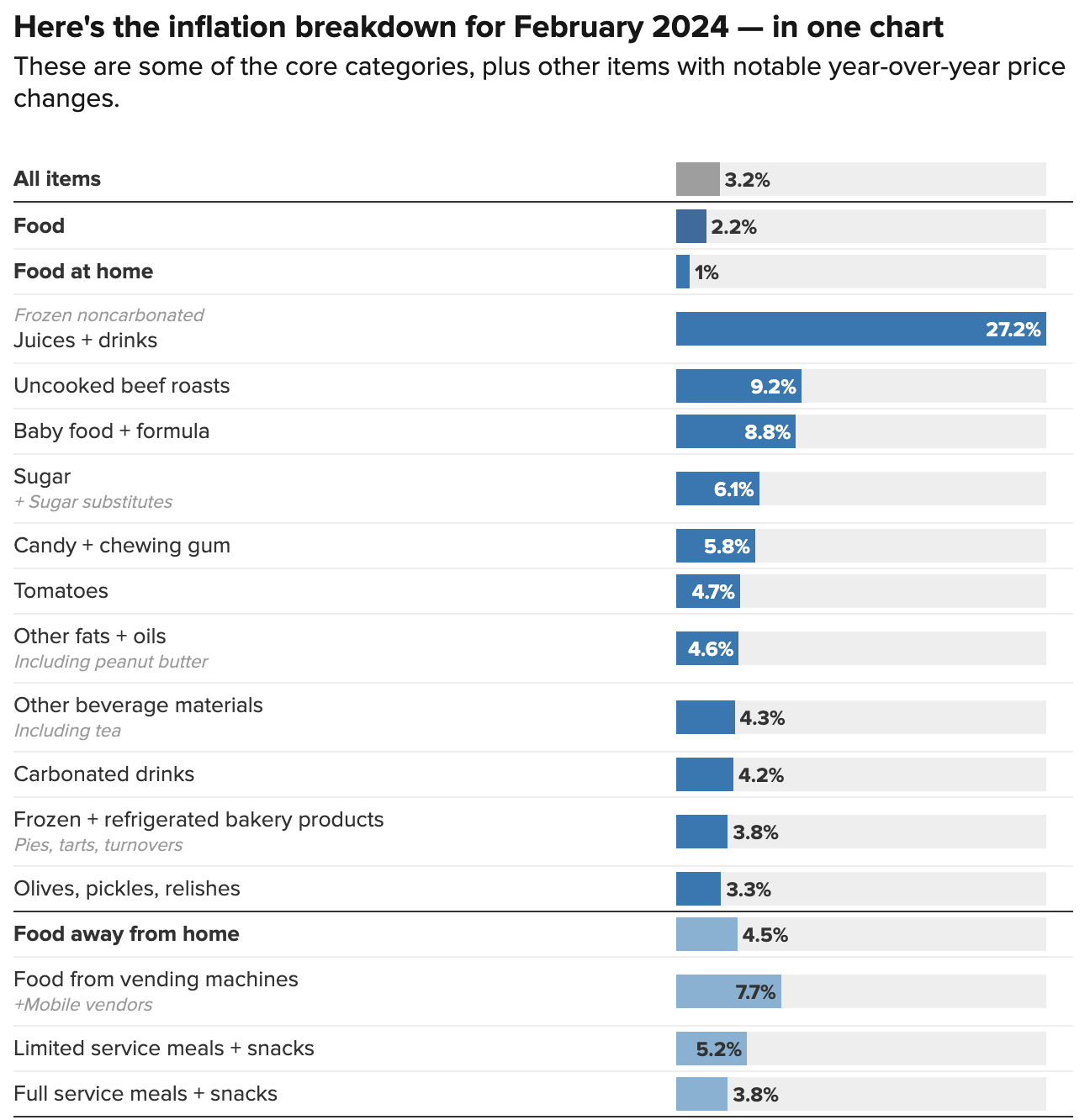
This snapshot of a longer chart from our media partner CNBC details which goods and services saw the most price hikes. As JUST’s Martin Whittaker discusses above, consumers are grappling with higher costs on everything from care insurance to childcare, a harsh reality for many workers as our recent report with Revelio Labs finds that over one third of Russell 1000 workers do not make a family-sustaining living wage. Explore the full chart here and the report here.

The business case for investing in workers is surely watertight at this point. Strengthening career pathways, training, wages, work schedules, health benefits and all-round workforce culture is associated with greater employee engagement, higher productivity, increased retention and other advantages, all of which contribute to superior competitive performance, higher shareholder returns and more. As an aside, our worker-focused index outperformed the Russell 1000 Equal Weighted Index by a massive 103.75% from 1/1/2018 through the end of January this year.
Worker issues also present opportunities for corporations to demonstrate their own unique brands of leadership. As an example, we’re excited to report that the energy company Avangrid (NYSE:AG) – a 2024 JUST 100 member ranking 12th overall and #1 in the utilities industry – announced this week it is joining our Worker Financial Wellness Initiative. Co-founded in partnership with PayPal, the Financial Health Network and Good Jobs Institute, the Initiative supports companies in advancing worker economic wellbeing and is a key part of our Corporate Impact Lab, where we help companies collaborate to take concrete actions in key stakeholder areas.
Looking down the list of companies that top their industry on worker issues in our 2024 Annual Rankings you might see some names that surprise you: Zillow, Amazon, Peloton, Cummins, Disney, Nike, Trane, Keysight Technologies, eBay, RTX, Hasbro, and QuantumScape (Automobiles and Parts in case you were wondering). Each leads in its own way. And their policies, ranging from industry-leading wages to flexible working schedules and sick leave, are exactly the kind of thing the public wants to see. Interestingly, in a survey of 600 C-Suite and HR leaders released this week, improving child care benefits was voted the most important major work benefit priority in 2024. Happily, we track that too.
Be well,
Martin
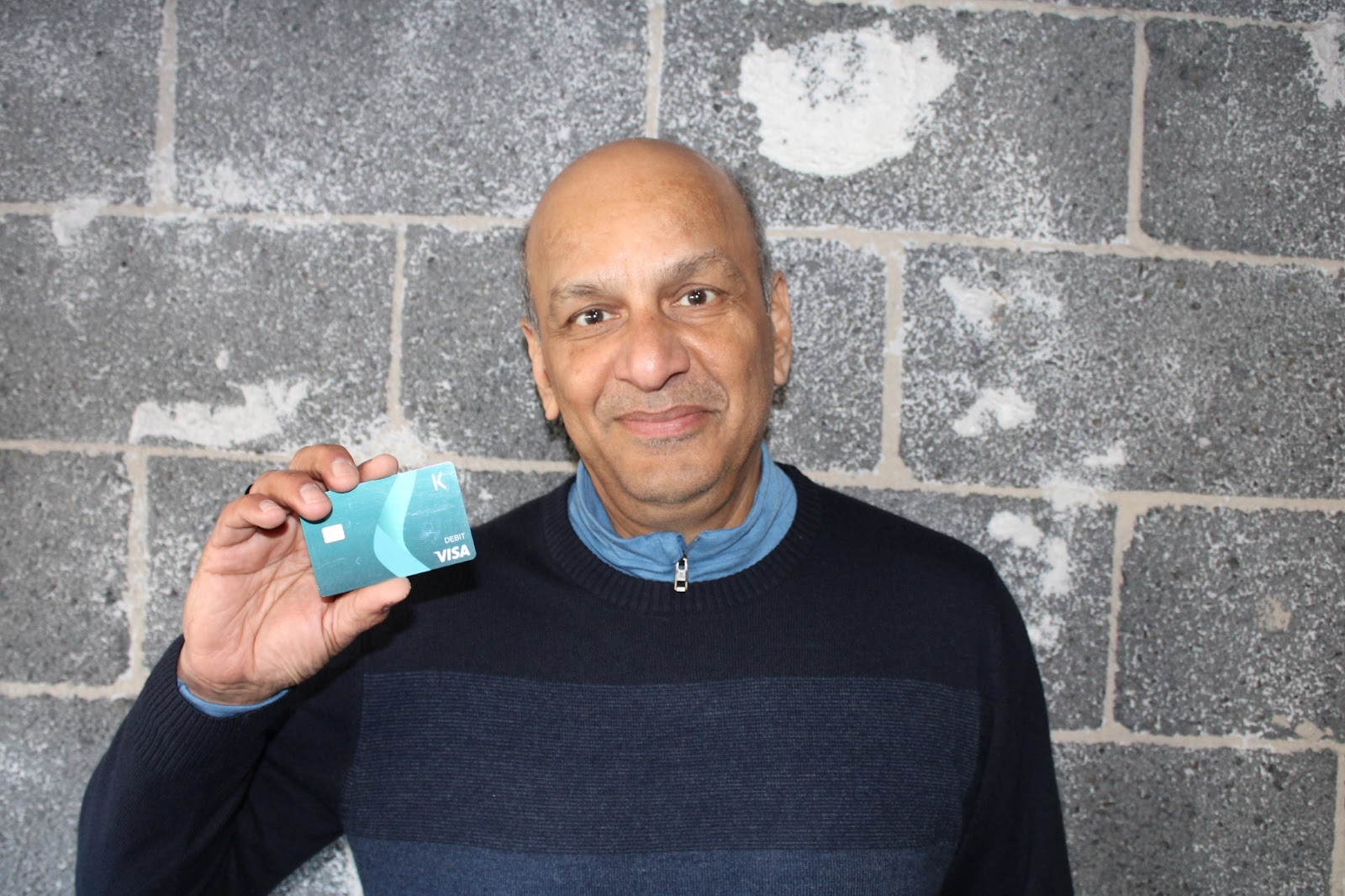
“Modern consumers want to do good. They don’t just want to buy a product – they want their product to have a story and create a positive impact. But how do they know if a company is truly aligned with their values or just greenwashing?
The Karma Wallet Card, launching spring 2024, will directly integrate JUST Capital’s ratings into every transaction – alongside 40+ other data sources, allowing cardholders to see the ethical score of the companies they purchase from in real-time … Knowledge is power – and when consumers are provided with actionable knowledge, they can make better choices.”
– Jayant Khadilkar, CEO and Co-Founder of Karma Wallet.
Avangrid joins JUST Capital and PayPal’s Worker Financial Wellness Initiative. Check out the company press release here.
Karma Wallet announces a partnership with JUST Capital, using our data to help consumers align their spending with their values.
The corporate rush for A.I. dominance is causing a major increase in many company’s carbon footprints as data farms balloon and more energy is needed for processing power. The New York Times has the full story.
CNBC speaks to an engineer who is worried that Microsoft’s Copilot Designer app is not safe for its “E for everyone” rating, saying that the app can create incredibly violent images with the right prompts.
The Securities and Exchange Commission this week adopted rules to enhance and standardize climate-related disclosures by public companies. As The Wall Street Journal explains, the disclosures are slightly watered down from what was proposed by not including Scope 3 requirements, but many companies could find themselves facing pressure from investors and other countries to track them anyway.
The Washington Post reports that the JetBlue and Spirit Airlines merger has been killed in the wake of antitrust objections to the deal. The merger would’ve created the 5th largest airline company in the world.
Bloomberg reveals that 56% of America’s largest companies are boosting childcare perks in 2024, with the rising cost of childcare becoming a consistent pain point for their employees. In a similar vein, JUST 100 company AT&T recently highlighted their investment into fertility and family planning support, another area companies are putting resources in.
A number of investors in Apple issued a joint statement raising concern over the company’s approach to unions after retail employees accused the company of “intimidation tactics to deter organizing”, claims denied by Apple. Apple has agreed to commission a third-party report on its union-related activity, The Financial Times reports.
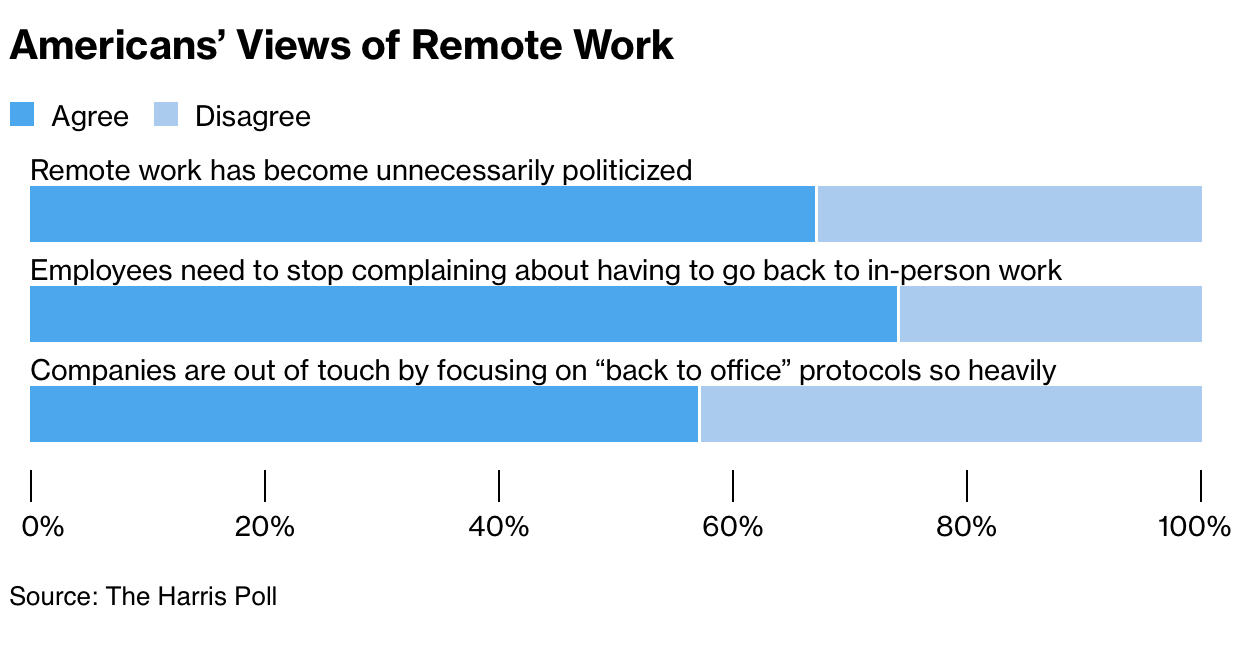
Bloomberg dives deep into recent Harris Poll data on how Americans’ views of remote work are changing. Interestingly, while a majority of Americans believe remote work has become unnecessarily politicized, they also believe that employees need to stop complaining about having to go back to in-person work. Look at all the data here.
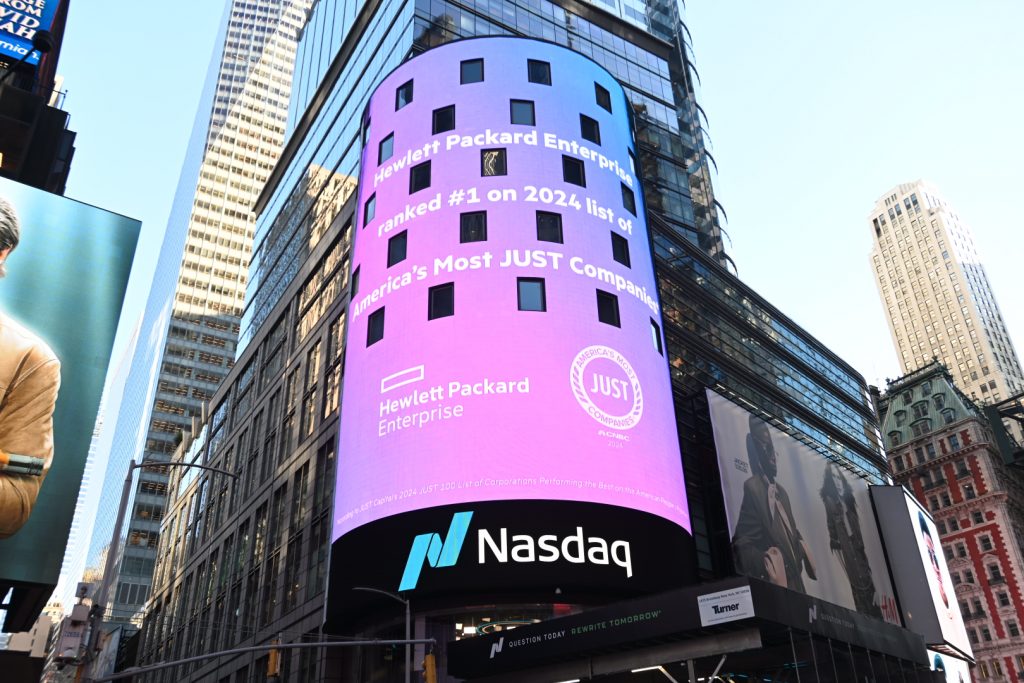
Our annual release of the JUST 100 with CNBC is always a special occasion. It’s a huge deal for JUST Capital to unveil which companies are truly delivering on the issues of greatest importance to the American public. It’s also a moment to recognize and celebrate business leadership, spotlight key issues and spark important debate about the role of business in society.
This year’s event, sponsored by the Stakeholder Impact Foundation and BCG, had a particular electricity running through it.
Maybe it was the magic of the Nasdaq closing bell ceremony with our Chair and co-founder Paul Tudor Jones, and Hewlett Packard Enterprise (HPE) CEO Antonio Neri, whose company took the #1 spot on our list. Maybe it was the power-packed, standing-room-only reception that followed with our fabulous partners Boston Consulting Group, Stakeholder Impact Foundation, and Nasdaq.
From BCG Senior Partner (and JUST Board member) Sushmita Banerjee’s opening remarks, to Andrew Ross Sorkin’s conversation with Paul and Antonio, to JUST Capital President Alison Omens’ panel with HPE Board Chair Patricia Russo (also on the JUST Board), Avangrid CFO Justin Lagasse, and Accenture’s Stuart Henderson, the program struck to the heart of what just business behavior actually looks like, the challenges and tradeoffs that companies face, and what it means to be a corporate leader today. You can read more of their remarks and takeaways here.
It’s a movement we know a large majority of Americans are behind: the idea that business can and must be a force for greater good. Lest anyone think this is antithetical to shareholders’ best interests, I note (as reported last week) that the JUST 100 Index has beaten the Equal Weighted Russell 1000 benchmark by 38.5% since inception (and 3% YTD), and the spread between the top 10% and bottom 10% of companies we rank is 75.5% since January 2018.
I’m going to leave the last word to HPE’s Neri. He is, as Paul noted, the new “gold standard” for business leadership in America. “One of the sayings we have at the company is ‘you have to win the right way.’” Amen to that.
Be well,
Martin
We’ll be highlighting some of the best policies across the JUST 100 in our next few newsletters, but for this week, we’re picking one policy each from the companies that landed 2-5 on the list.
CNBC, our official media partner, led in-depth coverage of our rankings.
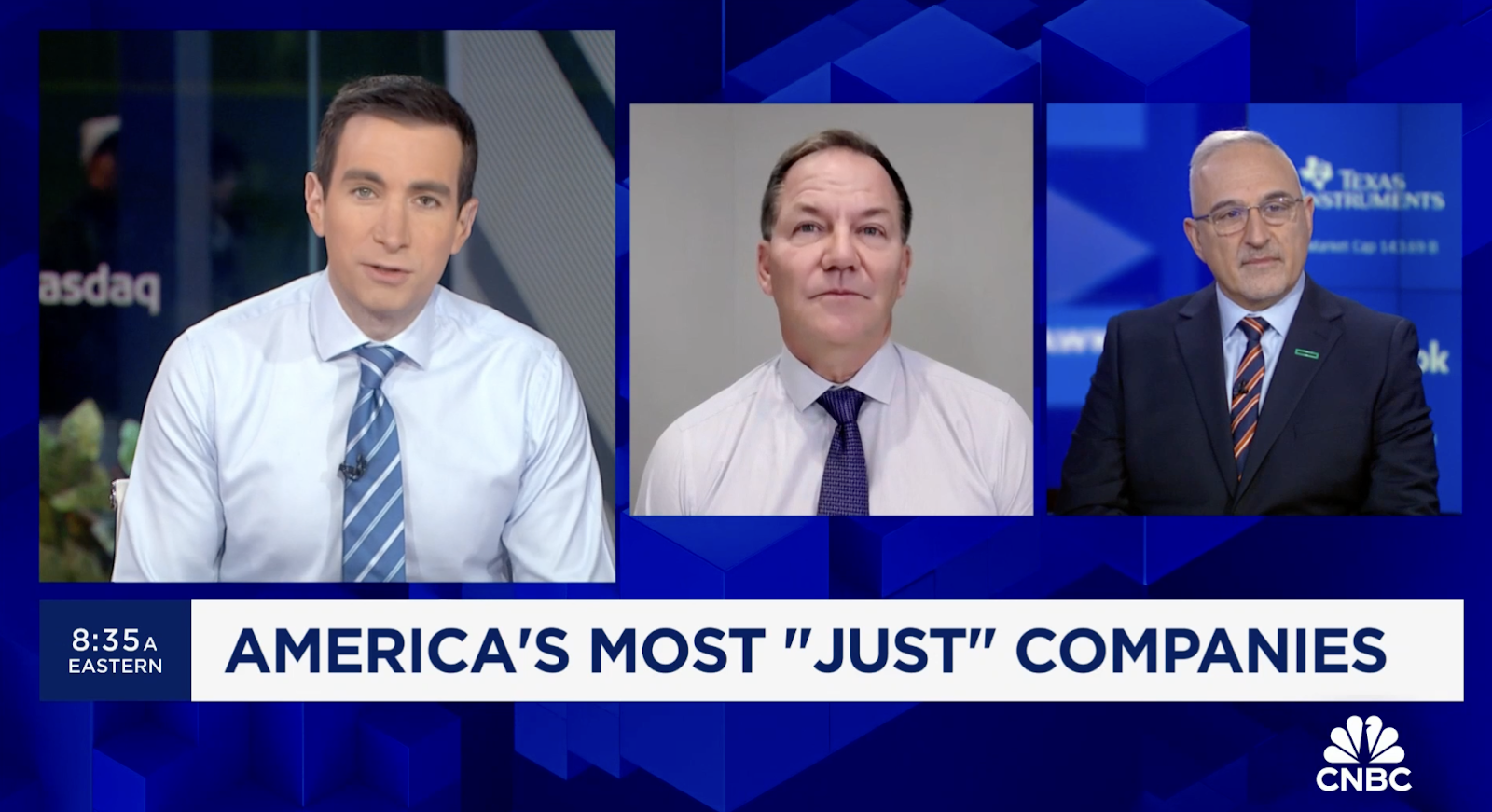
The network’s coverage led off with Andrew Ross Sorkin speaking with Antonio Neri – CEO of HPE, 2024’s Most JUST Company – and our founder and chair Paul Tudor Jones. The three discussed the company’s incredible performance across worker issues, the markets, and more. After you’ve listened to their conversation, you can take a much closer look at HPE’s leading policies and practices in this special deep-dive, and make sure to follow it up with our interview with their VP of Benefits, Culture, and People Experience on how the company implemented its exceptional parental leave policy–offering 26 weeks of paternity and maternity leave to all employees, including a host of other childcare related benefits.
Later that afternoon CNBC spoke with Christophe Beck, Ecolab chair and CEO, to discuss their place on the Just 100 list, the business of water conservation and their environmental leadership and more, and more. CNBC also released a short on-air piece highlighting how these top JUST 100 companies perform on DEI disclosures despite the recent political pushback.
On Wednesday they spoke with Avangrid CEO Pedro Azagra to discuss their ranking, working with the sustainable energy sector, and more. And on Thursday they were joined by Accenture CEO Julie Sweet, our #3 most JUST Company, where they discussed the company’s leading consumer privacy and cybersecurity policies and more.
Additionally, CNBC’s Brandon Gomez discussed overall trends in the JUST 100, and CNBC’s Eric Rosenbaum explored how chip companies fared.
Next week they’ll continue their coverage with interviews featuring the CEOs of Citigroup, Hasbro, and other companies. To keep on top of all of their coverage, go here.
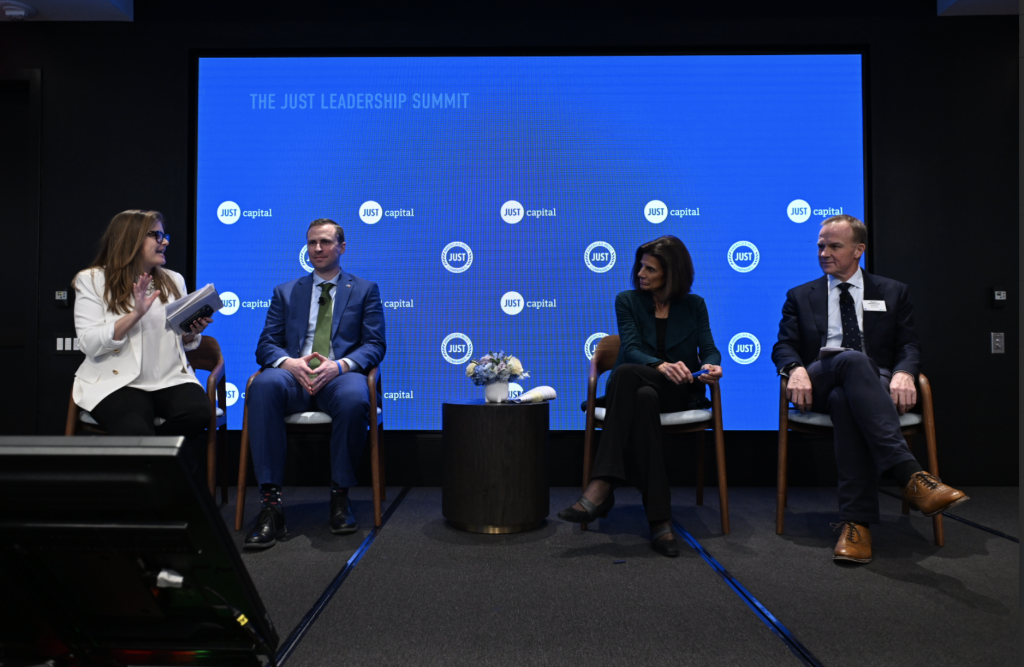
On Monday, February 5, JUST Capital and CNBC unveiled the 2024 JUST 100. The comprehensive list spotlights America’s Most JUST Companies by analyzing how companies comprising the Russell 1000 perform across the 20 Issues the American public believes corporations should prioritize in their business practices.
The event, which took place at the NASDAQ MarketSite and was sponsored by the Stakeholder Impact Foundation and BCG, opened with introductory remarks from JUST Capital CEO Martin Whittaker and a speech from Sushmita Banerjee, Senior Partner and Managing Director at Boston Consulting Group (BCG). Two panel discussions followed. The first featured a macro-level conversation between JUST Capital co-founder Paul Tudor Jones II alongside Hewlett Packard Enterprise (HPE) CEO Antonio Neri, moderated by CNBC’s Andrew Ross Sorkin. JUST Capital’s President Alison Omens then moderated the second panel with HPE Board Chairman Patricia Russo, Avangrid CFO Justin Lagasse and Accenture’s Northeast Market Unit Lead Stuart Henderson where they discussed in further detail what just business behavior actually looks like, what are the challenges and tradeoffs that companies face.
Banerjee set the tone for evening speaking about what she has seen working with some of the most successful companies in the world. “Just companies – in my experience – have leaders who exercise their responsible, ethical muscles every day, versus waiting for their grand moment where they could prove to the world they are doing something great,” she said.
Just actions, Banerjee said, lead to something every business needs to thrive: trust. She highlighted BCG’s Trust Index as an example of how companies can measure and decode trust among stakeholders by focusing on four dimensions: competency, fairness, transparency and resilience.
The companies that top JUST’s rankings prioritize building trust across stakeholders and their business performance benefits. ”When we look at the top 100 companies in JUST’s database, what we see is that they generate 2.5x more value than comparable businesses—their valuation multiples are also up to 47% higher,” Bannerjee said.
Sorkin kicked-off the first panel conversation by prompting Jones to reflect on how far the conversation around stakeholders in American business has come over the last decade.
“If you rewind to 2014, no one would even know what stakeholder business meant,” Jones told the panel. “There was nothing but shareholder governance at that point in time. Of course that was why business was very narrowly focused on nothing but profits. That is one of the reasons why we started JUST Capital.”
Turning to Neri, Sorkin gave the HPE CEO an opportunity to speak on why his company was able to secure the number-one spot in JUST’s 2024 rankings. This year is HPE’s first time at the top of the list after being recognized as a JUST 100 leader every year from 2018 through 2024.
“Our job is to create value and my measure of value is not just shareholder value,” Neri said at JUST’s 2024 Leadership Summit on Monday. “It’s about value for the people who participate in the ecosystem where we deliver business results or other types of outcomes for our customers and employees. Ultimately, stock price is a reflection of how you do things and what you deliver. One of the sayings we have at the company is ‘you have to win the right way.’”
The discussion delved into the correlation between this inclusive approach, business success, and positive societal impact. Additionally, Jones emphasized the need for other companies to adopt a similar mindset, underlining the significance of leadership in today’s dynamic economic and social landscape.
The second panel focused on the strategic investments C-suite leaders have undertaken that have led to top-ranking performances. HPE Board Chairman Patricia Russo, Avangrid CFO Justin Lagasse and Accenture’s Northeast Market Unit Lead Stuart Henderson gave practical examples to illustrate how they approach prioritizing stakeholder value to achieve business success.
“It’s really important that boards have clarity around what a reasonable timeframe is and I want to use an example from Merck,” Russo said. “There was a time when Merk’s TCR was not competitive with other pharma companies, because Merck had decided–as a company committed to science–that they were not going to cut back on R&D in order to get their profits up, they were going to continue to invest in medicines. And today, Merck has the largest cancer drugs on the planet as a result of what they invested in and their stock is now trading at $126 a share. So there is a time-horizon around when value creation for shareholders is the natural follow-on to all the other good things you’re doing for people, customers and communities.”
By aligning their strategies with the values prioritized by all of their stakeholders, these leaders exemplify the potential for businesses to thrive while making meaningful contributions to society. The emphasis on stakeholder value creation showcased the alignment between business success and ethical decision-making, reinforcing that a just approach is morally sound and strategically advantageous in the long run.
When asked what their advice would be to other companies, the panelists each provided their own poignant perspective. Henderson encouraged leaders to steer clear of politics and lean into the business case for transparency, diversity and sustainability, which would deliver good outcomes for shareholders and stakeholders. Lagasse rounded out the panel with a reminder to keep it simple—over-complicating how to empower and enable stakeholders to thrive is where the disconnect comes from. Russo emphasized the importance of focusing on managing human capital just as well as financial capital.
“I don’t get into debates about DEI,” Russo said. “I think the pushback is based on a myth of what it is. If you have a conversation with someone who is rational and intelligent, and you say, ‘Do you believe that different perspectives lead to better discussions?’ the answer will be yes. ‘Do you believe in a work environment where people feel like they can come to work and they can be their best selves because they are part of a team and valued?’ Absolutely. ‘Do you believe we should pay people fairly and the same for the same work?’ Oh, absolutely. Okay, well that’s DEI.”
Sixty-four percent of Americans agree that companies should offer a minimum of 12 weeks of paid parental leave as a way to foster gender equity, and research also suggests that paid parental leave helps companies attract talent, increase retention rates, and improve employee performance.
But the Bureau of Labor Statistics estimates only 23% of workers receive paid family leave, and a mere 9% of the largest U.S. companies currently offer parity of 12 weeks or more to both caregivers, according to a recent JUST Capital report.
Hewlett Packard Enterprise (HPE) emerged as one company that demonstrated a commitment to workers – especially working parents – through its paid parental leave policy. The policy offers 26 weeks of paid parental leave for all parents for any birthing or adoption event with the option to return part time for three years following the leave.
We recently spoke with Samanntha DuBridge, HPE’s Vice President of Global Benefits, Culture, & Engagement, to learn more about how HPE implemented its paid parental leave policy and the resulting impact on workers and the enterprise as a whole. Below are key takeaways from that conversation.
Expanding benefits, inclusively
“When Antonio Neri became CEO, he talked a lot about wanting culture to be a legacy feature for him,” DuBridge said. “He made it very clear early on. He had a strong commitment to what he referred to as a ‘world class culture that was inclusive,’ and that really was built around the lives of our people.”
As the HPE team considered how to address the needs of their workforce, the “star feature” of their cultural vision was enhanced parental leave for all parents. To make the policy as equitable and inclusive as possible, “executives all the way through to our hourly workers” can access all 26 weeks of the paid parental leave benefit. A report from the Urban Institute finds that those most likely to lack access to these paid leave benefits include part-time or hourly workers, people with lower family incomes, workers who are not U.S. citizens, have less formal education, are younger or Hispanic.
Dubridge highlighted HPE’s efforts to ensure that parents received support on their return to work by offering the option to work part time for up to three years. “When we benchmarked and talked to other organizations, part of the feedback we were hearing is, there were a couple of companies that were offering two or three months parental leave, and their employees appreciated it. But then they would come back and they would go from zero to 150 in terms of the amount of work that they had.”
Driving retention, engagement, and loyalty
DuBridge shared that the returns of offering expanded care benefits outweigh the short term costs. (Researchers also recently made the business case for paid leave.)
“There is certainly a reality that in a tighter economy, economic times, some of the programs that companies put in place are harder to hold to, but you’re also making an investment,” DuBridge said. “So you need to determine sort of where you’re making those investments and investing in your people, to me is a really critical component to being a successful company.”
In a JUST Capital interview in 2020, Neri remarked on the early successes of the paid parental program. ”When we looked at the business case, this was the way to retain the best talent,” she said. For us, it was an incredible return on investment. Our attrition rate declined dramatically. And our employee engagement scores improved by 20 points.”.
After conducting research on what policies might most help their employees, HPE’s leaders drafted and announced the plan within several months. To drive buy-in from shareholders and other stakeholders, DuBridge said HPE positioned the policy change as a business opportunity.
“What we found is what we hypothesized initially when we were pitching it, which is that there’s a significant amount of loyalty with people who feel like their company has gone way out of their way during a time that was very important to them,” she said.
HPE was already offering parental leave and had systems in place, “so it was just a matter of being clear about who was eligible and the rules around it and then making some adjustments in the system and training vendors,” DuBridge said. “It wasn’t like we were starting from scratch or that we never were offering anything. If you sort of step back and walk through a process, sometimes it feels a little less daunting than when you first think about the huge variation in the program that you’re going to be offering.”
DuBridge encouraged other companies to start small. “You can always take it step by step. It doesn’t mean that you have to go from offering nothing to what we’ve done at offering six months. People can start to make some progress in that space,” DuBridge said.
For leaders considering proposing or adopting similar policies, she suggests that employers get creative with policies they could offer. “I think there’s a way for employers to offer something that gives people a little more balance and flexibility. Even if it’s just short term, like three months, for example. It could make a significant difference for someone to be able to kind of get their life back in balance.”
Prioritizing family-friendly culture
DuBridge said HPE’s paid parental leave benefits for both primary and secondary caregivers has translated into a happier and more productive workforce.
“It means that you’ve got people that are focused and dedicated. They feel like they’ve had the time that they need to make adjustments so that when they are back at work, they can really be productive,” she said.
The paid leave benefits at HPE have also drummed up significant interest from prospective employees, both those who do plan to have children and those who don’t.
“It’s a signal to all workers that this is a family-friendly environment. It signals to them that we have the right type of culture, which I think has been very helpful for us,” she said.
JUST Capital, in collaboration with partners, established the Corporate Care Network to advance the well-being of workers and demonstrate the long-term value of investment in workers. The Network is committed to driving increased access to care benefits, including paid leave and flexible work policies, and highlighting leaders in the space.
If you’re interested in gaining insights into how to improve on the issues that matter most to the American public, and learning how your company can get involved in the Network, please reach out to JUST Capital impact@justcapital.com.
