
Yesterday, I shared a Q&A I recently had with Steve Beard on LinkedIn. Steve is CEO of Covista, which recently completed a transformation into America’s largest healthcare educator. It’s a fascinating story that got me thinking more broadly about what distinguishes leaders who successfully navigate profound transformation. The news that Enrique Lores has been named CEO of PayPal and The HOW Institute’s annual release of their State of Moral Leadership in Business report added more food for thought on this increasingly critical topic.
Enrique received our inaugural JUST Capital Lifetime Achievement Award last year for his exceptional leadership at HP Inc. During his tenure, he guided the company through a fundamental strategic transformation while consistently investing in workers, customers, and communities. I have confidence he’ll do the same at PayPal.
What do Steve and Enrique have in common? Both understand that transformation and stakeholder investment aren’t competing priorities, they’re mutually reinforcing.
Covista sits at the intersection of workforce, health, education, and technology. When I asked about Covista Open Doors, their new initiative to expand access to healthcare careers, Steve went straight to the heart of it. “We train and develop the folks that care for all of us,” he told me. “And we’ve got an opportunity that we believe is too good and too important to pass up.”
Enrique operated with the same philosophy at HP. At our flagship Best of American Business event last year he shared his conviction that “…business success and social responsibility are not separate pursuits. They are deeply connected.”
Both leaders also embody authentic leadership grounded in personal experience. Steve, a first-generation college graduate, told me that creating opportunity for historically excluded populations is simply part of who he is. Enrique started at HP as an intern nearly four decades ago, inspiring his commitment to workforce advancement and long-view leadership.
The HOW Institute report demonstrates how rare this kind of human, stakeholder-first leadership may be but also how vital it is to the process of transformation.
Be well,
Martin
The New York Times surveyed prominent technologists, economists, and philosophers and found deep disagreement over whether AI will ultimately expand opportunity or accelerate inequality. They also put out a separate opinion piece featuring three economists debating the impact AI is already having on the economy.
Fortune reports that Citigroup CEO Jane Fraser is pushing an employee training initiative across the organization to reskill their workforce with AI tools before automation reshapes people’s roles.
Axios examines why employees aren’t buying the hype for AI the same way their employers are.
The Washington Post reports a widening labor gap as demand for electricians, plumbers, and skilled trades grows while white-collar hiring slows..
Fortune finds more employers abandoning performance-based raises in favor of flat, across-the-board increases — a move meant to more broadly retain workers.
Bloomberg reveals that CEOs are increasingly anxious about economic slowdown, geopolitical instability, AI backlash, and workforce morale with fewer leaders confident they can manage multiple risks at once.
HR Dive highlights new research showing that replacing an employee now costs employers more than $45,000 on average, strengthening the business case for retention.
The Wall Street Journal reports that The Washington Post is laying off about one third of its workforce as digital subscription growth slows and legacy media companies continue to struggle with advertising and audience fragmentation.

A KFF Health Tracking Poll finds health care costs, expiring ACA tax credits, and insurance affordability are top voter concerns, particularly with many companies having to alter their health benefits due to rising prices.
As a wise person once observed, it’s tough to make predictions, especially about the future. That said, our data, our breadth of relationships, and our vantage point over the corporate landscape does afford us a decent perspective on what might be coming around the corner. So here goes.
Happy New Year to you all!
Be well,
Martin
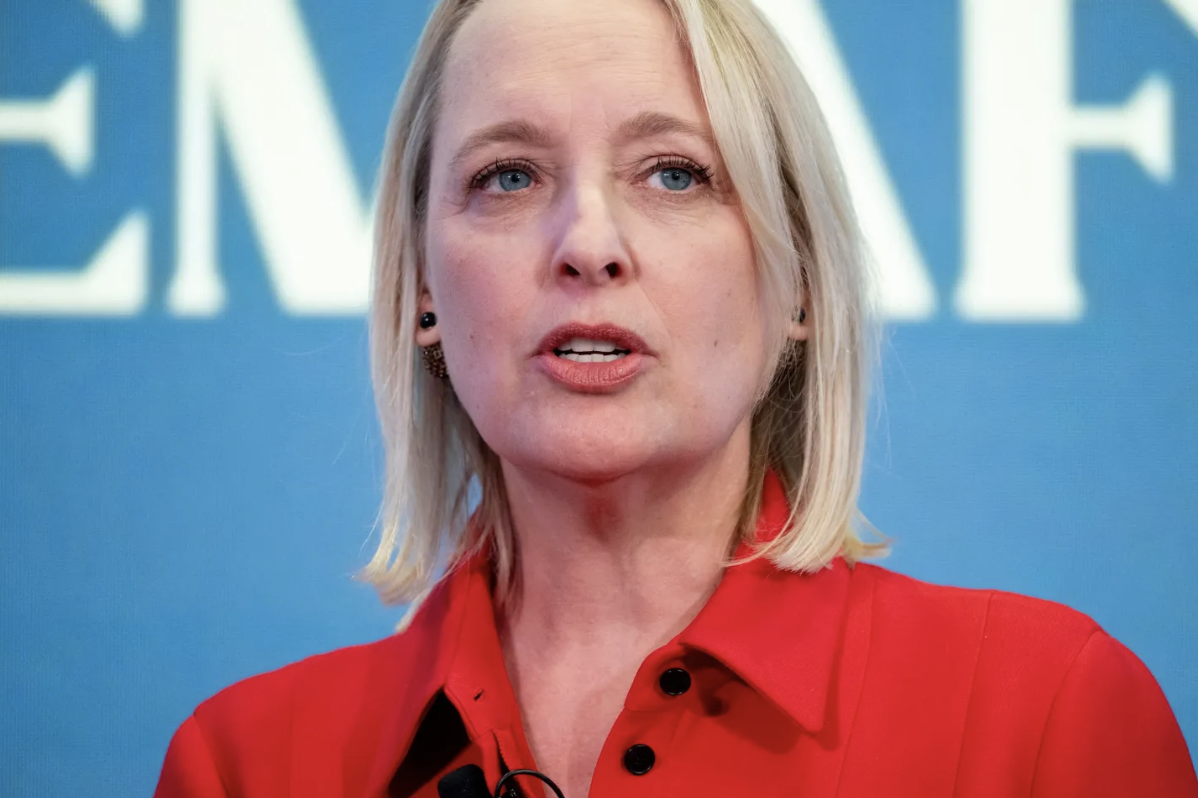
“One question that we ask everyone, regardless of if you’re a consultant or you’re working in technology…we say: ‘What have you learned in the last six months?’ A lot of the time people are asking me, ‘how do I know if someone’s a learner?’ And it’s a very simple way to know. If someone can’t answer that question, and by the way, we don’t care if it’s ‘I learned to bake a cake,’ if they can’t answer that question, then we know that they’re not a learner.”
Newsweek highlights our 2023 report on how only 9% of America’s largest companies provide paid parental leave parity in their article on why parental leave is starting to look up for Americans.
Martin joins the Purpose 360 podcast along with the CIO of IBM, CEO of Keep America Beautiful, and the Managing Director at Lion Tree to give their predictions on the year ahead around AI growth, DEI, corporate responsibility, and more.
NBC News reports that Meta is ending its fact-checking program and replacing it with a “Community Notes” style system alongside other changes after Zuckerberg said the “program intended to inform too often became a tool to censor.”
McDonald’s drops its employee and supplier diversity targets during the same week that Costco pushes back against anti-DEI board members.
Axios looks at which two industries would actually benefit if Trump implements his tariff plan, and Fortune hosts several opinion pieces debating their potential benefits and detriments.
The Washington Post reports that U.S Steel and Nippon Steel are suing the Biden administration for blocking their merger.
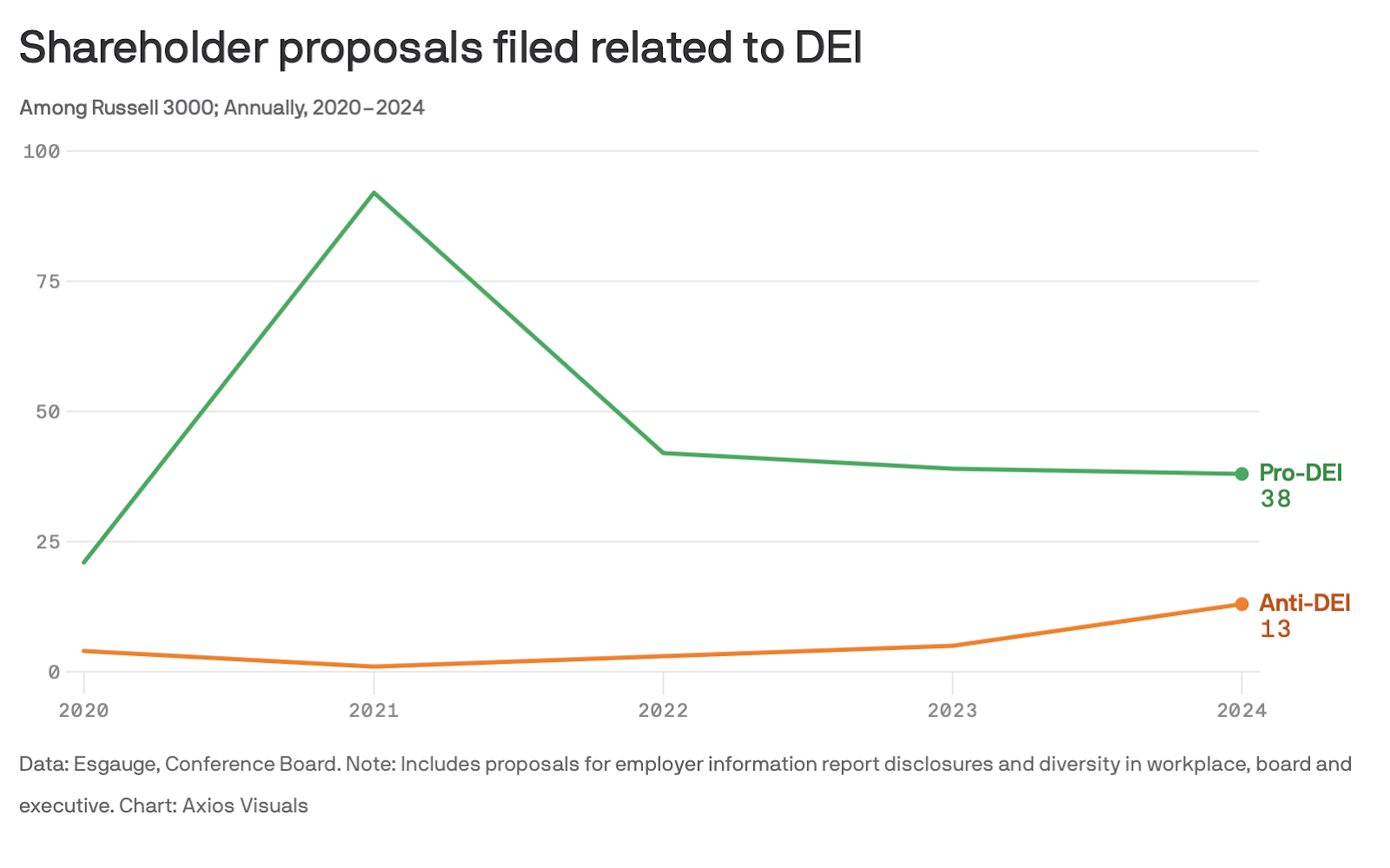
This chart comes from the latest research from Axios, and shows that anti-DEI shareholder proposals have continued to rise since 2020, with an increase over the last year. Explore more here.
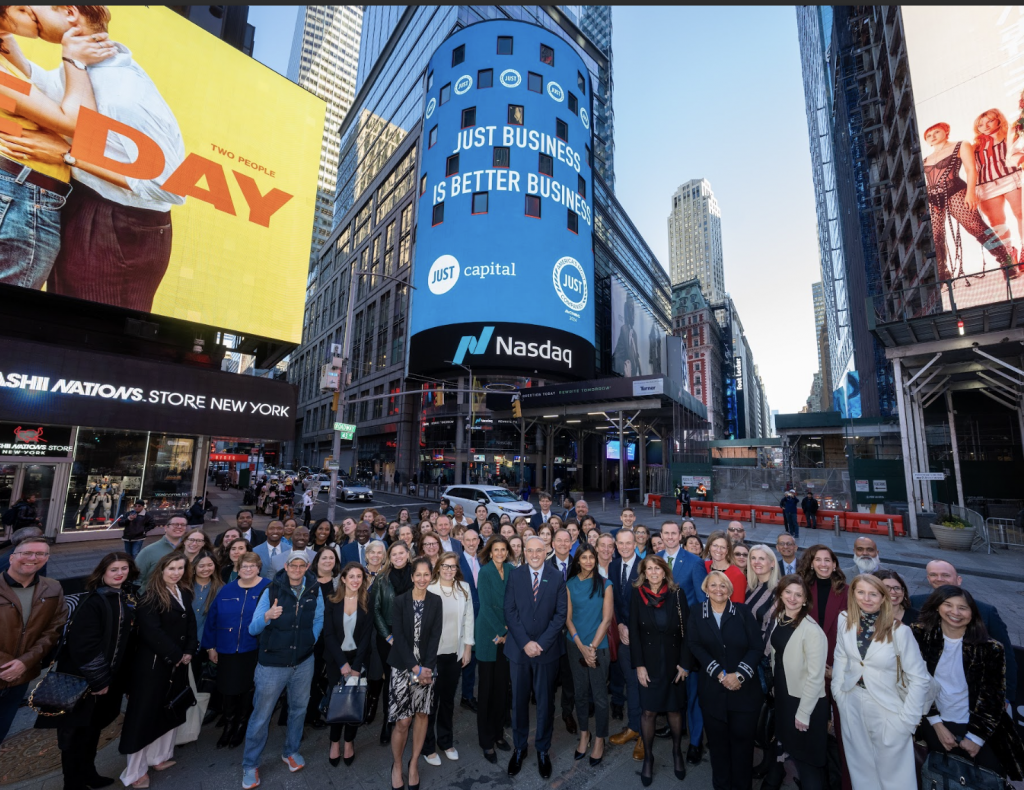
The mission of Just Capital, an independent nonprofit, is to demonstrate how just business – defined by the priorities of the public – is better business. Our goal is to help companies create value for all their stakeholders – their workers, customers, communities, the environment, and shareholders – by focusing on the issues that matter most to Americans.
Over the last 10 years, we have helped to transform how business success is defined. We’ve supported catalytic changes at companies that have improved the lives of workers, enhanced customer protections, strengthened communities, reduced environmental impacts, and established a higher standard of integrity and accountability in leadership.
Independent, objective, and data-driven, our focus is to harness the power of the private sector to build an economy that works for all Americans.
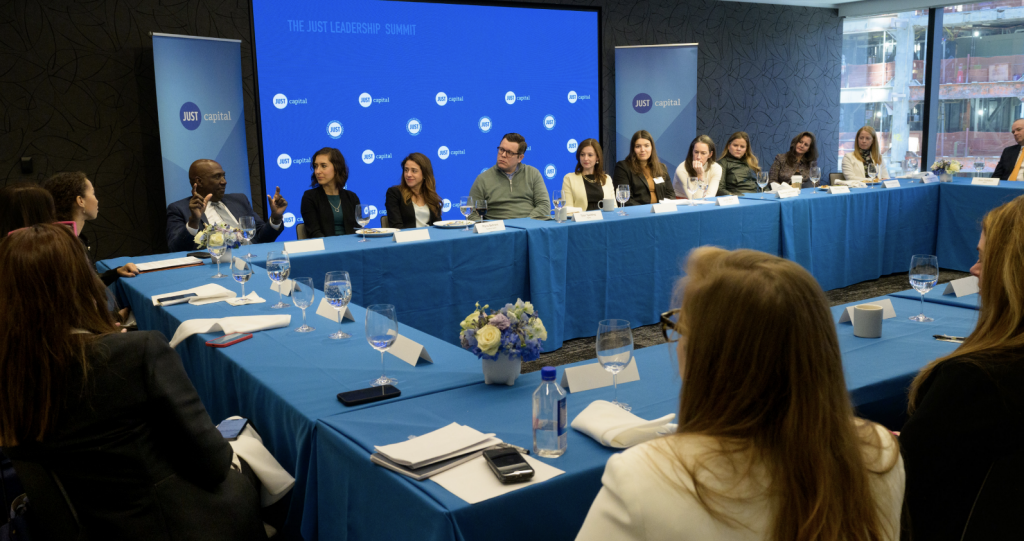
We are committed to providing innovative tools and insights that help companies navigate the evolving landscape of stakeholder expectations. Building upon our trusted offerings like the Ranking Report, we are excited to introduce expanded offerings — Just Intelligence and the Corporate Impact Lab.
Access cutting-edge analytics to navigate complex stakeholder issues and fuel your competitive advantage. Explore Your Company’s Data
Drive your strategic priorities with top executives, curated closed-door convenings, responsive expert insights, guidance, and rich resources. Join the Impact Lab to quickly spot trends, test interventions, weather social shifts, and lead the market. Learn more. Join the Lab
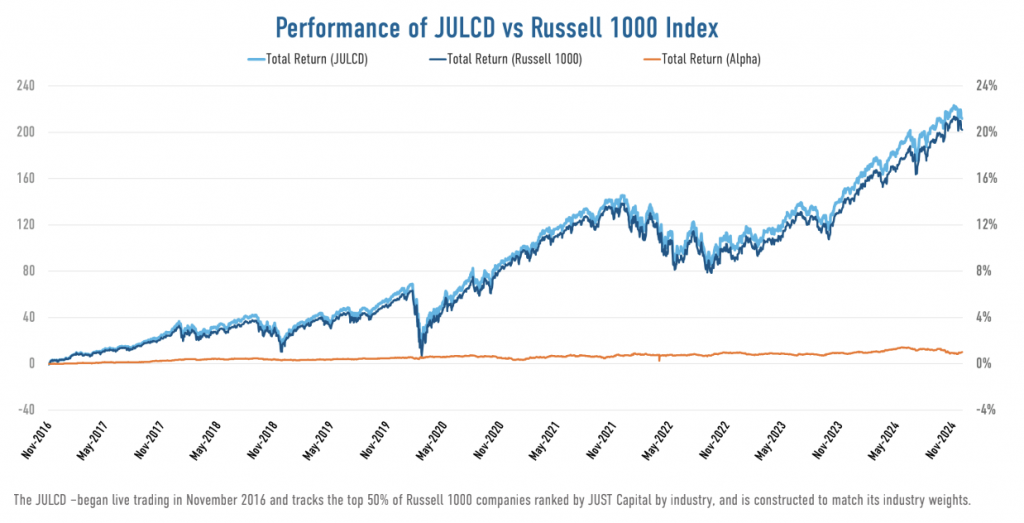
Our rankings, investable indexes, and in-depth financial analysis demonstrate the business and investor case for just business behavior. Our goal is to drive investment capital toward more just companies, thereby incentivizing a more just and equitable marketplace.
As of December 31, 2024 our flagship index – the Just U.S. Large Cap Diversified Index (JULCD) – has beaten the Russell 1000 Cap-Weighted Benchmark by 10.1% since inception.
The JULCD –began live trading in November 2016 and tracks the top 50% of Russell 1000 companies ranked by Just Capital by industry, and is constructed to match its industry weights.
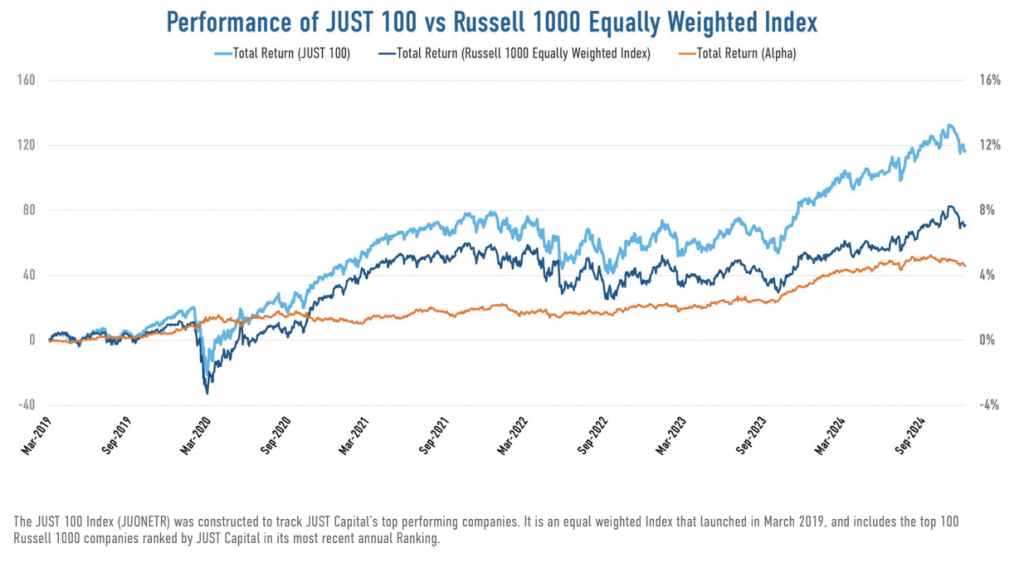
The Just 100 Index (JUONETR) is up 45.8% on the Russell 1000 Equal-Weighted Benchmark since inception.
The Just 100 Index (JUONETR) was constructed to track Just Capital’s top performing companies. It is an equal weighted Index that launched in March 2019, and includes the top 100 Russell 1000 companies ranked by Just Capital in its most recent annual Ranking.
Learn more about our indexes and index concepts here.
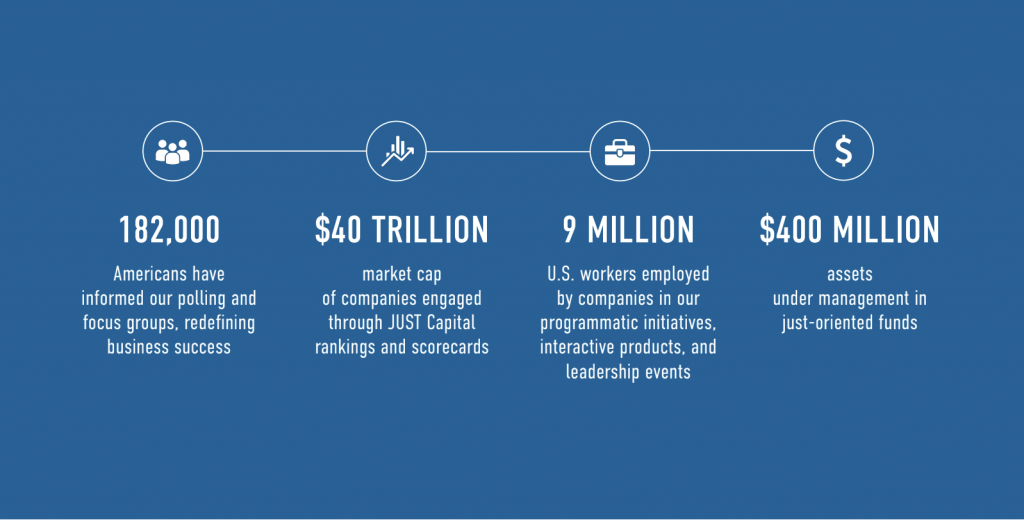
Over the past decade, Just Capital has been shifting the public dialogue about business success in America. We’ve proven that companies are successful when they put stakeholders first — creating better jobs, stronger communities, a healthier environment, and superior shareholder returns. Our data is clear: when companies prioritize what the American public wants, they create a win-win-win for shareholders, stakeholders, and society at large.
Interested in supporting our mission? Make a gift to Just Capital today.

The retail sector represents a vital sector of the U.S. economy, providing essential employment opportunities to over 55 million Americans, or roughly 26% of all employment in the country. And yet, despite its significant role, the retail sector often struggles with job quality. Too many retail jobs are part-time, low-wage positions with limited benefits, unpredictable schedules, and minimal opportunities for career advancement and professional development, leading to high turnover and low employee satisfaction. In 2023, research showed that 44% of retail workers contemplated leaving their jobs within the next three to six months, citing inadequate growth opportunities, mobility, or coaching as the top reasons for potential turnover – outweighing (though closely followed by) concerns about compensation and benefits.
Just Capital’s annual Americans’ Views on Business Survey, our longest running longitudinal survey of a representative sample of 3,000 Americans, highlighted broad agreement among respondents (92%) that retaining and promoting workers from within is an important business behavior. However, just over half (58%) of respondents felt that companies are performing well in this area.
As retail jobs increasingly shift from temporary job opportunities to long-term career options or serve as a vital career launchpad for many, employers must prioritize creating quality jobs that meet workers’ needs, attract and retain top talent, and provide clear pathways for advancement and development. In a sector where high turnover rates and entry-level positions are common, investing in employee development is key to fostering long-term engagement and retention. Within retail’s highly competitive industry environment, engaged, experienced employees can drive operational success and create value. What’s more, engaged employees attract customers, both by creating a better customer experience and by demonstrating the company’s values to customers who prefer businesses that invest in their people.
So which retailers are leading the way in providing opportunities for their employees? Just Capital’s Just Jobs Scorecard and The Schultz Family Foundation’s American Opportunity Index (AOI) assess company performance on job quality by tracking the policy investments that companies make and the outcomes of these investments for their employees. Among the hundreds of companies analyzed in both tools, Best Buy (BBY) stood out for its strong focus on professional development and career advancement opportunities for its workers.
Best Buy’s workforce development focus emphasizes the critical role that job quality and continuous career growth opportunities play in the retail industry. Best Buy’s strong performance on the Training and Development topic in Just Capital’s 2024 Just Jobs Scorecard underscores its commitment to creating meaningful career opportunities, which are especially important in retail where employees often face limited advancement prospects. This dedication is further validated by the company’s performance on the American Opportunity Index (AOI), where Best Buy is recognized as one of the leading retail companies in driving economic mobility and positive career outcomes for its employees. It is worth noting that the company is not immune to industry pressures and underwent layoffs in 2024 as part of a restructuring plan. Nevertheless, the company stands out for several leading practices in workforce development.
Through its tuition reimbursement program, Best Buy provides financial support for undergraduate and graduate coursework to full-time employees after six months of employment. This initiative helps make higher education more attainable and promotes ongoing education and skill development within the company. Additionally, Best Buy invests in on-the-job career development, providing an average of 44 hours of training per employee in FY23. That’s well above the current research-backed leading practice of 30 hours, and the retail industry average of 17 hours. Such strategic investments in the workforce have been linked to enhanced productivity and higher employee retention, benefiting both employees and the organization. In FY23, Best Buy reported a turnover rate of 34%, pointing to talent retention that exceeded the industry average for retail companies assessed by Just Capital.
In addition to its educational support, Best Buy is enhancing real-world industry experience through paid internship programs. In FY23, the company welcomed over 200 paid summer interns from high school, college, and graduate programs, offering opportunities for students from more than 75 universities across 26 states. Best Buy also invests in supporting individuals looking to re-enter the job market. In FY23, its partnership with The Mom Project underscored its commitment to recruiting skilled and diverse talent, including mothers seeking to return to work. Through these initiatives, Best Buy not only sets a high standard in training and development among its peers but also strengthens its dedication to inclusivity and diversity in hiring practices, which Just Capital’s polling indicates is important to American consumers.
Looking ahead, Best Buy is positioning itself at the forefront of workplace innovation by implementing an advanced AI-driven program, designed to anticipate future workforce needs and chart new learning and career pathways for employees. Although earlier this year layoffs accompanied the company’s investment in AI to enhance customer support, the use of AI now may be helping employees adapt to the evolving workplace. As AI continues to reshape job roles and skill requirements across industries, proactive company approaches like Best Buy’s help support employees in remaining competitive and well-prepared for an evolving job market.
Best Buy’s investments in workforce development support professional growth and mobility while expanding opportunities for individuals at various stages of their careers. This approach demonstrates the importance of investing in employees to drive long-term success, showing how effective job quality strategies can enhance retention and contribute to both employee and organizational success.
The policies that emerge from Best Buy’s workforce investment priorities can be tracked through our Just Jobs Scorecard, and the policies’ positive impact on Best Buy’s employees can be explored through Best Buy’s performance on the American Opportunity Index.
To learn how we’re engaging on job quality issues, unpack your company’s performance on the Just Jobs Scorecard, or join a corporate community of practice focused on peer learning and expert feedback on workforce well-being, please reach out to corpengage@justcapital.com.
As Henry Ford said, “If everyone is moving forward together, then success takes care of itself.”
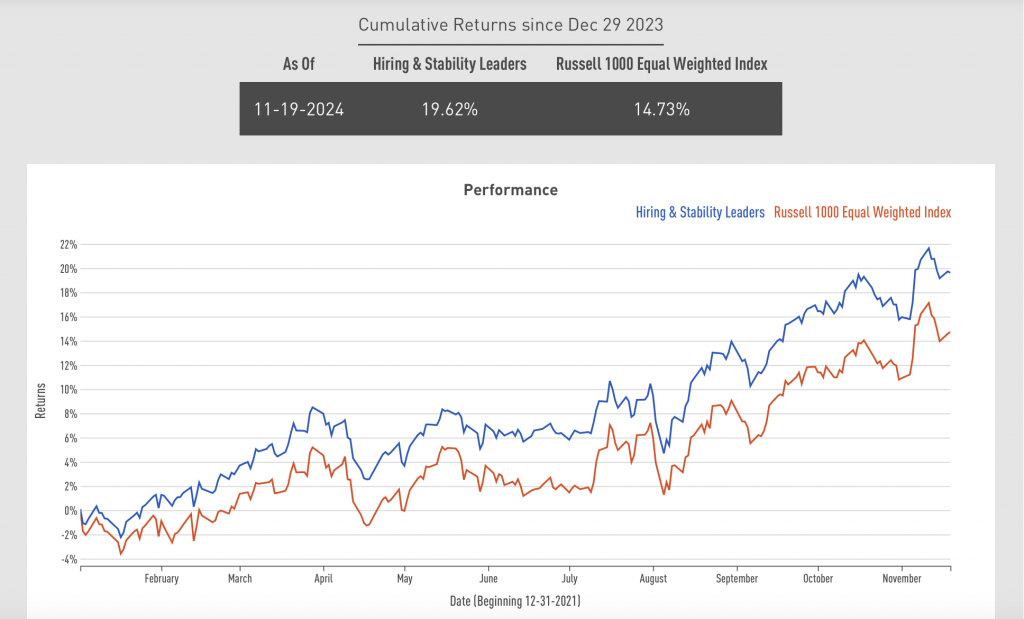
The release this week of our Human Capital Index Concepts puts some real-time market numbers behind this time-tested “employees first” credo. Using our Just Jobs Scorecard analysis, we created three groups of companies comprising the top 20% of performers in each of the Benefits, Employee Wellness, and Hiring & Stability categories. In each case, we tracked these firm’s market performance against the Russell 1000 Equal Weighted Benchmark.
The results are compelling.
All three indexes have beaten the benchmark year to date. Specifically, as of September 30, 2024, the leaders in Hiring & Stability and Employee Wellness were up 16.94% and 16.26%, respectively, outshining the benchmark by 5.09% and 4.41%, respectively. Those in the Benefits category delivered returns of 12.02%, up 0.16% on the benchmark.
We’re working hard to build these into investable products, but if you’re interested, you can view sample scorecards for HPE, Union Pacific, Starbucks, JPMorgan Chase and other companies leading on these issues here.
At a time when the future of work is so uncertain, and with new reports indicating growing resentment among American workers and creeping feelings of stagnation in the job market overall, these results should provide reassurance that at least one core tenet of business leadership – look after your people as best you can – still produces results.
Be well,
Martin

(Yum! Brands)
“When I transitioned from being the Chief Brand Officer to the CEO, some great advice I got was, don’t try to be a black belt in everything. Be a black belt in marketing and be a brown belt in everything else. That’s what I think helped me to be successful early on, because I’m not trying to be everything. I understand I’m not a CFO, but I have a great CFO who can lead the business.”
Forbes lists Just Capital’s Just Jobs Scorecard and corporate partnerships as key resources to craft competitive work-family employee benefits in 2025.
Our friends at The Brookings Institution take a deeper look at the counties Trump won – representing a minority share of GDP, but with notable gains since 2020.
Newsweek lists the 22 states that will be enacting minimum wage increases on January 1, 2025.
The New York Times reports that Spirit Airlines has officially declared bankruptcy after a failed merger and $2.2 billion in losses over the past 5 years.
Reuters reports that a Texas judge has blocked Biden’s federal overtime pay rule.
CEO Today looks at how job pay transparency laws are actually changing hiring for the better.
Fortune breaks down how men and women diverge when it comes to the best benefits for retaining them, with women ranking “work-life flexibility” significantly higher than men. Explore the data here.
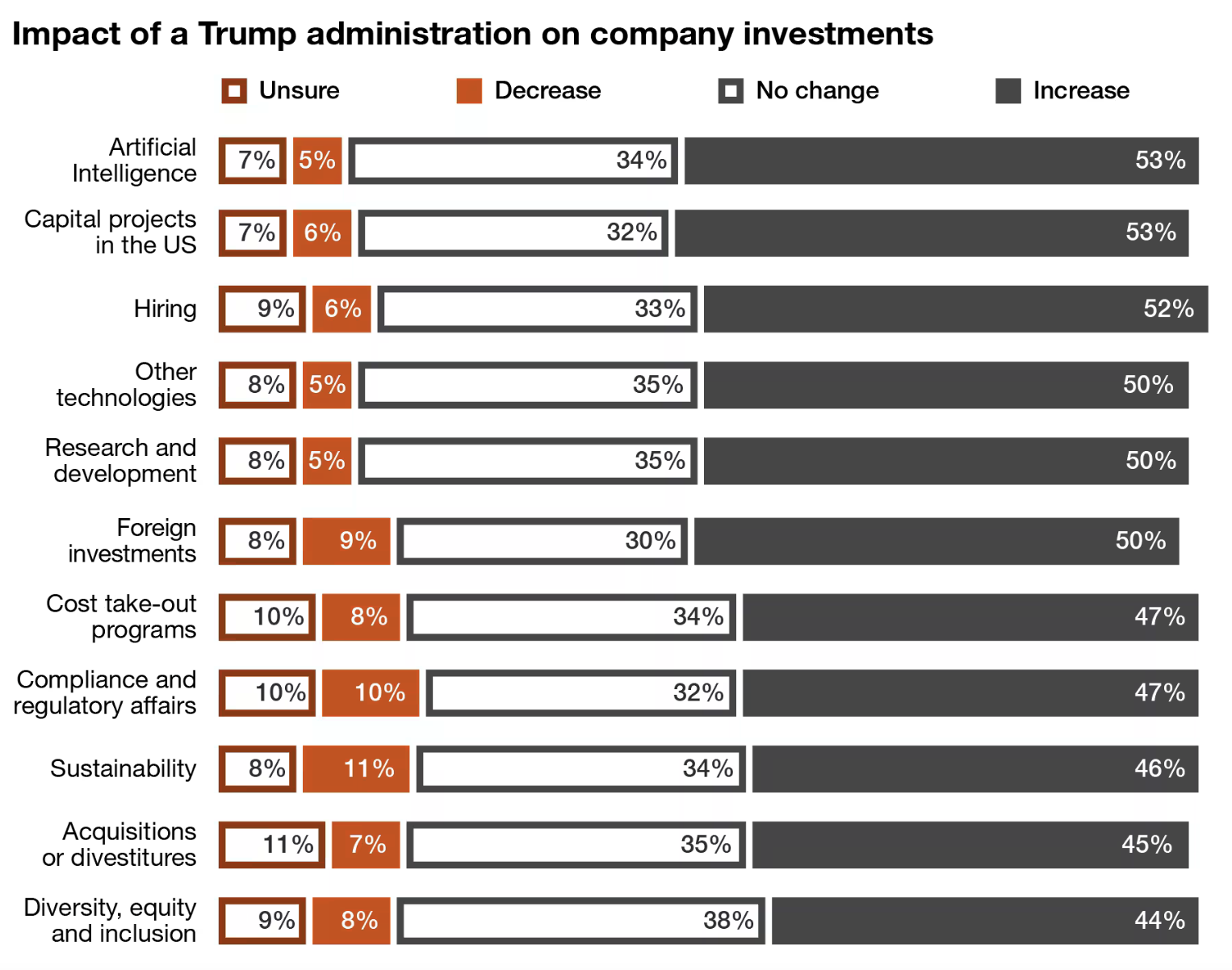
This chart comes from PwC’s recent analysis of how companies are planning to shift their investments, or stay the course, as Trump takes office in 2025. Look at all the insights here.
