“One lesson of the backlash [to ESG] is that executives must anchor their actions more firmly in a business case”. So wrote Andrew Edgecliffe-Johnson in this week’s edition of the always-insightful Semafor CEO Signal newsletter. He’s 100% right. I have been talking to CEOs, executives, and corporate board members over the last few weeks about how they see stakeholder matters in the current climate and this is a universal position.
On environmental issues, the case for leadership is compelling, especially as the potential for reshoring accelerates. Our polling shows the public supports the creation of more jobs in the U.S. At the same time, Americans across the political spectrum value clean air, water and soil. A majority is worried about the impacts of a changing climate. As one of our focus group participants (Republican, male) put it, “If [companies] post record profits, but pollute a river or lake, those profits come from the public.” The very definition of an economic externality, in other words.
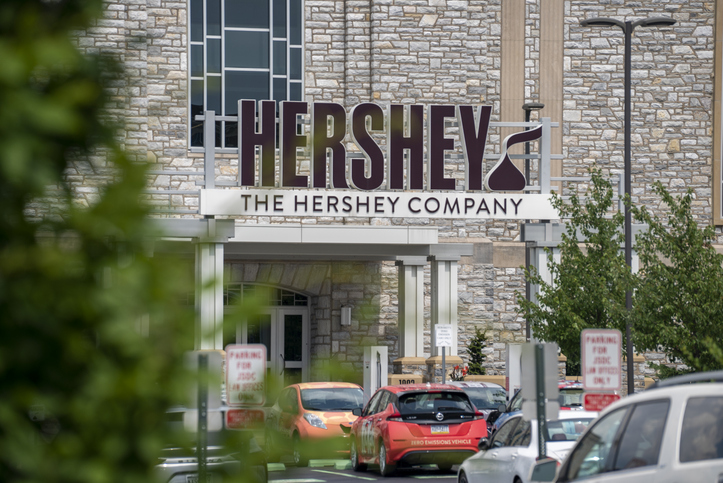
Safeguarding the health of our natural environment becomes particularly critical for businesses seeking to reshore manufacturing activities. Hershey’s commitment to reduce water usage by 20% at priority sites in water-scarce regions will reduce the company’s operating expenses and support the future sustainability of its domestic manufacturing capacity (which was already at 70% prior to a $1 billion announcement to boost its supply chain in Pennsylvania through 2026). The recent announcement by Microsoft (#1 on Environment in our 2025 Rankings) of a $3.3 billion investment in Wisconsin for cloud computing and AI-infrastructure will require the company to surpass its already industry-leading efforts on water conservation and energy efficiency if it’s to meet its target of becoming carbon-negative, water-positive, and zero waste by 2030.
Other companies leading in Just Capital’s assessment of environmental performance
include Aptiv (Automobiles & Parts), Graphic Packaging Holding Co. (Industrial Goods), Hewlett Packard Enterprise (Computer Services) and Johnson & Johnson (Pharma). To Edgecliffe-Johnson’s point, the business case here is clear. As of April 14, 2025 Environment Leaders have outperformed the Russell 1000 Equal Weighted Index by 5.6% since inception (December 31, 2021). As domestic manufacturing grows, so the opportunity for real innovation in protecting domestic natural capital also grows.
Be well,
Martin
“And what I said…we’ve been in business for over a century. Political winds blow in all different directions, particularly when you operate in almost 150 countries. But there are fundamental truths that have guided this company for 98 years: We welcome all to our hotels, and we create opportunity for all at our company…the next day I got 40,000 emails from Marriott associates around the world just saying, ‘thank you’.”
– Marriott CEO Anthony Capuano speaking to Fortune about the statement he made on Trump’s sweeping changes to DEI and the response it garnered from his employees.
Johnson & Johnson is changing its AI strategy after learning only 10-15% of AI test pilots it had created were creating 80% of the value. The Wall Street Journal has more.
Goldman Sachs investors have nixed several anti-DEI proposals presented at the latest shareholder meeting. Bloomberg has the story.
HR Dive reports that $100k is no longer a high enough salary for a family to meet their basic expenses in 25 of the top cities in the U.S.
Layoffs incoming. Volvo is set to cut 800 jobs, and Intel is preparing to let go of nearly 20% of its workforce. At the same time, according to Fortune, senior leadership is already beginning to feel the effects of cuts to middle management.
CNBC reports on a new Harvard study that shows 42% of Americans under 30 are “barely getting by” financially.
Despite claims that manufacturers would benefit most from Trump’s tariffs, Axios summarized the recently released “Beige Book”, indicating that ongoing uncertainty limits confidence amongst the industry’s leading businesses.
Proctor & Gamble CEO also cited uncertainty, when he announced on CNBC that price hikes for consumers are expected in the next fiscal year.

This chart comes from Axios, and has interesting implications for the healthcare industry. Gen Z is increasingly leaning on friends and family for medical advice as opposed to doctors or online searches. Learn more here.
Moving the needle on corporate justness often requires a patient, deliberate, hands-on approach. This was evident recently, when the JUST team – in conjunction with the Gates Foundation and several partners – brought together 14 executives from big companies for a groundbreaking 4-day summit to advance workforce innovation and well-being.
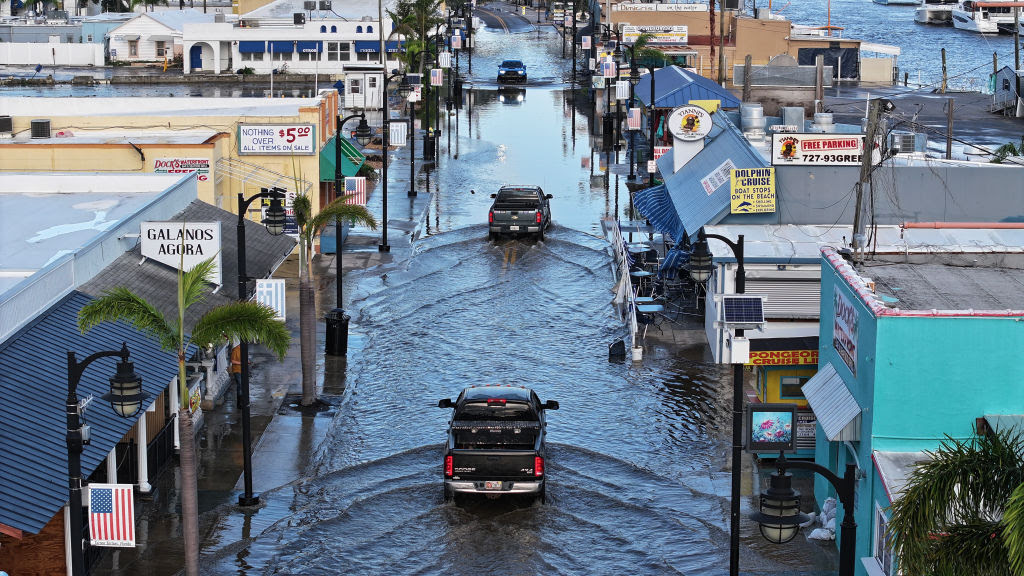
Occasionally, though, external events compel companies to move swiftly to help their stakeholders, whether that means their employees, their customers, the communities they operate in, or society at large. Hurricane Helene is such an event.
It starts with financial support. Many companies we track – including Bank of America, Lockheed Martin, Wells Fargo, Truist, Target, and others – have made sizable donations to local charities, the American Red Cross, and other organizations to help provide essential needs and resources to those most affected.
Others also deploy their corporate capabilities. AirBnB, for example, is providing free temporary housing to displaced families. Amazon’s Disaster Relief and Response Team is leveraging the firm’s logistics, cloud computing and transportation assets to support organizations on the ground and to ensure critical help and supplies get to those in need. Walmart, Kroger, Home Depot, and Lowes, all of which have employees directly in harm’s way, are using their stores and warehouses as distribution centers for food, water, charging stations, generators, chainsaws, portable AC units, and more.
As the saying goes, crisis doesn’t create character, it reveals it. For many business leaders, Hurricane Helene has given them the chance to show what they’re made of.
Be well,
Martin
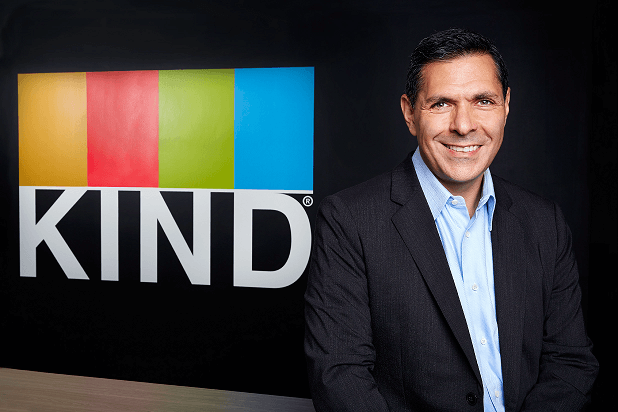
“I love trying to add purpose to the things I do because it gives me meaning. But I never advocate for people to insert purpose into their own businesses. It can end up as performative. A business can be a great social good on its own, and I don’t like adding gimmicky, fake missions. If you care about an issue, and you find a way to use market forces to channel that impact, it can do good. But often corporate communications departments are like, how do we add these as a feature? And it can be fake and doesn’t help.”
The Corporate Racial Equity Alliance, comprised of JUST Capital, PolicyLink, and FSG, have developed Business Standards for 21st Century Leadership to define business leadership that values people, planet, and the bottom line. Following our May 2024 release of draft standards 1-8, we have now released standards 9-14 for public feedback. The newly released draft standards focus on corporate impact on communities and society.
To lend your perspective on the topics of corporate impact on communities and society at large, please take our online survey by October 31. Stakeholder engagement in the development of these standards is key to our success. We hope you’ll join us and share your feedback.
It’s official: OpenAI is planning to become a for-profit business, causing several other executives to leave, and putting up more legal and logistical roadblocks. Mashable has the story. Meanwhile, Axios looks at some of the underlying causes of this shift.
Fortune reveals that shareholder proposals on diversity, pay equity, and plastic pollution got less support this season, but anti-ESG proposals also got less support. Learn more.
Board Member Peter Georgescu writes how, with a hollowing middle class, stakeholder capitalism is the best hope for a brighter future in his latest Forbes piece.
The Washington Post looks at the longshoreman strike, and the impact it could have on goods moving into the U.S.
The Wall Street Journal takes a look at the slow migration from salary-based pay to incentivized-bonus pay for many jobs, and how now, a majority of Americans work in positions where a chunk of their pay isn’t guaranteed.
Reuters examines the fallout that occurs when a Dollar Store closes in a low-income community.
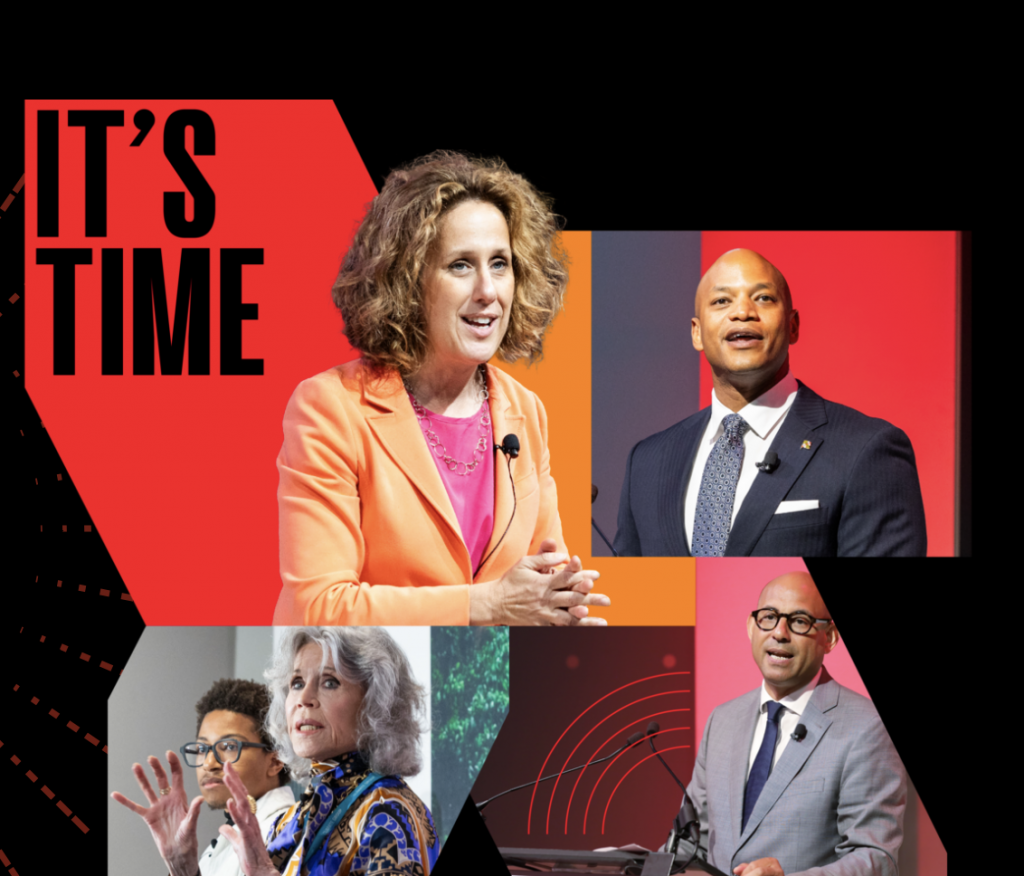
If you can make it around the barricades, past the acronyms, and beyond the countless cocktails and canapes, you realize Climate Week in New York City provides an opportunity to address some serious questions.
Are we actually on track to combat climate change? Who’s moving the needle? Who is holding everyone to account? And who, ultimately, will foot the bill for whatever future we have in store?
There’s certainly a lot of capital flowing into the climate space. According to CREO Syndicate, a nonprofit organization on whose board I serve, “Annual global climate finance flows doubled from 2020 to 2022, reaching $1.4 trillion or 1% of global GDP, but will need to increase sixfold to average $8.6 trillion through 2030, and $10.7 trillion through 2050, to reach net zero.” Whether all of this investment will generate a market rate of return (or mitigate greenhouse gas emissions for that matter) remains to be seen, but compared to, say, a decade ago, these numbers are impressive.
There’s also a lot of business action on the issue. As our list of Top 10 Companies for the Environment shows, companies like Hewlett Packard Enterprise, McCormick and Co, Accenture, and Trane are supplying the world with advanced climate solutions that tie directly back to market performance and profitability. This week’s announcement by Microsoft (another JUST 100 leader) that it will use the Three Mile Island nuclear facility to supply the emissions-free power it needs to grow brings home how seriously companies are taking their climate commitments and how complex the path forward really is.
Where is the public – as consumers, as taxpayers, as voters – on all this? I’d say it’s a mixed bag. Despite what many of the international visitors I talked to this week think, Americans do care about the climate. But as our polling shows, it’s hard to prioritize it when you’re struggling to make ends meet. For millions around the world, a changing climate threatens their livelihoods, their communities, their futures. Yet many feel similarly threatened by some of the policies proposed to address the issue. Getting to grips with these realities is essential. In the meantime, it’s the private sector that will continue to lead.
Be well,
Martin
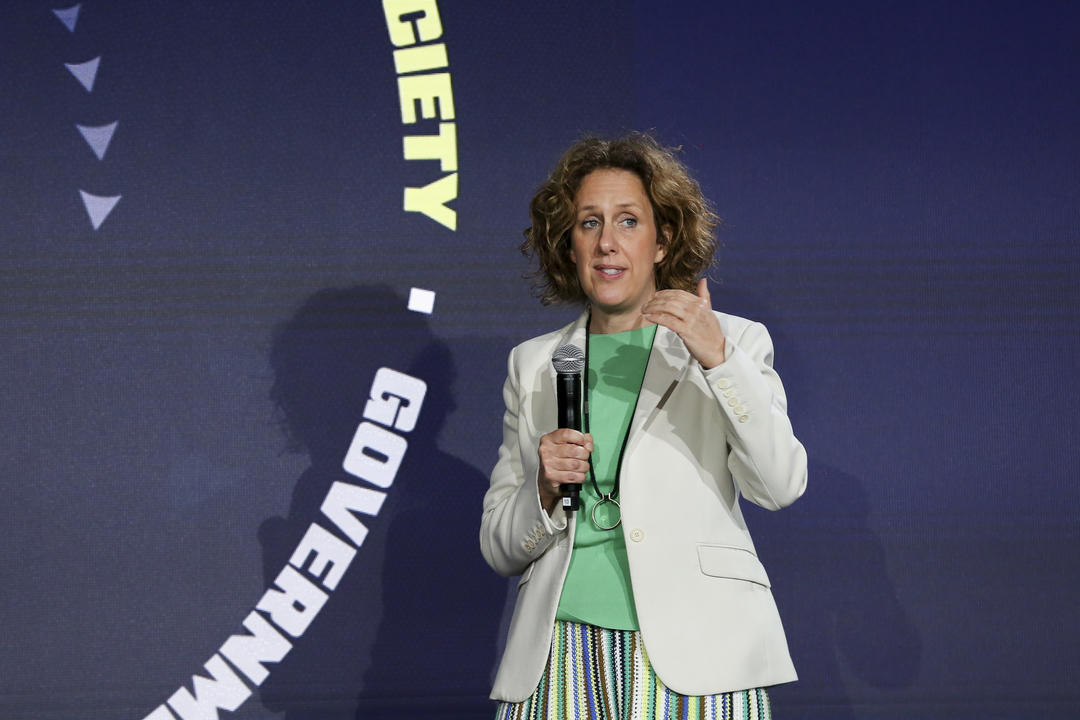
“We only have one environment and we must protect it. The planet will adapt without us – we are not as important as we think we are.”
California kicked-off climate week by launching the first-of-its-kind lawsuit against ExxonMobil for its alleged role in the plastic pollution crisis. The Guardian has the story.
Bloomberg takes a deep-dive into how corporations have lost or regained Americans’ trust, as part of an ongoing series on lack of faith in institutions.
Forbes predicts that average salary increases are going to decline next year. Explore why.
Fast Company explains why corporate America’s retreat from DEI is shortsighted, and Retail Dive highlights the leading DEI programs that serve business goals.
Bloomberg looks at the immense pay package garnered by ousted Nike CEO John Danahoe, and whether it was a just amount for a man who presided over the company losing over $40 billion in market value.
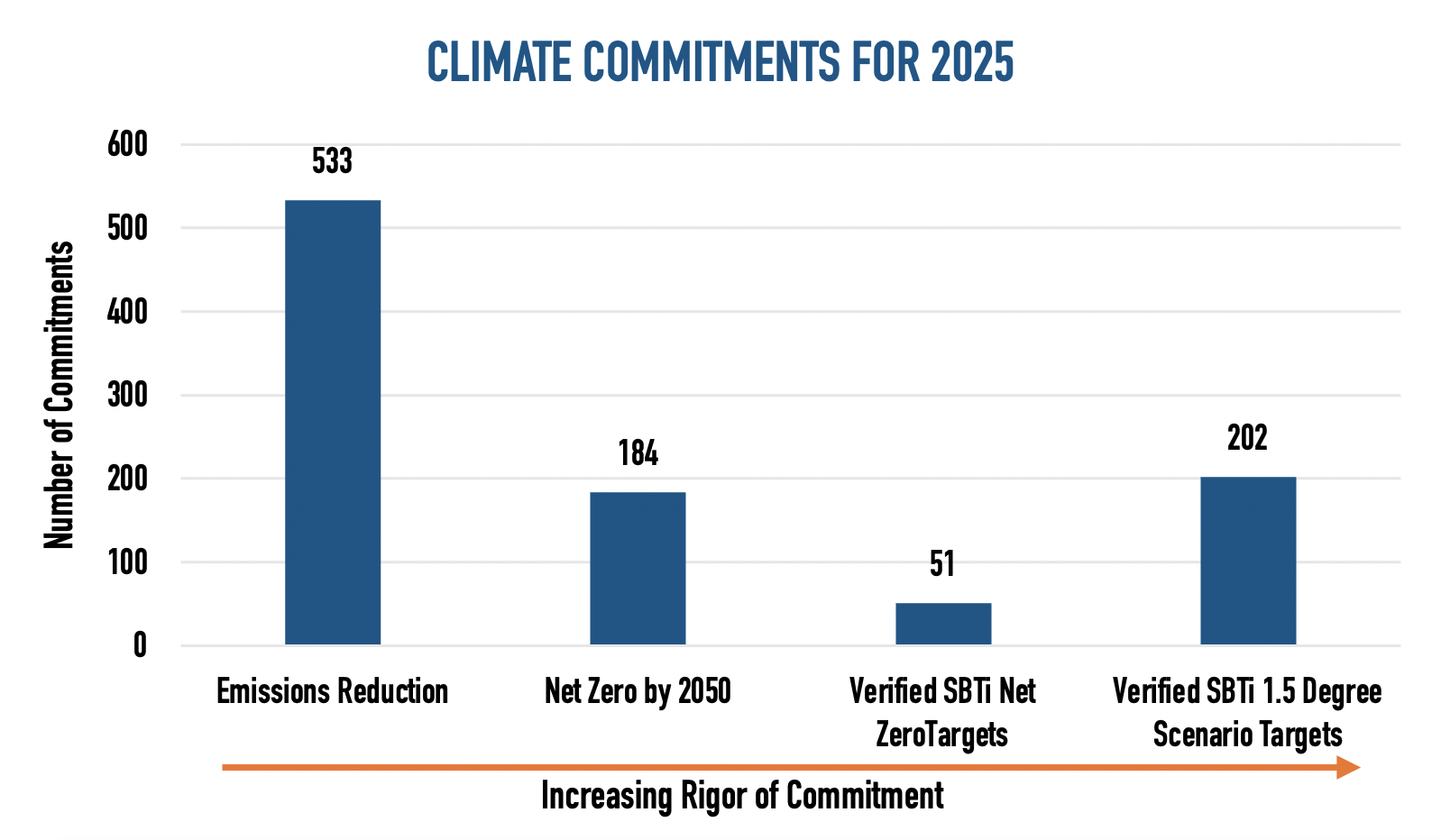
For climate week, we analyzed preliminary 2025 data on climate commitments, showing what level of disclosure and commitment Russell 1000 companies are providing, which will factor into our 2025 Rankings. So far, we are seeing a remarkable increase on SBTi scenario commitments compared to last year’s data.

Extreme temperatures are shattering weather records around the world. Almost 100 million Americans were reportedly under some level of excessive heat warning this week. Extreme weather conditions are being documented across much of the world. Sea surface temperatures in the tropical North Atlantic are at record high levels, fueling the intensification of tropical cyclones and what is expected to be a “above-normal” Hurricane season. Heat-related deaths, sadly, are an all-too-frequent news headline.
Then there’s the economic impact. According to researchers, “under current climate conditions, lost labor productivity due to heat in the U.S. could reach $100 billion a year [and] that loss could reach $200 billion by 2030 and $500 billion by 2050.”
What this also points to is the growing opportunity for market-based solutions to help the world adapt to a more volatile climate. This spans everything from helping businesses deal with the effect of extreme heat on workers – something Bloomberg highlighted this week – to building resilience into supply chains, logistics, food and agriculture production, and physical infrastructure (buildings, roads, electric grids); to risk management and insurance solutions that protect against climate-related financial loss.
It’s an area where AI can play a strong supporting role, too. JUST 100 company IBM’s “Environmental Intelligence Suite,” which leverages AI to help clients improve risk management and decision-making on climate risk, is one example. PG&E’s use of AI to enhance fire and outage risks is another. Beyond AI, construction companies are working to find workforce solutions to enhance safety and productivity, and energy companies, like those in Michigan, are preparing to keep the power grid running. HP and Intel’s leadership on water management in the semiconductor industry and broader technology sector y also springs to mind.
Helping the world address climate risk and extreme weather is becoming an increasingly important facet of just business leadership and overall stakeholder performance.
Be well,
Martin

“You spend a lot of time at work. Just like we would for a consumer on our app, we asked: What’s easy? What’s hard to do? How do you access certain things quickly and seamlessly? We had a lot of work to do, end-to-end, on the experience. Just like we would on a customer journey, we looked at our colleague journeys as well.”
The Biden Administration unveils new rules to curb U.S. investment into Chinese AI and semiconductor technology that could also enhance their military. The New York Times has the story.
The Washington Post looks at the race for tech firms to devise new, potentially improbable energy solutions as AI development eats away at an aging power grid.
PwC reveals a fascinating bit of research on how AI is impacting work. A study of half a billion job ads from 15 countries suggests that AI is making workers much more productive, with sectors that are especially exposed to AI experiencing nearly 5 times higher growth in labor productivity.
Post Father’s Day, Nike increases its paid parental leave to 16 weeks for all U.S. employees, which can be used for birth, adoption, or foster placement.
The New York Times takes a deep look at how Meta continues to fail at protecting the safety of its most vulnerable users–children.
The Atlantic casts a critical eye on federal workforce-training programs, revealing how they accomplished little for the workers NAFTA displaced in the 1990s, largely because they targeted “in-demand” jobs that employers needed to fill, which often meant low-wage, high turnover positions.
The attacks on DEI continue. This week, Fortune covers the move from several high-profile tech CEOs, including Elon Musk, to move to MEI (Merit, Excellence, and Intelligence).
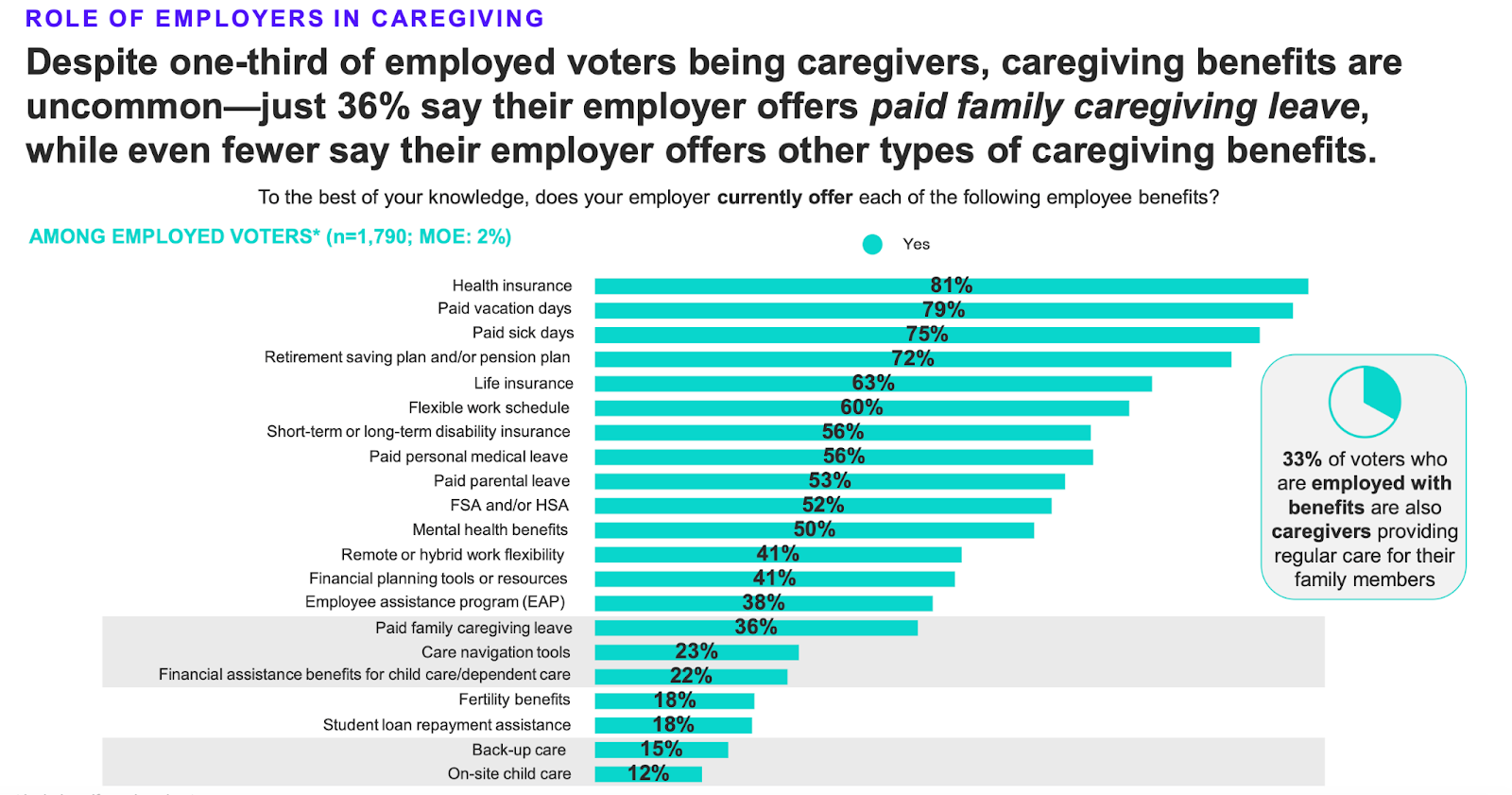
This chart comes from excellent research by Politico’s Morning Consult on Voter Sentiment on Caregiving in the U.S. The chart shows that only 36% of companies offer paid family caregiving leave, despite the fact that 59% of respondents would be more likely to stay at a job that has it. Explore the details here.
Monday is the 54th annual Earth Day, so in honor of that I thought we’d highlight a few companies that are showing extraordinary leadership on environmental matters.
First, though, a bit of context. Environmental protection in the U.S. has for the most part been a unifying issue over the years, even politically. It may surprise some that it was Ronald Reagan’s EPA Administrator William Ruckleshaus who sat on the U.N.’s Brundtland Commission that coined the term ‘sustainable development’ (he also served on Clinton’s Council for Sustainable Development), and George H. W. Bush who signed the first Rio Earth Summit declaration that established the U.N. Framework Convention on Climate Change (UNFCCC) in 1992. Protecting our air, soil, and water; our fragile ecosystems; our climate, wildlife, fisheries and oceans; these are ties that bind.
Today, we see this reflected in our polling. Almost 9 in 10 say that large companies have a responsibility to reduce their environmental impact by using sustainable materials and renewable energy. 73% favor increased disclosure from corporate America on environmental impact data. The environment is an essential corporate stakeholder, in other words.
American business leadership on environmental matters comes in many different forms. On greenhouse gases, for example, it’s interesting – and perhaps intuitive – that on an absolute basis the companies that have cut direct emissions the most in recent years are from the most emissions-intensive industries: American Electric Power, Chevron Corporation, Phillips 66. From HPE’s pioneering low-carbon tech infrastructure and Microsoft’s Climate Research Initiative, to Accenture’s nature-based carbon removal solutions, we see innovation everywhere. Explore more of it in our list of the Top 10 Companies for Environmental Performance in 2024.
Be well,
Martin
“Supply chains are extraordinarily complex. My view is you’re never done, you just keep working through it. You take the next supplier. You take the next question. You continue to push on all three dimensions. Do you have resilience for the part of your supply chain? Can you trust that supply chain? And do you have sustainability? And when you have that answer, you go to your next supplier, and you just keep asking those same questions. You keep pushing down the supply chain. Our belief though is that the harder you work it – you’re pushing a boulder up the hill, and then there’s a cascading effect through the supply chain and through the customer base as well. The boulder all of a sudden starts rolling down the hill. I don’t think we’re there yet, but I think that time is in our future.”
We release our Top 10 Companies for Environmental Performance in 2024.
JUST data partner Karma Wallet acquires DoneGood, an e-commerce marketplace where every purchase you make does good for people and the planet, to expand their platform and consumer sustainable buying choices.
According to Fast Company, “Big Tech is on a generative AI hiring spree”. While the sector is experiencing tremendous growth, there are problems on the horizon. One of them? “ChatGPT requires 15 times more energy than a traditional web search.” That quote comes from Fortune’s interview with Ami Badani, CMO of chip design firm Arm Holdings, on the energy consumption AI requires, and how it must be addressed for the technology to grow, otherwise it will eat up a quarter of the electricity in the U.S. by 20230.
The Brookings Institute chronicles the Hollywood writer’s strike and the ways its union pushed back against the use of generative AI, and what lessons can be learned for other industries that will soon be threatened by it.
ESG Today looks at the new EU rules that require all new buildings to be zero emissions by 2023.
With EV purchases slowing down, Tesla will cut 10% of its workforce–nearly 14,000 employees–in an effort to deal with thinning demand. More via The Washington Post.
CNBC releases an informative map showing the median annual income in every U.S. state in 2024, and Business Insider runs down the best paying retail jobs.
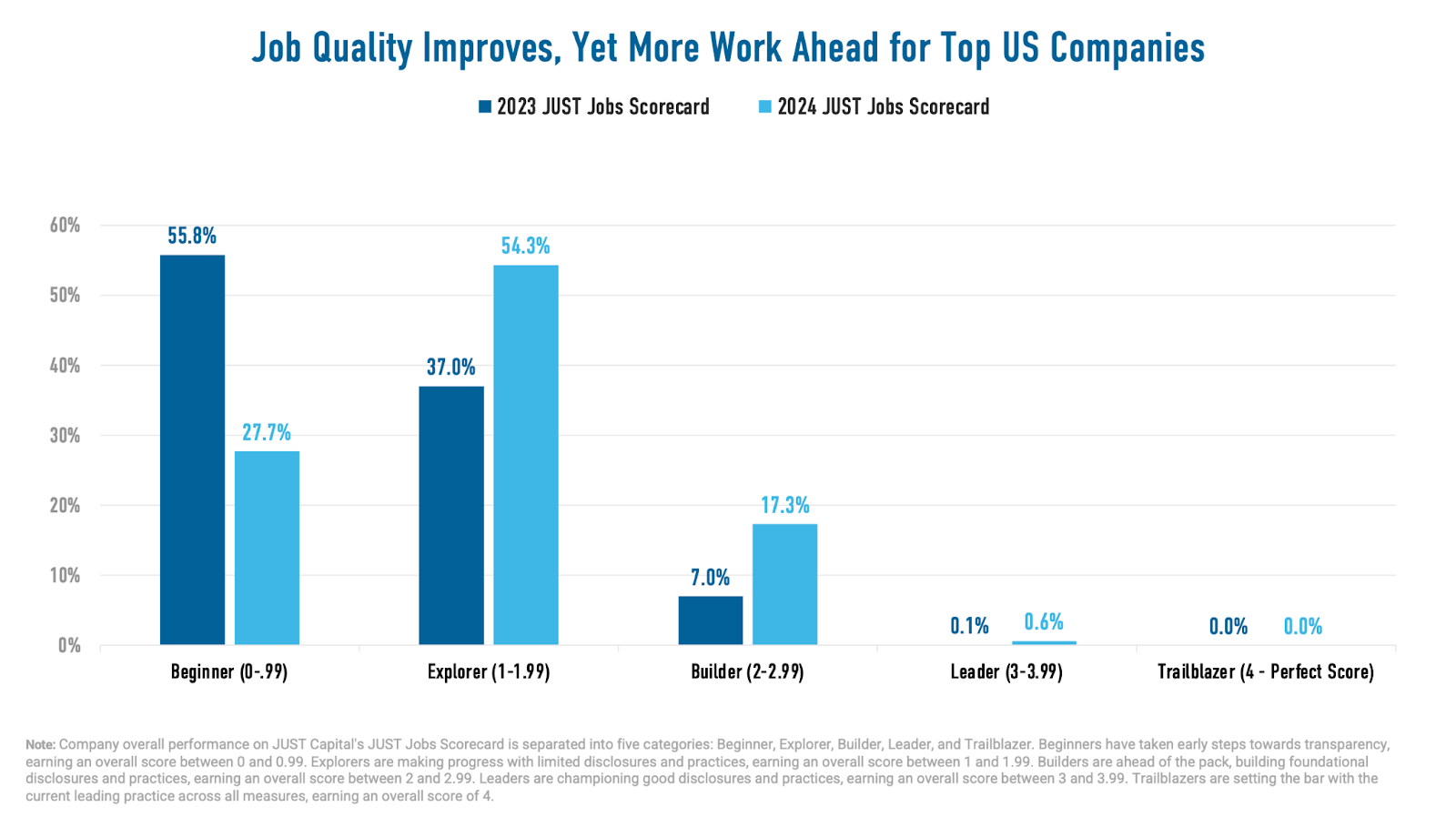
This chart comes from the data in our recently released JUST Jobs Scorecard. While America’s largest companies have more work to do to improve transparency around some key job quality data points, overall performance on the 2024 JUST Jobs Scorecard speaks to noticeable improvement since the 2023 pilot version of this tool. More than one-fourth of companies (256 companies, or 27.3% of all scored companies) have moved from the Beginner category (taking early steps towards transparency, overall scores between 0 and 0.99) into the Explorer category (making progress with limited disclosure and practice, an overall score between 1 and 1.99). Explore these trends, as well as your own company’s in-depth performance, here.
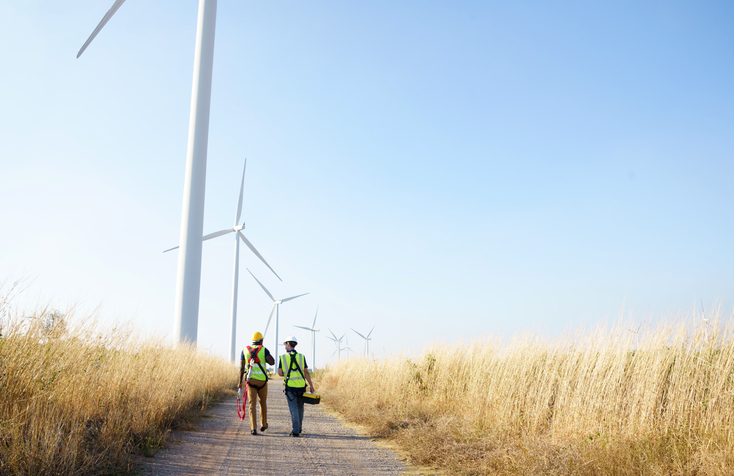
2024 has already been a big year for environmental and climate action in the private sector. Governments of all sizes have implemented new measures that will require certain companies to disclose their greenhouse gas emissions and climate risks.
Following last year’s adoption of the EU’s Corporate Sustainability Reporting Directive and California’s two climate disclosure laws (the Climate Corporate Data Accountability Act and the Climate-Related Financial Risk Act), the Securities and Exchange Commission (SEC) approved a rule that requires some companies to disclose both greenhouse gas emissions and climate risks to their business, the specifics of which are still being challenged in court.
A majority of Americans favor more disclosure from companies on these issues. Our Polling of the American Public found that 73% of Americans strongly or somewhat favor federal requirements for disclosure on environmental data like greenhouse gas emissions. Other research indicates that 90% of investors say that the CSRD and SEC rules will drive better investment decisions.
We evaluated the 10 companies with the best environmental performance in our 2024 Rankings of America’s Most JUST Companies. All 10 of these companies have set an emissions reduction target and we also found that these leaders are outperforming the remainder of the Russell 1000:
Read more about how these companies are taking action. The top 10 are listed below in ranked order on environmental performance based on the 2023 Rankings:
Hewlett Packard Enterprise is a top-performing company on the Environment Stakeholder, in addition to leading the Russell 1000 on overall performance, ranking first overall in our 2024 Rankings. HPE has committed to multiple ambitious climate goals, including achieving Net Zero across its entire value chain by 2040, a 70% reduction in Scope 1 & 2 emissions from 2020-2030, and a 42% reduction in Scope 3 emissions from 2020-230. HPE was the first company within its industry to set a verified 1.5-degree Science Based Net Zero Target, and in 2022 even moved up their commitment date for achieving Net Zero from 2050 to 2040. HPE is focused on finding low-impact suppliers and partnering with suppliers who have their own science-based targets, while also pushing out more sustainable options for their customers to reduce the company’s scope 3 emissions.
Johnson & Johnson has been a continued leader in the environmental space, being the 2nd top-performing company in the Russell 1000, moving up from the 8th spot on last year’s rankings. Johnson & Johnson’s climate action plan revolves around improving operational performance and optimizing their value chain. This plan includes sourcing 100% of their electrical needs from renewable resources by 2025, with 100% of their European operations already achieving this, and launching the Johnson & Johnson Supplier Sustainability Program. The company’s long-term goal is to achieve Net-Zero across all of its value chain by 2045, recognizing that to achieve environmental health equity, there needs to be a focus on tackling climate issues.
Microsoft Corporation has committed to the most robust climate commitments, pledging to be carbon-negative and zero waste by 2030. The pledge goes beyond this, as the company has pledged to remove the amount of carbon equivalent from the atmosphere of all of its historical emissions by 2050. Microsoft has disclosed detailed plans of how they going to achieve these goals and is partnering with global industry-leading organizations to move forward in the field of carbon removal. Microsoft has also pledged to be water-positive by 2030. Since initiating this program, they have secured contracts for projects expected to deliver over 35 million cubic meters of volumetric water benefits throughout the lifespan of these initiatives.
McCormick & Co. Inc. is focused on creating sustainability within the Food, Beverage, and Tobacco industry, honing in on the increased use and branding of sustainable herbs and spices. McCormick has identified the environmental impact of their most iconic branded ingredients and is leading research on how to minimize the environmental impact of their product with the largest carbon footprint, black pepper. The company is also partnering with vanilla farmers in Madagascar to help protect biodiversity in the region through providing the local farmers training on agricultural practices that meet third-party sustainability certifications. All of these efforts are being pursued to ensure the company meets its 2050 goal of Net Zero.
Accenture has met its 2025 Science Based Targets Initiative (SBTi) goal, achieving a 57% reduction in total emissions based on a 2016 baseline and reduced scope 1 and scope 2 emissions by 91%, significantly surpassing their goal of a 65% absolute reduction target. The company has since committed to even more reductions, and has gotten approval from SBTi for another near-term target to be achieved by 2030. Accenture has also invested in nature-based carbon removal solutions, that are predicted to remove millions of metric tons of carbon over the next 20 years. In addition, in 2023 Accenture did achieve its goal of 100% renewable electricity in all of its offices.
Adobe Inc. has adopted a three-tiered approach to sustainability, focusing on product sustainability, operational sustainability, and policy advocacy/thought leadership. Through these efforts, Adobe has a verified 1.5-degree Science Based Net Zero Target. The company’s products help reduce environmental impacts associated with physical software manufacturing, packaging, and distribution, which contributes to their goal of reducing scope 3 emissions associated with product use. Operationally, 80% of their offices globally are LEED or green building certified, and they are committed to sourcing 100% of their electricity from renewable sources by 2025. Adobe has also supported legislation advocating for the deployment of clean renewable energy in areas where they have digital supply chain operations
Bank of America Corporation is leveraging its position as a leading financial organization to invest in sustainable finance. The company collaborates with enterprises in agriculture, transportation, and aviation fuel sectors, offering education and services to help them integrate sustainability into their investments and develop resilient infrastructure. Bank of America has also pledged to reach Net Zero by 2050 within their finance activities, operations, and supply chain. In addition, the company’s Environmental Business Initiative will deploy and mobilize $1 trillion by 2030 to accelerate the transition to a low-carbon, sustainable economy, as part of a broader $1.5 trillion sustainable finance goal aligned to addressing the United Nation’s Sustainable Development Goals (SDGs).
The Procter & Gamble Company climate action plan includes achieving Net Zero by 2040, with additional science-based targets to be achieved by 2030. The company aims to reduce operational emissions by 50% and supply chain emissions by 40% by 2030. In order to tackle waste, Procter & Gamble is aiming to have 100% recyclable or reusable packaging in all consumer products by the same deadline. The company is also focused on reducing water use operationally, specifically in areas where there is a high level of water stress. Through partnerships, Procter & Gamble has embarked on a data-based water risk assessment to identify which water basins are most at risk and has started restoration projects to help restore these essential water sources.
Edwards Lifesciences Corp is aiming to achieve carbon neutrality by 2030 and has made verified commitments to the Science Based Targets Initiative (SBTi) for emission reductions aligned with the 1.5 Degree Warming Scenario. The company prioritizes efforts to diminish its waste and water footprints, striving to innovate new technologies to minimize production waste and regularly evaluating water risks across its operations. Additionally, Edwards Lifesciences is enhancing the sustainability of its operations by implementing renewable energy projects at its facilities and attaining LEED Gold certification for its Irvine campus.
Biogen Inc. has rolled out its initiative, Healthy Climate, Healthy Lives to increase sustainability within their organization and have a positive impact on overall public health. As part of their initiative, they have committed to reaching Net Zero by 2045 as verified by the Science Based Targets Initiative (SBTi). In year two of the initiative they have made reductions in direct emissions and sustained 100% renewable electricity within their operations. Biogen is participating in strategic collaborations with the Harvard T.H Chan School of Public Health, MIT Joint Program on the Science and Policy of Global Change the Technology and Policy Program, and The World Business Council for Sustainable Development’s (WBCSD) Healthy People, Healthy Business project – which Biogen co-chairs, all to assess and understand the impacts of climate issues on public health.
