
The days of American workers quitting en masse have slowed. New findings from the Federal Reserve Bank of New York show the quit rate in July at 4.1% – compared to 5.9% in July 2021. Those numbers don’t mean, however, that companies should let up on their retention efforts. The same survey found a year-over-year increase in the percentage of employees actively searching for a new job. And, with a potential recession on the horizon, many companies are looking at what they can offer to avoid becoming another employer implementing layoffs or hiring freezes.
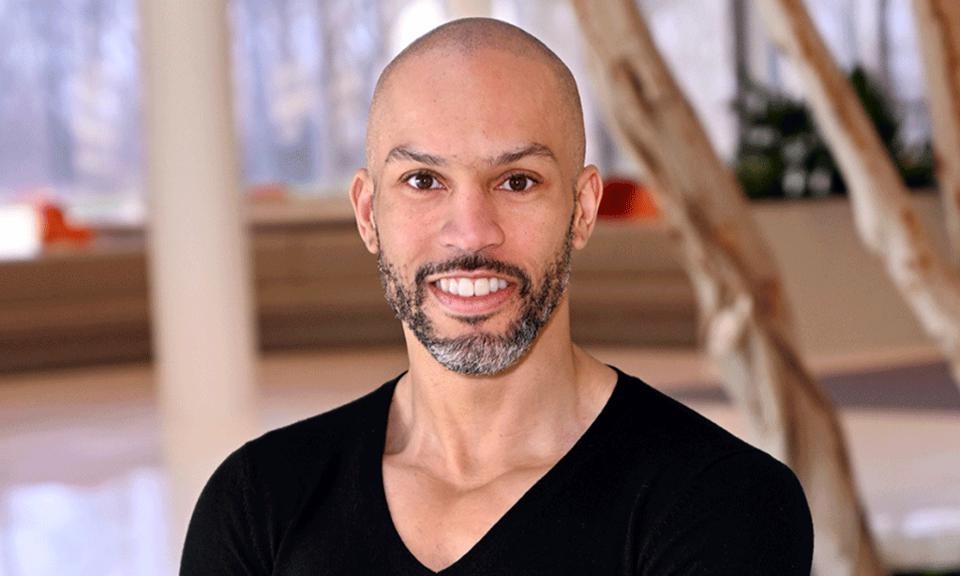
JUST Capital polling shows that, to the bulk of both workers and management, prioritizing diversity, equity, and inclusion (DEI) is a key way to recruit and retain talent. Of the major U.S. companies putting this into practice, Mastercard recently earned the number two spot on our 2022 Workforce Equity and Mobility Ranking. Executive Vice President and Chief Inclusion Officer Randall Tucker sees the company’s rank coming down to its DEI strategy and what’s shaped the company’s commitments and actions – starting with data. “DEI measurement should be no different than showing P&L for sales,” he said.
With $328 billion in market cap, Mastercard’s potential for impact, both within and outside company walls, plays a role in guiding its DEI work as well. We reached out to Tucker to hear how Mastercard has made DEI a priority across its 25,000-strong global workforce. In April, the Purchase, New York-headquartered company announced that bonuses for all employees, not just senior executives, would be tied to environmental, social, and governance (ESG) goals. This policy includes DEI metrics like pay parity, Tucker said, which a majority of Americans we polled see as having a positive impact on long-term business success.
Tucker shared more with JUST on what Mastercard’s learned from evolving its DEI work, and how those insights could benefit other leaders focused on building equity and upward mobility for their employees into company operations.
Mastercard’s approach to DEI is centered around impact and relevance, Tucker said. The company assesses what issues are most pressing to its stakeholders and how, and where, it can have the greatest impact. He pointed to Mastercard’s actions in the wake of the murder of George Floyd as an example. “There was a heightened interest in focusing on racial equity, both in terms of increasing Black representation in leadership roles as well as increasing Black suppliers that we work with and investing in closing the racial wealth and opportunity gap across American cities that have large Black populations,” Tucker said.
That interest resulted in Mastercard’s In Solidarity Initiative, which continues alongside the company’s other DEI work, he said. The five-year, $500 million Initiative includes an investment in Workforce Development Pathways and an Entrepreneurship Center created in partnership with the National Urban League to increase access to opportunity for historically excluded individuals and communities. It also includes an assessment of how Mastercard is supporting its Black employees’ education, skills development, and career advancement. Two years into this commitment, Mastercard has “seen tremendous progress in some areas, including doubling our Black suppliers” and, importantly, shared its progress in annual reports and through regular updates to its employees and board.
These insights help inform the areas the company needs to focus on, Tucker said. Data like detailed workforce demographics, which Mastercard discloses in its EEO-1 data, point out where gaps exist and where to take action. Tucker raised the company’s work on pay equity as an instance of where this focus on data has shaped progress. “Our pay equity numbers are ones we have been very deliberate about over the past few years. It’s an area in which we’ve achieved and maintain that every woman earns $1 for every $1 a man earns, and the same for a person of color as compared with a white employee,” he said. And, now, Mastercard’s taken this a step further by tying all employee bonus compensation to ESG metrics.
The company’s move to codify its commitment to pay equity is one way it’s made DEI a priority of all its employees. It’s also focused on actively bringing its employees into this work and sees their input and feedback as critical to achieving its commitments. Mastercard’s In Solidarity Initiative has a steering committee and advisory committees with employees driving the work and providing feedback along the way, Tucker said. “Part of my job more broadly is checking in with our employees to get a pulse check on how they’re doing and how the work my team is driving is resonating.”
The company views inclusion as a leadership skill that everyone can embody, including the most senior leadership. “We don’t have to contend with some of the most common problems that brands face, thankfully, in that we don’t have to sell our leadership on the importance of DEI – they get it and it’s a priority at Mastercard from the very top down,” Tucker said. Without leadership buy-in, he noted, that the company’s work would fall flat.
While leadership buy-in on DEI is not an issue for Mastercard, it faces other common challenges like distinguishing itself in the “fierce” competition for top talent and adapting its approach to suit a globally distributed workforce.
Making DEI a priority for all employees is a challenge, Tucker said, when you’re “a global brand that has 25,000 employees in many countries across the world with very different needs, hopes and concerns.” The company learned to tailor its approach by adopting a modular and inclusive approach across the five global regions where it operates. “We believe in regional customization to focus on the things that matter most in our five regions versus a one-size-fits-all approach,” he said, “Our DEI has to be inclusive so that no one is left out while also being specific and intentional as to where we need to move the needle to right-size representation and inequities.”
Tucker shared that Mastercard’s created regional and functional DEI strategies with leaders who are subject matter experts guiding the work. “Because what’s relevant to one group or geography is going to be different somewhere else,” he said. The company’s regional DEI action plans aim to create local relevance for the work and meet people where they are.
“Change doesn’t happen overnight, and it also doesn’t happen in a uniform way. The best thing you can do is meet people where they are, be a good listener and keep marching in the right direction – making sure others are marching alongside you,” Tucker said.
Approaching its DEI work as customizable, collaborative, and data-driven has allowed Mastercard to evolve its goals and make progress on key workforce equity and upward mobility metrics. For Tucker, this has further enhanced his deep personal commitment to tackling these issues.
“My motivation comes from an understanding that it is a privilege to be on this perch and to get to drive this work each and every day. If you asked the Randall of 25 years ago, a young gay Black man starting out, estranged from his family, bullied in broad daylight, it would have felt like a fairy tale to know that one day I would be able to step fully into my truth and devote my professional life to leading the charge on creating a more equitable and inclusive and safe workplace and world for others.”
The 2022 Workforce Equity and Mobility Ranking was funded by the Annie E. Casey Foundation. We thank the Foundation for its support. The findings and conclusions presented here are those of the authors alone, and do not necessarily reflect the opinions of the Foundation.
To learn more about how Mastercard and other companies are putting these best practices into action, explore our full 2022 Workforce Equity and Mobility Ranking and complementary Issue Brief. For more information on how we’re engaging with the country’s largest employers on these issues, reach out to our team at programs@justcapital.com.
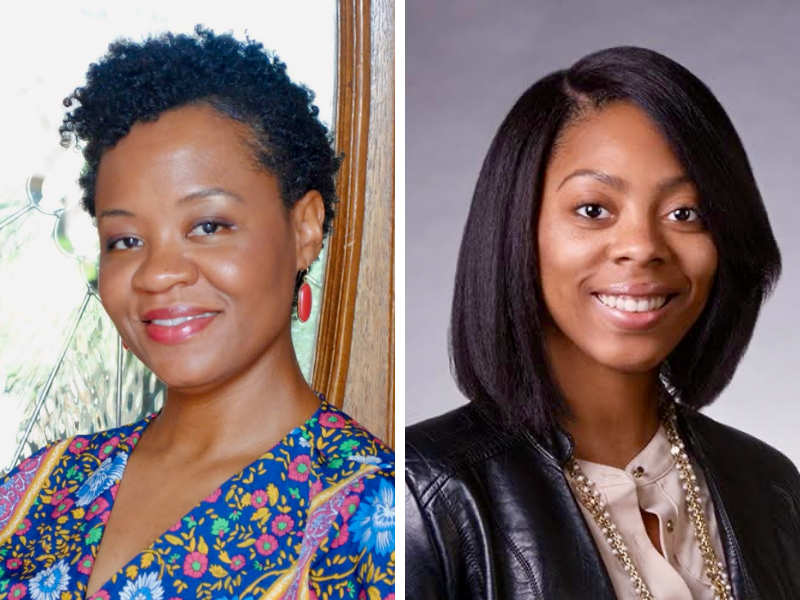
A few years ago, a representative of an employee resource group at American Electric Power (AEP) told CEO Nick Akins at the ERGs’ annual meeting with him that there was not enough diversity in the company’s upper management and leadership team. “And he definitely appreciated that call out,” said Kim Hughes, a 21-year AEP veteran who has served as a diversity, equity, and inclusion (DEI) manager since last February. She may have heard that story secondhand, but said she saw firsthand the ways in which AEP sought to diversify its C-suite and board, and how Akins has been “adamant” about making DEI core to the company’s culture.
And in a report earlier this month about Akins and the board’s decision to pass the CEO mantle to current CFO, Julie Sloat, board director Sara Martinez Tucker noted that Akins’ tenure since 2011 has been marked not only by technical innovations setting the company up for future success, but also by “an open, collaborative culture that embraces diversity, equity and inclusion.”
It’s been a team-wide project for the Columbus, Ohio-based energy company, with roughly 16,700 employees across 11 states, and while its leadership is clear about the ongoing nature of its DEI work, its commitment to inclusion and career mobility for its workforce led to AEP’s recognition as No. 20 among the Russell 1000 in JUST Capital’s 2022 Workforce Equity and Mobility Ranking, built with support from the Annie E. Casey Foundation.
That ranking has particular relevance today, when corporations, whether they’re expanding or reining in growth plans, are figuring out how to retain top talent during a lingering tight labor market.
To learn from AEP’s example, we spoke with both Hughes and fellow DEI manager Alyvia Johnson. Their pairing provides a fascinating look at AEP’s journey.
Hughes has been at AEP for over two decades, has a background in engineering, is based in Dallas, and focuses on inward-facing DEI initiatives; Johnson joined AEP in March after a few years at Wendy’s, has a background in human resources, is based in Columbus, and focuses on DEI in recruitment. Through a recent discussion with both, we identified key insights into how AEP made inclusion and mobility a critical rather than ancillary function of its business strategy and continues to build on that.
It is intentional and iterative with its efforts
When she was a young engineer during her early years at AEP, Hughes said she initially wasn’t aware of any leadership development programs at the company. And when she did find out about them, she thought they targeted a limited set of people – mostly white men who worked in Columbus. As the company grew across the country, especially over the past decade, Hughes said, its leadership became more aware of its need to expand leadership pathways. When Hughes had the opportunity to enroll in a year-long Targeted Development Program two years ago, she took it.
Johnson said that coming in as a new employee earlier this year, she was able to first learn about and then experience HR’s commitment to the approach that Hughes saw evolve over time. “The commitment has become even deeper and intentional as the company has grown and our communities are becoming more diverse across the United States,” Johnson said. “We’ve had many conversations about how in order to be competitive and to attract and retain the best talent, we need to have that focus on DE&I to create those opportunities for diverse talent. It’s also just the right thing to do.”
When Hughes enrolled in the program, she was told that it gave her access to leadership across the company – and she said that wasn’t just talk. She asked a since-retired executive named Charles Patton to become her sponsor, and he gladly accepted. Hughes said she would tell Patton things like, “I’m not sure where my next step is at AEP,” or “I’m considering this…” and he would guide her through her options, ultimately leading to the path she’s on today.
Hughes also told us that the company is not afraid to iterate its opportunity programs, and pointed as an example to the Women in Linework program, dedicated to increasing women’s representation among AEP’s lineworkers, who maintain power lines – and who are almost entirely men. It was designed as a training program with the goal of becoming an AEP employee. But, Hughes said, it didn’t take long to realize that the women they were recruiting were juggling responsibilities, including families, and that they needed to be paid if the program was actually going to achieve its intent. Women in Linework is now a 14-month program that starts with stipends and progresses to an hourly wage.
It uses employee resource groups and HR as a sounding board for the C-suite
A common refrain in business today is “listen to your workers,” but when you’re leading a national or multinational organization with tens of thousands of employees or more, that can be easier said than done. It’s why AEP has established the ERG and CEO meetings mentioned at the top of this article, along with what Akins dubbed “Nick’s Network,” where a rotation of representatives from different business units meet with Akins at the company’s headquarters. In both instances, Akins encourages what Hughes called “unfiltered feedback” from employees.
And while ERGs are critical for this approach to communication, Hughes also noted that AEP’s recent internal employee surveys conducted with Gallup found that ERG members were more engaged than the rest of the AEP population. That finding wasn’t surprising, she said, but it allowed them to isolate areas of disconnect among earnestly involved leadership and management and the average employee, on topics like management training and inclusion programs.
Johnson added that AEP’s DEI team has also made HR leaders “DEI champions” since, “A lot of times when employees are having concerns or issues, our HR managers are the first people to hear about it.” These HR managers get DEI coaching and are encouraged to facilitate related difficult discussions when it can lead to company-wide improvements.
It sets metrics and then consistently and transparently tracks them
“We all know in DE&I, we never arrive. It’s always we’re striving to be better,” Hughes said.
And while AEP is clear that it is far from where it wants to be – as of the end of 2021, its executive and leadership makeup was 78% male and 88% white – it makes its DEI-related metrics public. The company publicly reports its workforce and board demographics, gender-based salary ratios, incidents of discrimination and responses, and community impact data.
This year, leadership has also been given access to a DEI Dashboard, updated monthly and intended to be shared among leaders’ teams. It provides monthly data related to DEI initiatives and includes tips on how teams can potentially improve certain aspects of relevant initiatives through actions like partnering with a talent acquisition team.
And, for all of the company-wide goals, the board gets buy-in.
It begins employees’ development journey on day one
AEP has deliberately set out to prevent situations like the one Hughes experienced in her early days at the company, where she felt like leadership pipelines were out of reach for a Black woman like herself.
Aside from increased efforts in recruiting diverse entry-level talent, “Retention is really key,” Hughes said. “One of the things we do with new employees in orientation is we make them aware of our employee resource groups. Again, it speaks to engagement. We want them to be aware that they exist and that they can plug in immediately.”
And then, because there are still plenty of veteran employees like Hughes at the company, the DEI team also works with HR to ensure that they get access to growth opportunities as AEP evolves
“I’ve talked to many employees where they’re on their 20th year or 10th year, and they’ve been able to move around if it’s lateral or vertical to different areas and get that exposure,” Johnson said.
It made DEI core to its business
Under Akins, AEP expanded its DEI team and made diversity, equity, and inclusion a stated component of its culture alongside its foundational commitment to safety for its workers and customers. Notably, AEP also began incorporating DEI components in its incentive compensation plans for leaders across the company.“It’s nice just saying it’s important, but it’s putting the money with it,” Hughes said. “Not only is it safety, is it – of course – company performance, is it culture, but it’s DEI, as well. So to see that importance placed there is really good, too.”
The 2022 Workforce Equity and Mobility Ranking was funded by the Annie E. Casey Foundation. We thank the Foundation for its support. The findings and conclusions presented here are those of the authors alone, and do not necessarily reflect the opinions of the Foundation.
To learn more about how AEP and other companies are putting these best practices into action, explore our full 2022 Workforce Equity and Mobility Ranking and complementary Issue Brief. For more information on how we’re engaging with the country’s largest employers on these issues, reach out to our team at programs@justcapital.com.
The United States’ current economic and labor contexts seem to be at odds with each other. Debate around whether or not the country is, or will soon be, in a recession persists. Inflation reached its highest point in over 40 years this past June and dipped only slightly in July. At the same time, job growth remains strong. The latest jobs report saw numbers that nearly doubled economists’ estimates – with 528,000 jobs added in July, recovering those lost since the start of the pandemic.
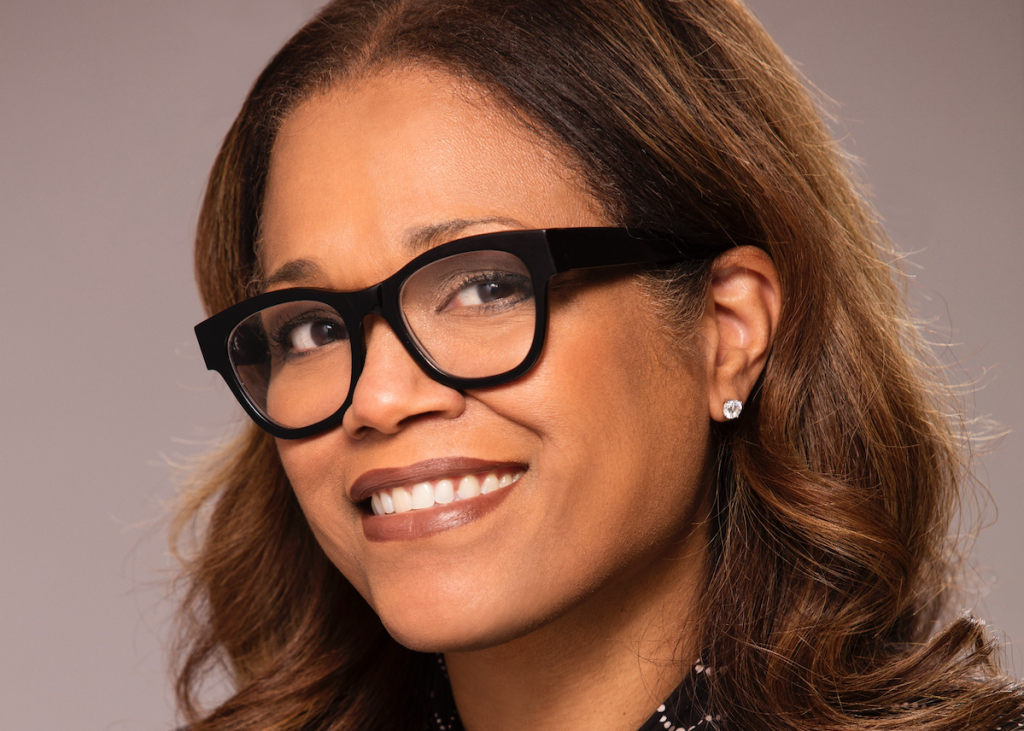
While jobs are being added across the country, whether or not these are truly good jobs that will retain top talent remains unclear. For Cynthia Bowman, Bank of America’s Chief Diversity & Inclusion and Talent Acquisition Officer, determining this requires a foundational commitment to data, accountability, and transparency. The Charlotte, North Carolina-headquartered bank’s detailed human capital and impact reporting has allowed it to take action with a “willingness to course correct when an activity isn’t having the intended outcome.” It’s part of the reason Bank of America comes in at the number 11 spot in our 2022 Workforce Equity and Mobility Ranking, which takes a look at how Russell 1000 companies are leading on the interconnected issues of diversity, equity, and inclusion (DEI) and upward mobility and advancement.
We spoke with Bowman to dig into how the company earned this rank. With a workforce of over 200,000 employees and $282.9 billion in market cap, she shared how the company’s leveraging its influence to break down the barriers to hiring and upward mobility that disproportionately affect workers of color – from rethinking degree requirements for roles to supporting career development for individuals from low- and middle-income communities. For her the importance of retention, not just hiring, has been key for both the company’s workers and its business. In May, Bank of America raised its U.S. minimum wage to $22/hour, a move investors viewed favorably.
This work is both an integral part of the company’s business strategy and, with increasing urgency, the right thing to do, she said. Read on to hear more from Bowman on how Bank of America is using data and addressing systemic barriers to embed equity and upward mobility in both its hiring and retention practices.
Findings from our 2022 Workforce Equity and Mobility Ranking make it clear that companies should start by getting specific on how they’re tracking and measuring their DEI efforts. Bank of America does just that and includes detailed reporting of its workforce demographics, and progress in diversifying, in annual reporting. The company discloses its EEO-1 reporting data, breaking down detailed workforce demographics by job level. Its latest measures show that 50% of its global workforce are women and 49% are people of color. In addition, 55% of its management team is diverse, including 32% women. Since 2015, representation of teammates of color in its top three management levels has increased by 60%.
Importantly, Bank of America has buy-in from the very top of the organization for this work. “This process starts at the top, with our Board of Directors and CEO. Our CEO and management team set the diversity and inclusion goals of the company. Each management team member has action-oriented diversity goals, which are subject to our quarterly business review process, talent planning and scorecards reviewed by the Board,” Bowman said. She mentioned that Bank of America has formed a Global Diversity & Inclusion Council to oversee DEI goal setting and embed these targets in performance management processes at all levels.
For Bowman, this focus on data and company-wide processes are critical. “At the end of the day, so much of it comes down to transparency and accountability,” she said. Not only does reporting ensure this level of transparency and hold leadership accountable, it also helps Bank of America improve its DEI efforts. Bowman shared that the company has been surveying employees for nearly 20 years and “the results inform a process of continuous improvement.”
This data-driven mentality has also informed Bank of America’s aim to tackle areas “where systemic, long-term gaps have existed and where significant change is required for progress to occur and be sustained.” One particular challenge Bowman noted is that, by the nature of the banking industry, potential job candidates assume that they need a four-year college degree. “In reality, our skills-first and knowledge-based hiring approach trump any degree requirement and allow for more equitable hiring practices for traditionally marginalized groups,” she said. The company partners with organizations including Year Up and UnidosUS to recruit talent without college degrees and is also looking to strengthen this pipeline through community college partnerships.
A key achievement Bowman noted for Bank of America in tackling these barriers is its community hiring and development program, Pathways. Pathways provides skills training, entry-level jobs, and career development for individuals from low- and moderate-income neighborhoods. The program ultimately aims to provide individuals with the preparation needed to take on ongoing job opportunities with Bank of America. In 2018, the company set out to hire 10,000 individuals through Pathways by 2023 – a target it exceeded in 2021 – and is now aiming to hire additional 10,000 individuals via Pathways by 2025.
Outside of its own workforce, Bowman noted that the company has committed $25 million to connect Black and Hispanic individuals to job opportunities in growth industries and, in turn, support long-term economic health in local communities. The commitment includes partnerships with 11 community colleges that serve predominantly Black and Hispanic students as well as 10 Historically Black Colleges and Universities and 11 Hispanic Serving Institutions. In its 2021 Annual Report, Bank of America reported having already allocated this money as part of larger reporting against its $1.25 billion racial equity commitment.
Bowman emphasized, however, that these efforts don’t stop at hiring and recruiting. “It’s about creating a workforce that looks like the world we live in across every level, including senior leadership. It’s about creating an environment where people don’t feel like they need to be someone else from the time they walk into work to the time they leave. And it’s about equity,” she said. “It’s about creating processes that diminish bias, allow you to promote within, generate more inclusion in our everyday practices from the time you hire, how you onboard, how you conduct calibrations, how you retain talent, how you recognize talent and how talent leads your organization.”
Bowman sees efforts like Bank of America’s commitment to raise its starting hourly wage to $25 by 2025 as crucial to creating an environment where equity is prioritized and, in turn, employees are motivated to stay. She raised the bank’s dedication to gender and racial pay equity, and reported near-equal pay ratios at over 99%, as another example of how equity can and should go beyond hiring and representation targets.
And, as Bank of America continues to put commitments that reinforce equity and upward mobility into practice, Bowman is eyeing both ambition and flexibility in how the company takes action. “You can celebrate impact and hold yourself accountable in areas where progress isn’t as strong,” she said. To her, this focus on data, accountability, and transparency also leaves room for companies to learn from each other. “When setting your strategy, look at what your peers are doing, look outside your industry and share your own best practices.”
The 2022 Workforce Equity and Mobility Ranking was funded by the Annie E. Casey Foundation. We thank the Foundation for its support. The findings and conclusions presented here are those of the authors alone, and do not necessarily reflect the opinions of the Foundation.
To learn more about how Bank of America and other companies are putting these best practices into action, explore our full 2022 Workforce Equity and Mobility Ranking and complementary Issue Brief. For more information on how we’re engaging with the country’s largest employers on these issues, reach out to our team at programs@justcapital.com.
