(PwC; Evgenia Eliseeva)
Last year, in the depths of the pandemic, Americans looked to the heads of business for leadership in a frightening, uncertain time.
Our polling found that 90% of Americans believed that the spread of COVID and societal unrest provided an opportunity for companies to hit “reset” and focus on doing right by their workers, customers, communities, and the environment. Separately, Edelman reported in its 2021 Trust Barometer that business was the most trusted institution among those it tracks. If companies were going to take their commitments to stakeholder capitalism seriously, a pandemic and renewed push for racial justice appeared to be an ideal test case.
But we’re seeing signs that confidence is slipping. As our CEO Martin Whittaker highlighted of our sixth annual Americans’ Views on Business Survey: “Only 49% of those surveyed believe companies have a positive impact on society (down from 58% in 2018); nearly 60% said capitalism is not working for the average American; only 36% believe companies are having a positive impact on the financial well-being of their lowest paid workers; and a mere 22% believe business is headed in the right direction.”
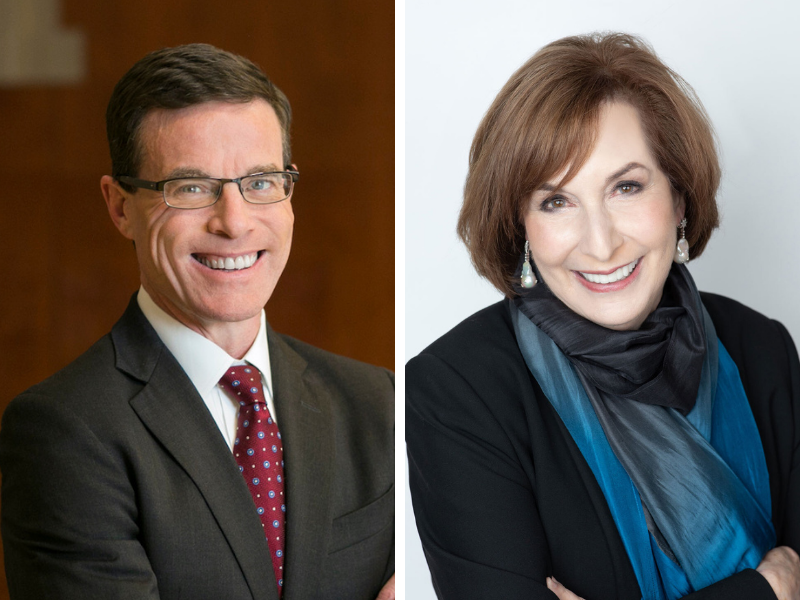
If companies want to come out the other side of this pandemic and its recovery strong, it is clear that they need to build trust among all their stakeholders. That’s why we reached out to PwC’s U.S. chair, Tim Ryan, who’s overseeing the firm’s Trust Leadership Institute, and one of its guest speakers, Harvard Business School management professor Sandra Sucher. PwC developed the Institute as a way to train executives on stakeholder- and ESG-driven leadership, and launched its first session – with 184 companies represented – last month. Ryan told us that PwC is using these same techniques for its own organization, and Sucher was a natural fit as a keynote speaker, given her specialization in how corporate leaders develop trust.
We’ve collected lessons from our interviews with both, drawing from what’s taught in the institute and in Sucher’s recently published book, “The Power of Trust,” coauthored with Shalene Gupta.
Developing confidence and stronger relationships with stakeholders requires, of course, an ongoing process, but the lessons below are intended to set leaders in the right direction, and touch on what Sucher says are the four elements of trust – competence, motives, fairness, and impact.
“My biggest advice is don’t let the past encumber your thinking,” Ryan said of his discussions with leaders on the subject of trust.
“The world is changing, work is changing, the relationship with workers and employees is changing,” Ryan said. “Old-school thinking is a bit of an excuse.” He mentioned the example of how business leaders are having to decide which aspects of flexible work they are going to maintain as pandemic restrictions continue to loosen. The pandemic has inspired frontline and office workers alike to demand more from their employers, and it would be a mistake to ignore their voice.
Ryan said that he pushes against those who insist that there is a correct way – the traditional way – to develop culture at work, requiring all employees to be in the same physical space. As the recovery continues to be messy and unpredictable, leaders need to maintain the trust of their workforce by acknowledging that the goal should not necessarily be a full return to “normal,” but that learnings on flexible work can continue to be beneficial and lead to higher engagement and productivity among office workers.
Sucher said that companies need to own the discomfort that comes with rebuilding trust in the wake of a major scandal, setback, or poor performance. “People want to know that you see the reality that they see,” she said.
She said a simple three step process can help guide this repairing of trust both internally and externally: Recognize the mistake without glossing over its impact and apologize for it, explain exactly what went wrong that led to that mistake, and then set a clear and detailed path on how the company is going to correct its course.
Chipotle CEO Brian Niccol pulled this off quite successfully. When the board brought him into the company in 2018, Chipotle was marred by a succession of food safety scares. Niccol made health and safety across all aspects of the business fundamental to his leadership style, and regularly communicated to the public exactly what broke down in its supply chain that led to customers buying tainted food. His embrace of, and then reaction to, the potentially fatal setback not only led Chipotle’s stock to eventually hit new highs, but placed the chain in a position to weather the pandemic better than many of its competitors.
Our survey research over the past year has made clear that the majority of Americans support efforts to develop racial and gender equity in pay and representation across different levels of companies, but transparency across all human capital metrics at America’s largest companies remains quite low.
Ryan said that he applauds business leaders who are willing to make commitments or statements on issues that their stakeholders value, but he then asks them, “Have you changed the way you’ve done business?” and, “Are you willing to tell a transparent story, even when it’s not perfect?”
Your workforce, potential employees, and investors are not going to trust your words, he explained, if you are not willing to provide a look at the reality of the situation. For example, when PwC US announced a new set of diversity, equity, and inclusion (DEI) efforts last year, it also released its first report detailing demographic breakdowns across its organization. Ryan noted in a blog post that the numbers were not ideal, but were important for tracking progress and holding itself accountable.
Similarly, there is a wealth of climate commitments out there, but very little accessible insight into how these plans will be achieved. According to DataDriven EnviroLab and the New Climate Institute, only 8% of companies that have net-zero emissions goals have interim targets.
It’s no wonder, then, Sucher said, that investors aren’t assured, after we shared with her the Edelman statistic that “86% of U.S. investors believe that companies frequently overstate or exaggerate their ESG progress when disclosing results, and 72% of investors globally don’t believe companies will achieve their ESG or DEI commitments.”
Speaking specifically about the many net-zero targets targeted between 2030 and 2050, Sucher said, “There’s nothing else in business we do on that time horizon,” and so “that skepticism is warranted.” If you want investors and other stakeholders to trust that you are taking their desires seriously, you should complement your big-picture goals with milestones and explain how you will meet them, she said. Our Research team has identified Microsoft as a standout in this regard.
In this year’s Americans’ Views on Business survey, we found that 63% of respondents believe that CEOs should take a stand on social issues. As we’ve seen over the past year, several companies have struggled with this, afraid of losing trust among certain stakeholders through either a stance or lack of one in regard to a major political debate in the country, such as the controversial Georgia voting bill passed in April.
Sucher said that companies have to acknowledge now that whether they make a statement, take action, or choose to be silent, there will be people unhappy with their decision. Rather than try to read which option would be most popular, Sucher said, “The question is who are we with respect to this issue?”
The answer to this question can be quite complex and difficult, but a company’s trustworthiness is built on its relationships with its stakeholders, and those relationships rely on that company working toward its purpose.
PwC has doubled down on educating clients on matters of ESG investing and how that is tied to long-term, sustainable corporate leadership.
“This is only increasing in size in magnitude, and we’re encouraging clients to own this opportunity for what it is – but also appreciate that this is not a quick fix, to simply put it off into the corner with a chief sustainability officer,” he said.
ESG investing and corresponding stakeholder leadership is not a fad, he explained, but something that will only grow more popular, as well as formalized with federal ESG standards on the horizon. But if companies are going to convince their stakeholders that they are taking it seriously, they need to integrate these initiatives into the core of their business.
“Change your supply chain, change your reporting, change your infrastructure, change the way you run your business,” he said.
(Stephanie Keith/Getty Images)
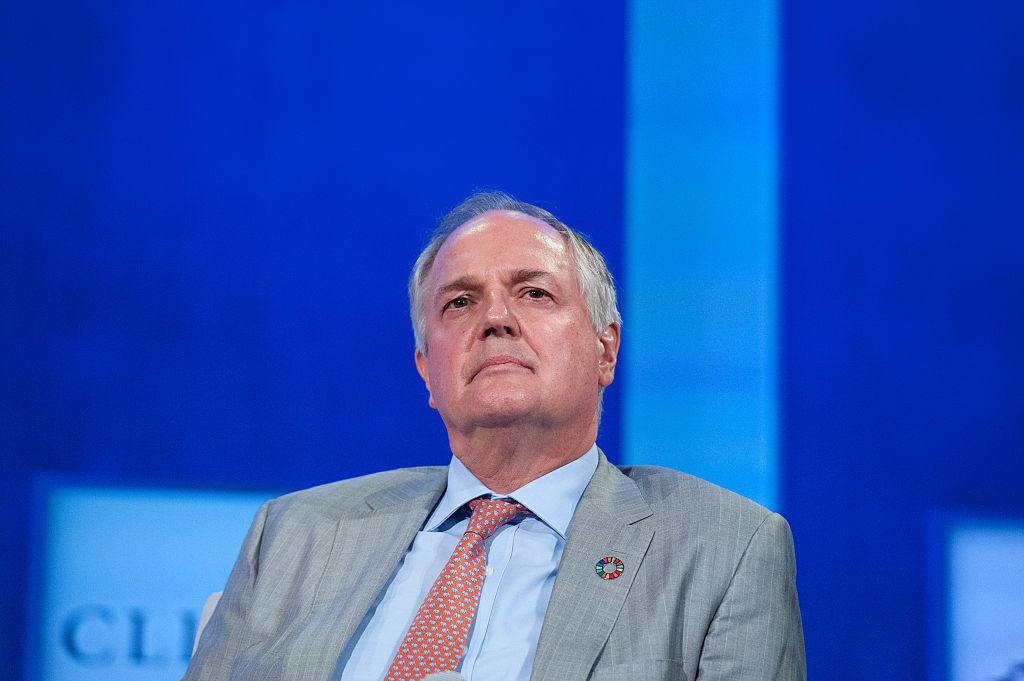
Any discussion of the stakeholder capitalism movement of the last several years has to include Paul Polman.
Over his decade-long tenure as CEO of Unilever, Polman spearheaded the London-based consumer giant’s Sustainable Living Plan, integrating sustainability and human rights into its global business strategy. He ditched quarterly reporting and guidance after taking charge in 2009 and was vocal about exchanging a short-term outlook based on the theory of shareholder primacy for one that created more robust growth over the long term. His style won him critics as well as fans, but by the time he handed over the company to Alan Jope in January of 2019, Polman had generated 290% shareholder return and expanded Unilever’s global market share. And in 2017, he also famously prevented a hostile takeover by Kraft-Heinz, a company whose leadership was in ideologic opposition to what Polman had built.
By the time he stepped down, Polman had proven that a corporation built on creating value across its stakeholders could both reduce its negative impact on the environment and society while creating higher returns for shareholders than competitors.
Now he’s out with a new book, “Net Positive: How Courageous Companies Thrive by Giving More Than They Take,” that draws upon his experience at Unilever as well as the sustainability consulting career of his coauthor, Andrew Winston. We recently spoke with Polman about “Net Positive,” and how it fits into the ambitious mission of his CEO collective, Imagine.
The following interview has been edited for length and clarity.
JUST Capital: How did the idea for Imagine come together and how’s it related to “Net Positive”?
Paul Polman: They are closely related. I discovered when I was CEO that increasingly the needs to operate at a higher standard were apparent to create this more sustainable, equitable business model. We were trying to do that with Unilever and made great progress, got recognized for that. But I also could see that there were limitations. If you did something, competition might not join, you might not have the bandwidth to do things or enough trust these partnerships, and ultimately you need governments involved to drive the broader systems changes. Most CEOs know what needs to be done – the “why” question is not actually that pertinent anymore; the “how” is really where the issues are. And many CEOs struggle with that. So my co-founder Valerie Keller, we created Imagine, which really focuses on this broader systems change.
A theory of change is as much about leadership or human change as it is about organizational or broader systems change. Our theory of change is not the only answer, but we think it is an important contribution to moving fast on the Sustainable Development Goals (SDGs), especially on the areas of climate change and inequality – burning issues, both sides of the same coin. We thought, why don’t we create a neutral platform called, Imagine, the name actually came from Yoko Ono – “You may say I’m a dreamer, but I’m not the only one.” And we put a critical mass of CEOs together by industry sector, across the value chain. You solve issues that are not in silos.
When you have 20-25% of a sector together of undoubtedly more responsible companies, then civil society and NGOs want to work with them and governments start to listen. We looked at industries that had the biggest impact on the SDGs from a negative point of view that we could turn around to make them positive. The energy transition gets enough attention and we are working then with a lot of other things. Fashion is a very destructive industry from biodiversity and labor standards. We look at food – the whole food system needs to be transformed. We look at tourists and travel and we’re starting to look increasingly at private equity, as well.
At the time of the 2019 G7, we created The Fashion Pact, bringing together about 80 companies in fashion. They work with Conservation International and they are now the leading industry to develop these science-based targets and integrating them. Moving, for example, to regenerative cotton, getting out of single use plastic for B2B as a first step and then beyond. Redefining the standards of shipping and hangers and how products need to be moved. This industry didn’t have climate change, the value chain, or biodiversity on the agenda. And in a relatively short period of time, one and a half or two years, you’ve had a major thrust forward with very good progress. With COVID, this industry worked with the International Labour Organization to put responsible standards together, and determine what to do to guarantee jobs in the value chain despite the disruptions to supply. This is also an industry that very quickly got together and worked on PPE, making masks and things like surgical gowns. They moved very quickly into this because this partnership was created.
Another one is food. We have the 27 biggest food companies together, and we have the whole value chain from the seed and the input providers to the processors like Bunge, Cargill, and ADM, to the manufacturers, Nestlé, Unilever, and Danone, to Walmart and Carrefour. Together, they are moving to regenerative agriculture, which gets you into farmer livelihoods, soil health, and biodiversity protection. It has us working together on the European Green Deal to get responsible labeling with consumers to look at alternative proteins.
JUST: Why do you think that they are useful a useful lens for business leaders, rather than just leaders of countries?
Polman: When the Millennial Development Goals (MDGs) were developed in the year 2000 and were set to run through 2015, they didn’t talk about the private sector. I was at Rio+20 [the United Nations Conference on Sustainable Development], in 2012, and we said we cannot finish the Millennial Development Goals only halfway.
The secretary-general, Ban Ki-moon, put a panel together of what he called eminent people, 27 of them. And it is true that there were a lot of politicians in that panel, but he had the courage also to invite business, and he wanted me to be on that panel. We have the 17 SDGs coming out of that, which we worked for about two and a half years, intensively consulting with all different stakeholders in society. Business is needed for about 90% of them, and while they were adopted by 193 countries at the UN, they are very much different from the MDGs. Business needs the SDGs but the SDGs need business, as well.
We did some studies and found that between now and 2030, we could unlock about $12 trillion of potential and create 380 million jobs. So we’ve been able to do a few things to show that this development agenda is not only a moral framework for the world at a time that multilateralism isn’t quite working, but we’ve also shown that it’s not just about risk mitigation, but is rather probably the biggest and best business plan that we have in front of us.
JUST: This really ties into the bigger question of how to lead with purpose. One of the biggest questions, especially over the past year, that corporate leaders have is determining when and how to speak on societal issues. You saw that with the Georgia voting bill and the Texas abortion bill. With Unilever specifically, you have the company’s Ben and Jerry brand saying that it’s going to restrict sales in Israel in occupied territories and then you have certain American states saying that they’re going to divest from Unilever in response. When you have such a polarized political context, but you also have the public expecting companies to take these stances on societal issues, how do you know what is right and what is good for the company and what may be a step too far?
Polman: We actually address that in “Net Positive.” One of the key hallmarks of a net positive company is that they take responsibility for their total imprint in society, not just their footprint. Many companies outsource their supply chain and also think they can outsource their responsibilities. And that’s obviously not acceptable anymore. You have to own the problems that you create as much as you embrace the opportunities that are there. We talk about the multi-stakeholder or the longer term model, with purpose at its core. We talk about shareholder return being a result of what you do, not an objective. And then we talk about these broader partnerships to drive this transformative change in society. We then call out some of these tougher challenges that are there, like how to deal with money in politics, corruption, tax payments, human rights in the value chain, and CEO salaries. So the book doesn’t shy away from giving people key ideas of how to get trust in society and how to turn that into a competitive advantage.
Now, the reality is not only your employees, but study after study – including from JUST Capital – finds that most people in society expect CEOs to speak up and participate in these broader societal issues that directly or indirectly affect their businesses. We’ve seen CEOs speak up on LGBT issues when governments were going in a different direction and that sent an incredibly important message about dignity and respect. We’ve seen people like [Merck’s former CEO and current chair] Ken Frazier walk away from the president when you had Charlottesville, because it was about dignity and respect.
So CEOs have to speak up when these basic human values are being threatened, because it undermines humanity. Likewise, when democracy is being threatened, like you saw at this dreadful event on January 6, at the Capitol, many CEOs spoke up and I think helped make the situation more manageable than it otherwise would have been. So it’s not anymore a question of if a CEO speaks up, it’s a question of how a CEO speaks up. And it’s really impossible or impractical to speak up on every issue. You cannot and nobody is expecting that. So there are some things I would say to get to your question. You should really ask, does it align with your company’s strategy? Can you have a meaningful influence on the issue? Does your voice matter, or is it just noise? Look at your broader constituency.
And we need to be sure that net positive companies are consistent. You cannot anymore make big commitments on climate change and then lobby separately for anti-climate change legislation, or speak up for human rights in the value chain but then operate your company under opposing principles.
JUST: At JUST Capital, we only have a focus on American companies, but these large corporations have a global lens. In the book you write about the challenges that you faced in dealing with that. How do you take that into account when there are different needs for different markets, but you also are trying to have an alignment of values?
Polman: Well, the values that you express as a company that you have to make come alive to create the right culture, et cetera, I think that can be done universally across the globe. There are countries that criminalize LGBT people, and so you will have to confront what you advertise in one country versus another. But what good companies do is they set goals that make them feel uncomfortable, but that they know what the world needs. A total inclusion goal – inclusion of people with disabilities, of different races, of gender. Unilever operates in most countries in the world, and in some countries, we had to fight with governments to get more women rights, for example.
So while you are not perfect, you have to be part of embracing that problem and actively driving for positive solutions. If you are willing to go on that journey, do it transparently and in partnership, and hold yourself accountable, then I think you are better placed than others. Ultimately, you need to work with governments and civil society to drive the bigger changes. Unilever has plastic around its products, some products need to be shipped, they need to have packaging, but when you are active to reduce plastics to start coalitions around that, to work with countries to set up recycling systems, to try to innovate in the industry at scale, to find alternatives.
So you become a solution provider and not a problem creator. And this book is very much about how to profit from solving the world’s issues, not creating them. And it’s the same as this advocacy. JUST Capital was evaluating the Russell 1000 companies and you showed that companies that lead in meeting the needs of all the stakeholders financially outperform those that lag by over the last four years. Well, if you truly run a business model with all stakeholders, you also have to advocate for all stakeholders. They have to make their voices heard to defend them when they are being attacked. You also have to ensure that these negative externalities that these stakeholders suffer, that you also actively correct them.
I could never say that there was no child labor or slave labor in Unilever’s value chain. The value chain was too big and too complex, and, you know, 90-100,000 companies that you work with and some contractors. But I could say that Unilever more aggressively was looking at this. They created the Modern Day Slavery Act in the UK and we lobbied for that. We had Oxfam audit our supply chains. We worked with broader coalitions of establishing what would be living wages and set the standards there. We not only made these commitments public, but kept raising them. That made us move quite rapidly up in GlobeScan’s ranking as the most respected company in the world, even ahead of Patagonia, which is the poster child, number one in the Dow Jones Sustainability Index all the time. But more importantly, we saw it translated into having higher engagement and having stronger relationships in our value chain and in our communities.
And that ultimately resulted in a 300% shareholder return during my tenure in our competitive set. So I think we’ve been making the case that this is actually good business, but it’s a different way of doing business than being myopically focused on the shareholder, which has proven now to more and more people, I think broadly, that’s a failed concept that destroys social cohesion, destroys our planet, and puts more people into poverty.
JUST: And on that, that notion of shareholder primacy versus stakeholder capitalism. Do you think that we need a new framework or that CEOs need a framework that is something along the lines of total stakeholder value? And how do you communicate this easily to investors? There are ESG standards coming to the United States shortly. What do you think is necessary for all of this to become reality?
Polman: Well, there’s a lot in there, but the most important thing is that yes this short-termism is not helping us. We cannot solve the issues of food security, climate change, inequality, with myopic focus on the quarters. But it’s not helping the economies either. The average lifetime of a publicly traded company has gone from 67 years when I was born to 17 years now. The average length of a publicly traded CEO’s tenure is now less than four and a half years. The number of publicly traded companies has gone down in the U.S. over the last four decades from 4,800 to 2,300. And increasingly the more we study this myopic short-term focus, we actually see that it destroys economies, versus builds economies. And it’s not surprising because most of the investments that are made for companies are investments that actually pay off only in year four, five, or six.
So we need to fight that. So one way to fight that is it’s obviously ourselves align the incentives, in the financial market, align the incentives, not incentivizing people on the quarterly meeting, but on the compensation side, the CEOs. So we need to put the right incentives systems in place. We need to educate the boards. The fiduciary duty of boards is not just single-mindedly to the shareholders. It goes much further than that in terms of guaranteeing the long-term future of the company. So we need to work the governance of a company. 75% of CEOs say that pressure is actually coming from the boards. We need to actively engage with our shareholders. Very few CEOs have the dialogue of long-term value creation by also working the environmental and social capital. So we need to communicate better our value creation models and how ESG or sustainability or whatever word you want to put on that is actually, the driver for long-term value. I think we have increasing evidence of that, that we need to do it. And then last, but not least, we need to be sure that the strategies we put in place are these longer term strategies. That’s why in Unilever, I got rid of quarterly reporting. We got rid of guidance when I came. I put the compensation system on the long term. Just to create an environment, that space for people, to start to act longer term.
On a macro basis to really solve that, we treasure what we measure. So we need to be sure that we start to not only celebrate return on financial capital, which is important, but also increasingly on social and environmental. So there is movement there from the SEC, from the Sustainable Standards Board, from the leaders behind the European taxonomy. Increasingly governments are looking at these negative externalities and trying to put them back into the company and hold companies increasingly responsible for that. Climate change is the first step, the recommendations of the TCFD, but it’s increasingly coming in other areas as well, such as wage disparities and makeup of companies around ethnic lines or racial or gender lines. All these things are becoming increasingly transparent and they force behavior. It’s very clear that if companies make commitments, report on it, and make it public, they make faster progress. What we now see is that these companies that do that also are more profitable and more resilient in this environment.
JUST: Is there a moment from your tenure as Unilever CEO that you would consider to be your proudest moment as a leader, and then if something comes to mind, what do you think that that taught you?
Polman: Well, it’s not about myself. It’s a whole organization that they are aligned behind a common purpose in Unilever’s case making sustainable living commonplace. And we had the Unilever Sustainable Living Plan, which was very audacious, which was very uncomfortable. We didn’t know how to do it alone, nor did we know how to get there, but we knew that these targets were needed. Get out of fossil fuel, don’t run your factories with waste, treat people well in your value chain, create decent jobs. These are very uncomfortable targets that no company had set before. But what I’ve learned with Unilever is that if you can get into people’s individual purpose and then translate that into a corporate purpose, that’s an incredible force for change.
That beacon gives you courage when the skeptics are there, when the financial markets aren’t fully on board, when the newspapers like to step on you, and when competitors want to abuse that by trying to undermine it. Ultimately it has resulted in Unilever showing that a longer term multi-stakeholder model with purpose at its core is also better for the shareholders. And nothing was better for us than having to face this battle with Kraft-Heinz, which was under the philosophy of only value creation for a few billionaires, and us under the philosophy of value creation for billions of people. Kraft-Heinz is on the bottom of lists for sustainability and human rights, and there’s the case of its falsifying records. What you’ve seen clearly before, during, and after that is the Unilever model on a long-term compounded basis is a significantly better value creation model. You have to figure out how you want to run your business. And you should run your business to the service of society, or otherwise it will not accept you in the long term.
At JUST Capital, you guys provide the positive ammunition that we need to give people courage to make the change, because we know what we have to do. Leadership is really what the issue is, right? It’s not technology, because we can do a lot. It’s not really the money – we have too much money coming out of our ears. It’s the willingness to put the interest of the common good ahead of your own, knowing that by doing so, you’re better off yourself, as well. And that takes courage. We just don’t have enough leaders. There’s a four and a half year CEO tenure. Most of these leaders will look at their own compensation, which often incentivizes them to do what’s best for themselves because they don’t know how long they’re around and that’s the problem. We have a human problem. The problem is not is not climate change or inequality. The problem is greed, lack of empathy, and selfishness. And if that doesn’t change, you won’t tackle the issues. It’s absolutely key.
(Courtesy of Andrew Winston)
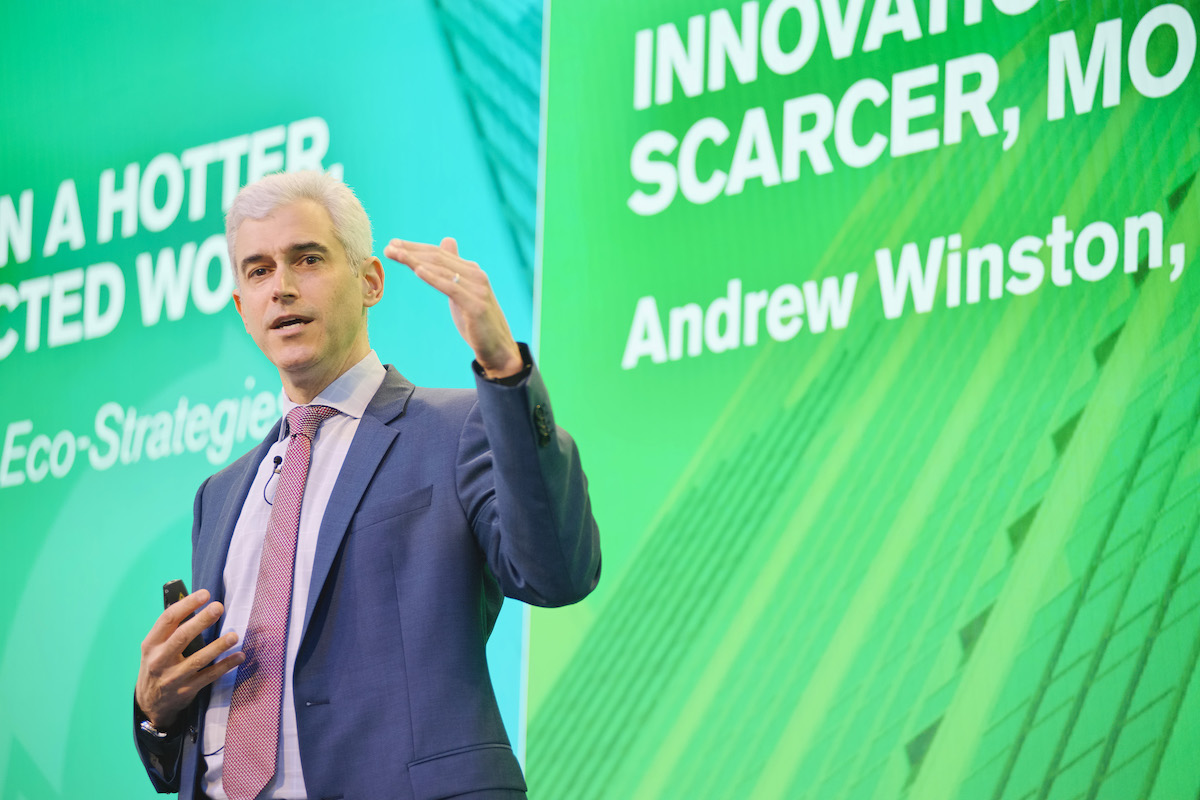
When Andrew Winston joined Daniel C. Esty, an environmental policy expert teaching at Yale, to begin working on their book “Green to Gold” in 2003, there wasn’t much you could find in bookstores on how to lead sustainable companies.
“Climate change” was still years away from becoming a widely discussed topic in business, and the idea that companies could ‘go green” was still in its infancy. The book hit stores in 2006, the same year the documentary “An Inconvenient Truth” brought the debate over global warming to the masses, and its case for improving returns while reducing your organization’s negative environmental impact registered with CEOs across America.
Winston has continued that work over the past 15 years, establishing himself as one of the country’s premiere consultants on corporate sustainability, working with companies like HP, Johnson & Johnson, Marriott, PepsiCo, and Unilever. It was through his relationship with Unilever that led him to collaborate with its former visionary CEO, Paul Polman, on the upcoming sustainability guide “Net Positive,” which has more urgency and calls on companies to be far more ambitious than they were when “Green to Gold” came out.
For this year’s Climate Week – coming the month after a dire IPCC report on climate change – we spoke with Winston about the ways the field has changed since he entered it around two decades ago, and how to make sense of what feels like an unending string of climate policy announcements.
The following interview has been edited for length and clarity.
Andrew Winston: Twenty years ago, if you told me where we’d be 10 or 15 years later, I don’t know if I would have started – it would have been kind of depressing!
There’s been this kind of natural progression, but some things have changed in the last couple of years. When I started getting into this, it wasn’t like the business community was unaware of sustainability, but you can go back and look at the number of sustainability reports and goals, and it was not big.
Every company had some kind of compliance agenda, had statements about how we care about the environment, but very few use the word “climate.” There wasn’t real pressure. My book “Green to Gold” came out 15 years ago and there weren’t that many others like it. The case had to be simple – green doesn’t hurt, it saves money, it’s good for you, and it’s not some liberal trying to take over your business and be anti-business.
Now, keep in mind, I still get asked to give that talk today all the time, so there’s still a huge chunk of the business world that is still thinking, well, this is always really expensive. I think what’s evolved, though, is the leading edge, certainly. The leading edge companies are just far ahead of the average or the lagging company.
And I think what’s happened over the last five years especially is that the battle to get sustainability on the agenda for large companies is over. From that perspective, all of us in the field, we won. I’ve had my website pivotgoals.com up for eight or nine years, and we can see now that pretty much every company in the Fortune Global 500 has some form of goals on climate or energy and some form of sustainability report. The gaps there are maybe Chinese national companies that just issue statements about keeping with the government’s five-year plan.
In the last two years, I’ve seen more change in the meaning of the role of business in society than in the previous 20. That’s for many reasons – the murder of George Floyd, MeToo, inequality getting drastically worse over the last 40. All the “mega trends” that I talk about with companies are just happening. You’re not debating climate as a model anymore. It’s like, “Oh, what’s happening to my supply chain in this region is from increased storms.” It’s much more tangible.
We’re beginning the battle for thinking about the long term in a real way finally, and I’d say the biggest change in the last year has been in the financial community. Among all stakeholders, I’d have said that until recently they were laggards slowing things down. But now they’re at the table. I’m skeptical, but I’m hopeful.
JUST Capital: With the rise of ESG investing and more sustainability reports, critics often argue that greenwashing has gotten more sophisticated. They’ll point to ways that companies can say that initiatives are resonating with customers without proving any real impact on the environment. What do you think of this critique, and how do you think companies have been communicating their goals and progress?
Winston: I’ve never thought greenwashing was a huge problem – I probably define it a little more narrowly. To me, true greenwashing is doing the opposite of what you’re saying. But I think that’s pretty rare with transparency.
I think that the way it plays out often is that companies are doing something they’re proud of and they talk about it without very good context on whether it’s a big deal or not. They’re buying X amount of renewable energy, or they built a new factory with zero waste, and it often lacks the context of how we’re still losing [in the bigger picture]. The whole reason we wrote “Net Positive,” is to say it’s just not enough.
I think we’ve probably entered a phase where companies are almost surprising themselves like, oh, this is good for business. So they’re like, look, I can talk about it as brand value, I can talk about how my customers and my employees like it.
There were old ads that said things like, “We did this to our factory, and it’s the equivalent of taking 37 million cars off the road for three seconds.” I always thought, I don’t know what you’re talking about. There’s always been a challenge in how to communicate this.
It can be difficult to find that balance, but as a business, you do want to show that it’s creating business value and you shouldn’t be shying away from that. That’s something Paul [Polman] certainly embedded in me. I mean, I was already the pro-business green guy, but he got me a little further down the path to talking about how we can talk about the growth of the business in a smart way, and to also say, oh, but consumption is too high. There are these tensions that we’ve got to work on. If we think we’re just going to all use less stuff, sure, but there’s going to be another billion or two billion people that need a higher quality of life, even basic stuff, which means using more. These are complicated issues. And I find, I feel sometimes for companies trying to communicate this, because they’re nervous about being slammed in the way you, in the way you say, but a fairly cynical generation is good for them, probably.
JUST: We just did some polling around climate policy, and we asked Americans if they believed that individual choices or corporate choices had more of an impact on the environment. And there’s an objective answer to that, but the subjective response to it was just about split, which I found fascinating.
Winston: Well, that was one of the incredibly successful campaigns of a fairly small handful of companies, telling us that it’s all individual action. Of course we can make individual choices, but there is this incredible pushback from the environmental community now. And I think younger, smarter people know that these are systemic issues.
But I also think swinging to the other side and going, “Hey, there’s just 100 companies who have made 80% of the emissions, so we’ll just solve them,” is also oddly naive about the system. Like we can say we’ll go after the fossil fuel companies or the utilities, but I keep reminding people that 70% of the US economy’s consumption. They don’t turn on the utilities for fun. They turn them on to power my home, to cool my home, to make stuff. We all have to figure out how to not just get the grid to go to zero carbon, but also to reduce the draw, you know, especially in the areas where you can’t easily go to zero carbon.
One of the key points of “Net Positive” is this systemic view of partnerships among business, civil society, and government. Acting like any one of them is the sole lead is silly. But yes, putting it on individuals has always been pretty funny, frankly.
My wife and I were just talking about this. The auto companies have now set really aggressive goals. They want to sell only EVs [electric vehicles] by 2030. If we don’t have an EV infrastructure, meaning fast charging stations everywhere, we’re not going to buy a second EV in our family because sometimes you need to drive 400 miles, so then what? We have one EV, but we’re going to still need a gas engine unless the infrastructure comes in.
JUST: During last year’s Climate Week, there was a trend around net zero commitments, and we’ve already been seeing more this year. Given that there is still a lack of standards for reporting these, what should consumers and investors be looking for in terms of both indicators of real progress and red flags that commitments might not be as serious as they sound?
Winston: Well, I think they’re serious. And there are distinctions in what people might mean by carbon positive, carbon negative, net zero, carbon neutral, etc. – there’re subtle distinctions that I can’t even explain very easily. I tend to take a bigger practical view, which is we’ve got to get to zero. Buy a lot of renewables, get super efficient, and head down the path really fast.
The goals from the leading edge definitely trickle through suppliers and to their peers, as they keep pushing forward. Five to 10 years ago, there were a few companies claiming basically carbon neutrality, but it was through mainly RECs, renewable energy credits, and now there’s a recognition that doesn’t really cut it unless they’re truly additional, which is not that hard to figure out. Like if you’re buying a PPA, a power purchase agreement, that causes a wind farm to get built, that counts. Your purchase is what’s making the capital available, but just buying the REC from a wind farm in Iowa for a dollar is just not useful.
There’s also increasingly, again at the leading edge, a recognition of what zero would really look like. The two goals that I think are the most compelling right now are from Microsoft and Google. That just blew the edge forward last year, when Microsoft said we’re going to be retroactively neutral and try to eliminate carbon equal to everything we’ve emitted. And then Google said something even harder, really, which was we want by 2030 to be 24/7 renewable, meaning every electron powering their facilities is renewable, not offset with the grid. And they don’t know exactly how to do it, but I think that’s the level.
And then you’re right, it feels like every day there are companies saying we’re going to be net zero by 2040, 2050. And the banks are saying they’ll do that to their portfolios – that’s another topic, but I think those goals are quasi-meaningless, to say you’re going to stop investing in fossil fuels by 2040 or 2050, when nobody’s going to be building them anyways and that’s 20 years too late. But it’s all happening really fast. We’ve still got to fill a gap, given that only a quarter or so of the Global 500 have science-based targets.
And then there are the few going further, talking regenerative and net positive, like Walmart or Ikea. You see it in biodiversity goals and in some carbon positivity goals. That’s the cutting edge and where we need to go.
JUST: We could talk about ESG in depth for hours, but to just touch on it briefly here, you mentioned earlier you weren’t fully convinced by it. It is striking that when you map out how different investors qualify as sustainable companies, it ranges wildly. The SEC has made clear that it’s going to have the first draft of standards regarding climate policy reporting, and so I wanted to get your take on that and what you consider to be most pressing.
Winston: First, just to step back, the fact that we’re all calling it ESG now – and I’ve been in this long enough that we’ve gone through different words – is solely because the investors are at the table, and that’s what they’ve been calling it. We had socially responsible investing, but there were very few people who were ESG executives. They were maybe led EHS, environmental health and safety, or they led sustainability, or were a “green czar.” That we’re all talking about ESG tells you something and it ties to what [BlackRock CEO] Larry Fink and others have been talking about aggressively.
People can push back and say, “Well Larry Fink just talks, but where’s the money going at BlackRock?” But the rhetoric matters. It has really gotten into CFOs’ and CEOs’ heads that they’re supposed to say something about this. But it’s really hard, because if I were going to say, create a fund to invest in companies I think are net positive, the problem is you have like three companies, maybe.
The biggest priorities for me are fundamentally climate or biodiversity, because they’re preconditional. We either get them right, or none of the rest of it matters. I mean, we can worry about living wages, but wages in Miami don’t matter if it’s underwater.
But then I think that inequality, and racial and gender income disparities have to be part of [these preconditions]. I got a call yesterday about a company, they’re going to announce this really big set of factories, employing a ton of people, and it’s going to be zero waste. I said to them, what’s going on with labor at that location? And this is from working with Paul [Polman] that I do this a lot more now. Are they unionized, what are their benefits, and what’s going on with your lobbying? These are areas that need to get fed into any kind of ESG rating to say these are standards we hold companies to. And that needs to include something about their position on policy, because again, these are systemic problems.
If you give some oil and gas companies a best in class rating because they say they want a carbon price, but then they’re funding directly or through associations a fight against any actual bill for a carbon price – which is what’s happened so far across oil and gas – they’re not actually being ESG or sustainable. So I think those are the key elements we have to look at: climate, inequality issues, and lobbying and political advocacy. We need to have a much more robust definition of what it means to be moving in the right direction.
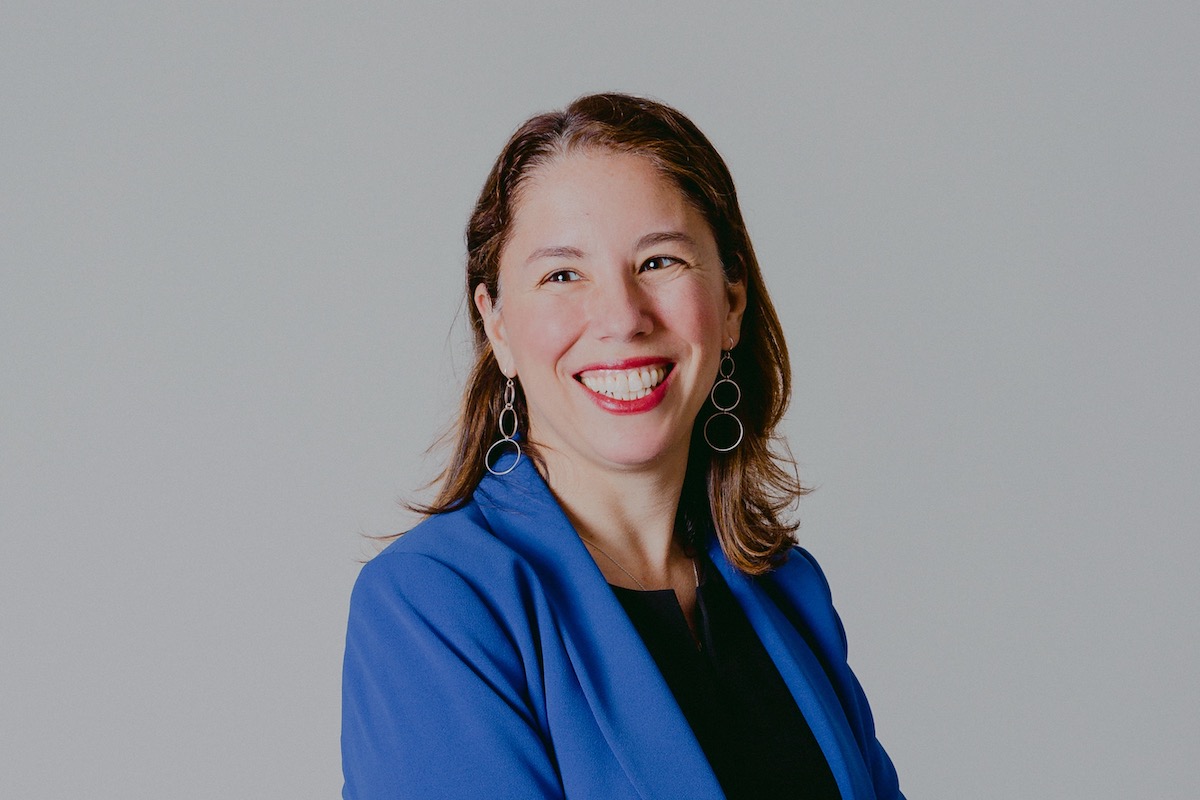
(Bridget Badore/The Century Foundation)
One of the lingering challenges the pandemic brought to the forefront was the reliance working mothers have on child care policies, and how a lack of sufficient infrastructure can impact the economy. In March, only 57% of American women were working or looking for work, the lowest labor participation since 1988.
It’s been the impetus for a reconsideration of national child care policy on a level not seen in 50 years. On Thursday, the House voted to pass the child care and paid leave sections of the Democrats’ $3.5 trillion spending bill, which include higher wages for caregivers, universal pre-K for children ages 3 and 4, and 12 weeks of paid family and medical leave. To Julie Kashen, Director of Women’s Economic Justice at the progressive think tank the Century Foundation and one of the country’s foremost experts on the topic, this represents a shot at a generational shift in how the United States values caregivers and working parents.
“I really think we are closer to making major change than ever before,” she told JUST Capital this week.
Of course, the policies are part of a bill with support split down party lines, and on the business front, CEOs of America’s largest companies have taken different stances on how such policies should be funded. But aside from the political debate unfolding, we have found general support for the legislation, as well as for companies stepping in where the government isn’t. In our latest survey conducted with the Harris Poll, we found 78% of respondents supported a federal paid leave policy, and that the highest number of respondents (28%) said the federal or state government should play the primary role in providing child care.
In our discussion, Kashen detailed the evolution of the child care debate in America explained why she believes that regardless of partisan battles, it’s in businesses’ favor to support caregiving reform.
The following interview has been edited for length and clarity.
JUST Capital: As someone entrenched in this work, how have you seen the pandemic has change the way that people are talking about child care?
Julie Kashen: I think the pandemic really shone a spotlight on the fact that we have never invested in a care infrastructure that we’ve needed for decades. We’ve built our public policies and workplace policies around the assumption that there is a full-time caregiver at home, and that’s just not the reality, as the majority of parents are working, whether because they have to or they want to. With schools closed and child care programs closed, it became abundantly clear that somebody needs to be there to care for children. And when that’s not a possibility, work will be disrupted. There have been studies over time that have shown that not having reliable, steady child care leads to productivity disruptions for employers, but I think that became even more evident and gave employers more of a stake in this after the pandemic.
JUST: Can you guide me through why it has been so difficult to pass these kinds of policies on a national level even as society has changed so much over the past 50 years?
Kashen: It’s useful to go back a little further, to look at the fact that during WWII, Congress did enact a publicly funded child care policy because the incentive was for women to work at home while men were fighting abroad. They sunset the program when the war ended, and the incentive was women should go home and care for their children and give the jobs back to the men. So, when we wanted it, we were able to do it. And then in the ’70s, there was some very effective cultural messaging around this as an individual family responsibility, not a government responsibility.
What’s unsaid in that is the gender piece, that women should be the ones who are doing it, and the racial piece, that Black women should be working and white women should be at home caring for their children. If you look historically, Black women’s labor force participation, especially for mothers, has always been higher than white women’s. Then you had a lot of pop psychology, like Dr. Benjamin Spock putting out work that said it’s better for moms to be home with their kids, based on a kind of junk science. There was this guilt factor around the way things were supposed to be, and more and more pressure was put on individual families and individual women. The conversation turned away from the idea of government being a way to solve this. Meanwhile, we had kindergarten through 12th grade paid for, and that’s accepted as a public good, but anything before kindergarten was not. You had this dichotomy exist.
In the ’90s, the conversation was caught up in welfare, and if you wanted particularly Black women and low income women to work, you needed to do something about their child care needs. The Child Care and Development Block Grant was formed as part of the TANF, or Temporary Assistance for Needy Families, and it became tied to welfare while there was also a child and dependent care tax credit created that’s much more about serving middle class and wealthy families. So, basically, child care as an overall solution to gender, racial, or economic equity was not really the approach – it was approached as a work support.
Now we’re in this different moment where years of work have gotten people to see that perhaps child care and early education could be a public good. And when the sector collapsed along with so many other sectors during the pandemic, we saw government saying we’re going to come help bail out the airline industry and others, including the child care sector. And now we are able to have this conversation where Congress is considering legislation to guarantee eligible families child care, to put in the significant funds needed for higher quality care, which includes higher wages for those who are working in the industry. It’s really a transformative moment where we might be able to see the changes that we’ve needed all along.
JUST: Where does corporate America fit into this? The U.S. Chamber of Commerce and Business Roundtable have both come out in opposition to the spending bill, primarily because it entails a rise in the corporate tax rate. That said, you had leaders of some companies meet with Vice President Harris the other week to speak in support of child care policy, and you had around 300 companies come out in support of keeping paid leave in the budget.
Kashen: I think that as we break it down into the individual policies, we can get more support. We know, for example, that in 2019 the Council for a Strong America published a study that showed the U S was losing $57 billion a year in earnings, productivity, and revenue because of the lack of a child care system. So that has inspired folks, including the U.S. Chamber of Commerce, to really be talking about child care in a new way.
I think the general feeling, and it looks like your polling shows this, is that we are in a place where everybody needs to do their part in some way. Families need to partner with their employers and with the government to come together to solve these challenges. The pandemic reminded us of how interconnected we all are. And so even though we may fight about some of the details, I think that overall there’s support for these particular policies and there’s an understanding that it’s good for children and families, it’s good for racial and gender equity, and it happens to also be good for businesses and the economy. It’s rare for there to be these policies that really can be such a win for all.
JUST: You’re still hopeful that eventually something will pass.
Kashen: Yeah.
JUST: And what if it doesn’t?
Kashen: I’m not willing to go there! But look, December marks the 50th anniversary of the veto of the biggest opportunity that we had last time. Now is our chance.
JUST: In terms of looking at the actual child care infrastructure in the U.S., do you think it needs a complete overhaul, or is there a way to make more incremental changes to have it work better for families?
Kashen: We have a system in place that is a federal-state partnership where the federal government sets the parameters of the policy and then the states implement it. What we’re talking about doing is changing it so that instead of having limited funds leading to states having to resort to waiting lists and not serving all the children eligible, there will be the funding available to do it all better. And that means guaranteeing that every family that’s eligible gets the assistance because the money will be there for the providers of care through this program, getting fully reimbursed for the true cost of care. And so we’re building on what exists already, but we’re transforming it into something that is really going to serve millions of children and families around the country in much more meaningful ways.
JUST: And how do you see the, the role of center based care from the larger companies, like Bright Horizons and KinderCare, which work with many of the country’s largest corporations?
Kashen: We need all different forms of child care, but we need to be able to give parents maximum choice of what kind of care they’re using. Employers that have been able to do backup care and care onsite, I think that’s amazing, and we certainly want to see that type of thing continue. It’s not the solution for everyone, though. There are too many people left out if you rely only on that, but marrying what employers are already doing with this robust system of diverse options will be really powerful.
JUST: If you were to sit down with one of the CEOs considering these policies right now, what would your appeal be to them?
Kashen: Human capital is one of the most important parts of a company. Making sure that the people who work for you are able to care for their families makes them more productive, better employees, and it’s better for the overall business. And so investing public dollars in child care really helps create a more productive workforce and it can help with recruitment and retention among people who aren’t working or aren’t working as many hours as they could right now. And then think about your personal story – who cared for you when you were growing up and who cares for your children, and how might that relate to the people who work for you, and what they might need that’s the same or different than what you have or had?
JUST: Do you believe that it’s necessary for them to use their lobbying power to push for this legislation right now? Companies can tend to say they take care of their own employees and find that to be sufficient.
Kashen: I think that they do because I think there’s a lot of turnover today. You may end up missing out on some great future employees if we’re not collectively investing. And our GDP is influenced by this. If you can increase women’s labor force participation, you can increase the wages of child care workers – these things will directly impact our overall economic well-being. You can increase the consumer purchasing power of women. It does have ripple effects. It’s not just on individual companies.

(Luiz Alvarez/Getty Images)
When Ella Bell Smith and Stella M. Nkomo first published “Our Separate Ways” in 2001, it was a groundbreaking investigation into the ways the glass ceiling hadn’t broken the same way for white and Black women in corporate America. Twenty years later, Smith and Nkomo knew the book’s publisher, Harvard University Press, would be interested in a follow-up. The thing was, Smith told JUST Capital, the results had barely changed over the past two decades. “It seems like the book is more appropriate now than it was 20 years ago,” she said.
Smith is now a professor at Dartmouth’s Tuck School of Business and Nkomo a professor at the University of Pretoria, and both have consulted with business leaders of some of the world’s largest companies. Earlier this month they re-released “Our Separate Ways” with a new preface and epilogue that places it in the current moment. They told us that while the slow progress since the first edition and a stronger backlash to DEI among certain people can feel disheartening, they are hopeful that the momentum in the wake of George Floyd’s murder can compel companies to make systemic change.
We discussed some of the ways business leaders can make this happen.
Smith and Nkomo told us that while it is worth celebrating the rise of Black women into prominent corporate positions, such as Thasunda Duckett into the role of TIAA CEO and Mellody Hobson into the role of Starbucks chair, they note that the overall numbers have barely budged since they first began their research. They pointed to last year’s Lean In and McKinsey report, “The State of Black Women in Corporate America,” which noted that “while African American women make up 7.4 percent of the US population…only 1.6 percent are in VP roles and only 1.4 percent are in C-suite positions,” and named “a lack of sponsorship, racial and sexual microagressions, isolations, undermining of their authority, and a lack of visibility” as barriers. Smith also noted how companies continue to deal with comparatively higher levels of attrition for Black women due to these same reasons.
She said that even today, too many business leaders “still don’t look at the differences that men experience versus women” and “still lump women of color together with white women.” As in 2001, siloing “women’s issues,” “Black issues,” etc. within a company can skew reality. To begin overcoming this, Smith explained, companies need to conduct and release pay equity analyses on an intersectional level (taking into account race and gender), and be deliberate in their support.
Expanding recruitment as a means of diversifying has been discussed for so long that best practices around it should be easily accessible at this point, Smith said. Problems can arise when that is seen as a solution unto itself.
Nkomo said that she and Smith found both in the ’90s and today that often when companies tout new diverse recruitment efforts, existing minority employees ask, “Well, what about us? We’re already in the company.” Instead of “parking” these employees (i.e. once they’re in the company, a diversity obligation has been met), it is necessary to ensure that development and sponsorship across demographics are built in to avoid the ceilings on progress to higher levels in the company.
That said, Nkomo noted, not all employees want to rise to the upper rungs of a company, of course, but the follow-through after recruitment is as important to retention on a horizontal basis as it is vertical.
Smith said that often when she speaks to leaders at companies who are motivated to bring ambitious DEI initiatives to their organizations, they speak as if they are charting new ground – when the truth is that previous generations of leadership there had the identical mindset.
Because matters of diversity and inclusion have typically been kept separate from core business strategy, even the most ambitious projects are traditionally tied to individual leaders or sets of them. And so when even the most well-intentioned CEO leaves, for example, it doesn’t take long for those in the company to revert to business as usual, leaving DEI goals to be rediscovered down the line.
If a company is serious about running an organization with equal access to opportunity, it needs to see that as part of its core operations and create means of accountability that exist regardless of who is in charge.
Smith and Nkomo acknowledge that corporate leadership has become far more aware that companies without barriers to development and with a variety of voices at the highest levels can outperform their peers, but that it can be easy to fall into a trap of thinking that diversity in the C-suite and board along with a DEI advisory committee will be sufficient. They’ve found that most of the most stubborn roadblocks occur in middle management.
“It is really hard for the guys and gals at the top of the organization to really influence unless there is accountability,” Smith said. “And that’s an important word here: accountability.”
That is where means of standardizing and tracking data around diversity comes in. Both researchers also noted that, especially in the levels of the company below leadership, DEI goals shouldn’t feel like a “punishment” on white workers, or be presented as if a lunch and learn on Black history, for example, will suddenly take care of roadblocks. Instead, it’s critical to present these initiatives for what they really are – a way for the company to grow because all of its workers have the opportunity to fulfill their potential and a diversity of perspectives and ideas will enhance its services and products – and they the path toward achieving them is built on authentic human relationships.
Smith and Nkomo both believe that “radical, systemic change” is the only way to break the long-standing stagnation of corporate racial equity work, but also that companies are in a position to lead.
For example, states like California and Illinois have passed board diversity quotas similar to those in Europe, and SEC chair said that the agency is considering human capital reporting standards for issues like demographics and pay gaps – but many companies still have free reign to determine what accountability looks like.
“It’s not what they were developed to do, but this is the one time when companies will probably have to have the courage to take the lead and the courage to speak up,” Smith said. “I’m hoping it is, because it would help stir the pot to get other parts of our system moving forward.”
Smith recommends leaders look to external consultants for assistance. “If you had the talent and the know-how inside, you wouldn’t be in this position.” These challenges have persisted because they are complex and difficult to overcome even for those who want to earnestly tackle them. They require investment in HR, DEI, and multifaceted organizational change.
“The reality of it is you can have all the power at the top, but if you don’t have accountability, if you don’t have historical memory of the generations that are there before, if you don’t have development, then guess what, you’re still at the ‘kumbaya’ stage,” Smith said.
UVA Darden School of Business
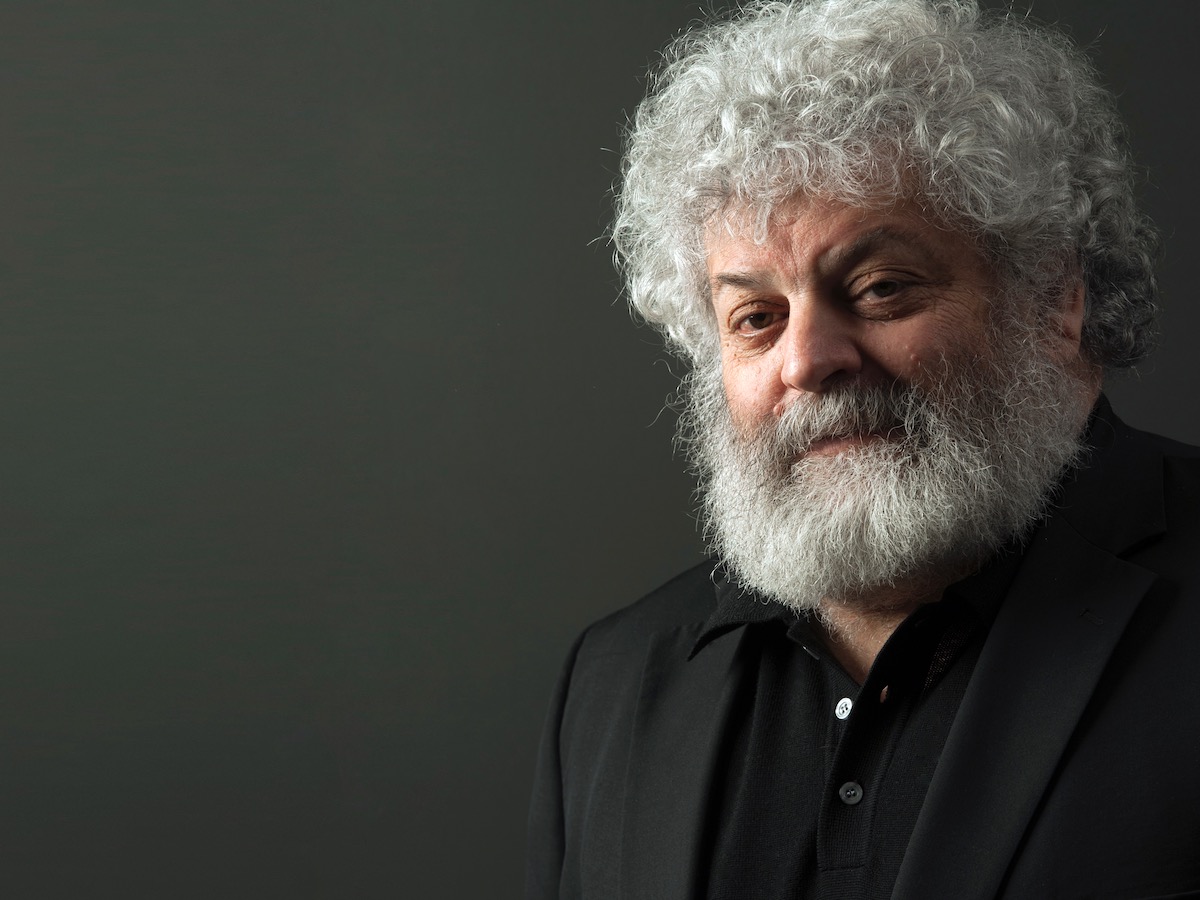
That there is even a mainstream debate about stakeholder capitalism is good news to R. Edward Freeman, professor at the University of Virginia’s Darden School of Business. “I’ve been at this since 1977,” he said, laughing, referring to his first paper on the subject. “Eventually, some people start to pay attention. I don’t mean to me, but to the idea.”
Freeman has been quick to point out from the beginning that he did not coin the term “stakeholder” in a business context – he points to the work of the Stanford Research Institute and others in the 1960s – but his work in the ’80s developed an idea of business with responsibilities to more than shareholders into a practical management theory. It’s why we spoke to him ahead of the second anniversary of the Business Roundtable’s stakeholder-centric Statement on the Purpose of a Corporation. It was a statement that surprised him when it was released in 2019, but one that also made him happy.
We discussed some of the accompanying critiques of stakeholder capitalism that have been frequent over the past couple weeks, whether alleging the approach is misguided, impossible to truly achieve, or nothing more than “woke” nonsense. To him, these are variations of the same arguments that have existed for decades, from critics who are unwilling or unable to see shareholder and stakeholder value as linked. He also believes that the stakeholder movement has momentum beyond a tipping point. “There’s no going back,” he said.
By the time Freeman arrived at the Wharton School of the University of Pennsylvania as a postdoctoral researcher in 1976, he had spent years studying mathematics and philosophy, both economic and otherwise. His next challenge was management theory, and his boss at the time wanted him to see what was behind the stakeholder ideas being tossed around. That led to 1984’s “Strategic Management: A Stakeholder Approach.” The text is now regularly referred to in management research as foundational to an increasingly popular approach, but at the time failed to make an impact.
It wasn’t until the ‘90s, when shareholder primacy was the norm, even for the BRT, that he saw a renewed interest in his work. That accelerated with the financial crisis and then with what he calls “a perfect storm” of social movements, rising inequality, and political instability that followed. Freeman joined the board of Whole Foods founder John Mackey’s Conscious Capitalism organization, and has spent years consulting corporate leaders.
Early in our discussion, Freeman alluded to the way many Business Roundtable CEOs said their latest statement was less reactionary to these forces than a proclamation of how they had long been approaching business. Critics have latched onto that point as proof that the statement was a marketing gimmick, but Freeman explained his interpretation before jumping to one of of stakeholder capitalism’s prominent critics, Vivek Ramaswamy, whose book “Woke, Inc.” was released the day Freeman spoke with us.
The following interview has been edited for length and clarity.
Prof. R. Edward Freeman: Now that we realized this, we can get better at it. We can improve it. We can look for how creating value for customers affects communities or suppliers, etc. And there are lots of companies out doing that. So I’m extremely optimistic about that.
And no, I haven’t read “Woke, Inc.,” because a review I read pissed me off so much. “Woke” [used by critics to mean disingenuously or suffocatingly progressive] is one of those phrases like “political correctness” – it stops arguments. “Oh, you’re woke, so therefore I’m going to discount you.” I’m a philosopher by training and phrases that stop arguments like that are formal fallacies.
On the other hand, over the years, I’ve managed to piss off the left and the right. Left, they think I’ve sold out to business, and they don’t think business can do anything good.People on the right, on the other hand, think I’m a socialist. But I actually think what stakeholder capitalism is, it’s about the business model. It’s about how business actually works in the real world.
But there are a lot of people who are in the grip of this old story. They just can’t imagine business as anything but a duality between stakeholders and shareholders. I’ve never thought that was interesting.
JUST Capital: When you see recent pushback, are they the same arguments that you’ve been seeing for decades at this point?
Freeman: Oh, God, yes. I mean, none of this stuff is new. It’s a little bit like Wall Street and the academic world, finance and accounting people, have discovered ESG. Well, wait a minute. That’s been around since Abt Associates [a research institution that began using “social audits” in 1971 as a way of measuring benefits and costs of its research on its stakeholders]. Let’s get out of the grip that it’s only economics that counts. Let’s look at business as a societal institution.
JUST: There is another form of pushback that can start with, “We agree with these theories, but the companies that say they are following them are lying.” Harvard’s Lucian Bebchuk and Roberto Tallarita have argued that there is no evidence BRT companies are following their statement of purpose.
Freeman: Arguments like, “Everybody’s lying, here’s what’s really going on,” are problematic. Even if all you care about is making money for shareholders, how are you going to do it? You’re going to have great products and services for customers, suppliers who want to make you better, employees who want to be engaged in the company, and communities who want you or at least allow you to operate. I’ve only looked very briefly at the Bebchuk paper, but I’ve heard for a lot of years he’s very much caught up in the sort of standard way to think about governance. I read the law, even, differently. I read it as saying directors have a duty of care to the corporation. And what’s the duty of care to the corporation? Well, I’d pay attention to how they create value for their stakeholders.
Again, I think seeing it as a duality between stakeholders on the one hand and shareholders on the other is a mistake. That’s not to say that there aren’t some people acting in bad faith. But for the most part, I don’t believe businesspeople are like that.
JUST: Do you reject the premise of the argument, then, that for stakeholder capitalism to be real, that governance and bylaws within a company would have to be changed?
Freeman: I don’t think that at all. There’s this idea that you have to eschew shareholder value, but that that’s ridiculous. Companies have to make money. It’s a lie to say, well, they’re only stakeholder capitalists if they put making money second. No, what they might do is see them as connected.
JUST: Arguments do exist that a full rethink of how companies make money and function is needed – like Sen. Elizabeth Warren’s “Accountable Capitalism” message bill – but I’ve never seen that as the primary stakeholder capitalism take. Critics often do, however, and I wonder if they’re conflating those positions by mistake or in bad faith, because it’s easier to turn down for a broader audience.
Freeman: I think there’s some of both.
There are at least four ways you can understand stakeholder capitalism. The first way is this is just PR – greenwashing and virtue signaling. The second way is well, people mean it, but this is really just CSR [corporate social responsibility], just dealing with social issues. The third way is around top-down elites and government policy shaping business.
The fourth way is about the business model, and this is about understanding how business actually works. And that’s been my view for 40-plus years.
There’s a great back and forth with Milton Friedman and John Mackey a number of years ago, before Friedman died. [Freeman considers Friedman a “hero” for his research on markets, but believes he misunderstood how corporations operate.]
And it was clear that Mackey understood this the same way I did. We might need some top-down stuff, we might need to change how we think about capital markets, we certainly need better PR, and we need to worry about social issues – but fundamentally we need to change the story about business.
JUST: To me, the rise of stakeholder capitalism is linked to the rise of ESG investing. SEC chair Gary Gensler has said there’s going to be standardized ways of reporting climate impact from companies and then it’s highly likely that there will be some human capital metrics standards after that. Do you think companies should be run in the way where you’re looking at potential value creation and risks in things like climate and the composition of your workforce, or should ESG analysis be relegated to a form of investment? How do you see it?
Freeman: I would look at it slightly differently. The perfect storm here is a function of what happened in the global financial crisis. Add global warming, Black Lives Matter, Me Too, inequality on a global level, and political instability. What you get is a recognition that we need to change the way we think about this.
If you think the right way to think about a business, evaluating it from the outside, looking at the risks to the future cash flows, then you’re going to see risk in all of those things. And there’s nothing wrong with that – that’s right. If you’re on the inside, you’ve got to probably start from a different perspective.
Some people will look at that just in terms of the risks of the future cash flows, but some people will look at it in terms of what they stand for while they’re here. Purpose matters to most human beings. And I think, [BlackRock CEO] Larry Fink would say purpose might drive profitability. Again, we’re realizing how those things are intertwined.
There’ll be some standardized versions of ESG, but I’m a little skeptical of having that too standardized. When you do that you lose opportunities for people to do it differently. And one of the things we know about businesses is they’re not all the same. And so their ability to deal with things like global warming or inequality are different. From the company perspective, we need companies innovating.
ESG is great. I’m all for it. I’m a little amused by it, because it’s a new toy that people think they have just invented. But I’m also like, “Great, welcome to the big tent of stakeholder capitalism.”
JUST: I’ve seen the same arguments around management repeated in articles and research over the past century of American business. And in the ’70s, you can find almost identical arguments to today around CEOs getting too bold in taking political stances. But we’ve also seen in our polling research that the public, across demographics, does want CEOs to take stands. Yes, they tend to want them to take stands that they agree with, but they are looking for them to step up, which I think is fascinating. How do you believe this has evolved?
Freeman: Well, I’ve recently had conversations with a number of CEOs who have said things like, “I know I have to do stuff here. I just don’t know how.” That’s been an issue – I’ve started a new course called “Societal Issues in Business,” trying to help students figure out how to do it. Look, not taking a position is taking a position. So the idea that you can escape from this by saying, “Well, I only deal with economic issues,” that’s a political position – it’s a position that says economics and politics are completely separate, which we know certainly from Adam Smith on is a foolish idea.
Now, Friedman said we elect officials to do this. He was worried for the most part about corporate philanthropy, about executives supposedly giving away owners’ money. But setting that aside for a minute, he was also worried about companies doing stuff that they didn’t know anything about – and I agree that’s worrisome. I much rather see companies trying to figure out, for instance, how they can offer up opportunities with their business model to people who’ve been shut out of the system, or how they can encourage their employees to be community builders in the communities where they live. One of the other vectors that we have going on here is the multi-sector, multi-stakeholder partnerships where you have NGOs, governments, and companies sharing their expertise to deal with societal problems. I think that’s an equally important thing that’s going on.
And around polling – of course, you’re right. The public is firmly behind stakeholder capitalism. There’s not much ambiguity about that.
JUST: Do you see this moment as a turning point, similar to the way that shareholder primacy gradually went from fringe to mainstream ideologically, and then became ingrained through corporate leadership, judgments, and deregulation? Is the pendulum swinging back?
Freeman: Yeah, I think it is. I actually think we’ve gone past the tipping point. Nobody’s arguing that what we really need to fix everything is to double down on shareholder value. And for good reason – it doesn’t work. The best you can say about it is it’s incomplete.
What causes a company to be profitable is how it manages its other stakeholder relationships. We’ve come to understand that. One of the other things that goes on, at least here in the U.S., is of course younger people are demanding this of where they work, and that’s a good thing. The forces are such that I don’t think there’s any going back.
