

HP CEO Enrique Lores (HP)
The 26th UN Climate Change Conference (COP26) begins on Oct. 31, and it’s potentially the most consequential of these meetings since the Paris Agreement was reached in 2015. The latest analysis from the UN’s climate science arm shows that global temperature rise is outpacing the Agreement’s aims, which UN Secretary-General António Guterres referred to as a “code red for humanity.” Corporate leaders and heads of governments around the world are mobilizing, and HP CEO Enrique Lores has shown that good climate policy can also be excellent for business. It’s why we invited him as the guest of our latest JUST Quarterly Call on Tuesday, in which we break down how a company is delivering long-term value through a stakeholder lens.
Ahead of the call, HP announced a major expansion of its partnership with the World Wildlife Fund (WWF) to conserve and restore global forests. The Palo Alto-based company will spend $80 million over the next five years to help offset the impact of printing with its products, ultimately restoring or protecting nearly one million acres of forest. The move is just the latest show of HP’s commitment to sustainability under Lores’ leadership.
With a commitment to be “the most sustainable and just technology company,” HP has prioritized sustainability and stakeholder performance while delivering for shareholders. HP’s 2020 Sustainability Impact Report noted that its sustainable impact agenda helped it win more than $1 billion in sales for the second year in a row. With a market cap of nearly $35 billion, HP’s latest earnings also show it is projected to continue to grow at a pace ahead of its industry peers.
This focus landed HP the number two spot among technology hardware companies for its shareholder performance in our 2021 Rankings of America’s Most JUST Companies. Within its industry, HP also ranked third for how it takes care of the environment and its communities and sixth for how it treats its 53,000 employees. We wanted to unpack those numbers with Lores, and, as COP26 nears, learn more about how HP’s approach to sustainability has been a boon for business. JUST CEO Martin Whittaker joined him for our latest Quarterly JUST Call to discuss.
Watch the full conversation here and read on for key takeaways.
Speaking on HP’s commitment to fighting climate change, Lores raised that the company is focusing on both overall targets and ones tied to key business areas. Overall, HP is committed to reaching net-zero greenhouse gas emissions by 2040, but the company has set other goals that are closer to core areas of business. Lores pointed to the negative environmental impact of printing as a key example. With an aim to make printing “forest positive,” the company started an initiative to fight deforestation, forming the foundation for its new partnership expansion with WWF, Lores said.
Lores also spoke on HP’s new sustainability bond framework, designed to help the company issue bonds to help finance sustainability-related projects, as a way of marrying climate targets with core business and shareholder interests. When announcing the framework, HP also issued its first $1 billion sustainable bond to positive reception from financial institutions, Lores noted. “Clearly even financial institutions are willing to put their money behind helping us make progress, which I think is an important sign of how the world is changing in the right direction,” he said.
HP’s approach to diversity, equity, and inclusion (DEI) has been informed by a similar mindset, Lores noted. He pointed to the growing evidence that diverse teams lead to better business outcomes as motivation for the company’s commitment and also emphasized the importance of specifics in HP’s DEI goals. “We are a company of engineers that likes to put specific and numeric goals to everything we do,” he said. HP’s DEI goals include having women comprise at least half of its executive leadership team and at least 30% of its engineering workforce by 2030, and doubling the number of Black employees in executive leadership roles in the U.S. by 2025.
Setting these specific goals has allowed HP to more easily track progress, Lores said, and the company’s already seen the benefit of prioritizing DEI play out at the board level. Referring to its board as “one of the most diverse in corporate America,” Lores noted that the discussions this group is able to have has led to better business plans and strategies for HP. The board has been particularly involved in HP’s ESG efforts, he said, helping push the company on both impact and shareholder return.
HP is not only addressing the environmental impact of its products, but the way they may have contributed to the digital divide around the world. For the company, that looks like both ensuring more people can access its technologies and that this access leads to better life outcomes for individuals. While HP has set an overarching goal to accelerate digital equity for more than 150 million people by 2030, it also runs programs focused on training and content people can use to start new businesses and achieve other goals that help evolve their lives, Lores said. And while HP’s goal may sound aggressive, Lores noted it’s a small dent the company can make given the billions worldwide who are disconnected.
What underpins all of HP’s sustainability agenda is its focus on leveraging relationships with suppliers and other business partners. “Every year we produce close to 100 million PCs. We produce 50 million printers. This is of great scale that we can use for the good of the planet,” he said. Lores frames HP as both a community, in that internally it needs to live up to its values and principles, and a platform, given the scope of its partners and suppliers. HP’s developed requirements for suppliers around diversity and environmental metrics as well as a new program, Amplify, to help partners develop their own sustainability agendas, Lores noted.
For Lores, HP’s sustainability approach is, importantly, further proof that shareholders are not an afterthought in stakeholder capitalism, saying that it’s a false dichotomy to say you have to “choose between business performance and having an impact in the world.”
“Our results show that doing both at the same time is possible,” he said.
Ahead of the Quarterly JUST Call, Lores joined Andrew Ross Sorkin on CNBC’s Squawk Box to discuss the current global supply chain and semiconductor shortages along with HP’s approach to ESG and its sustainable products. You can watch the full interview below.
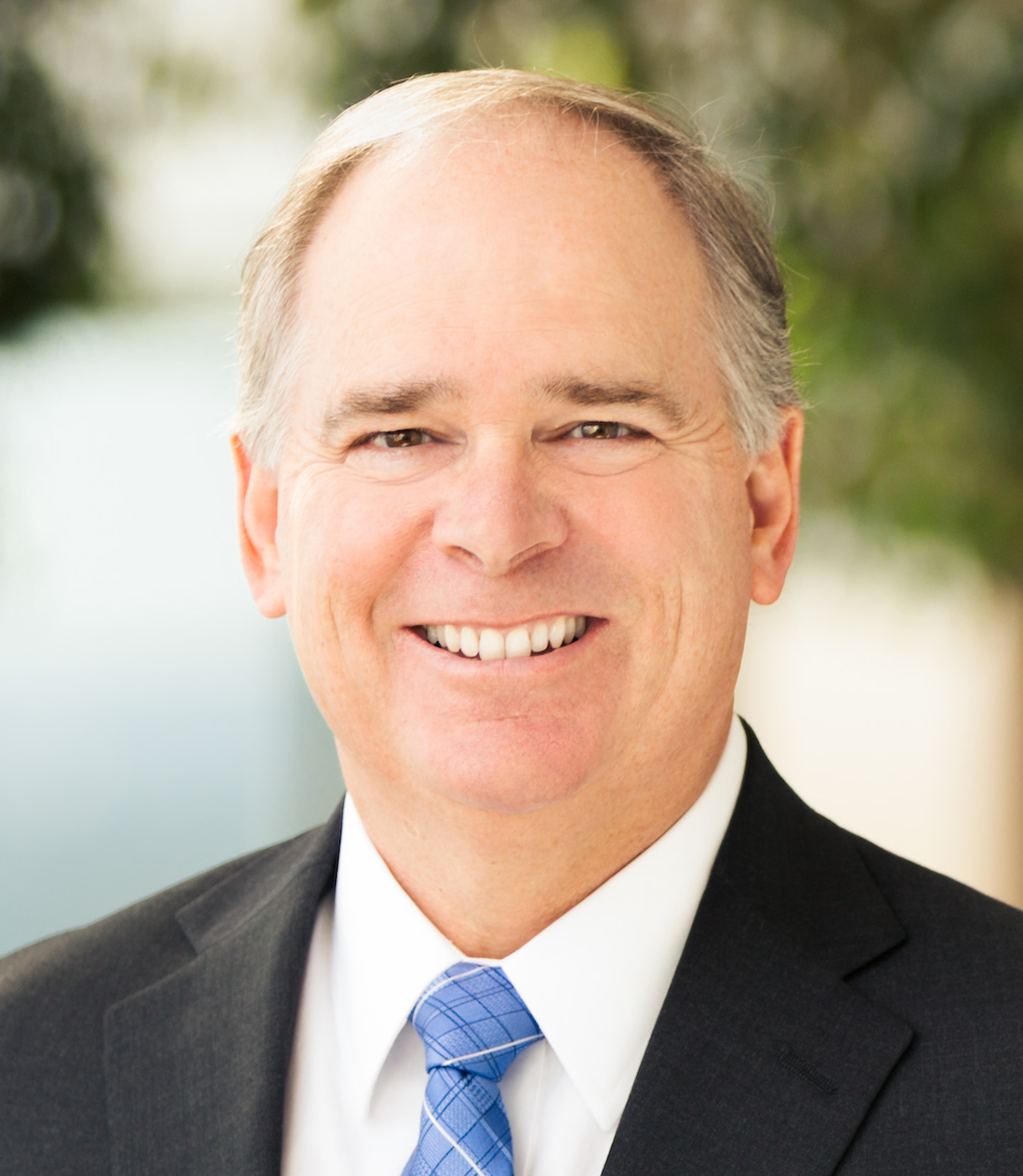
American Electric Power CEO Nick Akins. (AEP)
Last week, President Biden unveiled what he referred to as a “once-in-a-generation” investment in the country’s infrastructure, including a rethinking of American energy. The $2 trillion plan includes a proposed $174 billion spend on electric vehicle (EV) infrastructure and $100 billion on clean energy and the electric grid. Nick Akins, CEO of American Electric Power (AEP), is on the frontline of both the opportunity and the urgency behind these numbers.
Akins is at the helm of the largest electricity transmission system in the U.S., serving 5.5 million customers across 11 states, with a market cap of $43.2 billion. He’s leading work with industry competitors to build an interstate system of changing stations that would make taking a road trip in an EV a reality for Americans. He’s also just coming out of outages from the severe winter storm in Texas this February that affected a fifth of AEP’s customer base.
That storm and other extreme weather events, to Akins, solidified the importance of the Columbus, Ohio-headquartered utility’s new targets to reduce carbon emissions by 80% by 2030 and reach net-zero carbon emissions by 2050 while building a resilient and reliable power grid. AEP’s investing in this work while landing as the number-one ranked utility on our most recent list of America’s Most JUST Companies and top in the industry for how it treats its over 17,400 employees. The company also tied for first among our overall rankings for its performance on diversity, equity, and inclusion (DEI). Our recent polling shows Americans are looking to companies to do more on DEI and AEP’s leadership stands out.
AEP’s performance is also an example of the link between stakeholder investment and long-term shareholder value. The company’s ranked second in the utility sector for its performance on stakeholder value creation – a recognition that investments in its workers, communities, customers and the environment are benefitting its shareholders. AEP closed 2020 with operating earnings at $4.44 per share, the top of the range that the company had projected for the year.
We wanted to hear from Nick on how AEP managed these priorities and results during a challenging year. JUST CEO, Martin Whittaker, joined him on our most recent Quarterly JUST Call to discuss. Nandika Madgavkar, Head of the CEO Investor Forum at Chief Executives for Corporate Purpose (CECP), also fielded questions from CECP investors on AEP’s approach to long-term stakeholder value creation.
You can watch the full discussion here and read our key takeaways below.
Getting to the number-one spot on DEI, Akins stressed, has been a journey for AEP – one that the company’s employees informed throughout. Regular polling of AEP’s workforce has resulted in plans and dialogue that hold leadership accountable to employee expectations. For Akins, this has taken shape in opening up dialogue between leadership and employees to understand their concerns firsthand. He shared how joining a meeting of the company’s African-African Employee Resource Group was the first time he realized that “they could tell me every African-American employee who was in management at the company.”
“You have to be able to see that you can succeed in the company, and that’s the most visible way to show that,” he said. “So it’s just absolutely imperative to gain perspective.” While these conversations are important, Akins made the point that they’re not a substitute for action and representation in leadership saying, “there’s no replacement for that progress in my mind.”
A diverse and inclusive workforce is key to AEP’s position in a sector in transition, Akins raised, noting that “there’s no doubt that in an industry that’s changing as much as this industry is today, we have to have the best minds and the best perspectives at the table to make the best decisions.”
Leadership accountability on these priorities also lies with AEP’s board – a reflection of what its shareholders expect in managing risk on climate change and DEI among other priorities, Akins indicated. “We have something related to strategy in every session,” he said, “And that way, any decision we make is not a surprise to our board.” Akins highlighted how this dynamic played out in the board’s governance committee weighing in on AEP’s decision to pause political giving following the January 6 attack on the U.S. Capitol and in its human resources committee’s ongoing work to hold company management accountable for progress toward DEI goals.
Meeting the needs of both a front-line and white-collar workforce has been a continual challenge for AEP throughout the pandemic, Akins said, but it’s one that the company’s now starting to think about in the long term. Providing PPE to those in the field and pivoting to remote work for others was the company’s number one priority a year ago, but he shared how AEP’s now thinking about the shift from short-term policies – like providing an additional 10 vacation days to front-line workers – to long-term solutions like a hybrid model of working from the office or remotely. This isn’t an entirely new challenge for AEP, Akins emphasized, as it’s been a priority to ensure no worker, regardless of role, feels left behind in the company’s DEI efforts and as it retires more coal-fired power plants
“Employees want to know that regardless of what happens, the company will be focused on their ability to make that transition, whether it’s internal to the company, to other jobs with additional training or external training opportunities,” he said on the impact the company’s new climate plan will have on its workforce. Meeting the need of these workers is something AEP is going to continue to focus on, he noted, recognizing how tough these plant closures are and that, for workers, “if there’s something to look forward to beyond that, it’s a good thing.”
Akins acknowledged that utilities are more urgently focused on the shift to a clean energy economy, “This is the future. And we need to make that future happen as quickly as possible otherwise we’re just a caretaker of a museum,” he said. And he noted AEP’s success in taking action toward this future has come in partnership with competitors, technology developers and others. The company’s recently come together with five competitors, including Duke Energy and Dominion Energy, in the Electric Highway Coalition to develop a plan to build quick EV charging solutions in each provider’s territory – making EVs a more convenient and accessible option for Americans. Akins also raised that the utility and technology sectors are recognizing that they can’t face these challenges alone. He pointed to AEP’s involvement with Free Electrons, an energy startup accelerator, as one way they’re developing new solutions together.
The Biden administration’s recently proposed infrastructure plan, with significant investment in EV and power grid technology, reinforces the importance of this collaboration. Akins sees government as an accelerator in the move toward clean energy. And if companies want to make the most of the opportunities in this transition, they’ll have to keep up. “That’s why we’ve been around 115 years. We’ve been able to manage between the goalposts that exist in Washington to forge ahead,” he said, “And regardless of what administration is in place, our focus is moving to that clean energy future as quickly as possible because our customers expect it, and our shareholders expect it.”
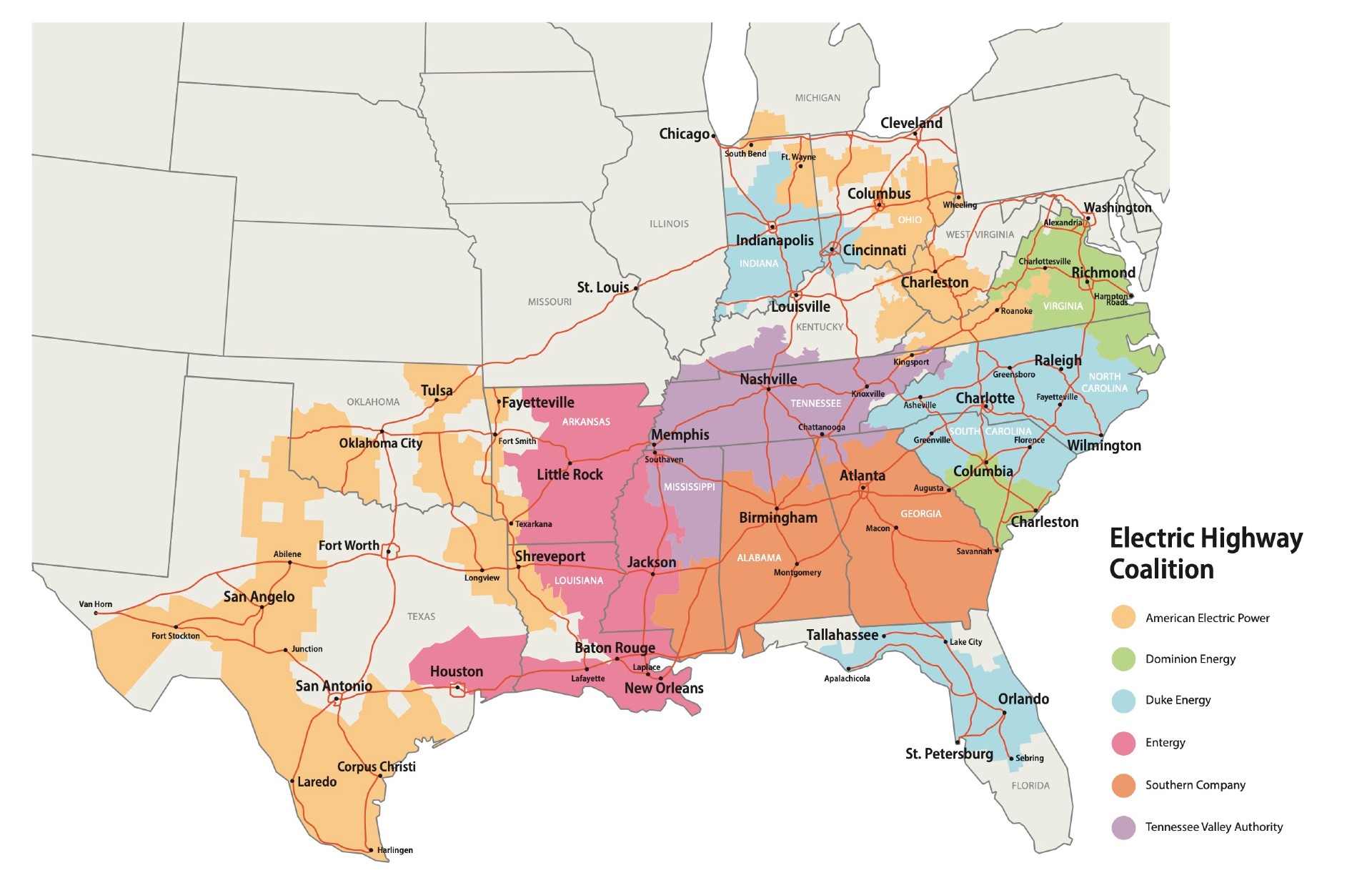
The Electric Highway Coalition’s planned network of EV charging stations.
AEP’s new climate action plan features a heavy emphasis on the need for a just transition – ensuring the shift away from fossil fuels “ascribe progress to these communities instead of just really debilitating them for the future,” Akins said. He pointed to AEP’s Appalachian Sky initiative as an example of how the company’s helping to revitalize regional economies and ensure both workers and communities that “there’s a period at the end of the sentence” after coal-fired power plant closures. He also raised how AEP has “an opportunity to do a lot of social good by virtue of electrification of the economy” by boosting rural community connectivity through increased EV and broadband access, and that this “really bodes well for the future investment priorities that we made.”
Ahead of the Quarterly JUST Call, Akins appeared on CNBC’s Squawk Box. Andrew Ross Sorkin and Joe Kernen asked Akins about the role of corporations in speaking out on Georgia’s new voting legislation and the energy, climate, and tax implications of the Biden Administration’s recently proposed infrastructure plan. You can watch the full interview below.
On Thursday, April 1st at 1PM ET we invite you to join our latest Quarterly JUST Call with Nicholas K. Akins, Chairman, President, and Chief Executive Officer of American Electric Power (AEP).
We’re at a pivotal moment in our country for transforming our energy generation and consumption, and that’s why we’re excited to be talking with the CEO of AEP, Nick Akins. He leads not only the largest electricity transmission system in the US, but the top ranked utilities company in our list of America’s Most JUST Companies, and top in its industry for workers.
The federal government is putting together a massive infrastructure plan that will take into account modernizing our energy grid, a task whose urgency was accentuated with the extreme storm in Texas this February.
Since taking the role in 2011, Akins has been leading that modernization at AEP. The company has just released a new climate plan as part of this mission, shooting for an 80% reduction of carbon emissions by 2030 and net-zero carbon emissions by 2050.
AEP also stands out in the JUST 100 for its Workers performance metric, driven by high scores in both workplace safety and diversity, equity, and inclusion (DEI). In fact, investments in the latter across the company and a dedication to disclosure have resulted in AEP tying for first place on DEI policies, which is particularly impressive as corporate America has spent the past year newly focused on the issue.
Also joining the call is Nandika Madgavkar, Head of the CEO Investor Forum CECP, who will guide the second half of the discussion around how AEP manages to tackle these challenges while delivering a high level of value across all stakeholders.
The Quarterly JUST Call, produced in partnership with CNBC and CECP’s CEO Investor Forum, builds on the traditional quarterly earnings call, providing a platform for CEOs to speak directly with investors and influencers about the ways in which they are creating value for all their stakeholders – workers, customers, communities, the environment, and shareholders – over the long term. Specifically, it taps into growing demand for a high value, reputable channel for investors interested in ESG and sustainability.
Mark your calendars and tune into CNBC Squawk Box in the 7-8:00 a.m. ET window on April 1 to catch an interview between Nick and Andrew Ross Sorkin as a preview!
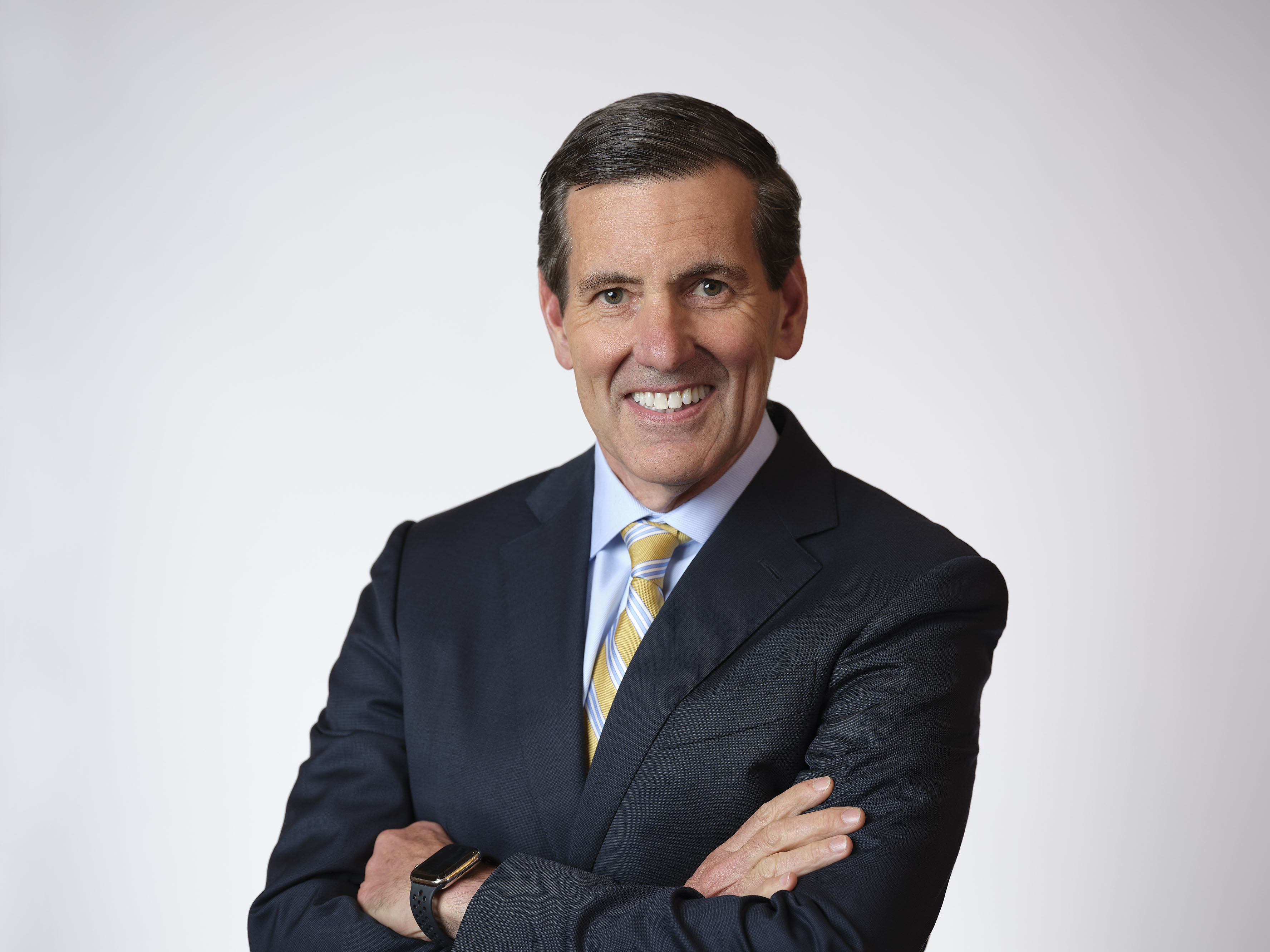
Humana CEO Bruce Broussard. (Humana)
It’s an interesting time to be leading Humana. It’s one of the largest health insurance providers in the United States and has a majority of its members – 16.6 million medical and 5.5 million specialty – are older adults, during a once-in-a-lifetime pandemic that is primarily most dangerous for the elderly. And it’s headquartered in Louisville, Kentucky, one of the centers of the ongoing racial justice protests.
Humana also happens to be a leader in the JUST 100, one of the top large corporations in delivering stakeholder value, based on the priorities of the public – it ranks first in its industry for customers, second for workers and the environment, and third for shareholders. Given its perspective on the biggest issues of the past several months, as well as its standing in our rankings, we knew it would be worth checking in with Humana’s CEO, Bruce Broussard, for our fifth Quarterly JUST Call (QJC).
The QJC is a chance for investors to get a holistic view of a company’s stakeholder performance, and for our discussion with Broussard, we partnered with our friends at Chief Executives for Corporate Purpose (CECP), who are similarly focused on strengthening C-suite communications about their long-term strategies to create sustainable value creation for both investors and other key stakeholders.
Broussard told JUST CEO Martin Whittaker that both the coronavirus crisis and the nationwide reckoning with racial inequity have solidified Humana’s dedication to its stakeholder approach, which he said has helped him in the constant goal of aligning short-term and long-term value creation. “Aligning shareholder value to how you improve societal problems is really a part of what we are trying to do as a health company,” Broussard said.
You can watch the full discussion here, which also features questions from investors collected by CECP’s head of the CEO Investor Forum, Nandika Madgavkar. Below it, we’ve highlighted some key takeaways.
“The beauty of Humana’s business model is really around when we help people stay healthy we do better as a company,” Broussard said. He’s been overseeing a transition in the company’s strategy, which it categorizes as shifting from a health insurance company that provides health care services to a health care company that provides health insurance. The more holistic view is built around improving access to preventative care, including expanded telehealth options, in-home testing, and sending health kits to members.
“All those things bode well for our organization from a financial value point of view, but in addition it really helps in improving people’s health, helps for societal issues in lowering the costs for making healthcare more affordable, and at the same time is just morally the right thing to do,” he said.
Even before COVID-19, a third of Humana employees worked from home and the other two-thirds had flexible work arrangements, so they were able to gain productivity quickly when many shifted to a work from home environment back in March. And being a purpose-driven company meant that their workforce was motivated to innovate around how they would help during the time of crisis. Broussard acknowledged however that, “the prolonged being at home, the prolonged Zoom calls, and prolonged isolation is having a toll on the behavioral side.”
To engage today’s workers, he said, leaders need to adapt and learn to lead in a virtual, two-dimensional environment. “We’ve found that storytelling and engagement around what we are doing as an organization, to bettering the organization, and keeping a transparent understanding of what’s going on in the organization, has been the most effective way to keep workers engaged.”
After the police killing of Breonna Taylor in Louisville in March, Humana’s hometown became one of the catalysts for a national movement. As the situation developed not only in the city but across the United States, Broussard said that he and his team recognized communities “demanding action.”
He said that he agrees with the faction of fellow CEOs who want to be more proactive when it comes to some of the country’s largest challenges. “Business is going to have to step up to deal with societal issues,” and while “we can’t solve all problems,” he said, companies like his with significant scalecan tap into what they do best to benefit the communities they serve.
In the case of racial equity, Broussard said that he and the board are focusing on the health disparities made impossible to ignore during the crisis. Black, Latino, and Native Americans have received COVID-19 diagnoses and died from it at significantly disproportionate rates from other racial groups in the country, and some of the key reasons are a lack of access to quality health care, as well as addressing important social determinants of health. Broussard said that Humana is hiring a chief health disparities officer whose role will focus on this issue, and the board will remain closely involved in developments.
Broussard explained that when Humana went into the crisis they aligned on some key tenants around how they would make decisions. “We wanted to be sure our shareholders were able to see returns coming through the crisis, that our brand improves and comes out of the crisis stronger than it entered, that we were oriented to customers’ health at outset, that our teammates, our employees, feel a sense of support in this time of uncertainty,” he said.
Aligning everything around the idea “we are responsible for people’s health” unleashed actions like waiving copays, sending 17 million masks to members and associates, ensuring telehealth was provided, and shipping one million meals to individuals homes. The impact was immediately palpable, Bruce explained, and its net promoter and employee engagement scores “skyrocketed.”
“Happy employees, and happy customers are going to be with you for a long time and that will deliver long-term stakeholder value. We wrap arms around employees, they feel supported, they support customers, and that shows up on the bottom line.”
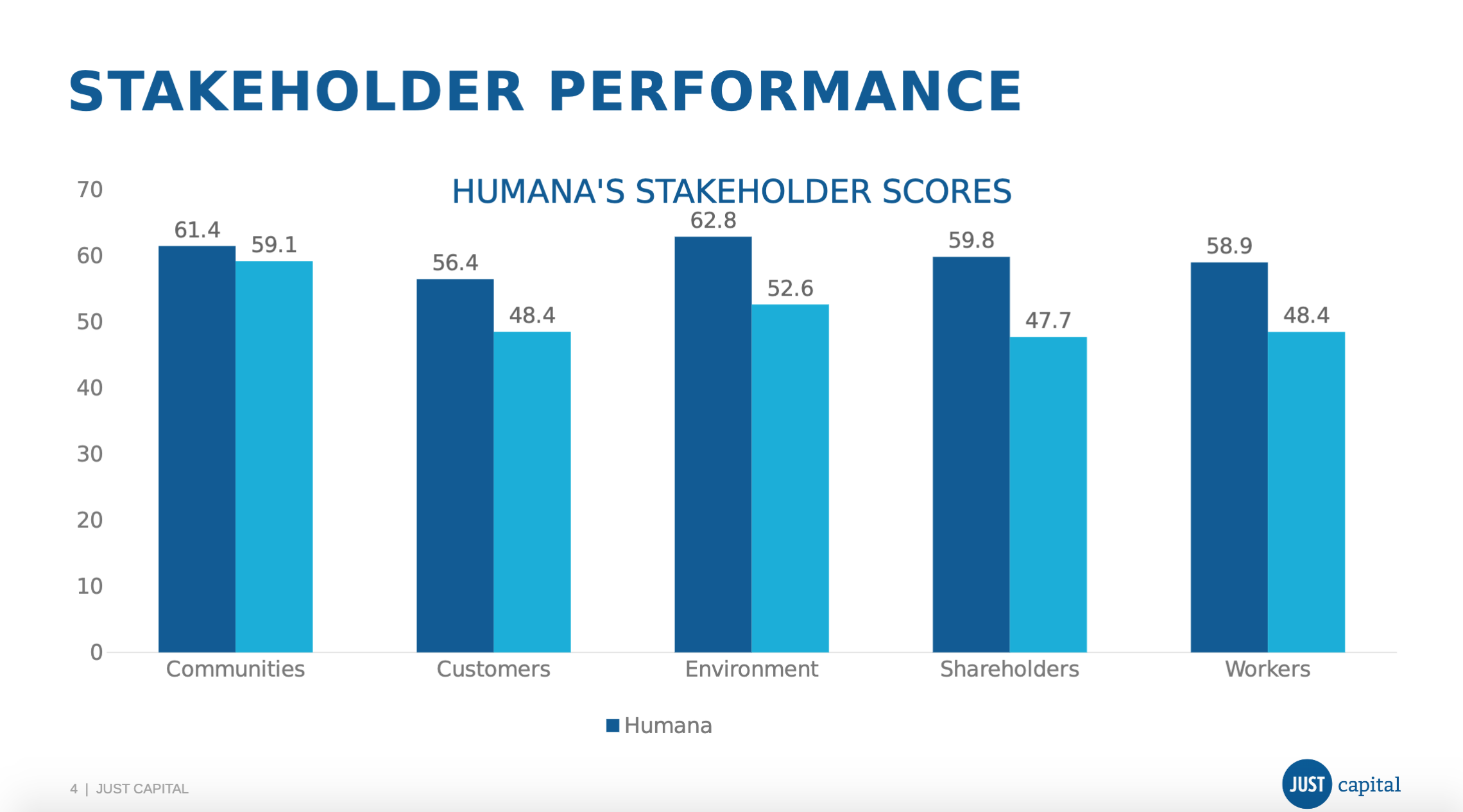
Humana’s stakeholder scores are measured against its industry average. JUST arrives at the scores by measuring a company’s policies and performance against stakeholder metrics, weighted according to how the American public prioritized them in our polling. (JUST Capital)
Broussard said that he told his large shareholders in March that they make he and his leadership team better by challenging them. “I think that healthy tension is a helpful exercise for us from a short-term point of view.”
It’s crucial, however, to pair that with the foundation of a governance structure at the management and board level of big picture strategy that goes well beyond quarter to quarter.
“If you tilt from one side to the other, and you’re not making that balance, the organization is harmed and the constituencies are harmed for some period of time,” he said.
Broussard said he always makes clear within Humana that, “Our responsibility as a leadership team is obviously make our budgets, hit our numbers, and those kinds of things. But our long-term responsibility is to leave this place a better place than we came. We are fortunate today to have people that made really good decisions before us, to allow us to sit in these chairs and do what we do. We want the next generation of customers, of employees, of shareholders to have that same value.”
Ahead of the QJC, Broussard appeared on CNBC’s Squawk Box. Andrew Ross Sorkin asked Broussard about the potential implications for private-public partnerships if Joe Biden were to win the presidential election, how the company adapted its offerings to customers once the pandemic hit, and how telehealth visits that have become normalized out of necessity could change the industry even when the coronavirus is gone. You can watch the full interview below.
JUST Capital and Chief Executives for Corporate Purpose (CECP) invite you to join us on Friday, July 24, for our latest Quarterly JUST Call featuring Bruce Broussard, CEO and President of Humana.
Tune into an interview with Andrew Ross Sorkin on CNBC Squawk Box in the 7:15-8AM EST window followed by an interactive webcast where we’ll unpack Humana’s stakeholder performance, long-term plan for sustainable value creation, response to COVID-19, and more.
The Quarterly JUST Call builds on the traditional quarterly earnings call, providing a platform for CEOs to speak directly with investors about the ways in which they are creating value for all their stakeholders – workers, customers, communities, the environment, and shareholders – over the long term. Specifically, it taps into growing demand for investors interested in long-term value creation through the lens of ESG and sustainability, even amidst the crisis.
For the first time, this Quarterly JUST Call is being produced in partnership with CECP’s CEO Investor Forum to strengthen C-suite communications about their long-term strategies to create sustainable value creation for both investors and other key stakeholders.
The Humana Quarterly JUST Call Schedule for July 24, 2020:
Humana
Humana Inc. is committed to helping our millions of medical and specialty members achieve their best health. Our successful history in care delivery and health plan administration is helping us create a new kind of integrated care with the power to improve health and well-being and lower costs. Our efforts are leading to a better quality of life for people with Medicare, families, individuals, military service personnel, and communities at large. To accomplish that, we support physicians and other health care professionals as they work to deliver the right care in the right place for their patients, our members. Our range of clinical capabilities, resources and tools – such as in-home care, behavioral health, pharmacy services, data analytics and wellness solutions – combine to produce a simplified experience that makes health care easier to navigate and more effective. More information regarding Humana is available to investors via the Investor Relations page of the company’s web site at www.humana.com.
Chief Executives for Corporate Purpose® (CECP)
CECP is a CEO-led coalition that believes that a company’s social strategy – how it engages with key stakeholders including employees, communities, investors, and customers – determines company success. Founded in 1999 by actor and philanthropist Paul Newman and other business leaders to create a better world through business, CECP has grown to a movement of more than 200 of the world’s largest companies that represent $6.6 trillion in revenues, $21.2 billion in social investment, 14 million employees, 23 million hours of employee engagement, and $15 trillion in assets under management. CECP helps companies transform their social strategy by providing customized connections and networking, counsel and support, benchmarking and trends, and awareness building and recognition.
JUST Capital
The mission of JUST Capital, an independent nonprofit, is to build an economy that works for all Americans by helping companies improve how they serve all their stakeholders – workers, customers, communities, the environment, and shareholders. We believe that business and markets can and must be a greater force for good, and that by shifting the resources of the $19 trillion private sector, we can address systemic issues at scale, including income inequality and lack of opportunity. Guided by the priorities of the public, our research, rankings, indexes, and data-driven tools help measure and improve corporate performance in the stakeholder economy. To learn more about how data-driven insights are creating a more just future for capitalism, visit: www.JUSTCapital.com.
Over the past several months, America’s business leaders have been taken to task in responding to some of the most significant events in our nation’s history: a global pandemic that has killed more than 100,000 Americans, an ensuing economic recession that has driven unemployment to unprecedented levels, and a sudden, urgent call from the American people to reckon with systemic racism across all facets of our society following the brutal killing of George Floyd.
CEOs are leading their companies through uncharted waters. And as part of our ongoing Quarterly JUST Call series – where we’ve previously explored the interconnections between driving stakeholder and shareholder value with the CEOs of PayPal, HPE, and Akamai – we were joined by Intel CEO Bob Swan to discuss what he and his company are doing to address the most critical issues of our time.
Swan initially sat down with Andrew Ross Sorkin on CNBC’s Squawk Box for a close look at how Intel has led on issues of diversity and inclusion, and then joined JUST CEO Martin Whittaker and Managing Director of Corporate Engagement Yusuf George for an in-depth discussion of Intel’s consistent leadership in our Rankings, and how the company is taking action today.
Watch the full talk here, and dig into our top six takeaways below:
Intel has consistently been a leader in the JUST Capital Rankings (#4 in 2020), in large part thanks to its exceptional transparency on a wide range of issues – from workforce demographics to environmental impact.
“We embrace truth and transparency,” explained Swan, “We set metrics, we manage them internally, we report them – not only to show the progress that we’re making, but also to hold ourselves accountable.”
Today, this approach to transparency matters more than ever before. In the midst of great uncertainty around the current health crisis, recession, and reckoning with systemic racism, companies have an opportunity to lead and drive change – as well as the chance to tell the public where they stand. In our recent survey with The Harris Poll, 89% of Americans told us they see this moment as an opportunity for large companies to hit “reset” and focus on doing right by their workers, customers, communities, and the environment.
Intel’s approach to transparency is a standout example for fellow corporate leaders looking to undertake this “reset,” and hold themselves publicly accountable to continued progress.
In response to the COVID-19 pandemic, Intel took swift action. In addition to ensuring that employees were safe and had access to paid leave, the company committed $50 million toward creating pandemic response technology – accelerating access to patient care technology, speeding scientific research, and ensuring access to online learning for students. Additionally, the company donated more than 1 million articles of PPE from its emergency supplies to support healthcare workers on the frontlines.
In outlining his company’s response, Swan shared, “We had three priorities. First and foremost, the safety and well-being of our employees; second, to ensure we’re delivering for our customers at a time when the demand for our products was required more than ever; and then third, to make sure that in the midst of the crisis that we’re helping our communities.”
Intel’s response exemplifies how companies can and should double down on their stakeholder commitments, even in a time of crisis. “We need to play a more active role on the things that are happening in the society around us,” Swan emphasized. “In times of crisis, it’s time to lean into the things that are increasingly important rather than pull back.”
In 2018, Intel announced that it had reached its goal of full representation, two years ahead of its 2020 target, meaning that its workforce now reflects the percent of women and underrepresented minorities in the U.S. labor market. And just last December, Intel became the only company we evaluate that fully discloses wage data for its workforce by gender, race, and ethnicity.
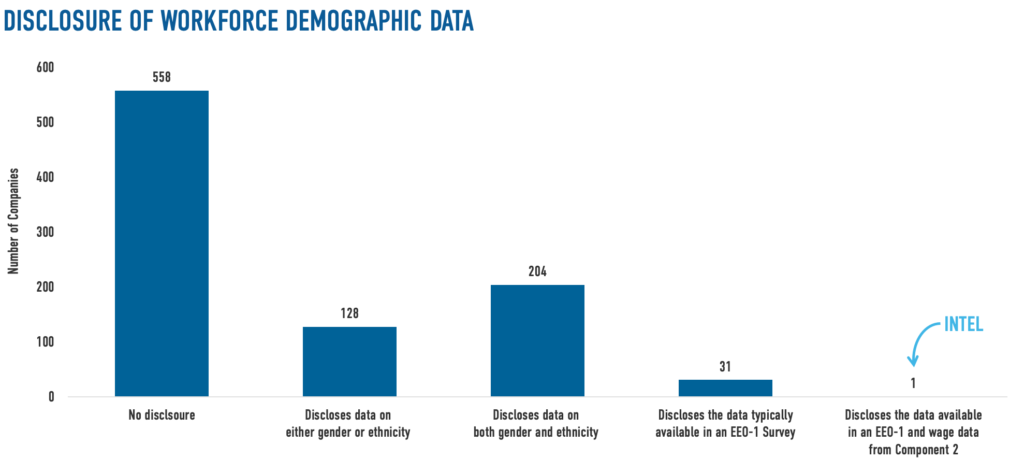
We asked Swan how Intel came to be such a standout leader in this area, and he shared that it came down to the company’s clear sense of purpose: “Our purpose as a company is to create world-changing technology that enriches the lives of every person on Earth. What that means is that we need to have a workforce that represents every person on Earth.”
In the midst of recent calls to address systemic racism in the workplace, this level of disclosure is one critical step, among many, that all companies can take to help drive change for BIPOC.
Throughout our conversation, Swan continually drove home the importance of disclosure and action not only for Intel’s advancement and accountability, but for creating change across the tech sector in order to create maximum impact: “The more we’re working together with other players in the industry, the bigger the impact that we can have going forward.”
In May, Intel announced that it would create and implement a Global Inclusion Index, to push for full inclusion and accessibility across the entire tech sector, where diverse workforces have been historically lacking. By setting ambitious goals of its own, Intel has been able to share its learnings and rally its industry peers to address the most critical issues. In the coming year, this work will be vitally important.
In addition to its leadership on diversity and inclusion, Intel has been a long-time proponent of environmental sustainability. In May, Intel announced that by 2030, it would aim to achieve net positive water use, 100% renewable power, zero total waste to landfill, and carbon-neutral computing – all ambitious goals. And on environmental issues, Intel has consistently outperformed industry peers in our Rankings:
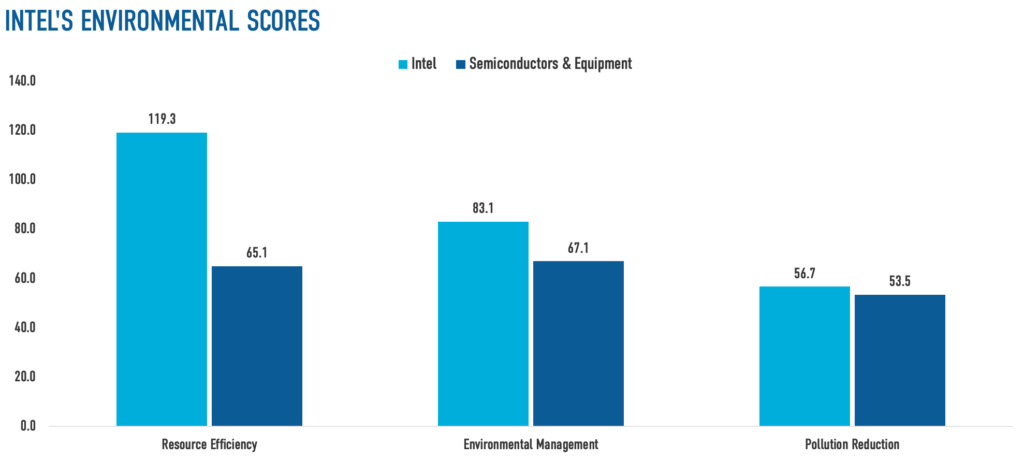
Swan explained that, increasingly, the environment is “on the radar screen of our customers…And our employees are just much more conscious about the implications that large operations like us can have on the environment.”
Intel’s stakeholder-driven approach to business is not new for the company, but Swan shared that he is seeing a growing interest from shareholders in discussing the needs of workers, customers, and shareholders. More and more, the conversation around social responsibility and business impacts is hand-in-hand:
“The beauty is these are not decoupled,” Swan explained. “So the interplay of the initiatives we set on a variety of constituents makes our social responsibility, goals, and objectives tightly coupled to how we operate the business. So they’re not a side show, they’re integral to what we do.”
Watch our full interview with Bob Swan below.
