
Two weeks ago, I noted how Sam Altman, CEO of OpenAI, said the advent of ChatGPT represents a “printing press moment” for society today, and how JUST Capital co-founder and chairman Paul Tudor Jones saw “huge winners and huge losers” being created.
We witnessed a stunning example of that this week, as NVIDIA – a key chip supplier for companies building AI technology and a company ranked second in our 2023 Rankings of America’s Most JUST Companies – saw its market cap surge from $311.76 billion on May 22 to $412.10 billion on May 30 (a 32% increase in about one week) and briefly became the U.S.’ first trillion dollar market cap-chip manufacturer.
Such enormous value creation for shareholders naturally begs the question about how other stakeholders might also prosper. For example, we hear about customers and the environment potentially benefiting via AI-led innovation pushing medical and scientific research forward, aiding in the generation of new antibodies to fight disease and detect cancer, and in clean energy production through hydrogen fusion. Other reports highlight AI’s potential to help fight financial crime, design climate change technology, and advance healthcare innovation.
On the flip side, top experts also warn of the massive risks of rapid AI development, including the threat of mass layoffs to workers, deep fake imagery and audio content, the spread of hateful content, and, well, the extinction of humankind. Not exactly on anyone’s bucket list.
With more than half the world’s companies reported to be actively adopting AI, and as we wait for inevitable government action, it’s reasonable to ask what responsibility business has to embrace just AI practices. This is why we are launching the JUST AI Initiative: to define what responsible AI usage actually looks like across the key stakeholder categories – workers, customers, communities, shareholders, the environment, and society at large – and to track, rank, and incentivize companies on responsible AI implementation.
I hope you’ll forgive the shameless plug, but if you’d like to get involved, please reach out. It’s too important an issue to hold back on.
Be well,
Martin
Between growing concerns over AI and crypto, along with the recent collapse of banks like SVB and First Republic, good governance is more important than ever. This week, we’re highlighting JUST 100 companies that stand out for having independent boards that prioritize oversight of core just issues.
Leaders from Google, OpenAI, and Anthropic release a statement warning about the existential risks of unmitigated AI systems and, amongst other controls, call for the creation of an international regulatory body.
Microsoft wants companies and the government to step up the pace of AI regulation, including watermarks for images and videos created by computers, as well as building in emergency brakes to curb powerful systems.
Bloomberg cites a new study from Revelio Labs that found most jobs threatened by AI are currently held by women, raising concerns the advancement of the technology could continue to widen gender disparity.
Vice shares the cautionary tale of how the National Eating Disorder Association (NEDA) had to take its chatbot offline, two days before it was set to replace human associates who ran the organization’s hotline, because it was giving harmful advice.
Quartz Obsession podcast takes a dystopian look at the bias AI systems may never be able to rectify.
The New York Times reports New York City has become an unexpected pioneer in AI regulation. Starting in July, the city will require employers to notify workers if an automated system is being used in determining hiring and firing.
Semafor writes about the growing battle between companies and conservatives as Pride month begins. Quartz explores how it represents a moment of truth for companies. While Target pulled or minimized displays, upsetting many workers, North Face defended its Pride campaign explaining, “creating community and belonging in the outdoors is a core part of our values and is needed now more than ever.” CNBC reveals new survey data from GLAAD showing a clear majority of Americans who don’t identify as LGBTQ+ believe companies should publicly support the community. Fast Company reports on new survey data from Indeed that shows a majority of LGBTQ+ workers are not comfortable being out at work, with 43% saying it was because they fear discrimination.
Legal experts worry the U.S. Supreme Court’s pending decision on affirmative action could create a ripple effect in the corporate world, upending DEI initiatives and limiting training requirements for employees. Fortune has the story.
The Wall Street Journal discusses how Tesla has teamed up with Ford to expand access to EV charging stations across the country. Ford customers will have access to more than 12,000 fast-chargers starting in 2024, tapping into Tesla’s robust infrastructure.
CNBC reports that Delta faces a consumer class-action lawsuit arguing that the airline falsely advertised itself as “carbon-neutral” and should pay damages to customers.
NPR reports on a growing crisis in California as State Farm refuses to insure California homeowners, citing rising building costs and the risk presented by wildfires as major factors.
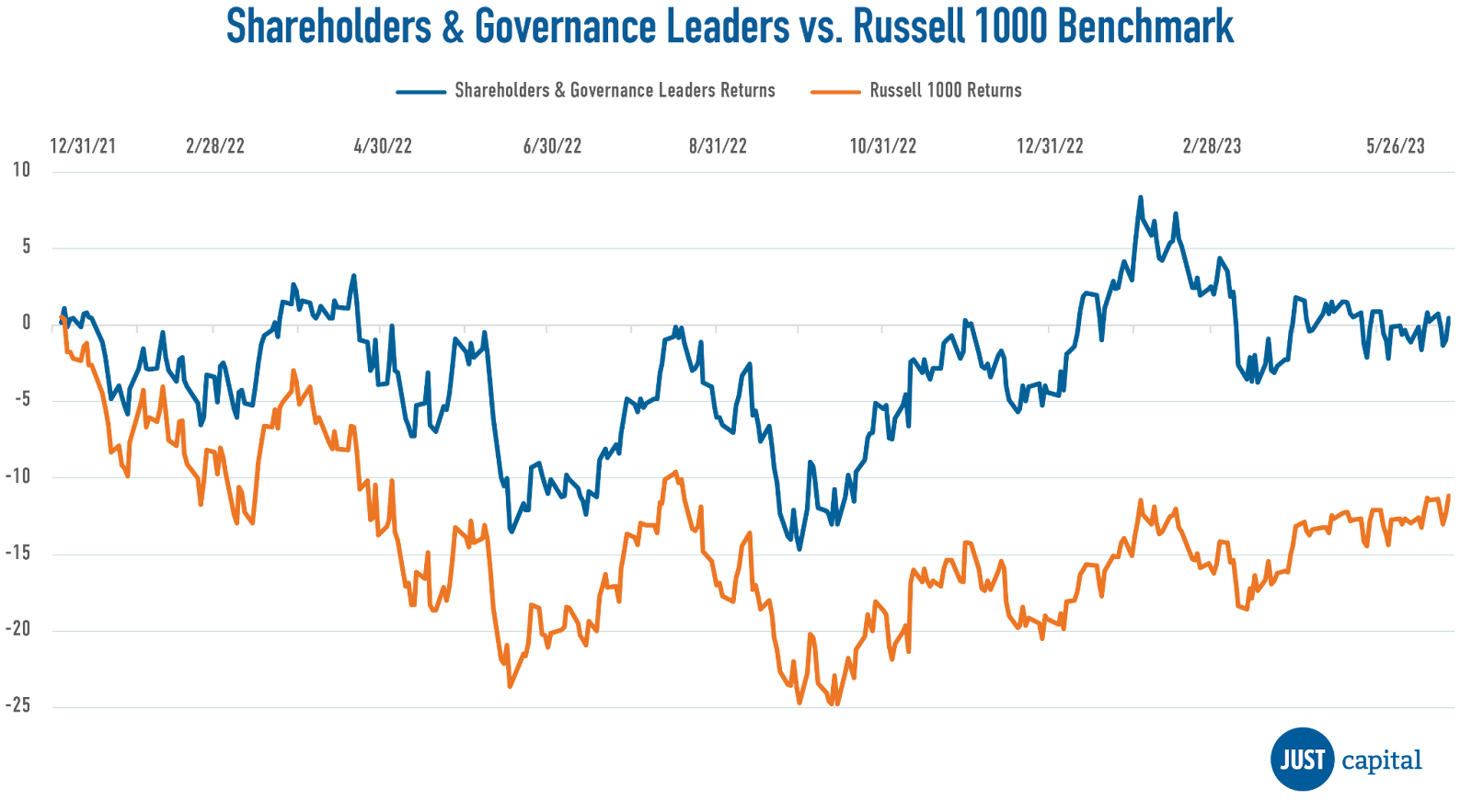
The Shareholders & Governance Leaders index concept features the top 20% of Russell 1000 companies in JUST’s annual Rankings that prioritize shareholder and governance issues. The top performing index concept, the Shareholders & Governance Leaders highlight the financial performance and impact of investing in companies that prioritize the interests of their investors and exercise best-practice corporate governance. From inception on December 31, 2021 through May 26, 2023, the concept has outperformed its Russell 1000 benchmark by 11.5%.
I had the pleasure of attending the CNBC CEO Council Summit in Santa Barbara this week. It was a great event, with a lot of honest and thought-provoking discussion. One of the central themes both onstage and behind the scenes was how companies are meeting the needs – and sometimes the demands – of their various stakeholders (particularly their workers) in such turbulent times.
It was a fascinating look at what it means to lead today. John Donohue, CEO of Nike, talked assuredly about how his company’s core values are critical in helping decide how and when to act on major social issues. Apple’s SVP of Services Eddy Cue highlighted how its “small company” culture helps the company maintain a relentless focus on customers. EY CEO Carmine Di Sibio spoke to workforce challenges across the economy, particularly in the service sector, referencing how AI is changing not just his company, but his clients’. And Caroline Wanga, CEO of Essence Ventures and former Chief Culture, Diversity, and Inclusion Officer at Target, spoke powerfully about the Target leadership team’s journey on DEI.
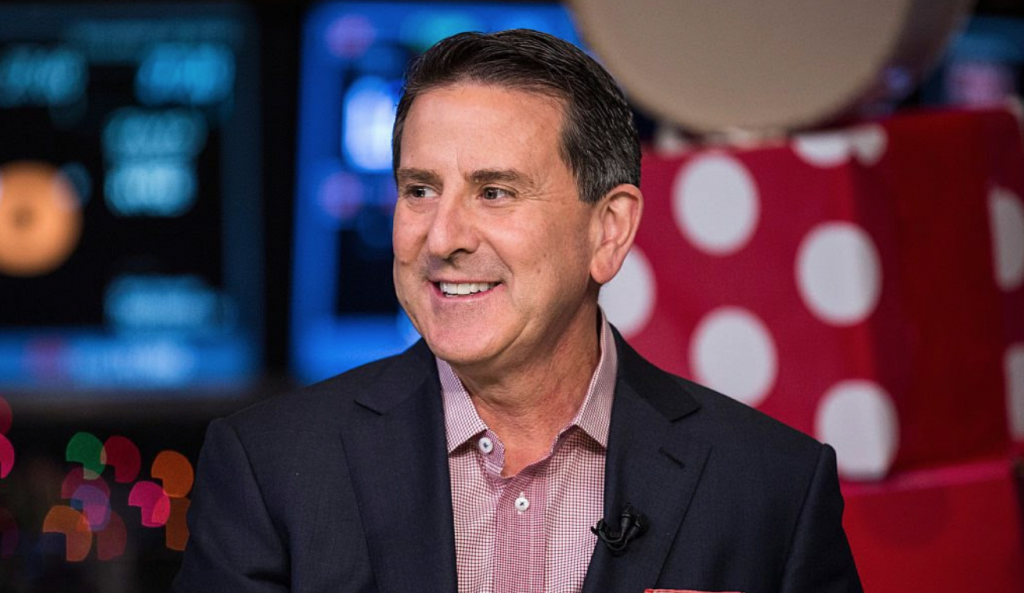
Coincidentally, Target CEO Brian Cornell echoed this in a wide-ranging interview with Fortune this week. “I’m really proud of the work we’ve done in the DE&I space,” he said. “I know that focus on [DE&I] has fueled much of our growth over the last nine years.”
How he responds to the current controversy surrounding the removal of LGBTQ merchandise from some Target stores ahead of Pride month will be another instructive moment. Overall though, Cornell believes that investing in worker wages, benefits, and educational resources has delivered concrete bottom-line results for the $69 billion retail giant. Industry leaders like PayPal, Chipotle, Prudential, Verizon, and others in JUST’s Worker Financial Wellness Initiative are seeing similar improvements in performance.
My key takeaway? Knowing and investing in your company’s culture is a must for any business leader today.
Be well,
Martin
This week we are highlighting the Top 3 companies within the JUST 100 for performance on Diversity, Equity, and Inclusion within the workplace.
A Harvard Business Review byline by Bain & Company partners marks t JUST Capital as a leader in independently tracking stakeholder value, and a key resource for companies in building a stakeholder strategy.
Our chief strategy officer Alison Omens is featured in the roll out of the U.S. Impact Investing Alliance’s new study, Impact at Work: An Examination of Corporate Impact Investing Strategies and Their Durability. The report provides an overview of the current state of corporate impact investing, with a focus on best practices and opportunities for companies to advance social, economic, and environmental outcomes in line with their business priorities.
“If it’s core to who you are and your values, then no, you stand up for your values. If it’s commenting on some political issue that’s in someone else’s backyard, then we may have that personal feeling, but we don’t comment on it with our brand and publicly.”
Sundar Pichai, the CEO of Alphabet and Google, pens an editorial in the Financial Times asking companies working on AI advancement to foster a culture of responsibility.
CNBC reports that former Google CEO Eric Schmidt warned that AI is an existential risk and that an “existential risk is defined as many, many, many, many people harmed or killed.”
LinkedIn co-founder and Greylock partner Reid Hoffman is profiled in The New York Times as an AI evangelist, beating “the positive drum loudly” to show how AI can improve humanity. He’s also featured on Fortune’s Leadership Next podcast this week.
Fortune reports on the Equal Employment Opportunity Commission’s (EEOC) decision to hold companies responsible for any AI discrimination in hiring, firing, or promotions.
Charter interviews Sandra Quince of Paradigm for Parity on how companies can adopt AI while still focusing on diversity, equity, and inclusion.
Apple, Goldman Sachs, and Samsung move to ban employees from using ChatGPT at work because of privacy concerns.
Bloomberg reports on the first instance of a fake AI-generated image affecting the market after an image of an explosion at the Pentagon momentarily rattled investors. Adobe Chairman and CEO Shantanu Narayen joined CNBC to talk about AI innovations and the growing need to “train consumers to verify the authenticity of images.”
Fortune has a new editorial arguing that killing the term ESG might be the best way to save it. Focusing on specific areas Americans care about would prove to be a more effective strategy.
The New York Times writes about the growing toll of inflation on Americans even in the face of a strong job market. In a new Federal Reserve survey, 35% of respondents said they were worse off than a year earlier, up from 20% in 2021.
Intelligencer explores the misconception that raising wages will lead to unemployment, citing a UC Berkeley study that found counties with minimum wage growth saw joblessness decrease.
A new opinion piece in The Washington Post takes on the hidden crisis of caregiving in America and advocates for more flexibility and support from companies and the government.
A Washington Post-Ipsos poll finds out what workers really care about. Pay, having a good boss, hybrid flexibility and health benefits all topped the list.
Axios and The Harris Poll publish a new survey on brand reputation. Facebook and Tesla dropped considerably down the list while Patagonia took the top spot.
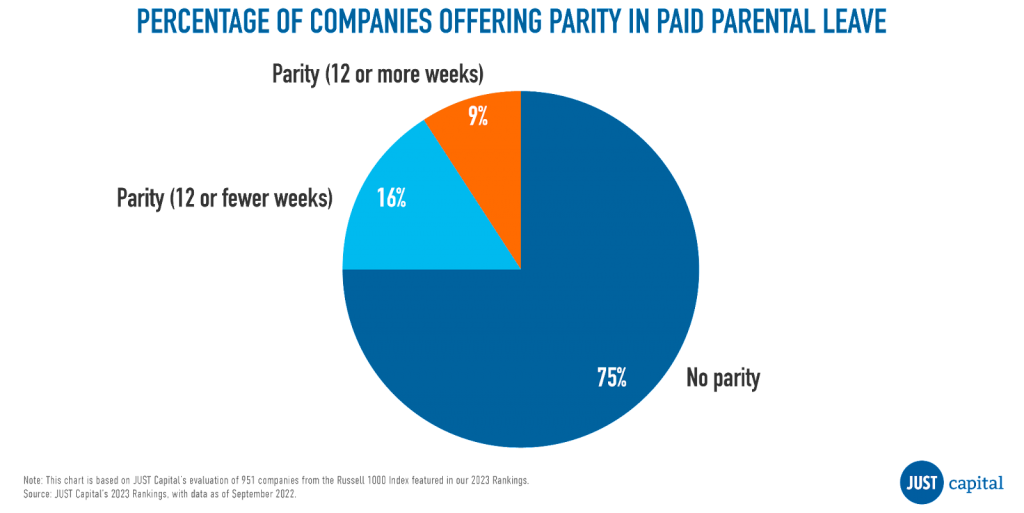
In a recent analysis, we took a look at whether companies offer equal weeks of paid parental leave to both primary and secondary caregivers. Leading to better outcomes for workers and their families, parity in paid leave is a more inclusive practice, acknowledging all family types and the roles that parents play in childcare, regardless of their gender identity, relationship status, or sexual orientation. As of September 2022, 9%, or 87 companies, provide equal weeks of paid leave to primary and secondary caregivers, compared to 6%, or 59 companies, a year earlier – an increase of 3 percentage points and 25 companies.
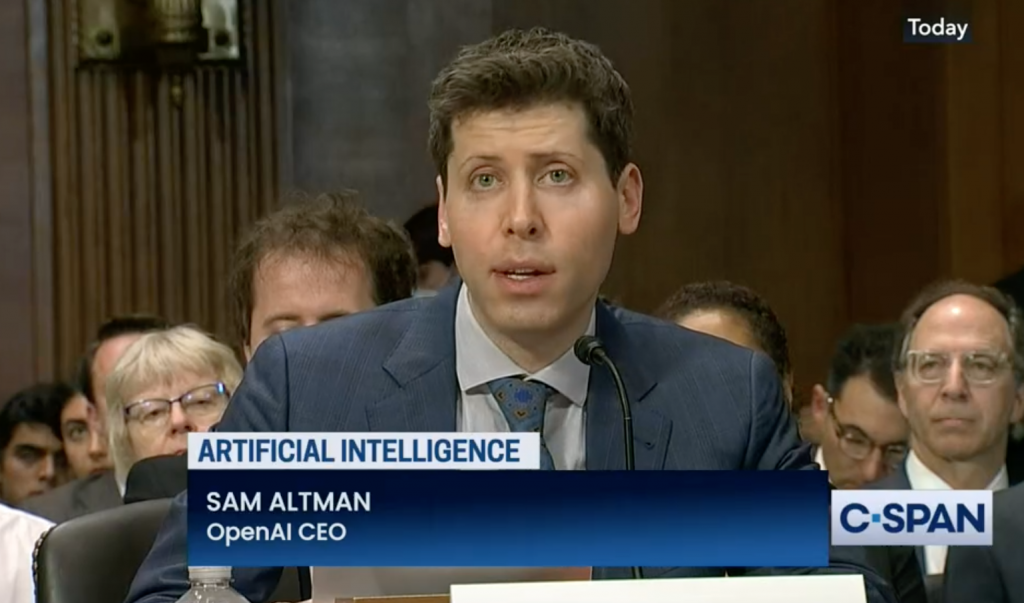
A “printing press moment” is how Sam Altman, CEO of OpenAI, framed the advent of artificial intelligence (AI) in his Senate testimony on Tuesday.
It’s a profound insight. Gutenberg’s printing press changed the course of human history, accelerating the European Renaissance, sparking the Reformation, fomenting revolution, transforming the trajectory of scientific, technological, and human advancement, and democratizing access to information, knowledge, opinion, and reasoning in ways that weren’t seen again for another 500 years.
Business leaders like Microsoft’s Satya Nadella, Elon Musk, Bill Gates, Reid Hoffman, and others have spoken of AI’s potential benefits: advancing medical and educational breakthroughs, expanding the global economy, creating climate change solutions, and changing the way people work. JUST Capital Co-founder and Chair Paul Tudor Jones spoke of AI’s productivity gains to the American economy this week on CNBC, saying it would create “huge winners and huge losers” in the market.
Equally powerful are the warnings of potential negative impacts, along with the calls to pause the development of AI models and – this week especially – for government oversight to protect society from potential risks. “My worst fear is we cause significant harm to the world,” Altman said.
Government undoubtedly has a key role to play in overseeing and setting guidelines around AI, but what of market forces? How might they also be harnessed to influence behavior?
Recent KPMG research found that 72% of executives think that generative AI can play a critical role in building and maintaining stakeholder trust. Can just and unjust use of AI toward key corporate stakeholders – shareholders, consumers, workers, communities, and the environment – be identified, called out, and used to reward and/or punish companies in the marketplace?
We’re on it.
Be well,
Martin
In the midst of proxy season, this week we are highlighting companies that tie executive compensation to their performance on ESG metrics, including carbon reduction, DEI advancement, workplace safety, and more.
CNBC’s Julia Boorstin reports on our Top Companies Supporting Working Moms in an on-air segment, and Andrew Ross Sorkin sits down with JUST Capital board chair Paul Tudor Jones for an interview on the economy, AI, JUST data, Robin Hood, and more.
JUST joins The Ford Foundation’s Future of Work(ers) Initiative, Center for Democracy and Technology, Institute for the Future, Good Jobs Institute, Partnership on AI, PolicyLink, and TechEquity Collaborative to support the launch of “Listen to Lead: Raise Retention and Boost Business,” a guide that helps C-suite and management leaders uplift workers’ voices to positively impact both employee experience and the bottom line.
JUST Capital’s Alison Omens and Molly Stutzman speak to CNBC for a story on the growing business belief that CEO compensation should be tied to ESG metrics. Nearly half of Russell 1000 companies use ESG-related key indicators as a factor in determining C-suite pay.
Entrepreneur features JUST research on the number of companies disclosing gender pay gap data in an article titled, “How to Close Your Wage Gap and Open Equity at Work.”
The BBC quotes JUST Capital CEO Martin Whittaker on how companies are reacting to current political pressures.

(Ford Foundation)
“Employees are a corporation’s most valuable asset. Step by step, the guide helps companies incorporate employee feedback in corporate decision making, leading to a more engaged workforce and smarter business operations. Together with corporate leaders, we can strengthen the link between good work environments and business outcomes, supporting a more inclusive and resilient economy.”
– Ritse Erumi, Program Officer, Future of Work(ers) program at The Ford Foundation on the release of the corporate guide, “Listen to Lead: Raise Retention and Boost Business.”
The Wall Street Journal asks leading AI minds to offer their perspectives on how the new technology will change the modern workplace.
McKinsey shares a report on what every CEO should know about generative AI. The value creation case is complicated, the report says, and America’s leaders will need to weigh risks and rewards before forging a path forward.
Microsoft argues that the pace of work is already outstripping productivity and generative AI could be the answer to restoring a healthy balance.
Axios releases a first-look report from the Edelman Trust Barometer that finds more than half of employees will not work for a company that fails to speak out against racial injustice.
A new Fortune piece explores the costs associated with letting staff go and offers up ways of rethinking how to save money, including introducing the four-day workweek.
Worker happiness is on the rise in America. The Wall Street Journal highlights new data from the Conference Board that shows 62.3% of Americans were happy with their jobs last year. Of the 26 job elements considered in the poll, the biggest increases in workers’ happiness came from work-life balance and workload.
In the age of evolving company benefits, some firms are exploring the possibility of offering affordable housing to their employees. Charter reports on the growing interest in employer-sponsored housing and what that might mean for the nature of American work.
Railroad workers across the country are seeing their benefits reduced this week, with the end of pandemic aid that paused cuts to sick pay and unemployment affecting 150,000 union workers. The Washington Post has the story.
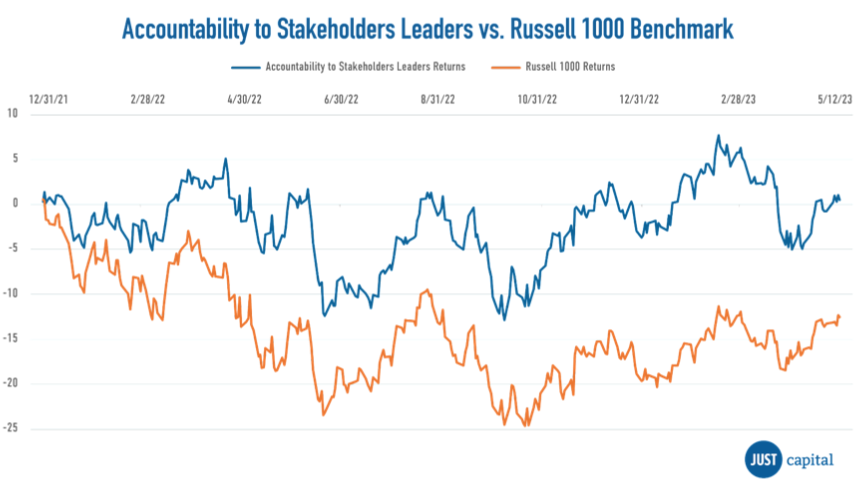
The Accountability to Stakeholders Leaders index concept features the top 20% of Russell 1000 companies in JUST’s annual Rankings that prioritize accountability to all stakeholders. The second most highly performing index concept, the Accountability to Stakeholders Leaders highlights the financial performance and impact of investing in companies that prioritize good governance with diverse, independent boards that oversee corporate performance on key environmental, health, safety, and social matters. From inception on December 31, 2021 through May 12, 2023, the concept has outperformed its Russell 1000 benchmark by 10.75%.

Sunday is Mother’s Day and so we wanted to highlight how the business community can better support mothers in the labor force.
Today, over 72% of all mothers in the U.S. with children under 18 hold jobs outside of the home. In addition to the obvious ways this bolsters the economy, it has also dramatically increased demand for benefits such as paid parental leave, subsidized child care, and flexible work – all of which have been shown to boost employee morale, productivity, and company loyalty.
When women don’t have access to leave, for example, 30% of them will exit the workforce within a year of giving birth, according to one study. Studies also indicate that when mothers stay in the workforce, their children are also more inspired and better prepared for the workplace.
Companies leading the way in their support for moms at work include software giant Intuit, banking firm US Bancorp, and pharmaceuticals company Eli Lilly and Co. These firms provide paid parental leave at or above 16 weeks for primary caregivers, a minimum of eight days of paid sick leave, and offer backup dependent care, subsidized child care, and flexible work scheduling. If you’re interested to learn more, this recent piece highlights our top six companies on paid parental leave in particular.
Supporting working moms is one part of a larger conversation we at JUST are having with business leaders around investing in employees. This week, the Worker Financial Wellness Initiative released a new guide focused on just that. It is a great resource for business leaders seeking to take action on improving the employee experience.
As Samanntha DuBridge, HPE’s vice president of global benefits, culture and engagement, told us in an interview published this week, “Investing in your people, to me, is a really critical component to being a successful company.”
Happy Mother’s Day to you all.
Martin
The week we are highlighting the Top 3 Companies for Working Moms from our 2023 Rankings.
This week, our Chief Strategy Officer Alison Omens spoke at a roundtable in the West Wing of the White House on the The Business Case for Pay Equity. She was joined by our Head of Corporate Impact Tolu Lawrence. Check out our related research on gender pay equity disclosures from Equal Pay Day earlier this year and coverage on CNBC’s Squawk on the Street. Stay tuned for new analysis revealing the latest disclosures onvia race and ethnicity.
A new guide from the Worker Financial Wellness Initiative digs into how companies can effectively act on the on-the-job experience of their workforce, highlighting actions from some of the largest U.S. employers across industries. For more on how companies are operationalizing employee experience, PayPal’s new Employee Financial Diaries Project provides a look at the company’s efforts to better assess the day-to-day financial realities of its workforce.
LinkedIn News showcases our latest paid parental leave data featured in Bloomberg to demonstrate that parental leave parity is on the rise. Check out JUST’s spotlight with HPE’s vice president of global benefits, culture and engagement on the company’s robust paid leave benefits. A Charter Works daily briefing from this week also features the same data.
Harvard Business Review highlights new research, leveraging JUST ranking data, that shows that when companies successfully implement DEI policies and practices, they also improve adaptability and ability to change.
JUST Capital board member Peter Georgescu writes a new piece for Forbes on the pillars of good jobs and calls out the JUST Jobs Program as a great place for any company to start their journey to provide them.
“What we found is what we hypothesized initially when we were pitching it, which is that there’s a significant amount of loyalty with people who feel like their company has gone way out of their way during a time that was very important to them.”
Timely polling out from Ipsos this week: “Americans don’t agree on who they think should be the ones responsible for limiting the risks of AI: 53% think it’s the responsibility of the companies developing AI, while 44% think it’s the responsibility of the government. At the same time, Americans don’t fully trust companies to develop AI systems with the public’s well-being in mind – while 25% have a great deal or somewhat trust AI companies to do so, 75% have little to no trust.”
The New York Times reports on the risks and rewards of bringing AI tools into the workplace. Companies are weighing the speed of adoption, potential for disruption, and the nascency of the technology as they decide how to incorporate the quickly-evolving tools into their businesses.
NPR’s Planet Money Newsletter highlights a new study on the real world impact of new AI systems, which found a positive correlation between the implementation of those systems and worker productivity.
In an opinion piece for The Wall Street Journal, Andy Kessler argues that the public fear surrounding AI and job loss is overblown. He sees the development as a natural progression in the history of technology making certain jobs redundant and creating new, higher-value roles.
CNBC has the story on Alphabet’s latest AI updates at Google I/O. The new features will include advancements to Bard and Search, as well as a new large language model named PaLm 2.
A new editorial in Fortune from Tensie Whelan and Ulrich Atz of NYU Stern, cites JUST Capital and Revelio Labs’ living wage work while making the case that companies don’t know how to value their workers as more than a budget cost.
Our partners at the Financial Health Network release a study based on interviews with home care workers in New York City who have been adversely affected by wage increases due to the negative effect it can have on their eligibility for public benefits.
CNBC reports on Sen. Bernie Sanders’ plan to increase the federal minimum wage to $17.
For additional insights into what a living wage is, visit our explainer on the issue – and our analysis revealing the number of Russell 1000 workers that do not currently make a family sustaining living wage may surprise you.
Labor shortages could be here to stay, Axios says. Even as the job market cools, the American working-age population is in steady decline and dropping fertility rates complicate the issue.
Bloomberg explores the way companies are trying to attract workers by offering more comprehensive benefit packages.
GreenBiz asks if corporate boards will rise to the challenge presented by ESG advocates. A recent study found that two-thirds of board members believe sustainability issues pose little risk to their business.
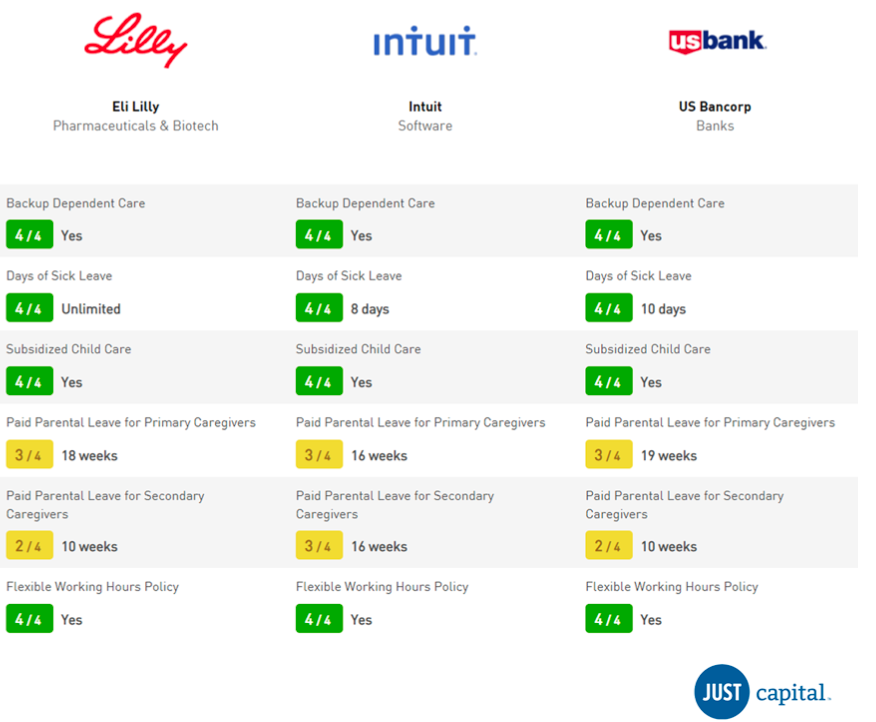
In recognition of Mother’s Day, we’re highlighting three companies that stand out for their commitment to working mothers – going above and beyond on issues including paid parental leave, subsidized child care, and more. Read more here to learn how Eli Lilly, Intuit, and US Bancorp are providing best-in-class support to parents – and especially mothers – in their workforce.
Working mothers make up a significant portion of the American workforce – nearly one-third of all employed women currently have children under the age of 18 – and many must find a way to delicately balance work and care responsibilities.
In our 2022 caregiving survey, 84% of women (compared to 68% of men) said access to child care is a problem for women in the workplace, and 70% of women (compared to 53% of men) say access to paid family leave is a problem for women in the workplace. Further, women are more likely than men to say the ideal number of weeks for parental leave is 12 or more weeks (56% of women, 46% of men). When not provided adequate caregiving support, many women are forced to make difficult decisions and nearly 43% end up leaving their careers.
With no federal oversight of paid leave and caregiving policies, and with women five-to-eight times as likely as men to experience a caregiving impact on their employment, corporate leaders are being asked to take the lead. More and more companies are taking action – as of September 2022, 60% of the companies we rank disclosed a paid parental leave policy, up from 47% the year before. But there’s a long way to go, with 40% of companies disclosing no such policies and an average of just 10.5 weeks for primary caregivers among those that do.
This year, in recognition of Mother’s Day, we’re highlighting three companies that stand out for their commitment to working mothers – going above and beyond on issues including paid parental leave, subsidized child care, and more. Among the 951 companies we ranked in 2023, we found that Eli Lilly, Intuit, and US Bancorp provide best-in-class support to parents – and especially mothers – in their workforce.
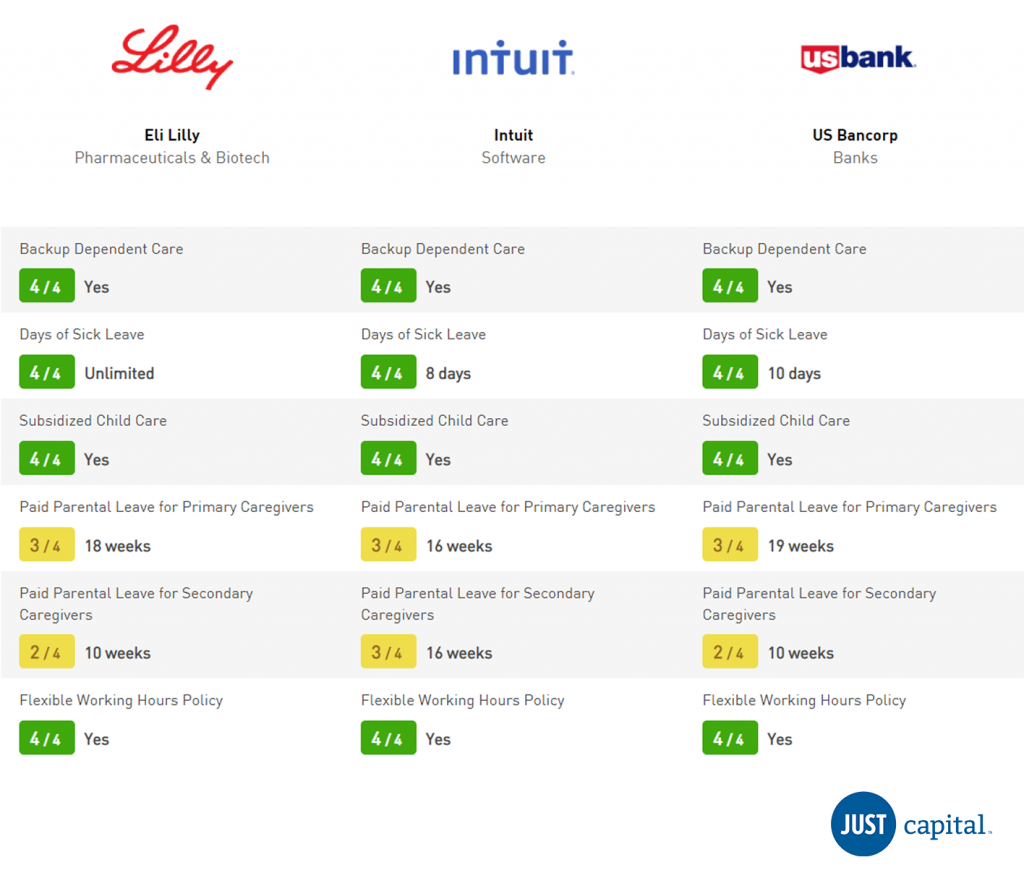
Each of these leading companies:
Read on below to learn more about key policies and disclosures and how these three companies support moms in the workplace as they navigate the challenges of caregiving in the “sandwich” generation – caring for both their children and their older relatives.
Intuit
Ranked 7th in Software and 65th overall
Software company based in Mountain View, CA
Intuit offers comprehensive caregiving policies to support working mothers, including 16 weeks of paid parental leave for both primary and secondary caregivers. By offering parity in parental leave and giving both parents the opportunity to bond with their children without worrying about work obligations, Intuit reduces gender-based discrimination, promotes gender equality, and combats the “motherhood penalty.” Intuit deepens its commitment to mothers by offering backup dependent care, flexible scheduling, and subsidized child care. Their dependent care program supports full-time and part-time employees working 20 or more hours a week, as well as seasonal employees, and covers regular and temporary child care, adult care, and elder care. Additionally, employees receive eight days of sick leave per year to attend to their own health needs or those of a dependent. Intuit aims to support employees “by offering benefits [they] need to stay healthy, achieve financial security, and enjoy peace of mind.”
US Bancorp
Ranked 9th in Banks and 56th overall
Banks company based in Minneapolis, MN
US Bancorp has implemented several policies and programs to support mothers in the workplace. All parents welcoming a new child through birth or adoption receive 10 weeks of paid parental leave, with an additional nine weeks of paid pregnancy leave for the parent giving birth. In addition, mothers have access to a maternity support program offered free through their insurance, and all parents can utilize an employee assistance program for practical advice and resources for help with health, finances, family and relationships, work-life balance, and more. US Bancorp also offers subsidies for childcare, flexible scheduling options, and backup dependent care reimbursement for up to five days of emergency care for both children and the elderly. Furthermore, US Bancorp offers 10 days of sick leave “for medical appointments, personal illness, the illness of a family member, to care for a family member when their school or place of care is closed due to a public health emergency.” US Bancorp asks employees to bring their best selves to work, and in return will “invest in benefits and programs that embrace what makes each of us unique and empowers all of us to thrive.”
Eli Lilly and Co
Ranked 16th in Pharmaceuticals & Biotech and 235th overall
Pharmaceuticals & Biotech company based in Indianapolis, IN
In 2019, Eli Lilly and Co expanded its paid parental leave to 10 weeks for both primary and secondary caregivers, with an additional eight weeks of leave for recovery for birthing parents. Eli Lilly and Co CEO Dave Ricks said of the expansion, “We’re proud to expand this benefit, reinforcing our commitment to a diverse, inclusive and flexible workplace, Lilly has always been a company grounded in strong family values. We hold a firm belief that the well-being of our employees – and those they go home to each day – is foundational to our purpose to create medicines that make life better for people around the world.” To further support mothers, Lilly also offers backup dependent care, as well as robust flexible scheduling through Lilly@Work, which allows employees to create custom schedules to best fit their needs, and based on their role, employees can work reduced schedules or work with other employees to create a job sharing arrangement. In addition, the company offers “Caregivers Time Off,” which is up to 64 hours of paid time off per year as a primary caregiver to an immediate or extended family member – whether natural, legally adopted, step, foster, or through marriage or domestic partnership – when they are ill or injured. Should mothers need to take time off to care for their own health, Lilly offers unlimited sick leave, which can be used to care for oneself or a dependent.
While there is still a long way to go, companies are increasingly supporting working parents, helping to ease their transition back to work and encouraging employees to stay with their companies long term. These actions help both working parents and their employers thrive – with 80% of companies that offer paid family leave reporting an increase in employee morale and 70% reporting an increase in employee productivity. By prioritizing retention of working parents, corporate leaders can support their companies’ bottom line and avoid unnecessary costs, with recent analysis showing that replacing an employee who leaves after childbirth can cost anywhere from 20% to 213% of their annual salary.
Furthermore, these benefits provide a key response to the urgent calls for more inclusive workplace practices. 64% of mothers overall are the primary earners in their homes, while a significant 84% of Black mothers fill this role – underscoring the need to support working mothers as part of the growing demand for corporate commitments to diversity, equity, and inclusion.
As we continue to navigate the ongoing caregiving crisis, employers play a pivotal role in ensuring that mothers have the support they need to remain in the workforce. Corporate leaders looking to build more inclusive practices that support working mothers can look to these three companies as examples of leading practices. By prioritizing this key workforce demographic, corporate leaders can help to build a sustainable future not only for working parents but for their companies overall.
JUST Capital, in collaboration with partners, established the Corporate Care Network to advance the well-being of workers and demonstrate the long-term value of investment in workers. The Network is committed to driving increased access to care benefits, including paid leave and flexible work policies, and highlighting leaders in the space.
If you’re interested in gaining insights into how to improve on the issues that matter most to the American public, and learning how your company can get involved in the Network, please reach out to JUST Capital impact@justcapital.com.

(PM Images/Getty Images)
On Wednesday, The WBCSD’s Business Commission to Tackle Inequality, a group of some 60 leaders from the world’s largest businesses and organizations (and including yours truly), released its inaugural report on the private sector’s role in reducing inequality. It’s a huge business issue. As The Wall Street Journal reported recently, inequality is a massive drag on the U.S. economy, slowing growth, costing taxpayers and workers, and chipping away at innovation.
What’s refreshing about the new report is that it lays out a clear, actionable roadmap for what executives can do about it, and why taking action benefits all stakeholders.
One of the 10 action items is for companies to pay workers a living wage. As JUST followers will know, “Paying a fair and living wage” is routinely the top priority for Americans when it comes to just corporate behavior. Recent surveys show that about 36% of consumers say it has been “somewhat” to “very difficult” for them to pay their usual bills, and 60% of Americans would struggle to pay an $1,000 emergency expense.
The good news is that companies are responding. More CEOs are seeing the business case for higher wages. As analysis we’ve just released shows some companies like Accenture and MSCI are encouraging or requiring their supply chain vendors to pay their workers a living wage. Home Depot recently invested $1 billion to increase wages despite slumping sales. The news follows similar moves over the past year by Walmart, Target, and others. Investors are also responding. Bloomberg reports that dozens of shareholder resolutions have been filed this proxy season pressing companies to address employee-related issues ranging from paid leave to wages.
The business case for reducing inequality is a compelling one, and the WBCSD’s report shows how to do it.
Be well,
Martin
PS: Advancements in AI are moving at breakneck pace, but already it’s clear the impacts on society will be profound. In a new weekly section called JUST AI, we’ll be tracking all the major developments at the intersection of AI and our mission.
This week we’re highlighting the top five companies encouraging or requiring their suppliers to pay a living wage from our 2023 Rankings.
Morgan Stanley Capital International (MSCI) requires its suppliers to pay employees a living wage and provides a clear definition of living wage – an essential step toward influencing behavior change.
Accenture developed an action plan for scaling living wage pay practices throughout its global operations and supply chain and regularly disclosing progress. UK suppliers are required to pay employees a living wage while global suppliers are strongly encouraged to do so.
Analog Devices Inc (ADI) is one of the few companies in the Semiconductor Industry that encourages suppliers to pay a living wage and has identified living wage as a key focus area to improve in its operations and supply chain practices.
Smartsheet requires suppliers to pay employees a living wage, as well uphold a safe and healthy work environment and ethical workplace conditions.
Teradyne ensures a living wage for its own employees and expects suppliers to follow the same practice.
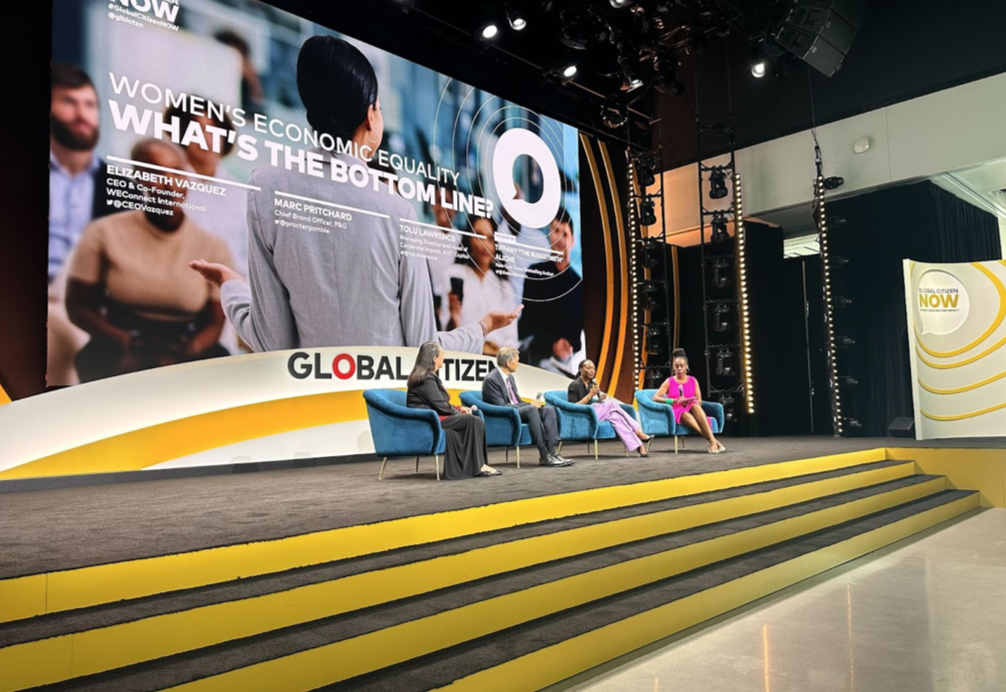
The Washington Post covers JUST Capital’s launch of The Corporate Care Network at the Global Citizen NOW conference. The initiative will work to improve care benefits for workers, including paid leave, flexible work, and childcare support. Companies within the Network will have access to leading research and data as well as a community of peers to share insights and inform action. Connect with our team if you’re interested in joining or learning more.
Bloomberg showcases JUST research and insights from JUST’s Tolu Lawrence in an article about more companies switching to gender-neutral paid leave policies that give flexibility to all parents.
A new JUST analysis finds that only 31% of Russell 1000 companies provide disclosure on both political contributions and lobbying spending – with companies more likely to disclose political contributions than lobby spend. Leaders from the Business and Democracy Initiative also share two key ways CEOs can navigate the current political climate as corporations are asked to take stances on today’s leading issues.
JUST board member Peter Georgescu pens an opinion piece in Directors & Boards on the benefits of capitalism as an engine for growth and the need to reimagine its relationship with stakeholders.
JUST Capital
“Overwhelmingly and consistently for the past eight years as we’ve been polling Americans – this is across demographics and political ideology – there’s agreement that the public wants to see companies invest in workers. The COVID-19 pandemic made clear that in order to invest in workers, you need to be providing them with care benefits they need to be able to thrive both at work and at home.”
– Tolu Lawrence, JUST Capital’s Head of Corporate Impact announcing The Corporate Care Network at Global Citizen NOW.
The New York Times reports that the “godfather” of AI Geoffrey Hinton quit his post at Google over concerns about AI, saying, “It is hard to see how you can prevent the bad actors from using it for bad things.” From human rights to climate to job loss issues, the Financial Times’ Moral Money team asks if technology companies at the forefront of generative AI can be ethical investments.
The White House announces a $140 million investment to create seven artificial intelligence research hubs and also released new federal guidelines on AI ethics, per CNBC.
IBM CEO Arvind Krishna shares with Bloomberg that the company plans to pause hiring on close to 8K back-office jobs they see as replaceable by AI in the next few years. It is one of the first acknowledgments by a major company that it plans to replace its workforce with AI.
Microsoft unveils a new AI-powered version of its Bing search engine to anyone who wants to use it. “The decision to add generative AI features to Bing could be particularly risky, however, given how much people rely on search engines for accurate and reliable information,” CNN Business reports.
The Wall Street Journal investigates America’s reliance on low-wage jobs subsidized by government programs such as food stamps and housing vouchers, writing it’s harmful to workers, taxpayers, and innovation.
CNBC reports on Home Depot’s billion-dollar pay raise for its workers. The retailer stands by its decision as a long term investment in the future of the company even as consumer spending slumps.
Since the pandemic, the lowest earners have seen the highest wage growth according to data featured in the Financial Times. The New York Times highlights strong wage growth even as the Federal Reserve continues its fight against inflation.
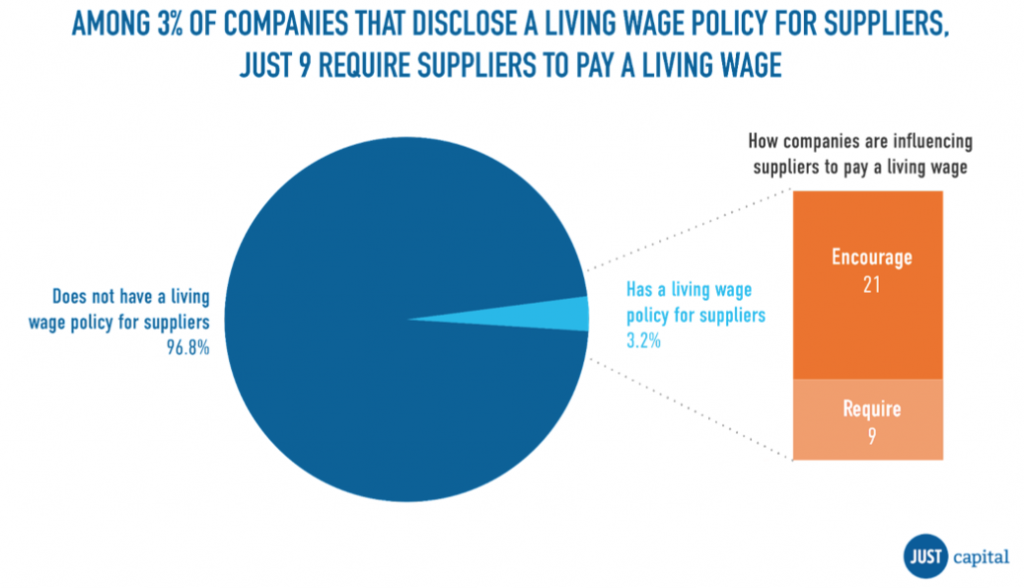
In our latest analysis exploring how and whether companies ensure that workers in their supply chain are paid a living wage, we found that just 30 of America’s largest companies (the Russell 1000) encourage or require their suppliers to do so. Furthermore, of those 30, only nine companies actually required their suppliers to pay a living wage, signaling that there is a very long way to go before workers in corporate America’s supply chain are paid enough to cover the local cost of basic living expenses – including food, housing, and medical care.
