

Last week, Just Capital brought together some of the world’s most influential business leaders, philanthropists, and government officials at Nasdaq’s MarketSite for our 2026 Best of American Business Celebration — supported by sponsors Accenture, Bank of America, and many more.
The day was defined by candor with seven fireside chats moderated by leading media figures. The conversations occurred under Chatham House rules, so we cannot directly attribute quotes, but we’re sharing two themes that dominated the discussions.
One refrain we heard repeatedly was the importance of keeping humans in charge of AI systems. One organization said their ethos was “humans in the lead” not just humans in the loop. It’s a deceptively simple idea, but in a world racing to automate, it’s a radical one.
Speakers also emphasized that neither government nor business alone cannot absorb the disruption that’s coming. Addressing AI’s impact on workers will require public private partnership to fundamentally reimagine how value is defined, rewarded, and shared One speaker even mentioned how dealing with this impact will go beyond workforce issues, and will force us to rethink how America handles things like health insurance, childcare infrastructure, and the social safety net at large.
There was a pointed message to CEOs in the room about the choice before them: use these tools to help people do more and better work, or use them simply to reduce headcount. One speaker referenced NVIDIA CEO Jensen Huang’s recent statement that leaders who laid off employees were “lacking imagination” in how AI tools could transform employee work, and it was clear the moral weight of how to handle this transition will define how history judges this generation of business leaders.On an optimistic note, there was general agreement that, with the right guardrails and widespread access, AI will provide significant value to society through innovations in healthcare, engineering, and education. Our latest polling shows that the American public agrees. Many leaders also believed that academia and nonprofits lack access to frontier models, which presents a structural problem that deprives these sectors of many of the technology’s gains if this continues.
On an optimistic note, there was general agreement that, with the right guardrails and widespread access, AI will provide significant value to society through innovations in healthcare, engineering, and education. Our latest polling shows that the American public agrees. Many leaders also believed that academia and nonprofits lack access to frontier models, which presents a structural problem that deprives these sectors of many of the technology’s gains if this continues.
If AI was the operational challenge in the room, the state of capitalism was the philosophical one.
Several leaders spoke with striking frankness about the erosion of public trust across the spectrum: in business, in capitalism, in the accessibility of the American dream, and in “brand America” abroad. It was clear that those in attendance were worried about the possibility of AI exacerbating these issues.
This concern was echoed from leaders across sectors – corporate leaders, investors, philanthropists, and policymakers. The idea that the very foundations on which markets depend is at risk was not an outlying perspective. It was a common thesis of the night.
There was also a belief that specific sectors were more vulnerable than others. One speaker drew a direct parallel between the major social media platform liability cases moving through the courts today and the first successful lawsuits against big tobacco, a flashpoint where public opinion decisively turns on one of the largest sectors of the American economy.
Leaders agreed that all of these issues could present an economic and social crisis soon.
In the end, the event left us debating profound questions: What kind of future do we want? How do we in this room shape it?
We at Just Capital believe in the power of markets and the private sector to advance society and build a better future for more people at scale. In an AI-powered future, the best of American business will continue to do just that.
Thank you to our insightful speakers and moderators, and thank you again to our sponsors!
Recent research on public attitudes toward AI reflect a rising level of unease and concern about the technology and its potential impacts on the workforce, relationships, and education. A closer look at public priorities suggests the views of the public are more nuanced than other polls may indicate and the path forward for AI-focused corporate leaders is clearer than overall sentiment polling implies.
In March 2026, Just Capital prompted the American public to prioritize AI-related issues rather than measure general sentiment. The results reveal that public support for AI is not absent but conditional: it depends on whether companies can demonstrate how they are managing risk responsibly while delivering on AI’s greatest potential to improve society. An early review of corporate disclosure suggests most companies have not yet made that case clearly or consistently.
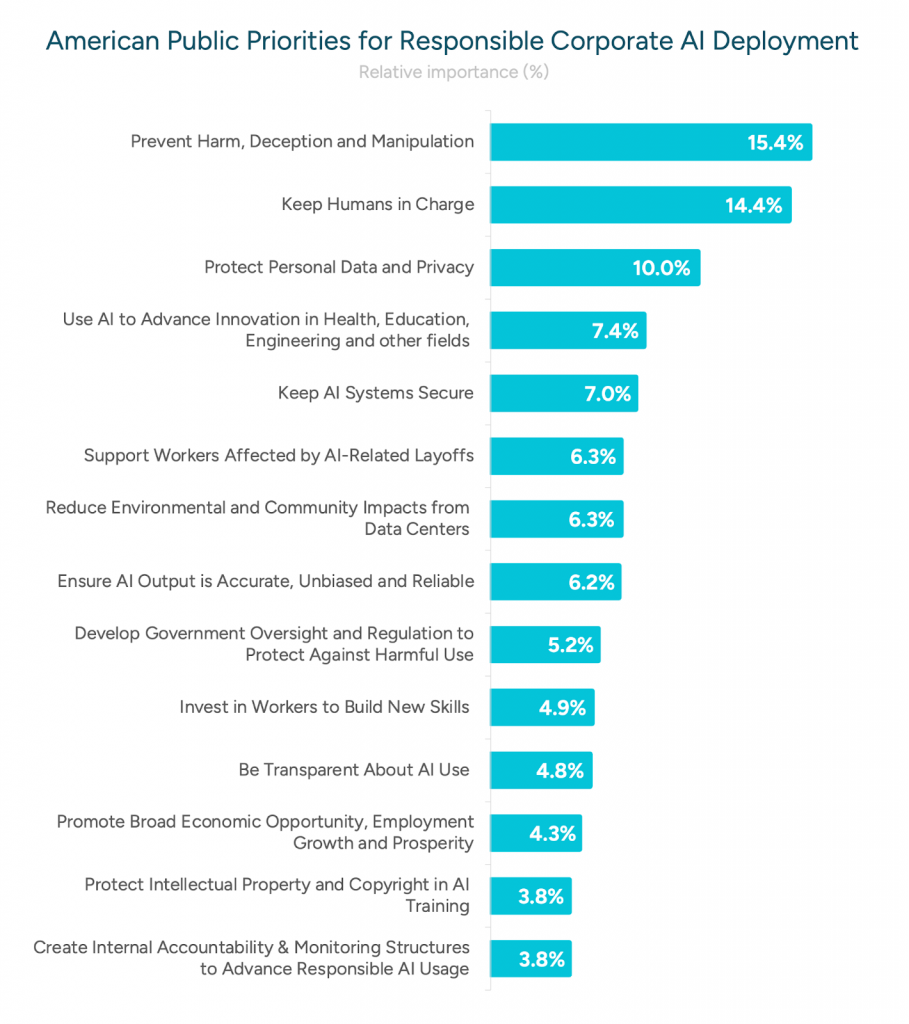
When asked to rank priorities rather than express general views, Americans reveal a more balanced perspective than headline sentiment polls suggest. They highly prioritize the use of AI to advance innovations in health, education, and engineering to solve complex societal problems, even ranking this above concerns around workforce disruption and environmental impacts.
At the same time, the three highest-ranked priorities are focused on safety concerns: preventing harm, deception, and manipulation; keeping humans in charge; and protecting personal data and privacy. This suggests public support would be bolstered by companies articulating the guardrails around the technology. Americans are watching to see whether companies can deploy AI responsibly.
We reviewed AI-related disclosures at six hyperscalers and 104 additional companies that rank highly in the organization’s measure of overall responsible business practices. Even among these 110 companies, most with strong disclosure track records across workforce, community, environment, customer, and governance issues, AI-related reporting is inconsistent and lacks common definition.
Two of six hyperscalers publish dedicated AI Transparency Reports. Fifty percent of companies disclose board-level involvement in AI risk oversight, but just 37% of the 110 companies analyzed disclose responsible AI principles or guidelines. Among those that do, disclosure is uneven on the issues Americans rank highest: only 16 companies mention preventing harm, deception, and manipulation; 27 mention human oversight; and 37 mention customer privacy and data protection.
Across Just Capital’s broader analysis of 933 public American companies, the picture is even less clear. The share of companies committing to not selling user data in any context dropped 3.5% year over year, and 3% fewer companies commit to not using user data for advertising. The average number of employee training hours fell from 24.34 per employee in 2024 to 21.96 in 2025, despite calls for more AI-focused training and reskilling opportunities. Among the smaller group of 110 companies analyzed further, 39 disclose formal AI training programs for employees.
As companies accelerate AI deployment, clearly and consistently defining responsible AI development and deployment will be a meaningful point of distinction for the American public. This analysis suggests the public will be more likely to extend trust to companies that demonstrate they are using AI to deliver genuine social benefit while protecting people from the greatest risks.
The full list of public priorities identified by Just Capital is below. These priorities are being translated into trackable metrics for ongoing analysis.
Methodology
Just Capital regularly conducts independent surveys to track Americans’ priorities, values, and expectations for corporate behavior, which serve as a foundational input into its Just Intelligence tool, rankings, and research products. Priorities weights were determined via maximum-differential (Max-Diff) to quantify the relative importance of each of the AI-related issue statements.
This survey was conducted online within the United States by Just Capital from March 12–16, 2026 among 2,012 U.S. adults ages 18 and older. Data from this survey have been weighted to align with known population parameters from the U.S. Census Bureau on key characteristics including [age, gender, geography, etc.]. While weighting adjusts for demographic imbalances, this survey is based on a non-probability sample and therefore no estimate of theoretical sampling error can be calculated. Findings should be interpreted accordingly.
Note: This op-ed was previously published by Fortune on February 19, 2026.
Today’s CEOs could be the most consequential corporate leaders in American history. The decisions they make will go a long way to determining whether the most powerful technologies ever developed strengthen the foundations of American capitalism or undermine them. It’s not an exaggeration to say the stability of the modern socio-economic system on which markets and business depend is at stake. Fortunately, executives have access to greater magnitudes of data and computing power than ever before in order to get this transition right.
Two realities define the leadership challenge ahead. First, company leaders know they have no choice but to embrace new technologies fully, at speed and with unprecedented levels of investment in order to remain competitive. Second, they understand that the transition to an AI-powered economy will reverberate widely, reshaping jobs, income models, communities, and the role of business in society in ways that are very difficult to predict. We’re already seeing the decoupling of economic growth and labor outcomes begin to play out. What happens if the value of labor drops to effectively zero?
Technological disruptions have happened throughout history. The problem is that this time it is unfolding faster, on a grander scale, and with greater implications, than any before. Whereas previous technological leaps forward were measured in years, with agentic AI, automation, quantum computing, and humanoid robotics, the adaptation time has been compressed to months. This gives leaders little time to experiment, adjust, and course-correct. If they are perceived as being behind the curve or investing incorrectly, the consequences are swift and severe. For society, and those who govern, the transition is felt almost daily. When you have near zero adjustment time, it’s akin to flying blind.
The warning signs are visible in Just Capital’s research. In our latest polling, only 35% of Americans say the current form of capitalism is working for the average person. In our AI-specific surveys, 48% of the American public predict AI will replace workers and eliminate many jobs and a majority is most worried about AI’s impact on social stability and safety.
From my frequent conversations with global business leaders, they are acutely aware of the challenge. Concerns for the future of capitalism continue and recently, executives debated whether the greater threat to the economy and society is artificial intelligence or the continued concentration of wealth and opportunity.
No one is arguing against the need for technological progress. Breakthroughs in healthcare, education, productivity gains, and innovations we cannot yet imagine are now closer than ever. Some predict all of that may in fact create new jobs; others foresee a “blood bath”. Capturing the benefits of transformation while preserving broad participation in economic growth will take new approaches by leaders on how technology is deployed, how the gains and disruptions are managed, and how companies are structured and run.
Forward-thinking business leaders understand that at its core, our capitalist system is built on the shared belief that economic growth creates opportunity, that effort and participation are rewarded over time, and that when businesses create value for all their stakeholders, they thrive financially and competitively.
Putting this into practice is the trick. The era of stakeholder management defined by broad frameworks, generalized commitments, and aspirational language is over. For too many, stakeholder considerations became a compliance exercise that proved to be too imprecise to guide real tradeoffs, withstand scrutiny, or serve as a source of genuine strategic insight.
Today’s hyper-competitive business environment necessitates the opposite: precise, decision-grade data and intelligence rigorous enough to help leaders make higher-confidence choices about strategic planning, capital allocation, workforce design, community engagement, and technology deployment in real time. And all on a company-specific basis. A retailer trying to balance customer satisfaction, supply chain automation, and a frontline workforce has very different priorities than a software company competing for top AI talent while trying to evaluate their footprint on communities.
Understanding the causal relationships between stakeholder investments and core business outputs is central to this. Mapping performance against peers and best practices, identifying areas where operational or reputational risks may be lurking, and pinpointing unseen organizational strengths that can be maintained, elevated, and leveraged are also vital.
Above all, leaders must clearly understand how specific investments in talent, consumer engagement, community resilience, and environmental stewardship translate into total returns. That clarity will drive both business success and societal value creation. While AI raises the stakes for this work, it also makes it possible.
The future of American business and that of its people are inexorably intertwined. As the country approaches the 250th anniversary of its founding, it feels like the next three years will shape the next 3 generations at least.

Yesterday, I shared a Q&A I recently had with Steve Beard on LinkedIn. Steve is CEO of Covista, which recently completed a transformation into America’s largest healthcare educator. It’s a fascinating story that got me thinking more broadly about what distinguishes leaders who successfully navigate profound transformation. The news that Enrique Lores has been named CEO of PayPal and The HOW Institute’s annual release of their State of Moral Leadership in Business report added more food for thought on this increasingly critical topic.
Enrique received our inaugural JUST Capital Lifetime Achievement Award last year for his exceptional leadership at HP Inc. During his tenure, he guided the company through a fundamental strategic transformation while consistently investing in workers, customers, and communities. I have confidence he’ll do the same at PayPal.
What do Steve and Enrique have in common? Both understand that transformation and stakeholder investment aren’t competing priorities, they’re mutually reinforcing.
Covista sits at the intersection of workforce, health, education, and technology. When I asked about Covista Open Doors, their new initiative to expand access to healthcare careers, Steve went straight to the heart of it. “We train and develop the folks that care for all of us,” he told me. “And we’ve got an opportunity that we believe is too good and too important to pass up.”
Enrique operated with the same philosophy at HP. At our flagship Best of American Business event last year he shared his conviction that “…business success and social responsibility are not separate pursuits. They are deeply connected.”
Both leaders also embody authentic leadership grounded in personal experience. Steve, a first-generation college graduate, told me that creating opportunity for historically excluded populations is simply part of who he is. Enrique started at HP as an intern nearly four decades ago, inspiring his commitment to workforce advancement and long-view leadership.
The HOW Institute report demonstrates how rare this kind of human, stakeholder-first leadership may be but also how vital it is to the process of transformation.
Be well,
Martin
The New York Times surveyed prominent technologists, economists, and philosophers and found deep disagreement over whether AI will ultimately expand opportunity or accelerate inequality. They also put out a separate opinion piece featuring three economists debating the impact AI is already having on the economy.
Fortune reports that Citigroup CEO Jane Fraser is pushing an employee training initiative across the organization to reskill their workforce with AI tools before automation reshapes people’s roles.
Axios examines why employees aren’t buying the hype for AI the same way their employers are.
The Washington Post reports a widening labor gap as demand for electricians, plumbers, and skilled trades grows while white-collar hiring slows..
Fortune finds more employers abandoning performance-based raises in favor of flat, across-the-board increases — a move meant to more broadly retain workers.
Bloomberg reveals that CEOs are increasingly anxious about economic slowdown, geopolitical instability, AI backlash, and workforce morale with fewer leaders confident they can manage multiple risks at once.
HR Dive highlights new research showing that replacing an employee now costs employers more than $45,000 on average, strengthening the business case for retention.
The Wall Street Journal reports that The Washington Post is laying off about one third of its workforce as digital subscription growth slows and legacy media companies continue to struggle with advertising and audience fragmentation.

A KFF Health Tracking Poll finds health care costs, expiring ACA tax credits, and insurance affordability are top voter concerns, particularly with many companies having to alter their health benefits due to rising prices.
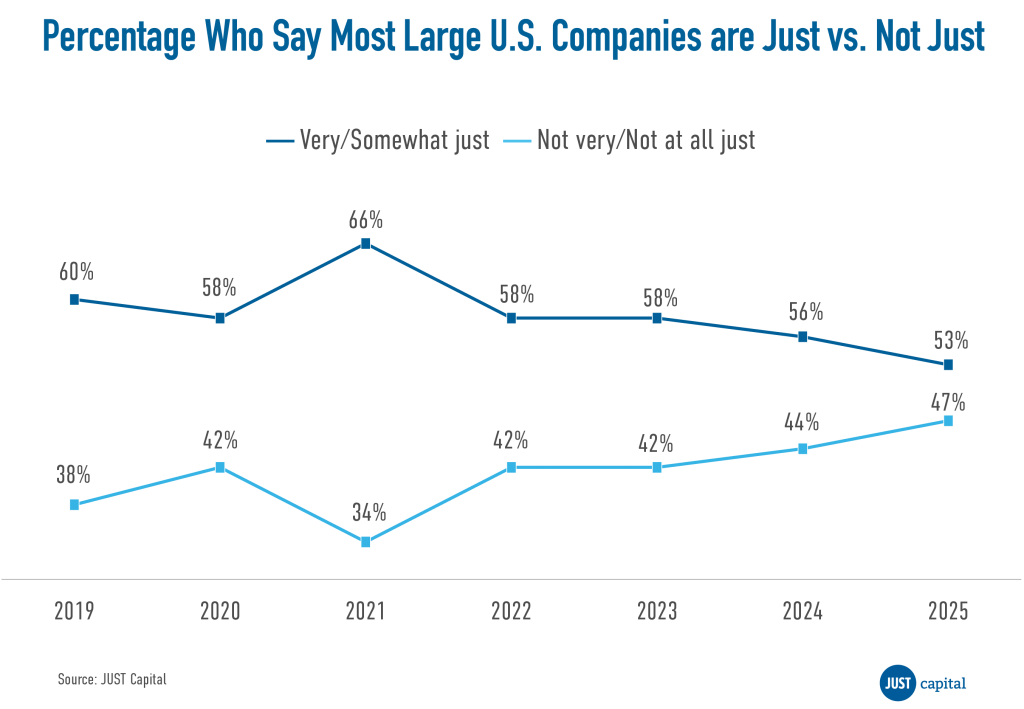
1. Only 53% of Americans believe large U.S. companies are very or somewhat just, the lowest percentage since we began this polling in 2019. Only 35% believe our current form of capitalism is working for the average American.
2. This is at odds with the expectations of the public. 80% believe business can be a force for positive social change and 89% agree it’s important that companies promote an economy that serves all Americans.
3. When we dig deeper, Americans care most about worker-related issues such as providing a fair and living wage, supporting worker well-being, and offering advancement and training opportunities, alongside employee benefits.
4. As AI and automation become even more dominant in 2026, leaders have a significant challenge ahead to innovate and grow their business while continuing to invest in and cultivate their workforce. Our recently released research on perceptions of AI amongst corporate leaders, investors, and the American public aims to help them identify key considerations for responsible AI deployment at scale.
Perceptions of performance on just business behavior peaked during the height of the Covid-19 pandemic in 2021. Since then, the gap between those who view companies as just versus unjust has narrowed to its smallest margin in seven years, suggesting declining confidence in corporate behavior.
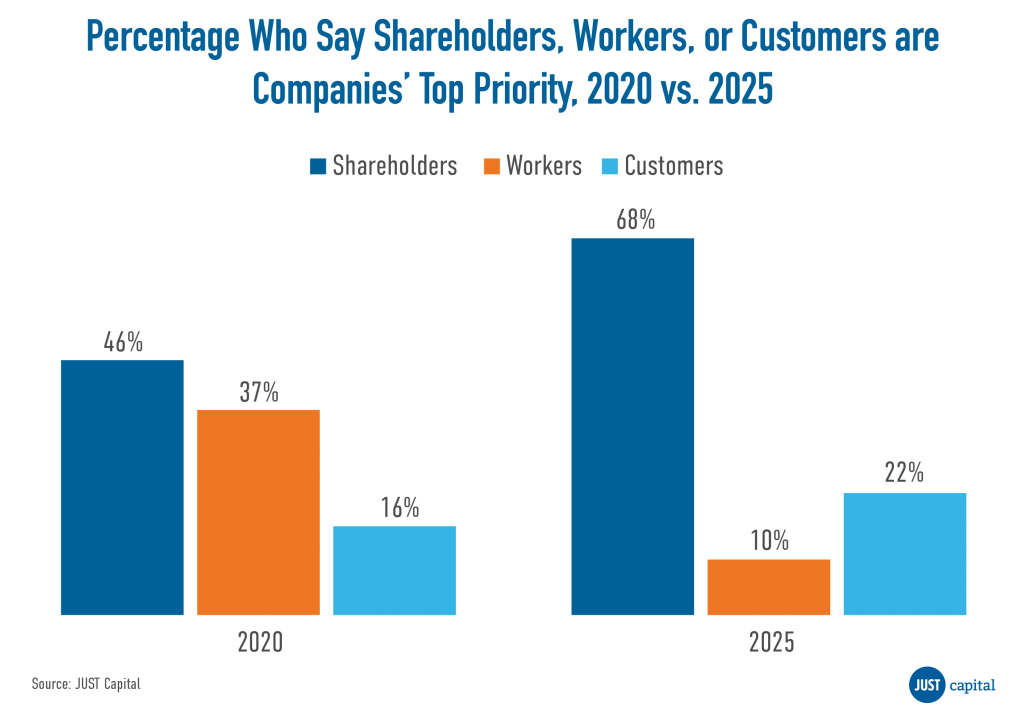
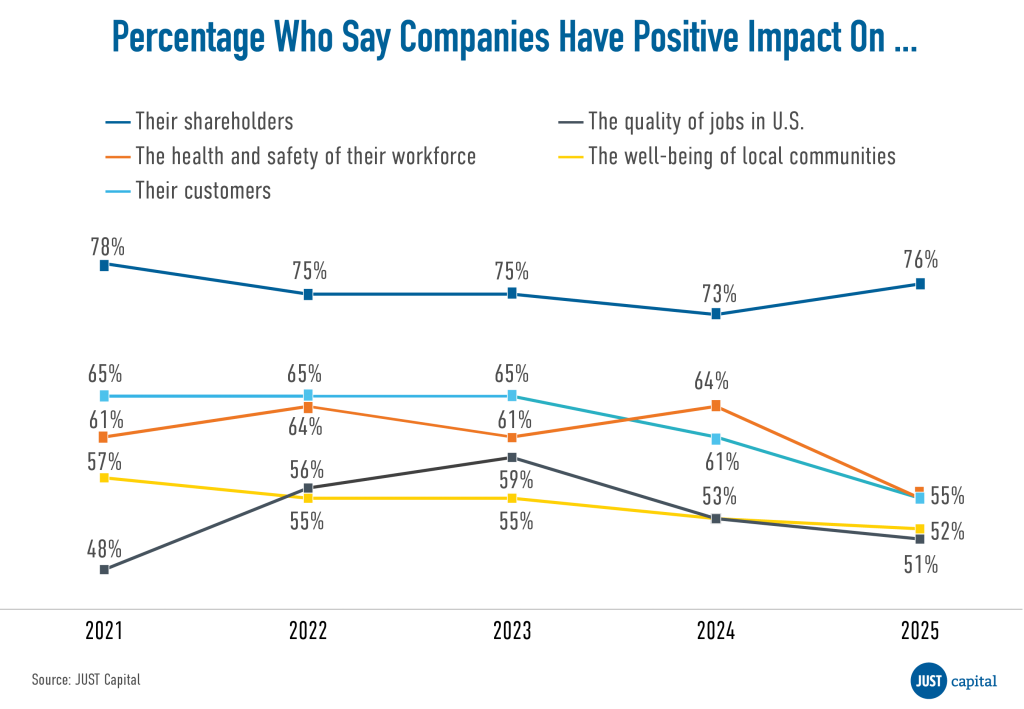
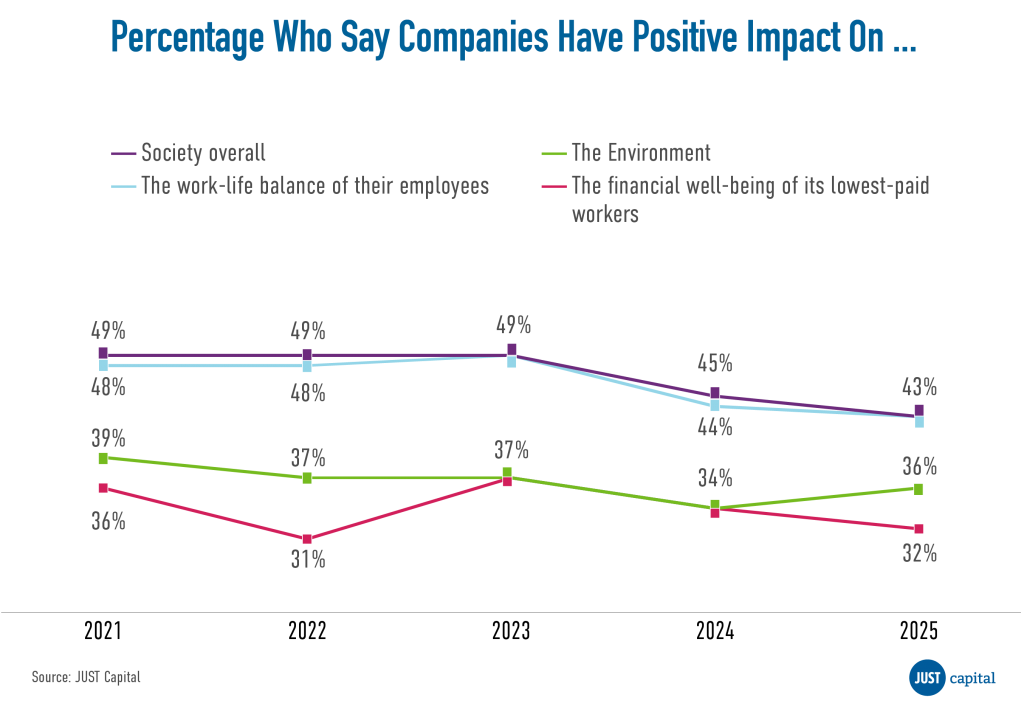
The public indicates belief that companies are overwhelmingly focused on shareholders at the expense of their workers and customers. The shift since 2020 is stark: while shareholder prioritization has remained constant or even intensified in the public’s view, they believe attention to workers and customers has languished.
76% of Americans say companies positively impact shareholders compared to other stakeholders, to society, and even compared to quality jobs. The starkest gap appears in perceptions of impact on the financial well-being of a companies’ lowest-paid workers.
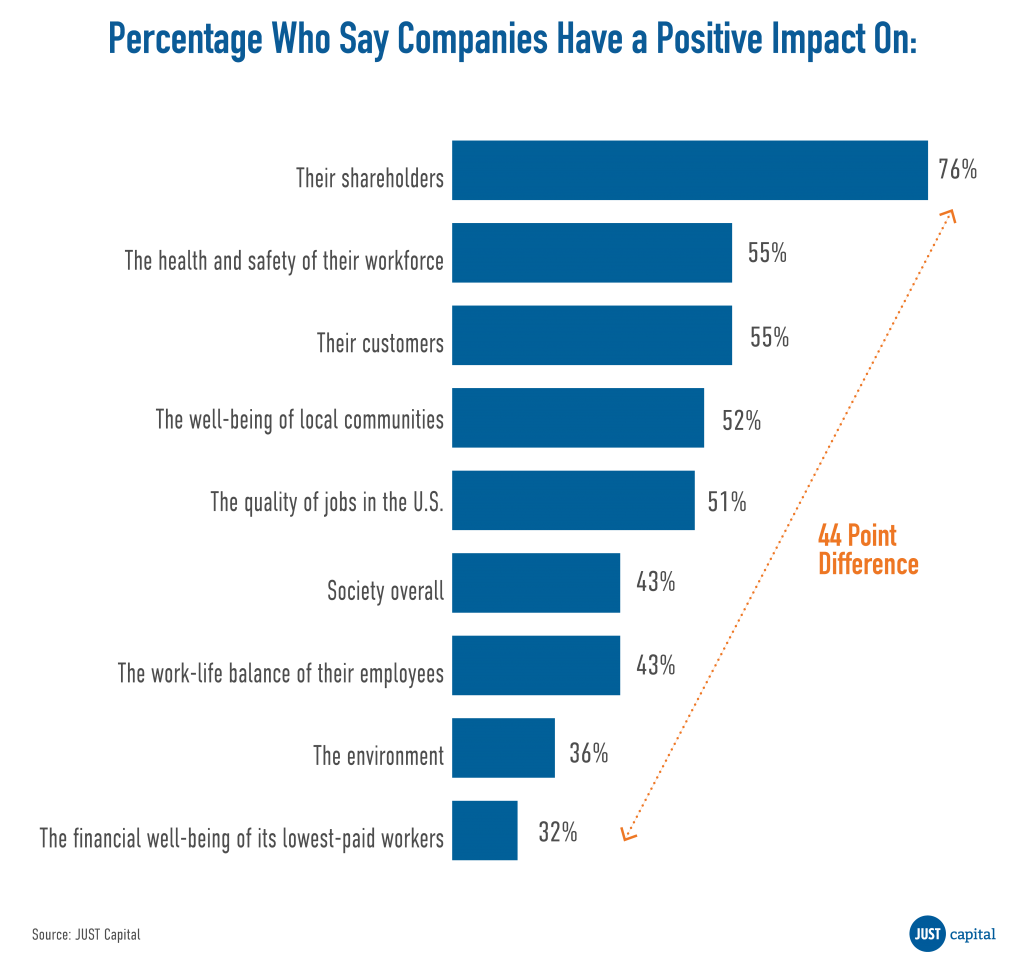
Over time, the erosion of public confidence has accelerated, with Americans increasingly convinced that companies prioritize investors to the exclusion of all other stakeholders.
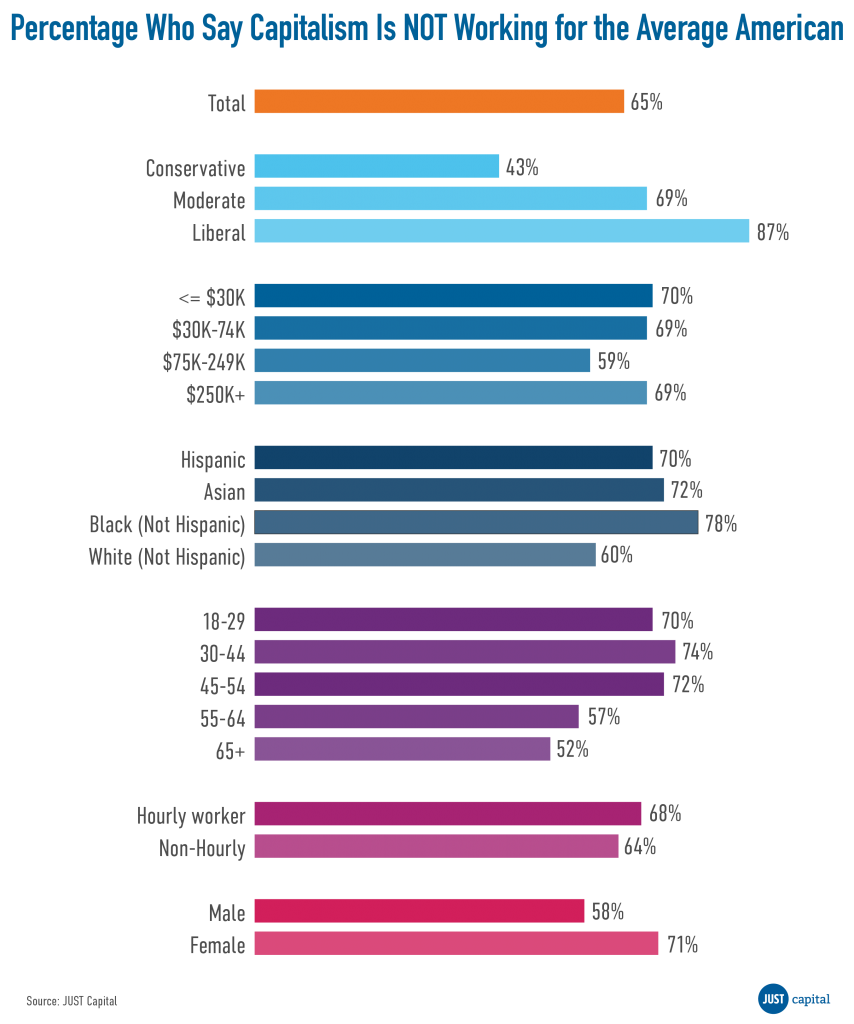
When asked whether capitalism is working for the average American, the majority of respondents say no. This negative sentiment has persisted for four years, with 2021 marking the narrowest gap between those who agree and disagree that the system is working.
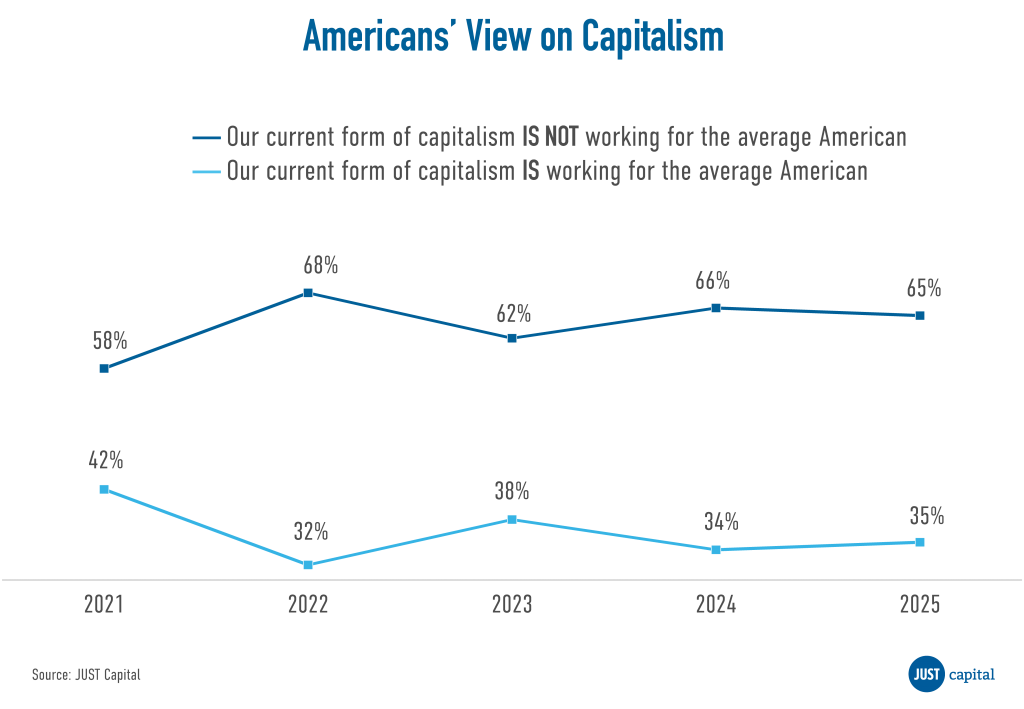
This sentiment is remarkably consistent across demographics. In nearly every group — regardless of age, income, race, or political affiliation — the majority believe capitalism is NOT working for the average American. The exception is Conservatives, who have a lower, yet still substantial share who express doubts about capitalism’s effectiveness to generate shared prosperity.
Eighty percent of Americans think that business can be a force for positive change. The public also has high expectations of corporate America across a variety of factors, such as the ethical use of AI in business operations, the relationship between transparency and trust, and the desire for companies to operationalize value creation rather than simply making public commitments. What is additionally striking is the consistent level of agreement on these sentiments across political ideologies.
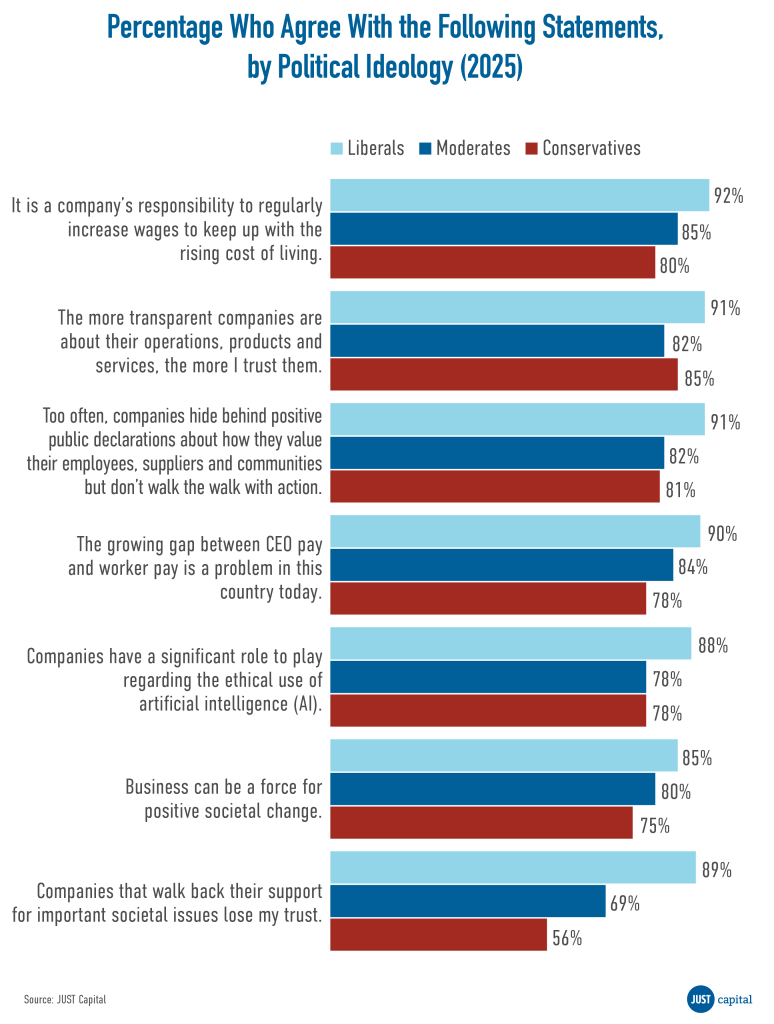
Although the public is looking for action over verbal commitment, there is an opportunity for leaders to better communicate how they are positively serving their workers, customers, and communities.
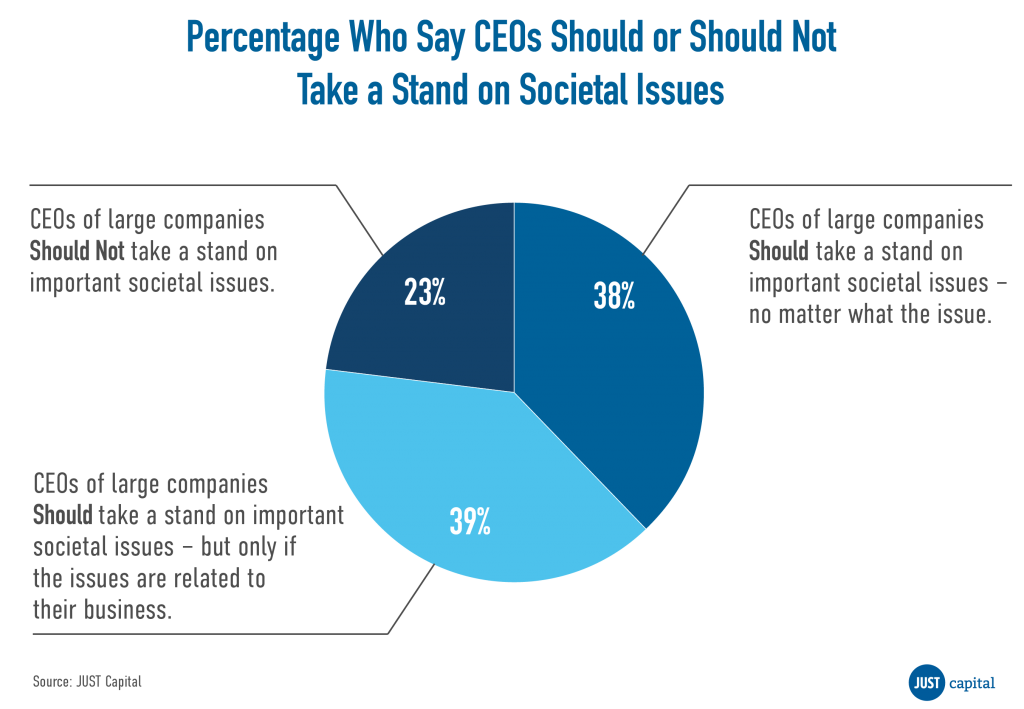
While a quarter of Americans say that CEOs should stay away from taking a stand on any societal issues, three-quarters say that they do have a role to play in societal issues, especially when they concern issues related to their business.
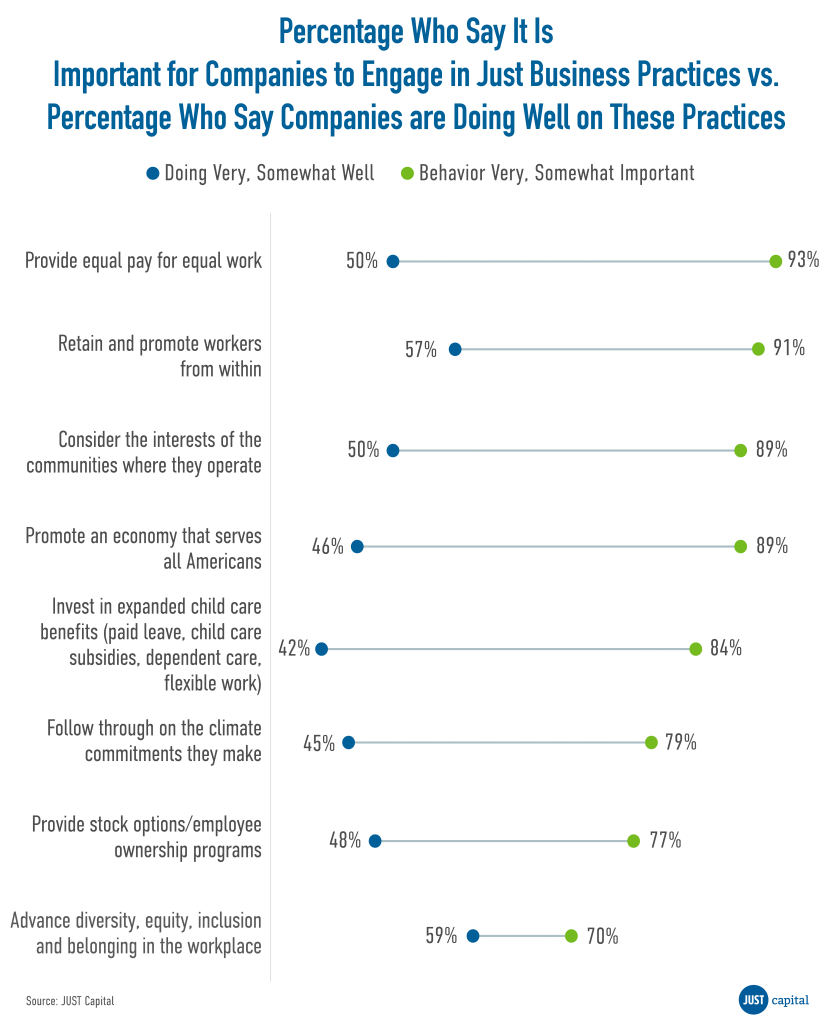
While 70 to 93 percent of Americans say it’s important for companies to engage in various responsible business practices, their evaluations of actual corporate performance indicate skepticism that expectations are being met. The largest gaps between expectation and perceived performance emerge in two critical areas: ensuring equal pay for equal work and contributing to an economy that serves all Americans.
Overall, Americans continue to prioritize worker-related issues, with four of the five worker issues ranking in the top six out of 17 total issues. Customer-related issues are also prioritized in the top 10.
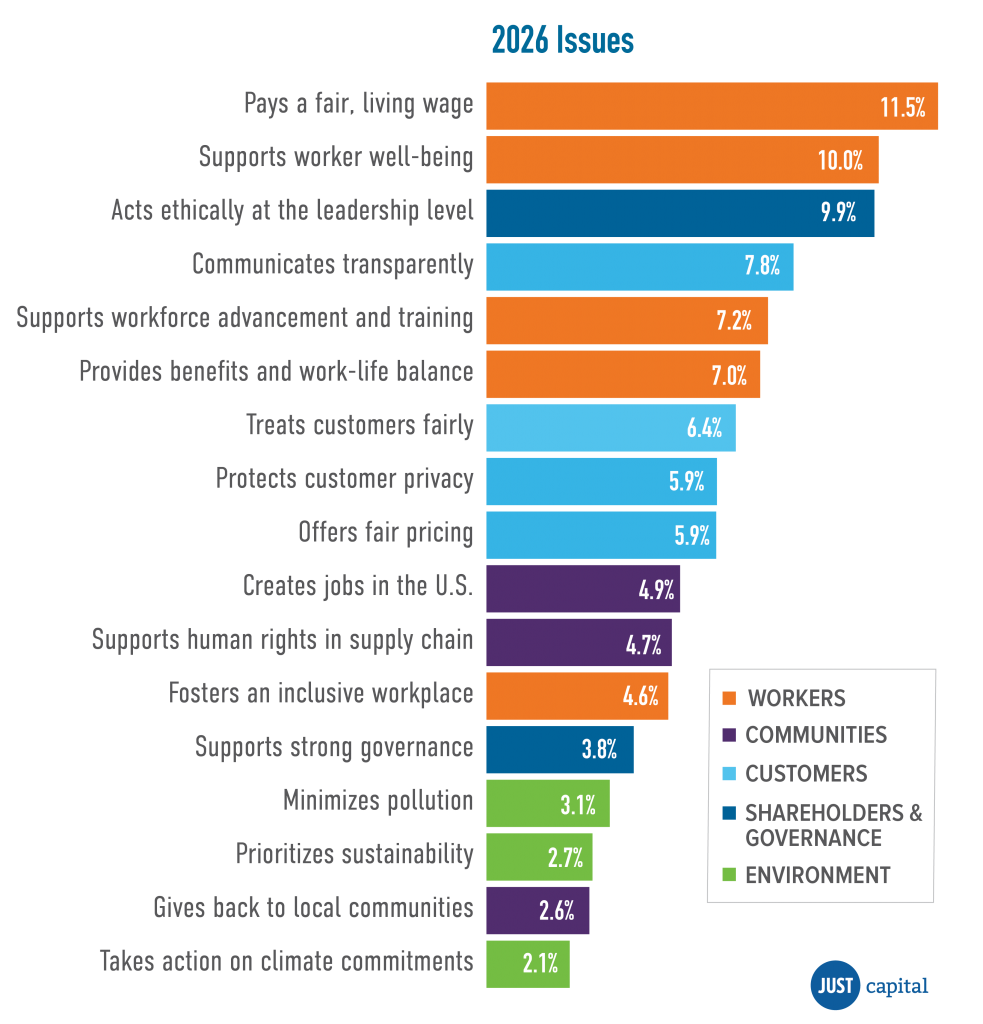
When we dig deeper, we find a remarkable consistency across demographic groups in the three highest-ranked Issues: Pays a fair, living wage, supports worker well-being, and acts ethically at the leadership level. These findings signal that the public continues to be united around the issues they want companies to prioritize.
Over the past seven years, “Pays workers fairly and offers a living wage that covers the cost of basic needs at the local level” has consistently ranked 1st across nearly every demographic cohort. At 11.5%, this issue’s weight remains relatively stable from last year, but is lower than at its peak of 21% in 2023, suggesting that while a fair, living wage continues to be fundamental to public perceptions of just corporate behavior, its degree of importance has declined in favor of other worker issues.
“Supports worker well-being and provides safe and healthy working conditions,” which rises to the second-highest ranked issue. This elevation likely reflects heightened concern about maintaining positive, supportive work environments that prioritize workers’ humanity.
Likewise, “Invests in its workforce by providing training, education, and career development opportunities” takes the #5 spot, and comprises 7.2% of the model, up from 6.9% the year before. The rise in worker training priorities likely reflects the growing desire among workers for upskilling in an AI-driven economy — a trend corroborated by findings in our AI survey.
“Conducts business ethically and honestly, and takes responsibility for wrongdoings” ranks #3 overall, followed by “Honest and transparent in communications with customers about its products, services, and operations,” at #4. Both issues made the top 4 last year, and their sustained prominence takes on new significance in the age of AI. As systems become more opaque and complex, the public’s insistence on ethical conduct and transparency suggests a fundamental demand: companies must demystify their AI practices and be accountable for decisions that affect their stakeholders’ lives.
Finally, the biggest mover this year is “Protects the privacy of customers, including their data,” which moved to #8 from #10 last year. As we found in our AI survey, the public fears that rushed AI adoption, combined with weak security protocols, could expose personal information to breaches, misuse, or unauthorized access.
The results of the survey reflect an ongoing call from the American people for a “back to basics” business approach. The public clearly defines just business behavior as companies paying fair wages, providing good benefits and training, creating safe and fulfilling workplaces, offering opportunities to advance, treating customers fairly, and supporting the communities in which they operate.
As AI and automation become even more dominant in 2026, leaders have a significant challenge ahead to innovate and grow their business while continuing to invest in and cultivate their workforce. Our recently released research on perceptions of AI amongst corporate leaders, investors, and the American public aims to help them identify key considerations for responsible AI deployment at scale.
Americans’ Views on Business Survey
Since 2015, JUST Capital has surveyed close to 200,000 Americans to assess how well they think companies are doing when it comes to creating value for all their stakeholders and building a more just economy that truly works for all. The 2025 Americans’ Views on Business Survey was fielded among 2,004 Americans – a sample representative of the U.S. adult population – between August 18 through September 2, 2025. Our quantitative research partner is SSRS, an objective, nonpartisan research institution that provides scientifically rigorous statistical surveys of the U.S. population.
The People’s Priorities Survey
Just Capital’s definition of just business behavior begins by hearing from a diverse, representative sample of Americans through small-group qualitative discussions to understand what they expect from a “just” business. This year, the major themes we translated into issues came from open-ended responses to the following question:
Q1. Think now about the largest companies in the U.S., with hundreds or thousands of employees. We would like to know what you would consider to be “just” business behavior for these companies as it relates to various groups of people. By “just” we mean “fair or good” behavior.
Before answering this question, however, we provide respondents a clear definition of the concept: A just company demonstrates a commitment to doing right by its workers, its customers, the environment, the community, its shareholders, and the business itself.
Respondents were prompted to answer this question from the point of view of one of five stakeholders (Workers, Customers, Communities, The Environment, or Shareholders).
Q1.1 For example, actions you would expect a just company to take related to its Workers
Our polling team then distills the major themes from these discussions into discrete statements, which we define as “Issues.” Subsequently, we conduct a quantitative survey of 2,000 U.S. adults in which they rank the relative importance of these 17 Issues.
We conducted the survey online with a probability-based sample attained through the statistical sampling methods employed by SSRS. The SSRS Opinion Panel is a nationally representative probability-based web panel, and findings are generalizable to the general adult population.
The survey is drawn from a probability sample, ensuring we capture diverse perspectives from a cross-section of Americans. This includes representation across demographic dimensions (race/ethnicity, gender, income, and age), as well as other characteristics such as political ideology.
The full survey was conducted from August 18 through September 2, 2025 among a general population sample of 2,004 English- and Spanish-speaking U.S. adults ages 18 and older, with an oversample of 470 Hispanic and 253 non-Hispanic Black respondents. Panelists were sent an email invitation to take the survey online as well as up to eight reminder emails throughout the field period. The survey program was optimized so that respondents could complete it using a desktop or laptop computer as well as a mobile device. In total, 610 respondents completed the survey on a computer and 1,394 completed it on a mobile device.
The margin of error is +/- 2.0% at the 95% confidence level. Results were weighted to U.S. census parameters for age, gender, education, race/Hispanic ethnicity, and census division to ensure representativeness of the U.S. population. All margins of error include “design effects” to adjust for the effects of weighting.

Ten years ago, Walmart CEO Doug McMillon made a bet that flew in the face of conventional retail wisdom: invest heavily in frontline workers through higher wages, better training, and expanded benefits. The result was increased value for the company, shareholders, and their associates. Just’s analysis frequently highlighted this. This week, in a powerful LinkedIn reflection and in remarks from the company’s workforce conference in Bentonville, McMillon connected that decade-long commitment to how the company plans to navigate AI-related transformation.
The timing is striking. Headlines have focused on AI-driven job cuts, and McMillon himself acknowledged that “AI is going to change literally every job”. But he’s using this moment to double down on the philosophy that got Walmart here: “investing in wages, benefits, and education shouldn’t be seen as a line item, it should be valued as the strategic enabler that it is.”
This approach aligns perfectly with what the majority of Americans want. Worker issues such as fair pay, well-being, and training and advancement consistently rank as top priorities in our polling. And our data supports the business case: since 2021, companies excelling on worker issues in our rankings have outperformed the Russell 1000 equally-weighted index by over 20%. McMillon noted that Walmart’s shareholder returns are up about 490% since 2015, outperforming the S&P500.
Behind fair wages, the #2 issue for the American public this year was ethical leadership. McMillon’s remarks may offer the blueprint for ethical leadership in the AI era. He didn’t sugarcoat the challenge. AI will eliminate some jobs and create others. He outlined that the composition of Walmart’s 2.1 million-person workforce will change dramatically over the next three years, even as headcount stays flat. That transparency builds trust.
As we work over the next few months to begin to define what just AI deployment looks like, Walmart’s strategy is an exciting place to start.
Be well,
Martin
(Getty Images/Bill Pugliano)
“Old-timers in our plants were saying, ‘It’s no longer a career, Mr. Farley. Working at Ford is no longer a career.’”
NVIDIA CEO Jensen Huang is encouraging Gen Z to go to trade schools, stating that the AI future will require “hundreds of thousands” electricians, carpenters, and plumbers to help build data centers and AI infrastructure. Fortune has the story.
The Wall Street Journal asks when we will see results of the “epic” levels of AI spending, citing worries many investors have that there is no clear timeline for when they’d see any return, echoing the dotcom bubble.
The New York Times reports that California Governor Gavin Newsom has signed a sweeping new AI law that will force companies to report the safety protocols they’re using in development, the greatest risks posed by their technologies, and more.
Fortune reveals that 62% of white collar workers would transition to a trade job if it meant more employment stability and better pay, particularly for younger workers.
The New York Times takes a deeper look at the ways in which the Trump Administration could solve issues with the H-1B program and argues that the proposed $100k fee per new hire is not the solution.
Bloomberg worries that large swaths of Americans no longer have meaningful spending power to impact the economy, which is why stocks continue to grow despite American sentiment being down on the current state of the economy.
Nearly 100,000 government workers resigned this week as part of the Trump administration’s “Deferred Resignation Program” implemented in April of this year, which claims to save taxpayers $28 billion dollars. Newsweek has the story.
Pew Research released several pieces of data on how Americans are using AI. One important insight for company leaders? Most Americans believe it’s important to tell the difference between AI- and human-generated content, but very few feel like they can.
