Our third quarterly AI survey of the American public, investors, and corporate leaders is out this week and the results are striking.
Twenty-seven percent of corporate leaders report providing advance notice of AI-driven layoffs, 31% say they are offering transition support to laid off workers, and only 13% report contributing to an industry-wide fund to support displaced workers. Nearly a quarter of corporate leaders — 23% — say none of these support mechanisms exist at their organization, despite the fact that 22% now believe large-scale job losses are on the horizon (compared to 13% just one quarter ago).
We think one possible explanation for these wide-ranging responses is that most companies don’t anticipate or aren’t yet laying off at the scale that would trigger displacement programs, so those programs haven’t been built. Only 19% of corporate leaders report significant job cuts to date. Nevertheless, the gap between investor and public expectations and corporate action is widening. Sixty-four percent of the public and 57% of investors expect advance notice of workforce changes. Seventy-two percent of investors say companies should fund training and skill development. These stakeholders are concerned about widespread layoffs even if they’re not yet materializing.
Other interesting datapoints: The share of company leaders who believe business should spend over 5% of total AI investment to support displaced workers has more than doubled since Fall 2025 from 8% to 17%. And nearly 75% agree companies should invest in local communities through training and workforce development programs.
Are business leaders getting more concerned about what’s to come? Or more committed to building support with key stakeholders? Maybe both.
Be well,
Martin
This newsletter was written mostly by humans with a bit of help from AI.
We are expanding Just Intelligence to track how America’s largest companies are deploying AI responsibly and we want your feedback.
Through polling conducted over the last year, we have identified several AI issues that matter most to the American public and developed new data points that capture how corporate disclosures meet those expectations. We plan to incorporate these data points into our 2027 Rankings methodology.
If you belong to a company being measured, your perspective is essential to ensuring this research is relevant and actionable.
Please submit your feedback by July 8, 2026.
View the Data Points and Provide Feedback
Fortune highlights comments from Vista Equity Partners CEO Robert Smith imploring companies who are expanding their AI capabilities to continue to invest into intern programs for the next generation, saying “that’s an important part of bringing people along and, honestly, of creating optimism and a new group of technologists and thinkers who can carry this world.”
NBC News covers a historic bill that just passed in Illinois that would require AI companies to have 3rd party safety audits.
Fortune examines Goldman Sachs data showing new college students are shifting majors to those that are less at risk for AI automation.
Our CEO Martin Whittaker joined Yahoo Finance to discuss the findings in our latest AI polling.
The New York Times reports on the UK’s social media ban for children under 16, and the worries from company executives that other countries may follow suit.
Yahoo Finance examines the “30% rule” – the idea that Americans should only spend 30% of their income on housing – to see if it’s actually still feasible in this era of slowing wages and hyperinflation.
Axios looks at rising CEO optimism despite the current headlines.

Axios looks at how, for the first time, a majority of U.S. households have both parents working full-time.

This week, I attended the Robin Hood Foundation annual benefit where the spotlight was on food poverty and how even families with two working parents are struggling to get by. It was a jolting reminder of the importance of our mission.
For the first time in three years, wages are lagging behind inflation. At the same time, retailers and manufacturers are passing the full cost of tariffs through to consumers after absorbing what they could on margin. Households are feeling the squeeze of both at once, evidenced by the fact that consumer borrowing saw its biggest monthly jump in March since 2022. Small business optimism on future business conditions and expansion opportunities has fallen to the lowest level in over two years. In some cases, workplace benefits are being rolled back.
In our polling, year after year, people across the political, economic, and demographic spectrum have told us that paying a fair, living wage is the single most important thing a company can do (even when we layer in critical AI-related issues). More recently, fair pricing has emerged as a top concern in its own right. Both are being put to the test right now.
According to United for ALICE, in 2026 approximately 42% to 49% of American families are living with financial strain, near the poverty line, or in economically vulnerable situations. Not only does this put those families in distress, but it also presents a material business risk. Real wages declining while shelf prices climb obviously curtails consumer demand, weakens workforce stability, and undermines confidence in the future more broadly.
Amid the daily frenzy of the markets, AI and global geopolitics, business leaders would do well to keep the financial health of their employees very much in mind.
Be well,
Martin
The New York Times reports that opposition to AI-driven data center expansion is growing across both liberal and conservative communities, with concerns ranging from environmental impact to energy consumption and local quality of life.
Related, Fortune broke the story on a power company that is dropping 50,000 Lake Tahoe residents to reroute their electricity to data centers.
Fortune examines a Gartner study showing many companies automating jobs with AI are struggling to realize the productivity and financial gains they anticipated.
The Wall Street Journal reports that rising fuel costs are offsetting recent pay increases for many Americans. This matches reports from Kraft Heinz showing growing strain among shoppers, with consumers trading down on meats and veggies and prioritizing value purchases.
At the same time, Axios looks at how student loan debt is preventing many Americans from buying homes, starting families, or building savings.
Inc. reports that LinkedIn is laying off 5% of its workforce.

This chart comes from a recent Gallup poll regarding Gen Z and the job market, which reveals that American youth have the most pessimism over job prospects compared to other countries.
Happy May Day. Traditionally a day when the world celebrates workers, this year the homophone is perhaps more apt. The American worker is, by many measures, sending up a distress flare. Job satisfaction has fallen to the lowest level in the 12-year history of the New York Fed’s survey. Wage growth expectations are down. Entry-level hiring is low as Gen Z competes with AI to get a foot on the first rung of the ladder.
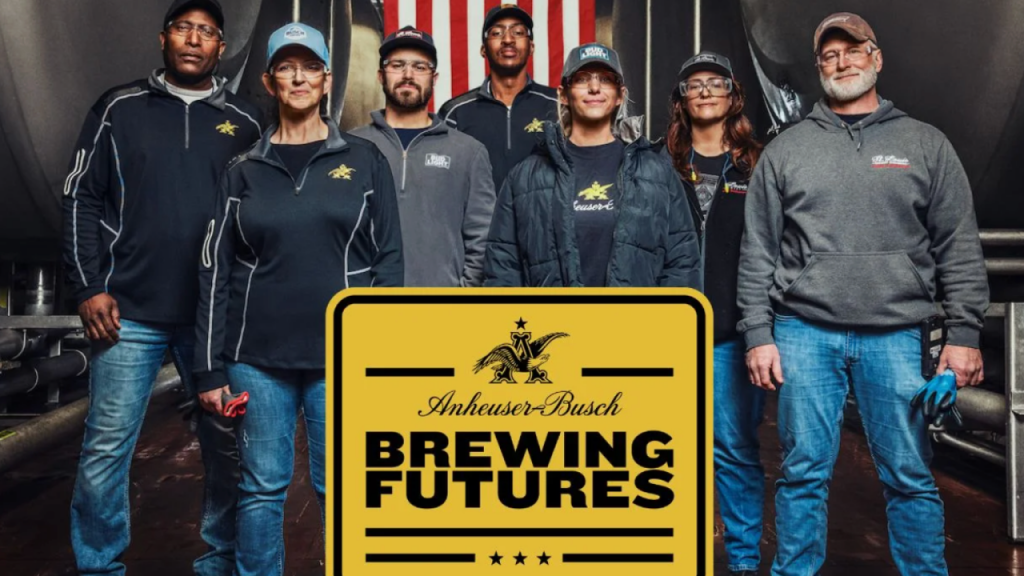
But it isn’t all doom and gloom. Against the steady drumbeat of AI-driven layoff announcements, some companies are taking a different tack. This week, Anheuser-Busch announced a $600 million investment in U.S. manufacturing operations, including 15 new technical skills training centers and an expanded commitment to hire veterans transitioning into manufacturing careers. Microsoft recently expanded its partnership with North America’s Building Trades Unions, launching no-cost AI literacy courses and credentials for millions of skilled craft professionals. Meanwhile, Citi is rolling out a new centralized AI operating system that allows their 180,000 employees to securely build agents that help them augment their work and AstraZeneca has certified 17,000 employees in AI competencies.
Our research indicates these kinds of investments can pay off. As of April 28, Just Capital’s Workers Leaders Index, which tracks companies that best meet the American public’s expectations on how they support their workforce, has outperformed the Russell 1000 equal-weighted index by 37% since December 2021. And our Workforce Advancement Leaders Index, which tracks companies with strong training programs, tuition reimbursement, high retention, and high internal hiring rates, has outperformed the same benchmark by 22% over the same period.
The companies investing in new skills and career pathways recognize that trust and engagement can translate into competitive advantage as the AI economy takes shape. I’ll be in Chicago next week speaking at the Win-Win Summit with Covista CEO Steve Beard on exactly that topic.
Be well,
Martin
Fortune reports that an NVIDIA executive has warned the infrastructure and compute costs of AI actually exceeds human labor costs, challenging the idea that companies can automate human work.
The Wall Street Journal reports that OpenAI has fallen short of key revenue and user growth goals as it pushes toward a potential IPO, with the company’s CFO questioning massive data center spending.
Fortune reports that executives and boards are divided over who should control AI strategy, reflecting governance confusion as the technology becomes central to business operations.
Bloomberg reports that Meta is preparing to cut around 10% of its workforce and close 6,000 open roles as the company pushes for AI-driven efficiency.
MSN reveals that nearly 40% of Americans do not have a retirement account.

This chart comes from our recent AI polling, and shows where public and investor perceptions align and diverge when it comes to workforce support, as well where company action is taking shape according to corporate leaders.
“Particularly with middle- and lower-income consumers, they’re feeling under a lot of pressure right now.”
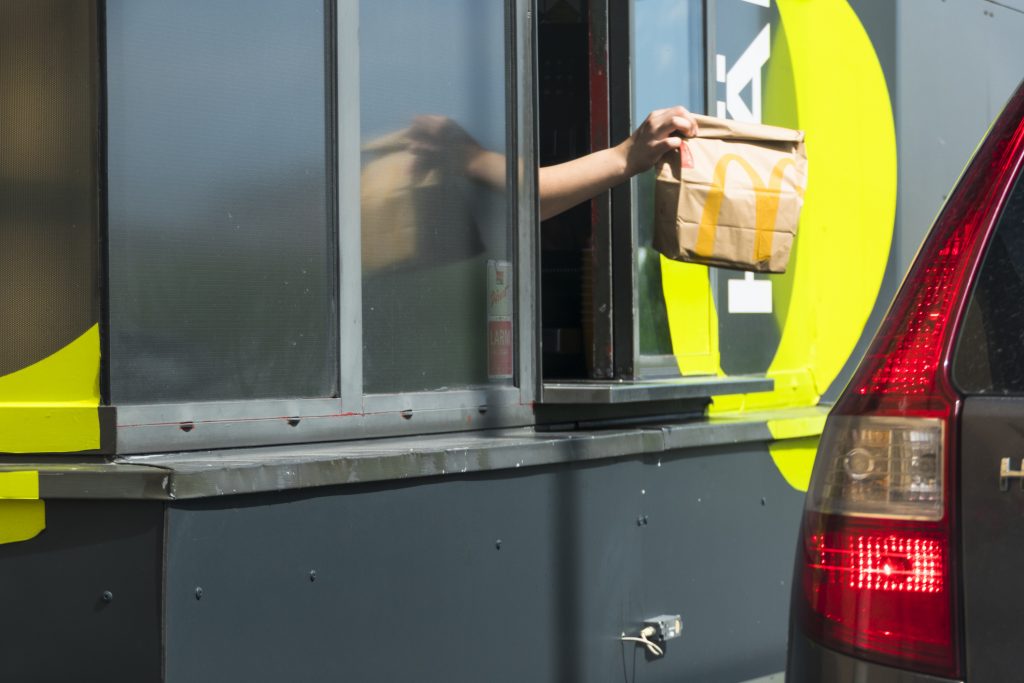
That worrying statement comes from McDonald’s CEO Chris Kempczinski, who earlier this week sat down with Fortune for a conversation on the state of the business. Going further, he relayed that traffic among these demographics is down double-digits, with low-income consumers skipping breakfast in particular.
Other indicators are also concerning. This week brought a dismal jobs report (the first time in four years the economy lost jobs). A new Federal Reserve Bank of New York poll shows that people’s confidence in their ability to find work if they lose their job is the lowest it’s been since they started polling in 2013. They also suggest lower-income households have already begun to change their shopping habits to withstand economic uncertainty.
How are companies responding to help their less well-off customers?
McDonald’s itself is currently cutting prices on certain food combos and offering limited time deals to help customers feeling the pinch. Other chains are making similar attempts,such as Domino’s recent “Best Deal Ever” promotion, which offered any pizza toppings for $9.99.
Other industries are also following suit. FanDuel gave $80,000 to restore Philly’s Septa train service for the Eagles’ season opener after the city officials said it would have to cut express service thanks to budget shortfalls. Grocer Aldi cut prices on 400 everyday items over the summer to offset rising food costs; energy companies (including Eversource) provide eligible customers with up to a 50% monthly discount on their electric bill and flexible payment plans; and earlier this year Target dramatically expanded their healthcare products under $10 to make health and wellness purchases more budget-friendly.
As more and more Americans become squeezed financially, we will surely see more efforts by just companies to ease the pressure.
We will be tracking them.
-Martin
The Washington Post reports that Anthropic (creator of the Claude AI model) has agreed to a history-making $1.5 billion class-action settlement with authors and publishers for allegedly downloading millions of books without permission — marking a notable legal precedent in the ongoing clash between AI development and creators’ rights.
Fortune reveals that the average employee age at tech companies has increased by five years as AI-enabled entry-level job cuts reshape their workforce.
Taco Bell is scaling back their use of AI after the technology led to worse problems with customer ordering compared to human employees.
Former Just Capital board member Dan Hesse discusses authentic leadership as a key way to unlock business value on The Mentors Radio podcast.
The Wall Street Journal reports that health insurance costs for employers are rising more than they have in 15 years, stunning small businesses in particular.
Business Insider looks at how the attempt to crack down on Elon Musk’s pay backfired spectacularly and what lessons can be learned going forward.
Newsweek examines how job changing is dwindling as workers find it harder to secure higher pay at a new company.
Following the removal of their new logo, Cracker Barrel is officially ending all of its restaurant remodels to respond to consumer backlash. Fortune has the story.
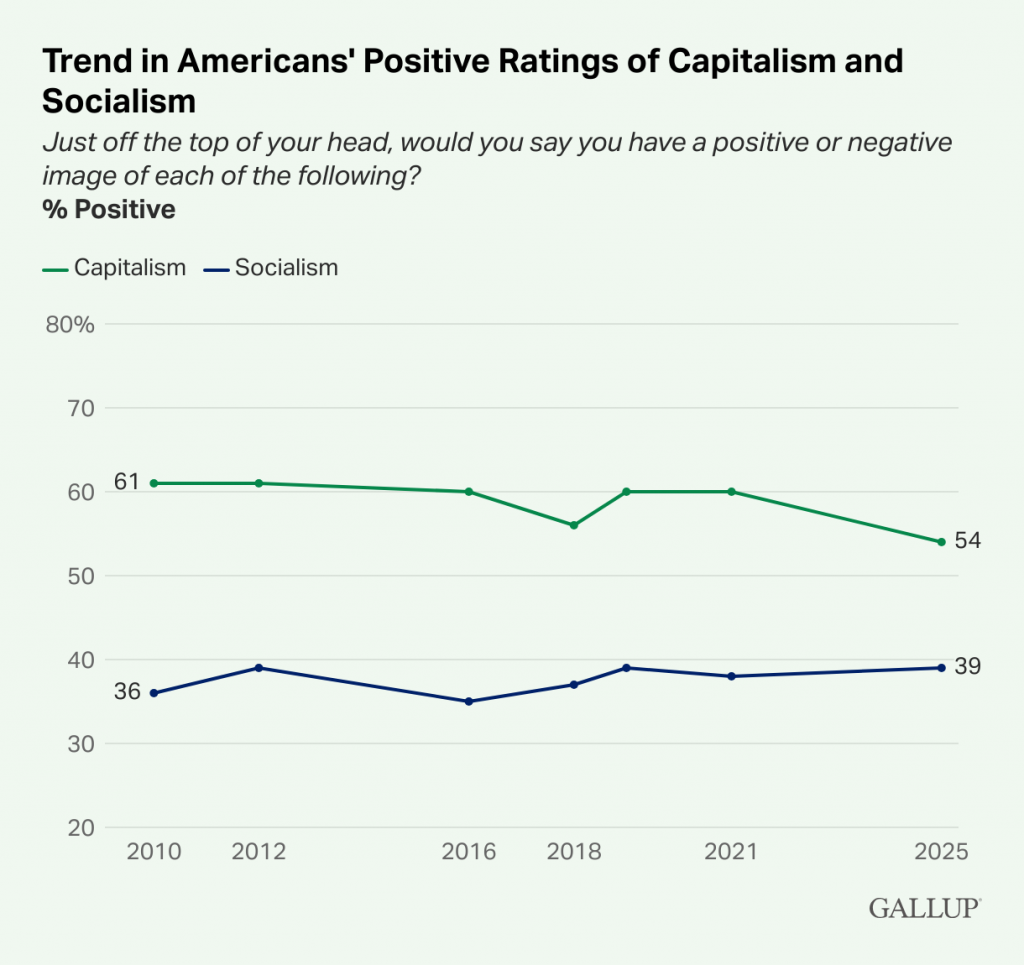
Gallup reveals that only 54% of Americans have a positive view of capitalism, down from 60% in 2021.
Axios and Harris Poll’s 2025 reputation rankings landed this week, concluding that prices – not politics – are now driving corporate reputations.
This finding resonates with our own research. In 2024, we saw significant amounts of alignment across demographics. For the first time in our polling history, we saw fair pricing – which respondents describe as “pricing in line with … value and quality” and companies avoiding “price gouging or excessive price increases” – emerge as a significant bipartisan issue. Interestingly, of the 2025 JUST 100 companies included in the Axios/Harris Poll rankings, the coverage is even; nine are classified as non-partisan, three lean “blue” and two lean “red”.
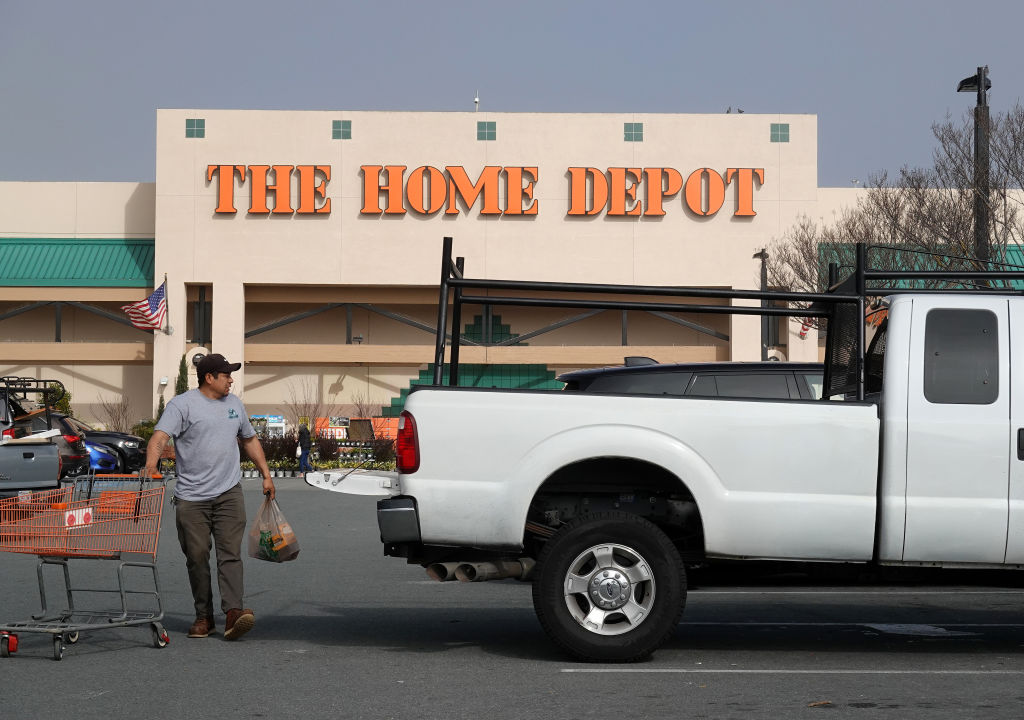
Given today’s cost of living, this should not be surprising, and companies are already responding to the call. Home Depot recently announced they are not planning to raise prices due to tariffs, but shared that some products may no longer be available as a result. During recent egg shortages, Trader Joe’s – the top company on Axios and Harris Poll’s list – was able to keep prices low by working directly with suppliers and focusing on product selection.
Serving customers through greater transparency and fairness is also very much in line with financial performance. Updating our figure from last week – as of May 27, 2025 our Customer Index has outperformed the Russell 1000 Equal Weighted benchmark by 4% since inception in December 2021.
When companies master the basics of treating people fairly, offering good value products and serving all stakeholders, Americans are ready to reward them, regardless of politics.
Be well,
Martin

“Don’t waste a good crisis. My most favorite leadership roles are ones that I’ve been leading through transformational change and market volatility.”
Mashable reports that the congressional budget bill has a special provision that would ban states from regulating AI for the next decade.
Fortune discusses the claim from a current LinkedIn exec that AI is already starting to “break the first rung” on young peoples’ career ladder, with many companies automating much of the work that new graduates did to break into tech, law, and other professions.
Meanwhile, the New York Post highlights how much of Gen-Z is pivoting to trade work amid AI uncertainty and the extreme rising cost of college.
Axios sits down with Anthropic CEO Dario Amodei who says we’re not taking the job loss implications seriously enough, and there is a possibility that AI wipes out “half of all entry level jobs.”
Debates continue over two versions of a “no taxes on tips” bill up for votes in Congress. The Washington Post shares concerns that this change would encourage restaurants to keep base wages artificially low. Vox concurs, saying that “tipped workers need a raise, not a tax break.”
When it comes to overtime, legal firm Jackson Lewis sees the potential for employers to “restructure compensation to provide employees more take-home pay without incurring higher payroll costs by reducing pay for non-overtime hours and permitting more overtime work that is tax-free — a win for employers and employees.”
Fox News released an op-ed stating that no taxes on overtime is actually the far more important bill with a greater impact for working people, despite receiving less press.
Pew’s latest polling shows support for stricter environmental regulations outweighs opposition in a majority of states.
As layoffs across tech continue, Meta announces plans to rate more employees “below expectations” to make culling easier.
Despite rolling back many Covid-era perks for their employees, The Financial Times seems to think that Covid-era benefits bestowed on C-suites are here to stay.

Axios reveals new data that shows that 77% of Americans think companies are moving too quickly on AI, and would prefer delaying breakthroughs to avoid potential catastrophic mistakes.
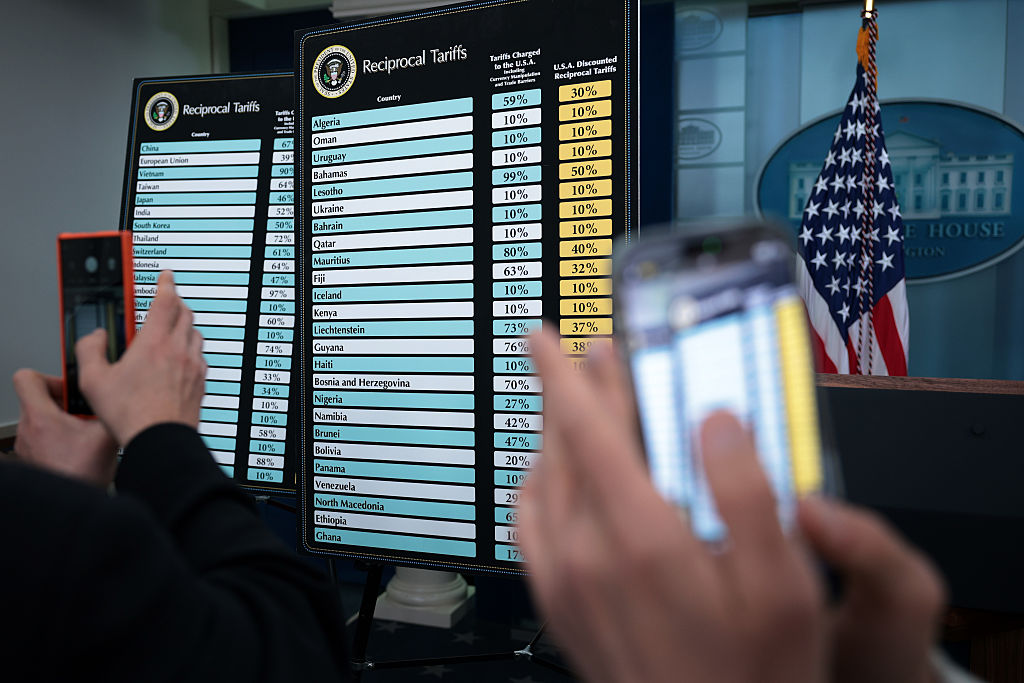
Regardless of how the market rollercoaster we’re on plays out, the global economy is clearly being fundamentally reshaped. According to many commentators, the possibility of a recession or worse in America and around the world is still real. If tariff-induced inflation gets introduced to the mix, it’s a double whammy for households. And if it accelerates AI adoption, as some think, the pain for workers could compound.
I’ve spent much of the week thinking about what all this means for Just Capital. The argument – captured in this comment by Scott Bessent – that this is all being done to benefit Main Street after decades of neglect warrants careful scrutiny. History teaches us that dislocations invariably tug at society’s fault lines and hit the economically vulnerable (i.e., Main Street) the hardest. Maybe this is different. Overall though, I’m coming to the (admittedly self-serving) conclusion that it makes just company behavior more important, and increases the performance dividend of stakeholder leadership.
Consider this: In the last major market shock during Covid, the most just companies outperformed their peers. From January 31, 2020 through the end of May 2023 the broad based JULCD (the “Just 500”) beat the Russell 1000 by a little over 1% and the Just 100 was up 11.8% over its benchmark. More highly ranked companies also displayed more resilience than their lower ranked counterparts when Covid hit, responding to worker and customer needs more effectively, and bouncing back faster.
Although the current tumult is driven by altogether different causes, I expect just leaders to similarly outshine their rivals (as our index track records suggest). Companies that excel in creating value for all their stakeholders possess greater brand strength, are more long-term growth oriented, prioritize productivity and innovation (including via technology), and are better at attracting and retaining the best people. They have strong cultures, care deeply about their customers, have tighter relationships with local communities and suppliers, and are more adept at navigating social and environmental matters. When market shocks happen, these companies are invariably better positioned. Walmart’s successful customer loyalty program was cited this week as a reason why the company may be more recession-resistant than others (see below for other examples).
Call it what you want – multi-stakeholder capitalism, just capitalism, better capitalism – it’s the kind of leadership that will stand companies in good stead in times of great uncertainty. It’s also the best chance we have of building a better future for America.
Be well,
Martin
Reactions from Trump’s tariffs have run the gamut across companies and investors. Here are just a few from the week.
Ford says they’re “not sweating”, as 80% of their cars are assembled in the U.S., and they’re working with the administration to “help grow jobs here” to assemble even more on U.S. social.
JPMorgan Chase CEO Jamie Dimon responded to the tariffs in his shareholder letter, saying that “the quicker this issue is resolved, the better”.
Levi’s CEO Michelle Gass assembled a task force to figure out potential options for dealing with the impact of tariffs, saying that any price hikes the company makes will be “surgical”.
Walmart is suspected of being more resilient thanks to its growing “Walmart +” program, which drove nearly half the total spend on the company’s website last year. The subscription service could give Walmart a buffer on raising prices.
Outside of specific companies, CNBC created a round-up of thoughts from several top investors and CEOs (some anonymous) on the impact of the tariffs. The BBC also reported that right now, some workers in middle America have a more positive opinion of the tariffs than business leaders.
Lego proceeded with the opening of a new production complex in Vietnam, reportedly undaunted by tariffs against U.S. trading partners.

(Getty Images/ Kayla Bartkowski)
“For the last four decades, basically since I began my career in Wall Street, Wall Street has grown wealthier than ever before, and it can continue to grow and do well. But for the next four years, the Trump agenda is focused on Main Street. It’s Main Street’s turn. It’s Main Street’s turn to hire workers. It’s Main Street’s turn to drive investment, and it’s Main Street’s turn to restore the American Dream.”
CNBC looks at an alarming trend for companies – scammers using bots and generative AI to pose as qualified job applicants for remote jobs, and then, once hired onto a company, installing malware and ransomware on their servers.
Fortune looks at how Atlassian has bucked the return-to-office trend of other tech companies, and in the process, tripled the size of its workforce and nearly doubled the amount of candidates who apply for open roles. Explore the tenets that make their remote workforce possible.
The Guardian looks at marketing’s role in “woke” backlash to corporate activism, saying, “the contradictions of the brand purpose era are most apparent when looked at from the view of the average person. Social progress once came hand-in-hand with economic progress. Now, instead, social progress has been offered as a substitute for economic progress.” Read the full article here.
Bloomberg reports that TikTok is becoming an even bigger bargaining chip in the growing trade war.
Fortune examines some of the strategies CEOs are starting to implement to weather the tariff storm. Yahoo Finance takes a close look at Starbucks in particular, given that the majority of their coffee is imported from some of the countries receiving the highest tariffs. Meanwhile, a small business owner takes to the New York Times opinion section to discuss pricing woes these tariffs create, stating: “Bizarrely, the U.S. government can scramble its tariff policy faster and with less warning than I can change my retail prices. I face a critical business decision and lack the minimal level of certainty to make it.”
