
The days of American workers quitting en masse have slowed. New findings from the Federal Reserve Bank of New York show the quit rate in July at 4.1% – compared to 5.9% in July 2021. Those numbers don’t mean, however, that companies should let up on their retention efforts. The same survey found a year-over-year increase in the percentage of employees actively searching for a new job. And, with a potential recession on the horizon, many companies are looking at what they can offer to avoid becoming another employer implementing layoffs or hiring freezes.
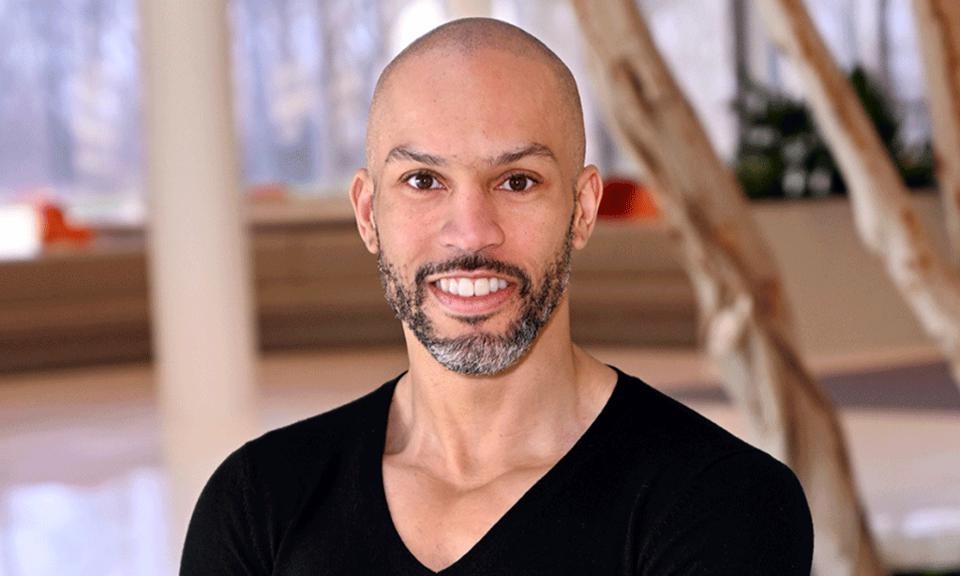
JUST Capital polling shows that, to the bulk of both workers and management, prioritizing diversity, equity, and inclusion (DEI) is a key way to recruit and retain talent. Of the major U.S. companies putting this into practice, Mastercard recently earned the number two spot on our 2022 Workforce Equity and Mobility Ranking. Executive Vice President and Chief Inclusion Officer Randall Tucker sees the company’s rank coming down to its DEI strategy and what’s shaped the company’s commitments and actions – starting with data. “DEI measurement should be no different than showing P&L for sales,” he said.
With $328 billion in market cap, Mastercard’s potential for impact, both within and outside company walls, plays a role in guiding its DEI work as well. We reached out to Tucker to hear how Mastercard has made DEI a priority across its 25,000-strong global workforce. In April, the Purchase, New York-headquartered company announced that bonuses for all employees, not just senior executives, would be tied to environmental, social, and governance (ESG) goals. This policy includes DEI metrics like pay parity, Tucker said, which a majority of Americans we polled see as having a positive impact on long-term business success.
Tucker shared more with JUST on what Mastercard’s learned from evolving its DEI work, and how those insights could benefit other leaders focused on building equity and upward mobility for their employees into company operations.
Mastercard’s approach to DEI is centered around impact and relevance, Tucker said. The company assesses what issues are most pressing to its stakeholders and how, and where, it can have the greatest impact. He pointed to Mastercard’s actions in the wake of the murder of George Floyd as an example. “There was a heightened interest in focusing on racial equity, both in terms of increasing Black representation in leadership roles as well as increasing Black suppliers that we work with and investing in closing the racial wealth and opportunity gap across American cities that have large Black populations,” Tucker said.
That interest resulted in Mastercard’s In Solidarity Initiative, which continues alongside the company’s other DEI work, he said. The five-year, $500 million Initiative includes an investment in Workforce Development Pathways and an Entrepreneurship Center created in partnership with the National Urban League to increase access to opportunity for historically excluded individuals and communities. It also includes an assessment of how Mastercard is supporting its Black employees’ education, skills development, and career advancement. Two years into this commitment, Mastercard has “seen tremendous progress in some areas, including doubling our Black suppliers” and, importantly, shared its progress in annual reports and through regular updates to its employees and board.
These insights help inform the areas the company needs to focus on, Tucker said. Data like detailed workforce demographics, which Mastercard discloses in its EEO-1 data, point out where gaps exist and where to take action. Tucker raised the company’s work on pay equity as an instance of where this focus on data has shaped progress. “Our pay equity numbers are ones we have been very deliberate about over the past few years. It’s an area in which we’ve achieved and maintain that every woman earns $1 for every $1 a man earns, and the same for a person of color as compared with a white employee,” he said. And, now, Mastercard’s taken this a step further by tying all employee bonus compensation to ESG metrics.
The company’s move to codify its commitment to pay equity is one way it’s made DEI a priority of all its employees. It’s also focused on actively bringing its employees into this work and sees their input and feedback as critical to achieving its commitments. Mastercard’s In Solidarity Initiative has a steering committee and advisory committees with employees driving the work and providing feedback along the way, Tucker said. “Part of my job more broadly is checking in with our employees to get a pulse check on how they’re doing and how the work my team is driving is resonating.”
The company views inclusion as a leadership skill that everyone can embody, including the most senior leadership. “We don’t have to contend with some of the most common problems that brands face, thankfully, in that we don’t have to sell our leadership on the importance of DEI – they get it and it’s a priority at Mastercard from the very top down,” Tucker said. Without leadership buy-in, he noted, that the company’s work would fall flat.
While leadership buy-in on DEI is not an issue for Mastercard, it faces other common challenges like distinguishing itself in the “fierce” competition for top talent and adapting its approach to suit a globally distributed workforce.
Making DEI a priority for all employees is a challenge, Tucker said, when you’re “a global brand that has 25,000 employees in many countries across the world with very different needs, hopes and concerns.” The company learned to tailor its approach by adopting a modular and inclusive approach across the five global regions where it operates. “We believe in regional customization to focus on the things that matter most in our five regions versus a one-size-fits-all approach,” he said, “Our DEI has to be inclusive so that no one is left out while also being specific and intentional as to where we need to move the needle to right-size representation and inequities.”
Tucker shared that Mastercard’s created regional and functional DEI strategies with leaders who are subject matter experts guiding the work. “Because what’s relevant to one group or geography is going to be different somewhere else,” he said. The company’s regional DEI action plans aim to create local relevance for the work and meet people where they are.
“Change doesn’t happen overnight, and it also doesn’t happen in a uniform way. The best thing you can do is meet people where they are, be a good listener and keep marching in the right direction – making sure others are marching alongside you,” Tucker said.
Approaching its DEI work as customizable, collaborative, and data-driven has allowed Mastercard to evolve its goals and make progress on key workforce equity and upward mobility metrics. For Tucker, this has further enhanced his deep personal commitment to tackling these issues.
“My motivation comes from an understanding that it is a privilege to be on this perch and to get to drive this work each and every day. If you asked the Randall of 25 years ago, a young gay Black man starting out, estranged from his family, bullied in broad daylight, it would have felt like a fairy tale to know that one day I would be able to step fully into my truth and devote my professional life to leading the charge on creating a more equitable and inclusive and safe workplace and world for others.”
The 2022 Workforce Equity and Mobility Ranking was funded by the Annie E. Casey Foundation. We thank the Foundation for its support. The findings and conclusions presented here are those of the authors alone, and do not necessarily reflect the opinions of the Foundation.
To learn more about how Mastercard and other companies are putting these best practices into action, explore our full 2022 Workforce Equity and Mobility Ranking and complementary Issue Brief. For more information on how we’re engaging with the country’s largest employers on these issues, reach out to our team at programs@justcapital.com.

A few years ago, a representative of an employee resource group at American Electric Power (AEP) told CEO Nick Akins at the ERGs’ annual meeting with him that there was not enough diversity in the company’s upper management and leadership team. “And he definitely appreciated that call out,” said Kim Hughes, a 21-year AEP veteran who has served as a diversity, equity, and inclusion (DEI) manager since last February. She may have heard that story secondhand, but said she saw firsthand the ways in which AEP sought to diversify its C-suite and board, and how Akins has been “adamant” about making DEI core to the company’s culture.
And in a report earlier this month about Akins and the board’s decision to pass the CEO mantle to current CFO, Julie Sloat, board director Sara Martinez Tucker noted that Akins’ tenure since 2011 has been marked not only by technical innovations setting the company up for future success, but also by “an open, collaborative culture that embraces diversity, equity and inclusion.”
It’s been a team-wide project for the Columbus, Ohio-based energy company, with roughly 16,700 employees across 11 states, and while its leadership is clear about the ongoing nature of its DEI work, its commitment to inclusion and career mobility for its workforce led to AEP’s recognition as No. 20 among the Russell 1000 in JUST Capital’s 2022 Workforce Equity and Mobility Ranking, built with support from the Annie E. Casey Foundation.
That ranking has particular relevance today, when corporations, whether they’re expanding or reining in growth plans, are figuring out how to retain top talent during a lingering tight labor market.
To learn from AEP’s example, we spoke with both Hughes and fellow DEI manager Alyvia Johnson. Their pairing provides a fascinating look at AEP’s journey.
Hughes has been at AEP for over two decades, has a background in engineering, is based in Dallas, and focuses on inward-facing DEI initiatives; Johnson joined AEP in March after a few years at Wendy’s, has a background in human resources, is based in Columbus, and focuses on DEI in recruitment. Through a recent discussion with both, we identified key insights into how AEP made inclusion and mobility a critical rather than ancillary function of its business strategy and continues to build on that.
It is intentional and iterative with its efforts
When she was a young engineer during her early years at AEP, Hughes said she initially wasn’t aware of any leadership development programs at the company. And when she did find out about them, she thought they targeted a limited set of people – mostly white men who worked in Columbus. As the company grew across the country, especially over the past decade, Hughes said, its leadership became more aware of its need to expand leadership pathways. When Hughes had the opportunity to enroll in a year-long Targeted Development Program two years ago, she took it.
Johnson said that coming in as a new employee earlier this year, she was able to first learn about and then experience HR’s commitment to the approach that Hughes saw evolve over time. “The commitment has become even deeper and intentional as the company has grown and our communities are becoming more diverse across the United States,” Johnson said. “We’ve had many conversations about how in order to be competitive and to attract and retain the best talent, we need to have that focus on DE&I to create those opportunities for diverse talent. It’s also just the right thing to do.”
When Hughes enrolled in the program, she was told that it gave her access to leadership across the company – and she said that wasn’t just talk. She asked a since-retired executive named Charles Patton to become her sponsor, and he gladly accepted. Hughes said she would tell Patton things like, “I’m not sure where my next step is at AEP,” or “I’m considering this…” and he would guide her through her options, ultimately leading to the path she’s on today.
Hughes also told us that the company is not afraid to iterate its opportunity programs, and pointed as an example to the Women in Linework program, dedicated to increasing women’s representation among AEP’s lineworkers, who maintain power lines – and who are almost entirely men. It was designed as a training program with the goal of becoming an AEP employee. But, Hughes said, it didn’t take long to realize that the women they were recruiting were juggling responsibilities, including families, and that they needed to be paid if the program was actually going to achieve its intent. Women in Linework is now a 14-month program that starts with stipends and progresses to an hourly wage.
It uses employee resource groups and HR as a sounding board for the C-suite
A common refrain in business today is “listen to your workers,” but when you’re leading a national or multinational organization with tens of thousands of employees or more, that can be easier said than done. It’s why AEP has established the ERG and CEO meetings mentioned at the top of this article, along with what Akins dubbed “Nick’s Network,” where a rotation of representatives from different business units meet with Akins at the company’s headquarters. In both instances, Akins encourages what Hughes called “unfiltered feedback” from employees.
And while ERGs are critical for this approach to communication, Hughes also noted that AEP’s recent internal employee surveys conducted with Gallup found that ERG members were more engaged than the rest of the AEP population. That finding wasn’t surprising, she said, but it allowed them to isolate areas of disconnect among earnestly involved leadership and management and the average employee, on topics like management training and inclusion programs.
Johnson added that AEP’s DEI team has also made HR leaders “DEI champions” since, “A lot of times when employees are having concerns or issues, our HR managers are the first people to hear about it.” These HR managers get DEI coaching and are encouraged to facilitate related difficult discussions when it can lead to company-wide improvements.
It sets metrics and then consistently and transparently tracks them
“We all know in DE&I, we never arrive. It’s always we’re striving to be better,” Hughes said.
And while AEP is clear that it is far from where it wants to be – as of the end of 2021, its executive and leadership makeup was 78% male and 88% white – it makes its DEI-related metrics public. The company publicly reports its workforce and board demographics, gender-based salary ratios, incidents of discrimination and responses, and community impact data.
This year, leadership has also been given access to a DEI Dashboard, updated monthly and intended to be shared among leaders’ teams. It provides monthly data related to DEI initiatives and includes tips on how teams can potentially improve certain aspects of relevant initiatives through actions like partnering with a talent acquisition team.
And, for all of the company-wide goals, the board gets buy-in.
It begins employees’ development journey on day one
AEP has deliberately set out to prevent situations like the one Hughes experienced in her early days at the company, where she felt like leadership pipelines were out of reach for a Black woman like herself.
Aside from increased efforts in recruiting diverse entry-level talent, “Retention is really key,” Hughes said. “One of the things we do with new employees in orientation is we make them aware of our employee resource groups. Again, it speaks to engagement. We want them to be aware that they exist and that they can plug in immediately.”
And then, because there are still plenty of veteran employees like Hughes at the company, the DEI team also works with HR to ensure that they get access to growth opportunities as AEP evolves
“I’ve talked to many employees where they’re on their 20th year or 10th year, and they’ve been able to move around if it’s lateral or vertical to different areas and get that exposure,” Johnson said.
It made DEI core to its business
Under Akins, AEP expanded its DEI team and made diversity, equity, and inclusion a stated component of its culture alongside its foundational commitment to safety for its workers and customers. Notably, AEP also began incorporating DEI components in its incentive compensation plans for leaders across the company.“It’s nice just saying it’s important, but it’s putting the money with it,” Hughes said. “Not only is it safety, is it – of course – company performance, is it culture, but it’s DEI, as well. So to see that importance placed there is really good, too.”
The 2022 Workforce Equity and Mobility Ranking was funded by the Annie E. Casey Foundation. We thank the Foundation for its support. The findings and conclusions presented here are those of the authors alone, and do not necessarily reflect the opinions of the Foundation.
To learn more about how AEP and other companies are putting these best practices into action, explore our full 2022 Workforce Equity and Mobility Ranking and complementary Issue Brief. For more information on how we’re engaging with the country’s largest employers on these issues, reach out to our team at programs@justcapital.com.
The United States’ current economic and labor contexts seem to be at odds with each other. Debate around whether or not the country is, or will soon be, in a recession persists. Inflation reached its highest point in over 40 years this past June and dipped only slightly in July. At the same time, job growth remains strong. The latest jobs report saw numbers that nearly doubled economists’ estimates – with 528,000 jobs added in July, recovering those lost since the start of the pandemic.
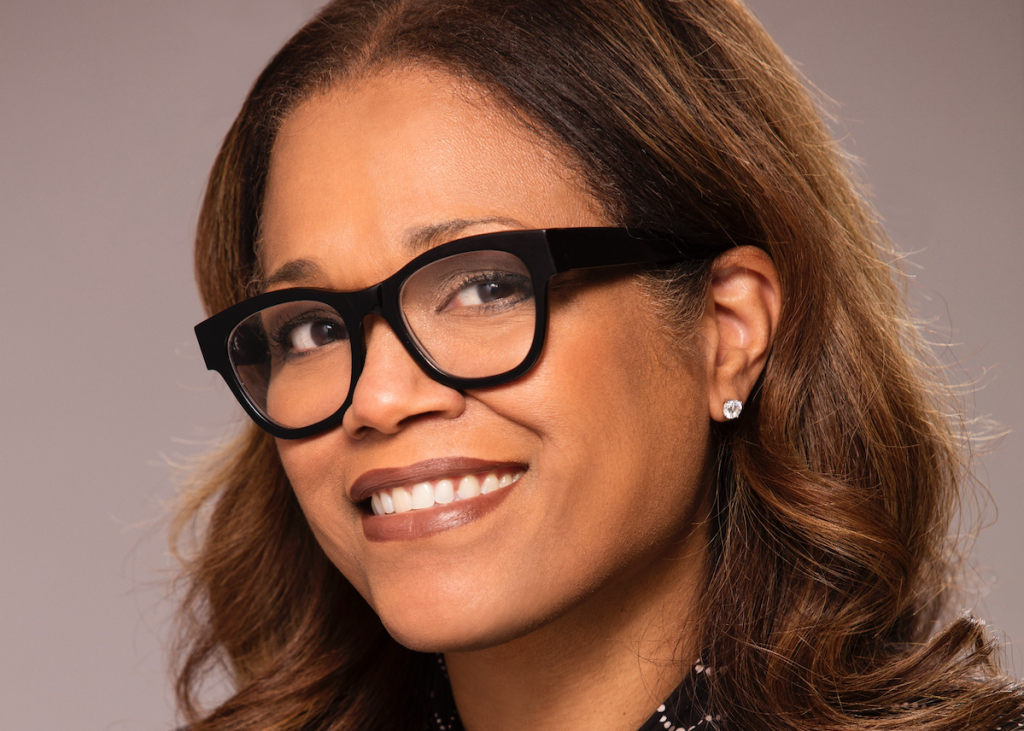
While jobs are being added across the country, whether or not these are truly good jobs that will retain top talent remains unclear. For Cynthia Bowman, Bank of America’s Chief Diversity & Inclusion and Talent Acquisition Officer, determining this requires a foundational commitment to data, accountability, and transparency. The Charlotte, North Carolina-headquartered bank’s detailed human capital and impact reporting has allowed it to take action with a “willingness to course correct when an activity isn’t having the intended outcome.” It’s part of the reason Bank of America comes in at the number 11 spot in our 2022 Workforce Equity and Mobility Ranking, which takes a look at how Russell 1000 companies are leading on the interconnected issues of diversity, equity, and inclusion (DEI) and upward mobility and advancement.
We spoke with Bowman to dig into how the company earned this rank. With a workforce of over 200,000 employees and $282.9 billion in market cap, she shared how the company’s leveraging its influence to break down the barriers to hiring and upward mobility that disproportionately affect workers of color – from rethinking degree requirements for roles to supporting career development for individuals from low- and middle-income communities. For her the importance of retention, not just hiring, has been key for both the company’s workers and its business. In May, Bank of America raised its U.S. minimum wage to $22/hour, a move investors viewed favorably.
This work is both an integral part of the company’s business strategy and, with increasing urgency, the right thing to do, she said. Read on to hear more from Bowman on how Bank of America is using data and addressing systemic barriers to embed equity and upward mobility in both its hiring and retention practices.
Findings from our 2022 Workforce Equity and Mobility Ranking make it clear that companies should start by getting specific on how they’re tracking and measuring their DEI efforts. Bank of America does just that and includes detailed reporting of its workforce demographics, and progress in diversifying, in annual reporting. The company discloses its EEO-1 reporting data, breaking down detailed workforce demographics by job level. Its latest measures show that 50% of its global workforce are women and 49% are people of color. In addition, 55% of its management team is diverse, including 32% women. Since 2015, representation of teammates of color in its top three management levels has increased by 60%.
Importantly, Bank of America has buy-in from the very top of the organization for this work. “This process starts at the top, with our Board of Directors and CEO. Our CEO and management team set the diversity and inclusion goals of the company. Each management team member has action-oriented diversity goals, which are subject to our quarterly business review process, talent planning and scorecards reviewed by the Board,” Bowman said. She mentioned that Bank of America has formed a Global Diversity & Inclusion Council to oversee DEI goal setting and embed these targets in performance management processes at all levels.
For Bowman, this focus on data and company-wide processes are critical. “At the end of the day, so much of it comes down to transparency and accountability,” she said. Not only does reporting ensure this level of transparency and hold leadership accountable, it also helps Bank of America improve its DEI efforts. Bowman shared that the company has been surveying employees for nearly 20 years and “the results inform a process of continuous improvement.”
This data-driven mentality has also informed Bank of America’s aim to tackle areas “where systemic, long-term gaps have existed and where significant change is required for progress to occur and be sustained.” One particular challenge Bowman noted is that, by the nature of the banking industry, potential job candidates assume that they need a four-year college degree. “In reality, our skills-first and knowledge-based hiring approach trump any degree requirement and allow for more equitable hiring practices for traditionally marginalized groups,” she said. The company partners with organizations including Year Up and UnidosUS to recruit talent without college degrees and is also looking to strengthen this pipeline through community college partnerships.
A key achievement Bowman noted for Bank of America in tackling these barriers is its community hiring and development program, Pathways. Pathways provides skills training, entry-level jobs, and career development for individuals from low- and moderate-income neighborhoods. The program ultimately aims to provide individuals with the preparation needed to take on ongoing job opportunities with Bank of America. In 2018, the company set out to hire 10,000 individuals through Pathways by 2023 – a target it exceeded in 2021 – and is now aiming to hire additional 10,000 individuals via Pathways by 2025.
Outside of its own workforce, Bowman noted that the company has committed $25 million to connect Black and Hispanic individuals to job opportunities in growth industries and, in turn, support long-term economic health in local communities. The commitment includes partnerships with 11 community colleges that serve predominantly Black and Hispanic students as well as 10 Historically Black Colleges and Universities and 11 Hispanic Serving Institutions. In its 2021 Annual Report, Bank of America reported having already allocated this money as part of larger reporting against its $1.25 billion racial equity commitment.
Bowman emphasized, however, that these efforts don’t stop at hiring and recruiting. “It’s about creating a workforce that looks like the world we live in across every level, including senior leadership. It’s about creating an environment where people don’t feel like they need to be someone else from the time they walk into work to the time they leave. And it’s about equity,” she said. “It’s about creating processes that diminish bias, allow you to promote within, generate more inclusion in our everyday practices from the time you hire, how you onboard, how you conduct calibrations, how you retain talent, how you recognize talent and how talent leads your organization.”
Bowman sees efforts like Bank of America’s commitment to raise its starting hourly wage to $25 by 2025 as crucial to creating an environment where equity is prioritized and, in turn, employees are motivated to stay. She raised the bank’s dedication to gender and racial pay equity, and reported near-equal pay ratios at over 99%, as another example of how equity can and should go beyond hiring and representation targets.
And, as Bank of America continues to put commitments that reinforce equity and upward mobility into practice, Bowman is eyeing both ambition and flexibility in how the company takes action. “You can celebrate impact and hold yourself accountable in areas where progress isn’t as strong,” she said. To her, this focus on data, accountability, and transparency also leaves room for companies to learn from each other. “When setting your strategy, look at what your peers are doing, look outside your industry and share your own best practices.”
The 2022 Workforce Equity and Mobility Ranking was funded by the Annie E. Casey Foundation. We thank the Foundation for its support. The findings and conclusions presented here are those of the authors alone, and do not necessarily reflect the opinions of the Foundation.
To learn more about how Bank of America and other companies are putting these best practices into action, explore our full 2022 Workforce Equity and Mobility Ranking and complementary Issue Brief. For more information on how we’re engaging with the country’s largest employers on these issues, reach out to our team at programs@justcapital.com.
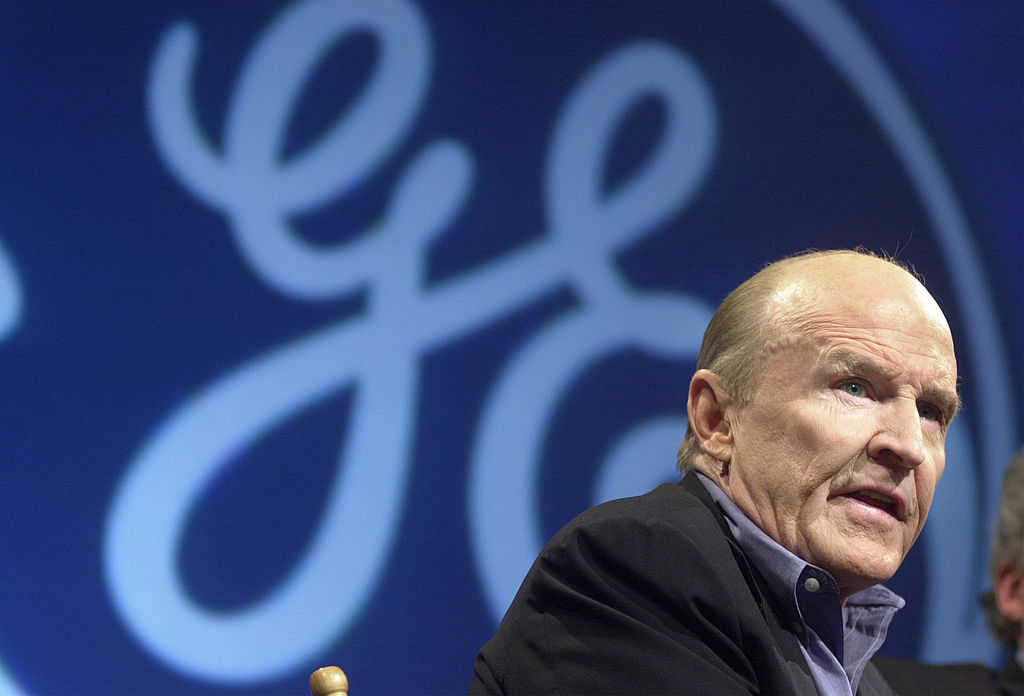
When Jack Welch retired as chairman and CEO of General Electric in 2001, he ended a 20-year tenure that took GE from a valuation of $14 billion to $600 billion, making it the most valuable company in the world. Over those two decades, his brash management style, ruthless cost cutting, and creative financial engineering set a new standard for what a CEO could and should be. Fortune captured popular sentiment across corporate America when it named him “Manager of the Century” as he transitioned into retirement.
Two decades later, in a moment when American business is increasingly rejecting business norms of the past 40 years, New York Times writer David Gelles is arguing that we should reconsider the legacy of what he deems the single most influential corporate leader of that era. The title of his book pulls no punches: “The Man Who Broke Capitalism: How Jack Welch Gutted the Heartland and Crushed the Soul of Corporate America – and How to Undo His Legacy.”
Given our focus on guiding corporate America toward a stakeholder capitalism model supported by the majority of the public, we were of course interested in Gelles’ argument. We sat down with him to discuss why he thinks Welch’s career, and the norms he established, were so harmful to the country, and how exploring that story can illuminate the path we should instead pursue.
The following transcript has been edited for length and clarity.
When I first saw the title, I thought, “Oh wow, that’s a hot take, putting this all on Jack Welch,” but I did see as I was going through it, that OK, I see your point and the tremendous influence that he had and how he fit into this. But you also recognize that there were so many different factors – philosophically, politically, legally, societally – that went into this shift that we saw in capitalism and developing a new norm for corporate leadership. Can you give me your overview of where Jack Welch fit into all of these different factors that reshaped the way we do business in America and then the world?
Well, as you acknowledge, the moment right around when Jack took over was a period of immense change in the American economy and the global economy at large. There’s no doubt that the last two decades of the 20th century were going to be a heck of a lot different than the 50 years that came before, but there’s a difference between ideas and action. You alluded to some of the philosophical and economic and ideological changes that were afoot, in the form of some of the Friedmanites and the Mont Pelerin Society, people reevaluating the role of business in society, those questioning Keynesian Economics.
But it was only when Jack took over GE that we actually saw what that ideology looked like in practice. He was the one with his singular mix of ambition and a sense of impunity, and control of one of the largest and arguably the most influential company in the country. He was able to not only radically transform and reset norms at GE, which was this standard bearer, but because of that influence, also bring the rest of the economy along for the ride, essentially setting a new standard by which CEOs and executives were evaluated.
When you’re looking at this period leading into the ‘80s, you had stagflation and you had the rise of globalization. Clearly the preceding singular moment of what could be considered a “golden age of capitalism,” that was always going to be temporary, along with America’s role in the world during this postwar boom. Companies and business in general could seem great for those that were actually allowed into that sphere, but things were changing and had to change. Was there a moment where things started to correct too much or swing too much to the other side?
Jack recognized that things needed to change, but I argue that he radically overreacted. And if it was the case that companies did need to become less bureaucratic, less thick with middle management, his solution was simply to fire people en masse. If it was the case that American industry was inevitably going to begin outsourcing, he went whole hog. He went and started putting factories on trucks and sending them down to Mexico as quickly as he could. It’s important to remember that while we’re talking about these large abstract economic forces, ultimately what we’re talking about are the decisions made by certain men and their effects on real people.
And when I think about it in those much more human and practical terms, it’s easier for me to entertain a counterfactual and imagine a world where yes, Welch made a company like GE more efficient, but he did it without laying off 120,000 people in his first three years.
He didn’t do that because he had to, it was not because the company was unprofitable – GE had just recorded a billion dollar profit the year before – but because he wanted the company to be more profitable. He wanted to boost the EPS [earnings per share] and thus began the game that unfortunately so many companies and CEOs are still playing, which is just this exercise in trying to do whatever they think Wall Street wants to see, to keep the stock price going up. That, sadly, is the world we still live in today,
A quote of Jack’s from his retirement, and it was even in Lynn Stout’s “The Shareholder Value Myth,” is when he said, “shareholder value is the dumbest idea in the world.” How did he square his worldview with that statement?
The context of course, is that through his actions, Welch became essentially the apotheosis of the CEO who seemed to be obsessed with shareholder value above everything else, and he made statements to this effect during his time as CEO. In his autobiography, he effectively parrots Milton Friedman and says, “The purpose of a business is to increase its profit.”
When the Wall Street Journal asked him what he was most proud of upon his retirement, he said that making GE the most valuable company in the world. This was a guy who throughout the course of his career was relentlessly focused on the stock price and did everything he could to drive it upwards. Then there came this moment in 2009, when in conversation with my former colleague Francesco Guerrero at the Financial Times, he said shareholder value is the dumbest idea in the world.
That to me was one instance, but by no means the only one, of his grand campaign to shape his own legacy in retirement. And by that point, because of the financial crisis, I think it was clear to him, even if he might not say it in such stark terms, that an economy that focused on shareholder value above all else was having a hell of a lot of problematic consequences in the marketplace. I think we can look at other statements he made in retirement and also take them with a grain of salt. He tried to refashion himself as a management guru who prided himself on his emotional intelligence, and you can ask just about anyone who worked closely with him and that’s not the terms in which they’d describe Jack Welch’s management style. He understood that people would be assessing his legacy and I think this was one example where he tried to maybe walk back some of his most nefarious contributions to the economy we live in today.
There’s a section in the book where I was familiar with a lot of the stories in isolation, but when they’re brought together, it was striking that when you follow all of his acolytes’ later careers as CEOs, inevitably the majority of them just tanked the companies they were leading when they tried to mimic Welch’s management style. Going back to Welch himself – let’s take a hypothetical situation where he doesn’t retire and doesn’t age, and stays on as CEO beyond 9/11 and goes through the financial crisis and its fallout. Would GE still have crumbled under him the way it did under his successor Jeff Immelt, or did he have a magic ability to keep everything under his spell, essentially?
These are great thought experiments. I recently had an almost identical conversation with Andrew Ross Sorkin. Andrew believed that Welch did have a unique ability to read the moment in a really special way, and believed that given the opportunity, Welch might have been able to meet the moment, in a way that Immelt didn’t. We won’t know, but what I would say, is without knowing exactly how Welch would’ve navigated the 2000s, it’s important to note that some things that were fully out of his control changed right around him, notably, Sarbanes-Oxley, and it was right after he handed the reins to Immelt, that all of a sudden you have Enron, WorldCom, and Tyco.
The result of that is investors, analysts, and regulators taking a much, much closer look at exactly what’s going on inside these big, complex companies, especially ones with big, complex financial operations. Immelt talks about the fact that after Sarbanes-Oxley, all of a sudden, there’s a whole lot more scrutiny. It became much harder for GE to do that earning smoothing that it was so famous for and that plenty of executives acknowledged that they did during Welch’s heyday. (Plenty of people pointed this out – Bill Gross goes off and essentially questions GE’s trustworthiness.) But in 2009, GE settled with the SEC over sweeping accounting fraud charges, for the years just after Welch retired and they made clear that under the scrutiny of serious contemporary financial diligence and regulation, [its financial arm] GE Capital just couldn’t hold up.
When you explore the financialization of corporate America, it almost seems a bit bizarre being like, “Well, what are these companies even existing for anymore?” It seems so far away from a company’s purpose. Was that also an inevitability, or is this only an extreme extension of a philosophy?
Well, I think you used such an important word there, which is “purpose.” This is a book about a man, but it’s really a book about a system. And to me, the system has changed, because the way executives think about the purpose of a corporation has changed and if we take it back to the “golden age of capitalism” or whatever you want to call it, and compare it to potentially whatever we’re getting closer to now with the emergent stakeholder capitalism, Robert Wood Johnson and Larry Fink would agree that the purpose of the corporation goes well beyond making a profit.
When executives and we as a society think about the purpose of our corporations as contributing broadly – making quality goods and services, but also paying workers a fair wage, contributing to communities, and taking decent care of the environment and their supply chains – that leads you to one set of outcomes. Understanding the purpose of a corporation to be like a game, where you maximize profits with whatever tools you happen to have, is going to lead you to another set of outcomes.
Leo Strine has always been such an interesting figure to me, because his writings both establish in Delaware law that a corporate board’s decisions must be made to benefit shareholders and that if they’re not doing that, they’re not upholding their responsibility as a corporation, but he has also come out as one of the biggest proponents of stakeholder capitalism. As you’re considering these structural shifts, how are you squaring those elements?
What law? There’s no law that says companies have to maximize short-term shareholder profits.
Well, it’s the responsibility to shareholders in the sense of creating value for them.
Fine, but that definition leaves room for wide interpretation and one of the great cons of the last 40 years has been the perversion of that statement into the belief that the responsibility of CEOs is to maximize short-term shareholder profits, often in the form of return of capital programs, which is garbage. That’s not the law. The law serves as a necessary, but obviously insufficient and extremely vague guardrail, to say companies should not flagrantly destroy value, they can’t be burning money.
And sure, in extreme cases, you might argue that a company could be willfully destroying its value, but when a company is investing in research and development, when a company is paying its workers good wages in an effort to retain them and have a strong, committed, and loyal and stable workforce, I don’t see how that can possibly be interpreted as somehow destroying shareholder value.
Yeah, I guess I teed that one up for you, because that’s essentially where we’re coming at it, too! Something related to all of this is where ESG [environmental, social, and governance investing] is headed. Under Gary Gensler, the SEC is very clearly working to reduce and also police “greenwashing.” The movement has definitely progressed significantly in the last few years. How do you see it tied to everything we’ve been talking about?
Oh, we have a story on the front page today about the backlash against ESG.
It’s begun. Something has shifted in the business world over the last, call it seven to five years. The emergence of stakeholder capitalism or conscious capitalism, the arrival of ESG, CSR [corporate social responsibility], DEI [diversity, equity, and inclusion] – the acronyms that are trying to signal that companies are looking out for more than their bottom line. All of that amounts to a meaningful shift in the posture of big business and I think that will endure. Not because I believe that CEOs are woke and Trojan Horse progressives trying to implement AOC’s worldview on the world through their corporations, but because I think a lot of employees, especially younger employees, actually expect their companies to stand up for causes they believe in and to represent their values.
Now, that’s not going to mean every company takes the same position. And big companies especially, there’s going to be a vast diversity of views inside, and that’s where you get to these tricky damned if you do, damned if you don’t situations for CEOs. But beyond the most extreme culture war flashpoints that many CEOs have to deal with, the enduring parts of stakeholder capitalism and ESG I believe are going to be some of the things I’ve been talking about throughout this conversation, which is a recognition that corporations need to take better care of workers than they have been on the balance for the last 40 years. That means in practice paying marginally better wages, improving benefits, and increasing the amount of upskilling that’s available. You already see many companies doing this, because they see it’s in their self interest.
It’s a competitive job market all of a sudden, and they need employees who are going to be loyal, engaged, and able to keep up with a changing environment and changing technology. I think it also means, whether or not Republican lawmakers and state treasurers may appreciate it, an enduring commitment to climate action. Hundreds and hundreds of companies have now pledged to go net zero by 2040 and I think thousands have said they’ll do it by 2050. That alone isn’t going to solve the climate crisis, but it signals that executives, corporations, boards, investors, and real institutional capital are recognizing the gravity of the challenge ahead of us when it comes to dealing with climate change. I don’t think even the backlash that we’re starting to see from Republicans right now is going to change that.
To me, there are parallels between this and the rise of shareholder primacy, in the sense that even when Friedman and others first started writing about this in the ‘50s, for example, it was laughed off as extreme or unserious the same way that the birth of ESG and conscious capitalism and all of that could be easily laughed off 20 years ago or so by many people.
Shareholder primacy as an idea then later shaped regulations and politics, and now stakeholder capitalism is in a similar situation now. With shareholder primacy, it went to extremes very quickly. Do you think that there’s maybe a scenario where some of the stakeholder-driven changes could be going maybe too far away from what companies should be focusing on? I often think of when they’re saying, “CEOs, we need to give them a stronger voice in society,” that seems to me, well, we’ve had that before and that’s not always been the best thing for our country!
Plenty of people would argue that we’re already there, and that’s where you see the backlash against “woke” capitalism. I understand the pressure that CEOs are under, to address some of these very contentious social and political debates, but no one elected them as our moral authorities. I don’t want to take my values advice from the CEO of McDonald’s! The whole part of this, of us looking to billionaire executives for sound judgment or a philosophical compass, it’s just laughable and that to me is indicative of what a polarized and unmoored society we live in today, where we don’t have political or religious leaders who could provide that kind of role for us.
But in the same breath, I think it’s important to acknowledge it’s really hard for them to ignore calls from employees, and customers in some cases, to get out there on these issues.
You made the point about how it was a long journey, to get from Keynesianism to the world where Jeff Bezos, Elon Musk, and Mark Zuckerberg control some ungodly amount of the wealth in this country, and the way I think about it is, it was a pendulum that swung over a long arc and I feel like we’re right at that moment where the pendulum is at that moment of pause, right before it comes back.
And if that is where we are, I’d be heartened, because it would suggest that maybe some of the worst excesses of corporations might be over, in some broad way, for the time being. But I can’t lose sight of the fact that if that’s the case, it’s also going to be a long journey to go back in the other direction. I think you rightly said that it happened gradually and then suddenly, when we were moving in the direction of shareholder primacy. I think it’s going to happen gradually with much resistance to the other direction, because listen, there’s enormous, entrenched economic interests that aren’t going to want some of the reforms we’re seeing. Republicans don’t want this to happen, so they’re going to lobby to quash it.
At the end of the book, you point to companies and actions that are heading in that new direction. One of your suggestions is getting worker representation on boards, and of all the suggestions in there, that to me seems the one that would have the most resistance to it in America. Do you actually see any movement there or is that more of a wishlist?
That is my wishlist in that part of the book, but listen, there are real policy proposals from elected Democratic representatives at the national level who are pursuing that and, as I point out, this is not a pipe dream. This literally happens today across the pond in Germany, at most major companies and in fact, it did happen here in the United States, when the head of the United Auto Workers was on the Chrysler board, even when Lee Iacocca was the CEO.
This is almost the most important thing for me: These are choices. We as a society get to choose how we run our economy, and it’s big and it’s messy and it’s a lot of people making different choices, but in the same way that there is no law that says you must maximize short-term shareholder profits, there is no law that says workers and employees don’t get a say in how the companies they work for are run.
I’m just encouraging people to have some imagination as we think about what we want the next 50 years of our economy to look like, especially as we take a real hard look at what the last 50 years have been like.
For well over a decade, JPMorgan Chase has been developing a corporate responsibility arm that is integral to the bank’s business strategy rather than a silo of philanthropy.
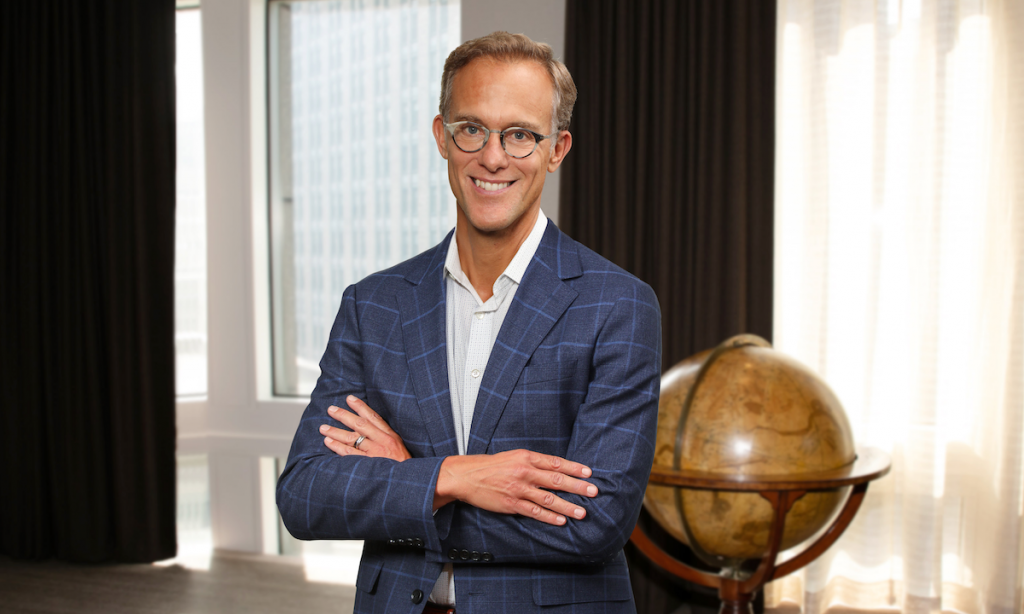
CEO and chairman Jamie Dimon picked Peter Scher to lead this mission back in 2008, and Scher was so successful in this role that he was promoted to vice chair, where he continues to oversee the team he helped build. When it came time last year to choose his replacement, the firm chose Demetrios Marantis, who is tasked with maintaining the branch’s highly ambitious initiatives, including its $2.5 trillion, 10-year sustainable investment plan. And, as evidenced by the 2021 ESG Report released last month, he will also be leading the push to further crystalize his team’s corporate responsibility work as essential to JPM’s environmental, social, and governance goals.
Marantis comes to the role with a mix of experience in government, serving as deputy and acting U.S. trade representative under President Barack Obama, and the private sector, subsequently working for Square and Visa.
We recently caught up with Marantis to discuss what he’s learned in his eight months on the job, touching on how JPM developed its newly formatted ESG report and how he mobilized his team to confront the humanitarian crisis caused by the Russia-Ukraine war.
Do not allow headwinds to shift you off your long-term commitments
Dimon has spoken and written at length about the impact of the Russia-Ukraine war since it began in late February, from its effects on the global energy industry to its massive humanitarian crisis. In his introduction to the ESG report, he wrote, “A responsible approach to energy and climate, especially during a time of war, is to immediately help provide energy security around the globe while remaining focused on accelerating the development of affordable, reliable and lower-carbon energy solutions.”
As for the state of JPM’s investments in alternative energies, Marantis said that “this isn’t a question of either-or” when it comes to fostering short-term fossil fuel solutions while still plugging away at that $2.5 trillion goal. Progress toward it will happen despite how the U.S. and Europe figure out what to do with Russia cut off as an energy provider, Marantis said, reflecting what Dimon has also explained.
Develop processes that allow you to confront unexpected societal developments
Marantis’ 400-person global team were more directly responsible for how to respond to the devastation resulting from the war. He said that existing cross-team workflows based upon leveraging niche expertise allowed them to pivot quickly to Ukraine.
“We mobilized a cross-team group across corporate responsibility,” he said, including “our geopolitical experts, our government relations experts, our community engagement experts. And we worked with the business to craft a response that was very tailored to the immediate humanitarian needs at the time.” That included an initial $5 million commitment and employee-match that funded organizations providing emergency food, housing, and medical services. Last week, the firm allocated an additional $5 million to The Chamber of Commerce of the Polish Hotel Industry to assist the wave of refugees entering that country, and its employee-match continues.
Marantis said that much of this was built on the processes that evolved over previous corporate responsibility initiatives, resulting in a “muscle memory” that did not place the team at square one whenever a new crisis arose.
Make ESG-related initiatives intrinsic to the company’s success
JPM’s 2021 ESG report breaks down clearly each of its programs that fall into the E, S, and G, both internally and externally, and is introduced by Dimon.
In our discussion, Marantis was clear that Dimon’s mission to tie the success of corporate responsibility to the success of business overall was more concrete than ever. When talking about the bank’s diversity, equity, and inclusion (DEI) work, he pointed to its creation of demographic-centric centers of excellence that include both internal career development and external business development programs.
“We have a longstanding commitment to advancing an inclusive and sustainable economy, which is part of the firm’s DNA,” Marantis said. “This,” referring to DEI work, “has also become part of the firm’s DNA.”
Looking at the big picture, this year’s ESG report was the first to include an update on progress towards its $2.5 trillion sustainable development target – which is intended to foster economic conditions that will not only benefit communities, customers, and the environment, but shareholders, as well. The report notes that last year the firm invested $285 billion (11%) toward its target, with investments across initiatives such as underwriting sustainable bonds, supporting small businesses, and financing energy-efficient buildings. Much of its five-year, $30 billion racial equity plan launched in 2020 falls under its community development targets.
“What’s really exciting about where we are as a firm is this isn’t something that Demetrios Marantis from the corporate responsibility team thinks is important,” he said. “This is something that comes from Jamie, our CEO, and all of our business leaders.” He later explained that he was soon going to report to the board’s public responsibility subcommittee overseeing ESG progress, and expected to be grilled (in a way he looked forward to). “We take the full force of JPMorgan to address these challenges.”
Stakeholders want to see transparency, even if the results aren’t perfect
This year’s ESG report includes breakdowns of where JPM’s sustainability dollars went, as well as detailed, intersectional demographic data of its workforce. As ESG matures in the U.S., with the Securities and Exchange Commission preparing to codify a set of climate-related disclosure standards this year, and investors increasingly demanding data around the many green and DEI commitments companies have made over the past few years, transparency unto itself has value.
Marantis said that whenever he has interviewed candidates for a job recently, candidates ask him for details around the current state of and progress in DEI and corporate responsibility, rather than just accepting statements that sound good. “Applicants have a real choice of where they end up landing, and going to a place that takes these issues as seriously as we do is a differentiating factor.” This also applies to employees and managers already at the company, who demand the same level of transparency to ensure that the company is holding itself accountable.
“Advancing racial equity and promoting a sustainable economy – this isn’t going to change overnight,” he said. “It’s a sustained effort that we have to just keep plugging away at.”
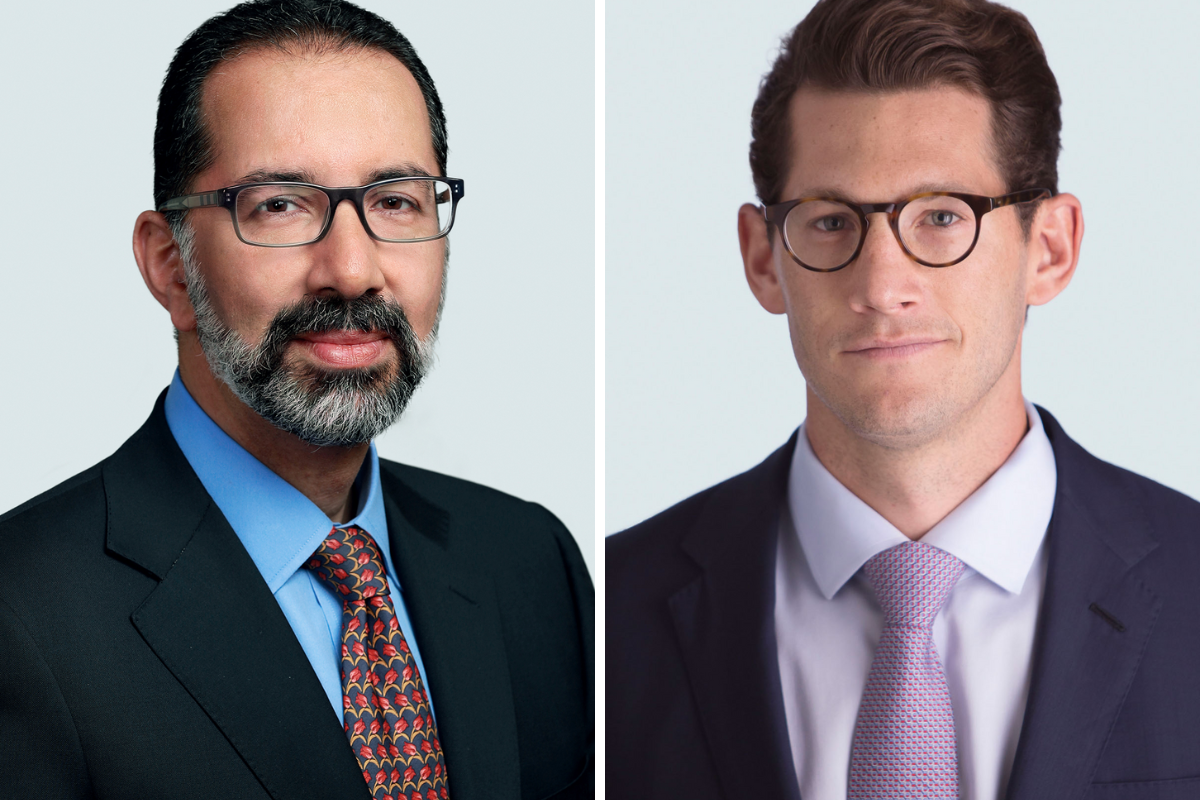

The past few years have marked a generational shift in what it means for investors and companies alike to embrace ESG – environmental, social, and governance – factors, and among the most influential movers has been State Street Global Advisors. When we spoke last week with the giant asset manager’s CEO, Cyrus Taraporevala, and global head of asset stewardship, Benjamin Colton, the world was now contending with the ways the Russia-Ukraine war was going to affect ESG’s role in the future of business.
In his annual proxy voting guidelines letter to board directors of SSGA’s portfolio companies, representing more than $4 trillion in assets under management across 2,100 clients in 58 countries, Taraporevala asked readers to recognize the urgent need for clean energy transition clarity. He and Colton, who oversaw the development of this year’s guidelines, told us in our discussion that even though they sent the letter and guidelines in January, their guidance has not changed.
That’s because even though the war, the COVID pandemic, a reckoning with racial injustice, and alarming climate research have pointed out specific ESG risks, they’ve also highlighted that ESG is core to holistic investment strategy. As Taraporevala told us, “it’s very sloppy shorthand” to say that traditional “financially important metrics are somehow separate from ESG” with an ESG lens constantly shifting to meet an immediate ideological concern.
We discussed with Taraporevala the guiding principle of “value, not values” that he’s used in his six-year tenure as CEO (ending with his retirement later this year) and with Colton why and how SSGA has been a leading investor voice on increasing corporate diversity and transparency around it, and what both want and expect from this year’s proxy voting season, kicking off in April. Watch the full conversation below, and sign up for The JUST Report to get access to exclusive bonus clips not featured in the full interview:
The following interview has been edited for length and clarity.
JUST: I would say it’s safe to say that when you set up these guidelines for the year, that you likely weren’t predicting global conflict with Russia and a war going on in Europe. Does this war change your advisory or overall investment strategy for the near or long term?
Cyrus Taraporevala: When it comes to our proxy guidelines and ESG issues, by definition these are long-term issues that go over many, many, many years. We don’t react to things in the moment. Of course, what’s going on, like so many other things, does change our investment philosophies and tactics in the moment, including the fact that Russian securities are basically untradeable. But that’s separate and distinct. We will do what we need to do for our clients in the moment, but I just want to draw a distinction between the two topics.
JUST: Does there need to be a new set of expectations around the energy transition? With that being so fundamental to long-term climate strategies, and this conflict throwing the entire balance of oil and gas supplies around the world into disarray, how does that affect what you’d be advising to companies? Are these conversations that you’re having?
Taraporevala: In a sad way, because this conflict is terrible and tragic from a human perspective, it actually just reinforces what our proxy letter talked about when it comes to climate. We are pushing our portfolio companies to tell us not whether they want to get to net zero, but also as importantly tell us how are they going to get there. We also spend a lot of time talking about two concepts that I want to make sure you understand.
The first, which is very apropo of what you’re talking about, was this point that demonizing the fossil fuel industry and having this simplistic “green is good, brown is bad” approach was not something we subscribed to. We wrote about it in early January – we weren’t waiting for a war to talk about it. Our view is we are going to need fossil fuels for quite a long time through this transition. We believe the oil and gas companies are going to be part of the solution. They need to be part of the solution, so we need to engage with them. We need to work with them, support them, as they go through their transitions. And green versus brown is too simplistic. Think of it as a color spectrum, if you will. You’ve got dark brown – dare I say, dirty brown – forms of thermal coal, all the way to very light brown, think natural gas. And you’ve got green. You’re going to need some form of the lighter browns for quite a long time. And as I said, it’s sad but true, this recent conflict only reinforces and underscores that.
The second point we made about climate is this notion of what I coined in an op-ed in the FT last year “brown-spin.” Now, we all know what greenwashing is, right? So brown-spinning is basically where the pressure on publicly traded companies is becoming so heavy that they are looking at their highest emitting assets and basically saying, “You know what, I’m just going to sell them, get them off my books. I don’t have to deal with this topic of conversation with my shareholders.” But what does it really accomplish? Ultimately, they’re being sold to either private equity owners or some other form of maybe a state owned enterprise, or a hedge fund, et cetera. And in many cases, the level of emissions for the planet not only stays the same, but actually may increase because the new owner cares even less about it and doesn’t have the same pressures that a public company would have to make a transition on those emitting assets. Tragically for the shareholder of a publicly traded company, it’s often sold at a discount, i.e. the buyer sees a wonderful IRR.
So you have the worst of all worlds. You have the planet no better off, potentially worse off, and you definitely have the shareholder worse off. So what have we really accomplished? The frame I used in op-ed was imagine the world in 2050, where every publicly traded company can say they’re at net zero and have no emissions, but the total amount of emissions in the air and on the planet are the same.
These are themes that we have been talking about for a long time, and again, this current conflict simply underscores them.
JUST: Do you think that as it underscores it, it also sets back the timeline?
Taraporevala: I don’t know about that. I think it’s too early in this moment and probably very speculative depending on what scenario comes to pass. Right now when it comes to this conflict, our focus is on our clients and our people. We have quite a lot of people in Europe, people not too far from Ukraine and Poland, and people all over the world with family ties and loved ones there. The rest will come.
SSGA’s guiding principles
JUST: Can you tell me how the proxy voting priorities have changed over your tenures at SSGA and what stands out as unique about 2022’s guidelines?
Taraporevala: There are three core beliefs that we hold very strongly to.
The first is that strong, capable, and independent boards are truly the linchpin for driving long-term shareholder value, and that has not changed. We are steadfast in that belief.
The second is that when it comes to our asset stewardship activities, it is about value, not values. And this is a difficult one because we all do have values. We’d love to espouse them, but when it comes to other people’s money, which we are the fiduciary for, we have to ask ourselves, how does this drive value? How does it either increase the returns or mitigate the risk? That is our North Star.
And then the third, starting to get to the other part of your question, is we’ve been at this for a long, long time. We’ve been at many of the topics we are talking about in our proxy letter for well over a decade. We have been pushing our portfolio companies to improve their disclosure on topics that we believe, in addition to the more traditional financial metrics, do drive long-term risk-adjusted value. We’ve been pushing them on effective board oversight.
So if you just do a quick checklist of what’s stayed the same, what’s changed, and how has it evolved? You could say broadly on ESG that “G” is the furthest along. That’s where a lot of this started. And really, this goes back to Graham and Dodd. Well-managed companies with good boards do better and should be accorded a premium. There’s nothing particularly “ESG” or new about it. On climate, we have believed for a long time in the systemic risks around the “E.” But I would say certainly the level of focus and emphasis more broadly has increased over the years, and we think will continue to increase over the years. And the “S” is probably the epicenter of where the greatest change has happened over the last several years.
We’ve been ahead of the curve in terms of asking our portfolio companies for more disclosure on human capital management, but I would say all else being equal, the clarity of our expectations has increased. The way we are holding boards accountable, using not just our voice, but even our vote, that has gotten sharper.
When we think about our proxy guidelines, we don’t actually start with what’s going to be unique and super different every year. In some ways that would drive our portfolio companies crazy and is not really in the best long-term value creation interest. They are slow burn issues that take years, and we want to signal to our portfolio companies well in advance that these are the issues we’re going to talk about. We believe consistency is a good thing, because otherwise you just rip some of your portfolio companies around and nothing happens year over year.
Ben Colton: In the past decade, we said that climate change is a material risk for all companies, that it’s an issue that belongs with the board, and we published guidance on effective oversight of climate change and climate-related risk. And this year we’ve escalated it to really articulate what we’re expecting from a climate transition plan. We’re going to have targeted engagement campaigns on some of the most heavy emitting companies in our portfolio.
You can also see this on the social side. When we launched our Fearless Girl campaign, which held companies accountable for having at least one female director on the board, it wasn’t about having a token female director, this was really about diversity in thought – a critical mass of diverse perspectives that lead to benefits of seeing risk differently and having less groupthink, more innovation, and better business outcomes overall. We’ve escalated our expectations for companies not only on gender diversity, but to have directors from underrepresented communities. This year our voting guidelines expect 30% female representation on boards in addition to one director that’s from an underrepresented community, in developed markets, and the expectation of one female director is expanded to all markets.
The other trend that we’re seeing is a lot of blending between the issues. We’re seeing how corporate governance issues are also mixing with environmental and social issues. How does the board oversee a climate transition, or think about risk management related to racial and ethnic diversity, and human capital management? We’re also seeing shareholder proposals asking for more disclosure on how the board is overseeing these issues. And with a just climate transition, that’s a combination between social and environmental issues. How are our companies thinking about the transition and also about their workforce and the communities in which they’re operating in that context? How are they going to reskill and retool their employees when their business lines change? How are they going to think about those communities in which they’re impacting and operating within?
‘Value, not values’
JUST: Something that tie this all together is, Cyrus, what you said about value, not values. Can you unpack that a bit? Every week you’ll see debates around, “Oh, is this ‘woke capitalism,’ are companies getting too ideological?” And you see pushback from either side, from those saying companies aren’t doing enough to those saying they’re doing too much.
Taraporevala: Look, that narrative is definitely out there. But as I said, for us, this is not about politics. This is not about what’s “woke.” This is about the best risk-adjusted return. A huge part of our business is indexed assets. And in many ways, index equities are quasi permanent capital. As long as the company’s in the index, my index managers, unlike my active managers, have to hold that company in their portfolios, which means they don’t have the luxury of saying, “I don’t like what’s going on, let me just press a button, let me get out.”
And for some strange reason, my clients don’t like the S&P 499 worth of returns, they expect the S&P 500 worth of returns. So we have to engage with these companies, we have to think about the long-term risk adjusted returns.
For us, this “value not values” compass really helps us. It’s human, it’s natural, to want to sometimes have your values reflected. But we have to catch ourselves and say, no, no, no, that’s not this topic. We have to focus on value. We don’t subscribe to the idea this is political, and it’s actually a shame that narrative is being framed as such.
JUST: Reading the guidelines and hearing everything that both of you are saying, these arguments are very much tied back to a common sense assessment around risk and value creation. A lot of what this would be considered though, too, is ESG. Is it still useful now in 2022 to consider ESG as an alternative lens to assessing a company, or are lines blurring between what is just smart management, smart investing, and what is ESG?
Taraporevala: We’ve never actually bought into this ESG/non-ESG dichotomy. It’s just not binary. Here’s the way I think about it. An investor puts together a rich mosaic of different data and information that drives her decision about whether or not to invest in a company. (And I’m purposely focusing on the active side for this part of the conversation.) Different investors can look at that same rich mosaic of data and information and reach different conclusions. That’s cool. My equity value managers have a very different portfolio than my equity growth managers. So we are not suggesting the answer needs to be the same, but we do believe that having the right data and information disclosed is important, from which different people can reach different conclusions. That’s the wonderful thing about markets. It’s very sloppy shorthand to say financially important metrics are somehow separate from ESG.
There are traditional financial metrics – think FASB. And there are ESG metrics that also ultimately drive risk-return tradeoffs, so they are very meaningful financially. To us, it’s putting it all together. For example, when we engage with our portfolio companies, we don’t have just our asset stewardship team engaging with companies. We have our portfolio managers on the active side, side by side with our asset stewardship team at meetings with companies, and when the time comes to decide our votes, there’s a discussion and perhaps even a debate among our folks.
My hope, maybe it’s my naive dream, is that in seven to 10 years, and I fear it might take that long, we’re not even talking about ESG as a separate thing.
When I go around the world, I don’t have clients say to me, “Do you think about price to earnings? What about dividend yields? How are you thinking about price to book?” That’s part of the mosaic, right? And just given the newness of ESG, parts of it do feel a little different, and it’s going to take a little time for folks to adjust to it. But again, I go back to governance. I grew up studying Graham and Dodd, and it was always very clear that good companies should be accorded a premium and governance was part of what a good company was. Good management, good boards. So we never said, oh, but that’s separate, let’s take that out of the regular Graham and Dodd analysis and have it in a separate bucket and we’ll come up with different portfolios based on that.
Colton: One of the crucial factors of this ESG discussion is more quality and consistent data, as well. As we have more historical data, as we all coalesce around common standards – we think SASB is a really good starting point – that conversation will continue to evolve as we get more clarity around how we’re measuring outcomes. We joked one time with a company, where they said the quickest way that we’re going to reduce our carbon emissions is by just changing our data provider. And that shouldn’t be the case, but sadly that is the reality.
We can’t even get consistency among the same data points that we’re looking at. But we do think that is improving, and one of the ways to continue to get more consistency is by having asset managers and asset owners be clear on what their expectations are, be clear to companies on what kind of disclosure they want to see and what’s going into their analysis. How are we thinking about net zero as an asset manager and what kind of disclosure do we want to see? We need to understand the guardrails, and the interim goals of achieving those long-term expectations.
What the ‘S’ means in 2022
JUST: You mentioned how much the “S” has changed in recent years. Can you tell me how State Street defines it now?
Colton: Cyrus’s letter three years ago underscored the importance of board oversight responsibility in thinking about corporate culture. That is so closely connected with human capital management. How is the board monitoring, enhancing, and overseeing corporate culture? How are they holding management accountable for identifying hotspots within their organization, or integrating the voice of employees and using not only the risk KPIs, but also synthesizing information? What a company needs to be successful for the next 10 years is probably known somewhere within the organization already. How do we track that information and how does the board utilize their employees to the fullest?
Now we’re also seeing the Great Resignation, and this competitive landscape for talent, and also a work from home environment for many companies. Attracting and retaining talent and creating a corporate culture, maybe in an untraditional way, is more important than ever. These are the types of things that we’re talking about with companies, and we’re trying to be clear on what our expectations are and what kind of disclosure we want to see. And that really comes through in some of those guidance pieces that were attached to Cyrus’s letter this year.
JUST: On that note of how companies are navigating the challenges around labor over the last year, where there really seems to have been a shift in dynamic between workers and management of companies, what are you advising in regards to how much a company should be investing in its workforce while also navigating the fears of inflation and the overall difficulties of this economy?
Taraporevala: We are mainly asking questions of companies – we are not here to dictate. That’s between management and their boards. How are you thinking about it? How important is talent and labor to being able to enable your strategy? Where are you seeing the major pressure points? How is your attrition? How is your ability to attract new talent? How is your ability to attract diverse talent? We hold boards accountable, boards hold management accountable.
JUST: Target announced in their last earnings call they are planning a major investment in their workforce, where starting salaries are going to range from $15-24 an hour. Other companies have made similar investments recently. Do you expect to see more companies investing in their workforce in this moment?
Taraporevala: I’m not commenting on individual companies, but will talk generally.
I don’t really buy into this narrative of companies are now suddenly, over the last one or two years, investing in their workforce. We believe great companies have invested in their workforce for a long, long time. The specific tactics may vary, but investing in the workforce – which is a lot more than just compensation, it’s about helping people think about their careers, it’s about advancing their careers, it’s about mobility, it’s about the culture of the organization to attract, retain, and motivate a great workforce – that’s always been a huge competitive advantage for some companies.
JUST: Ben, broadly speaking, what do you expect of this year’s proxy season? And should we expect some more ESG-centric battles similar to what we saw with Engine No. 1 and ExxonMobil last year?
Colton: That was really about long-term strategy and finding and determining which directors are best suited for overseeing such strategy. What I will say is that as human capital management becomes more and more important, and get more disclosure around those issues or see the lack of disclosure from some companies, I would suspect that you’re going to see the social issues appear more and more in those discussions when you see contested situations, because it really is a material issue for all companies.
JUST: So issues like around pay or gender diversity, equity, inclusion, those types of issues.
Colton: I think broadly human capital management, how a company is looking at their workforce, its composition, all of the issues we’ve underscored as material. I would expect to see companies disclosing more information, and also in those contested situations, that information being further up in the pitch deck, so to speak, than it was in the past.
We filmed this interview and will be releasing clips like the one below, along with a lightly edited full Q&A video, including material not included in the above feature. To make sure you don’t miss any, subscribe to our newsletter and follow us on Twitter and LinkedIn.
