What are you searching for?

close search
Business Roundtable
Capitalism
Environment
Investor Return
Workers
50 Years After the Introduction of the ‘Friedman Doctrine,’ It’s Time to Create a New Capitalism
Milton Freidman (The Friedman Foundation for Educational Choice).

When the New York Times Magazine published Milton Friedman’s essay, “The Social Responsibility of Business Is to Increase Its Profits,” 50 years ago, Friedman was six years shy of his Nobel Prize win and not quite yet on the path to becoming one of the world’s most influential economists of the 20th century. And while his various ideas had growing clout in libertarian circles, his “Friedman Doctrine,” as the Times dubbed his theory about the role of corporations, still had an air of being radical for its time.

Friedman had been an advisor to Republican presidential candidate Barry Goldwater, whose conservative ideology resulted in massive defeat in 1964 but two terms for Ronald Reagan in the ’80s; Friedman’s book “Capitalism and Freedom” (one of its chapters is the basis for the Times essay) was a flop when it was first published in ’62, but was a bestseller by the time he was advising Reagan here in the US and Prime Minister Margaret Thatcher in the UK.

There are many reasons for this transition, but as for the idea of shareholder primacy laid out plainly in the Friedman Doctrine, it grew in appeal in the ’70s as corporate profits declined and America’s trade deficit grew. Put simply, the role of a corporation that Friedman had been pushing for years was about to have its time. It’s a time that we’ve been living in for the past four decades, and one that we at JUST Capital think has lasted long enough.

Average wages have stagnated, and the level of wealth and income inequality has persisted at pre-Great Depression levels. The financial crisis of ’07-’08 awakened the majority of the country to this destabilization of our economy and society, and the pandemic has been another cruel reminder. Six years of polling the American public, including COVID-era surveys done in partnership with The Harris Poll, have shown that Americans want business leaders to play a role in tying their corporate purpose to society rather than profits at all costs, and an increasing chorus of executives, academics, and politicians are agreeing.

As we look back at the capitalism of the past 50 years, we’re considering where it needs to head to make stakeholder capitalism, the alternative, a reality. We’ve collected insights from prominent supporters for an idea of what that can look like.

Companies must recognize they do not exist in a bubble, and that social and natural capital are not ‘free’

In her book “Reimagining Capitalism in a World on Fire,” Harvard Business School professor Rebecca Henderson argued that the reign of shareholder primacy led corporations to treat social capital, like workers’ livelihoods, and natural capital, like the health of the environment, as “free.” Now, she wrote, as executives consider the risks posed by a climate crisis and inequality-fueled populism, they’re starting to realize that these resources are, in fact, expensive.

Both are leading more companies to recognize that they have a responsibility to the health of a society, and can’t have the extent of that be lobbying for policies that will benefit their industries.

Henderson sent JUST the following:

The most critical action we can take to “fix the system” is to change the rules. I’m a huge fan of capitalism at its best, and I think that free markets are one of the great inventions of the human race – but they only work their magic when markets are genuinely free and genuinely fair. For that to happen, prices have to reflect real costs, and at the moment, our failure to price in the harm from greenhouse gas emissions is causing immense distortions. We also know that vast disparities in education and healthcare – often in combination with continued discrimination against people of color – has meant that many people don’t have the opportunity to participate in the free market in a way that could reach their full potential.

We need to rebalance capitalism. We must remember that free markets must be balanced by democratically accountable, transparent governments and strong civil societies, if we are to build a just and sustainable future. Business must step up to make this possible. Our economies, and with it our firms, will suffer enormously if we don’t address the problems that we face. Working them is already opening up billion dollar opportunities across the economy.

The purpose of business is not maximizing shareholder value – that was only ever a means to an end. The purpose of  business is to build a thriving and prosperous society. And right now, that requires taking a wider view.

Companies must balance the long-term with the short-term

Perhaps the economist most directly opposed to Friedman’s ideas on markets is fellow Nobel laureate Joe Stiglitz, of Columbia. Before I joined JUST, I interviewed Stiglitz in depth on the topic. The two knew each other, and had long debates.

Friedman believed that the “invisible hand” of market forces, as applied to competitive industries, would allow companies fixated on maximizing profit to in turn benefit all stakeholders. That is, prioritizing short-term gains leads to optimized management and capital allocation, which in turn allows the company to grow and make higher returns, when then in turn leads to more jobs, better products, and other benefits to society.

Stiglitz told me at the time that it was a rejection of the Keynesian system that had become the norm by the time Friedman was writing – and John Maynard Keynes himself noted in 1936 that the American stock market encouraged the pursuit of short-term gains benefitting investors at the expense of long-term ones benefitting society. The debate going on today is not a new one, the world has just drastically changed around it.

Stiglitz argued that Friedman’s belief  “was not based on any economic theory.” Stiglitz and the economist Sandy Grossman published a paper in 1980 that stated that while market equilibrium that the invisible hand was always guiding us toward could exist in theory, it could not in reality – meaning Friedman’s theory would fall apart.

Stiglitz wrote in his 2015 book “Rewriting the Rules of the American Economy” that the Friedman Doctrine became entrenched in American business through deregulation, lower taxes, and relaxed antitrust laws, which created a climate fostering activist investors.

He wrote: “If all of this had led to more efficient and innovative corporations, that would have been one thing. But in fact, the new ‘activist’ investors pushed for seats on boards and pressured management into policies that were viewed as more ‘shareholder-friendly’ — meaning friendlier to short-term investors — including increasing dividends and buyouts.”

Proponents of Friedman’s approach will say that the way CEO pay increasingly became tied to stock performance during this time keeps CEOs accountable to their shareholders. As Stiglitz argued, it instead is “an incentive to manipulate stock prices by using company money to buy back shares in order to drive prices higher.” Stepping back, the average ratio of CEO-to-median-level-employee pay from 20-to-1 in 1965 to 295-to-1 in 2018.

BlackRock CEO Larry Fink, head of the world’s largest asset manager, helped take the pushback against the prevailing system into the business mainstream when he wrote in his annual letter to CEOs a couple years ago that his firm would only do business with companies that clearly defined their long-term business strategy and connected it to social benefits.

Fink wrote: “Without a sense of purpose, no company, either public or private, can achieve its full potential. It will ultimately lose the license to operate from key stakeholders. It will succumb to short-term pressures to distribute earnings, and, in the process, sacrifice investments in employee development, innovation, and capital expenditures that are necessary for long-term growth. It will remain exposed to activist campaigns that articulate a clearer goal, even if that goal serves only the shortest and narrowest of objectives.”

Structural change is necessary to enable stakeholder capitalism

It’s critical to note that when we talk about stakeholder capitalism, we’re not talking about merely a change in rhetoric. We will need to rethink how we measure value creation if proclamations like the Business Roundtable’s revised purpose of a corporation are to mean anything substantial.

Columbia Journalism professor Nicholas Lemann (disclosure: he was dean when I attended) tracked the evolution of American capitalism over the past century in his book “Transaction Man,” which provides valuable context for today’s debate. In a comment shared with JUST, Lemann wrote that while shifts in public opinion can create an environment for change to our economic system, reforms to capitalism have always come from structural change. He wrote:

Milton Friedman may have stated the basic premise of the shareholder revolution first, but in many ways the revolution’s most important founding father was Friedman’s younger colleague Michael C. Jensen. “Theory of the Firm,” an academic paper that Jensen, as a young professor at the University of Rochester’s business school, coauthored in 1976, began to suggest a number of techniques that could be used to instantiate Friedman’s idea. Most of these tried to get managers to act like owners, by, for example, making then the actual owners (as in leveraged buyouts and private equity), or by paying them mainly in the form of stock options. Ideas become reality when there are structures to make them do so.

In thinking about the nearly century-old back and forth between stakeholder and shareholder capitalism, we tend to pay too much attention to fuzzy factors like the national ethos and the intentions of managers and shareholders, and too little to structures. The conventional wisdom about stakeholder capitalism in its post-second World War form is that it was produced by the economically secure position of American industrial corporations, and by the benign impulses of the corporate executives of the day. But this was actually a world created by government policies, beginning during the New Deal — policies that made organized labor more powerful, that put corporations under heavy government regulation, and that restrained the power of Wall Street firms. And in the 1970s, a new generation of government policies, most of them deregulating finance in a variety of ways, undergirded the shareholder revolution.

I am skeptical that the new stakeholder revolution, proclaimed last summer in a statement produced by the Business Roundtable, will not amount to much unless government is once again in the picture. It’s unlikely that the statement would have been written if there weren’t already rising and impossible to miss global political animus against big corporations. And corporations can’t practice true stakeholder capitalism unless they are legally freed of their primary fiduciary obligations to their shareholders. Look at politics in 2020, at least in the Democratic Party: you can sense the next wave of policy approaching.

Changes that would be secured in public policy can begin in the private sector. Before COVID became a global pandemic in March, one of the hottest topics in business was the future of ESG (environmental, social, governance) investing and the consolidation of ESG metrics, as “sustainability” can currently be defined at the whim of investment firms or companies themselves.

There has been progress on that front. JUST CEO Martin Whittaker, however, said in a new editorial for Business Insider that this logic must also be applied to business operations. Speaking for the Business Roundtable, GM CEO Mary Barra told Fortune that last year’s statement on purpose “was catching up with reality,” and that the CEOs who signed it had already been balancing the needs of their investors with the needs of their other stakeholders. Whittaker said that while that may be true, if the stakeholder capitalism that an increasing number of corporate leaders are endorsing is ever going to replace shareholder primacy, then total shareholder return as a guiding light is going to have to be replaced with “Total Stakeholder Return.”

A poll we took this summer with The Harris Poll shows that Americans want corporations to value stakeholders with virtually identical weight. (JUST Capital)

Companies will benefit from listening to their stakeholders

Friedman wrote in his Times essay that if CEOs allocated money in ways that did anything aside from maximize profit, they were imposing a tax of sorts on their shareholders and customers. This operates on the assumption that if a CEO were, for example, to decide to take somewhat of a hit in a quarter during a pandemic to provide robust worker benefits, they were cheating their investors and the people who buy their products and services. But it does not take into account the future value of these investments – a healthy, financially secure workforce is a more productive and stable one for the duration of that pandemic – or, as JUST has shown for the past six years, what the public actually wants.

As Whittaker wrote in the editorial mentioned above:

Our polling, done in tandem with The Harris Poll, suggests that a substantial majority of the public — regardless of background, age, location, or political ideology — supports the idea of companies creating value for all their stakeholders. Last year, our survey respondents prioritized key stakeholder issues with the following order of importance​: workers (35%), customers (24%), communities (18%), environment (11%), and then shareholders (11%). (Percentages reflect relative prioritization of these stakeholder categories based on representative survey populations.)

To be clear, this does not mean that the stakeholder necessitates sacrificing your company’s financial performance for a perceived moral good, or otherwise cloaking profit maximization beneath a soft, PR-friendly mask; on the contrary, our research suggests companies that lead in meeting the needs of all their stakeholders have outperformed the laggards by almost 30% over the past four years — and by double-digit margins throughout the pandemic. They also have lower risk profiles, decreased market volatility, shallower drawdowns, and greater profitability.

Companies are recognizing this. It was remarkable to see, for example, how many corporations responded to the George Floyd protests against police brutality and racial inequity this summer with significant investments in diversity and inclusion efforts within their own organizations, as well as through sizable charitable donations.

JUST and The Harris Poll found that the large majority of Americans either somewhat favored or strongly favored CEOs responding to the protests with a statement about ending police violence (84%), promoting peaceful protest (84%), elevating diversity and inclusion in the workplace (78%), condemning racial inequity (75%), and condemning police killings of unarmed Black people (73%). It’s important to remember that before this year, most corporations would want to steer clear of such hot topics. But Americans, in their roles as workers, customers, and shareholders, are considering businesses in a way that would be anathema to Friedman.

As Ford Foundation president Darren Walker told CNBC in June, “More is going to be demanded of corporations, and more should be demanded, because they have a tremendous influence on how we live our lives.”

Stakeholder benefits must be tied to purpose, which in turn must be integrated into core business strategy

Friedman was right to point out that many CEOs couching their actions in moral rhetoric were being deceptive – and anyone who follows ESG investing knows all too well about “greenwashing.” If a company was investing in a community it operated in, Friedman argued, it was doing so because it could strengthen their business, not because of a moral imperative.

What’s interesting is that corporate leaders are not contesting Friedman’s point, but rather countering it. For example, JPMorgan Chase has, over the past decade, made significant investments in communities, but embrace rather than hide the way it is benefitting their business. Peter Scher, JPM’s head of corporate responsibility and chair of its mid-Atlantic region, wrote to JUST:

This year has provided a stark reminder of why business must play a proactive and deliberate role in supporting and rebuilding our communities.

With the COVID-19 pandemic exacerbating longstanding economic and racial disparities around the world, it is critical for business to step up and play a major role in creating opportunity and level playing field for dramatically more people. It’s not only the right thing to do, but it’s an economic imperative and good for the future of business. This is the new definition of capitalism. It is no longer just about a company’s short-term bottom line, it now includes businesses responsibility to society – how we support our employees and how we invest in the communities, especially those who have struggled and been underserved for decades. We, as business leaders, must step up to help solve systemic problems, and use our capital and other resources to do so, because that is in the long-term interests of our companies and our shareholders.

JPMorgan Chase is using our business expertise, policy ideas and philanthropic investments to help create an inclusive recovery and racial equity. We’re doing this in four major areas: skills development and careers, financial health, neighborhood development, and small business. And through our JPMorgan Chase PolicyCenter, we are advancing policies that remove barriers to economic opportunity, including second chance opportunities for those who have been part of our criminal justice system.

Detroit’s continued turnaround provides a good example of how business can collaborate with local government and community organizations to help those who have struggled for decades. JPMorgan Chase, along with other companies, have worked closely with Detroit and Michigan’s leaders to provide capital, jobs, training, technology, and a host of other resources to help Black Detroiters and many of the city’s neighborhoods recover and rebuild. We’ve done business in Detroit for 85 years: a long-term investment in its revitalization is not only good for Detroiters, it also makes very good business sense.

Businesses have a collective responsibility to lift up the communities that we serve and invest in the future – for our shareholders, customers, employees, and communities. When our communities thrive, we all thrive.

It’s easy to see how the same logic applies across the board.

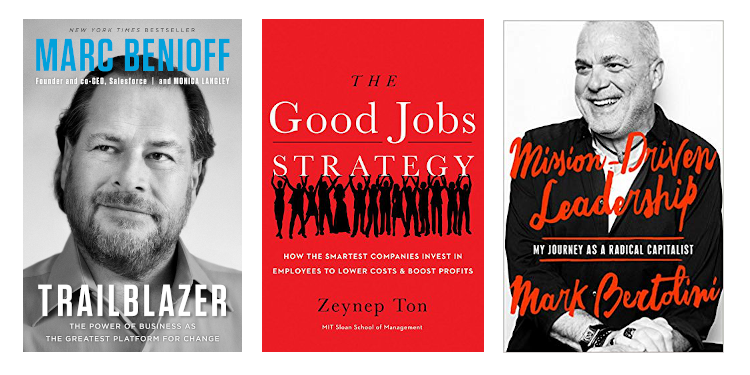
For workers, Zeynep Ton, president of the Good Jobs Institute, has shown in her work how neglecting workforce investments for the sake of cost-cutting and profit-maximization has resulted in “bad jobs” that destabilize a business. Employees that are trusted with “good jobs” and rewarded fairly are more motivated and productive, which results in a better customer experience and, in time, better shareholder returns.

It also makes sense why companies like Microsoft and Apple boldly embracing green energy. Former Vice President Al Gore’s firm, Generation Investment Management, showed this year in its annual Sustainability Trends Report that in two-thirds of the world, wind and solar power are the cheapest forms of energy during the coronavirus crisis. As our ESG team put it, “That means companies here in the United States have an opportunity to cut costs, reduce carbon emissions, and maximize operating efficiency.”

At the World Economic Forum’s annual meeting in Davos in January, Microsoft CEO Satya Nadella said, “The fundamental source of all value in capitalism still comes from the planet and the people who live on the planet, and if the planet is in danger, what happens to capitalism?”

We always must remember why we’re doing this: for stronger businesses, a more robust economy, and an equitable society

Friedman railed against any implication that businesses should exist as charities. Proponents of stakeholder capitalism agree with him – it’s just that the past 50 years have given us an excellent case study on what a singular focus on profits yields, and the evidence suggests a stronger alternative is possible. Profits enable companies to grow and benefit all of their stakeholders. But when corporate leaders and investors can capture the value, short- and long-term, of investments across workers, customers, communities, and the environment, in addition to shareholders, they can make decisions that strengthen their business for many years.

And that means a stronger economy, and a stronger country.

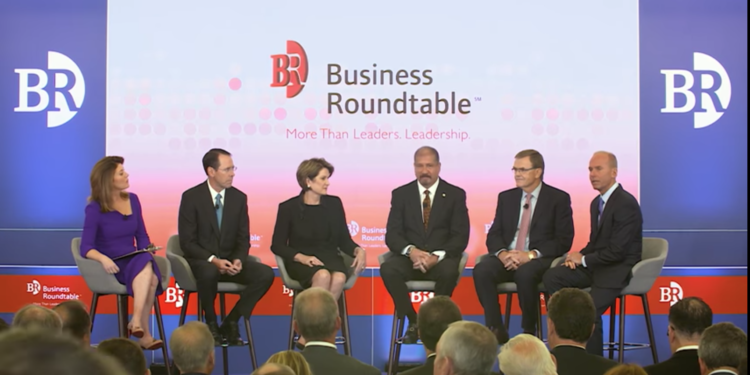
Back in August, the Business Roundtable, an association of the chief executive officers of nearly 200 of America’s largest and most influential companies, released a new Statement on the Purpose of a Corporation. After 41 years of endorsing a governance model of shareholder primacy, the organization boldly committed to focus on delivering value to all its stakeholders, “for the future success of our companies, our communities and our country.”

181 CEOs signed the Statement, committing to lead their companies for the “benefit of all stakeholders – customers, employees, suppliers, communities and shareholders.”

Critics of the shift generally fell into two camps – those who believed the Statement went too far, undermining fiduciary duty, and skeptics who believed it didn’t go far enough, representing mere words, not actions. 

For the converted, many saw the Statement as a reflection of how many top CEOs currently run their companies, while others saw it as a historic paradigm-shift that would help companies, boards, and investors chart a new course for the future of capitalism. 

Regardless of where you stood on that skeptic-to-convert spectrum, everyone started asking for a scorecard that would help us understand how these companies were actually performing on key stakeholder issues. 

JUST Capital has the answer. Our mission, as a nonprofit organization, is to openly and transparently measure, in a data-driven way, corporate performance on stakeholder issues, as well as to incentivize improvements. We have been doing this for four years. We are also the only organization tracking how the American public thinks about stakeholder performance, and which issues they prioritize. 

Today we are pleased to release a stakeholder analysis for the Business Roundtable Signatories, based on the analysis that fuels our 2020 Rankings of America’s Most JUST Companies, as well as our own framing for how companies can optimize the creation of value in this new era of stakeholder capitalism

JUST Capital has polled more than 96,000 Americans over the past five years to intimately understand which issues the public wants corporations to prioritize to restore trust and create an economy that serves all Americans. We also have four years of corporate performance data on those issues, as well as market analysis that shows the business and investment case for adopting these business behaviors. 

By the Numbers

Overall, a healthy majority of the Roundtable’s signatories scored well this year. They are not performing quite as well as the top companies, the JUST 100, but are close. And 34 of the signatories are, in fact, featured in the JUST 100, including Apple, Salesforce, Anthem, P&G, Cisco, GM, IBM, AT&T, Accenture, and Xylem. 

Our analysis is based specifically on 134 of the 181 signatory companies, as we track, measure, and rank Russell 1000 companies each and every year. If a company is not included in the Russell because they are a private corporation or for other rules-based reasons, we do not yet have data on those companies. For the 134 signatories that were included in our universe, we analyzed those companies across five stakeholder groups – including Workers, Customers, Communities, the Environment, and Shareholders – covering 29 Issues – like whether companies pay a living wage or protect the environment, and over 400 data points – from paid parental leave to veteran hiring and supplier policies.

Here’s how 134 of the Business Roundtable signatories stack up: 

Serving Stakeholders

So aggregate performance was high. We next explored how the Business Roundtable signatories performed regarding key issues relating to each stakeholder. 

First a note to explain that our stakeholder definitions are modestly different than the Business Roundtable’s purpose statement framing. We think similarly about employees (which we categorize as “Workers”), Customers, and Shareholders. The Roundtable considers issues relating to the environment and sustainable business practices as a component of how they serve communities, whereas the American public sees the Environment as a separate stakeholder. JUST combines supplier issues that matter most to the public – like upholding human rights standards in the international supply chain and supporting local, diverse, and veteran suppliers in the communities in which they operate – within our Communities stakeholder, rather than breaking suppliers out as a separate stakeholder. 

Overall, you can see that the 134 Business Roundtable signatories are performing well above average when it comes to serving their stakeholders, except for Customers, where we are measuring issues like creating quality, safe products that do not harm health, the environment, or society, and protecting privacy. 

Specifically, compared to other Russell 1000 peers not in the JUST 100, the Business Roundtable signatories perform:

Note: the “Non-JUST 100” category above includes all of the Russell 1000 companies we rank minus the JUST 100. 

Impacting the Future

While the current performance of the Business Roundtable signatories shows that many of the top companies are already operating with a stakeholder-focused mindset compared to their peers, increased investments by this incredibly influential community of corporations could have massive ripple effects throughout our economy.

For instance:

In the coming year, we will continue to track the actions they make toward their commitment – to support their workers, customers, communities, and more – in an effort to understand how this shift toward stakeholder capitalism impacts our economy, and the lives of all Americans.

It is a simple idea matching the needs of our time. Today, more than ever, Americans expect a great business to behave justly. Increasingly, people are choosing one product over another because of a company’s environmental or social record. Or they are looking at the purpose, values, and ethical practices of an organization before applying for a job or investing capital. The market, in other words, is increasingly looking to reward (and punish) companies on things that transcend pure financial return. A new, more just marketplace is being born.

We are JUST Capital, a nonprofit of committed capitalists who believe free market enterprise is capable of producing extraordinary prosperity for all Americans – not just shareholders.

Our mission is to promote just business practices, a decision born from deep engagement over the past four years with nearly 100,000 Americans through one of the most comprehensive ongoing polls ever conducted on public attitudes toward corporate behavior. Having studied Americans’ issues and challenges, we have come to understand what precisely this concept of a just company means to the hard-working people of this country. We know how deeply people expect business to aspire to far more than mere profits. We also benefit from working with hundreds of large corporations to discover, measure, and monitor best practices toward this goal. A goal which, not coincidentally, also yields far greater profits, employee retention, brand loyalty, and market dominance.

This model of measuring corporate performance will, without doubt, be the wave of the future. Those companies that embrace it sooner rather than later will almost certainly lead their particular industry. Our investable indexes and financial analysis of most just companies have already proven that assertion.

And we are not alone in this belief. Recently, 181 CEOs of the Business Roundtable also recognized the evolving role of business in society, signing a new statement of corporate purpose that embraces a new “stakeholder” model of governance. Perhaps most importantly, we know from our 2019 survey that a substantial majority (95%) of the American people – regardless of politics, income, location, ethnicity, gender, or education – also support this model. This truly is a new brand of capitalism of, by, and for the people.

Business Governance, Reimagined

For a modern company to thrive now and in the future, it must optimize the creation of value for five specific stakeholders:

  1. WORKERS
    All those employees and contractors outside the C-Suite who have become the true value creators in 21st century business must be treated with respect and provided with fair compensation, sharing in the incremental value they help create. Unfortunately, this has not happened in any meaningful way in the past 40 years. Overall, national wages have been flat or under inflation for most of the past four decades. Employees must be motivated and engaged, their merits recognized and rewarded. They need to be trained or retrained for the tasks of today and tomorrow. How a company treats and compensates its workforce have been the top-weighted Issues in our polling since 2015.
  2. CUSTOMERS
    Each new customer must be prized and nurtured, considered a lifelong asset, and treated with respect, integrity, and honesty. They are entitled to safe, quality products at a fair price that do not harm health, the environment, or society. To make someone a customer for life, a business must not only fulfill their functional needs with superior value versus competitive offerings, but instill in customers a sense of loyalty and pride in using their product or service.
  3. COMMUNITIES
    The modern-day corporation’s sphere of influence extends to the physical and virtual communities its operations impact, the suppliers it relies on, and all the governmental, non-governmental, and civil organizations it touches around the world in the course of its daily operations. These communities need to be carefully tended to, to maintain the social license to do business. Creating new jobs in communities that need them; applying strong ethical standards of behavior throughout supply chains; investing in wider community health and education programs; and contributing to fair tax revenues; all are part of today’s theater of operations and require constant analysis and investment.
  4. THE ENVIRONMENT
    Our collective socio-economic health depends on the vitality of the planet. Currently, this is in existential crisis. Enlightened businesses today understand they must take on a leadership role in tackling systemic environmental challenges, alleviating the impacts of climate change, and preserving the scarce natural capital on which humans as a species depend. Integrating such thinking into planning, risk management, product development, strategy, and operations is crucial to sustaining long-term business viability.
  5. SHAREHOLDERS
    The American people know that businesses must make money in order to thrive. They know that providing a fair and reasonable return for the capital invested in a business is a critical pillar of justness. Likewise, capital markets will continue to reward businesses that provide sustainable revenues and profit growth in the short and long term. Shareholders and the financial community are crucial stakeholders, and must be treated as such, receiving full and transparent information about all the issues with the potential to substantially impact a business’s plans and performance. Today, the shareholder has important rights in dealing with corporations. Those rights must be protected, but of course, abuse of those rights must be monitored and eliminated.

At the center of it all lies the entity on which all the stakeholders above depend: the corporation itself. Building and maintaining a successful and just company requires constant vigilance, attention, and re-investment by its stewards – namely, the CEO and the Board. The ethics of leadership; the quality of governance and oversight practices; the prioritization of resources; investing in technology, workers, and R&D so as to improve productivity and innovation – areas where we lag our major global competitors: China, South Korea, Japan, Germany – all these things matter immensely in the protection of long-term business value. The encouraging news is that just companies already do many of these things and their shareholders continue to thrive.

The JUST 100

Through our data, our modeling, our corporate analysis, and our public company rankings, JUST Capital is uniquely positioned to become the most trusted, most valued independent platform for measuring and improving corporate performance in the stakeholder economy. Our work empowers the market to hold companies to account for how they perform in serving the needs of their five vital stakeholders. We achieve our mission of building a more just marketplace by tracking corporations’ progress openly and honestly, using data-driven approaches, by engaging with them to promote inclusive and profitable growth, and by creating tools and products that enable users to invest in, work for, buy from, and otherwise support the most just companies that are aligned with their values.

JUST Capital champions America’s Most JUST Companies, including the JUST 100 and Industry Leaders, as the companies with the most just practices across all industries, as well as within each industry sector. As a change agent, we share best practices and build benchmarking tools that provide any company with the information they need to produce superior results across all critical constituencies. The success that follows can be transformational.

The Fierce Urgency of Now

The system of free enterprise capitalism that drove America to become the most dominant economic and military power in the world – from WWII to the 1980s – had a sense of responsibility to a broad set of stakeholders. During this period, America created the largest economic market in the world: America’s great middle class. In the last forty years, all of this has changed. Business governance evolved into “maximizing short-term shareholder value.”

The effect on American society has been deeply divisive and is now unsustainable. Between 1979 and 2016, real average income among working-age individuals grew by 170% for America’s top 1%, compared to 24% for the bottom 90% of Americans. Today’s staggering socio-economic inequality is negatively affecting our society.

That is why action is urgently needed. We salute the significant announcement made by the Business Roundtable. We collectively agree that some form of multi-stakeholder capitalism is the inevitable way of the future. We salute leaders in finance, such as Larry Fink, who for the past several years has spoken about the need for business to contribute to society. It is now imperative that other equity management and pension firms join this platform. We strongly urge them to join forces with us now. CEOs, through the Business Roundtable, have publicly spoken. It is now the boards of directors’ turn to step up and help create constructive individual corporate governance principles.

On our end, JUST Capital is committed to working with America’s corporations to measure and celebrate their successes, to guide them on their journey, and to provide the tools needed along the way. We are also committed
to capturing and amplifying the voice of the American people, so that we can shape a market that reflects and serves their priorities. Finally, we are committed to supporting investors, policymakers, activists, and advocacy groups in building a more just economy.

We can envision a day soon when free market enterprise will unleash a robust period of productivity and innovation unlike anything we have seen in years. One that works for all Americans. All that is possible if we embrace stakeholder capitalism and commit to measuring performance on what really matters for our collective, long-term success.

Following the 125th anniversary of Labor Day in the U.S. – celebrating workers’ contributions to companies and the economy – JUST Capital is excited to announce a new initiative dedicated to increasing the prevalence of quality jobs in America.    

Each year, we poll the American public to find out what matters most to them when it comes to just business practices. And each year they prioritize worker- and job-related issues above everything else. This transcends partisanship, geography, and income – in other words, the American people are aligned.  

Importantly, the majority of Americans think companies are falling short when it comes to their workers: 80% of Americans believe that companies do not share enough of their success with employees, and nearly 60% think companies are putting their shareholders above everyone else.   

The public’s desire for change is understandable when you consider the current economic climate. Wages are slowly rising, but inequality is rising faster, exacerbating longer-run trends. Since the Great Recession, more than half of total income growth has gone to the top 10% of Americans. There are signs that such fundamental change is happening: the Business Roundtable took an important step last week, stating that the purpose of a corporation is to provide value to all stakeholders from employees to customers to communities, not just their shareholders. Business leaders have an opportunity to pursue practices that will make this vision for corporate America a reality. 

That’s why JUST Capital is excited to be investing in a new Quality Jobs Initiative as part of our mission to align the market with the values of the American people. The key purpose of the Quality Jobs Initiative is to tie together all the work we’re doing on worker- and job-related issues, surface the business case for good jobs, and showcase the current state of play – from corporate leadership to new insights about types of work and practices – on quality jobs. We’ll be conducting new research on workers, contractors, and quality job practices, engaging companies in a series of one-on-one conversations and small group convenings, working to create more clarity and case studies on human capital standards and practices, and celebrating companies leading the way.


Want to read more stories like this?

Sign up for The JUST Report

Our FREE weekly newsletter about the future of capitalism and the movement to build a more equitable marketplace in America. 


The Quality Jobs Initiative will comprise four key areas: 

Transparency and Disclosure: We believe that human capital disclosure is the first step of performance analysis and a key step toward change. Already this year, JUST Capital launched the Win-Win of JUST Jobs and the JUST Jobs Policy Tracker, which surfaces worker policy data across all 890 companies we track on nine issues – including diversity and inclusion policies and targets, tuition reimbursement, and work-life balance – representing hundreds of hours of work from our research analysts. This tracker enables anyone – from workers to corporate leaders to investors – to see, for example, every company that has conducted and published the results of a gender pay equity analysis. Over the next year, we will engage companies that do not yet disclose all their policies to make the business case for greater transparency and serve as a thought-partner as they work to achieve higher disclosure. 

We are also pleased to be partnering with NYU Stern Center for Sustainable Business to provide their researchers with data on quality jobs so they can assess correlation between quality jobs and corporate financial performance across different sectors, as well as assess how well the “S” in ESG is capturing quality jobs.

Frontline Workers: Business leaders know that frontline workers are crucial to the success of their businesses. We are engaging companies with significant frontline workforces to identify and share policies that ensure frontline jobs are good jobs. In partnership with MIT Sloan Professor Zeynep Ton’s the Good Jobs Institute, we will be co-hosting corporate leaders in a workshop for companies to detail the business case for transitioning to a good jobs strategy. We’ll also be working with companies in surfacing best practices in training, scheduling, and other management policies.

Contract Workers: Increasingly, companies are contracting with vendors, temporary help agencies, and other entities to contribute to and support the production of their goods and services. We are exploring the role of corporate America in creating economic opportunity for workers reliant on these companies regardless of their employment status. Through engagement with companies we seek to advance research on the business dynamics driving the utilization of contractors and alternative work arrangements.  

Mapping Wages: Underpinning all of the work described above is the research that shows that many workers in America don’t earn enough to cover life’s expenses. In addition to engaging companies on specific policies that would improve the economic outcomes of workers, we will be putting forth new ideas for how to measure, quantify, and think about wages. That includes mapping companies’ wages in America, assessing intra-firm inequality, developing a “Living Wage Index” to track progress, and modeling the economic benefits of businesses paying their workers a living wage. 

We’re incredibly excited about this new work, and believe that by partnering with companies and foundations on this new Initiative, we can introduce new insights that make the business and investor case for quality jobs, thereby supporting a shift in corporate practice toward more just business behavior as defined by the American public. 

We’d like to thank our foundation partners for their support of elements of the Quality Jobs Initiative, including: the Robert Wood Johnson Foundation, the Ford Foundation, the Annie E. Casey Foundation, the Surdna Foundation, the Nathan Cummings Foundation, the Alfred P. Sloan Foundation, and others.

by Alison Omens with contributions from Patrick Oakford.

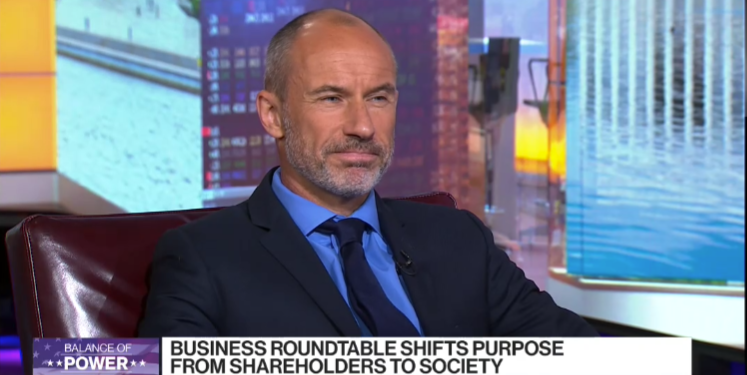
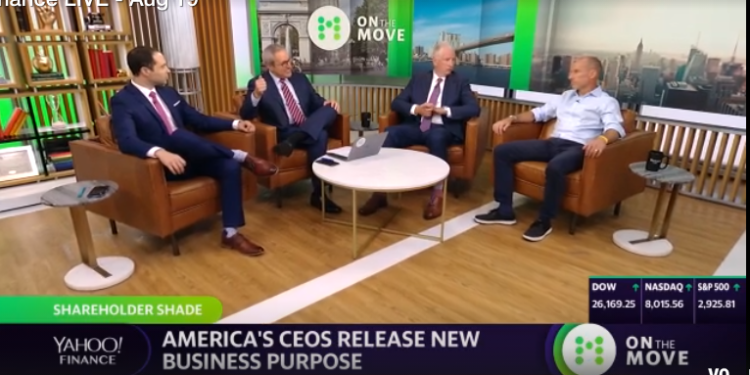
In the wake of Business Roundtable’s statement that corporations should serve all of their stakeholders, various critics have come out saying the move will hurt shareholders.

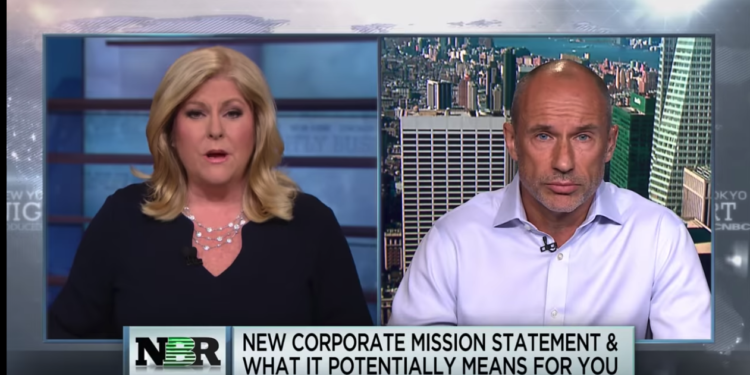
Martin Whittaker appeared on Bloomberg TV to explain why investing in workers, communities, and society can deliver increased shareholder value.

In these times of unrest, both in the U.S. and globally, it’s hard to imagine the majority of people agreeing on anything. Yet our annual surveys – which over the last five years have reached nearly 100,000 people – consistently show that the American people agree about one very important thing: The role and responsibility of big companies. 

Regardless of age, political affiliation, income, location, ethnicity, and gender, people want companies to stop prioritizing shareholders and start sharing success with all stakeholders. Most importantly, people want companies to prioritize employees by investing in good jobs, fair pay, equal opportunity, health care, retirement planning, career development, as well as paid time off and parental leave. 

In short, people want the American Dream back. And the institutions of free market enterprise are starting to listen.

This week, the Business Roundtable, which represents the largest and most influential companies in America, put out a new Statement on the Purpose of a Corporation, committing to a new ethos in which the purpose of a corporation is to benefit “all stakeholders – customers, employees, suppliers, communities and shareholders.”

It is a move of historical significance, a throwback to the days of Henry Ford, when industry leaders believed the health of a company was tied to the health of communities in which it operated and the prosperity of its workers. Ford knew that his workers were his customers, and believed for his company to be successful, they had to be able to afford his cars. His company was the largest employer in the U.S. for decades, and his approach influenced a generation of future business leaders. 

From the 1940s through the 1970s, this approach to free-market capitalism propelled one of the greatest expansions of social mobility and economic growth for our nation. The original Johnson & Johnson credo from 1943 – that the company worked to optimize the interests of customers, employees, communities, as well as its shareholders – is just one example of this approach in action. Likewise, the opening pages of the 1964 Annual Report for General Motors, at the time the largest corporation in America, evidence a company recognizing the value being created by and for all its stakeholders. 

So what happened? As Ford Foundation President Darren Walker recently explained at the Aspen Ideas Festival, “the economy was redesigned with the set of incentives that we have today.” In 1970 economist Milton Friedman wrote his infamous treatise for The New York Times Magazine entitled, “The Social Responsibility of Business is to Increase its Profits.” While the piece itself contains plenty of nuance, the title captured the hearts and minds of CEOs, boards, and investors, and became the mantra for an era of short-term, profit-maximizing, winner-takes-all capitalism that has dominated our economy for the last 49 years. 

For investors, Wall Street, and the corporate management class, the wealth creation effect has been unparalleled. But we also have a Gini coefficient and income inequality levels of a developing country. Eight families have as much wealth as half of humanity. And of all of the wealth generated in 2017, 82% went to the richest 1% of the global population. As many now recognize, this system is no longer sustainable.   

Fast forward to this week and the Business Roundtable announcement. In the accompanying press release, the organization’s Chairman, Jamie Dimon, stated that the “American Dream is alive, but fraying,” and that corporations need modernized principles that “push for an economy that serves all Americans.” These views echo those of many other business, finance, and political actors across the ideological spectrum who understand that such fundamental change is needed. Like the Business Roundtable, these leaders, and their organizations, are committed to centering business and finance on the noble purpose of serving all of free market enterprise’s beneficiaries. They know that a more just, inclusive, and moral form of capitalism must emerge if capitalism itself is to survive.  

The good news here is that there is a significant and credible body of independent research to support the case that this approach is also better for business. Our own work consistently shows that companies that invest in worker pay and well-being, treat customers fairly, produce beneficial products and services, reduce their environmental impact, and support the communities in which they operate, invariably outperform their peers in the market. 

In the coming months and years, those who believe in the fundamental good of free market enterprise must set about reconstituting our economic system so that it matches the next generation’s vision of capitalism and creates prosperity, innovation, and success for everyone. Companies have a decisive role to play in this transition. The new Statement on the Purpose of a Corporation is a great step in the right direction and we applaud the Roundtable for its leadership.

Our Newsletter

The Just Report delivers curated commentary and news to your inbox every week to help you determine what matters most for your business.