

Warren Buffett’s public holdings are more likely to be outperformers on stakeholder value. So concludes an analysis released by Bain this week, which notes that his portfolio companies are predominantly in the top half of a global universe of 1,300 companies measured on employee, community and customer performance criteria, with one-third in the top quartile. It’s not quite clear precisely what the measurement criteria are, but the point remains: the world’s #1 investor, by coincidence or intent, has disproportionately allocated his capital to companies that align value creation for stakeholders with total return for shareholders.
A Forbes article published this week by JUST Board member and former Y&R CEO and Chairman Peter Georgescu delves deeper into the historical connections of corporate stakeholder performance, reminding us that, despite recent divisiveness and rollbacks, stakeholder capitalism is not a new idea. Indeed, its practice across decades of American business history has resulted in perhaps the greatest value creation success ever: the establishment of the American middle class.
Per Axios reporting this week, the performance of the highest ranked companies in the JUST Annual Ranking compared to the lowest ranked companies brings this into sharp relief. Between January 2018 and August 30, 2024, the top 10% of companies in our rankings has beaten the bottom 10% by 92.85%. The performance of the JUST ETF tells a similar story. With a one-year return of 27.20%, the fund has surpassed not only the broader Russell 1000 index (by 0.62%) but also that of other U.S. large-cap ESG-focused ETFs. The JUST 100, which includes the top 100 companies from JUST Capital’s rankings, has outpaced its benchmark by 13.91% over the past year and an impressive 51.39% since its 2019 launch.
These are the kind of returns the Oracle of Omaha himself would be proud of.
Be well,
Martin

“How can Costco afford to pay so much more than other retailers, and provide its customers such low prices? Jim’s answer is always the same: paying your fellow workers well isn’t altruism, it’s good business. Costco’s employee turnover is a fraction of the rest of the retail industry – 8% compared to 60% – and its stock performance is so much higher.”
CNBC took a deep dive into some of the most interesting policies featured in our Top 10 Companies That Treat Employees Best list.
Axios spotlights JUST Capital data to make the case that ethical investing can produce financial returns.
JPMorgan Chase
JPMorgan Chase offers a minimum hourly wage of $20, which exceeds the Russell 1000 average and represents the third highest minimum wage among banks. The company also supports new parents with 16 weeks of paid parental leave for both primary and secondary caregivers and families with various caregiving services.
Cigna
Cigna prioritizes transparency by sharing highly detailed workforce demographic data by gender, race/ethnicity, and job category, reinforcing its focus on fostering an inclusive environment. Additionally, Cigna supports its employees’ work-life balance with key benefits including 18 days of paid time off and seven days of paid sick leave annually, paid parental leave, flexible scheduling opportunities, and emergency backup dependent care support.
Dayforce
Dayforce sets a high standard in the Software industry with its generous and inclusive parental leave policy, offering 17 weeks of paid leave to all caregivers. This is the highest offering at parity among the Top 10 companies and far surpasses the Russell 1000 average of 11 and 8 weeks of paid parental leave for primary and secondary caregivers, respectively.
Read about more leading policies here.
NPR reports that California is angling to be the first state to require safety standards for powerful AI models, particularly around testing for safety around a program’s ability to hurt our cyber infrastructure or shut down critical systems.
Axios reports on the slow trickle of companies dropping DEI from their companies, with Ford being the latest after external pushback. Meanwhile, Intelligencer looks at whether the attacks on corporate DEI programs are just encouraging companies to “hide” what they’re doing, and Forbes argues that dropping DEI programs is a short-sighted business strategy.
For Labor Day, The Washington Post looked at the swaths of disabled employees who make less than federal minimum wage due to an obscure law.
News Nation reveals that with the job market cooling, companies are offering lower salaries for new positions than they did in 2023.
Yahoo Finance reports that nearly 10,000 employees from Hilton, Marriott, and Hyatt went on strike this week for better pay and conditions.
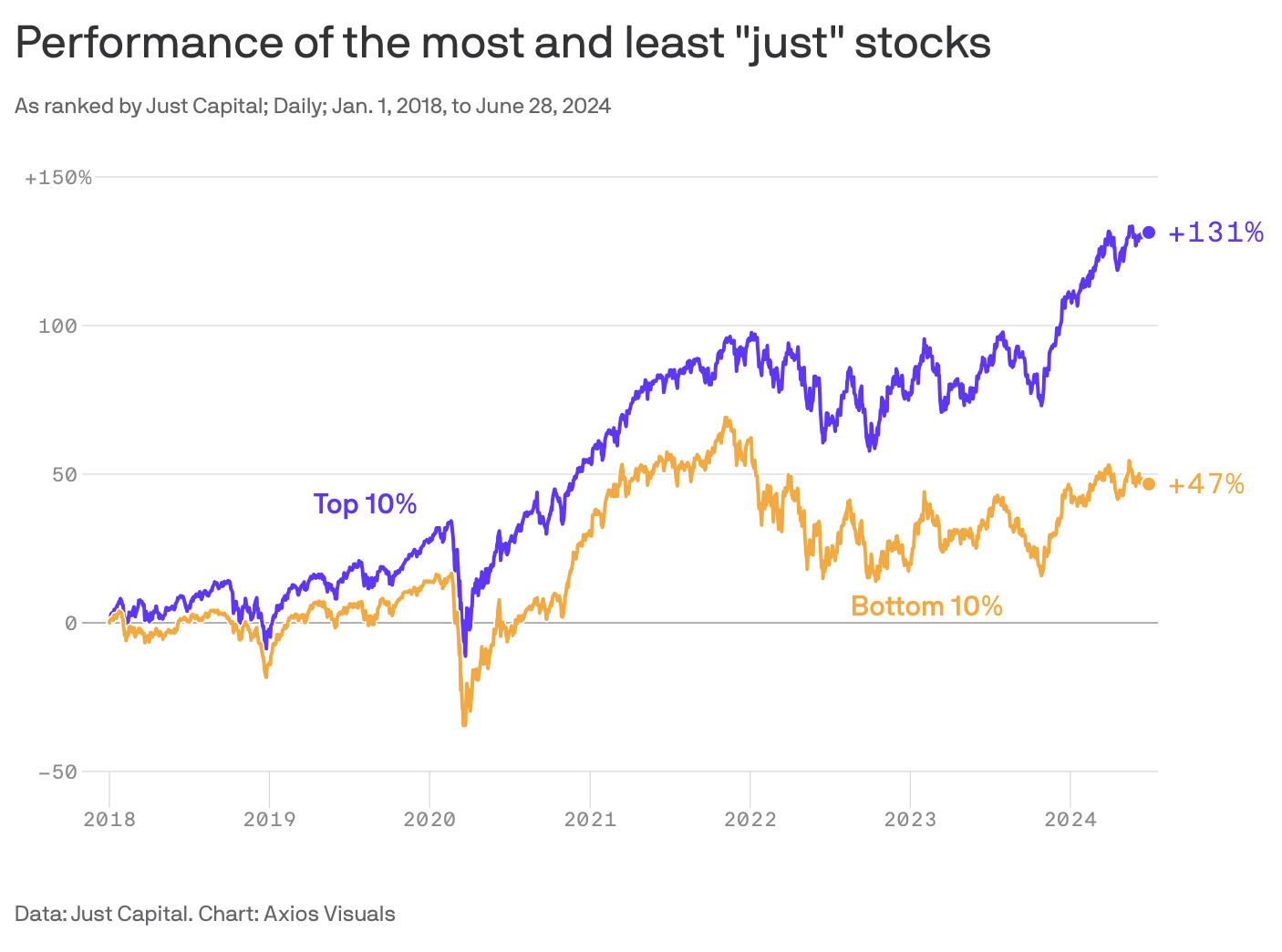
This chart comes from a report of JUST Capital data by Felix Salmon at Axios, and shows that if you had invested in the top 100 companies in the JUST Ranking over the last few years, you would be outperforming the S&P 500, particularly if you shorted the worst. Dig into his research here, and explore some of our own index concepts here.
By Aleksandra Radeva, Lisa Simon (Revelio Labs), Zanele Munyikwa (Economist at Revelio Labs)
In today’s economic landscape – with looming uncertainty about the role of generative AI on the workforce and the pocketbook pinch of ongoing inflation – where and how can workers and their families find financial security and the stability it offers? When companies pay their employees a wage rate that meets local living expenses, they’re not only investing in operational success but also demonstrating leadership on one issue on which Americans across political affiliations agree, a seeming rarity in this election season.
To better understand the financial security of employees across America’s largest publicly traded companies, the Russell 1000, JUST Capital and Revelio Labs analyzed the amount by which employees’ wages exceed the local living wage necessary to cover basic budgetary needs. And while a living wage covers the basics, including housing, food, healthcare, and other essentials, the excess amount provides additional income that allows for the savings, discretionary spending, and improved quality of life necessary for true economic stability. The results – which indicate the financial viability of Russell 1000 employment, including among some entry-level positions, in some of America’s highest cost-of-living cities – may initially seem confounding. To learn more about how we made these calculations, click here.
When considering where workers can achieve financial stability, it’s surprising to find that some of the highest cost-of-living areas in the U.S. – like Seattle, cities in the Northeast, Silicon Valley, and Austin – also top the list for areas where a family of two working adults with two children can earn above a basic needs-based living wage. This finding indicates that the companies represented in these regions, as well as the wages offered in certain roles, can offset the high living costs.
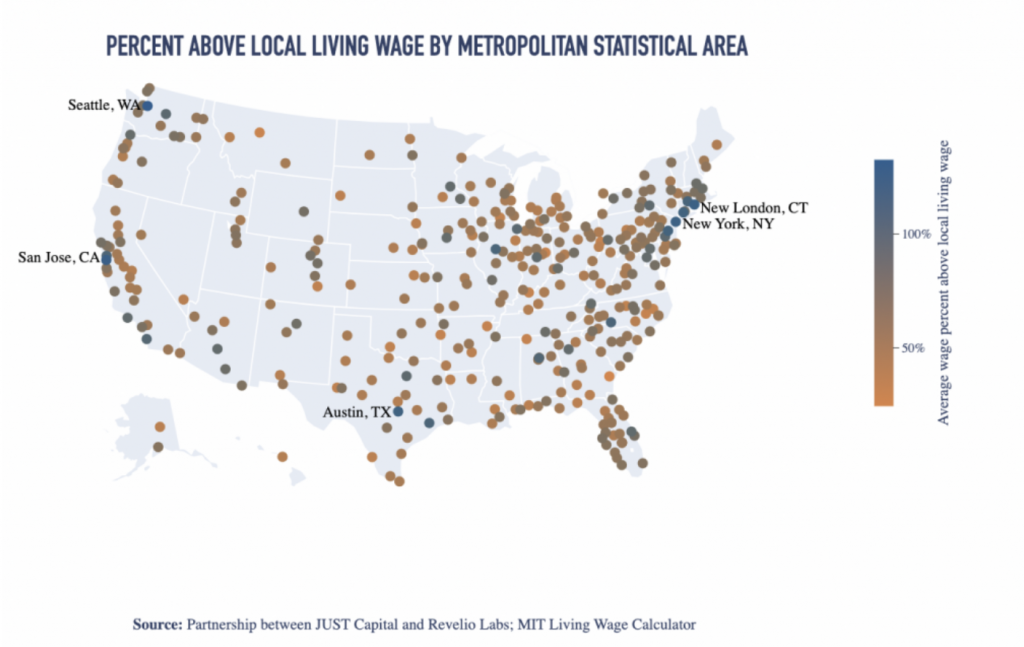
The map above shows where Russell 1000 company employees are paid a rate that, on average, exceeds the local living wage. For example, the living wage estimate, or amount needed to meet basic budgetary needs, for a family of two adults and two children in Austin, Texas is $52,800 per worker (assuming both adults work). Our data shows that on average, a Russell 1000 worker in Austin makes $114,000, which is 160% above the local living wage estimate for a family of four. This finding is certainly driven by the fact that Austin has a high concentration of high-paying companies with highly paid roles. But it also tells us that if one could be any worker with any role in a Russell 1000 company, a job in Austin would be more likely to ensure financial security.
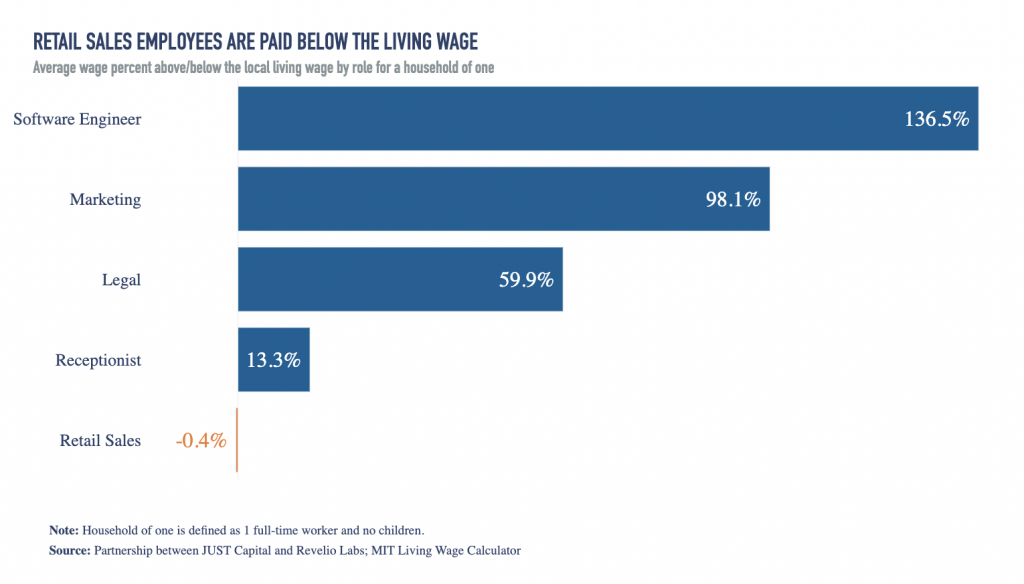
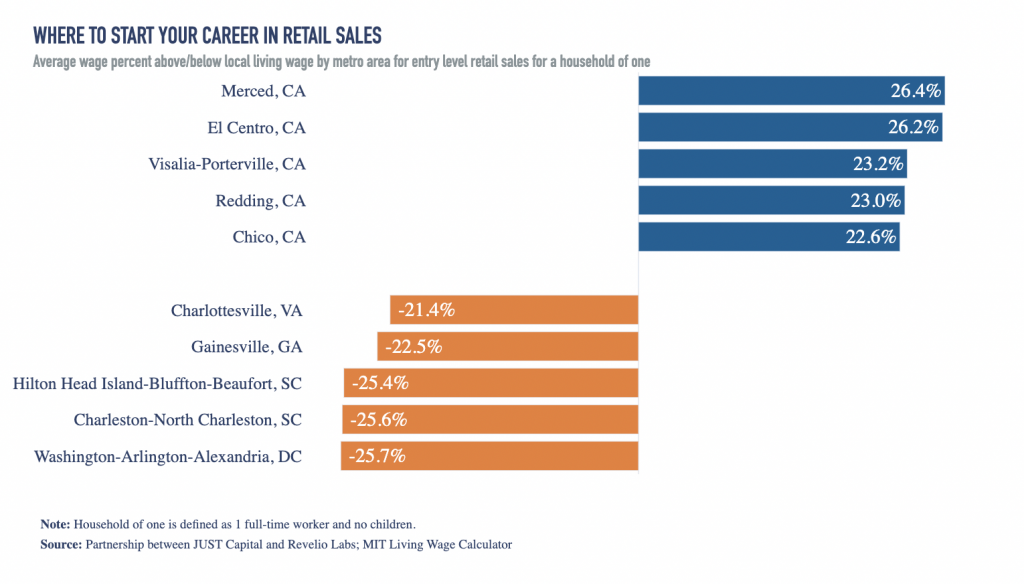
But when looking across different roles at Russell 1000 companies, not all tend to pay a living wage, let alone above it. The industry with some of the largest location-based variation in employees earning more than a local living wage is retail sales. That variation is driven by the industry’s large, diverse workforce and extensive presence across different regions. For those starting their careers in retail, the location of a given store plays a crucial role in determining financial viability. California, although a high cost-of-living state, not only provides a higher likelihood of achieving a wage exceeding the local living wage in retail roles but also maintains this advantage in entry-level positions.
For example, an entry-level retail sales employee working at a Russell 1000 company can make on average 26.4% more than the living wage for a household of one in Merced, California. In Charlottesville, Virginia, on the other hand, employees will make 21.4% percent less on average than their local living wage.
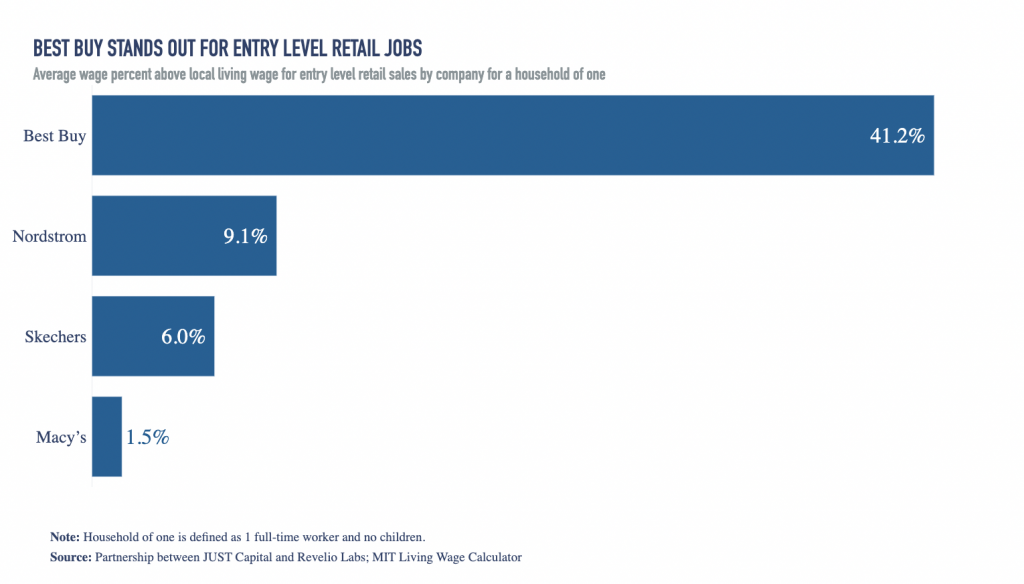
Besides location, the employer also plays a role in determining an entry-level role’s financial viability. Certain companies – including Best Buy – stand out for their higher pay for entry-level retail jobs. Best Buy, Nordstrom, Skechers, and Macy’s are notable for offering wages that exceed the local living wage estimates for a single adult working full-time, making them attractive options for those entering the retail sector. On average, entry-level sales employees at Nordstrom make 9.1% more than their local living wage for a household of one.
*The best companies for entry level retail positions are determined based on the percentage average wages fall above the local living wage for those positions.
And while some locations and employers offer a good starting point in retail, can such jobs support a family? A more detailed examination of retail roles reveals a sobering reality: supporting a family on a retail salary remains difficult in most areas. This finding is particularly true for entry-level positions, where wages often fail to meet the local living wage estimates. However, there are exceptions. California emerges as a state where retail sales roles can offer wages exceeding the local living wage, suggesting a more favorable economic environment for retail workers.
*For the purposes of this analysis, a family is defined as two full-time working adults with two children, and the living wage is what each of the adults needs to make to meet an estimated basic needs budget in their location.
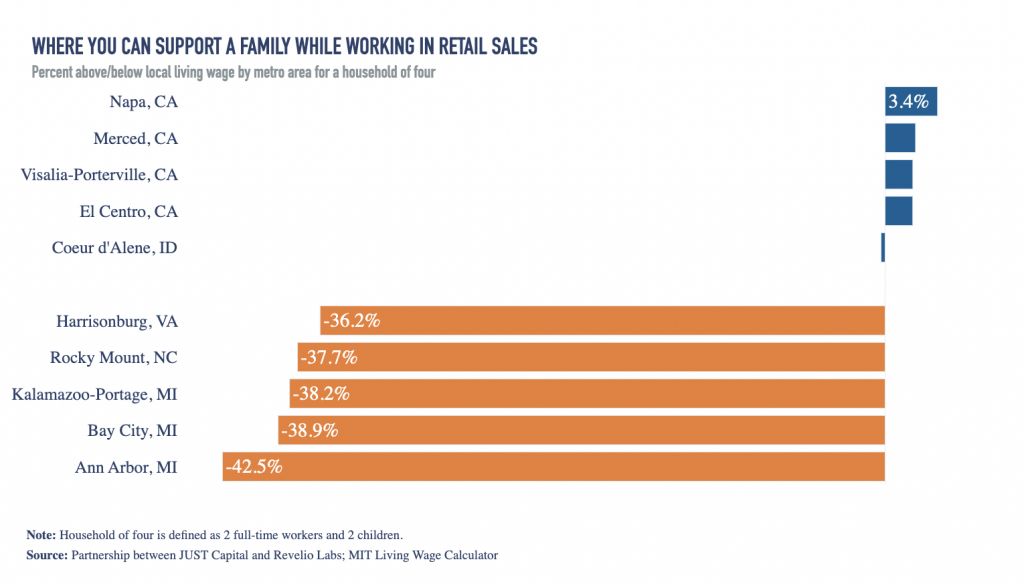
*The above graph represents the top and bottom five locations for relative wages earned by employees in retail sales roles compared to the local living wage .
These insights underscore the complex landscape of wages and living costs across the U.S., where variation exists even across Russell 1000 companies in the same industry. They highlight the importance of considering both geographic and role-specific factors when evaluating economic stability and opportunities for families.
JUST Capital and Revelio Labs are committed to identifying the corporate leaders on key workforce trends, particularly when it comes to companies investing in their workforce by paying a fair, living wage – a top priority of the American public for just business behavior. Learn more about leveraging the research insights, cabinet of experts, and peer-to-peer engagement available to corporate leaders through JUST Capital’s programming by reaching out at corpengage@justcapital.com.
Lisa Simon is the Chief Economist and Zanele Munyikwa is an Economist at Revelio Labs.
What is a living wage? A living wage is the amount of money needed for a given worker to cover the cost of their family’s minimum or basic needs where they live. Learn more about living wage as an important business benchmark here.
How do we calculate the percent that average wages fall below or above the local living wage in this analysis? To calculate the percentage average wages fall above or below the local living wage, we look at the average wage earned by employees working at Russell 1000 companies in a given metropolitan area, and compare that average to the local living wage. We then use the following formula to calculate the percentage above or below the local living wage:
(Average wages earned in MSA by Russell 1000 employees﹣Local living wage) / Local living wage
Why is a pay rate that exceeds the living wage important? For workers across incomes, knowing where your earnings are most likely to exceed the local, basic needs-based cost of living provides an indication of where your wages might be “worth” the most in terms of purchasing power. What’s more, the basic needs budget used to estimate living wage typically assumes the lowest-cost version of necessities, and does not include significant elements of financial security such as retirement savings. A worker earning a living wage would remain only one unexpected expense away from financial precarity. Learn more about how local living wage estimates are calculated here.
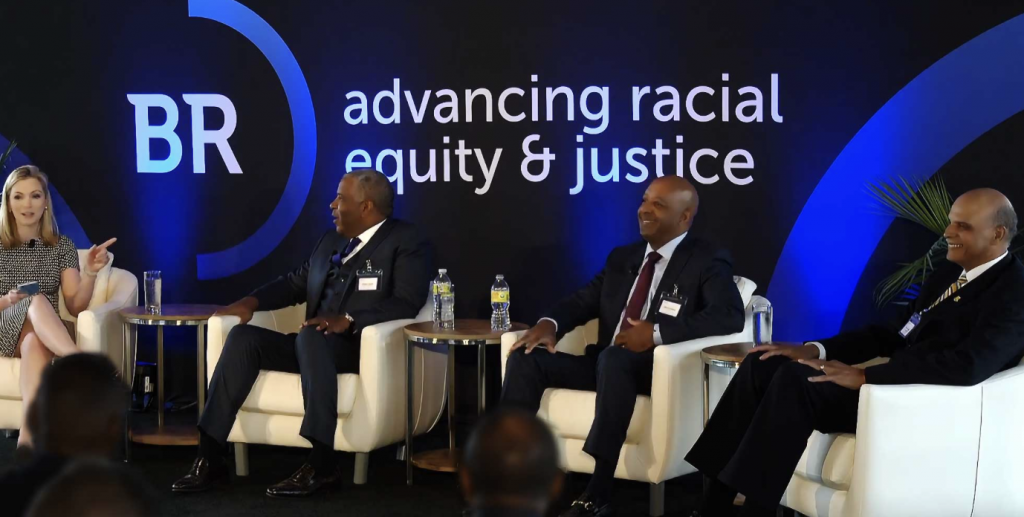
Monday marked the 5th anniversary of the Business Roundtable’s landmark restatement of the purpose of a corporation. As I wrote on LinkedIn, much has changed since then. The stakeholder model has become the framework by which many companies compete and win today, not because they think differently about purpose – though most do – but because it provides the best path to financial and market success.
Crucially, the stakeholder model is also how the American people think about corporate purpose. JUST’s own polling, as well as that of others, makes this clear. Understanding this is important because it offers clues in a quest currently underway on both sides of the aisle: that for a new economic vision for the nation (this week’s NYT Op-Ed by James Pogue about Connecticut Senator Chris Murphy is the latest reflection on the issue). Call it a secular shift, one that is fundamentally cross-partisan in nature, that seeks to understand why so many Americans feel cut adrift by our system of free market capitalism and how the problem can be tackled.
While disagreements over political solutions to this question undoubtedly exist, it strikes me that from a business perspective, the answers may be hiding in plain sight. Hardened by a cycle of embrace and backlash that continues to evolve, the stakeholder approach – in which the overarching goal is doing right by workers, communities, customers, suppliers, the planet and, yes, shareholders too – offers a clear blueprint for action which benefits everyone.
Be well,
Martin
This week, in partnership with Dayforce, we released a new toolkit for companies ready to implement effective paid leave policies to better support their employees, while improving talent recruitment, retention, productivity, and morale.
Our Guide for Corporate Leaders on Paid Leave Policies, offers an overview of paid leave policies across Russell 1000 companies, including industry insights and concrete examples of leading policies and best practices from some of America’s biggest companies, including Hewlett Packard Enterprise, S&P Global, Ford, and many more.
This week, in partnership with Dayforce, we released A Guide for Corporate Leaders on Paid Leave Policies for companies ready to implement effective paid leave policies to better support their employees, while improving talent recruitment, retention, productivity, and morale.
This comprehensive resource offers an overview of paid leave policies across Russell 1000 companies, including industry insights and concrete examples of leading policies and best practices from some of America’s biggest companies, including HPE, S&P Global, Ford, and many more.
As issues of generative AI violating copyright grow, Andreeson Horowitz is putting $80 million into a startup, Story, which aims to create a blockchain method for tracking what copyrighted material was fed into and utilized by AI. Fortune has the story.
The Wall Street Journal had people write-in their feelings on the debate over DEI, and it turns out proponents AND opponents actually share many similar views. Meanwhile, Morning Consult takes a look at how regular Americans feel about recent DEI rollbacks, like what happened this week at Harley-Davidson.
Meanwhile, Inc spoke to several CEOs who continue to have Chief Diversity Officers on how they’re positively impacting their companies.
Worries abound over Meta discontinuing a tool used to fight disinformation right before an election. NPR has the story.
NPR takes a deep dive into the non-profit hospital system, showing that as CEO pay and profit margins go up, it’s not necessarily resulting in more “charity care” for patients that can’t afford to pay.
Harvard Business School reveals that while anti-ESG proposals surged in 2024, they earned less support from shareholders. At the same time, Robert Eccles breaks down three ways corporate leaders can manage the conflicting pressures in the ESG political wars.
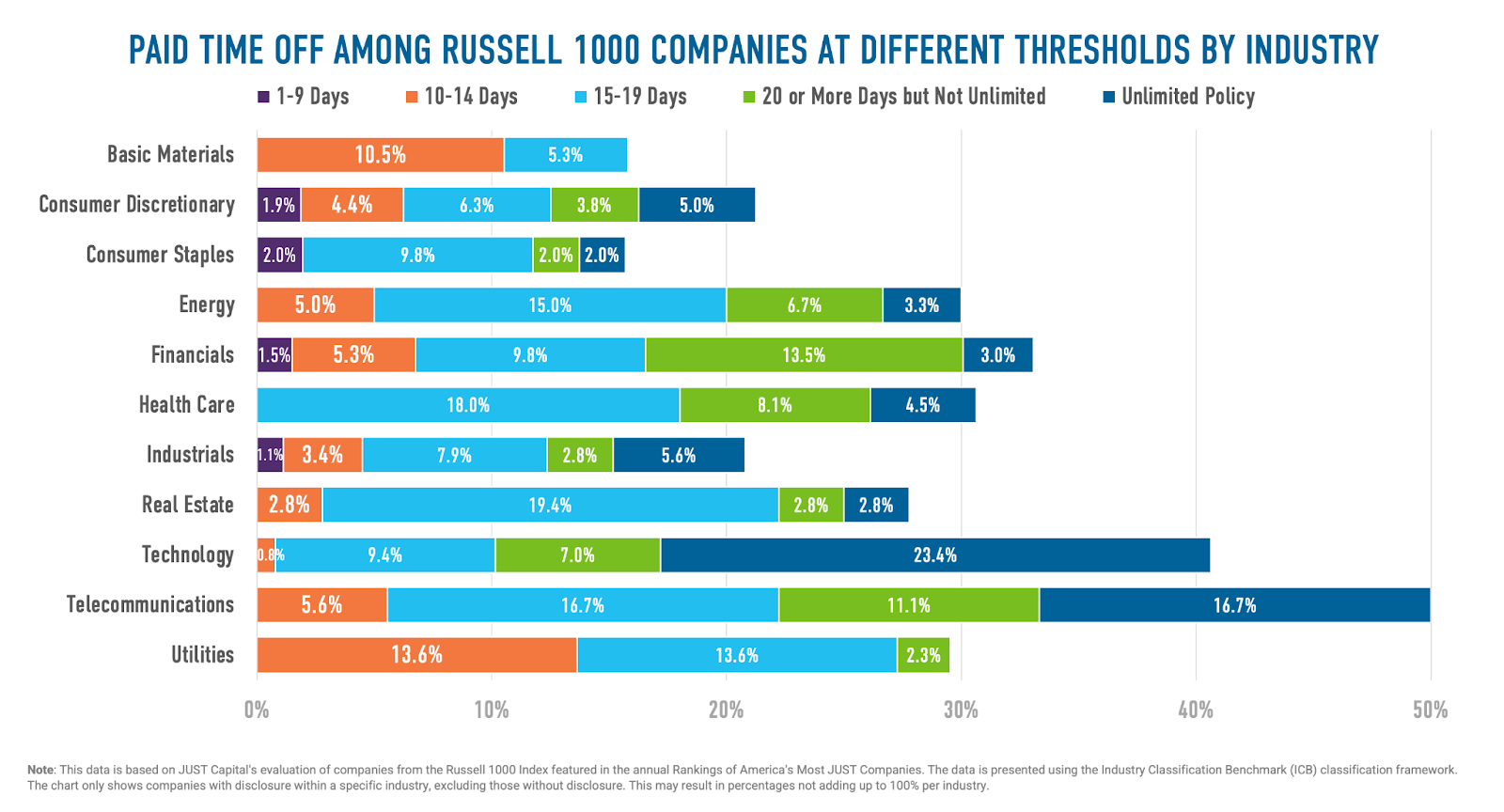
This chart comes from our Guide for Corporate Leaders on Paid Leave Policies, and highlights the PTO policies across industries in the Russell 1000. Read more about this data, as well as best-in-class policies, here.

By Daniel Krasner and Aleksandra Radeva
Providing good jobs means paying workers well, supporting their well-being, offering career advancement opportunities, and building inclusive work environments. Failure in these areas can come at a high cost for businesses by creating a vicious cycle of attrition, negatively impacting productivity and undermining overall profitability. But investments in job quality foster loyalty and satisfaction among employees and are linked to better performance and lower turnover, benefitting a company’s bottom line. Prioritizing such investments is also a way to align corporate strategy with the American public’s business priorities, as our seven years of polling data show worker issues consistently rank the highest.
As business leaders continue to navigate the challenges of attracting and retaining top talent, offering quality jobs is one way for companies to maintain a competitive edge in the labor market.
But which companies stand out for their workforce investments? JUST Capital’s JUST Jobs Scorecard and The Schultz Family Foundation’s American Opportunity Index (AOI) assess company performance on job quality by tracking the policy investments that companies make and the outcomes of these investments for their employees. Among the hundreds of companies analyzed in both tools, JPMorgan Chase (JPMC) emerged as a leader with programs focused on fair and equitable compensation, employee career development, and inclusive hiring practices across their workforce.
For JPMC, aligning workforce investments with strategic goals is critical:
“Our employees are key to our success in serving customers, clients and communities. We aspire to have the best talent in the marketplace and to foster a work environment in which all of our people are supported, feel like they belong, and are able to make an impact through their work. In addition to providing a positive and inclusive work environment and offering a competitive pay and benefits package, we invest in our employees with training and upskilling opportunities and support along the way so they never stop learning.” – Trish Dever, Head of Total Rewards at JPMorgan Chase
For more than five years, JUST Capital’s survey research shows that ‘Paying a fair, living wage’ continues to be the top business issue for the American public. Unsurprisingly, pay is also the primary reason for quitting a job cited by workers. Recognizing the critical role of pay in job quality, JPMC ensures a minimum hourly wage of at least $20 – one of only 2% of companies featured in the JUST Jobs Scorecard to disclose doing so. Importantly, JPMC’s minimum wage meets the national living wage estimate for a single working adult of $17.46/hour in 2023 – or the minimum amount that a full-time worker with no dependents requires to cover basic budgetary needs, as estimated by the MIT Living Wage Calculator. Only 4% of the Russell 1000 companies we assessed in the JUST Jobs Scorecard disclose paying a wage that meets the single adult living wage estimate, and even fewer – just 2% – disclose paying at least $20/h, placing JPMC among a small minority of companies that prioritize this level of wage-based investment in their entry-level workers.
A commitment to fairness is another element of JPMC’s compensation strategy. The company conducts periodic pay equity analyses and is among just 12% of Russell 1000 companies overall and 31% of banks that disclose both their gender and race/ethnicity adjusted pay ratios.
Beyond competitive and fair compensation, JPMC prioritizes employee development and training – another key consideration for workers in choosing to remain at a company. JPMC offers tuition reimbursement, apprenticeship programs through their Analyst and Associate hiring, and Emerging Talent Programs, which aims to build more inclusive pathways into the financial sector for untapped talent, such as individuals who are either pre-college or lack a conventional university degree. Just 17% of banks and 26% of the Russell 1000 overall disclose offering apprenticeship programs and the career pathways they make possible. JPMC’s focus on professional development and upskilling opportunities underlies the company’s strong performance on the promotion dimension in the AOI, which assesses JPMC employees’ promotion prospects and their ability to advance their career beyond the organization.
Building on its commitment to employee training and advancement, JPMC also emphasizes inclusive hiring practices, including a dedicated veteran recruitment policy and efforts to support justice-impacted individuals. With over 18,000 veterans and 3,100 military spouses currently employed, their Military Pathways Rotational Programs offers extensive support, including training, mentorship, and networking, aiding service members’ transition to civilian roles.
Another way JPMC supports inclusive hiring is through expanding its second chance hiring models to better reach qualified candidates and collaborating with the Second Chance Business Coalition to develop best practices for hiring individuals with criminal backgrounds. As a result of these efforts, in 2022, second chance hires comprised 10% of all of the company’s new U.S. hires that year. JPMC is one of 11% of banks and 6% of Russell 1000 companies to give justice-impacted individuals a second chance.
Increasingly, companies are prioritizing job quality and targeted workforce investments. The business case for these investments is clear, as they contribute to long-term organizational success and profitability.
The policies that emerge from JPMC’s workforce investment priorities can be tracked through our JUST Jobs Scorecard, and the policies’ positive impact on JPMC employees can be explored through JPMC’s performance on the American Opportunity Index.
To learn how we’re engaging on job quality issues, unpack your company’s performance on the JUST Jobs Scorecard, or join a corporate community of practice focused on peer learning and expert feedback on workforce well-being, please reach out to corpengage@justcapital.com

Recent research from Sift, the AI-based fraud prevention platform, has revealed what it calls a “surprising generational divide”. It seems that Gen Zers – those born between 1997 and 2012 – express a significantly higher willingness to engage in online payment fraud compared to other generations. What’s more, some 33% of Gen Z respondents – much higher than other age groups – “either know someone who has participated in payment fraud or have done so themselves”.
As a father of four Gen Zers, I naturally found this to be somewhat unsettling. However, far more important is the analysis of why exactly this might be happening. First, it’s clear Gen Z is experiencing extremely high levels of economic distress and anxiety relative to other generations, brought about by student debt, exorbitant prices for houses, rental property and health insurance, a tough job market, and a general inability to afford even day-to-day necessities. What’s more, the research found that they feel much lower levels of corporate and brand loyalty. Indeed, Gen Z sees large corporations more as a cause of their broader economic problems than a pathway out of them.
Sift recommends companies build trust with Gen Z by “emphasizing their social responsibility”, helping them with payment management and flexibility, and prioritizing responsive customer service. These are all things we have heard in JUST Capital polling over the years in relation to just company behavior towards customers. According to our own surveys, Gen Zers also want to see CEOs advance climate solutions (70% vs 66% general population); uphold women’s reproductive rights (64% vs 57%); and protect LGBTQ rights (58% vs 51%). They are also more likely to say they would accept moderately less pay in order to work at a just company (23% vs 18%).
Gen Z makes up 20% of consumers in the U.S. and, in 2021, reportedly had a combined buying power of $360 billion. Undoubtedly it has grown since then as more of Gen Z join the workforce. They are the workers, the shareholders, the community leaders of tomorrow. Being just seems to be critical to winning their hearts and their support.
Be well,
Martin
August 6th 2024: Investing in Care: Proving the Payoff of Caregiving Benefits
Join us for a candid discussion about the challenges and opportunities of investing in caregiving benefits and potential positive outcomes for doing so. How are companies currently leading on caregiving benefits? What do you need to know about your workforce to create quality offerings? Learn first-hand from a company’s journey to significantly expanding their caregiving benefits.
Speakers:
Donnebra McClendon, Global Head of Culture and Inclusion, Dayforce
Joseph Fuller, Professor of Management Practice, Harvard Business School
Nicole De Santis, Partner, BCG
Ashley Marchand Orme, Director of Equity & Stakeholder Leadership, JUST Capital
Our friends over at The Conference Board are hosting a panel of expert economists on August 21 to discuss AI’s impact in the labor market, how it can cause or solve labor shortages, and more. Sign up here.
The Wall Street Journal reveals that many recent college graduates are heading to cities in the South due to better hiring prospects and lower cost of living, a job migration that hasn’t happened in several decades.
Are your company’s DEI efforts at a standstill? Fast Company speaks to twelve experts on why corporations need to move forward with their plans regardless of the political climate.
A Bloomberg opinion piece argues that the supposed gulf between rising productivity and flat wages is a “bi-partisan delusion”.
Following up on last week’s story, The Hollywood Reporter reveals that Disneyland workers have ratified their contracts with higher wages and sick leave.
Mashable reports that video game voice actors are following in the footsteps of the film industry, and are going on strike for protections against AI.
Bloomberg reveals that women now actually make up the majority of low-paid workers. Explore the implications here.
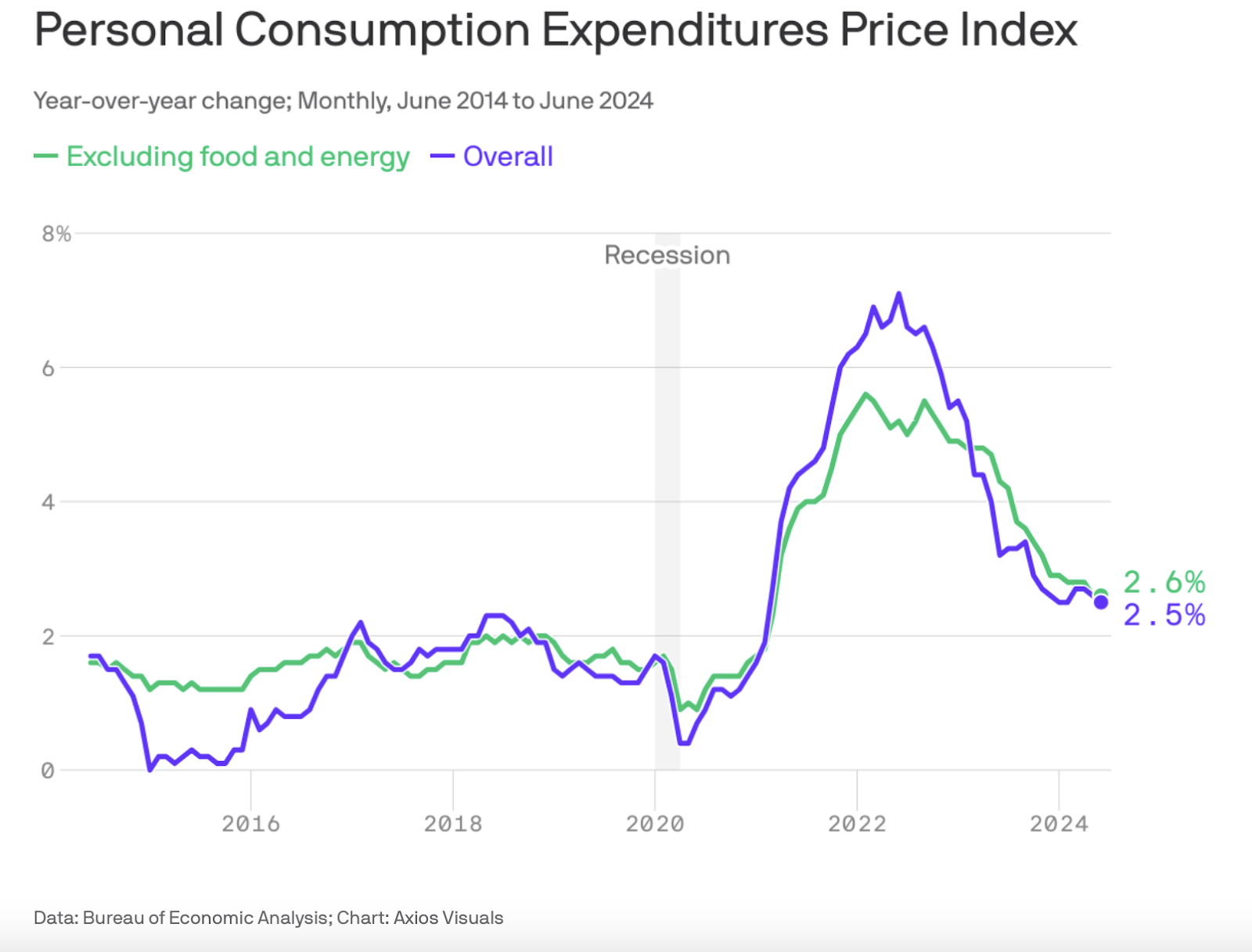
This chart comes courtesy of Axios, which shows that despite a blip in Q1, inflationary pressure is on the way down, with experts suspecting a rate cut may be coming in Q4. Explore the data.
The COVID-19 pandemic exposed weaknesses in global supply chains, resulting in increased attention to supply chain risks, including child and forced labor. Recent EU regulation will require additional due diligence on global supply chain risks and large companies like those within the Russell 1000 that operate across regions will experience pressure to evaluate the effectiveness of their policies or face significant penalties abroad. We also see in our polling that human rights issues in supply chains are fairly important to the American public, ranked at 11th in 2023.
At the same time, domestic workers are increasingly prioritizing freedom of association and collective bargaining. In late 2023 polling of the American public’s view on business, “majorities from every political party (92% of Liberals, 86% of Moderates, and 74% of Conservatives) [were] in support of collective bargaining.”
In response to this environment of heightened scrutiny and public polling data, JUST Capital and RepRisk partnered to analyze trends in risk incidents among companies in the Russell 1000 Index over the last decade with a focus on the most recent three years (2020-2023) and key issues including Supply Chain, Child and Forced Labor, and Freedom of Association and Collective Bargaining. We then examined how and if disclosure of policies and actions to mitigate these risks influence their incidence.
Supply Chain Risk:
Unsurprisingly, RepRisk recorded an increase in risk incidents related to supply chains such as human rights risks, geopolitical risks, poor labor practices and use of conflict minerals during the pandemic for Russell 1000 companies. However, the count of these incidents has returned to pre-pandemic levels in the last three years. As vendors and suppliers are considered part of the supply chain, supply chain risks were found to be linked to companies who are held accountable for the actions of their suppliers. Heightened regulatory scrutiny underscores the need for comprehensive risk management strategies to ensure compliance and mitigate potential liabilities across global supply chains.
Child and Forced Labor Risk:
According to the UN, child labor incidents globally declined between 2000 and 2016. However, conflicts, crises, and the COVID-19 pandemic have reversed this trend, pushing families into poverty and forcing more children into labor. Though the majority of Russell 1000 companies have not been linked to child and forced labor, a small subset have, despite regulatory efforts and the reputational consequences.
Freedom of Association Risk:
Freedom of association risk refers to violations of workers’ rights to organize and collectively bargain, and includes, for example, interfering with union formation and participation, retaliation against striking workers, and refusal to comply with union agreements. Over the last three years, RepRisk has captured an increase in freedom of association risks within the Russell 1000 companies. This coincides with increased attention to workers’ rights issues in the US, highlighting the growing importance of addressing labor rights and maintaining ethical employment practices.
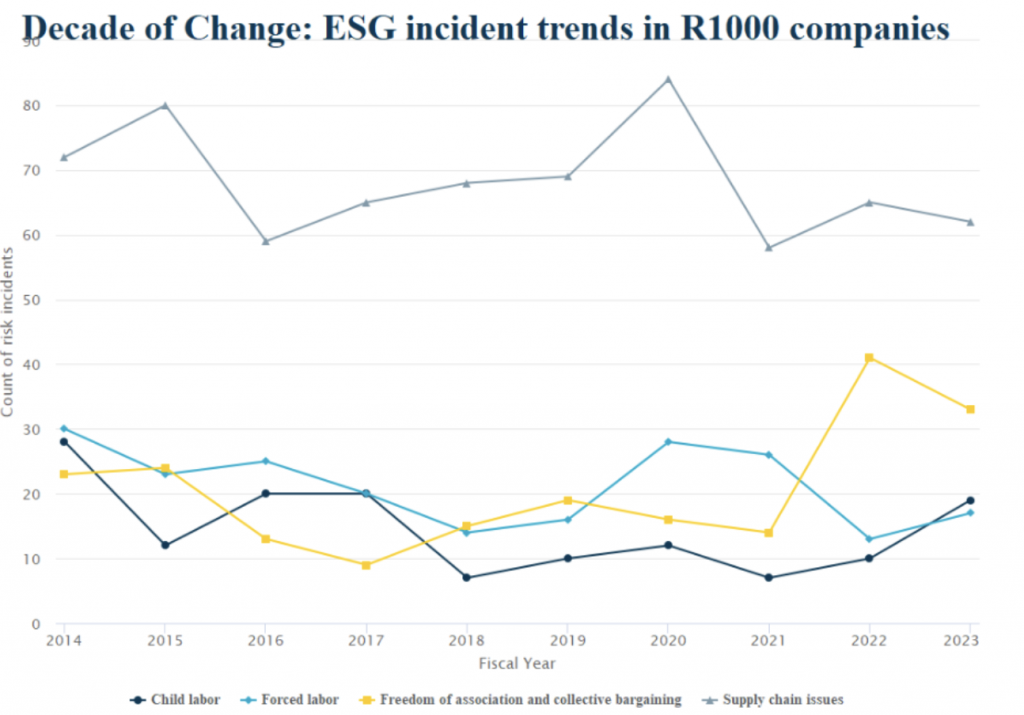
Over the past 10 years, the recorded risk incidents are linked to a subset of just 192 Russell 1000 companies. In the more recent three-year period, this subset has narrowed down to 106 companies with recorded risk incidents.
Across all four risk categories, there have been 902 risk incidents in the last 10 years, with 291 incidents reported in the last three years.
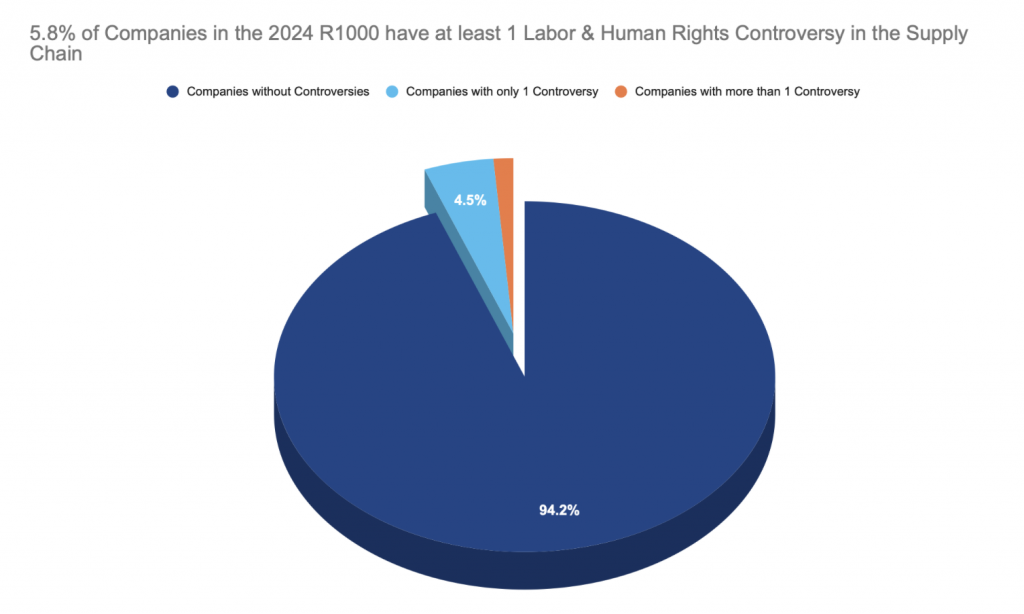
JUST Capital takes RepRisk’s data in these four areas and rolls them into a singular data point called Labor & Human Rights Controversies in the Supply Chain, which are then filtered for the highest severity.
In JUST Capital’s 2024 Rankings, there were 87 unique risk incidents of this type, distributed over 54 companies, following the trend of a high concentration of risk incidents in a small number of companies.
Of the 36 industries JUST Capital evaluated between 2020 and 2023, 13 had no companies with risk incidents, 10 had one, 9 had two, and 4 had greater than two. These four highest risk industries are Retail, with 9 risk incidents, Clothing & Accessories and Food, Beverage & Tobacco, both with 6, and Restaurants & Leisure with 5. Risk is defined by the number of incidents in an industry – rather than percent, as industries vary in size – with the highest-severity risk incidents regarding labor and human rights in the supply chain.
When analyzing a portion of JUST Capital’s human rights data in conjunction with risk data, we found that there was no clear relationship between industry risk and industry disclosure of policies and actions to mitigate these risks.
JUST Capital Policy and Action Data Points
JUST Capital identifies human rights data points assessing the degree to which companies are actively auditing and reporting on human rights within their supply chain as well as taking remedial action. You can learn more about the below policies and actions and our methodology HERE.
Policies:
Actions:
The following graphs reveal the percent of companies within each of the four highest risk industries that are disclosing policies or actions on the six data points above that JUST Capital uses to assess a company’s human rights efforts.
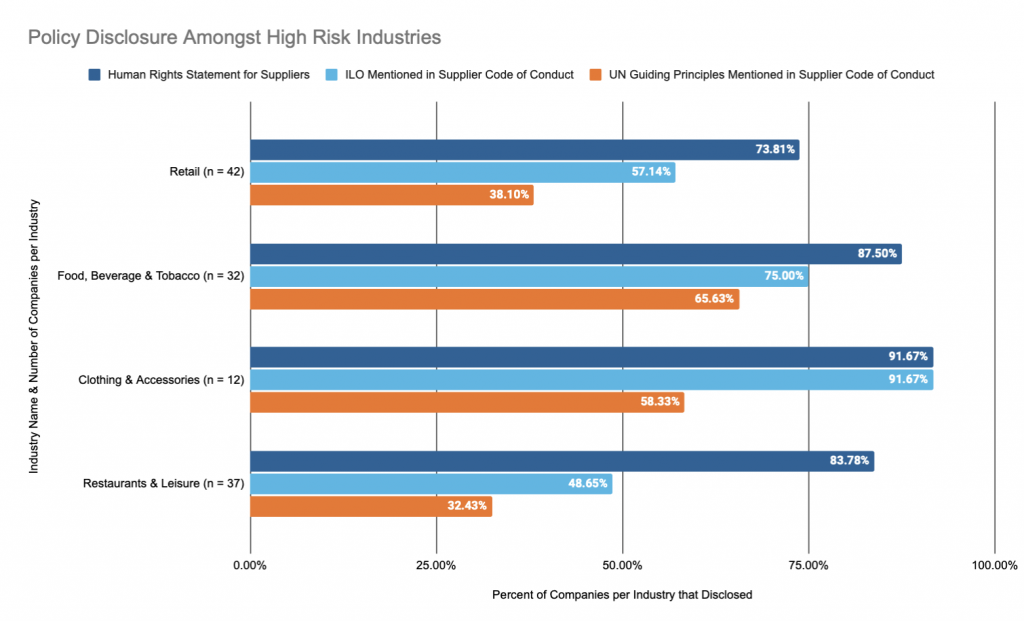
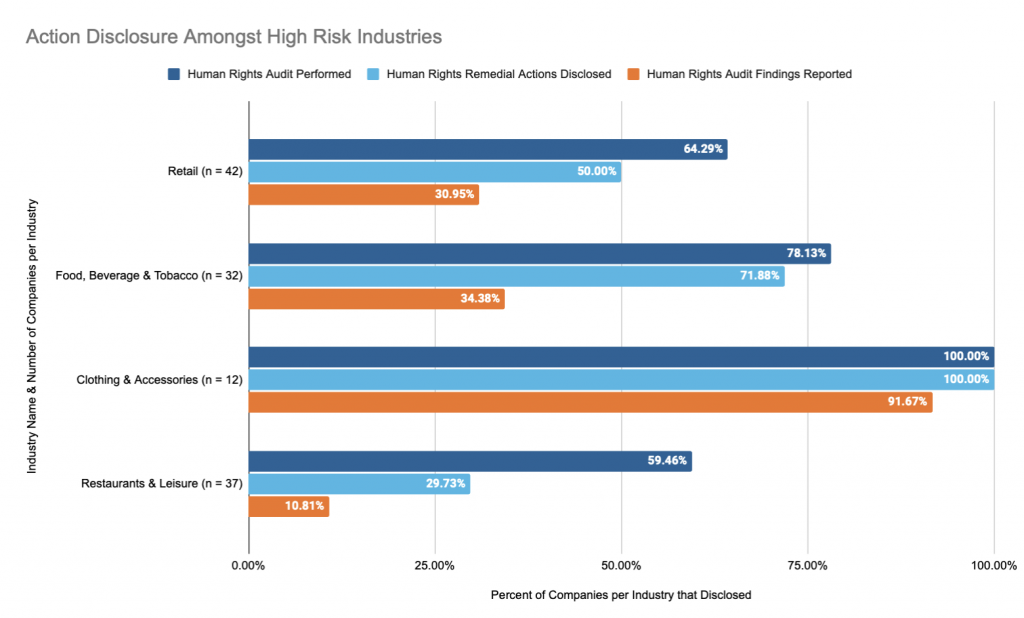
Rates of disclosure of global supply chain risks and associated actions vary among industries. This is evident in the comparison between Clothing and Accessories vs Retail. Retail reported the lowest percent of disclosure, while Clothing & Accessories showed the highest rate of disclosure amongst high-risk industries. This is likely due to the fact that Clothing & Accessories is a more heavily regulated industry as companies produce a similar product whereas Retail involves a variety of products, limiting the ability to standardize disclosure requirements.
When compared to industries of a similar size, high-risk industries were found to have lower rates of disclosure. For example:
Discussion
Industries with no – or minimal – risk incidents had high rates of disclosures of sustainable human rights practices. However, industries with known exposure to human rights and supply chain risks had high rates of disclosure as well, indicating that rates of disclosure do not necessarily mitigate incidents of risk. Rates of disclosure could be indicative of legal requirements applying more heavily to one industry, pushing for further human rights due diligence, e.g. disclosure of remedial action plans or reporting the findings of human rights audits. Perceived salience or applicability to the human rights space plays a role, leading to a natural order of leading and lagging industries. Companies in industries that rely on global supply chains are going to have somewhat high disclosures compared to less clearly implicated industries. Risk mitigation in the form of these six data points is not foolproof. For example, reference of the UNGPs may be indicative of a company’s commitments, but did not influence the number of risk incidents occurring. Across all industries, more work can be done to mitigate these types of risks, especially in light of increasing scrutiny on these issues from the American public. In a mixed-policy, region-dependent environment, standardization benefits companies trying to ensure compliance.
About this Partnership
JUST Capital is an independent nonprofit dedicated to demonstrating how just business – defined by the priorities of the public – is better business.
JUST Capital engages RepRisk as their third-party data partner for collecting data on systematic risk incidents, as reported by media and other stakeholders, taking into account incident severity, relevance, and prominence, and scales these by a company’s global revenue to account for the increased attention that large companies experience.
