Just Capital’s 2021 Americans’ Views on Business Survey is by Jennifer Tonti, Managing Director, Survey Research & Insights.
As we continue to move forward from the COVID-19 pandemic, we find ourselves in the midst of an economic sea change – in one of the tightest labor markets in history despite millions of Americans still out of work. In August alone, an unprecedented 2.9% of the entire workforce, some 4.3 million people, quit their jobs as part of the labor market reckoning dubbed The Great Resignation. And American workers rose up during “Striketober” to demand better working conditions and higher pay.
It remains to be seen what the long-term impacts of these shifts will be – and whether this is a temporary blip for our economy or a greater shift in how people think about the role of business in society. In this year’s Survey of Americans’ Views on Business, we’ve turned to the public once again to ask them how they think corporate America is doing today – and provide a lookback on our findings over the years to see how views have shifted.
Since 2015, Just Capital has surveyed more than 150,000 demographically diverse Americans, asking them what they believe is most important when it comes to just business behavior. Polling the public not only helps us understand what Americans want from corporate leaders today, it provides a data-driven roadmap for how companies can better align their business with the public’s priorities and help address the country’s most pressing societal challenges.
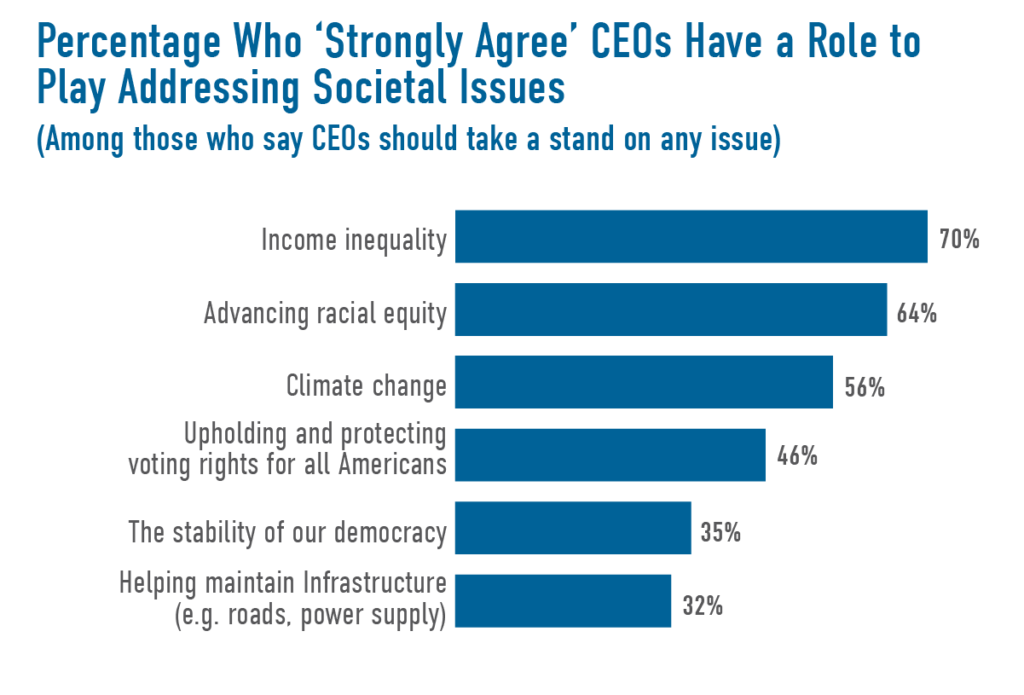
In 2021, many of the positive views we’ve heard from the public from past surveys seem to be reversing course, and Americans increasingly believe that business is heading in the wrong direction, with a decreasing focus on workers in favor of shareholders. But they also believe that corporate leaders can play a critical role in addressing core societal issues – from income inequality (70%) to racial equity (64%) to climate change (56%).
“Organizations should not be creating the world’s problems but actually solving them,” suggested former Unilever CEO and Just Capital Board member Paul Polman in a recent Financial Times interview. Americans agree that companies should aim to do more good by focusing on their stakeholders’ long-term interests and taking responsibility for their impact on the wider world.
Here’s what we learned:
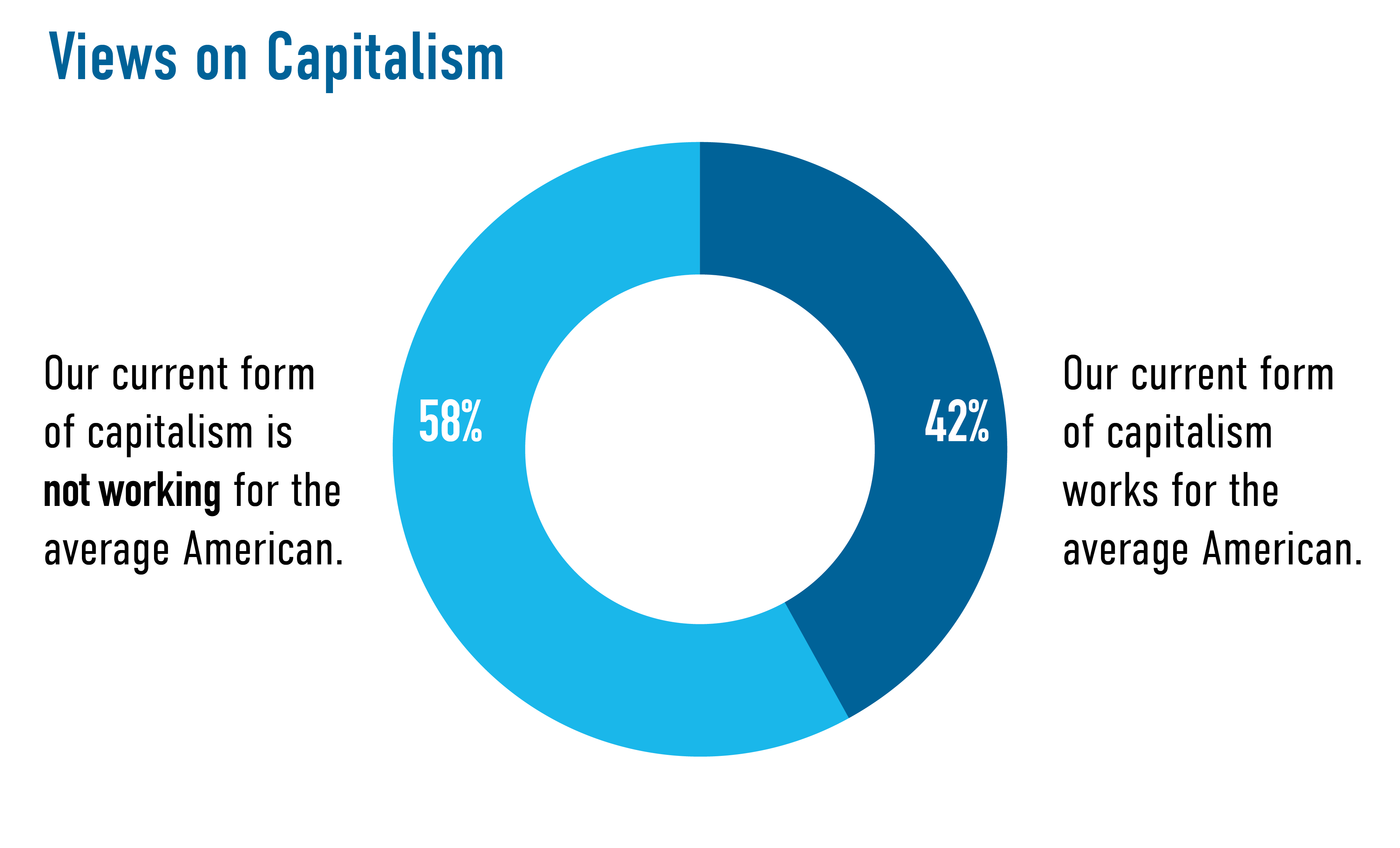
A majority (58%) says that our current form of capitalism is not working for the average American. This finding is supported by 61% who agree “The Coronavirus pandemic has made it clear that America needs a more evolved form of capitalism.” These two findings underscore that, in the eyes of the public, large companies are still operating like business as usual, and the average American is not reaping the benefits promised by the capitalist model.
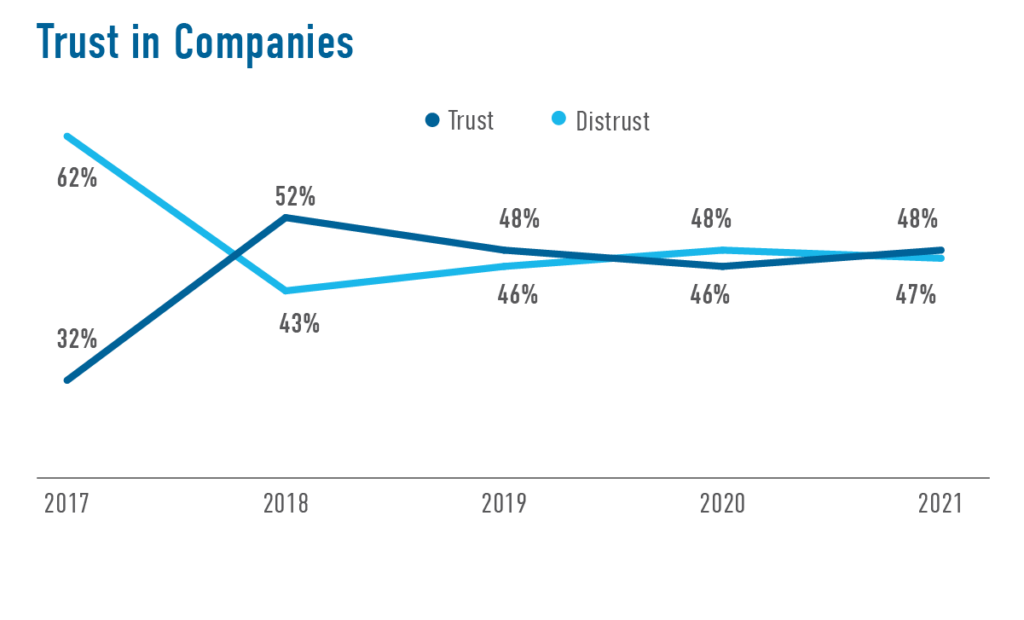
By the same token, Americans’ trust in business has stagnated. Although Edelman’s Trust Barometer shows that business is the most trusted institution (compared to major institutions such as government and media), our research shows that Americans’ trust in business has plateaued over the last four years, with roughly equal proportions saying they trust companies (48%) as distrust them (47%).
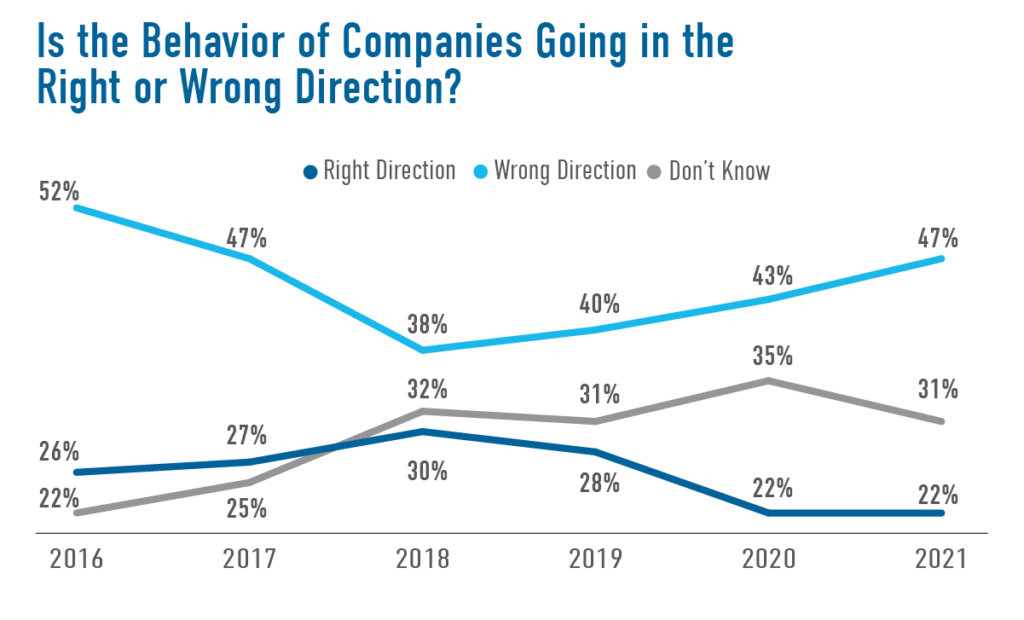
Since 2016, we have asked the public whether they think companies are heading in the right or wrong direction. The optimism we saw emerging in 2018 has started to slowly reverse course; in 2021, just 22% say companies are headed in the right direction (a similar percentage as when we started asking this question five years ago), versus 47% who say companies are headed in the wrong direction. Another 31% say they don’t know if companies are moving in the right or wrong direction, which could be an indication of their mixed feelings about the issue.
In August of 2019, CEOs of the Business Roundtable challenged Milton Friedman’s shareholder primacy doctrine and redefined the purpose of a corporation to promote “an economy that serves all Americans.” All told, today 243 signatories have committed to lead their companies for the benefit of all stakeholders, which includes serving their workers, customers, communities, the environment, and shareholders.
Yet in the two years since that announcement, there is significant skepticism that companies are actually following through on their commitments: 84% agree that companies “often hide behind public declarations of support for stakeholders but don’t walk the walk.”
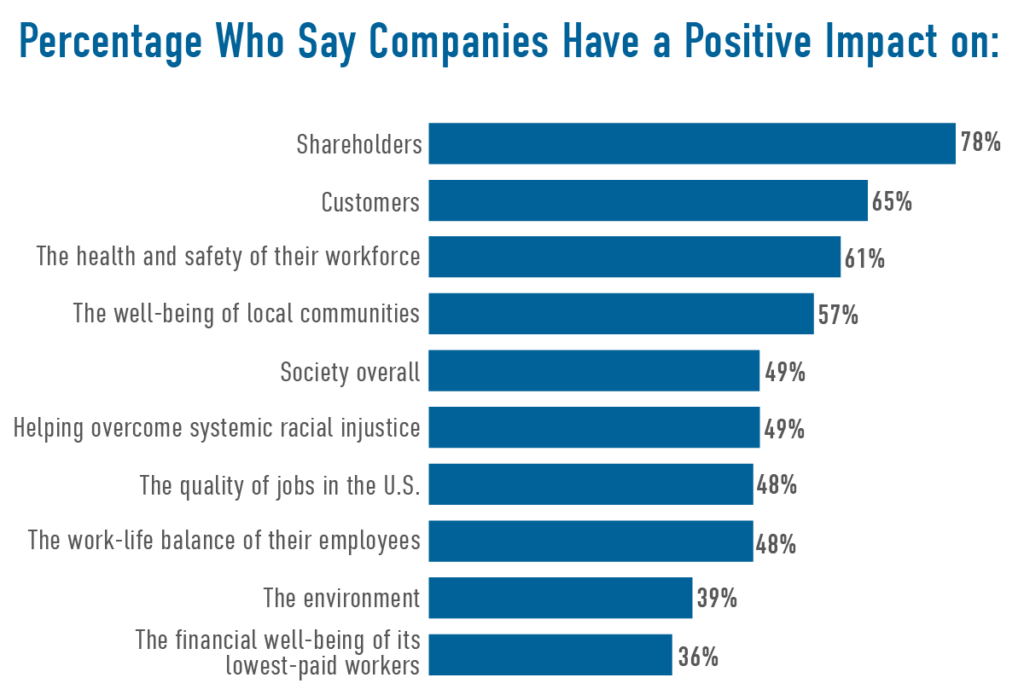
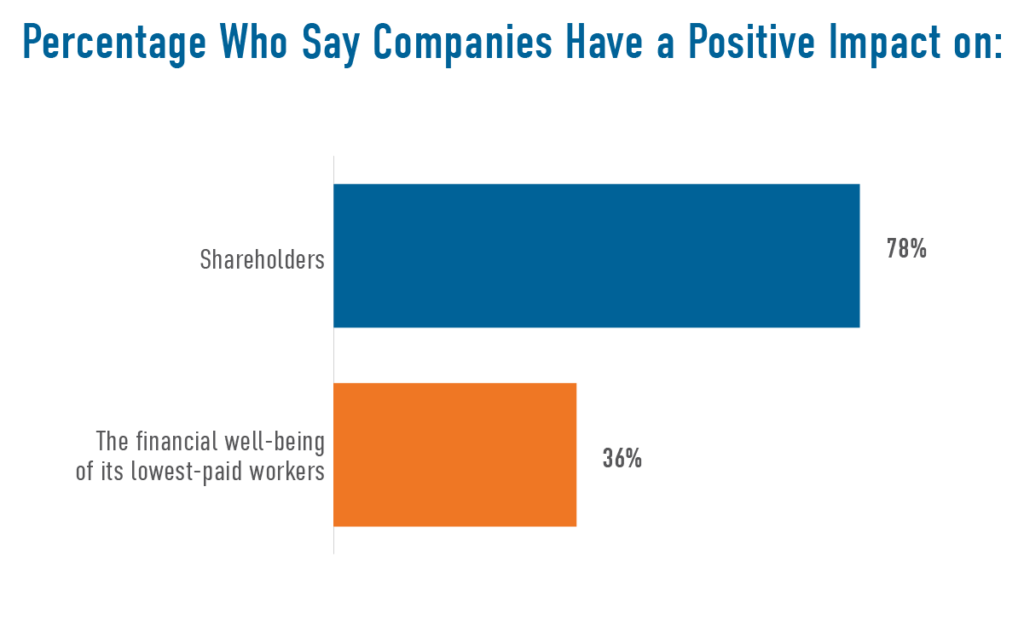
The following chart shows that the public is less confident that companies are actively demonstrating a positive impact across key stakeholders. For example, the percentage who say companies are having a positive impact on shareholders (78%) is significantly greater than those who say the environment (39%) or the financial well-being of lowest paid workers (36%).
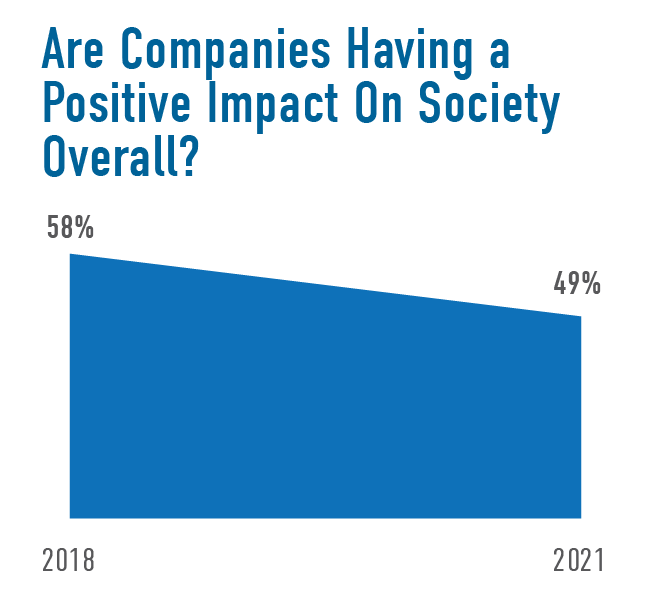
When we look at some of these measures over time, once again we see that the public’s perspective is that companies are moving in the wrong direction. For example, the percentage who say companies have a positive impact on society overall has fallen from a high of 58% in 2018 to just 49% of Americans in 2021.
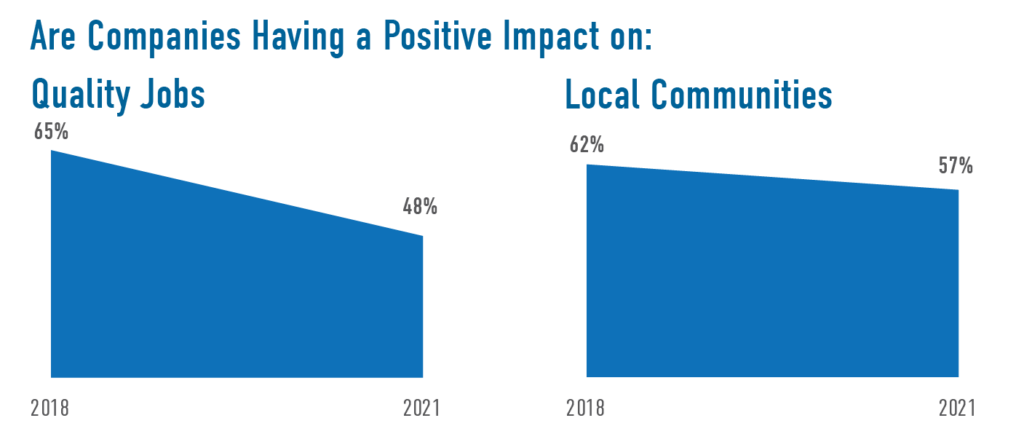
Similarly, the percentage who say companies have a positive impact on the quality of U.S. jobs (65% in 2018) falls almost 20 percentage points (48% in 2021) as does the percentage of those who believe companies are having a positive impact on the well-being of local communities (62% in 2018 to 57% in 2021).
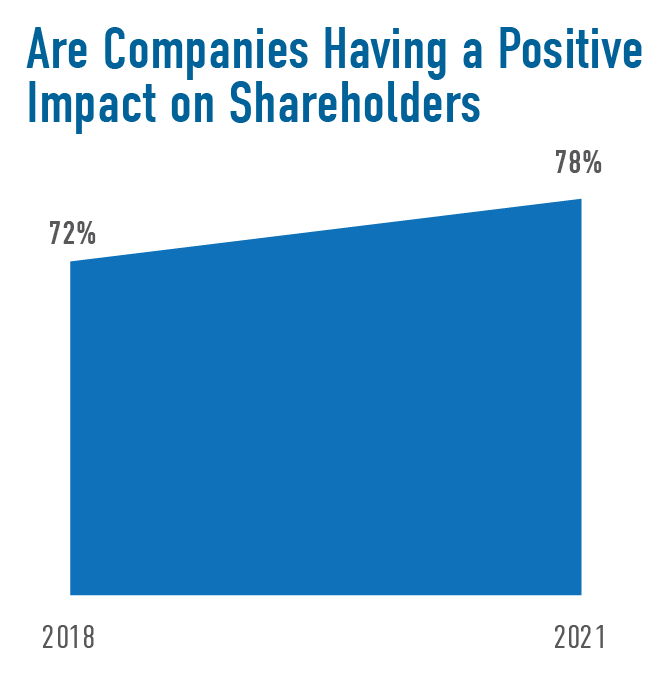
Compare those trends with the percentage of Americans who say companies are positively impacting their shareholders: This number has ticked upwards, from 72% in 2018 to 78% in 2021.
Another question asks for the public’s thoughts about which stakeholder – shareholders, customers, or workers – is the top priority for companies. For each of the last five years and by a significant but varied margin, Americans have said shareholders. Although the percentage had been trending downward, in 2021 that dip has reversed yet again, with just about half (51%) saying shareholders are a company’s top priority. At the same time, the percentage of those who said workers were a company’s top priority – which had reached a high of 37% in 2020 – has fallen to 30% in 2021.
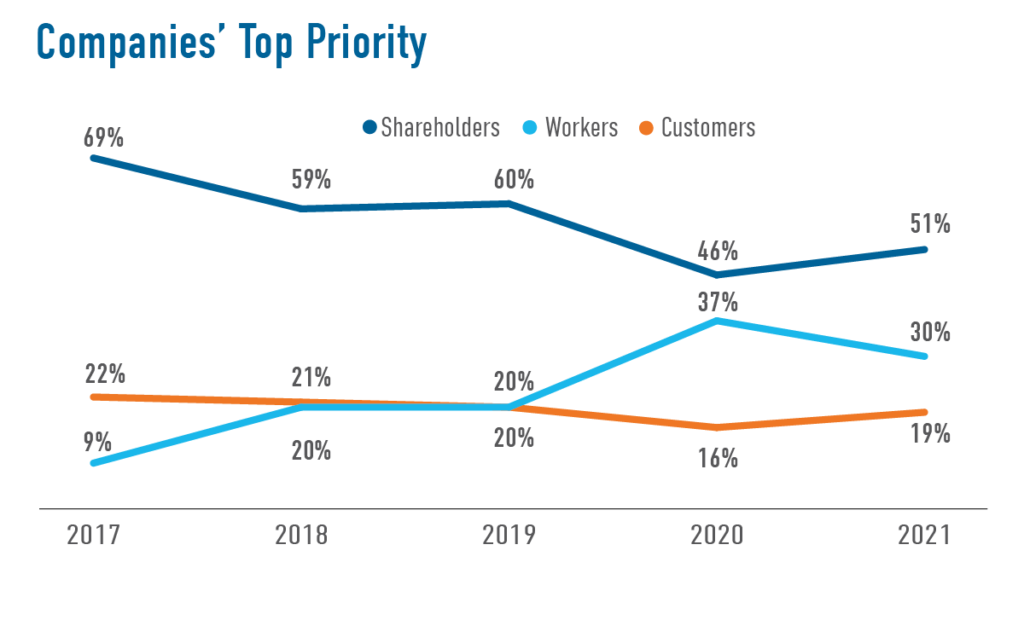
The data reflect that Americans continue to believe that workers are being left behind. Low wages, poor benefits, and the continued strain of health concerns during the pandemic have made working conditions next to impossible for America’s frontline workers, and the public is taking notice. Particularly when the media is paying close attention to the groundswell of workers who, feeling more empowered than ever to fight for better treatment from their employers, are striking, walking-out, or simply resigning.
Revisiting the chart on positive impact for specifically worker-related issues brings the Great Resignation to closer focus. Compare the 78% who say companies have a positive impact on their shareholders to the percentage who say companies have a positive impact on the financial well-being of their lowest-paid workers (36%), and you see that Americans believe companies’ focus on shareholders is greater their focus on their lowest-paid workers by a margin of 2-to-1.
Despite the increasing skepticism we see from the American public, respondents also believe that change is possible – that corporate leaders have a key role to play in addressing the most critical issues of our time and that they’ve done right by their stakeholders through the COVID-19 pandemic and moving through our nation’s reckoning with racial injustice.
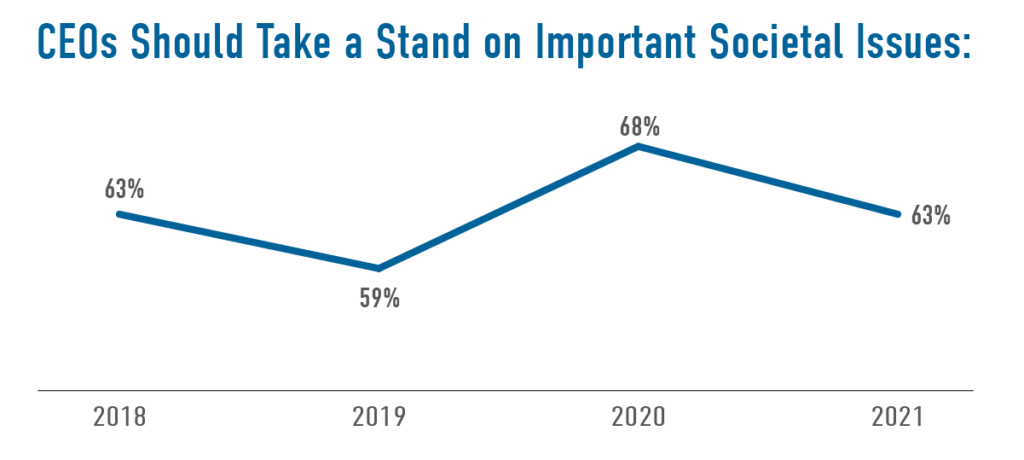
The public has consistently maintained that corporate leadership is the driving force behind just business behavior. Although the numbers may vary slightly year over year, the proportion is relatively stable over time: a majority of Americans (63%) believe CEOs of large companies have a responsibility to take a stand on important societal issues.
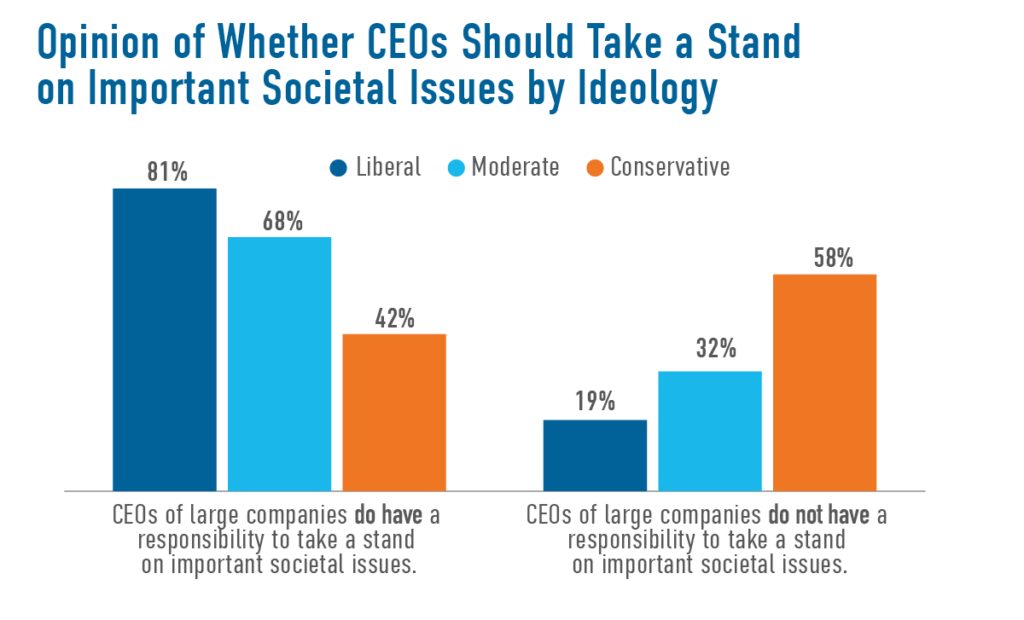
When we look at views on business across demographic disaggregates, we see a lot of consistency between different groups. CEOs taking a stand on societal issues, however, is one case in which Americans don’t necessarily see eye to eye. Americans who identify as liberal are almost two times as likely as conservatives to say CEOs have a responsibility to take a stand on societal issues (81% liberal vs. 42% conservative).
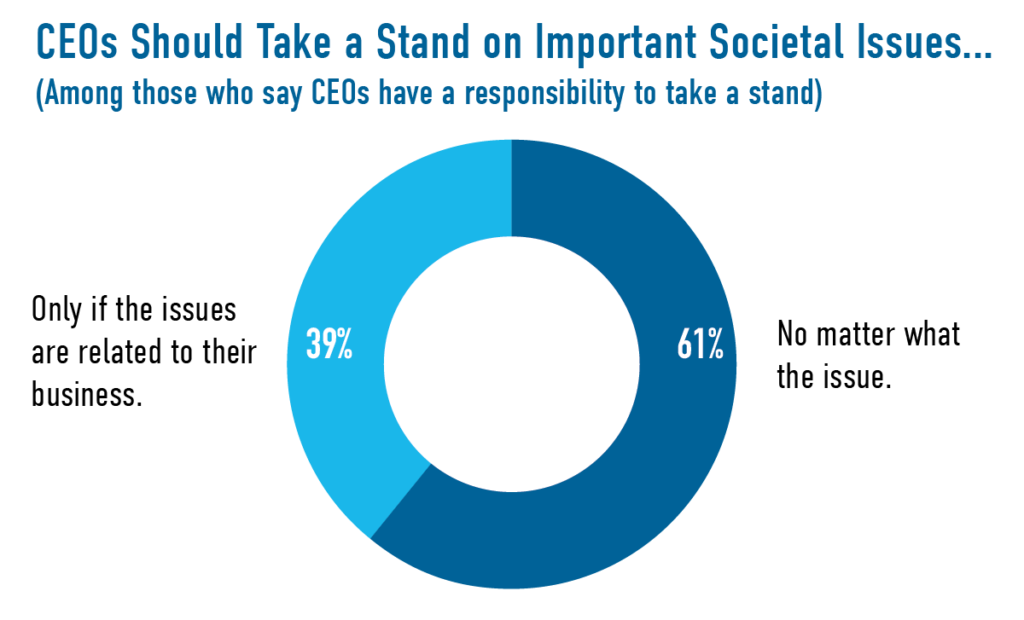
Of the almost two-thirds who say that CEOs have a responsibility to take a stand, 61% of that group says they should do so no matter the issue, and not necessarily focus on issues that directly impact their business.
In 2021, we asked which societal issues CEOs should address. Among those who say CEOs should take a stand no matter what, 70% strongly agreed that leadership should address income inequality. The other most important issues were racial equity (64%) and climate change (56%).
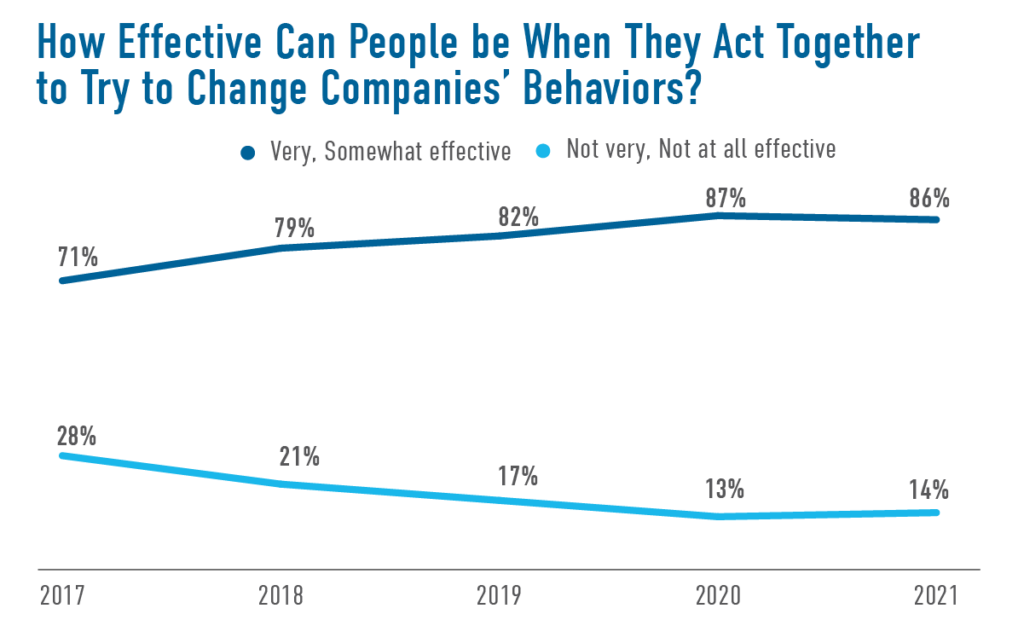
When asked if business can be a positive force for change, a large majority (84%) agreed. Additionally, people believe that their own actions can shape the future: 86% of Americans say people can be effective when they act together to try to change companies’ behaviors, up 15 percentage points since we first asked this question in 2017.
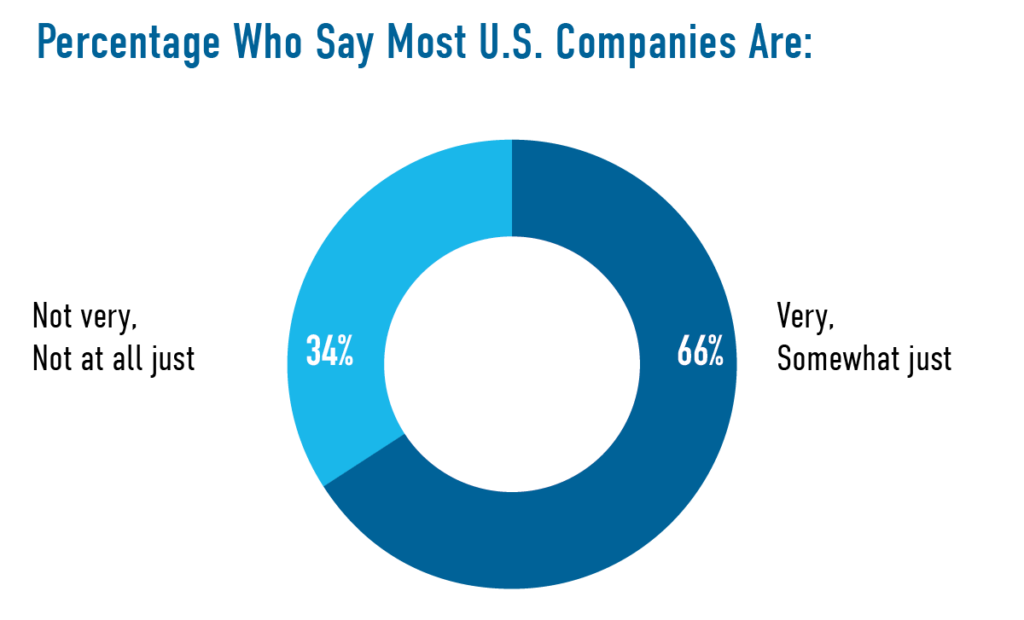
With regards to just business behavior, we found this year that two-thirds of Americans think most companies are very or somewhat just, up from 60% in 2019.
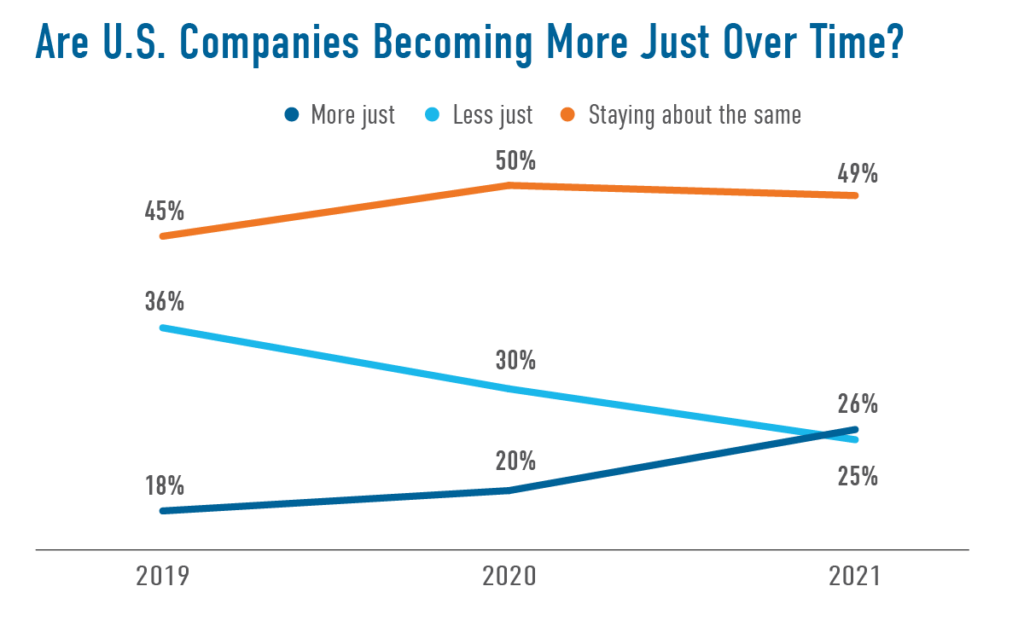
We also asked Americans whether they think companies are becoming more or less just over time – and although a plurality say that they have stayed about the same, a growing percentage say companies are becoming more just while a decreasing percentage say companies are becoming less just.
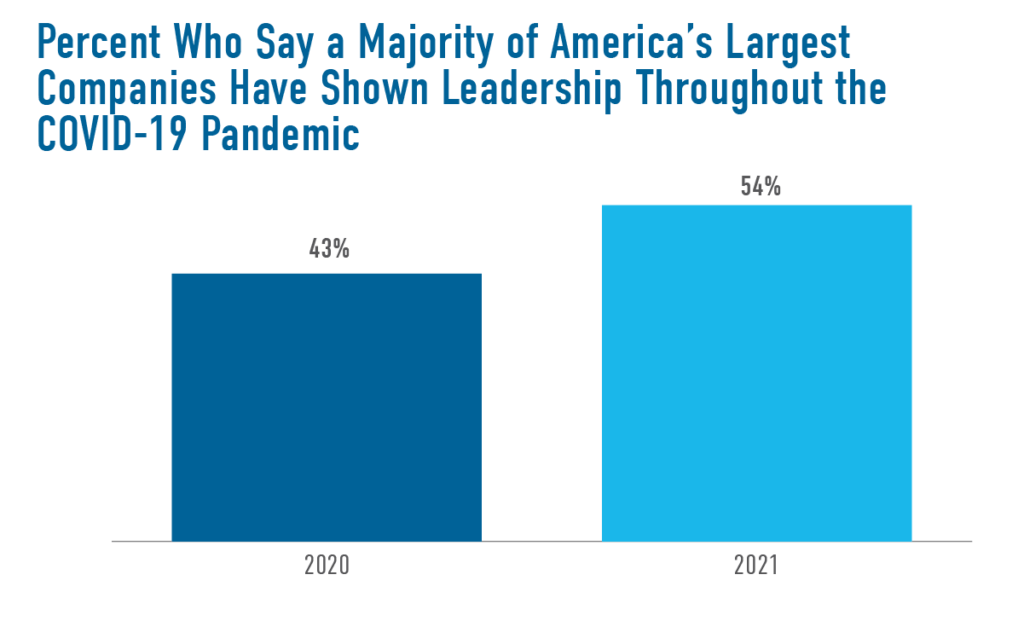
Positive assessments of corporate behavior are perhaps informed by the public’s views on how companies have weathered the events of the past two years. More than half (54%) say companies have shown leadership throughout the pandemic, up from 43% in 2020.
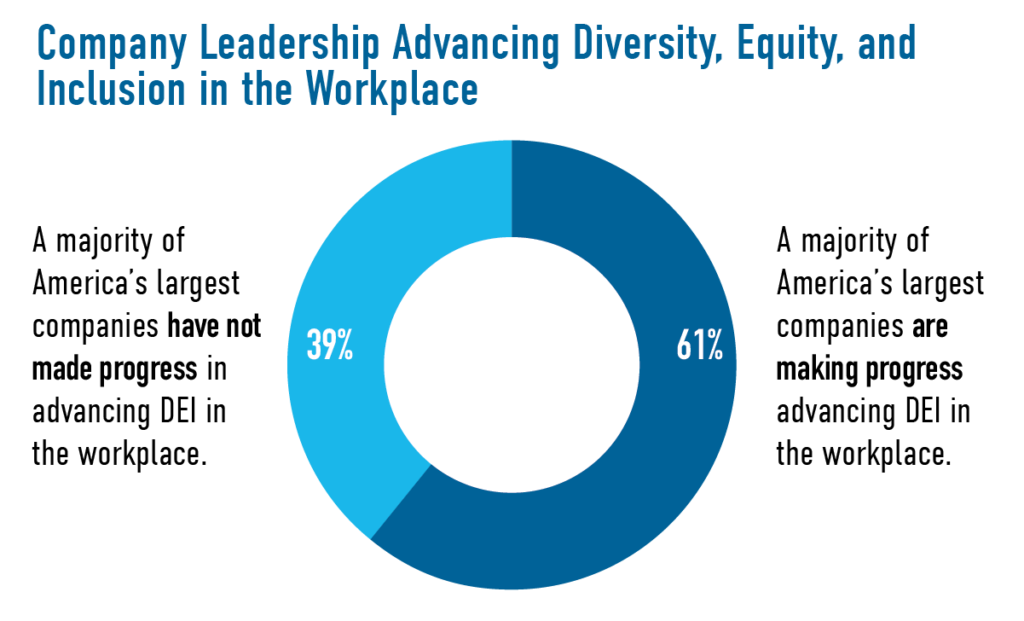
Assessments of company leadership making a commitment toward diversity, equity, and inclusion in the workplace over the past 12 months show similarly positive results, with 61% of Americans saying a majority of companies are making progress advancing DEI.
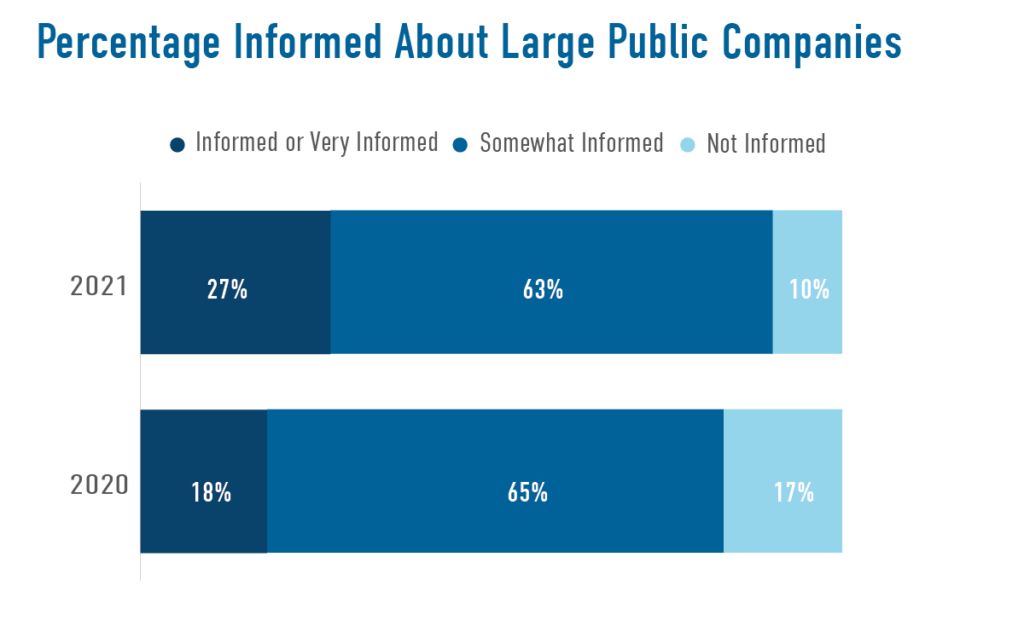
That Americans have strong opinions about large U.S. companies may be attributable to a significant and growing percentage of the public being informed about corporate activities and behavior (in 2021, 27% say they are Informed or Very Informed, up from 18% in 2020), undoubtedly due to an prodigious amount of media coverage on the topic throughout the pandemic.
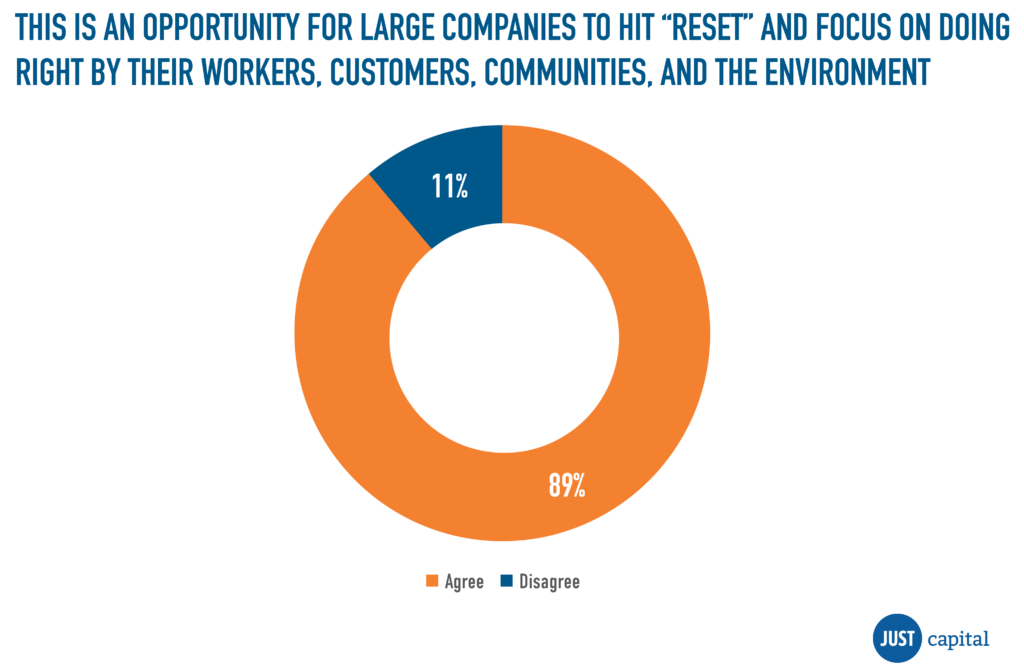
For all of corporate America’s positive momentum toward achieving a more just business model, this year’s survey data shows that leadership has more work to do in addressing the needs of all their stakeholders, particularly treatment of their lowest paid workers. Last year, almost nine in 10 Americans said the pandemic was “an opportunity for large companies to hit reset and focus on doing right by their workers, customers, communities, and the environment.” While Americans saw positive gains on some key metrics, there has been some backtracking from those gains in the past 12 months.
If progress is truly to be made toward a more just economy that serves the needs of every American, then corporations must continue to listen and respond to the issues that matter most. Toward that end, Just Capital will be releasing in December the “The People’s Priorities” showcasing which Issues rose to the top in this year’s Annual Survey and the final Issue weights that will underpin our Rankings of America’s Most Just Companies in 2022.
The Americans’ Views on Business survey was conducted in association with SSRS – an objective, non-partisan research institution that provides scientifically rigorous statistical surveys of the U.S. population. Just and SSRS conducted the 20 question survey online with a probability-based sample between July 28 and August 10, 2021 among a general population sample of 3,000 English- and Spanish-speaking U.S. adults 18+ years of age, with an oversample of 507 Hispanic and 461 non-Hispanic Black respondents.
The margin of error is +/- 2% at the 95% confidence level. Results were weighted to U.S. Census parameters for age, gender, education, race/Hispanic ethnicity, and Census Division to ensure representativeness of the U.S. population. All margins of error include “design effects” to adjust for the effects of weighting.
With 56% of the population having received at least one dose of the COVID-19 vaccine, and 48% of the population fully vaccinated, businesses in the U.S. are accelerating their return to pre-pandemic operations. Yet certain sectors have had a difficult time filling roles, with the lower-wage jobs in the retail and hospitality industries taking an especially hard hit. According to a recent report from the Labor Department, as of June, employment at restaurants and hotels is down by 1.3 million jobs since the pandemic began, and the overall share of U.S. workers leaving jobs at these establishments hit a two-decade high in May.
News reports show corporate leaders lamenting a “labor shortage,” but many experts argue that it is a misalignment between employer and employee expectations. The largest companies in some sectors have figured out that the answer to staffing challenges is relatively simple: pay more and provide better benefits. A recent Wall Street Journal report cited that Chipotle, McDonald’s, and Olive Garden have all announced wage increases this year, and other employers have started to expand benefits, and offer bonuses and other perks. The job market is leaning in favor of workers over employers more now than in the recent past. And we wanted to know Americans’ opinions on what changes companies need to make to attract workers, and whether these changes should be a permanent shift in worker treatment versus a temporary response to the pandemic.
Just Capital, along with our research partner, The Harris Poll, asked a sample of more than 2,000 respondents their opinion about shifting expectations of worker wages; specifically, what companies need to do to incentivize people to come back to work. For context, we reached out to a general sample of U.S. adults and, among this group, roughly one-in-three respondents identify as minimum wage, hourly or gig, contract or temporary worker.

While rolling back unemployment benefits is one way state governments have been trying to get people back in the workforce, there is no hard evidence it’s working – especially in those industries with the most severe staffing shortages, and with a higher amount of low-wage roles.
Overall, low-wage workers make up a sizable chunk of the U.S. workforce, comprising approximately 44% of workers ages 18 to 64, according to a 2019 study by the Brookings Institute. We asked respondents what companies should do to attract workers and fill openings for low-wage work. Their response: offer higher starting wages and good benefits.


Many employers are already recognizing that the solution to attracting employees back to work, while creating a more resilient and inclusive recovery on the other side of the pandemic, is to invest in higher wages and benefits. Whether this is the beginning of a new era of worker bargaining power still remains to be seen, but the American public clearly supports a shift toward good jobs with comprehensive benefits.
As we’ve seen with The Worker Financial Wellness Initiative, the benefits of investing in workers in traditionally low-wage jobs can be substantial including increased engagement, productivity and customer satisfaction, combined with lower turnover costs, which creates a virtual cycle for employees, employers, and shareholders too. Watch PayPal CEO Dan Schulman and Chipotle CEO Brian Niccol discuss the benefits they’ve experienced from investing in their worker’s financial well-being on CNBC Squawk Box or listen to Squawk Box Pod (starting at minute 24:00).
This survey was conducted online within the United States by The Harris Poll in partnership with Just Capital from July 6–8, 2021 among 2,057 U.S. adults ages 18 and older. This online survey is not based on a probability sample, is not representative, and therefore no estimate of theoretical sampling error can be calculated. Please explore topline survey results here, or for complete survey methodology, including weighting variables and subgroup sample sizes, please contact Jennifer Tonti at jtonti@justcapital.com.
Since 2015, we have been regularly polling Americans for their opinions on just business behavior. One key element of exploration is understanding the degree to which the public believes corporations have a role to play in speaking out on societal issues. In 2019, our Annual Survey showed that 59% of Americans said CEOs of large companies have a responsibility to take a stand on important social issues. In 2020 that percentage grew to 68%.
This trendline shows that, more and more, the public is looking for corporate leadership on issues above and beyond business operations. In our recent focus groups, we heard loud and clear that Americans increasingly expect CEOs to speak out on some of America’s most pressing societal issues, including inequality, racial inequity, and threats to democracy. Findings from a recent poll from our partners at The Harris Poll echo our own research: a strong majority of Americans (60%) said that well-known brands taking stands on social issues is more important than in the past, and younger generations share this stance to a significantly greater degree (70% Gen Z, Millennials). As the public’s expectations for just business evolve, JUST Capital is committed to continuing to probe what it means for companies, and what Americans expect from corporate leaders on the most pressing issues of our time.
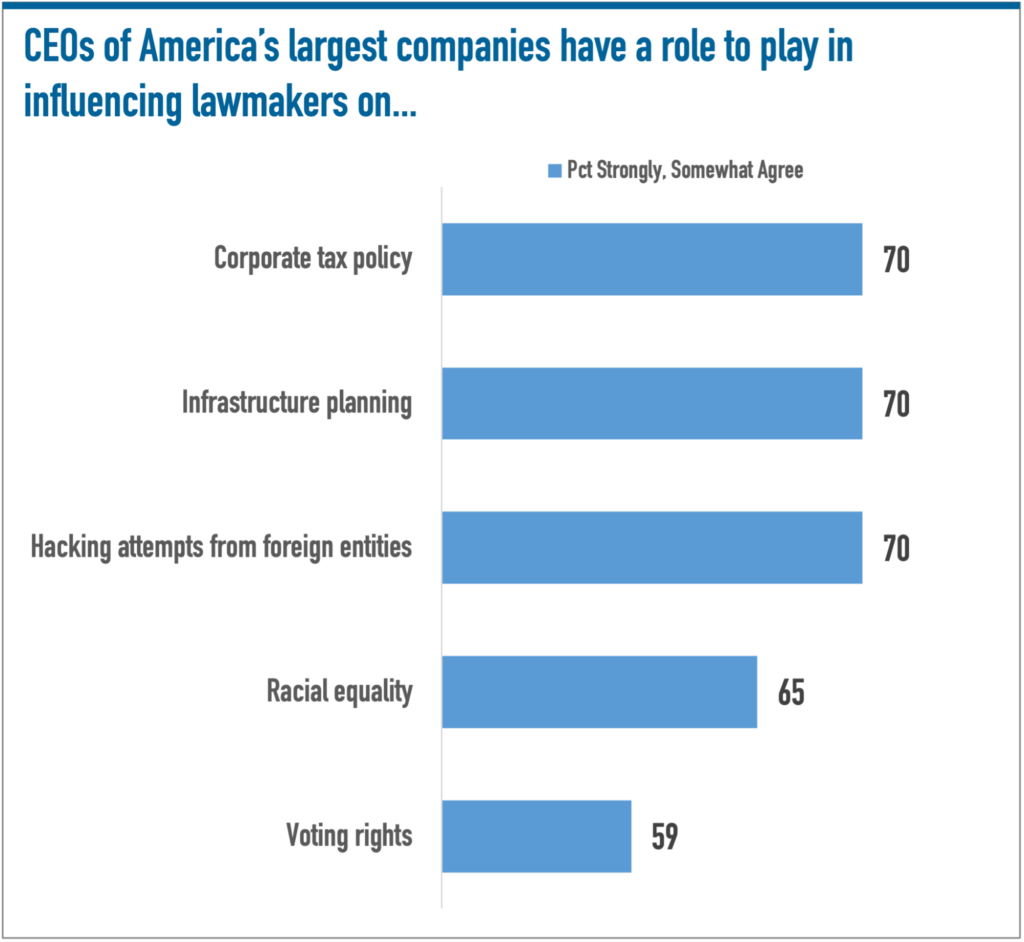
To that end, this most recent survey, fielded in April in partnership with The Harris Poll, reached 2,000 Americans in an effort to understand whether they believe CEOs have a role to play in influencing lawmakers across a variety of issues. Strong majorities agree that CEOs should influence lawmakers when it comes to both economic issues such as corporate tax policy, infrastructure, and blocking hacking attempts from foreign entities (70%), as well as societal issues such as racial equality (65%) and voting rights (59%).
When we look at responses to this question across different demographic groups, results generally follow the same pattern of responses. However, there are some pronounced differences when we look along generational lines.
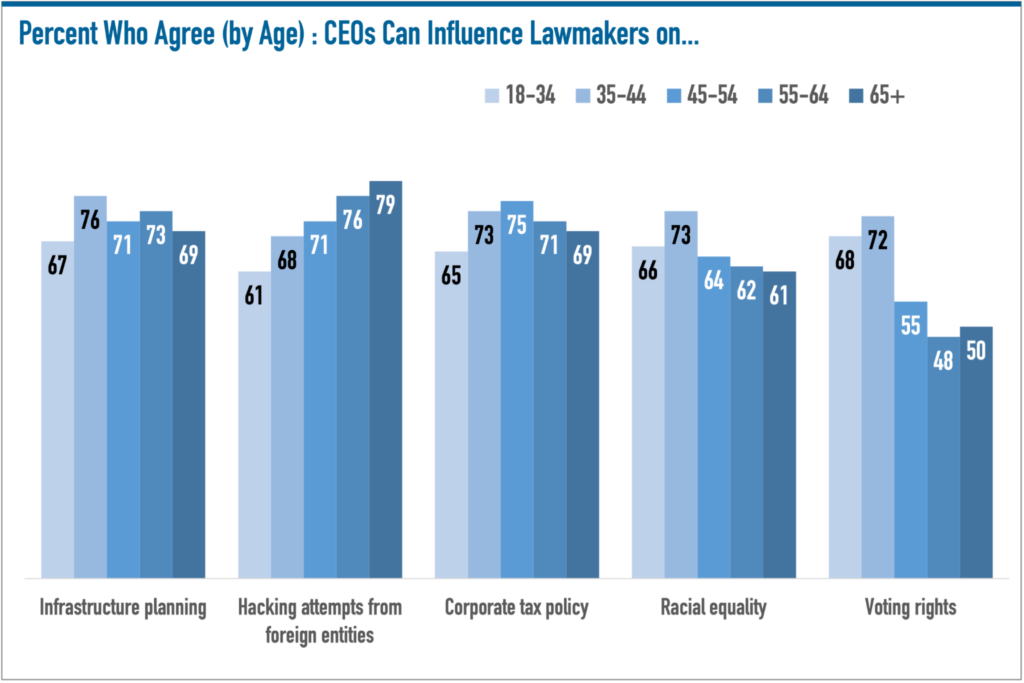
Gen Z and Millennials – respondents 18-44 – are more likely to agree that CEOs have a role to play in influencing lawmakers on social issues, like racial equality and voting rights, than their older counterparts. Conversely, Americans 55+ placed more emphasis on the importance of economic issues like infrastructure, hacking, and tax policies.
Race and ethnicity is another demographic area where we see differences in levels of agreement. Black and African American respondents were more likely to agree that corporate leaders should influence lawmakers on racial equality (76%) and voting rights (69%) than White Americans (63% racial equality, 57% voting rights) and Hispanic Americans (65% racial equality, 56% voting rights).
In the last month, voting rights specifically has emerged as a major issue, with a number of CEOs speaking out against restrictive new voting laws emerging in states like Georgia, Florida, and Texas. A survey we conducted leading up to the 2020 election showed that 57% of respondents believe companies have a moderate or significant role to play in upholding U.S. democracy by advocating to roll back laws that restrict voting rights for groups disproportionately affected, such as Black voters.
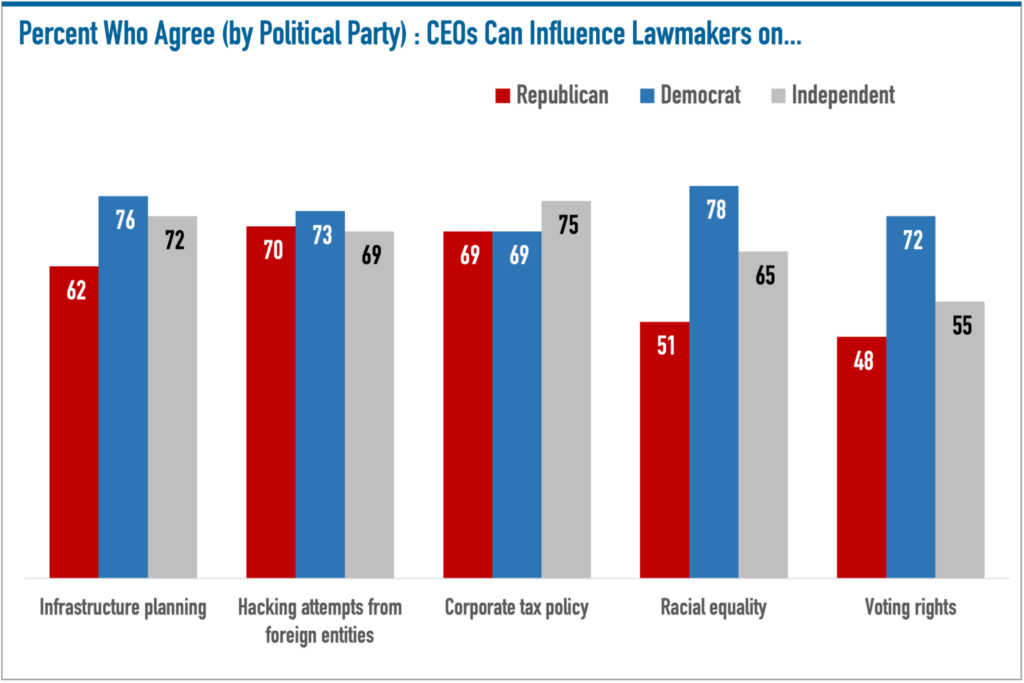
This most recent poll tells a similar story, with a majority (59%) agreeing that CEOs can influence lawmakers on voting rights issues. However, looking at these results across party lines, there is disparity in agreement among Republicans, Democrats, and even Independents.
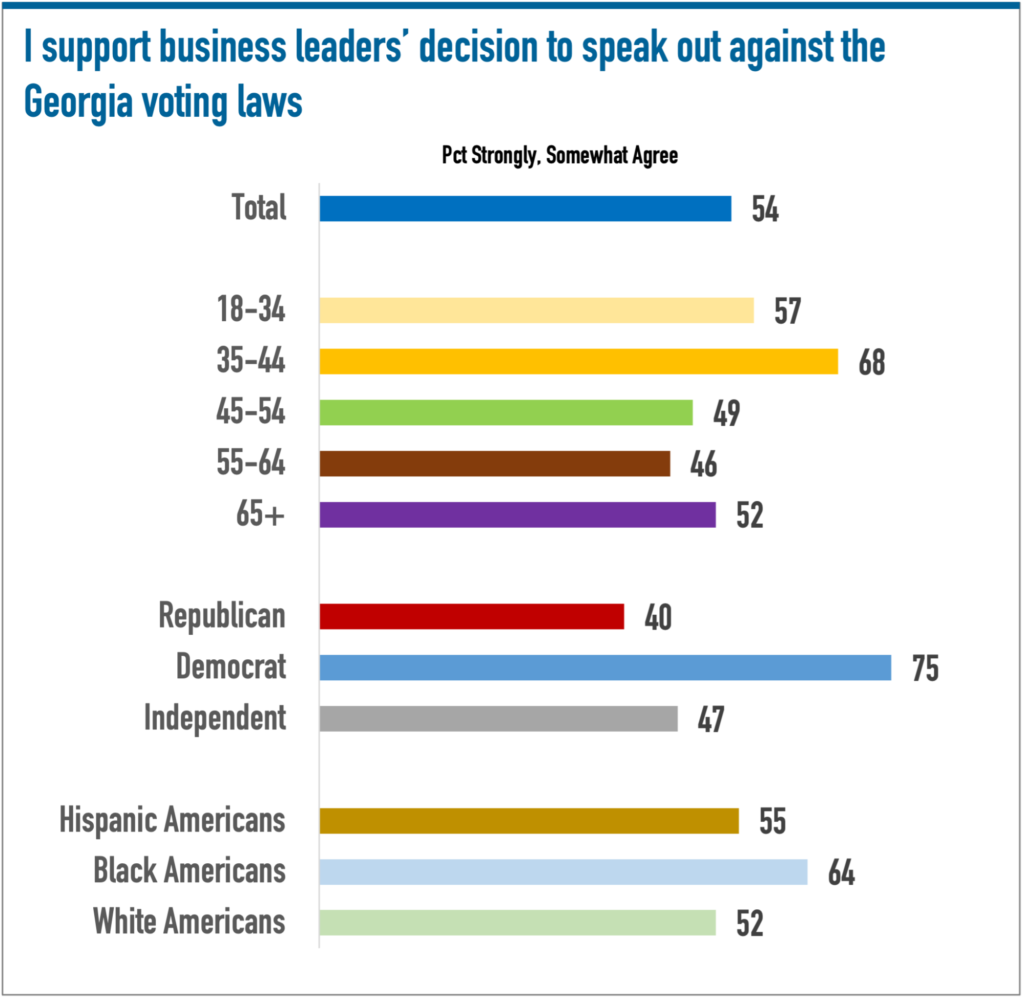
We also asked specifically about whether or not the public supports companies that have spoken out against the recently passed Georgia voting reform bill. More than half of respondents (54%) support the companies that spoke out, while 27% say they do not support the companies that did so, and 19% say they have no opinion on the matter.
But much like we saw in the previous question, there are clear differences when looking at age, race/ethnicity, and political party, with more support for speaking out from younger generations, Democrats, and Black Americans.
For corporate leaders, navigating a commitment to social issues while avoiding partisanship is proving to be a delicate dance. We will continue to regularly poll the public to understand how they want business leaders to respond to the critical stakeholder issues facing the country and economy today and in the months and years to come. With signals that the public increasingly expects business leaders to speak out, we will continue to monitor what Americans want, how companies are measuring up, and where corporate America should focus to align their practices with the priorities of the public.
This survey was conducted online within the United States by The Harris Poll in partnership with JUST Capital from April 29–May 3rd, 2021 among 2,061 U.S. adults ages 18 and older. This online survey is not based on a probability sample and therefore, is not representative of America. The results represent only the views of the sample and no estimates of sampling error can be calculated. For complete survey methodology, including weighting variables and subgroup sample sizes, please contact Jennifer Tonti at jtonti@justcapital.com. Detailed findings from this survey are available here.
Our most recent survey of the American public, fielded in collaboration with our partners at The Harris Poll, revisits how Americans expect companies to prioritize diversity, equity, and inclusion efforts – and specifically, what concrete actions corporate leaders can prioritize to ensure a movement toward greater racial equity.
The upshot: Americans continue to say that companies have a role in promoting equity both in the workplace and more broadly in society by instituting various corporate diversity, equity, and inclusion policies and practices. The events of the past year have moved the public toward the belief that companies have the opportunity — and the responsibility – to shift societal norms around racial equity, defined by our program partner PolicyLink as “just and fair inclusion into a society in which all people can participate, prosper, and reach their full potential.”
In this most recent poll, a vast majority of respondents – even across demographic and party lines – say it’s important for companies to promote racial diversity and equity in the workplace. That number skyrockets to near universal agreement among Black Americans (95%).
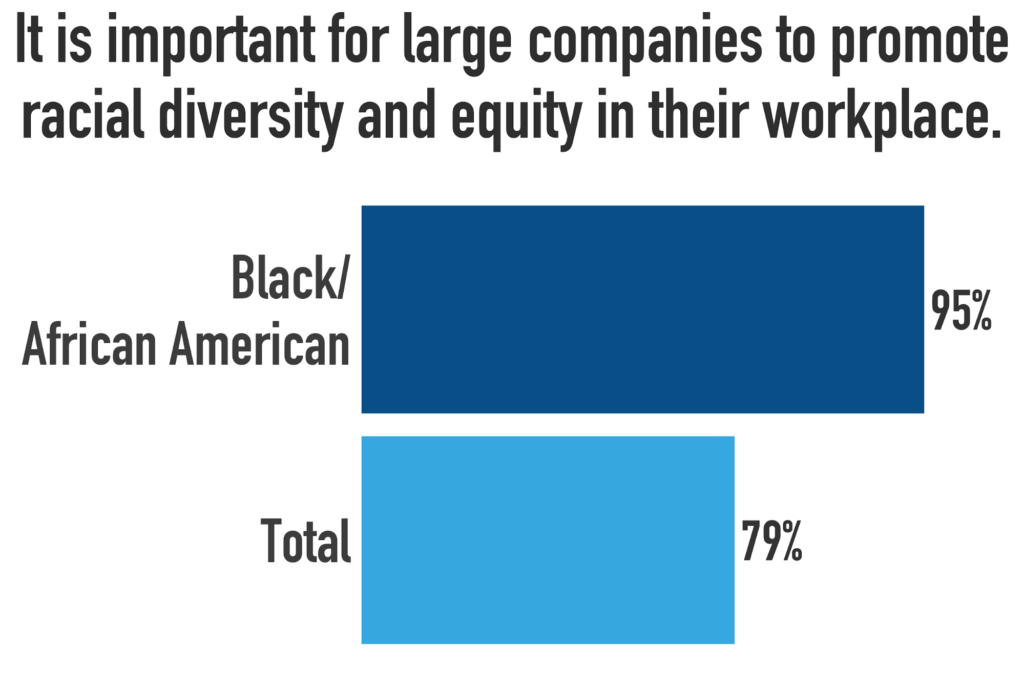
Two-thirds of respondents say that large companies have more work to do with regard to achieving racial equity specifically in the workplace but also more broadly across American society. Among Black Americans, those percentages rise to over 80%, specifically:

In February 2021, Just Capital held focus groups in which we explored myriad topics regarding just business behavior. We heard consistently in these focus groups – and from Black Americans, in particular – that they agree that companies should undertake tangible action to advance racial equity across all of their domains of influence: inside companies, within communities in which they operate, and at the broader societal level. For instance, one respondent was impressed with Ben & Jerry’s action plan to dismantle systemic racism and support Black Lives Matter.
“They had like a seven step plan that they gave you exact things that they were going to do to support, not just Black Lives Matter for now, while this is going on. But these are things that we can vote on and do. And giving information about ways for different legislations to be pushed forward, where they were going to put their money, specific names of things you should vote on that are going to help about police brutality…I think that is a just company just saying, ‘I know we’re going to get some pushback from this, but in this community, this is an important thing right now. We’re not just going to put a banner on the ice cream. We’re going to talk about these issues and keep this on the front page.’” – Black American woman in her 30s
Half of respondents (51%) say that promoting racial and ethnic diversity, equity, and inclusion in the workplace will ultimately have a positive effect on a company’s profitability. We see even greater profitability optimism among Black Americans (61%) and Democrats (68%).
Much like we saw from our June 2020 poll, strong majorities agree that true racial equity in the workplace cannot be achieved without all workers being paid a living wage – 82% among Black Americans, 76% total, and even 66% among Republicans – demonstrating that there is a strong connection between racial and economic justice.
To advance racial equity in the workplace, a majority of Americans show strong, universal agreement (73% or more) on the importance of instituting a range of corporate diversity, equity, and inclusion policies and actions. In particular:
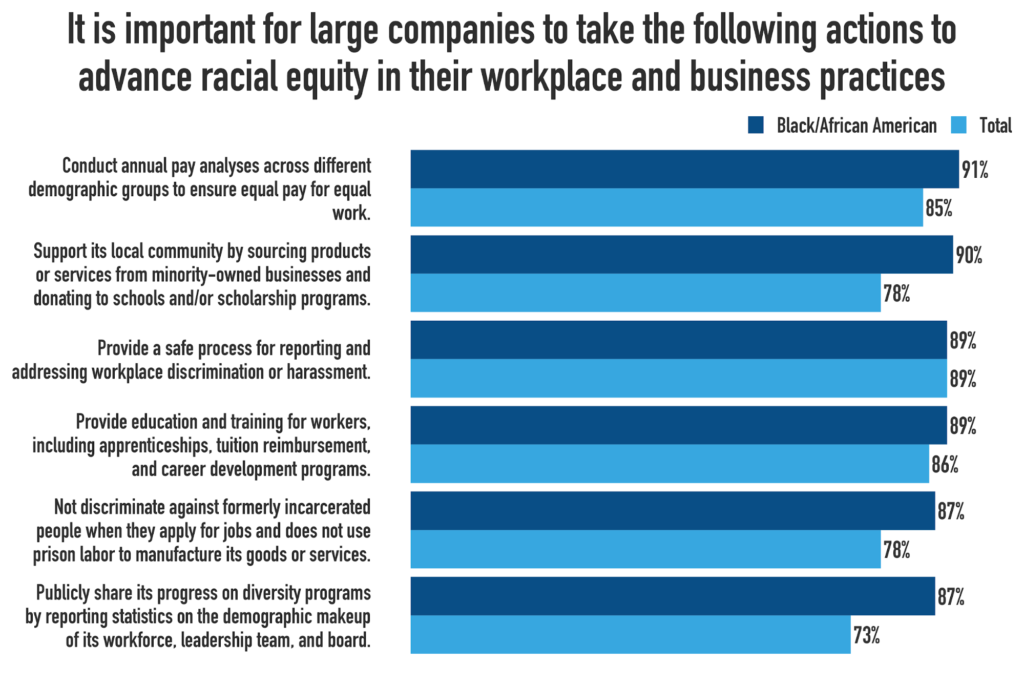
While support for diversity and equity policies is strong across demographics, there is significantly more support for actionable policies among Black/African Americans. For instance the top two issues included:
Across demographics, the two most important actions included:
While Americans continue to emphasize the importance of taking meaningful action to advance racial equity in the workplace, corporate America still has a long way to go. Though demographic disclosure is a key first step toward building a more diverse, equitable workplace, fewer than one-third of America’s largest companies have released some kind of workforce diversity data, and just 6.4% disclose detailed intersectional data that demonstrate workforce composition by both gender and race/ethnicity.
The insights from this latest survey effort – as well as the specific considerations we heard from our recent focus groups – show that the public continues to demand that corporate America instill values of equity and inclusion in the workplace. As discussed in our CEO Blueprint for Racial Equity, this is a defining moment for companies to redesign their “business-as-usual” practices and policies and showcase true leadership. In the coming weeks and months, we will exploring what tangible steps America’s largest companies are already taking to advance racial equity, and working to incentivize corporate leaders to build more inclusive workplaces and communities – that are truly aligned with the priorities of the public and their belief that creating this more equitable economy is not just necessary, but possible.
This survey was conducted online within the United States by The Harris Poll in partnership with Just Capital from March 11–15, 2021 among 3,024 U.S. adults ages 18 and older. This online survey is not based on a probability sample and therefore no estimate of theoretical sampling error can be calculated. For complete survey methodology, including weighting variables and subgroup sample sizes, please contact Jennifer Tonti, Managing Director of Surveys & Polling [jtonti at justcapital.com].
In this latest survey conducted by JUST Capital and The Harris Poll, with support from the Ford Foundation, we explore the state of worker health and safety in the U.S., turning to both employers and employees to understand how the impacts of COVID-19 are continuing to shape the workplace one year into the pandemic. Explore our key takeaways, as well as the full findings of this report, below:
For the last 12 months, the coronavirus pandemic has disrupted the workplace as we know it. On March 11, 2020 the World Health Organization characterized COVID-19 as a global pandemic, and on March 13, President Trump declared a national emergency. The need for companies to respond to the coronavirus crisis came on fast and frantic, forcing many organizations to quickly implement policies and procedures that would protect their workers from exposure and illness.
For some businesses, simply offering a generous work from home policy was sufficient to keep certain workers safe. However, in the U.S. there are approximately 55 million workers in industries deemed either “essential” (including Healthcare, Food Service, and Public Transportation, among others) or whose nature of work otherwise requires that they work outside the home. Taking the possibility of extended home quarantining off the table for this group leads potentially to COVID-19 exposure from any number of individuals, be they co-workers, customers, patients, or the public at large.
And these impacts are felt most keenly among low-wage workers, women, and people of color. Black and Hispanic workers, in particular, have borne the brunt of these challenges on the front lines, comprising about a third of essential workers. And against the backdrop of systemic racism and economic inequality, Black communities have faced considerably higher risk to contracting and dying from COVID-19. As we cross the one-year mark of the pandemic, it only grows more urgent, particularly for workers of color, that companies prioritize health and safety in the workplace.
Throughout 2020, JUST Capital continually turned to the public to find out what they wanted to see corporate America prioritize in the face of COVID-19. As the pandemic evolved, Americans told us what they thought should be prioritized during the initial response and sporadic reopenings – as well as what policies should be altered and prioritized in the long term as we work toward a “great reset” and economy that better serves its workers, customers, and communities. Health and safety consistently topped their chief concerns.
In this latest survey report, we look at policies and procedures in the workplace for those working at least part time away from the home – those most likely to be exposed to illness. We spoke with both workers and business leaders across companies of multiple sizes and industries to fundamentally understand if there was a disparity between workers feeling safe and how employers see their policies impacting worker safety. Specifically, we (1) asked about what safety policies and procedures are in place, (2) assessed the perceived level of compliance with these policies, (3) evaluated their perceived effectiveness, and finally (4) looked to understand the degree of sickness in the workplace and trepidation of reporting. Finally, we’ll see what the lasting impact these worker health and wellness policies have once the pandemic has receded.
This survey was conducted by JUST Capital and The Harris Poll with support from the Ford Foundation and additional participation from the National Council for Occupational Safety and Health (NCOSH). Throughout the report we will be using the shorthand “workers” to refer to U.S. adults (18 or older) who work full or part time at a company with 25 or more employees, and work outside the home at least part of the time. When we discuss employers, we will be referring to U.S. adults who work full time at a company with 25 or more employees, hold a management level position, have decision-making responsibility for worker and/or workplace issues, and whose employees must work outside the home at least some of the time.
At the start of the pandemic there were a lot of unknowns: how long would it last? How bad will it get? When will a vaccine become available? Regardless of when those questions could be answered, employers recognized that they had to respond quickly to protect and support their workforces. For many companies, that response could take the form of liberal work from home policies. For instance, a June 2020 snapshot from Stanford estimates that 42% of the U.S. workforce is working from home during the pandemic, and a September poll by Gallup reports that one in three workers say they are “always working from home.” But for those businesses whose operations require employees to be onsite (often deemed frontline or “essential”), protecting the health and safety of those workers was of vital importance. The public agreed; according to polling that JUST executed early in the pandemic, Americans said the topmost priorities for large companies in response to COVID-19 should focus on measures that protect their workforces.
Our ongoing survey research found that public opinion about corporate responses to COVID-19 was generally strong in the early days of the pandemic, with a majority (58%) saying America’s largest companies were showing leadership during the outbreak. This generally tracks with worker and employer perceptions of safety and protection almost one year later. Across a mix of company sizes, industries, and work situations, the findings are encouraging, with majorities of workers (72%) and employers (76%) reporting feeling safe in their workplace. Yet that leaves 28% of workers and 24% of employers saying that they do not feel safe and protected from getting infected with the coronavirus at their current workplace.
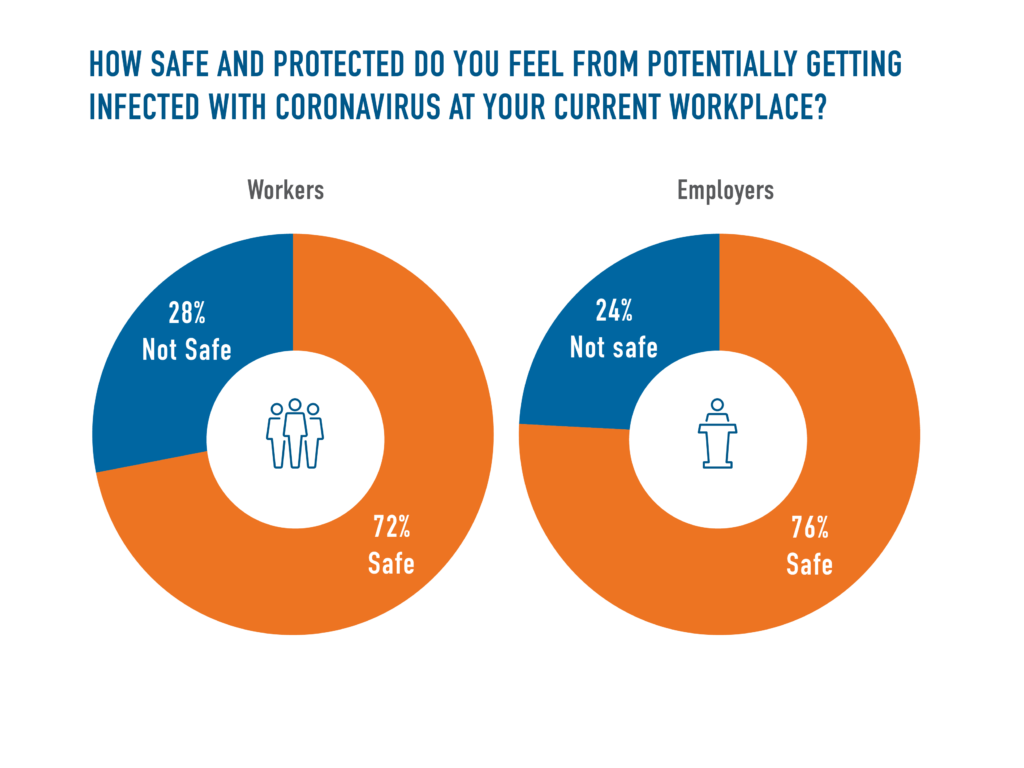
Clearly some employers are falling short in adequately protecting their workforces. Looking at the response groups, the workers who report feeling less safe are concentrated in smaller businesses (with 25-99 employees) in sectors like Retail and Restaurants, who report having frontline or essential positions where they are more likely to interact with the public and therefore have a greater risk of exposure to infected individuals.
The perception of safety is a question of adequacy: those who do not feel safe in their workplace are almost 4x as likely to say that their company’s health and safety measures are not enough to combat the spread of coronavirus. Fewer report that management is sufficiently equipping workforces with protective gear and that compliance with these measures is lagging. To make matters worse, this group is disproportionately more likely to report that they or someone at their organization have been discouraged from reporting an injury or sickness, and fear personal retribution if they were to report on safety issues in the workplace.
One theme emerging from the data is the divergence of the perceptions of health and safety between workers and their employers. We asked both groups for their opinions about the degree to which management is taking seriously the needs of workers, and while a majority of workers had positive opinions about their employers’ response, in many cases, workers were significantly more likely – in some cases more than twice as likely – to report that employers are falling behind. This could manifest as workers’ overall skepticism about management’s commitment to their health, safety, and overall well-being.
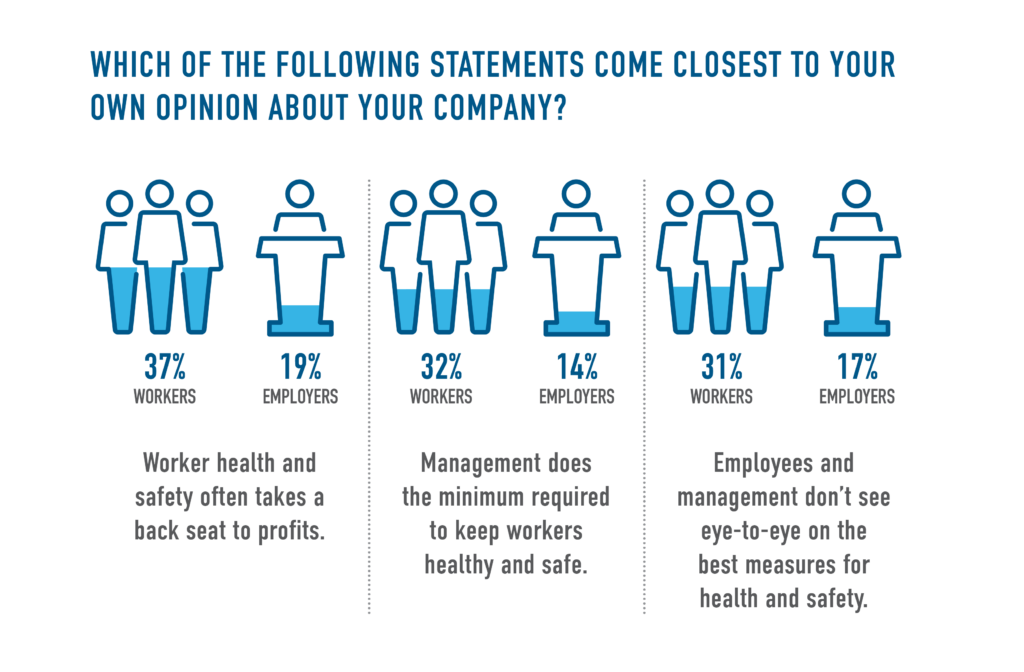
It continues to be of key importance that employers – particularly those in service sectors (e.g. Retail, Hospitality, and Food Services) that are more vulnerable to the virus – provide safe working environments, especially as we tiptoe toward a more significant level of reopening.
Significant majorities of respondents in both the employer (89%) and worker (82%) groups say that their workplaces have a formal, written COVID-19 safety plan in place for employees, and nine in 10 workers report that they are very or somewhat knowledgeable about the plan. What is more, the following chart shows that companies are doing a relatively satisfactory job in communicating those plans to staff.
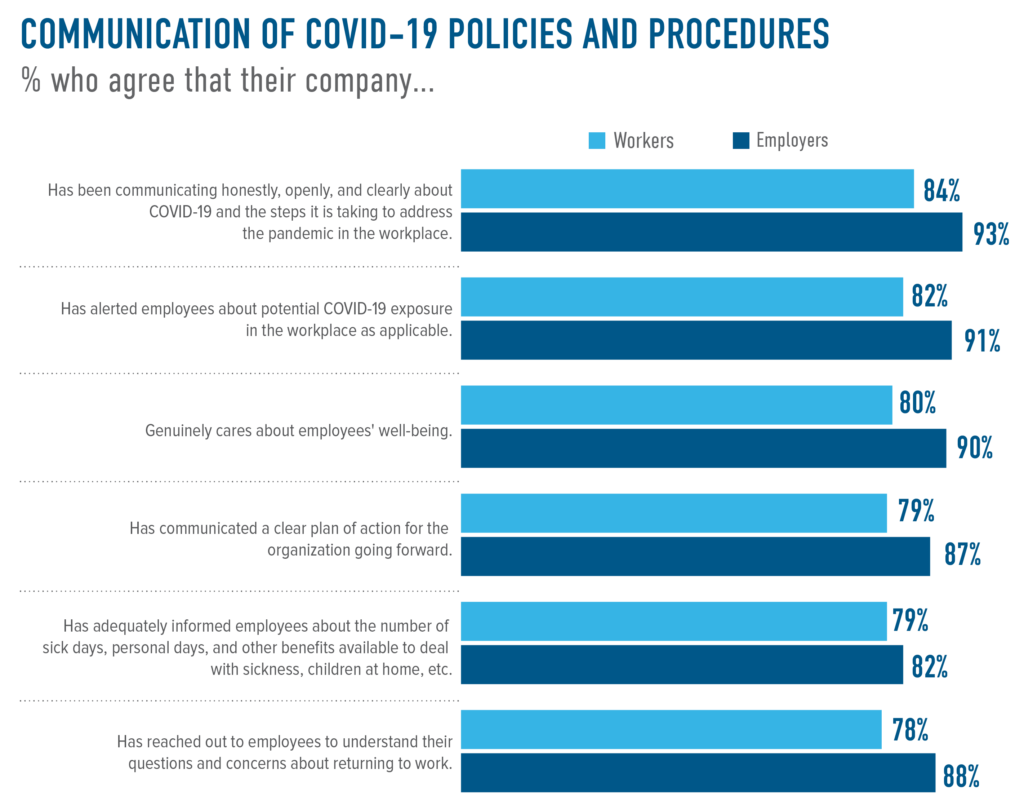
These findings are encouraging, yet subsequent data show that organizational leaders are failing to bring their employees into the planning process. Part-time workers as well as employees of small businesses in particular say they are less knowledgeable about company policies and procedures, which could signal that management needs to create more opportunities for two-way communication and collaborative forums (for example, 67% of part-time workers agree management has “reached out to employees to understand their questions and concerns about returning to work” vs. 80% agreement among full-time employees). Just under half (47%) of employers report creating a task force to manage coronavirus response, and significantly fewer in the worker group than the employer group say that management has asked employees for suggestions or feedback when creating policies and procedures.
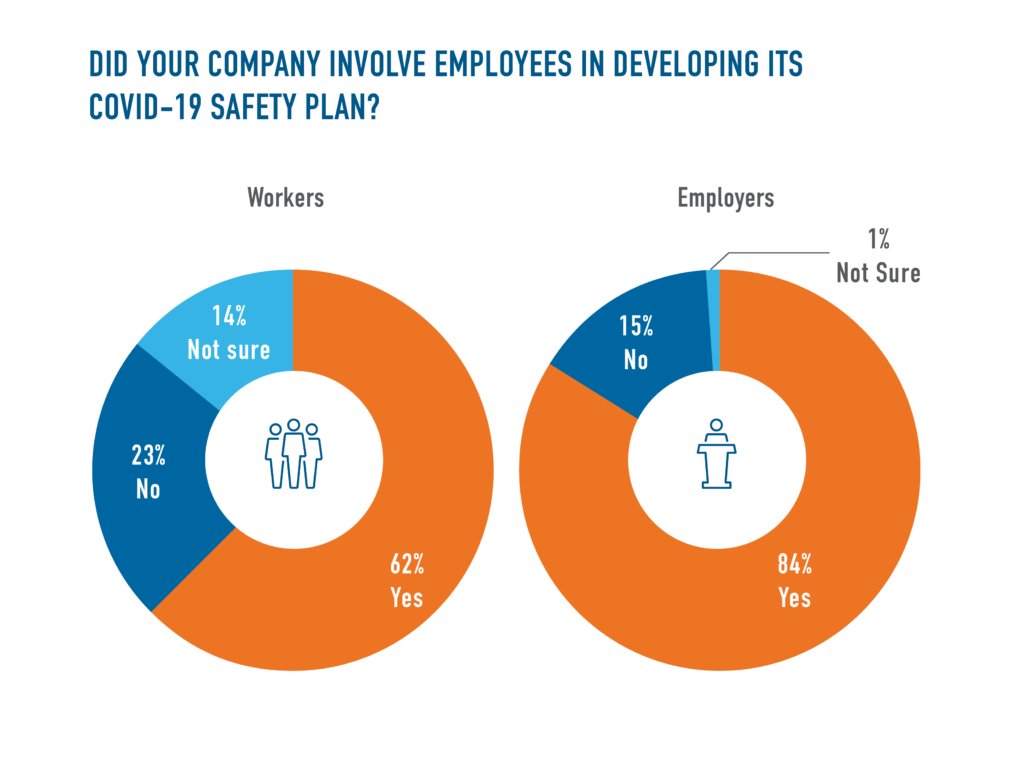
Worker respondents who reported not feeling safe are even less likely to say they have been involved in the creation of a workforce safety plan, and are more likely to say they are “not knowledgeable” of the policies instituted. Although policies and procedures are essential to mitigating the spread of COVID-19 in the workplace, excluding workers from the creation of these policies can lead to a lack of agency for those workers, keeping their unique perspectives from the process of identifying specific needs and solutions.
As stated by both workers and employers alike, the majority of businesses report they have taken fundamental health and safety measures, such as regular cleaning/sanitizing, providing PPE, and enforcing social distancing protocols for customers. Indeed, when asked to provide the single most important step a company can take to make employees feel comfortable in the workplace during the pandemic, majorities mentioned those measures verbatim. Mask requirements, which, while majorities of both employees and employers report are instituted in their workplaces, remain an area where improvement is still needed, especially as mask-wearing enforcement can be an easy step to take.
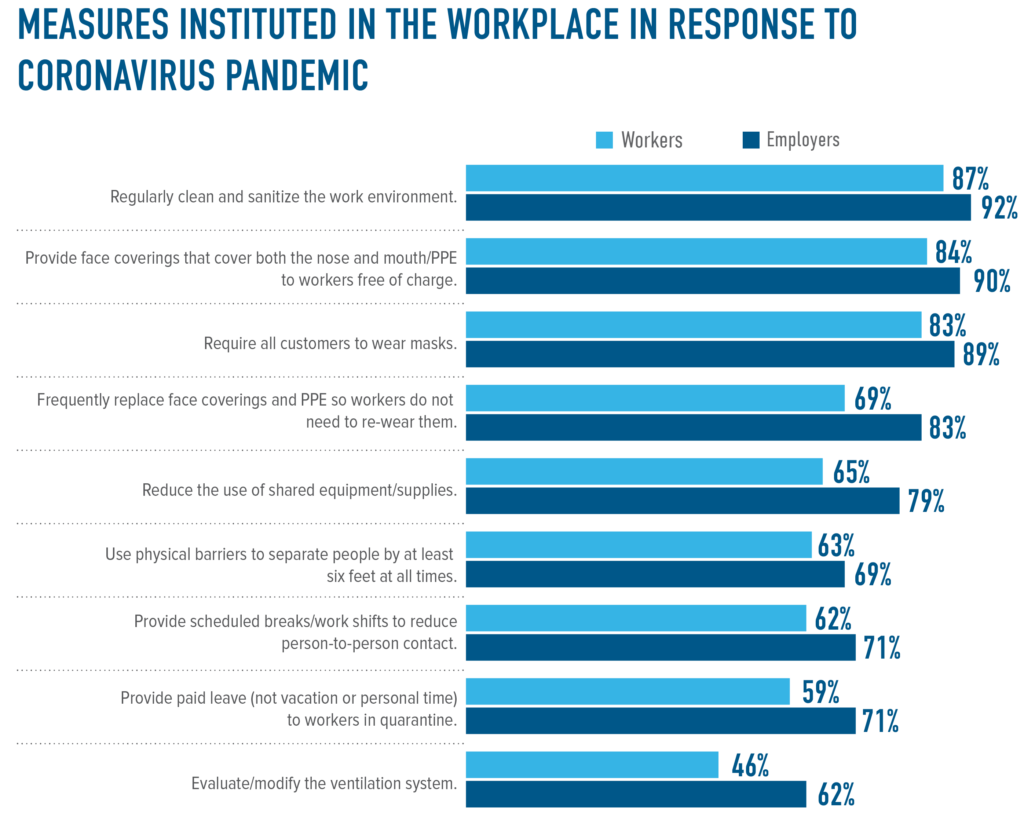
As states start to roll back mask mandates, it is crucial to note that when asked to identify the “single most important” thing their company could do to make employees feel comfortable at work during the coronavirus pandemic, the most-mentioned policy from both workers and employers was to enforce wearing a mask at all times.
Looking across industries, Healthcare is one area where these policies and procedures are reported at a greater rate. Healthcare workers report having their place of business outfitted with revamped ventilation systems, as well as having access to paid leave, regularly scheduled breaks/work shifts to reduce person-to-person contact, and physical barriers to enforce distancing, all by a margin of about 10+ percentage points over the average. In addition, almost three-quarters of frontline healthcare workers said they were involved in the establishment of policies and procedures, versus 56% among those who are not healthcare frontliners.
On the flip side, Retail is an industry that is lagging behind the norm: significantly more workers in this sector agree “management is doing the minimum required to keep workers healthy and safe” (45% Retail workers vs. 32% total) and “worker health and safety often takes a back seat to profits” (43% Retail workers vs. 37% total).
Fewer workers than employers say there are established policies in place for some key health and safety issues – including frequently replacing PPE and reducing the use of shared equipment. Another area in which significantly fewer workers and business leaders reported being aware of an established policy focused on modifications to ventilation systems, which the CDC and numerous epidemiologists recommend as a key strategy to reduce exposure to COVID-19.
Offering paid leave to quarantining employees is another area where there is a marked discrepancy between what managers are saying they provide and whether workers share the perception that the policy exists. While 71% of employers say they provide paid sick leave to workers in quarantine, 59% of workers share that this has been their experience, and we know from our research that just 20% of America’s largest companies have expanded their paid sick leave policies as a result of the pandemic.
We see a rosier picture when we look at whether respondents are satisfied with the degree of compliance employers maintain with these health and safety measures. Among those who say any of these measures are in place, more than three-quarters are “very or somewhat” satisfied with compliance.
When we ask respondents whether they feel the health and safety measures in their workplace are adequate to combat the spread of coronavirus, majorities of both workers (69%) and employers (82%) tell us the level is just about right. Most assess policies and procedures positively, with more than eight in 10 saying they are effective and easy to adhere to; among the negative assessments, there is tight agreement on both sides that said policies might be interfering with company productivity.
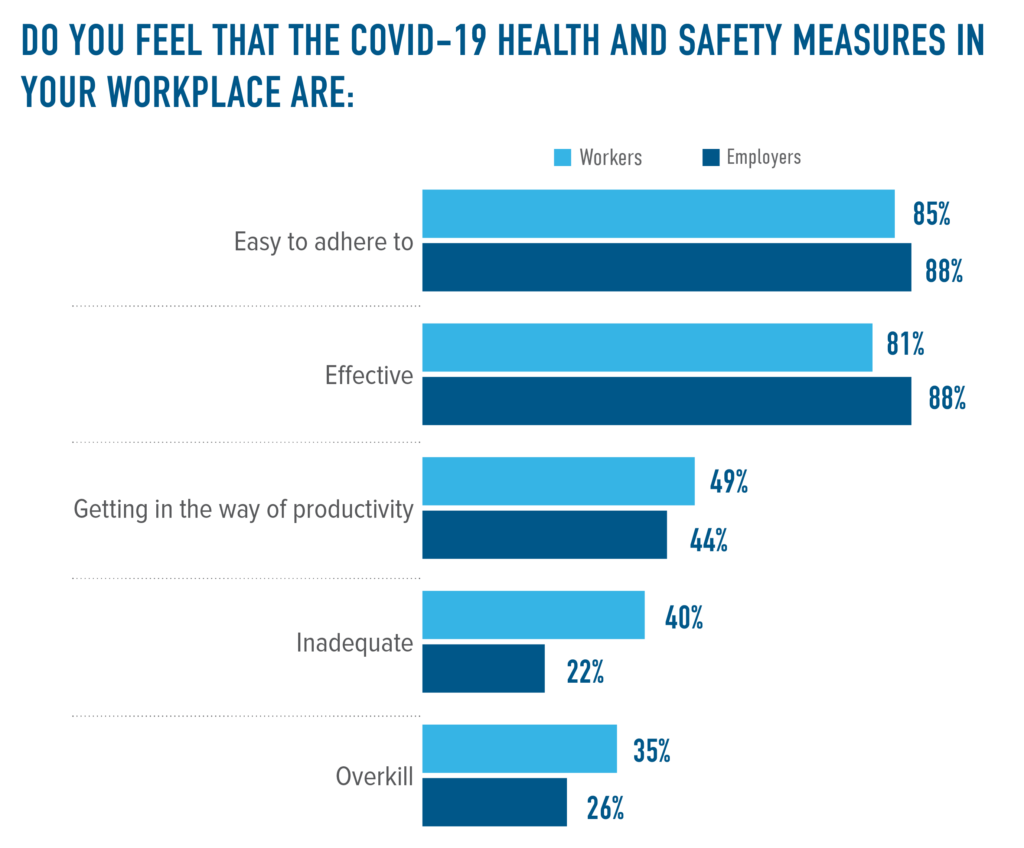
Gig workers and those who have more than one job are more vulnerable to exposure and, on the whole, are more likely to agree that health and safety measures in their workplaces are inadequate to combat the spread of the coronavirus, making them more fearful of contracting COVID-19. Gig workers and multiple job holders have disproportionately reported coming to work sick (34% vs. 13% single job holders), as well as having been discouraged (either themselves or someone else at their business) from reporting injury or sickness by management (57% vs. 15% single job holders).
Health and safety policies can be effective in keeping the workplace safe, yet workplace transmission is far from a rare occurrence, as there continues to be significant risk of COVID-19 exposure to those who work in public spaces. Here, we look at incidences of workplace illness and employer response.
One in five workers report going to work sick since the start of the pandemic. Of that group, 33% say they were afraid of losing their job, 32% said they had no paid sick leave, and 28% were afraid of making their employer/boss angry. Also concerns of retaliation are real: 28% said they or another person at their organization were discouraged from reporting an injury or sickness in the workplace.
When looking at COVID-related illness specifically, just 13% of the worker group tell us they have tested positive, and of those 130 workers, only 21 did not tell their bosses about their illness (warehouse workers are more than twice as likely not to have reported illness to their employer). On the positive side, for those who did alert their managers, the response was mostly supportive: half of workers who tested positive said that their employer told them to take time off with pay.
However, a substantial proportion (39%) of sick workers report that management threatened them with some form of retaliation – either endangering employees’ financial health (being told to take time off without pay), putting others at risk (being told to keep quiet about it), or threatening to fire the sick individual.
The reported lack of paid sick leave is a serious barrier to ensuring health and safety, with one in three workers reporting going to work sick because their place of business does not offer the benefit. Echoing these findings, in a recent Fortune op-ed titled “To end the pandemic, every business leader must put worker health and equity first,” Ford Foundation’s Darren Walker and Cisco’s Chuck Robbins underscored, “Over a quarter of people know someone who has gone to work sick during the pandemic because of financial stresses, thereby risking the health of customers and staff.” Workers must not be forced to choose between their economic security and their health or the health of others. Businesses of all sizes must establish practices that protect their employees financially as well as their health and safety. Our survey also found that companies may be lagging in monitoring these wider health impacts, with only 30% of workers who tested positive saying their employers conducted contact tracing to determine the impact at work.
Health and safety issues also exacerbated racial inequities. Multiple studies have shown that Black/African American and Hispanic workers account for about a third of employees in frontline jobs. Our research shows that these groups are more likely to report experiencing retaliation by managers for raising concerns about the coronavirus: Hispanics are 2x more likely to say have been discouraged from reporting illness (28% vs 13% overall) and both Hispanics and Black Americans are disproportionately more likely to say they fear negative, personal impact if they were to report on safety issues in the workplace.
We now know how susceptible we are to pandemics and health crises, as well as their impact on communities, the economy, and business success. With increasing numbers of Americans receiving vaccinations every day, companies have reason to feel optimistic about the state of business in 2021. The Conference Board’s annual CEO Confidence Index reflects record levels of confidence among leaders of the country’s biggest companies. With some states starting to roll back COVID-19 restrictions and mask mandates, we’re entering into a confusing period for employers, workers, and the public. What this report shows is that now is not the time for leaders to start pumping the brakes on their coronavirus precautions. Eight in 10 leaders agree that COVID-related logistics will transition to permanent policies in their company, and over the next six months, one in three tell us they plan to increase workplace health and safety initiatives at their company.
The simple measure of extending paid sick leave to all workers, whether full-time, part-time, or contract-based, is one of the most impactful ways businesses can help reduce the transmission of COVID-related illness. This report also underscores the difference between having a paid sick leave policy on paper vs. implementing a policy that is easily accessible to all, understood by all, and does not result in retribution or criticism from management when utilized. 59% of workers say their companies provide paid leave (not vacation or personal time) to workers in quarantine, with the lowest incidences among small businesses, retail companies, and manufacturers. And a majority of employers admit they have separate health and safety policies for their fully employed workforce vs. temporary or freelance workers.
To build resilience, employers should think long-term when it comes to health and safety. This means upholding the policies that have worked in this pandemic even when it’s over, including paid sick leave, employee engagement, and higher pay for frontline workers, contracted employees, and temporary workers. It’s clear from our survey research on these issues that business leaders should focus on their people, placing their voices, health, safety, and equity at the top of business priorities. There is a critical opportunity today for companies to get this right, lead by example, and help create a safer, more equitable future for all Americans.
This survey was conducted by JUST Capital and The Harris Poll with support from the Ford Foundation and additional participation from the National Council for Occupational Safety and Health. The survey was conducted online in the U.S. and fielded between February 2nd and 9th 2021, among 1,000 U.S. employees and 300 U.S. employers. To qualify, U.S. employees must be 18 or older, work full or part time at a company with 25 or more employees, and work outside the home at least part of the time. U.S. employers must be 18 or older, work full time at a company with 25 or more employees, hold a management level position, have decision-making responsibility for worker and/or workplace issues, and employees must work outside the home at least some of the time. This online survey is not based on a probability sample and therefore no estimate of theoretical sampling error can be calculated. For complete survey methodology, including weighting variables and subgroup sample sizes, please contact either Jennifer Tonti, Managing Director, Survey Research & Insights or Jill Mizell, Director of Survey Research.
2020 will be a year that’s talked about for decades to come. And while the “annus horribilis” may be in the rear view mirror, its impact will still be felt through the better part of the coming year.
Over the course of 2020, we regularly surveyed the American public to take their pulse on the most critical issues of the year – from COVID-19 to racial inequity to the preservation of our democracy – and to learn what role they believe companies and corporate leaders must play in addressing those issues and supporting their stakeholders in the process. Our findings informed the focus of our research and initiatives throughout the year and provided the foundation by which we assessed corporate America in our 2021 Rankings of America’s Most Just Companies.
We’ve gathered some of these key findings below to provide not just an archive of the public’s views during this unprecedented year, but also a blueprint for corporate action in the year to come – one that is sure to be formative for stakeholder capitalism in America.
In a year roiled by so many challenges, one of the fall-outs is that Americans believe the pandemic has exposed underlying structural problems in our society. Our June 2020 report entitled “The Great Reset” uncovers this and myriad other insights, including the fact that a strong plurality of the public believes that we need a more evolved form of capitalism that will:
Findings from our Annual Survey reinforce these beliefs, and suggest that there is more work corporate America must do to support its stakeholders, specifically:
It’s clear that corporate America is not living up to society’s expectations – and Americans let us know that they see this moment as an opportunity for companies to hit “reset” and work to meet the needs of all their stakeholders.
Further, when we asked them which stakeholders they believe were top priority for companies in 2020, 37% of Americans responded that employees were a key focus in 2020, a significant 17 percentage point increase from the year prior. Yet the plurality (46%) says that shareholders are companies’ top priority – suggesting that, while we know from our other survey work that Americans want employees to be a company’s top priority, corporate America is not yet aligned with their views.
In the immediate aftermath of the pandemic, Just Capital set to work tracking corporate responses to COVID-19 – and also reached out to the public at regular intervals for their feedback on where they think corporations should focus their efforts. In a quick pulse survey fielded in April 2020, 89% of Americans agreed that protecting the personal safety of frontline workers (including providing PPE) should be at the top of the list:
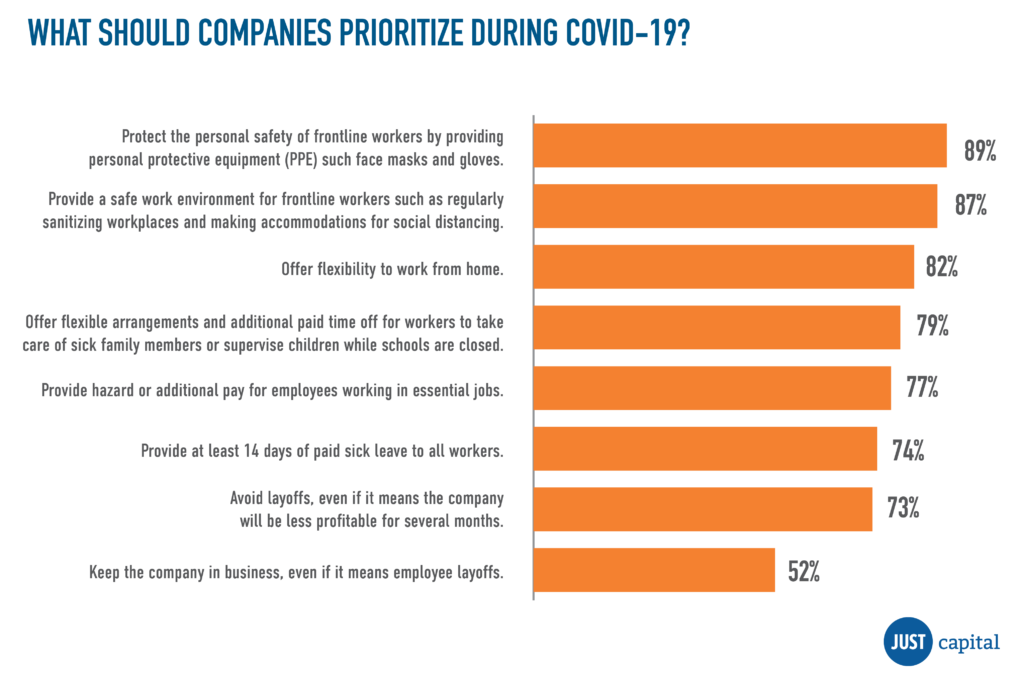
In June 2020, we reached out to Americans again as we approached the reopening phase of the pandemic. Three out of four Americans told us that large companies should continue to prioritize worker health and safety, even if it makes taking a more cautious approach to re-opening.
At the time of this survey, the future of the pandemic was highly uncertain – including whether and when there might be a vaccine, when businesses would be able to reopen, and what support Americans could expect from the government in the short and long term. In the face of this uncertainty, which we of course continue to experience today, Americans let us know that they believed a number of crucial corporate policies needed to be extended for at least another year to support our country’s workforce, and that companies should:
Looking ahead to the other side of the pandemic – the timeline for which remains uncertain, even today – 84% of Americans let us know they will remember the companies that did right by their workers, that worked to ensure workers’ health and safety and avoid layoffs. What is more, three-in-four (76%) agreed they will remember those that took missteps in their responses to COVID-19.
With the American people ready to hold corporate leaders to account for their responses to the COVID-19 crisis, we asked them how they expect corporate leaders to respond to other critical issues of our time.
Following the killing of George Floyd and too many other Black Americans – and the national reckoning with racial injustice that followed – we tracked and aggregated notable actions from corporate America, and provided actionable guidelines for how companies can combat systemic racism against Black colleagues in the workplace.
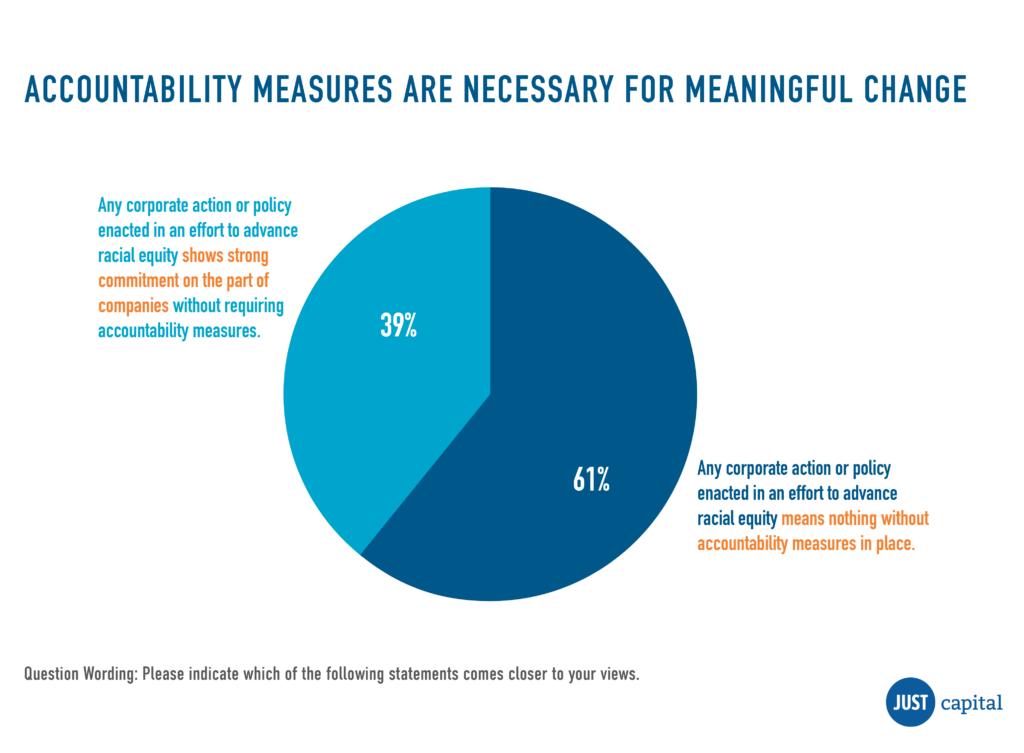
Turning to the public for their views on corporate responses – specifically, statements in support of Black Lives Matter and condemnations of white supremacy – we found that 75% of Americans want corporate leader to condemn racism, racial inequality, and racial injustice, but 61% agree that these commitments ring hollow without actions to back them up:
As the year progressed, we found the very foundations of American democracy under threat, and asked the public what they believed the role of companies should be in its preservation. 83% of Americans told us they believe that the health of our economy depends on the strength of our democracy, and in a survey fielded before the 2020 election, a majority (62% or more) shared that they believed companies could step up to help maintain democracy by:
We returned to the public in December, following the election, to ask them how they viewed corporate responsibility under the incoming Biden administration. We found that nearly 80% of Americans expect corporate leaders to continue to speak out on social issues over the next four years – including 87% of Democrats and 75% of both Republicans and Independents.
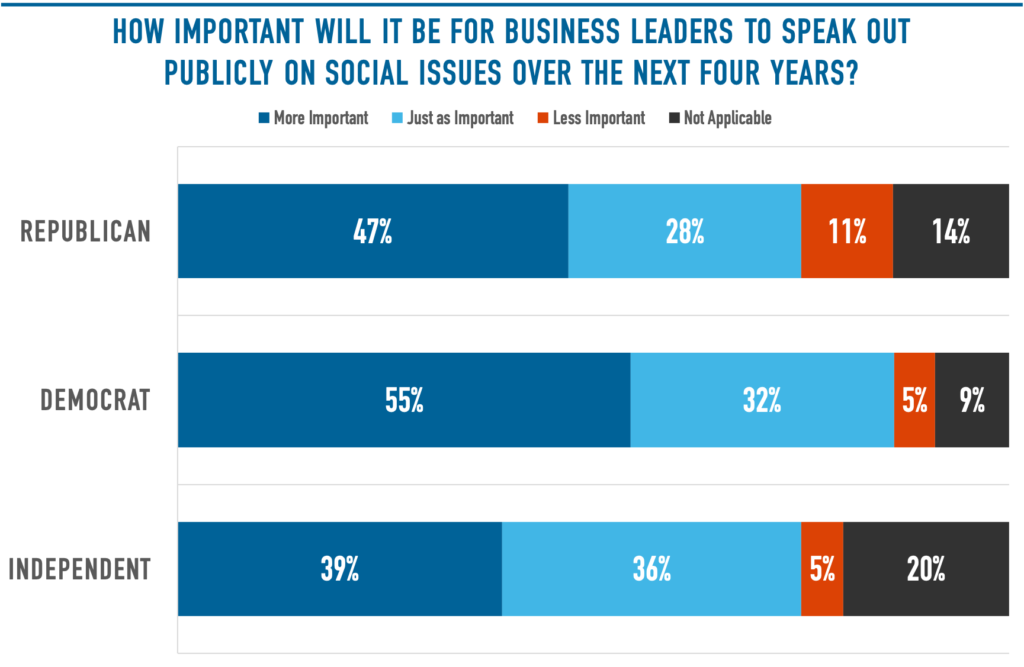
The year to come will continue to test corporate leaders – with the pandemic still raging, democracy still fragile, and racial inequality still in the process of being dismantled. Americans clearly expect corporate America to take a stand, but not without clear actions to truly move the needle for their stakeholders.
Since we first began polling the public back in 2015, Americans let us know year after year that they believe a top priority for companies must be to pay their employees a fair and livable wage – and in the past three years, it was the most important issue in the public’s view. These priorities provide the foundation for our Rankings, and in 2021, paying a fair, livable wage accounted for 9.9% of a company’s score in our Rankings:

In our 2020 Survey – which determined the prioritization of each of the above issues – 80% of Americans let us know that they believe large, public companies have a responsibility to consider the impact they have on all their stakeholders. But only 35% of Americans believe companies are actually having a positive impact on their lowest-paid workers.
Finally – reflecting the critical and intersectional need for companies to take action in this area – 84% of Americans – and 89% of Black Americans – let us know that the most important action for promoting racial diversity, equity, and inclusion in the workplace is to commit to paying all employees a living wage.
In the year ahead – which we hope will yield progress and even a degree resolution – Americans continue to face an uphill battle in our collective efforts to end the pandemic, fight against systemic inequality, and preserve our democratic system. The voice of the public in 2020 is clear: Corporate America has an active role to play in addressing society’s key issues. We will continue to reach out to Americans to better understand what they believe that role should be – again, not only for a snapshot of their views in this unprecedented time, but most critically, to provide a playbook for corporate America as we continue along a road to recovery.
