On Wednesday, April 29, the JUST Capital team unpacked key insights from our COVID-19 Corporate Response Tracker as well as our ongoing survey work. Check out the full briefing call below!
Last week, JUST Capital hosted a briefing call on the growing importance of quality jobs in America, and the ways that investments in frontline jobs can lead to better business outcomes. We dug into this topic in conversation with Michael Mussallem, Chairman and CEO of Edwards Lifesciences – a JUST 100 company that prioritizes the pay, benefits, and opportunities of its employees – and Sarah Kalloch, Executive Director of the the Good Jobs Institute, which was co-founded by Professor Zeynep Ton of MIT Sloan and focuses on shifting business performance by focusing on creating good jobs in low-wage industries (particularly retail).
With worker pay and well-being a core priority for the American public when it comes to just business, JUST Capital is committed to continuing to surface the business and investor case for good jobs. Our own analysis shows that companies who treat their workers well consistently outperform their peers at the market level.
Check out four key takeaways for corporate leaders from the call:
For many companies, employee engagement and dedication to its mission are top priorities. The Good Jobs Institute outlines a hierarchy of workers’ needs that shows that, if companies seek to meet these goals, they must first start by creating good jobs.
A medical technology company based in California, Edwards Lifesciences has 14,000 employees globally and a notable manufacturing workforce in the U.S. Mussallem, in describing the company’s culture, emphasized that its company-wide commitment to patient outcomes – and the connection it fosters between employees and the patients they serve – is vital to Edwards’ success.
Ranked 20th overall on worker issues in our 2020 Rankings of America’s Most JUST Companies, Edwards is first in its industry when it comes to paying workers a living wage and top in class for providing good benefits. Given these achievements, it’s not surprising that Edwards’ employees report feeling a strong sense of commitment to patient health and outcomes, and have higher retention rates than employees at other companies in their industry.
Too often businesses view their human capital as a cost to the company, but a core tenet of the Good Jobs Strategy is around reversing this view, which Kalloch explained can trigger a vicious cycle that harms business outcomes. Beginning with low investments in people, this cycle often starts with operational problems, which lead to low sales and profits as a result. From there, companies might look to reduce expenses, and too often cut costs from their workforce, further reducing investment in their people. The cycle repeats. Kalloch encouraged companies to turn this cycle on its head – suggesting that when corporate leaders view their workforces as an investment from the get-go, they improve rather than hinder business operations and outcomes.
After companies break this cycle and invest more meaningfully in their workforce, they should create an operating system that fosters and maximizes the talents of their workers. Kalloch explained the Good Jobs approach to doing so – a three step process: First, focus on the work employees need to do to meet customers’ needs and simplify processes. When workers are juggling unrelated tasks, stretched thin, or spending too much of their time on non-customer activities, they are less effective and productive on the job. Beginning with this area of work – and simplifying employees’ day-to-day – helps workers become more effective in their interactions with customers, in turn supporting the bottom line. Second, standardize systems and empower workers. By creating a clear line of communication between frontline workers and corporate management, companies can more quickly receive feedback that impacts business decisions. Finally, develop systems for cross-training employees. Training employees on a handful of jobs that are more focused in scope will not only help build a more engaged workforce but also better position stores to respond to variability or unexpected workforce needs. Combined, these operational changes will improve worker productivity and customer satisfaction.
This is the bottom line of the Good Jobs Strategy. Analysis of companies that have implemented the strategies described above – including Walmart and Quest Diagnostics – shows that when these businesses broke the cycle of viewing people as costs and started implementing new practices that maximize the potential and talent of workers, they observed significant business improvements. At Walmart, for example, turnover declined by more than 10% over the last five years, and at Quest Diagnostics, it decreased by 35%. Over the same period, store sales were up at Walmart and Quest Diagnostics saw a $1.3 million annualized run-rate savings. In short, when companies start by investing in workers, they are able to more easily achieve their core mission, and see measurable returns on their investments.
Check out the full conversation on quality jobs here:
For more information on the Good Jobs Institute, and our work in collaboration to build the case for quality jobs, read more here. If you’re interested in speaking further about this research, please contact our corporate engagement team at corpengage@justcapital.com.
One can’t seem to pick up a paper, turn on a podcast, or listen to the news without hearing about the need for businesses to create and support more quality jobs. But what are the elements of a quality job? The American people tell JUST Capital what the key components of a quality job are – a living wage, access to adequate benefits, and stakeholder-driven corporate practices. Last year, JUST Capital launched its Quality Jobs Initiative to better understand how companies think about these issues and identify strategies for companies to implement policies that support good jobs.
While there are a range of benefits and practices that companies should adopt, from providing paid leave to all new parents to conducting pay equity analyses, one innovative benefit is emergency savings programs, which is based on a striking number: 40% of Americans can’t cover a $400 unexpected expense.
Workers’ ability to set aside even a small amount of money can help them weather financial emergencies and prevent additional costs from high-interest credit cards, payday loans, cash advances, or missed work. Even $250 to $749 of liquid savings, for example, have been shown to make a family less likely to be evicted or miss a utility payment. In cases of unexpected expenses, a savings cushion can also reduce the need to take out loans and hardship withdrawals from retirement accounts like 401(k)s, and can give employees more stability to contribute steadily to other savings vehicles like health savings accounts (HSAs).
Businesses that are committed to practicing stakeholder capitalism should take steps to improve the financial security of their employees for their workers’ sake. But it is in employers’ economic interest to address this issue as well: financially secure employees are less likely to miss work, more productive when they’re at work, and more committed to their organizations’ goals. According to MetLife, employers have lost $250 billion each year due to employee stress affecting their work, with personal finances ranking as the top source of employee stress.
Employer support for building emergency savings is crucial to building financial security among employees. The Emergency Savings Initiative launched by BlackRock aims to garner greater business support for this issue and expand employer-provided savings programs by providing direct assistance to companies as they develop and implement new savings programs.
As part of the Initiative, JUST Capital partner – nonprofit Commonwealth – builds solutions to make people more financially secure, and advises companies on best practices for structuring effective emergency savings vehicles. Commonwealth recommends that employers evaluating emergency savings solutions as a benefit should insist on certain features to maximize the impact of their investment. Specifically, the most effective savings vehicles are highly liquid, have low or no fees, and have no minimum balance requirements.
We are pleased, though not surprised, to see some 2020 JUST 100 companies participating in the Initiative. Etsy, the Industry Leader in Retail and #53 in the 2020 JUST 100, has joined the Initiative to research the financial challenges faced by its sellers to help them create savings using a goals-based financial app that will launch early this year. Similarly, UPS, the Industry Leader for Transportation and member of the JUST 100, has committed to creating financial solutions for its employees by conducting research to understand their financial needs. Honorable mention goes to Mastercard, ranked #88 out of 923 companies for Workers, for its commitment to testing a variety of savings strategies with its customers and other stakeholders.
JUST Capital is committed to identifying and elevating best practices that support quality jobs. It’s clear that having the ability to set aside money for a rainy day is an important part of a good job. We applaud the efforts of BlackRock and Commonwealth to not simply highlight the dire need to strengthen families’ finances but bring effective solutions to the market.
To learn more about joining the growing list of companies committed to increasing employee financial security, contact Commonwealth at esi@buildcommonwealth.org.

This week, JUST Capital joined world leaders at Davos as a key voice at the table in advancing the core theme of this year’s World Economic Forum: Stakeholder Capitalism.
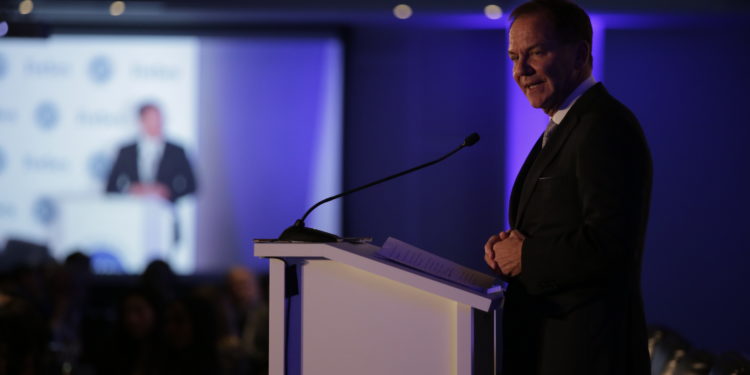
JUST Chairman and Co-Founder Paul Tudor Jones led the conversation around how our mission to build a more just economy, along with our research, data, and tools, uniquely position us to meet the moment of stakeholder capitalism. From CNBC’s Squawk Box to Forbes’ Reimagining Capitalism panel to Paul’s conversation with EY CEO Carmine Di Sibio on the WEF stage and Martin’s participation in the WEF’s IBC standards framework dialogue, we highlighted the growing urgency to transform our current economic system to one that better serves the needs of all its constituents – and how we play an essential role in doing so.
Here are our five top takeaways from the conversations we joined throughout the week:
At Davos, we’ve found overwhelming agreement among corporate and world leaders that – while capitalism is the single most dynamic and powerful force for wealth creation the world has ever known – too many are being left behind. Unlike years past, there’s also been broad acceptance of what to actually do about it, namely, adopt stakeholder capitalism as the solution. During EY’s Breakfast – Long-Term Value: Moving from Ambition to Action, where Paul spoke alongside EY CEO Carmine Di Sibio – moderator Andrew Edgecliffe-Johnson of the FT described a decreasing allegiance to Milton Friedman’s shareholder primacy model at WEF this year.
Paul lauded the merits of Friedman’s position in 1970 – when inequality in the U.S. was one-fifth of what it is today and there existed a more egalitarian approach to wealth sharing in America – but emphasized that sharing has become vastly skewed over time, today prioritizing the 1%.
“Capitalism in its current form is not working for most people,” explained Paul in Tuesday’s Reimagining Capitalism panel hosted by Forbes, where he spoke with Chief Strategy Officer Alison Omens and Verizon CEO Hans Vestberg, “not just in America but throughout the world, and I think that’s why stakeholder capitalism is the central theme in Davos this year.”
While the Business Roundtable purpose statement and WEF’s amplified commitment to stakeholder capitalism feel like momentous steps forward, there is already palpable impatience for action. And perhaps even a backlash if actual action is not forthcoming soon. Shifting the ideal of stakeholder capitalism into practice will require honest enquiry into how exactly we do this. Everywhere we went, there was an embrace of stakeholder value creation and performance measurement, but questions over what, exactly, this means. What do we mean by value creation? Over what period of time? And for whom?
The biggest corporate announcements of the week tended to focus on environmental sustainability and the climate crisis. But what felt missing to us was a broader conversation around how companies are going to concretely deliver value to their most important stakeholder: Workers. “The American public has consistently told us the single most important measurement regarding just business behavior is how do you pay and treat your workers,” Paul shared in conversation with Di Sibio and Edgecliffe-Johnson at EY’s Breakfast. “It is far and away the most important metric.” Edgecliffe-Johnson followed up with an Op-Ed in Moral Money noting that there is a lot of talk in Davos about workers, but so far the words tend to be loftier than the actions.
We have pressed hard all week for C-suite leaders and directors to take one simple action when they step off the plane home from Davos, which is to perform a Financial Distress Test of their Workforce to really understand what percentage of workers aren’t making enough to cover their bills. PayPal’s leadership on this issue, which was widely discussed during the week, provides a concrete example of how to do this.
Shifting from shareholder primacy to stakeholder capitalism means we need a new common set of metrics and standards. Right now we have an alphabet soup of metrics and patchy disclosure, which is a real risk for CEOs, boards, and investors. According to several executives we talked to privately, the multiplicity of metrics is destroying momentum, and there is overwhelmingly positive support for simplification and standardization. The most significant news discussed at both our WEF stakeholder capitalism panel on standards and another on corporate leadership with Klaus Schwab and Brian T. Moynihan, was a new set of metrics and disclosures from WEF’s International Business Council. The reporting recommendations from the IBC and the big four accounting firms include a set of 22 metrics across 14 themes of Principles of Governance, Planet, People, and Prosperity. There was deep support for this approach among attending CEOs and we believe it has real legs in terms of future adoption.
As an organization committed to measuring and improving stakeholder performance, we eagerly dug into the IBC framework and can confirm that our dataset for the 1000 largest public U.S. companies currently covers 13/14 of the proposed themes, and 19/22 of the proposed sub-themes. (We also have comprehensive data for Customer issues, a key stakeholder not captured in the proposed IBC model.) And because we have four years of corporate performance data on these metrics and more, JUST can translate the BRT and IBC frameworks into actionable insights to help companies benchmark and improve on these critical issues. We support the simplification push and will be in the thick of the action going forward.
At Wednesday’s EY Breakfast, Paul emphasized that shareholders and stakeholders must not be viewed as binaries companies must choose from, but rather with a holistic understanding of the ways that short-term investments into worker, customer, environmental, or community needs pay off in the long term.
“We have to think about the tail risks that threaten the current sharing arrangement,” Paul explained. “One tail risk is climate. So clearly all of us, including companies, will need to fall in line and pay to minimize that tail risk or there will be no shareholders.”
We’ve seen this play out when companies focus too myopically on driving investor returns. Boeing and PG&E are clear examples of the risks that arise when too much attention is paid to shareholders at the expense of all other stakeholders. Our own analysis has shown that higher performing companies in our Rankings tend to have lower downside risks than those that sit at the bottom of our list.

Nearly every conversation around stakeholder capitalism sparked a question around trade-offs and the new decision-making landscape CEOs and boards must navigate. Thankfully CEOs easily rebuffed the trade-offs argument, explaining that driving stakeholder value and shareholder value is an “YES/AND” issue, not an “EITHER/OR” issue.
A stakeholder-based framework is both morally responsible and good for business. A stronger middle class means a bigger consumer base. Alleviating poverty means more business opportunity and less pressure on the public sector. Prosperous communities provide a license to operate. A healthier planet means more sustainable use of resources and lower environmental risk. Stronger institutions means a more representative democracy. If business starts looking out for everyday people again, we will begin doing well by doing good.
One thought struck us during the week was that few organizations have the data and analysis that JUST has. We are not seeking to impose our standards or methodologies on the world – we are seeking to drive impact and that cannot be done at the end of the day without real and honest assessment of how to measure and track performance.
We know from years of work that benefiting shareholders and stakeholders is not a zero sum game – JUST Capital’s data clearly shows that the opposite is true. Compared to other Russell 1000 peers on average, companies in the JUST 100:
There are no guarantees, obviously, but the notion that stakeholder value creation leads to lower returns is simply wrong. You can also look to the results of the JUST Index: Since its inception on November 30th, 2016, the JUST Index (JULCD) returned 60.31% (55.14% for the R1000 in the same period), an outperformance of 517bps.
The message from Davos is clear. Leaders from both the private and public sectors agree that change is urgently needed. There has been crucial groundwork laid for next steps, and we are poised to help companies move from aspiration to action on some of the most pressing issues of our time – particularly income inequality, quality jobs, and worker well-being. The future of stakeholder capitalism is now – and the year ahead promises great change on the frontiers of this critical conversation. Stay tuned.
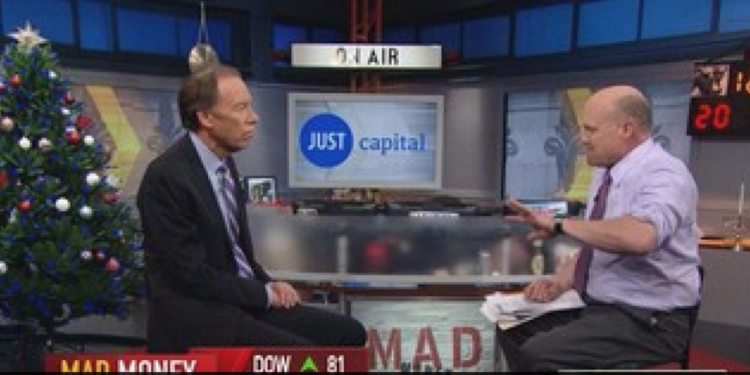
Today in Davos, Chairman and Co-Founder Paul Tudor Jones joined Andrew Ross Sorkin on Squawk Box to discuss how JUST Capital’s work answers the question of “what’s next” for stakeholder capitalism.
Watch the clip on JUST below and the full video here.
There’s a “massive dichotomy between what the people want & what the C-Suite is delivering,” says Paul Tudor Jones. “What is happening right now is causing millennials not to believe this system..there is a threat to free markets, which is the best way to allocate resources.” pic.twitter.com/YkLxF0EQSP
— Squawk Box (@SquawkCNBC) January 21, 2020

We’re thrilled to share that next week JUST Capital will be attending the World Economic Forum Annual Meeting in Davos – an event that will convene the world’s top leaders to explore the key theme of “Stakeholders for a Cohesive and Sustainable World.”
Now is the moment to move from aspiration to action in implementing stakeholder capitalism, and we believe that the American people must have a voice at the table. As the leading platform to meet the moment, JUST provides the answer to “what comes next.” Our unique data, tools, and insights can support catalytic change and help build an economy that works for all Americans.
Next week promises to foster bold new conversation around the issues that matter most to the public, and we’ll be on the ground, working closely with both private and public sector leaders to shift capitalism toward a more just course.
Read on for more details on JUST’s presence at WEF – including how to register for our panels with Forbes and EY – and how best to follow our updates.
JUST Co-Founder and Chairman Paul Tudor Jones will be featured at events throughout the week – here are a few top highlights, including opportunities to livestream, register, and watch:
Tuesday, January 21
Reimagining Capitalism with Forbes
11:30-12:15PM CET | TCS Dome
Chief Strategy Officer Alison Omens will join Paul as well as Verizon CEO Hans Vestberg for a discussion around how JUST is working with companies to encourage and embolden actionable change for all their stakeholders.
Watch the Livestream.
CNBC Squawk Box with Andrew Ross Sorkin
1:30PM CET, 7:30AM EST | CNBC Squawk Box
Paul will join Andrew on Squawk Box to talk about why JUST Capital is the leading platform to bring stakeholder capitalism from aspiration to action.
Tune in to CNBC at 1:30 CET, 7:30AM EST.
Wednesday, January 22
Long-Term Value: Moving from Ambition to Action
EY Breakfast with Global Chairman and CEO, Carmine Di Sibio
7-8:30AM CET | Belvedere Hotel
Andrew Edgecliffe-Johnson, US Business Editor of The Financial Times will moderate a practical discussion between Paul and Carmine about how best to operationalize stakeholder capitalism, and the work JUST Capital and EY are partnering on to move the needle forward.
Watch the Livestream via EY’s LinkedIn here.
WEF Event:
Stakeholder Capitalism: Creating Common Standards for Corporate Governance
9:15-9:45AM CET | Spotlight Room, Congress Centre
In this talk moderated by CEO of FCLT Global Sarah Williamson, Paul and co-panelist Global Chairman and CEO of EY, Carmine Di Sibio, will discuss how chief executives and their boards should plan to pivot away from shareholder primacy toward stakeholder governance.
Watch via WEF.
Next week we’ll be posting regular WEF updates on social (follow us on LinkedIn, Twitter, and Facebook), and will share a wrap-up of key takeaways by next week. If you haven’t already, sign up for the JUST Report to stay tuned!
If you’ll be at WEF next week and would like to connect on the ground, please reach out to our team in Davos:
Martin Whittaker, CEO: mwhittaker [at] justcapital.com | LinkedIn |Twitter: @MWhittaker_
Alison Omens, Chief Strategy Officer: aomens [at] justcapital.com | LinkedIn | Twitter: @AlisonOmens
Jason Rizzi, Director of Development: jrizzi [at] justcapital.com | LinkedIn