Since 2015, we have been regularly polling Americans for their opinions on just business behavior. One key element of exploration is understanding the degree to which the public believes corporations have a role to play in speaking out on societal issues. In 2019, our Annual Survey showed that 59% of Americans said CEOs of large companies have a responsibility to take a stand on important social issues. In 2020 that percentage grew to 68%.
This trendline shows that, more and more, the public is looking for corporate leadership on issues above and beyond business operations. In our recent focus groups, we heard loud and clear that Americans increasingly expect CEOs to speak out on some of America’s most pressing societal issues, including inequality, racial inequity, and threats to democracy. Findings from a recent poll from our partners at The Harris Poll echo our own research: a strong majority of Americans (60%) said that well-known brands taking stands on social issues is more important than in the past, and younger generations share this stance to a significantly greater degree (70% Gen Z, Millennials). As the public’s expectations for just business evolve, JUST Capital is committed to continuing to probe what it means for companies, and what Americans expect from corporate leaders on the most pressing issues of our time.
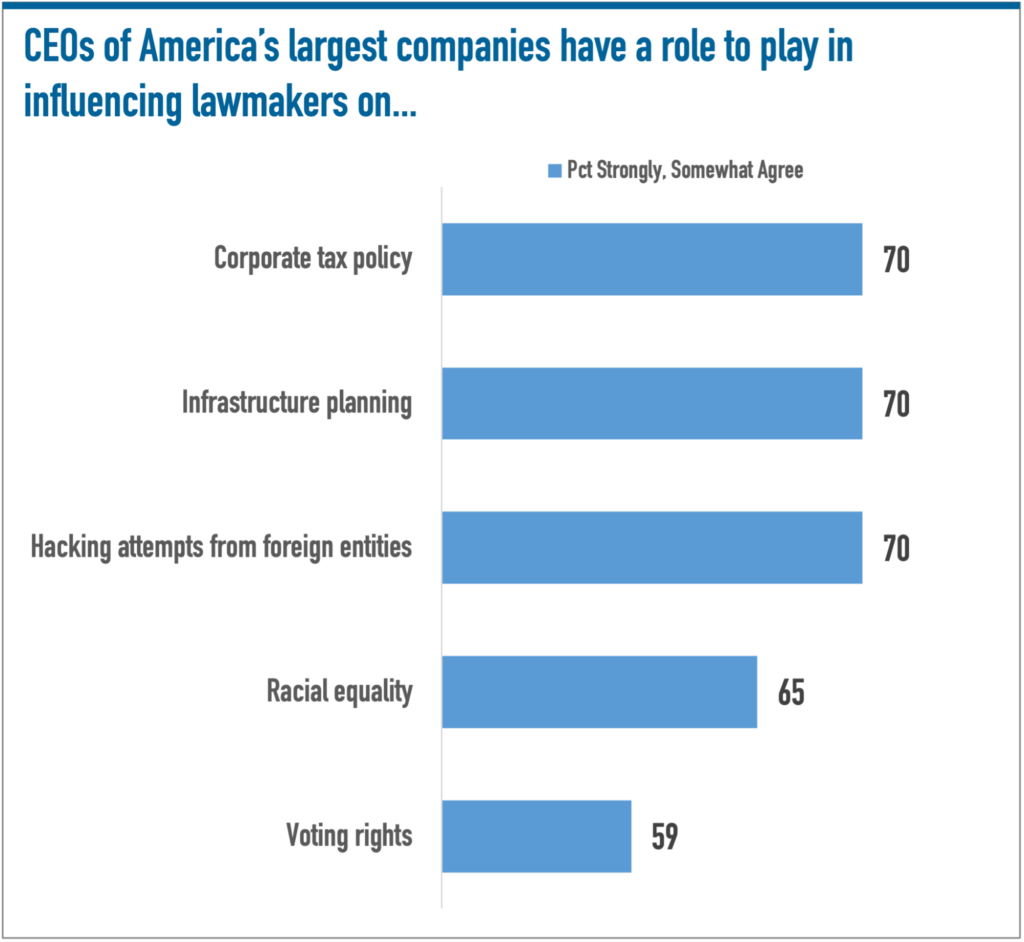
To that end, this most recent survey, fielded in April in partnership with The Harris Poll, reached 2,000 Americans in an effort to understand whether they believe CEOs have a role to play in influencing lawmakers across a variety of issues. Strong majorities agree that CEOs should influence lawmakers when it comes to both economic issues such as corporate tax policy, infrastructure, and blocking hacking attempts from foreign entities (70%), as well as societal issues such as racial equality (65%) and voting rights (59%).
When we look at responses to this question across different demographic groups, results generally follow the same pattern of responses. However, there are some pronounced differences when we look along generational lines.
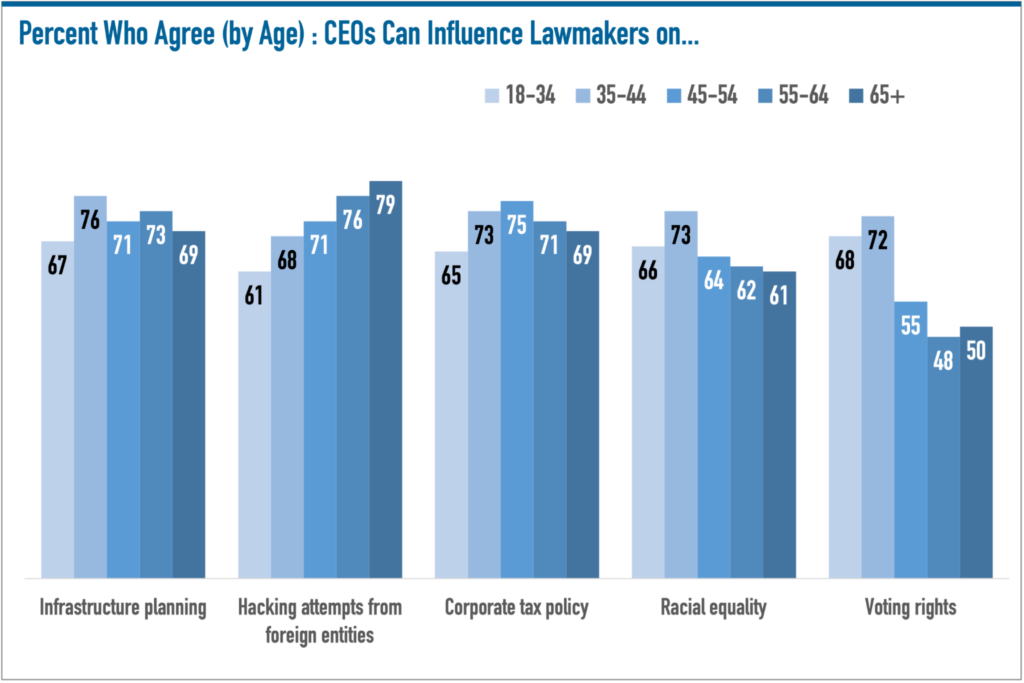
Gen Z and Millennials – respondents 18-44 – are more likely to agree that CEOs have a role to play in influencing lawmakers on social issues, like racial equality and voting rights, than their older counterparts. Conversely, Americans 55+ placed more emphasis on the importance of economic issues like infrastructure, hacking, and tax policies.
Race and ethnicity is another demographic area where we see differences in levels of agreement. Black and African American respondents were more likely to agree that corporate leaders should influence lawmakers on racial equality (76%) and voting rights (69%) than White Americans (63% racial equality, 57% voting rights) and Hispanic Americans (65% racial equality, 56% voting rights).
In the last month, voting rights specifically has emerged as a major issue, with a number of CEOs speaking out against restrictive new voting laws emerging in states like Georgia, Florida, and Texas. A survey we conducted leading up to the 2020 election showed that 57% of respondents believe companies have a moderate or significant role to play in upholding U.S. democracy by advocating to roll back laws that restrict voting rights for groups disproportionately affected, such as Black voters.
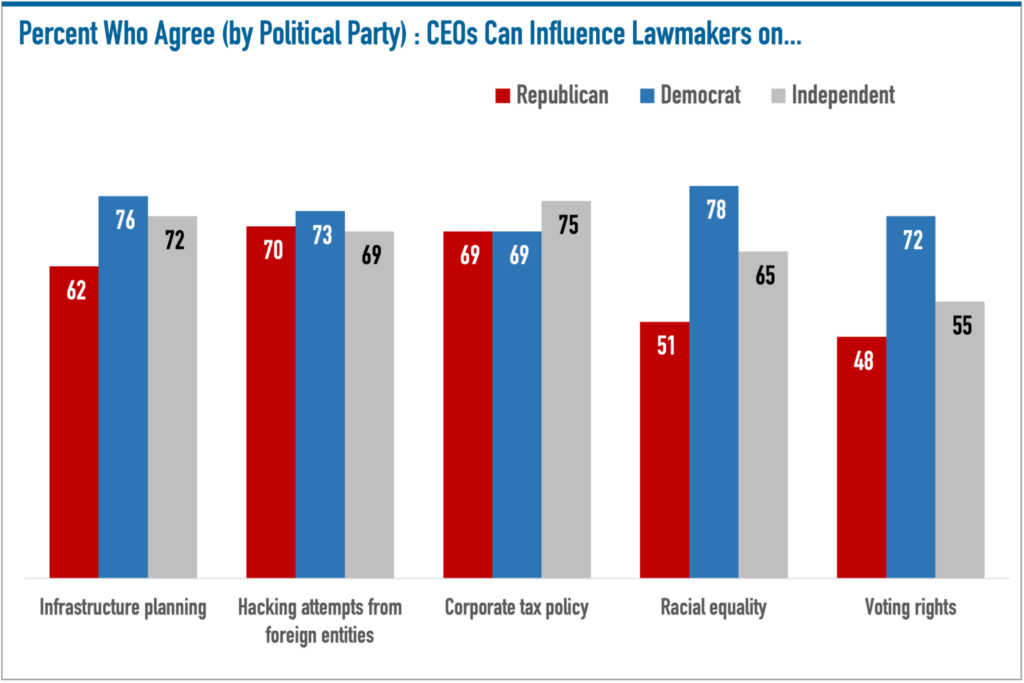
This most recent poll tells a similar story, with a majority (59%) agreeing that CEOs can influence lawmakers on voting rights issues. However, looking at these results across party lines, there is disparity in agreement among Republicans, Democrats, and even Independents.
We also asked specifically about whether or not the public supports companies that have spoken out against the recently passed Georgia voting reform bill. More than half of respondents (54%) support the companies that spoke out, while 27% say they do not support the companies that did so, and 19% say they have no opinion on the matter.
But much like we saw in the previous question, there are clear differences when looking at age, race/ethnicity, and political party, with more support for speaking out from younger generations, Democrats, and Black Americans.
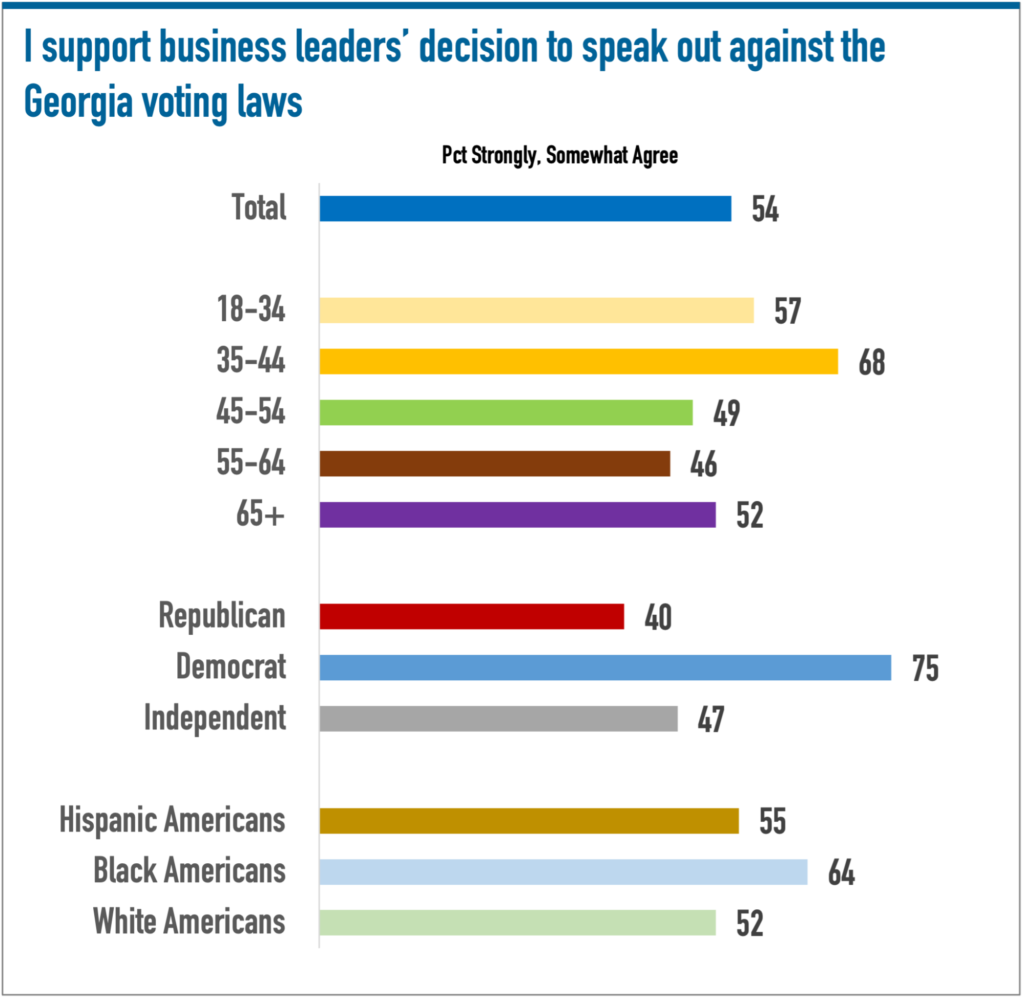
For corporate leaders, navigating a commitment to social issues while avoiding partisanship is proving to be a delicate dance. We will continue to regularly poll the public to understand how they want business leaders to respond to the critical stakeholder issues facing the country and economy today and in the months and years to come. With signals that the public increasingly expects business leaders to speak out, we will continue to monitor what Americans want, how companies are measuring up, and where corporate America should focus to align their practices with the priorities of the public.
This survey was conducted online within the United States by The Harris Poll in partnership with JUST Capital from April 29–May 3rd, 2021 among 2,061 U.S. adults ages 18 and older. This online survey is not based on a probability sample and therefore, is not representative of America. The results represent only the views of the sample and no estimates of sampling error can be calculated. For complete survey methodology, including weighting variables and subgroup sample sizes, please contact Jennifer Tonti at jtonti@justcapital.com. Detailed findings from this survey are available here.

It’s been nearly a year since the movement against racial injustice reached a tipping point that corporate America could not ignore. Companies issued statements, made commitments, and announced financial pledges to address the impacts of systemic racism at an unprecedented pace and scale. Whether companies had a role to play in advancing racial equity was not a question. How they should take action, however, remained unclear.
In response, we teamed up with PolicyLink and FSG to develop A CEO Blueprint for Racial Equity. The Blueprint outlines ways for CEOs to take action in their workplaces, the communities they operate in, and society at-large. The aim of the Blueprint is to help CEOs go beyond their statements, recognizing that a commitment to advancing racial equity is just the first step.
We wanted to hear from executives themselves on where they need the most guidance along this journey. Today, we’re sharing what we learned from one-on-one conversations with 40 corporate leaders in a new report: Corporate Insights Into The CEO Blueprint For Racial Equity.
The partners joined former Microsoft executive and Social Venture Partners International founding president, Paul Shoemaker, to hear from CEOs, directors, and other C-suite leaders – together representing 4.3 million workers across a range of industries, such as healthcare, retail, and finance. We asked these leaders how they’ve approached their racial equity work beyond public statements, and which barriers and growth opportunities alike have arisen along the way. We also asked if they’ve used the first iteration of the Blueprint to guide their strategies and how it has been useful, as well as where they need greater support.
The new report centers on seven key takeaways from these conversations, including:
These takeaways will help inform refreshed guidance PolicyLink, FSG, and JUST are publishing in a forthcoming June update to the Blueprint. With these firsthand insights from executives, this update will include new recommendations for CEOs to address the key hurdles shared in this latest report. The Blueprint update will also serve as a North Star for our work toward developing new racial equity reporting standards, critical for real progress in this space.
Advancing racial equity will remain a top priority for the country and companies alike. Hearing from corporate leaders directly can help provide the most comprehensive resources for action. With a shared understanding of the hurdles they’re facing and the tools to tackle them, executives can collectively help advance action that is commensurate with the scale of this challenge – inside their companies, within their communities, and at the broader societal level.
For additional details on JUST’s work advancing racial equity in corporate America, visit our Initiatives page, and to get engaged, please reach out to our Managing Director of Corporate Engagement, Yusuf George.
On Thursday, April 1st at 1PM ET we invite you to join our latest Quarterly JUST Call with Nicholas K. Akins, Chairman, President, and Chief Executive Officer of American Electric Power (AEP).
We’re at a pivotal moment in our country for transforming our energy generation and consumption, and that’s why we’re excited to be talking with the CEO of AEP, Nick Akins. He leads not only the largest electricity transmission system in the US, but the top ranked utilities company in our list of America’s Most JUST Companies, and top in its industry for workers.
The federal government is putting together a massive infrastructure plan that will take into account modernizing our energy grid, a task whose urgency was accentuated with the extreme storm in Texas this February.
Since taking the role in 2011, Akins has been leading that modernization at AEP. The company has just released a new climate plan as part of this mission, shooting for an 80% reduction of carbon emissions by 2030 and net-zero carbon emissions by 2050.
AEP also stands out in the JUST 100 for its Workers performance metric, driven by high scores in both workplace safety and diversity, equity, and inclusion (DEI). In fact, investments in the latter across the company and a dedication to disclosure have resulted in AEP tying for first place on DEI policies, which is particularly impressive as corporate America has spent the past year newly focused on the issue.
Also joining the call is Nandika Madgavkar, Head of the CEO Investor Forum CECP, who will guide the second half of the discussion around how AEP manages to tackle these challenges while delivering a high level of value across all stakeholders.
The Quarterly JUST Call, produced in partnership with CNBC and CECP’s CEO Investor Forum, builds on the traditional quarterly earnings call, providing a platform for CEOs to speak directly with investors and influencers about the ways in which they are creating value for all their stakeholders – workers, customers, communities, the environment, and shareholders – over the long term. Specifically, it taps into growing demand for a high value, reputable channel for investors interested in ESG and sustainability.
Mark your calendars and tune into CNBC Squawk Box in the 7-8:00 a.m. ET window on April 1 to catch an interview between Nick and Andrew Ross Sorkin as a preview!
2020 will be a year that’s talked about for decades to come. And while the “annus horribilis” may be in the rear view mirror, its impact will still be felt through the better part of the coming year.
Over the course of 2020, we regularly surveyed the American public to take their pulse on the most critical issues of the year – from COVID-19 to racial inequity to the preservation of our democracy – and to learn what role they believe companies and corporate leaders must play in addressing those issues and supporting their stakeholders in the process. Our findings informed the focus of our research and initiatives throughout the year and provided the foundation by which we assessed corporate America in our 2021 Rankings of America’s Most Just Companies.
We’ve gathered some of these key findings below to provide not just an archive of the public’s views during this unprecedented year, but also a blueprint for corporate action in the year to come – one that is sure to be formative for stakeholder capitalism in America.
In a year roiled by so many challenges, one of the fall-outs is that Americans believe the pandemic has exposed underlying structural problems in our society. Our June 2020 report entitled “The Great Reset” uncovers this and myriad other insights, including the fact that a strong plurality of the public believes that we need a more evolved form of capitalism that will:
Findings from our Annual Survey reinforce these beliefs, and suggest that there is more work corporate America must do to support its stakeholders, specifically:
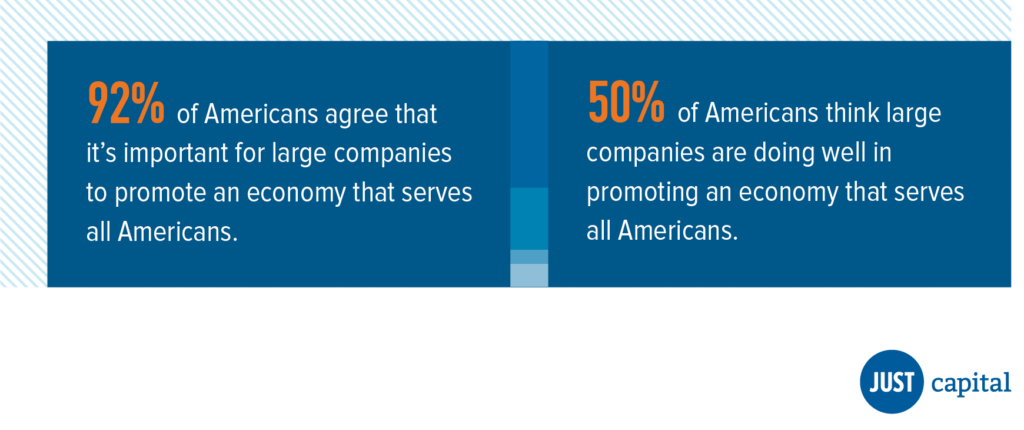
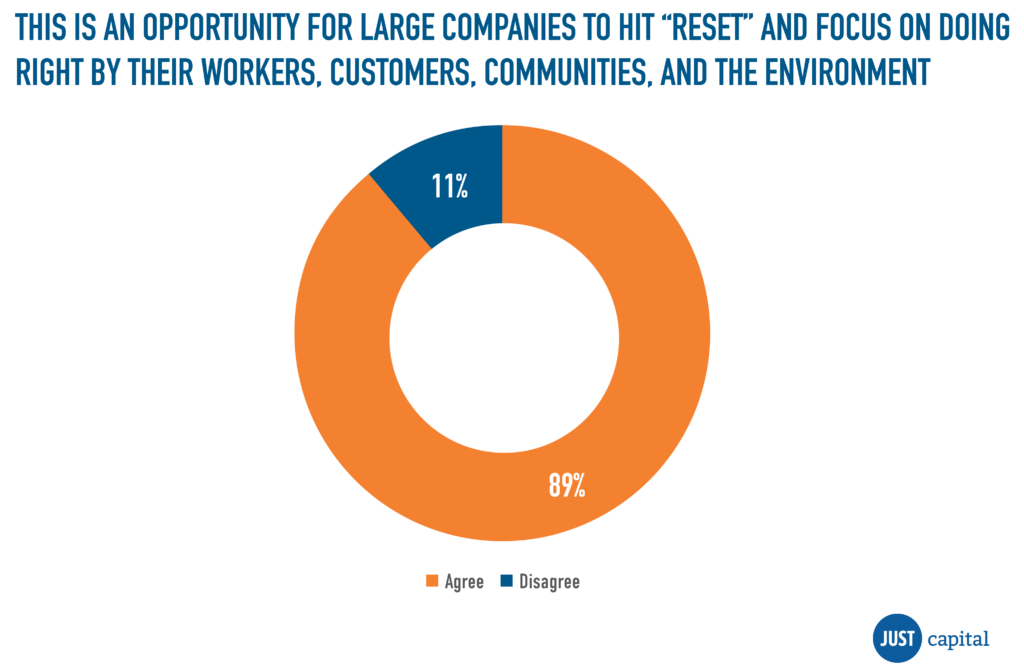
It’s clear that corporate America is not living up to society’s expectations – and Americans let us know that they see this moment as an opportunity for companies to hit “reset” and work to meet the needs of all their stakeholders.
Further, when we asked them which stakeholders they believe were top priority for companies in 2020, 37% of Americans responded that employees were a key focus in 2020, a significant 17 percentage point increase from the year prior. Yet the plurality (46%) says that shareholders are companies’ top priority – suggesting that, while we know from our other survey work that Americans want employees to be a company’s top priority, corporate America is not yet aligned with their views.
In the immediate aftermath of the pandemic, Just Capital set to work tracking corporate responses to COVID-19 – and also reached out to the public at regular intervals for their feedback on where they think corporations should focus their efforts. In a quick pulse survey fielded in April 2020, 89% of Americans agreed that protecting the personal safety of frontline workers (including providing PPE) should be at the top of the list:
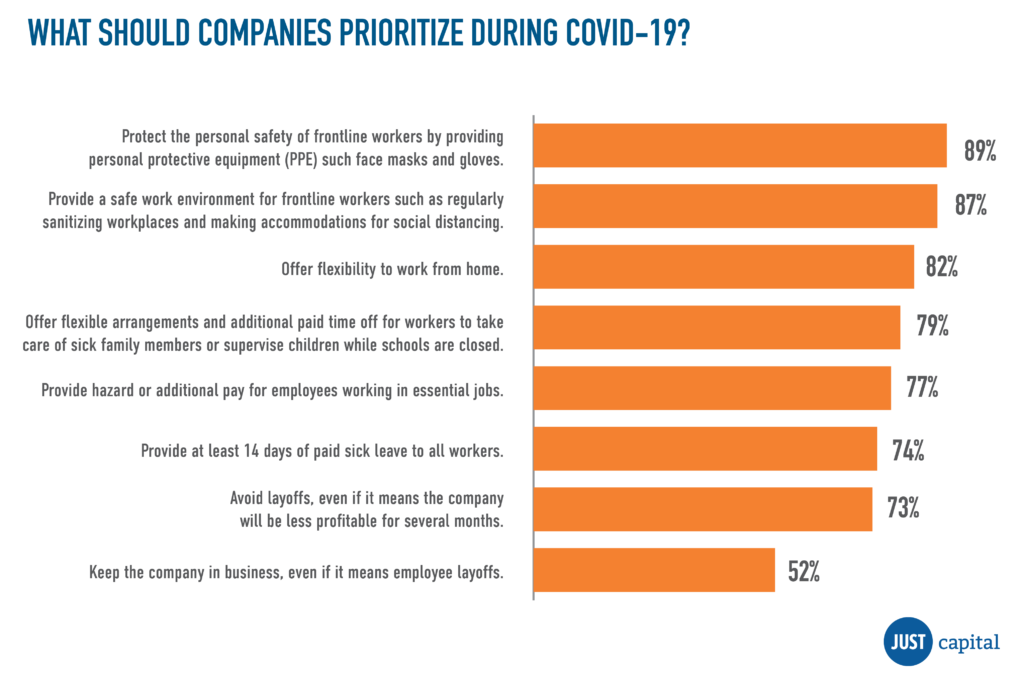
In June 2020, we reached out to Americans again as we approached the reopening phase of the pandemic. Three out of four Americans told us that large companies should continue to prioritize worker health and safety, even if it makes taking a more cautious approach to re-opening.
At the time of this survey, the future of the pandemic was highly uncertain – including whether and when there might be a vaccine, when businesses would be able to reopen, and what support Americans could expect from the government in the short and long term. In the face of this uncertainty, which we of course continue to experience today, Americans let us know that they believed a number of crucial corporate policies needed to be extended for at least another year to support our country’s workforce, and that companies should:
Looking ahead to the other side of the pandemic – the timeline for which remains uncertain, even today – 84% of Americans let us know they will remember the companies that did right by their workers, that worked to ensure workers’ health and safety and avoid layoffs. What is more, three-in-four (76%) agreed they will remember those that took missteps in their responses to COVID-19.
With the American people ready to hold corporate leaders to account for their responses to the COVID-19 crisis, we asked them how they expect corporate leaders to respond to other critical issues of our time.
Following the killing of George Floyd and too many other Black Americans – and the national reckoning with racial injustice that followed – we tracked and aggregated notable actions from corporate America, and provided actionable guidelines for how companies can combat systemic racism against Black colleagues in the workplace.
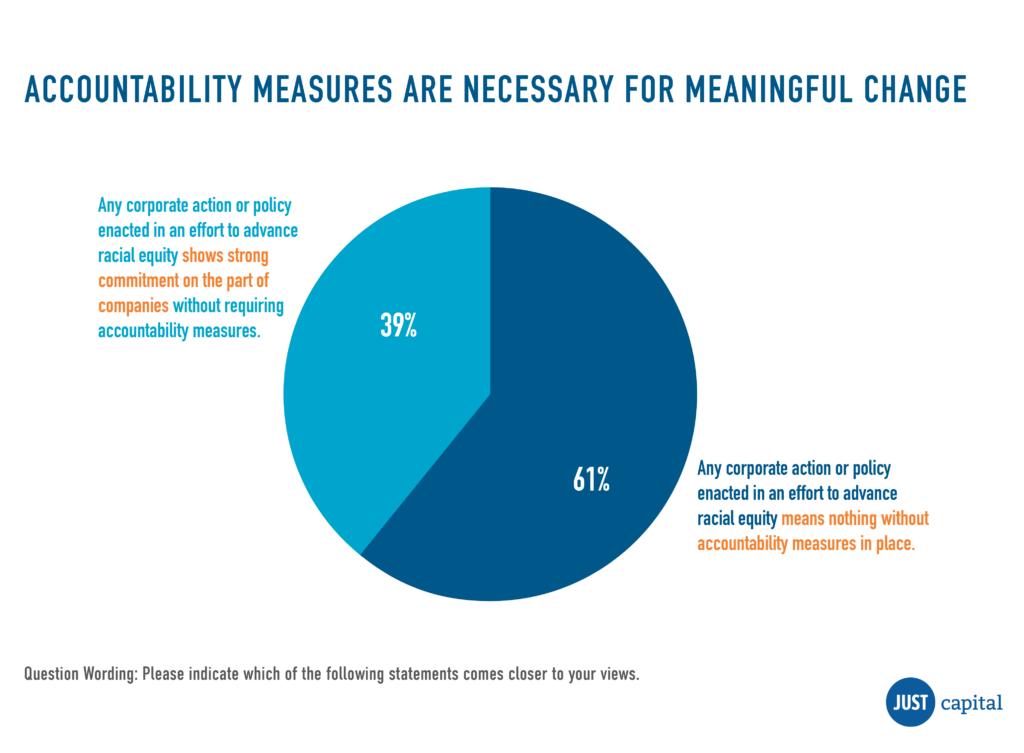
Turning to the public for their views on corporate responses – specifically, statements in support of Black Lives Matter and condemnations of white supremacy – we found that 75% of Americans want corporate leader to condemn racism, racial inequality, and racial injustice, but 61% agree that these commitments ring hollow without actions to back them up:
As the year progressed, we found the very foundations of American democracy under threat, and asked the public what they believed the role of companies should be in its preservation. 83% of Americans told us they believe that the health of our economy depends on the strength of our democracy, and in a survey fielded before the 2020 election, a majority (62% or more) shared that they believed companies could step up to help maintain democracy by:
We returned to the public in December, following the election, to ask them how they viewed corporate responsibility under the incoming Biden administration. We found that nearly 80% of Americans expect corporate leaders to continue to speak out on social issues over the next four years – including 87% of Democrats and 75% of both Republicans and Independents.
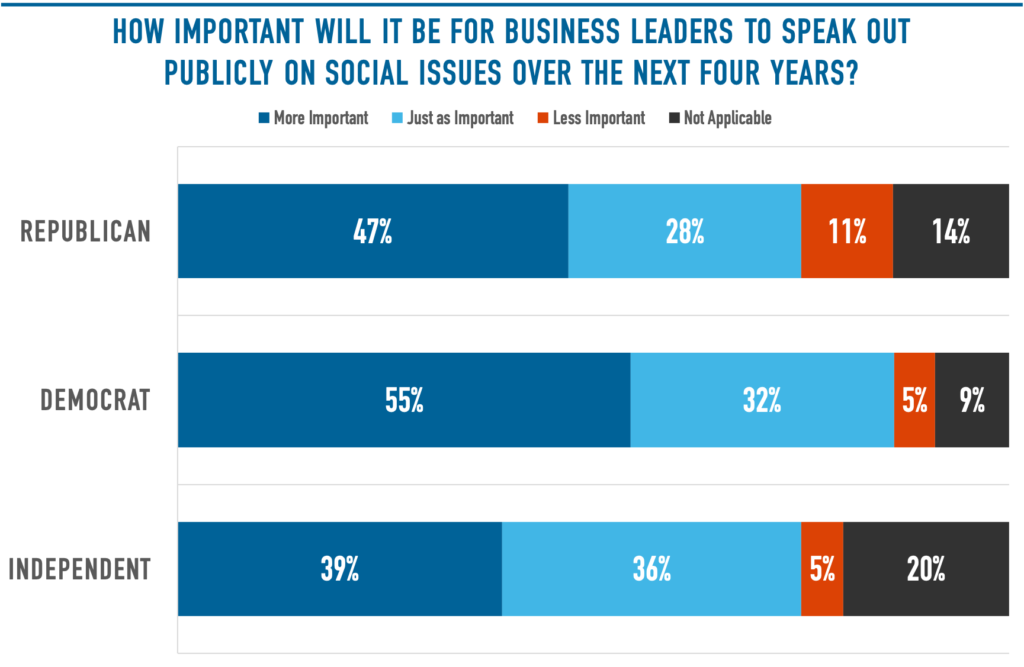
The year to come will continue to test corporate leaders – with the pandemic still raging, democracy still fragile, and racial inequality still in the process of being dismantled. Americans clearly expect corporate America to take a stand, but not without clear actions to truly move the needle for their stakeholders.
Since we first began polling the public back in 2015, Americans let us know year after year that they believe a top priority for companies must be to pay their employees a fair and livable wage – and in the past three years, it was the most important issue in the public’s view. These priorities provide the foundation for our Rankings, and in 2021, paying a fair, livable wage accounted for 9.9% of a company’s score in our Rankings:

In our 2020 Survey – which determined the prioritization of each of the above issues – 80% of Americans let us know that they believe large, public companies have a responsibility to consider the impact they have on all their stakeholders. But only 35% of Americans believe companies are actually having a positive impact on their lowest-paid workers.
Finally – reflecting the critical and intersectional need for companies to take action in this area – 84% of Americans – and 89% of Black Americans – let us know that the most important action for promoting racial diversity, equity, and inclusion in the workplace is to commit to paying all employees a living wage.
In the year ahead – which we hope will yield progress and even a degree resolution – Americans continue to face an uphill battle in our collective efforts to end the pandemic, fight against systemic inequality, and preserve our democratic system. The voice of the public in 2020 is clear: Corporate America has an active role to play in addressing society’s key issues. We will continue to reach out to Americans to better understand what they believe that role should be – again, not only for a snapshot of their views in this unprecedented time, but most critically, to provide a playbook for corporate America as we continue along a road to recovery.
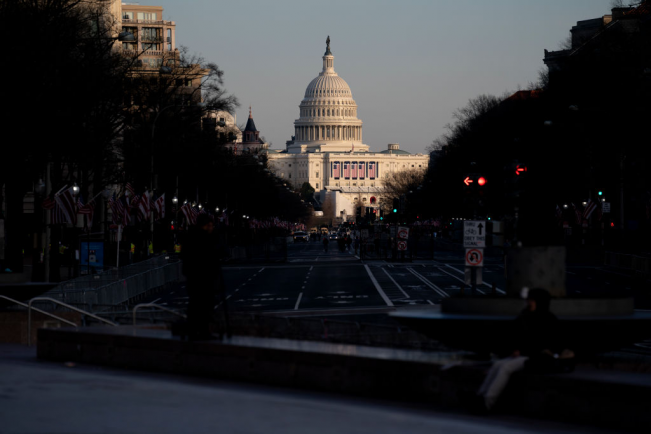
Following last week’s attack on the Capitol, we’ve seen a swell of responses from corporate America, condemning the day’s violence and reaffirming their belief in our nation’s democracy. CEOs of America’s largest companies have responded in myriad ways – publicly denouncing the act of domestic terrorism at the Capitol, halting political donations to members of Congress who voted against certifying the election, pausing all PAC donations to both Republicans and Democrats for six months as they reevaluate strategies, as well as permanently dissolving company-sponsored PACs moving forward. Technology companies also made unprecedented moves to shut down their platforms and/or bar individuals – including the President of the United States – who were using their accounts to propagate conspiracies and/or organize attacks on government workers.
The response, if nothing else, has clearly demonstrated the power corporate America has to effect change.
Edelman’s 2021 Trust Barometer, released this week, has shown us that business has an opportunity to lead in this moment. It is “not only the most trusted institution among the four studied, but it is also the only trusted institution … and the only institution seen as both ethical and competent.”
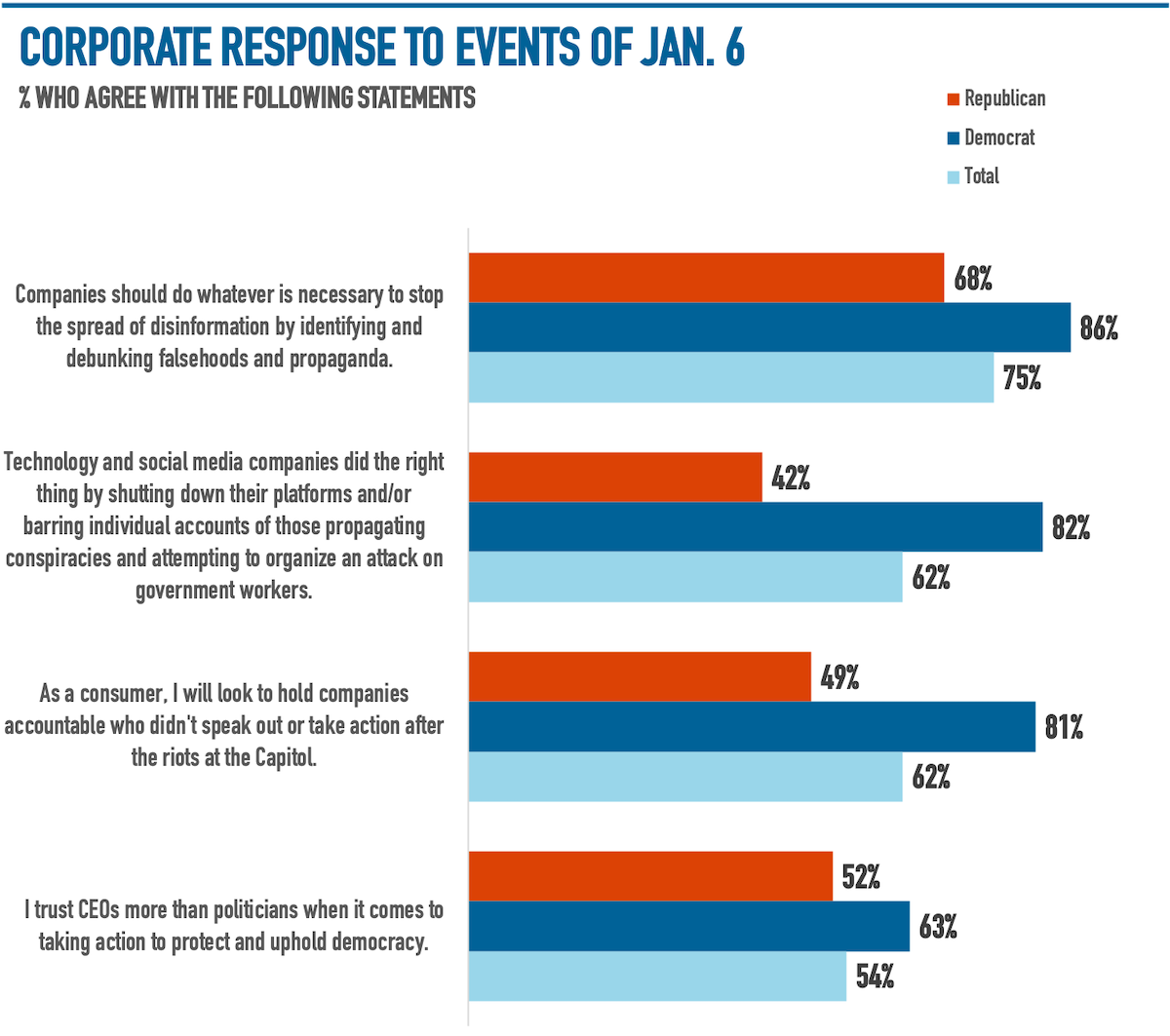
To wit: In a survey we conducted this week, polling more than 1,000 Americans to gauge their thoughts on corporate America’s response, we found that 54% of Americans agreed that they “trust CEOs more than politicians when it comes to taking action to protect and uphold democracy.” John Gerzema, CEO of The Harris Poll and partner of Just Capital, says it best: “Americans were outraged by what they saw at the Capitol last week, and they’re looking for leadership from the business community.”
Andrew Ross Sorkin argued in The New York Times this week that this was an “epiphany moment” for corporate America to reassess political giving entirely, so we were curious to see where the American public landed on this overall, and what differences may exist across political ideology.
A majority of Americans (58%) agree that corporate political donations are harmful to democracy, vs. 42% who say corporate political donations are beneficial. From an ideology perspective, both Republicans and Democrats were mostly unified in thinking political donations are more harmful, with surprisingly more Republicans agreeing (63%) than Democrats (52%).
70% of Americans believe that companies should denounce the acts of violence perpetrated by the mob on the Capitol building last week. However, a greater percentage of Americans favor corporate leaders taking action in the form of curtailing political donations. Republicans and Democrats are united in their desire for more sunlight on these issues: 78% of Americans want to require companies to publicly disclose all political donations to ensure transparency and accountability (82% among Democrats, and 76% among Republicans) and 69% say companies should pause all political contributions and reassess their donation strategies to political organizations (75% among Democrats, and 65% among Republicans).
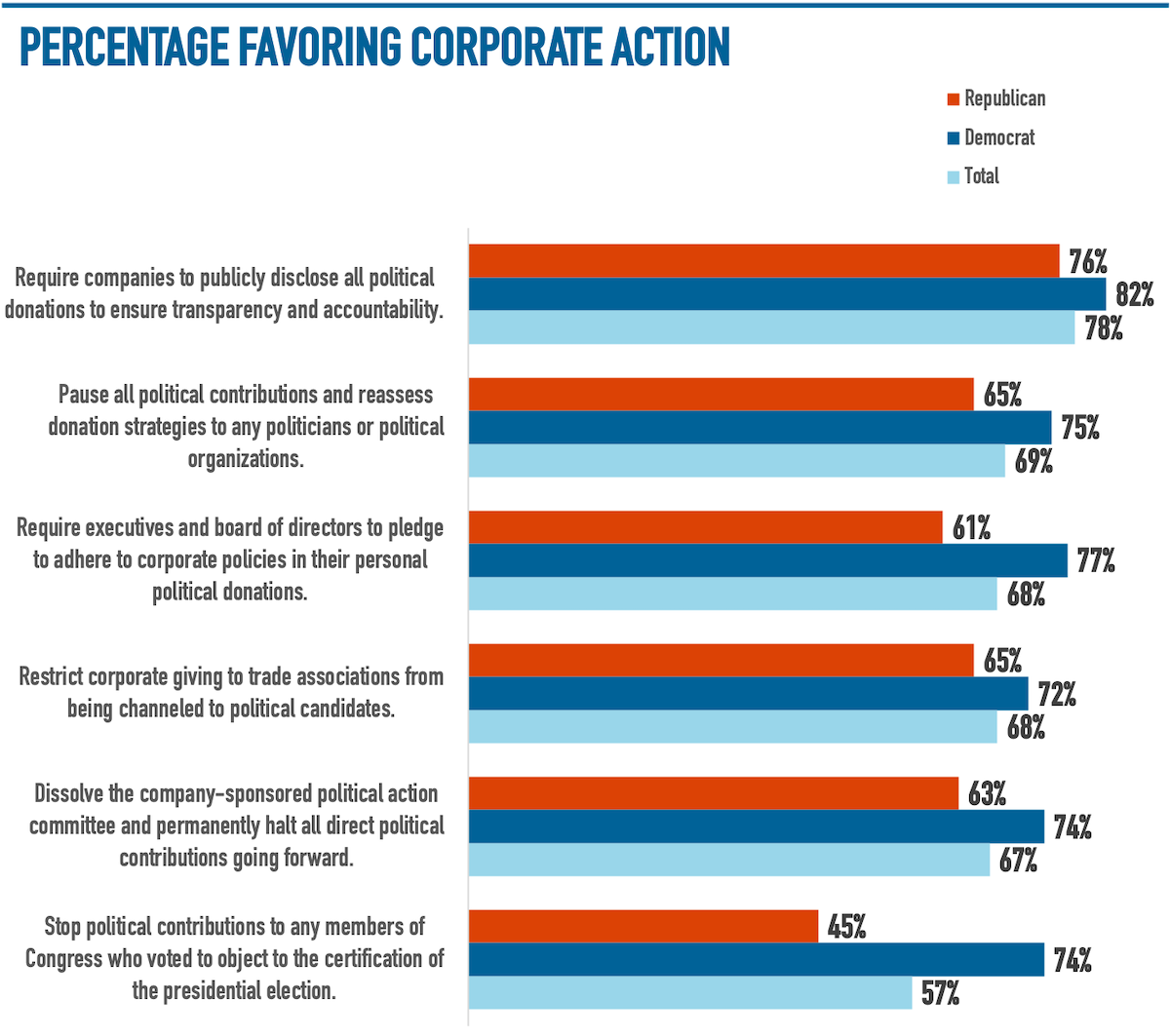
Fewer, though still a majority (57%), believe that companies should halt political contributions to any members of Congress who voted to object to the certification of the presidential election. This is where we see a clear split in political ideology, with 74% of Democrats and only 45% of Republicans supporting this action.
There are other areas in which the public expects corporate leaders to leverage their power to protect and defend democracy. In fact, 62% of Americans say they are likely to hold companies accountable for not speaking out or taking any action in response to the events of Jan. 6 – signaling their expectation that the private sector step up in a time of crisis.
Three-quarters of Americans agree that corporations have a role to play by stopping the spread of disinformation, a point of view that is generally shared by both Republicans and Democrats. Yet we see significant differences across party lines with regards to how companies leverage their power. Far fewer Republicans (42%) than Democrats (82%) say that tech companies did the right thing by shutting out individuals who actively spread conspiracies and/or attempted to organize attacks on government workers.
American capitalism relies on the strength and stability of our country’s democracy, and these recent threats to the very foundations of our national and political identity could yield deep impacts beyond the halls of the Capitol. It cannot rest solely in the hands of our nation’s elected officials to right these wrongs and restabilize our democratic system. As Americans told us in another recent poll, business and government must work together to tackle the most critical social issues of our time. And after last week’s events, it’s clear that the protection of our democracy must be on that list.
This survey was conducted online within the United States by The Harris Poll in partnership with Just Capital from Jan. 13-14, among 1,015 U.S. adults ages 18 and older. This online survey is not based on a probability sample and therefore no estimate of theoretical sampling error can be calculated. For complete survey methodology, including weighting variables and subgroup sample sizes, please contact Jennifer Tonti, Managing Director of Survey Research, at jtonti@justcapital.com.
If there’s one thing that has emerged after the events of the last week, it’s the clear need for healing and leadership across society. It aligns with the priorities we continue to hear from the American people, who, in our latest poll conducted in late December, say that business and government have a collective responsibility in tackling the critical issues of our time.
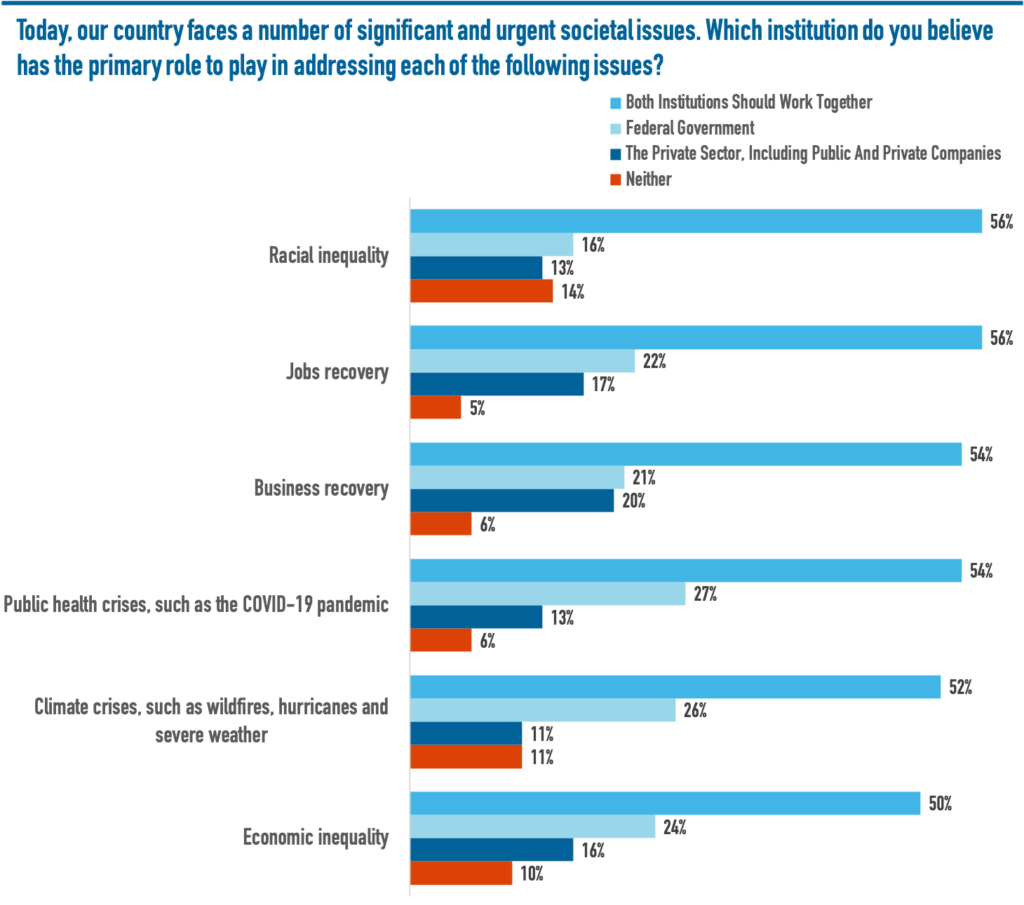
In an effort to understand whether there is bipartisan support for collaboration between business and government, we asked Americans whether they think the federal government or the private sector should play the primary role in addressing issues from racial inequality to public health to climate. Most respondents said they believe that they should work together. Specifically, 50% or more believe that business and government should join forces to address racial inequality, business/jobs recovery, climate crisis, economic inequality, and the public health crises, far outweighing those who think either the federal government or private sector are primarily responsible to drive change on the issues.
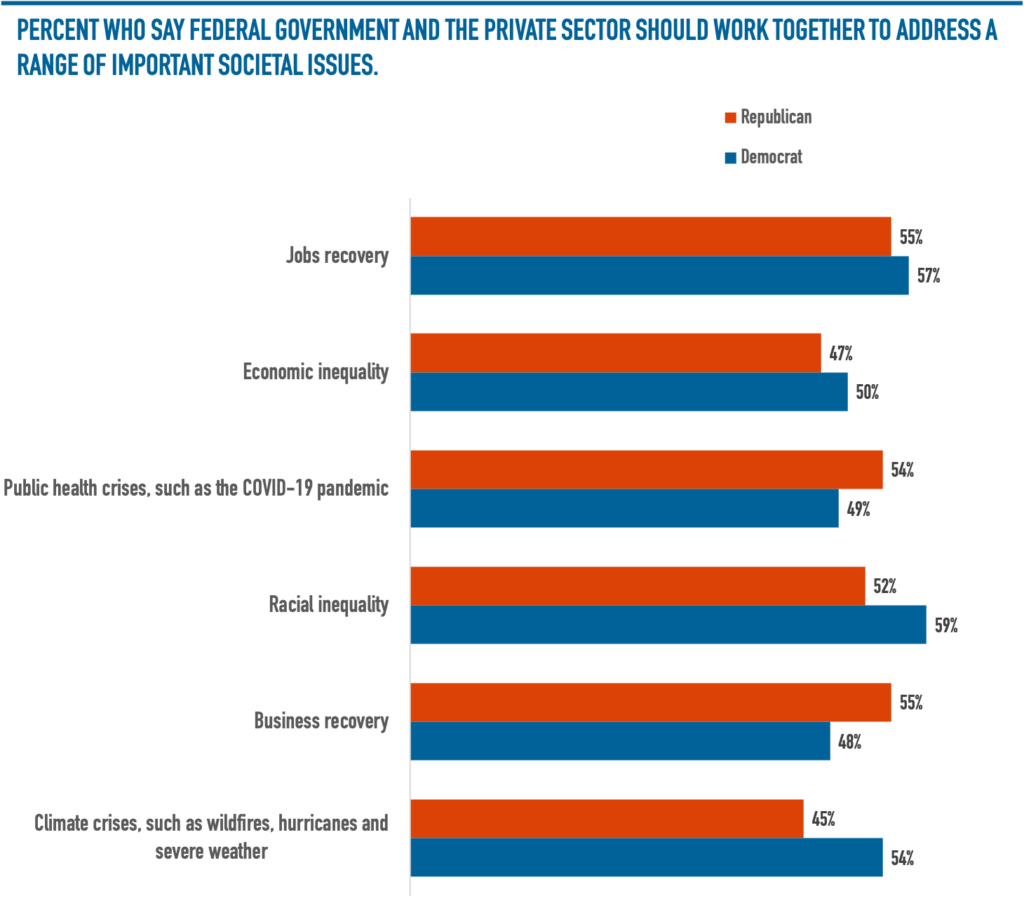
When looking at these issues, there is clear agreement across partisan lines that collaboration between business and government is needed, suggesting that there is rich opportunity to work together across the aisle in elevating shared values and identifying solutions. To wit: Majorities or pluralities of both Republicans and Democrats agree that the federal government and the private sector should work together to address society’s most pressing issues, including racial inequality (52% of Republicans and 59% of Democrats), jobs recovery (55% of Republicans and 57% of Democrats), and public health crises such as the COVID-19 pandemic (54% of Republicans and 49% of Democrats).
We see similar alignment on the issues we capture in our annual survey. In our 2020 Report, we found that liberal and conservative Americans align on the top eight priorities for stakeholder capitalism – in particular, Americans from different ideological backgrounds agree that companies must prioritize their workers. Overall, fair pay and livable wages for workers is the top priority – it sits at the top of the list for conservatives and at the #2 spot for liberals (who say that basic human rights across a company’s supply chain is their top priority) – and ethical leadership is #4 on the list for both conservatives and liberals. Among the top eight priorities, liberals put slightly more emphasis on issues of human rights and workplace diversity, while conservatives put slightly more emphasis on job creation and workforce investment.
America’s largest companies have a role to play in helping to heal the country’s divisions and to create an economy that works for all. The public agrees that businesses can do this by lifting up workers – providing a fair and living wage, job opportunity and stability, and an inclusive workplace – and want to see the private and public sectors work together to address the country’s most urgent social and economic challenges. 2021 can still be a year of great promise, and the business community can lead the way, starting with ensuring the financial wellness of all their workers, advancing racial equity in the workplace, and by actively engaging with government leaders to identify and implement solutions to some of the country’s greatest challenges.
