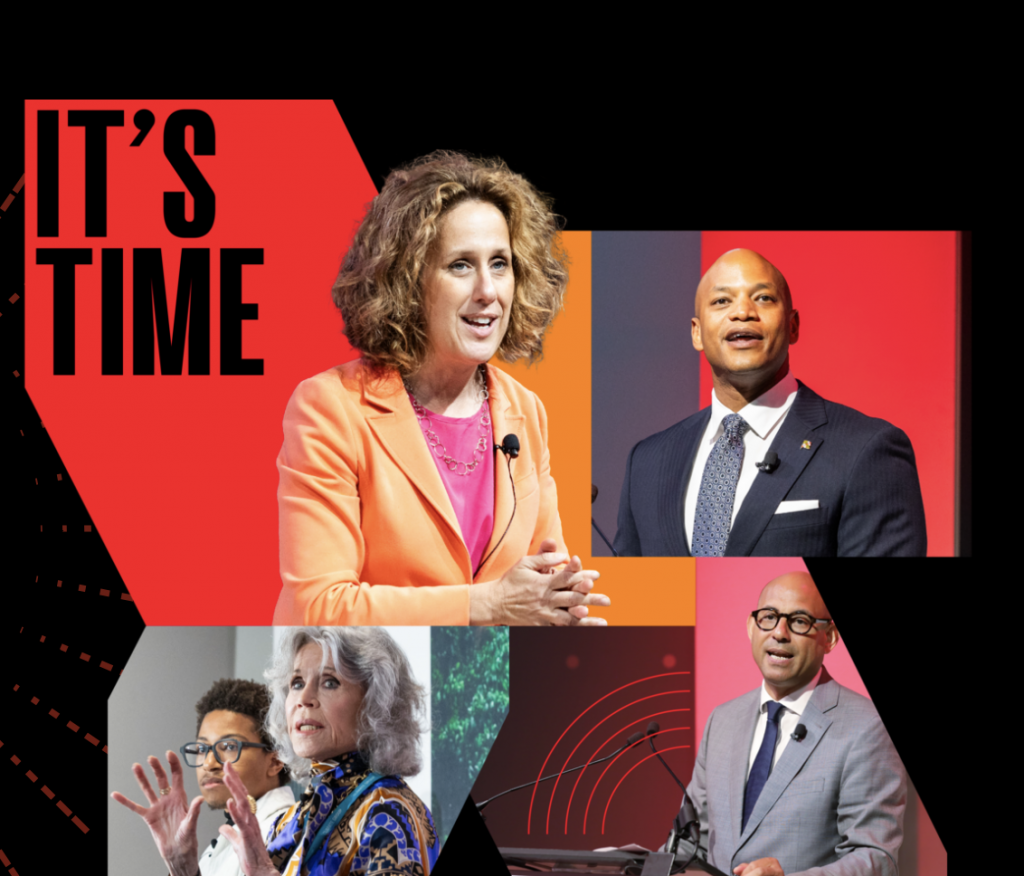
If you can make it around the barricades, past the acronyms, and beyond the countless cocktails and canapes, you realize Climate Week in New York City provides an opportunity to address some serious questions.
Are we actually on track to combat climate change? Who’s moving the needle? Who is holding everyone to account? And who, ultimately, will foot the bill for whatever future we have in store?
There’s certainly a lot of capital flowing into the climate space. According to CREO Syndicate, a nonprofit organization on whose board I serve, “Annual global climate finance flows doubled from 2020 to 2022, reaching $1.4 trillion or 1% of global GDP, but will need to increase sixfold to average $8.6 trillion through 2030, and $10.7 trillion through 2050, to reach net zero.” Whether all of this investment will generate a market rate of return (or mitigate greenhouse gas emissions for that matter) remains to be seen, but compared to, say, a decade ago, these numbers are impressive.
There’s also a lot of business action on the issue. As our list of Top 10 Companies for the Environment shows, companies like Hewlett Packard Enterprise, McCormick and Co, Accenture, and Trane are supplying the world with advanced climate solutions that tie directly back to market performance and profitability. This week’s announcement by Microsoft (another JUST 100 leader) that it will use the Three Mile Island nuclear facility to supply the emissions-free power it needs to grow brings home how seriously companies are taking their climate commitments and how complex the path forward really is.
Where is the public – as consumers, as taxpayers, as voters – on all this? I’d say it’s a mixed bag. Despite what many of the international visitors I talked to this week think, Americans do care about the climate. But as our polling shows, it’s hard to prioritize it when you’re struggling to make ends meet. For millions around the world, a changing climate threatens their livelihoods, their communities, their futures. Yet many feel similarly threatened by some of the policies proposed to address the issue. Getting to grips with these realities is essential. In the meantime, it’s the private sector that will continue to lead.
Be well,
Martin
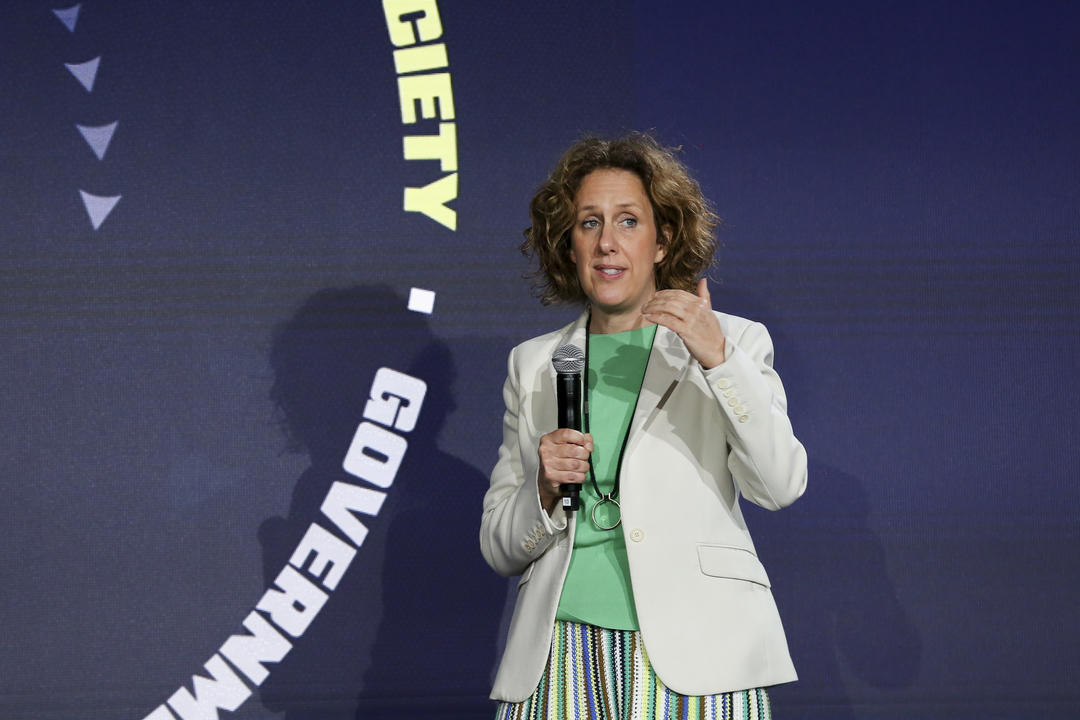
“We only have one environment and we must protect it. The planet will adapt without us – we are not as important as we think we are.”
California kicked-off climate week by launching the first-of-its-kind lawsuit against ExxonMobil for its alleged role in the plastic pollution crisis. The Guardian has the story.
Bloomberg takes a deep-dive into how corporations have lost or regained Americans’ trust, as part of an ongoing series on lack of faith in institutions.
Forbes predicts that average salary increases are going to decline next year. Explore why.
Fast Company explains why corporate America’s retreat from DEI is shortsighted, and Retail Dive highlights the leading DEI programs that serve business goals.
Bloomberg looks at the immense pay package garnered by ousted Nike CEO John Danahoe, and whether it was a just amount for a man who presided over the company losing over $40 billion in market value.
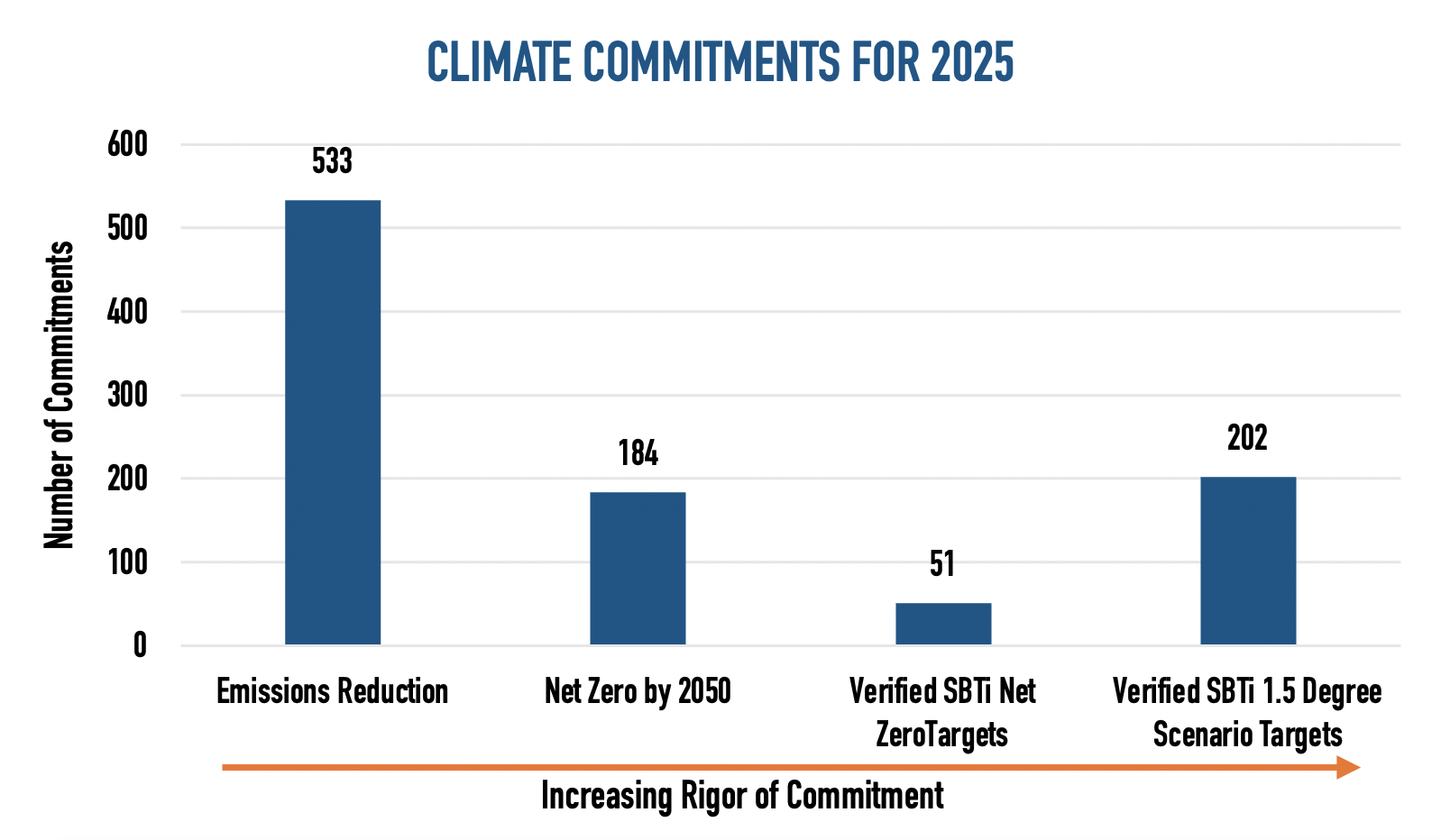
For climate week, we analyzed preliminary 2025 data on climate commitments, showing what level of disclosure and commitment Russell 1000 companies are providing, which will factor into our 2025 Rankings. So far, we are seeing a remarkable increase on SBTi scenario commitments compared to last year’s data.
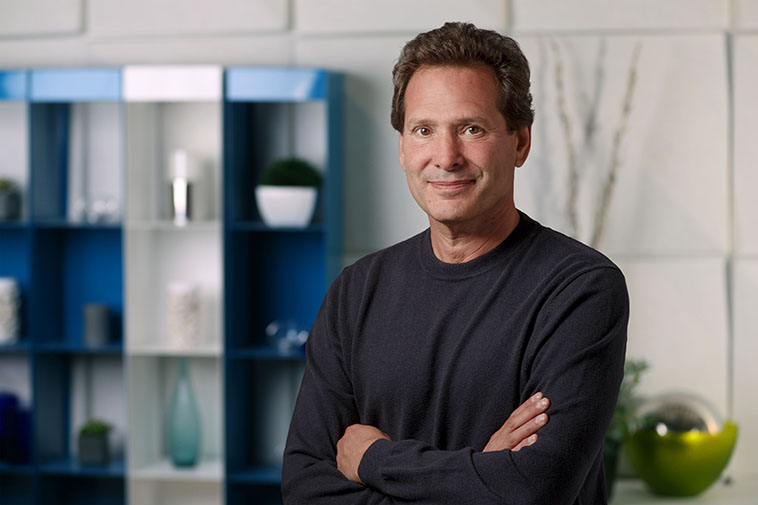
Just Capital announces today the appointment of former PayPal CEO Dan Schulman as chairman of its board of directors.
Schulman replaces Just Capital Co-Founder Paul Tudor Jones II, who will remain on the board and continue to partner with Just Capital’s advisors and directors to realize its goal of becoming the most trusted and objective authority on ranking, recognizing, and incentivizing corporate stakeholder leadership.
“Paul Tudor Jones II’s vision when he co-founded JUST Capital ten years ago is an inspiration to us all,” said Dan Schulman. “Under his leadership, the organization has changed the conversation about how business in America is done. The role of JUST Capital is becoming ever more important in today’s world. I look forward to partnering with Paul and the rest of the board to help guide the kind of corporate leadership that the world so urgently needs.”
Schulman was the CEO of PayPal for more than nine years and previously held leadership roles at American Express, Sprint Nextel Corporation, Priceline Group, and AT&T. He is a board member of Verizon, Cisco, Lazard, and the Cleveland Clinic. He is vice chair of the Valor Capital Group, a life member of the Council on Foreign Relations, and co-chairs the World Economic Forum’s Steering Committee to promote global financial inclusion.
“Dan Schulman’s track record working at some of the largest U.S. companies makes him the perfect person to carry Just Capital forward as chairman,” said Paul Tudor Jones II. “I couldn’t be prouder of what we’ve achieved and look forward to working alongside Dan and the entire JUST Capital team to drive change at scale and better the lives of all Americans in doing so.”
Over the past 10 years, Just Capital has amplified the voices of more than 180,000 Americans and incentivized hundreds of the largest U.S. companies to take concrete actions that benefit millions of workers, families, and communities. With partners like CNBC and Forbes, the organization has built the Just Capital Rankings into a sought-after designation that improves brand value and has launched investable indices that demonstrate the clear case for stakeholder-driven business. As of August 30, 2024, Just Capital’s flagship indexes, the JUST 100 Index (JUONETR) and Just U.S. Large Cap Diversified Index (JULCD), have outperformed their benchmarks by 51% and 12.9%, respectively, since inception.
“As stakeholder metrics become more relevant in C-suites and boardrooms, Just Capital is delighted to work hand-in-hand with Dan Schulman to hone our strategy to directly support leaders in managing risk, measuring and improving performance, and creating impact at scale,” said CEO Martin Whittaker. “When many are questioning the merits of capitalism and faith in the American Dream is being tested, our vision is clear. We know that just business is better business.”

A major survey on Global CEO Confidence released by EY last week provides some fascinating insights into the way corporate leaders around the world view the competitive and economic landscape right now.
Cautious optimism is one way to summarize it. CEOs are “rethinking, reimagining and reshaping their companies” to be fit for a highly unpredictable future. They place great importance on being data-driven, on resilience, on understanding how the drivers of total shareholder return are shifting. They know that “capitalizing on disruption” – whether by AI, other emerging technologies, shifting societal values, geopolitical risk or otherwise – will be crucial to long- and short-term value creation.
Such confidence is critical for a stakeholder mentality to take root. And as the FT’s Gillian Tett noted in her opinion piece last week, “[Milton] Friedman’s shareholder-first mantra went hand in hand with an assumption that the issues that really mattered for companies were those recorded on their balance sheets.” Clearly, this is no longer the case. The biggest risks to shareholder value today often arise from social, environmental, governance, and political sources.
I like to think that through JUST’s polling, data, insights and rankings we can help companies understand and navigate this increasingly complex landscape of stakeholder expectations. A critical phase of this – ensuring we’ve captured the latest policies and practices from the companies we rank – kicks off September 17th with the opening of our annual Data Review Period. Companies can register to participate here. By building CEO confidence in planning, strategy and decision making on stakeholder performance, we can help equip them to deal with whatever lies ahead.
Be well,
Martin
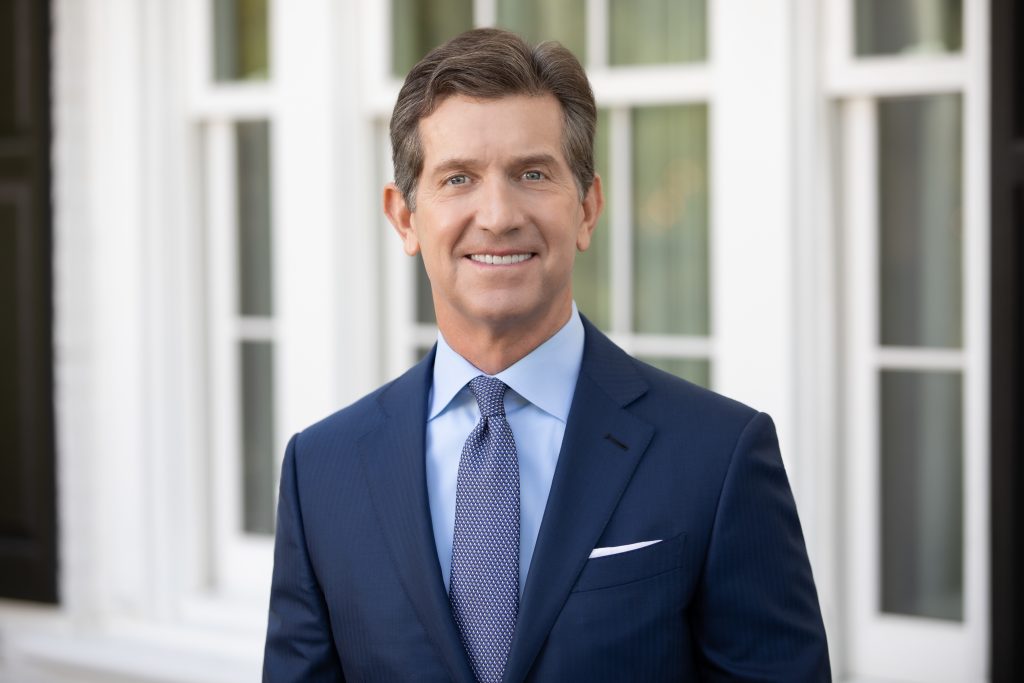
“In addition to thinking about the return we need to have for our shareholders and the sustainability that this provides to the business, that can also be really complemented by taking care of our employees who make those products possible and the communities where we work and live. How can we make sure that like they’ve helped us along the way, we’re giving back to them.”
JPMorgan Chase
JPMorgan Chase offers a minimum hourly wage of $20, which exceeds the Russell 1000 average and represents the third highest minimum wage among banks. The company also supports new parents with 16 weeks of paid parental leave for both primary and secondary caregivers and families with various caregiving services.
Cigna
Cigna prioritizes transparency by sharing highly detailed workforce demographic data by gender, race/ethnicity, and job category, reinforcing its focus on fostering an inclusive environment. Additionally, Cigna supports its employees’ work-life balance with key benefits including 18 days of paid time off and seven days of paid sick leave annually, paid parental leave, flexible scheduling opportunities, and emergency backup dependent care support.
Dayforce
Dayforce sets a high standard in the Software industry with its generous and inclusive parental leave policy, offering 17 weeks of paid leave to all caregivers. This is the highest offering at parity among the Top 10 companies and far surpasses the Russell 1000 average of 11 and 8 weeks of paid parental leave for primary and secondary caregivers, respectively.
Read about more leading policies here.
Bank of America, 2023’s Most JUST Company (and #1 for Workers in 2024) is once again raising wages – bringing its minimum wage to $24 an hour, with a plan to hit $25 in 2025. Axios dives into the details.
In other news on wages, the U.S Construction industry dropped to its lowest level of unemployment ever recorded, with wages up across the board. CB has the full story.
However, MSN counters this news by reporting on the 15 cities that are no longer viable for minimum wage workers due to rising cost of living.
NPR chronicles one Wisconsin CEO’s journey to create viable child care options for his 900 employees, and the hurdles the company faced.
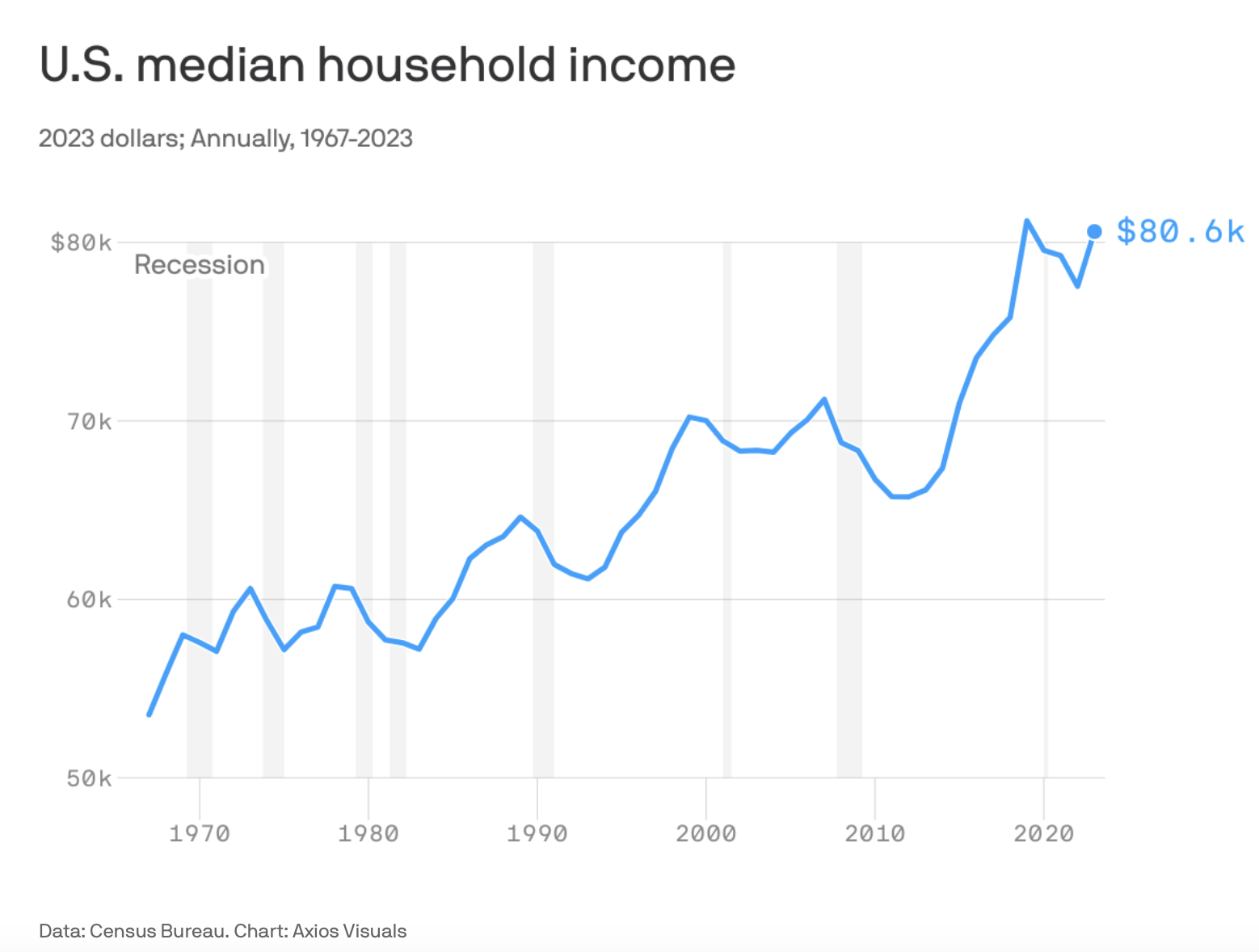
This chart comes from Axios’ latest newsletter, and shows that for the first time in 4 years, the median U.S. income has actually gone up. Learn more inside.
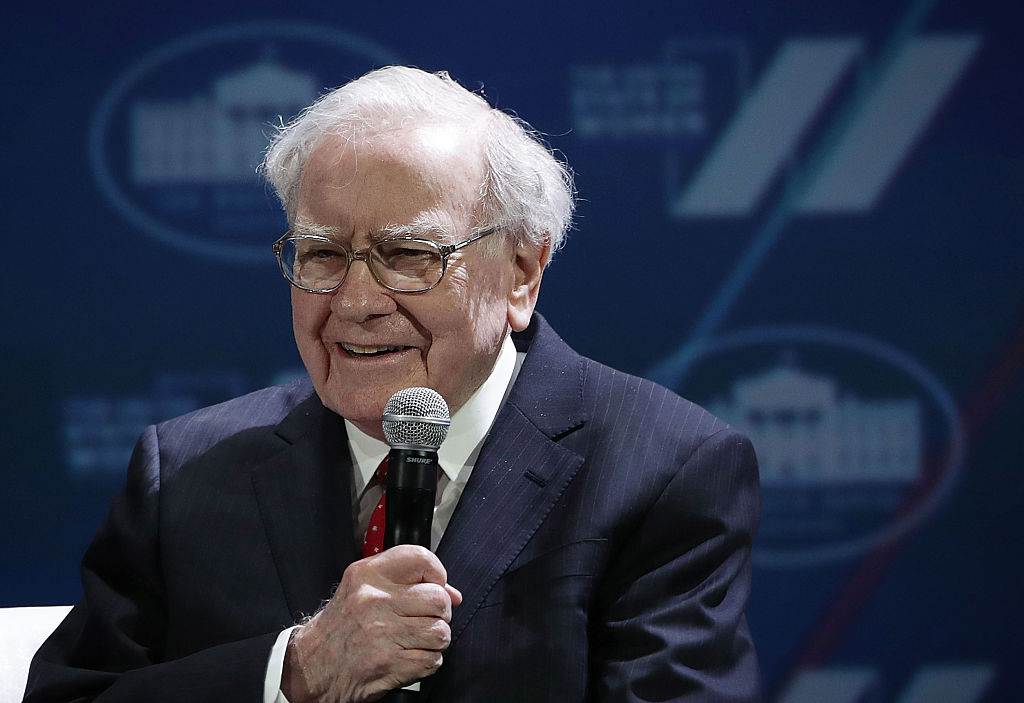
Warren Buffett’s public holdings are more likely to be outperformers on stakeholder value. So concludes an analysis released by Bain this week, which notes that his portfolio companies are predominantly in the top half of a global universe of 1,300 companies measured on employee, community and customer performance criteria, with one-third in the top quartile. It’s not quite clear precisely what the measurement criteria are, but the point remains: the world’s #1 investor, by coincidence or intent, has disproportionately allocated his capital to companies that align value creation for stakeholders with total return for shareholders.
A Forbes article published this week by JUST Board member and former Y&R CEO and Chairman Peter Georgescu delves deeper into the historical connections of corporate stakeholder performance, reminding us that, despite recent divisiveness and rollbacks, stakeholder capitalism is not a new idea. Indeed, its practice across decades of American business history has resulted in perhaps the greatest value creation success ever: the establishment of the American middle class.
Per Axios reporting this week, the performance of the highest ranked companies in the JUST Annual Ranking compared to the lowest ranked companies brings this into sharp relief. Between January 2018 and August 30, 2024, the top 10% of companies in our rankings has beaten the bottom 10% by 92.85%. The performance of the JUST ETF tells a similar story. With a one-year return of 27.20%, the fund has surpassed not only the broader Russell 1000 index (by 0.62%) but also that of other U.S. large-cap ESG-focused ETFs. The JUST 100, which includes the top 100 companies from JUST Capital’s rankings, has outpaced its benchmark by 13.91% over the past year and an impressive 51.39% since its 2019 launch.
These are the kind of returns the Oracle of Omaha himself would be proud of.
Be well,
Martin

“How can Costco afford to pay so much more than other retailers, and provide its customers such low prices? Jim’s answer is always the same: paying your fellow workers well isn’t altruism, it’s good business. Costco’s employee turnover is a fraction of the rest of the retail industry – 8% compared to 60% – and its stock performance is so much higher.”
CNBC took a deep dive into some of the most interesting policies featured in our Top 10 Companies That Treat Employees Best list.
Axios spotlights JUST Capital data to make the case that ethical investing can produce financial returns.
JPMorgan Chase
JPMorgan Chase offers a minimum hourly wage of $20, which exceeds the Russell 1000 average and represents the third highest minimum wage among banks. The company also supports new parents with 16 weeks of paid parental leave for both primary and secondary caregivers and families with various caregiving services.
Cigna
Cigna prioritizes transparency by sharing highly detailed workforce demographic data by gender, race/ethnicity, and job category, reinforcing its focus on fostering an inclusive environment. Additionally, Cigna supports its employees’ work-life balance with key benefits including 18 days of paid time off and seven days of paid sick leave annually, paid parental leave, flexible scheduling opportunities, and emergency backup dependent care support.
Dayforce
Dayforce sets a high standard in the Software industry with its generous and inclusive parental leave policy, offering 17 weeks of paid leave to all caregivers. This is the highest offering at parity among the Top 10 companies and far surpasses the Russell 1000 average of 11 and 8 weeks of paid parental leave for primary and secondary caregivers, respectively.
Read about more leading policies here.
NPR reports that California is angling to be the first state to require safety standards for powerful AI models, particularly around testing for safety around a program’s ability to hurt our cyber infrastructure or shut down critical systems.
Axios reports on the slow trickle of companies dropping DEI from their companies, with Ford being the latest after external pushback. Meanwhile, Intelligencer looks at whether the attacks on corporate DEI programs are just encouraging companies to “hide” what they’re doing, and Forbes argues that dropping DEI programs is a short-sighted business strategy.
For Labor Day, The Washington Post looked at the swaths of disabled employees who make less than federal minimum wage due to an obscure law.
News Nation reveals that with the job market cooling, companies are offering lower salaries for new positions than they did in 2023.
Yahoo Finance reports that nearly 10,000 employees from Hilton, Marriott, and Hyatt went on strike this week for better pay and conditions.
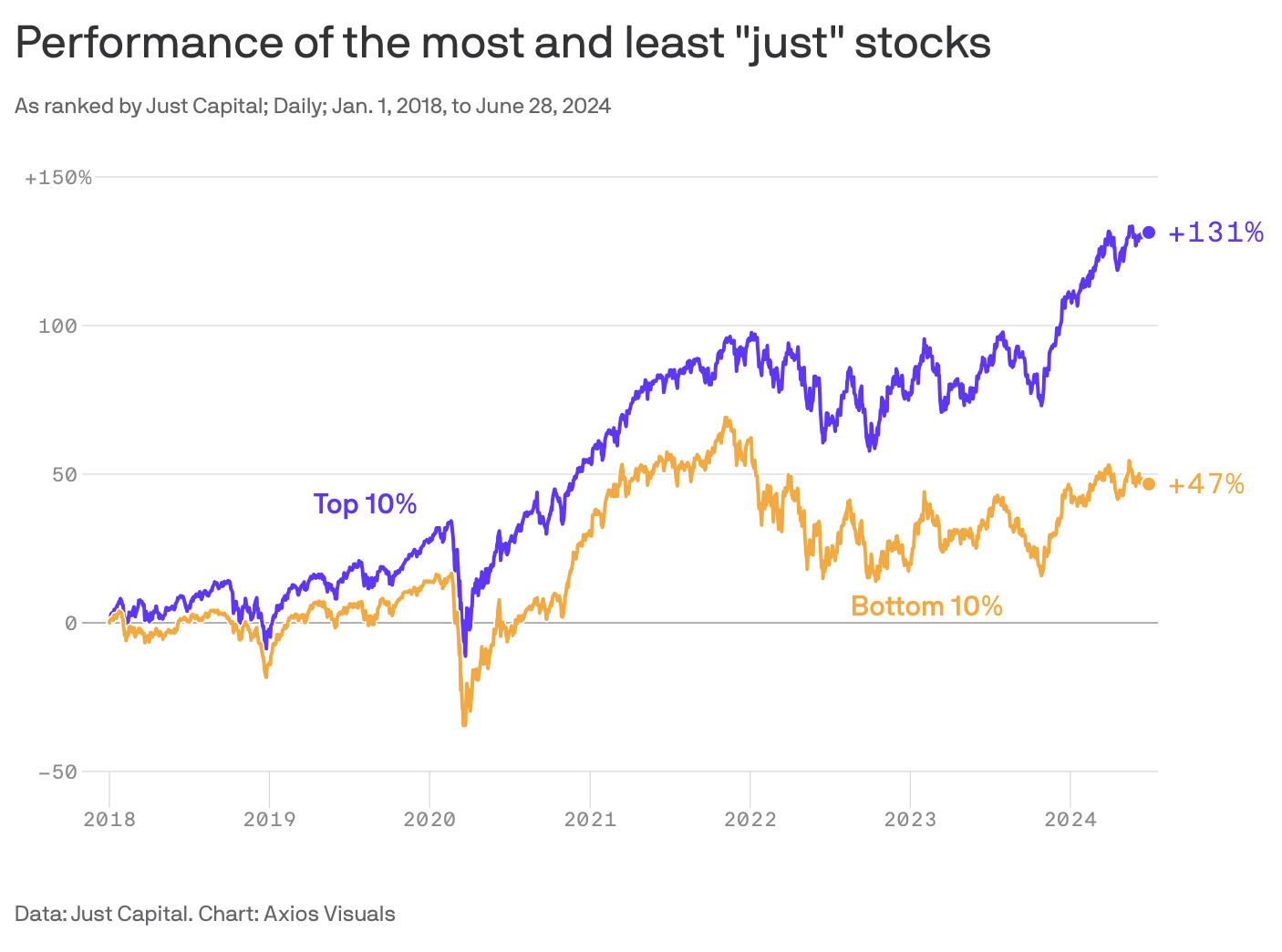
This chart comes from a report of JUST Capital data by Felix Salmon at Axios, and shows that if you had invested in the top 100 companies in the JUST Ranking over the last few years, you would be outperforming the S&P 500, particularly if you shorted the worst. Dig into his research here, and explore some of our own index concepts here.
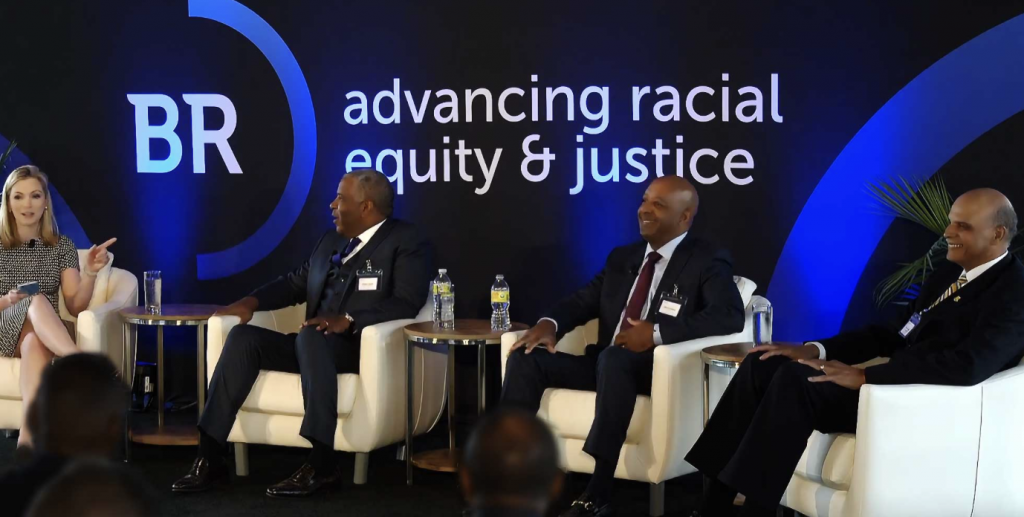
Monday marked the 5th anniversary of the Business Roundtable’s landmark restatement of the purpose of a corporation. As I wrote on LinkedIn, much has changed since then. The stakeholder model has become the framework by which many companies compete and win today, not because they think differently about purpose – though most do – but because it provides the best path to financial and market success.
Crucially, the stakeholder model is also how the American people think about corporate purpose. JUST’s own polling, as well as that of others, makes this clear. Understanding this is important because it offers clues in a quest currently underway on both sides of the aisle: that for a new economic vision for the nation (this week’s NYT Op-Ed by James Pogue about Connecticut Senator Chris Murphy is the latest reflection on the issue). Call it a secular shift, one that is fundamentally cross-partisan in nature, that seeks to understand why so many Americans feel cut adrift by our system of free market capitalism and how the problem can be tackled.
While disagreements over political solutions to this question undoubtedly exist, it strikes me that from a business perspective, the answers may be hiding in plain sight. Hardened by a cycle of embrace and backlash that continues to evolve, the stakeholder approach – in which the overarching goal is doing right by workers, communities, customers, suppliers, the planet and, yes, shareholders too – offers a clear blueprint for action which benefits everyone.
Be well,
Martin
This week, in partnership with Dayforce, we released a new toolkit for companies ready to implement effective paid leave policies to better support their employees, while improving talent recruitment, retention, productivity, and morale.
Our Guide for Corporate Leaders on Paid Leave Policies, offers an overview of paid leave policies across Russell 1000 companies, including industry insights and concrete examples of leading policies and best practices from some of America’s biggest companies, including Hewlett Packard Enterprise, S&P Global, Ford, and many more.
This week, in partnership with Dayforce, we released A Guide for Corporate Leaders on Paid Leave Policies for companies ready to implement effective paid leave policies to better support their employees, while improving talent recruitment, retention, productivity, and morale.
This comprehensive resource offers an overview of paid leave policies across Russell 1000 companies, including industry insights and concrete examples of leading policies and best practices from some of America’s biggest companies, including HPE, S&P Global, Ford, and many more.
As issues of generative AI violating copyright grow, Andreeson Horowitz is putting $80 million into a startup, Story, which aims to create a blockchain method for tracking what copyrighted material was fed into and utilized by AI. Fortune has the story.
The Wall Street Journal had people write-in their feelings on the debate over DEI, and it turns out proponents AND opponents actually share many similar views. Meanwhile, Morning Consult takes a look at how regular Americans feel about recent DEI rollbacks, like what happened this week at Harley-Davidson.
Meanwhile, Inc spoke to several CEOs who continue to have Chief Diversity Officers on how they’re positively impacting their companies.
Worries abound over Meta discontinuing a tool used to fight disinformation right before an election. NPR has the story.
NPR takes a deep dive into the non-profit hospital system, showing that as CEO pay and profit margins go up, it’s not necessarily resulting in more “charity care” for patients that can’t afford to pay.
Harvard Business School reveals that while anti-ESG proposals surged in 2024, they earned less support from shareholders. At the same time, Robert Eccles breaks down three ways corporate leaders can manage the conflicting pressures in the ESG political wars.
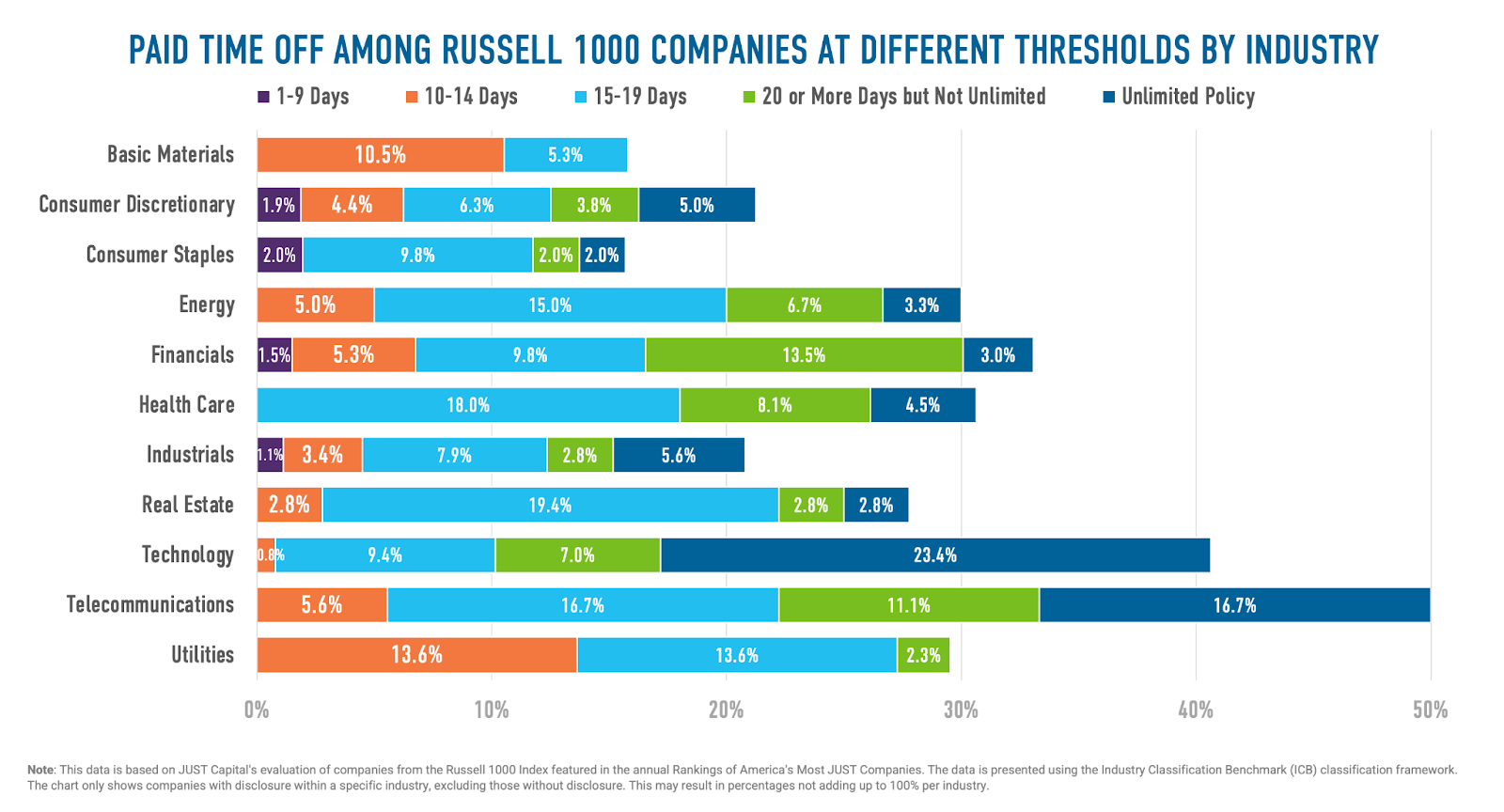
This chart comes from our Guide for Corporate Leaders on Paid Leave Policies, and highlights the PTO policies across industries in the Russell 1000. Read more about this data, as well as best-in-class policies, here.

Recent research from Sift, the AI-based fraud prevention platform, has revealed what it calls a “surprising generational divide”. It seems that Gen Zers – those born between 1997 and 2012 – express a significantly higher willingness to engage in online payment fraud compared to other generations. What’s more, some 33% of Gen Z respondents – much higher than other age groups – “either know someone who has participated in payment fraud or have done so themselves”.
As a father of four Gen Zers, I naturally found this to be somewhat unsettling. However, far more important is the analysis of why exactly this might be happening. First, it’s clear Gen Z is experiencing extremely high levels of economic distress and anxiety relative to other generations, brought about by student debt, exorbitant prices for houses, rental property and health insurance, a tough job market, and a general inability to afford even day-to-day necessities. What’s more, the research found that they feel much lower levels of corporate and brand loyalty. Indeed, Gen Z sees large corporations more as a cause of their broader economic problems than a pathway out of them.
Sift recommends companies build trust with Gen Z by “emphasizing their social responsibility”, helping them with payment management and flexibility, and prioritizing responsive customer service. These are all things we have heard in JUST Capital polling over the years in relation to just company behavior towards customers. According to our own surveys, Gen Zers also want to see CEOs advance climate solutions (70% vs 66% general population); uphold women’s reproductive rights (64% vs 57%); and protect LGBTQ rights (58% vs 51%). They are also more likely to say they would accept moderately less pay in order to work at a just company (23% vs 18%).
Gen Z makes up 20% of consumers in the U.S. and, in 2021, reportedly had a combined buying power of $360 billion. Undoubtedly it has grown since then as more of Gen Z join the workforce. They are the workers, the shareholders, the community leaders of tomorrow. Being just seems to be critical to winning their hearts and their support.
Be well,
Martin
August 6th 2024: Investing in Care: Proving the Payoff of Caregiving Benefits
Join us for a candid discussion about the challenges and opportunities of investing in caregiving benefits and potential positive outcomes for doing so. How are companies currently leading on caregiving benefits? What do you need to know about your workforce to create quality offerings? Learn first-hand from a company’s journey to significantly expanding their caregiving benefits.
Speakers:
Donnebra McClendon, Global Head of Culture and Inclusion, Dayforce
Joseph Fuller, Professor of Management Practice, Harvard Business School
Nicole De Santis, Partner, BCG
Ashley Marchand Orme, Director of Equity & Stakeholder Leadership, JUST Capital
Our friends over at The Conference Board are hosting a panel of expert economists on August 21 to discuss AI’s impact in the labor market, how it can cause or solve labor shortages, and more. Sign up here.
The Wall Street Journal reveals that many recent college graduates are heading to cities in the South due to better hiring prospects and lower cost of living, a job migration that hasn’t happened in several decades.
Are your company’s DEI efforts at a standstill? Fast Company speaks to twelve experts on why corporations need to move forward with their plans regardless of the political climate.
A Bloomberg opinion piece argues that the supposed gulf between rising productivity and flat wages is a “bi-partisan delusion”.
Following up on last week’s story, The Hollywood Reporter reveals that Disneyland workers have ratified their contracts with higher wages and sick leave.
Mashable reports that video game voice actors are following in the footsteps of the film industry, and are going on strike for protections against AI.
Bloomberg reveals that women now actually make up the majority of low-paid workers. Explore the implications here.
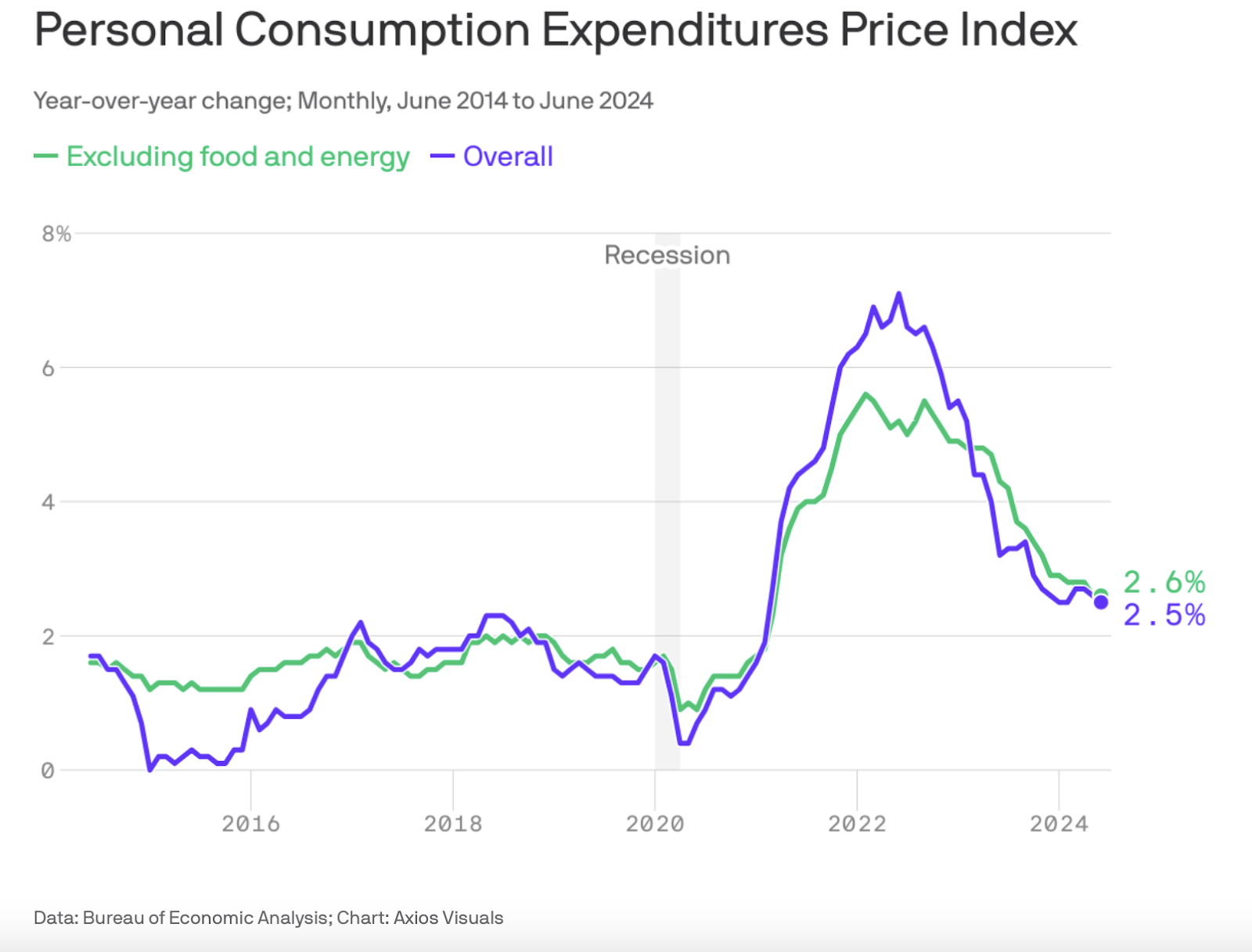
This chart comes courtesy of Axios, which shows that despite a blip in Q1, inflationary pressure is on the way down, with experts suspecting a rate cut may be coming in Q4. Explore the data.
