For Shanelle Forde, an Associate Software Developer at Prudential Financial, the most important role in her life is that of mom. “What’s important to me, at the top of my list, is my son,” she said. Working at Prudential, in her own words, “absolutely allows” her to be there for her son, without having to worry about how she’ll make ends meet.
Shanelle is just one of the nearly 1 million employees represented through companies participating in the Worker Financial Wellness Initiative, which helps companies take steps like raising wages or expanding access to benefits to bolster the financial health of their employees. To learn how those actions have impacted their lives and livelihoods, we set out to hear from workers firsthand through a compelling new video series.
This is Shanelle’s story:
Shanelle, a single mother, first came to Prudential through the company’s partnership with Year Up, an organization working to increase access to job and education opportunities for young adults. After six months of classroom training, Shanelle joined Prudential for a six-month internship and has been with the company for four years since. During that time, she’s had the opportunity to complete leadership and software training that have allowed her to level up in a way she’d never been able to before.
“One of the biggest differences I notice from my other jobs and Prudential, is how supported we are as employees,” she said. “When you support your workforce, your workforce absolutely supports you.”
Importantly, Prudential’s support allows Shanelle to come into work and focus on just that – work. A big part of that came from the company’s efforts to increase its employees’ financial literacy, she said, including access to tools to plan out retirement and other savings goals. Having that knowledge and support has been transformational for Shanelle.
“It has allowed me to be a better parent,” she said. “But it also allows me to be a better worker because now when I come to work, I’m happy. I don’t have to focus on those things like, ‘oh, how am I going to pay my rent?’ I can just come to work and focus on the work.”
Providing these resources and support for its employees also aligns with Prudential’s core business, Lata Reddy, Senior Vice President of Inclusive Solutions at Prudential shared with us. “As a company, our purpose is to make lives better by solving the financial challenges of our changing world. That’s why we provide a robust suite of benefits and tools that includes savings, physical and mental health benefits, dependent care resources and financial wellness offerings like tuition reimbursement to support employees to be more financially secure,” she said.
Listening to and acting on employee experience is becoming increasingly important. The stories of workers like Shanelle are a potent reminder of the power that companies have to create meaningful change for their workforce. And Prudential’s leadership is recognizing that this ultimately translates into business success.
“A decade’s worth of research shows that when workers are more financially secure, key business outcomes improve such as productivity, customer satisfaction, and employee turnover and engagement. We have been creating financial wellness tools for employers and customers since we were founded almost 150 years ago,” Reddy said. “Shanelle is a shining example of how employees can thrive with the right support and resources.”
Hear from other employees about the impact worker financial wellness programs have had on their lives:
The Worker Financial Wellness Initiative is a vibrant and growing community of business leaders dedicated to improving the financial health and security of their workers. The Initiative includes peer learning opportunities for C-suite leaders; creating resources and events for HR and compensation professionals; providing direct assistance to companies on how to develop and deploy a Worker Financial Wellness Assessment, and use it to identify areas for improvement and immediate next steps; and public opportunities to celebrate corporate leadership.
To learn more about the Initiative and how you can join, click here.

Amid the fiery debate around “woke capitalism” and pressure from 13 Republican Attorneys General to Fortune 500 companies following the Supreme Court’s decision on race-based college admissions, some experts worried that CEOs would back down from diversity, equity, and inclusion commitments around things like pay equity.
But in actuality, the opposite is true – at least that’s according to Maria Colacurcio, CEO of Syndio, a software tech company that helps Fortune 500 companies and others advance policies promoting pay equity and career equity, or policies that promote fair pay and fair promotion, respectively. Prior to joining Syndio, Colacurcio co-founded Smartsheet, a workplace management platform, and held leadership roles at Starbucks and Microsoft.
According to Colacurcio – who works with clients like Salesforce, Walmart, American Airlines, and General Mills – many C-suite leaders are pursuing pay equity and fair promotion policies more aggressively than before. In fact, some are “ignoring” the letters from Republican Attorney Generals altogether, she noted.
Business leaders aren’t backing down from the issue of pay equity because it continues to be an issue of interest for employees, which plays into the war for talent, and because of new state-level pay transparency laws, which are forcing companies to disclose salary ranges, she said. In addition, she noted, there’s mounting regulatory pressure – amid growing interest from the the Equal Employment Opportunity Commission (EEOC), whose chair recently declared pay equity a top focus, and the European Union, which passed a directive requiring pay transparency.
In a recent Q+A with JUST Capital, the Syndio CEO discussed the financial case for pay equity, what she learned from serving as a director at Starbucks during the company’s pay equity analysis, how to begin conducting an internal pay equity audit, artificial intelligence, and more.
Editor’s note: The following has been lightly edited for length and clarity.
There’s growing political debate around issues like pay equity. Have you seen a scaling back of CEOs on these issues?
We work with primarily Fortune 2000 companies, and we’re actually seeing quite the opposite. So in the wake of salary transparency laws, and a competitive talent market, which continues even amidst all the news of layoffs, we’re seeing a lot of companies doubling down on this work, including bellwethers across tech like Microsoft, Walmart in retail, Moderna in healthcare, and so on.
I think part of that is because folks realize there’s no going back to the old way. This generation of employees expects companies to pay equitably.

So what I’m hearing is that companies are not scaling back.
Absolutely. I think a lot of folks started immediately presuming that the Supreme Court’s recent ruling would cause a big rollback in diversity practices. And I think what it’s doing is more so bringing to light, what is the right way to measure this? What is the right way to think about analytics and measurement to ensure that we’re tracking in the right way toward our goals? I think that’s the really important part of this conversation that we need to continue to focus on.
Walk me through the bottom-line case for advancing pay equity.
This is about not only attracting the right type of talent, the type of talent that’s going to drive business performance, but also retaining that talent, because retaining your way to some kind of aspirational goal is much more efficient and cost effective than hiring your way to that goal. Gartner research found that 58% of workers would consider switching jobs for more transparency. For Gen Z employees, that number jumps to 70%.
Studies have shown that businesses with more diverse teams and leadership have better financial performance. According to McKinsey & Company, companies in the top quartile for gender diversity were 25% more likely to have above-average profitability than those in the bottom quartile. Additionally, companies with more racial and ethnic diversity were 36% more likely to have above-average profitability.
You served as a director at Starbucks, where you played a role in the company becoming one of the first Fortune 50 companies to go public with its pay equity results. What did you learn from that? I imagine that it’s scary for a company to do that for the first time.
It is scary. And kudos to Starbucks for being so progressive and being first to really take transparency and want to take it to that level, because no one was really doing that at the time. And, you know, they continue to be just an absolute powerhouse in what they’re doing.
That experience – in addition to co-founding Smartsheet [a software as a service offering for collaboration and work management] – was the impetus for Syndio, for figuring out how to solve these issues through technology.
Rob Porcarelli was the VP Assistant General Counsel at Starbucks – he now works as Syndio’s Chief Legal Officer. Through him, I learned how pay equity initiatives worked. They’re usually done through an outside consulting firm or law firm – it’s just very cumbersome, it’s archaic. It’s a long process. And more importantly, the recipient of the information doesn’t learn much, they just get a big stack of paper back, which tells them who to pay and how much, but they don’t learn anything about the root cause of the policies and behaviors that are driving those disparities. So we started talking. It was really this idea of like, how do we fix starting pay?

Why are you passionate about pay equity and career equity on a personal level?
So when I left Smartsheet, I had taken a couple years off to stay at home with my young kids, and I went through a divorce as I was transitioning back into the workforce. The motherhood penalty was a very real thing for me, even with the experience I’d had having worked at Microsoft and having been in tech for a long time. My experience with the motherhood penalty was very much a gut punch.
So I think that, combined with what Rob taught me in the process of going through that effort for Starbucks, is what opened my eyes to the fact that there’s so many different facets to this problem. It’s not just the fact that companies don’t have their fingertips on this data and analysis, it’s that they can’t do analysis quickly and efficiently. It’s about perception. How are folks perceived when they move into that role of motherhood? How does that show up in pay? How do we begin to combat that?
If I was a company contemplating taking on a pay equity or an opportunity analysis, can you walk me through some of the steps involved? Who should I talk to?
So I think the folks to get in the room are your HR team, your CHRO, your head of compensation or whoever’s handling that, and then I think the legal perspective is another really great perspective to have in the room, so your chief legal officer.
Now I’m the CEO of Syndio, so I’m gonna highly recommend our platform – we have clients who are best in class in their industries. I’m also going to recommend some free resources we have like our guide titled “The New Way to Fair Pay,” and our helpful communications playbook.
Then start the conversation: How can we make pay and opportunity equity a strategic business priority?
The best time to address pay equity is now. For every minute you wait, it actually compounds on itself and gets worse. There’s remediation that you’re going to have to pay if you’re living in a place where you have disparities because of gender, race, ethnicity – not to mention the potential brand catastrophic risk, if that comes out, in addition to lawyers, fees, settlement costs, other things like that, if you are entangled in some sort of litigation.
On the opportunity equity side, or ensuring all employees have the same shot at promotion, I think the real selling point here is that without precise metrics, a broad-based DEI effort can spend a lot of time and money trying to fix the wrong thing. There’s tech out there to help companies tackle DEI efficiently, in a really modern and specific way, using analytics to drive the measurement. It will show you where progress has been made and where there’s still opportunities for progress.
Artificial intelligence has generated a lot of interest in how it will impact the way people work. What impact do you see AI having on the work you do?
While AI isn’t new, the sophistication of AI is growing, and that will inevitably have an impact on how HR understands and interacts with information, including workplace equity. Natural language capabilities will empower companies to democratize insights and infuse fairness into decision-making at a larger scale. AI’s speed and efficiency can streamline data preparation for analysis, facilitating faster and more frequent assessments. With caution and understanding around the use of inputs, AI’s predictive capabilities can drive companies from reactive to proactive equity management.
However, these potent tools are built upon existing language and data and can therefore amplify biases ingrained in the status quo. To address this, we must focus on developing generative AI, large language models, and natural language processing tools that actively counteract biases in pay and opportunity-related decisions.
Members of JUST Capital’s Corporate Impact Initiatives engage with Syndio, among other impact partners, to help them navigate workforce investments and deliver on their equity commitments.

At JUST, we seek to uplift, promote, and support corporate leaders doing good for business and society. In certain instances though, we too must talk about corporate unjustness and its disastrous consequences.
In the case of Purdue Pharma and its collaborators, corporate unjustness has been linked to the direct or indirect deaths of over 1,000,000 Americans, including at least one family member of my own team.
This week, the Supreme Court heard arguments in a challenge to the bankruptcy deal meant to compensate victims of the highly addictive painkiller OxyContin and shield Purdue Pharma’s owners, the Sackler family, from liability. The court’s decision will set precedent informing future bankruptcy settlements and civil liability implications for “non-debtor” business leaders.
Our research shows that the American people care deeply about accountability. JUST’s Issues Report finds that “Prioritizes accountability to all stakeholders” is the third-most important issue to the American public. Our Views on Business Survey also found that more than 8 in 10 Americans still believe that companies “often hide behind public declarations of support for stakeholders but don’t walk the walk.”
This week I invite every reader to think about one question: How do I act in ways that not only create and promote just behavior but prevent unjust behavior and hold responsible parties accountable?
We will continue to track corporate justness and invite you, as always, to partner with us.
Be well,
Martin
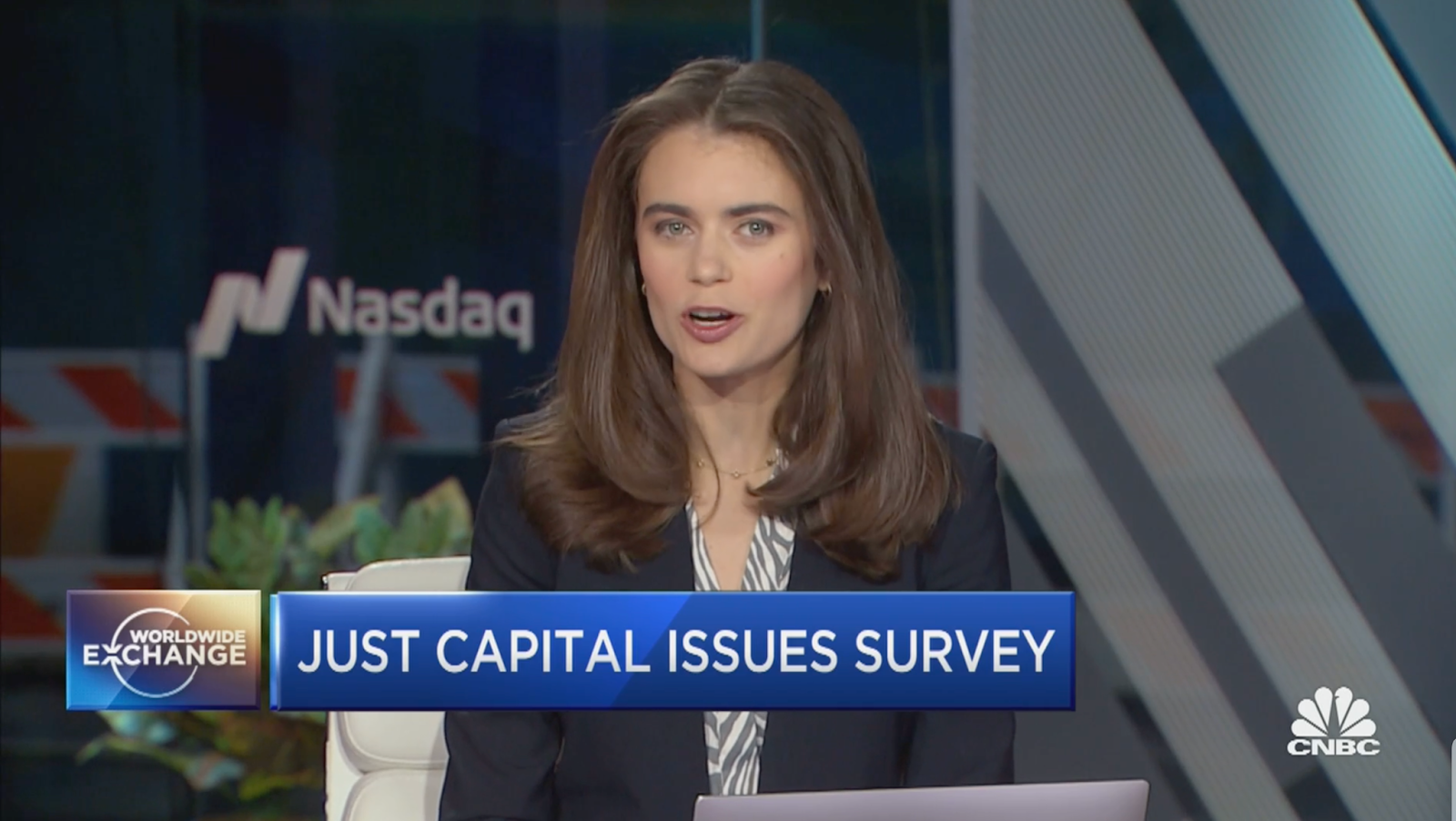
JUST releases its 2023 Issues Report – The People’s Priorities, finding that workers remain top of mind for the American public across a range of demographics. In a year marked by strikes and growing unionization, “pays a fair, living wage” remains that public’s top priority when it comes to just business behavior with “supports workforce retention, advancement, and training” gaining in importance. CNBC’s Pippa Stevens dives into more detail on Worldwide Exchange.
Martin speaks to The New York Times’ DealBook following last week’s DealBook Summit, weighing in on comments from Elon Musk on why he wanted to help create OpenAI and Jamie Dimon’s perspective on “major global issues, economic issues, social issues.”
In light of the Supreme Court’s ruling to end affirmative action in college and university admissions earlier this year, JUST examines how Russell 1000 companies are partnering with Historically Black Colleges and Universities (HBCUs). Of the 951 companies we ranked in 2023, 80 disclose financially supporting HBCUs and 66% of these companies sit in the top 20% of our Rankings.
Forbes speaks to Martin about the JUST model for change, highlighting the ultimate goal of our approach and our upcoming nationwide marketing campaign. “We want to create a race to the top for corporate America in creating value for all their stakeholders.”
Yahoo Finance also covers the launch of our first-ever national marketing campaign in partnership with Empower Media.
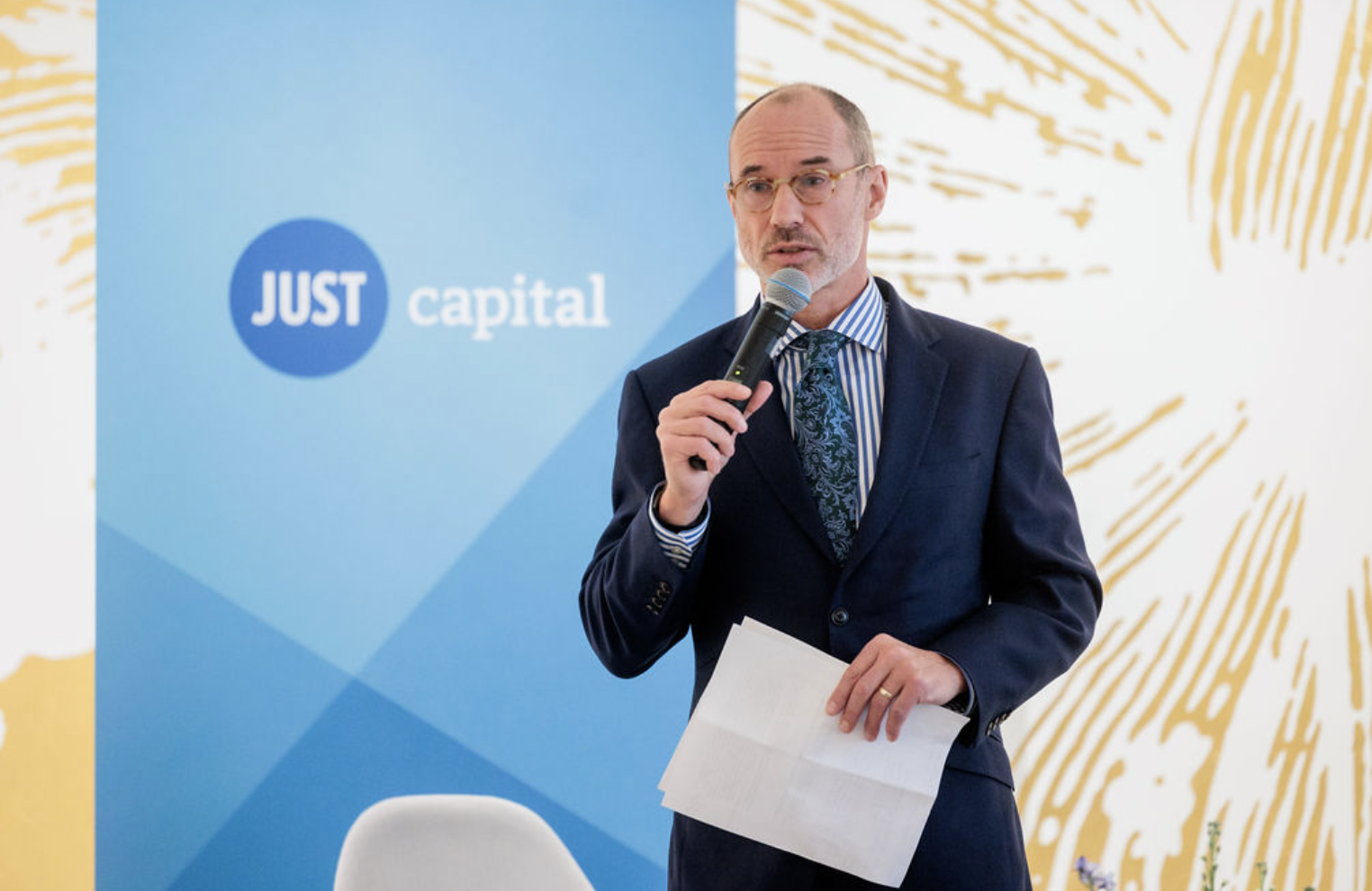
“We need more people to believe American capitalism is working for them, not against them. With politics bereft of long-term vision and serving only to divide, the private sector must lead. An economy in which companies compete by creating value for all their stakeholders is a powerful uniting force.”
Politico looks at how tech companies are already beginning AI lobbying efforts in earnest, with staffers working on AI policy in the offices of key Congressmembers receiving money from a nonprofit funded by companies like Microsoft and Google.
Fortune reports on a new AI tool, supported by Sam Altman, that aims to support parents accessing paid parental leave by providing the technology “for parents to get their questions answered without risking job security.”
SAG-AFTRA actors vote in favor of a new, three-year contract with studios, despite some union members’ concerns around the agreement’s terms on AI. The New York Times reports that the new contract does not prohibit studios entirely from using “synthetic fakes” and creating an AI-generated character from multiple performers’ likenesses.
IBM SVP and Director of Research Darío Gil argues for greater collaboration in AI development and warns of the dangers in consolidation in a Fortune editorial.
In another instance of the year’s continuous tech layoffs, Spotify is eliminating 17% of its workforce – nearly 1500 employees – in order to reach its profitability goals in 2024 and 2025.
Quartz reports that a majority of restaurants are raising their wages faster than food prices, with wages increasing 66% on average compared to 48% for food costs.
Walmart becomes the latest major company to stop advertising with “X,” exacerbating the platform’s ad revenue shortfall. Mashable has the story.
With COP28, the UN’s annual climate conference, underway, The Washington Post takes a deeper look at some of the companies that announced major climate goals and how, with deadlines running out, many are failing to deliver on their promises. Related, Bloomberg reports that Bill Gates no longer believes that the world will be able to prevent global temperatures from rising by 2°C, the point laid out by many scientists as a threshold of no return from the worst impacts of global warming. CBS News reports on new findings confirming that 2023 will be the hottest year on record.
The Atlantic takes aim at the belief that millions of Americans are unhappy at work, laying out a compelling case for why all of those doom and gloom articles about the workforce may be nothing more than a repeated myth. Read the full story here.
Quartz looks into the rise of white-collar apprenticeships and how they can advance companies’ DEI goals and address the challenges of recruiting in a tight labor market.
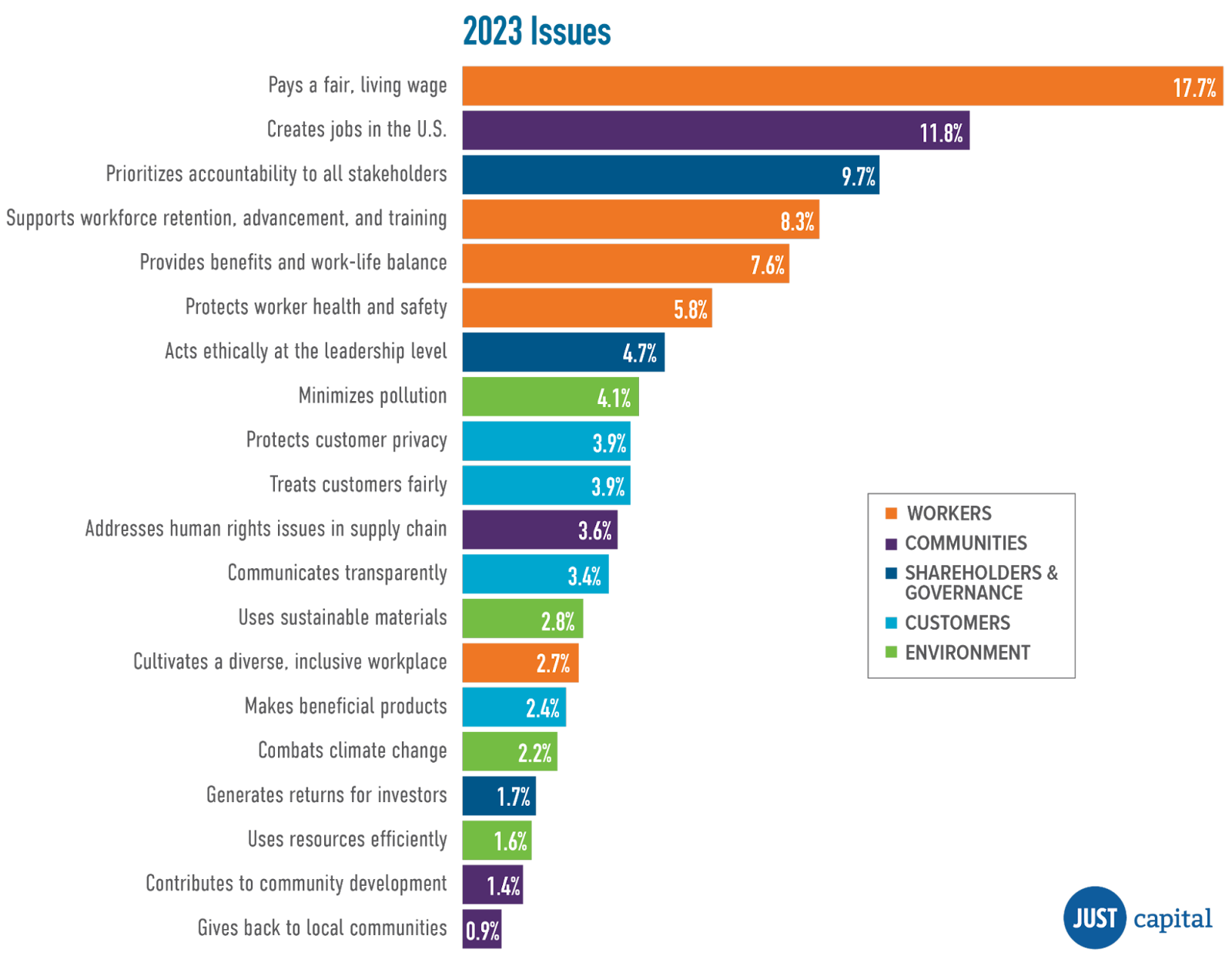
This chart comes from our 2023 Issues Report – The People’s Priorities. According to our polling, these are the issues the American public is most concerned about when it comes to just business behavior. Worker issues dominate the majority of the top spots, but you can explore this trend and others in the full report, here.

Just Capital’s 2023 Issues Report – The People’s Priorities is by Jennifer Tonti, Managing Director, Survey Research & Insights.
In every year that we’ve been measuring which issues matter most to the public when it comes to just business behavior (what we call The People’s Priorities), the events of that year can determine which issues Americans deem more important than others, as well as the degree to which the public prioritizes each issue. The outputs of this ongoing study help provide a roadmap for companies regarding what issues they should be tracking and investing in to stay one step ahead of shifting expectations.
The top takeaway from this year’s polling is how enduring and consistent the public is when it comes to what they want the nation’s largest public companies to prioritize. Year after year, Americans say that companies should put workers squarely at the heart of their business practices, foremost by paying their workers a fair and living wage. Indeed, Worker Issues continue to command the highest share of priority (42%) among the 20 stakeholder-related issues we measure, with four of the five Worker Issues once again among the top six priorities of the public, with Workforce Advancement gaining in importance this year.
Even more encouraging is that despite vocal attempts by politicians to use business as a divisive wedge issue this year, Americans remain united, not divided, across political ideologies around what they want from companies today. As in years past, we found a broad consensus across demographic and political cohorts – liberal, conservative, high-income, low-income, men, women, young generations, older generations, and white, Black, and Hispanic Americans – that Workers should be corporate America’s top stakeholder priority and that paying a fair, living wage should be the number-one issue to prioritize.
Just’s annual Rankings process begins with focus group conversations with a diverse mix of Americans across the U.S., the goal of which is to understand the actions and behaviors they expect from a “just” business. Focus groups enable our research team to hear the unvarnished voice of the public speak about what issues matter most, and whether their opinions have changed over time. The polling team then distills the major themes of these discussions into statements that capture these concepts, which we call “Issues.” In 2023 (as in the past two years), this work yielded 20 Issues.
Since the public initially tells us that all of these Issues are of high importance, we then conduct a choice modeling exercise as part of our Annual Survey work, enabling us to derive the relative importance of these 20 Issues. From here, we extract a “weight” per Issue that we use as the foundation for our Rankings of America’s Most Just Companies. The weights below reflect the probability that an individual would choose that Issue as most important to defining a just company, based on a representative sample of 3,001 Americans. These weights power our analysis of corporate stakeholder performance at the country’s largest companies, including our annual Rankings of America’s Most Just Companies.
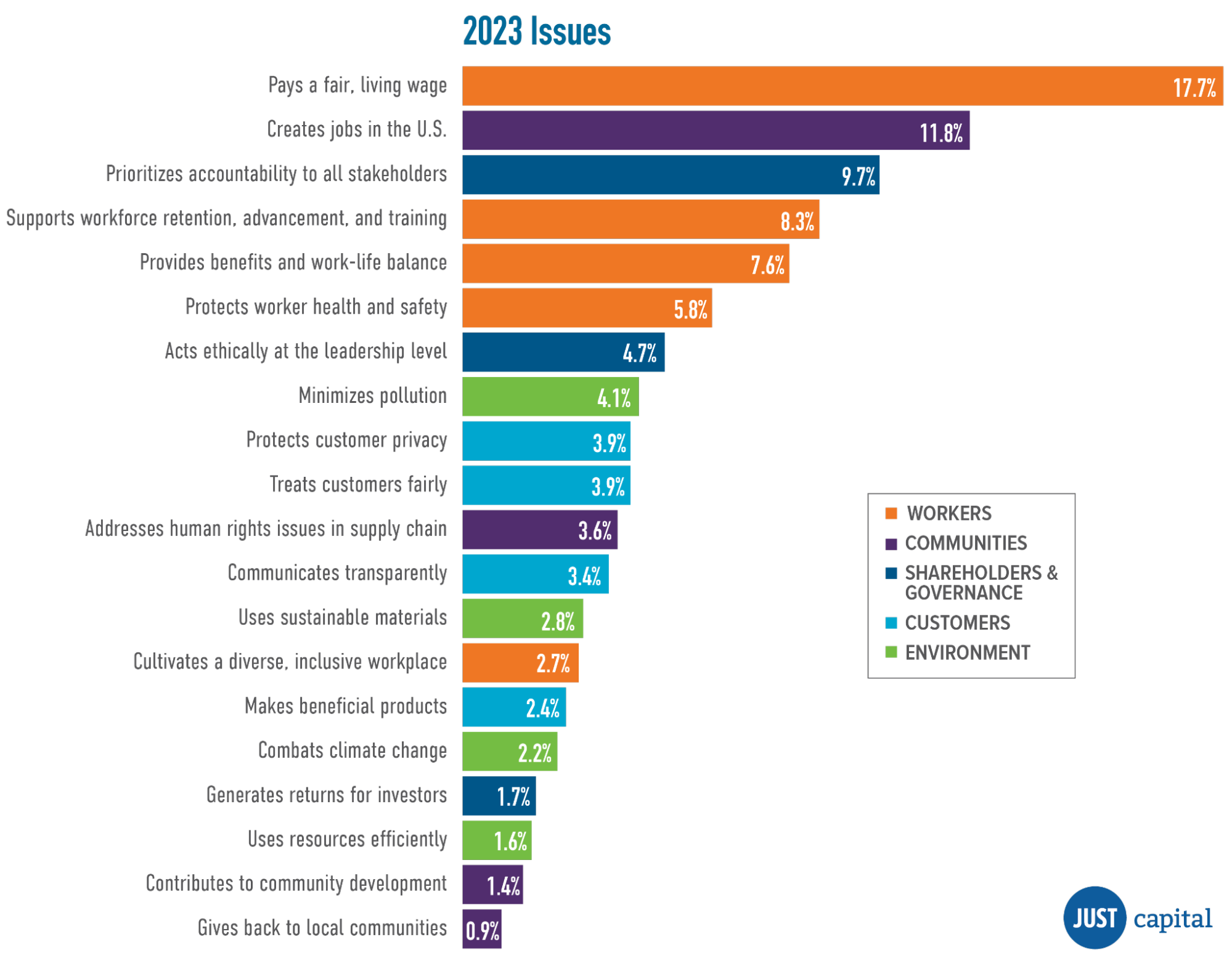
Each Issue is color-coded by the stakeholder it most impacts. While we reference the prioritization of several Issues in this report, please note that the relative importance between many of these Issues often varies by a fraction of a percentage point.
As we saw in 2022, four of the five Worker Issues are among the top six-ranked issues overall. The top-most prioritized issue, “Pays workers fairly and offers a living wage that covers the cost of basic needs at the local level” has been the number one issue for the last six years in a row, and will comprise a substantial 17.7% of companies’ scores in our upcoming 2024 Rankings. This percentage, though lower than we saw last year (21.2%), is still far-and-away the highest across all 20 issues. And the issue is ranked first among nearly every demographic cohort.
From auto to health care to entertainment, 2023 has marked a year of labor strikes across industries. Rising inflation, rapid evolution of AI technology, and the broader impacts of the pandemic on the U.S. workforce have fueled demands for better pay, working conditions, and job security. Even threats of a strike, as was the case for airline pilots and UPS workers this year, has spurred companies to raise wages and enhance benefits. Workers are no longer willing to accept pay that doesn’t allow them to provide for themselves or their families.
In 2023, “Focuses on workforce retention and employee advancement by providing training, education, and career development opportunities” comprises 8.3% of a company’s score, and now is the second highest-ranked worker issue. In the past two years, we’ve seen the issue of retention and advancement steadily increase in importance among the public. This increase occurs alongside the rapid evolution and adoption of AI and other technology by many employers. Fears of how this technology could replace, or diminish, certain jobs in part fueled strikes from Hollywood writers and actors and auto workers. As more workers fear losing their jobs, investing in growth, training, and opportunities for employees can have a positive effect on retention and send an important signal to workers that employers value them. Many companies have already started to recognize and act on this.
Benefits and Worker Health & Safety rank fifth and sixth among the public’s priorities. “Offers a quality benefits package and supports good work-life balance for all employees” comprises 7.6% of a company’s score, up from 6.2% in the previous year. “Protects the health, safety, and well-being of workers beyond what is required by law” remains one highest ranked issues at number six, but its importance has decreased from 7.6% last year to 5.8% this year as the urgency of worker health and safety slows after the height of the pandemic.
One of the obvious reasons why Worker Issues consistently get the highest prioritization among the five stakeholder groups may be attributable to the fact that at some point or another in everyone’s life, they are a worker. Thus, these issues are arguably closer to home than those that are reportedly as important overall, but come in at a lower relative priority (such as communities or the environment) in our polling. What the continued prioritization of Worker Issues across seven years of gathering this data is definitely saying is that, despite all the work companies are doing to make sure their workforce is happy and protected, there is still more to do. A recent Deloitte survey found that there is a marked discrepancy in perceptions of workforce well-being between employees and employers. The survey found that while many leaders say they’re taking accountability for workforce well-being, workers simply aren’t seeing their efforts.
There is a very clear business case for corporate leaders to focus on Worker Issues. Investing in good jobs that provide strong benefits, fair wages, and opportunities for advancement is a value generator for companies. In March, we soft launched the first iteration of the Just Jobs Scorecard and have plans to publicly launch the Scorecard in early 2024. The tool helps companies better understand their current performance on a range of job quality metrics like training and development, and how they could improve. When examining the top-scoring companies across the Scorecard’s categories, we found they outperformed their peers in 2022. Prioritizing worker issues is an opportunity for companies to lead and, in turn, boost their bottom line.
One Issue that falls under the Communities stakeholder, “Creates jobs in the U.S. and provides employment opportunities for communities that need them,” is once again second in relative importance, comprising 11.8% of a company’s score in our Rankings. Two in three respondents (66%) say that creating jobs in the U.S. is more important than last year.
Accountability to Stakeholders, an issue that falls under Shareholders & Governance, is of key importance to Americans as well. “Has an independent, diverse board that holds leadership accountable to the needs of workers, customers, communities, the environment, and shareholders” comprises 9.7% of a company’s score, and is the third most important Issue in 2023, reinforcing the fact that in the eyes of everyday Americans, companies have a broad responsibility to serve all the stakeholders that drive the long-term success of the company (not just shareholders), and that leadership should be held accountable by its board.
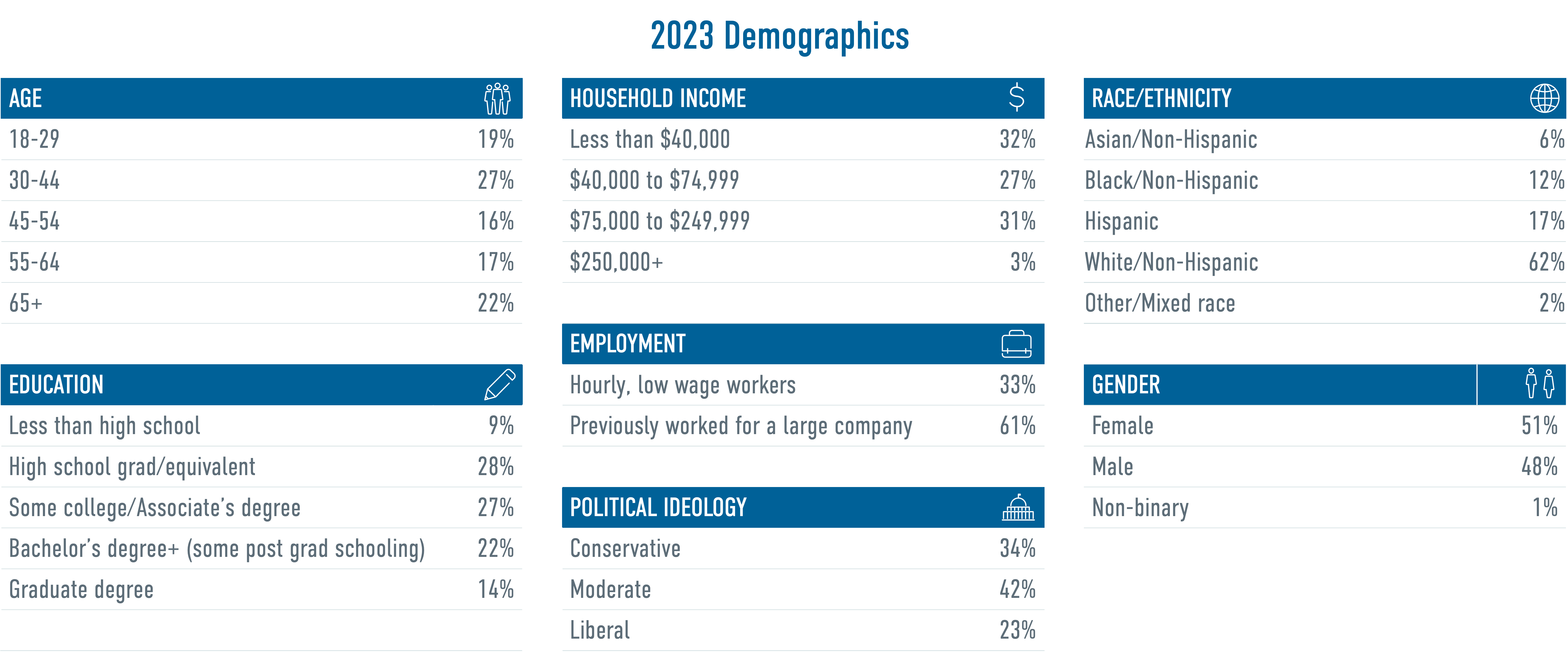
The People’s Priorities are based on responses from more than 3,000 U.S. adults, who are a full representative cross-section of Americans. This means we hear from a variety of voices, both by demographic such as race/ethnicity, gender, income levels, and age, as well as behavioral metrics such as political ideologies or whether or not respondents are active investors. What we found was, despite it being a year with increasingly divisive rhetoric in politics and in the media, the public remains remarkably consistent in what they want companies to prioritize today. Across every demographic group we surveyed, whether political affiliation, race, gender, age, or income group, Americans are united in wanting companies to prioritize Workers as the most important stakeholder and nearly all cohorts prioritize the same top three Issues: Pays a fair, living wage; Creates jobs in the U.S.; and Prioritizes accountability to all stakeholders.
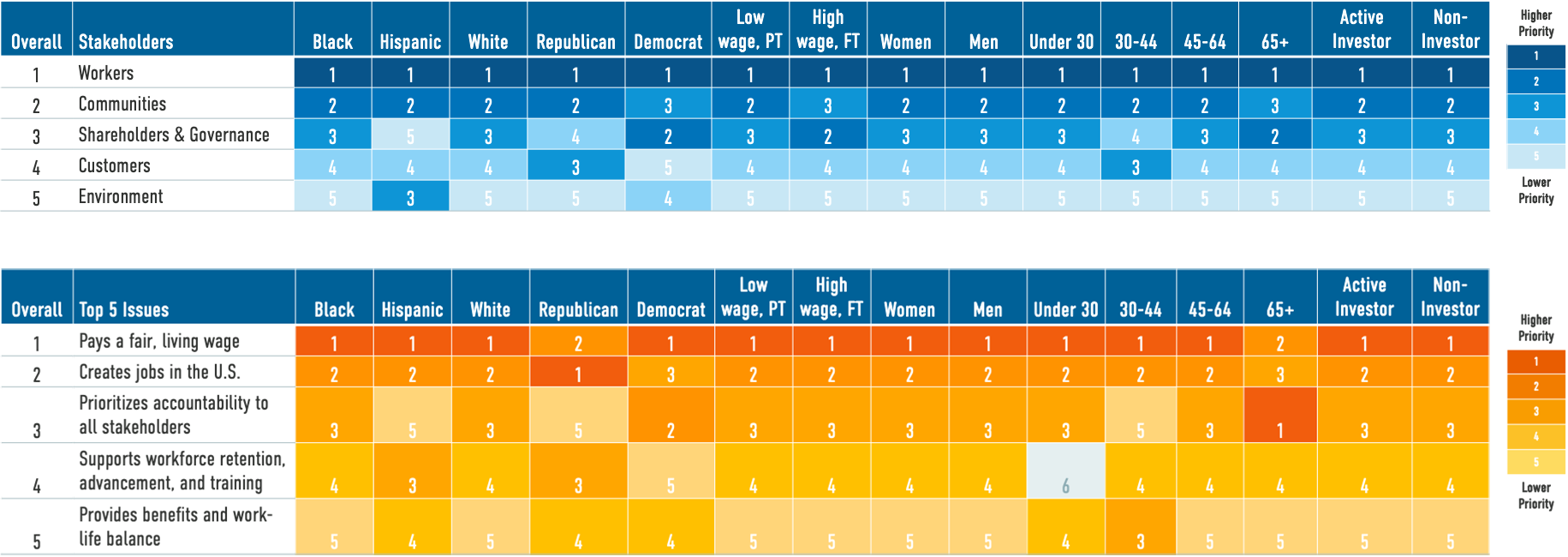
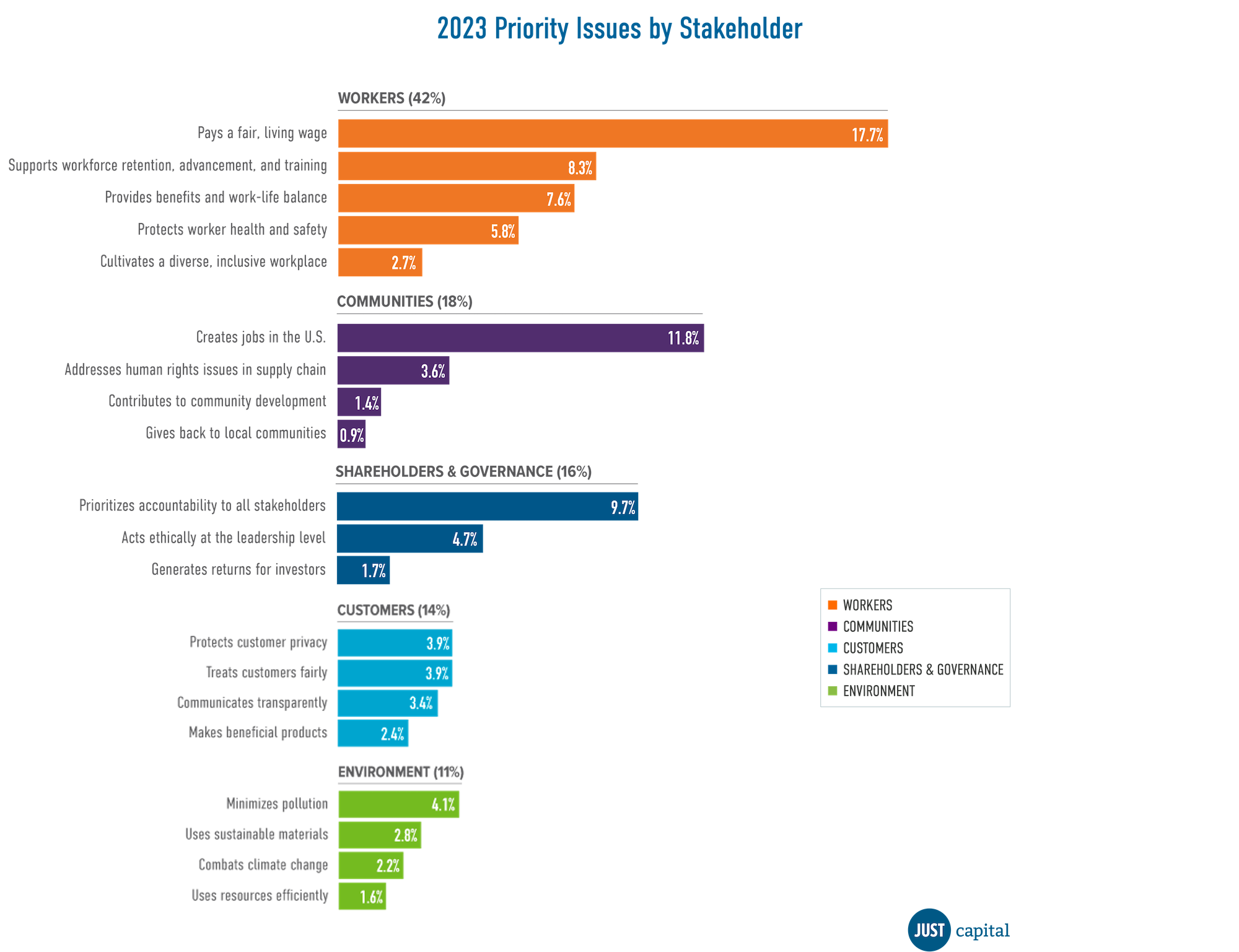
To provide further clarity around how to better balance stakeholder interests, we classify each Issue by the stakeholder it affects most, organizing the 20 Issues into five stakeholder groups: Workers, Customers, Communities, the Environment, and Shareholders & Governance.
Specifically, we assign each of the 20 Issues to the one (and only one) stakeholder it most impacts. For example: “Compels leadership to act ethically and with integrity and avoid wrongdoings” is assigned to Shareholders & Governance, whereas “Is transparent in communications with customers about its products, services, and operations” is assigned to the Customers stakeholder. The weight of each stakeholder group is calculated by summing all of its associated Issue weights.
Workers (42%)
For the sixth consecutive year, the American public prioritizes Workers as the most important stakeholder by a significant margin. The Workers stakeholder considers a company’s performance on factors related to how it invests in its employees, including (1) paying a fair, living wage; (2) supporting workforce retention, advancement, and training; (3) providing benefits and work-life balance; (4) protecting worker health and safety; and (5) cultivating a diverse and inclusive workplace.
Communities (18%)
The Communities stakeholder considers a company’s performance on factors related to how it supports its communities, including (1) creating jobs in the U.S.; (2) addressing human rights issues in the supply chain; (3) contributing to community development; and (4) giving back to local communities.
Shareholders & Governance (16%)
Issues included in this grouping explore how a company maintains good governance and delivers value to its shareholders by (1) prioritizing accountability to all stakeholders; (2) acting ethically at the leadership level; and (2) generating returns for investors.
Customers (14%)
The Customers stakeholder considers a company’s performance on factors related to how it treats its customers, including (1) protecting customer privacy; (2) treating customers fairly; (3) communicating transparently; and (4) making beneficial products.
Environment (11%)
The Environment stakeholder considers a company’s performance on factors related to how it reduces its environmental impact, including (1) minimizing pollution; (2) using sustainable materials; (3) combating climate change; and (4) using resources efficiently.
Year after year, we continue to see that the public supports a movement away from shareholder primacy toward a more stakeholder value-driven operational model of business, one that takes America’s largest companies on a journey to becoming more just. Results from this latest survey shows that the areas Americans want corporations to prioritize have not changed substantially in the past few years. The labor strikes and demands of the last year, however, have added new urgency to them.
It’s become more clear to corporate America that ignoring these priorities presents a significant risk to business. Now is the time for proactive action. And the views of the American public offer a helpful roadmap. We hope that this report once again provides clear guidance on the specific actions businesses can take today to rebuild trust in business and markets as a force for good.
A Representative Look at the Public’s Views
Since its inception, the mission of Just Capital is to demonstrate how just business – defined by the priorities of the public – is better business. Our goal is to help companies create value for all their stakeholders – their workers, customers, communities, the environment, and shareholders – by focusing on the issues that matter most to the American public. The goal is to help companies improve, and in turn, improve the lives of their workers, customers, and society writ large.
At the core of our work is a robust research program that starts with focus groups in which we ask the American public to identify the policies, practices, and behaviors companies should prioritize to be considered just, (which we call “Issues”). These Issues include fair pay and living wage; a more diverse and inclusive workplace; stronger, healthier communities; good jobs; a cleaner environment; and more. Then, based on sophisticated polling of a representative sample of Americans, we estimate the relative importance of these behaviors – in other words, how important to defining a just company each behavior is relative to others.
Since 2015, Just Capital has surveyed more than 172,000 Americans – representative of the U.S. adult population – asking them to define just business behavior. For the past two years, we have partnered with SSRS, an objective, non-partisan research institution that provides scientifically rigorous statistical surveys of the U.S. population, to survey more than 3,000 Americans on their perspectives.
Defining a Just Company
Before answering questions about the just behavior of large companies, it is important for respondents to have a clear definition of the concept. Below is the definition we have provided to our focus group and survey respondents since 2022: A just company operates in a way that serves its workers, customers, shareholders, the environment, and the communities it affects, even if it comes at a cost.
Summary of Methods
We conducted the 20 question survey online with a probability-based sample attained through the exhaustive statistical sampling methods employed by SSRS. The SSRS Opinion Panel is a nationally representative probability-based web panel, and findings are generalizable to the general adult population.
The full survey was conducted from June 23 to July 5, 2023 among a general population sample of 3,001 English- and Spanish-speaking U.S. adults 18+ years of age, with an oversample of 590 Hispanic and 411 non-Hispanic Black respondents. Panelists were sent an email invitation to take the survey online as well as up to eight reminder emails throughout the field period. The survey program was optimized so that respondents could complete it using a desktop or laptop computer as well as a mobile device. In total, 900 respondents completed the survey on a computer and 2,101 completed it on a mobile device.
The margin of error is +/- 2.2% at the 95% confidence level. Results were weighted to U.S. Census parameters for age, gender, education, race/Hispanic ethnicity, and Census Division to ensure representativeness of the U.S. population. All margins of error include “design effects” to adjust for the effects of weighting.
To identify the priorities of the public, we calculate for each Issue the probability that an individual would choose that as most important to defining a just company. As such, there are 20 probabilities calculated from the 20 Issues. These probabilities can be referred to as weights as each represents the relative importance of one Issue versus another. To illustrate more explicitly, the Issue “Creates jobs in the U.S.” was assigned a weight of 11.8% as there is a 1.18 in 10 chance that a respondent chosen at random will identify this Issue as most important in defining a just company. By comparison, the weight assigned to “Generates returns for investors over the long term” has a 1.7% weight.
Our full body of survey work for 2023 also includes six focus groups conducted in partnership with The Harris Poll.

Recent events at OpenAI have focused attention on the battle between company purpose and profit. Between forces motivated to ensure AI benefits society, and those who view AI through a purely commercial lens. At The New York Times Dealbook conference yesterday, Elon Musk recounted how he helped found the organization precisely because he was worried about Google’s lack of appreciation for the impacts of AI on the human species. OpenAI’s structure – a for-profit owned by a nonprofit – has been pinpointed by some as the root cause of the problem. Speaking about it on CNN, Scott Galloway said “You’re either a for-profit entity seeking commercial success, or a non-profit thinking about risk to humanity.”
To me, OpenAI’s structure may have exposed some inherent tensions, but it is not necessarily the reason for them. Many companies, including Newman’s Own, Inc. and IKEA, have made hybrid nonprofit/for-profit structures work, and many purely commercial entities have pursued financial gain and materially advanced society without sacrificing their souls. As I noted in a recent LinkedIn post, the truth is that in business today, you must do both. Indeed, the best path to making plenty of money for investors over the long term is by creating value for all stakeholders. Our research at JUST Capital shows this time and again.
We explored the concept of just and responsible corporate practices with major field builders at a private event this week under the auspices of our JUST AI Initiative. Chatham House rules prevent me from providing specifics, but I will relay that government oversight, company governance, and enforceable standards (of practice, model training and development, and more) were key themes. Whether this is sufficient to match the pace, size and complexity of looming AI threats is a critical question.
Be well,
Martin

This week marked Giving Tuesday and the launch of JUST Capital’s matching challenge. Through December 12, all donations made to our organization will be matched dollar-for-dollar by a generous Board member to help secure a just future for workers and communities across the country!
We have made a positive impact on 1.2 million workers to date thanks to donor support and we aim to scale up this impact over the years to come. Our goal is to raise $10,000 by December 12. Please help us reach this goal with a tax-deductible donation today!
This week JUST Capital hosted a virtual roundtable event, Defining and Incentivizing Just Corporate AI Practices, connected to our JUST AI Initiative. JUST’s Founder and Chairman Paul Tudor Jones convened top AI and business leaders to explore how the private sector should be approaching AI while holding the “tension between profitability and social benefit,” as one attendee put it. The dynamic group had a robust discussion about the private sector’s imperative to lead and align on systemic solutions that will protect stakeholders in the age of AI. If you’d like to learn more about our JUST AI Initiative and join future conversations like this one, please reach out to us at corpengage@justcapital.com.
At The New York Times’ Dealbook Summit as part of its Groundbreakers series, JUST Capital’s CEO Martin Whittaker hosted a packed panel where attendees had the opportunity to “learn from leaders reshaping the business landscape.” Martin’s discussion focused on the question – How do corporate leaders navigate a political environment where business and its commitments to policies like ESG and DEI, are putting them in the political fray And how should they navigate that tricky terrain to make sure they are boosting the bottom line and doing good?
JUST Capital announces its partnership with the Schultz Family Foundation and the American Opportunity Index to explore the corporate policies and practices that lead to real-world outcomes on worker equity and mobility. Our partnership will highlight leading companies and build upon insights from the JUST Jobs Scorecard and the American Opportunity Index to connect the dots between corporate policies and worker outcomes. The Wall Street Journal and Fast Company report on the latest version of The American Opportunity Index, released this week.
JUST Capital Advisor Susan McPherson joins Dr. Gillian Marcelle and Alix Lebec to pen an op-ed in Investment Monitor arguing that the finance world needs a paradigm shift to effectively address climate change, emphasizing the need for investors, asset owners, and managers to rethink their strategies towards achieving sustainability and climate resilience, alongside the need for profitable returns.

“The AI revolution is a trust revolution. Without placing trust and safety at the center, no amount of innovation will drive the widespread adoption of this technology necessary to invoke transformative use cases for individuals, organizations, and societies.”

“Investors ought to be looking at how you incentivize really positive, socially conscious uses of AI through the private sector.”
CNBC reports that Meta has officially broken up its responsible AI team, redistributing employees across its Generative AI and AI Infrastructure divisions. “We continue to prioritize and invest in safe and responsible AI development,” a Meta spokesperson said of the move.
Related, Axios takes a look at the AI pioneers who say it will prove impossible to develop constraints on the technology, as the profit motive to get things done more, better, and faster will override any safety measures.
Sports Illustrated is in the middle of a media controversy this week when it was revealed that the outlet published articles from fake, AI-generated writers.
Former IBM CEO Ginni Rommetty speaks to Fortune and states that she believes once generative AI fully integrates into the workforce, “it will put a premium on soft skills like collaboration, judgment, and critical thinking.”
Bloomberg looks at the growing number of AI deepfake porn victims that are discovering no laws exist to help them fight back against this growing problem.
Vox takes a look at the continuous downturn of economic sentiment despite rising wages and plenty of jobs. “It’s a good time to be a worker and a bad time to be a consumer – the problem is most people are both.” Higher wages have little impact if the price of goods rises to match, or in many cases, outpace them.
Some wage raises are coming with strings attached. USA Today looks at how companies are cutting benefits to afford all of these pay raises and whether that trade-off is worth it.
Fortune covers the myriad of ways large companies are trying to compel employees back to the office next year and the growing wave of disability discrimination lawsuits from disabled employees being forced back into the office despite no dip in productivity in the years spent working at home.
Fast Company reveals that among the 10 highest paying occupations, women are underrepresented in nine.
Following the autoworker strikes, GM is planning a $10 billion stock buyback in order to calm nervous investors. The Wall Street Journal has the story.
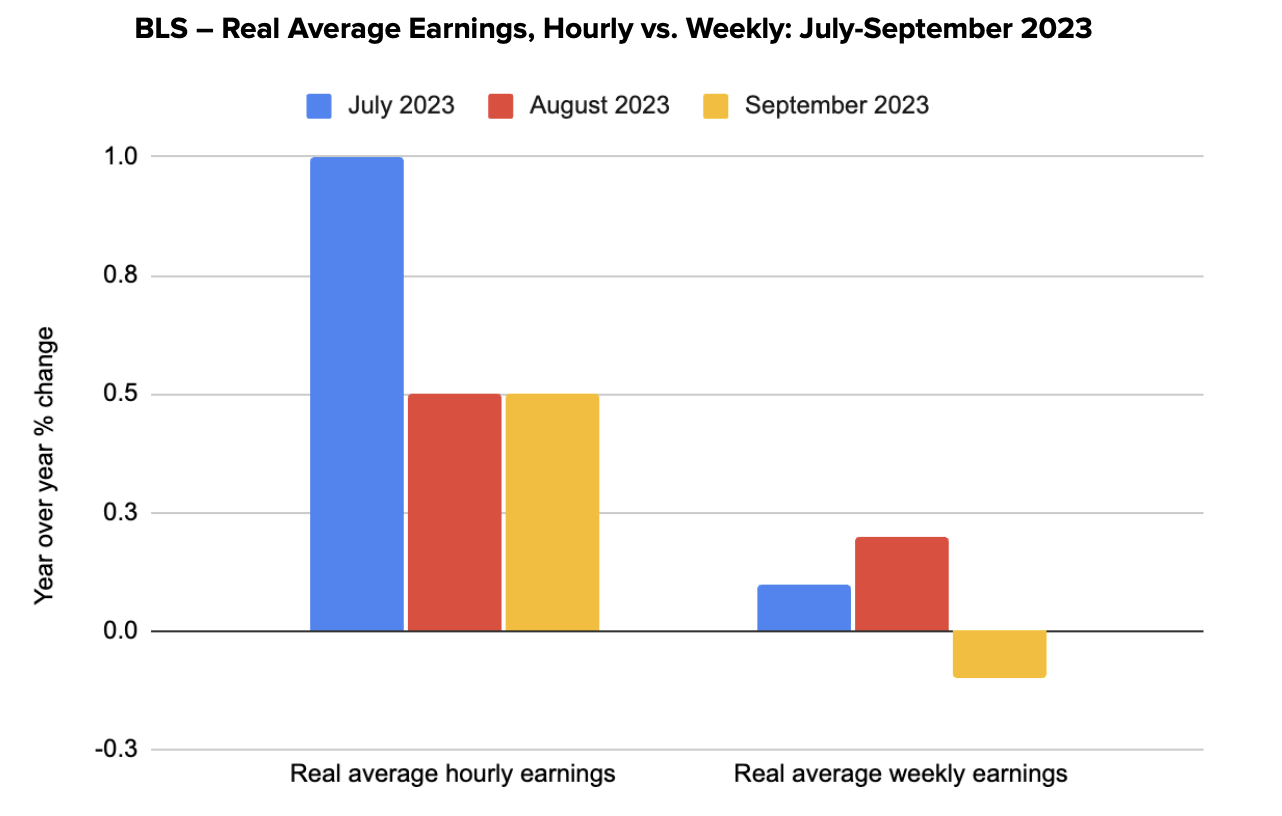
This chart comes from the Bureau of Labor Statistics, and shows that even as average hourly earnings go up, weekly earnings are falling. Like a smaller candy bar sold for the same price, jobs are experiencing shrinkflation. Year over year, average real hourly earnings grew in July, August, and September 2023, and they are basically flat from February 2020-September 2023. The gains, however, were more modest for average real weekly earnings. In fact, weekly earnings declined in September 2023 by 0.1% due to a decrease in the average workweek. These data suggest that employers are responding to price pressures by reducing employees’ hours, thus decreasing Americans’ take home pay and straining family budgets.
We go more in-depth into this and more research in our quarterly JUST Investor newsletter, launching this Tuesday. If you would like to receive that newsletter, click here.

Recruitment and retention remain key challenges corporate leaders faced this year. Against a backdrop of unionization drives, strikes, return-to-office plans, and AI evolution, workers are continuing to ask for what they want in a good job and are willing to voice their discontent – or find another role – if they feel overlooked. One central component they’re seeking? Opportunity. A majority of workers expect employers to prioritize advancement, career development, and skills-building – but too many executives are not following through.
JUST Capital’s polling of the American public consistently finds that Americans want to see investment in creating quality jobs that lead to opportunities for the workforce from companies. Americans we polled across party lines overwhelmingly agree that it’s a company’s responsibility to create quality jobs by providing clear career pathways to job opportunities with higher pay (83%) and regularly increasing wages to keep up with the rapidly rising cost of living (87%).
Investing in workers also makes operational sense for businesses. Research shows that when employers give workers learning opportunities in the workplace, they’re less likely to leave. Similar findings highlight that “employment capital” – non-wage components of work like benefits and career advancement prospects – are important to job quality and economic security. JUST data also finds that companies with better disclosure and performance on human capital issues don’t suffer financial consequences beyond short-term profit maximization and tend to outperform their Russell 1000 peers.
When companies invest in their employees’ careers and provide opportunities for advancement within and beyond the company, it’s something to celebrate. At JUST, we firmly believe in the importance of elevating business leadership on the issues of importance to the American people. It’s why we’ve been excited to partner on the Worker Financial Wellness Initiative, create Rankings that track performance on the issues that matter most in defining just business behavior, and highlight the state of disclosure on key workers metrics. It’s also why we’re excited to partner with The American Opportunity Index, which assesses economic mobility and opportunity generation for American workers at some of the largest employers in the country. The Index highlights leaders in real-world outcomes for workers. But what are companies doing to create the conditions that lead to those opportunity outcomes for workers?
JUST Capital is partnering with the Schultz Family Foundation and the American Opportunity Index to connect the dots on how corporate policies translate to real-world outcomes for workers.
In a series of leadership spotlights, we’ll lift up examples of corporate policies and performance, tracked in JUST Capital’s forthcoming JUST Jobs Scorecard, that respond to the American public’s expectations of business today and create the positive outcomes for workers assessed in the Index. This work will serve as an opportunity to learn from leaders about their company’s journey, challenges, and successes in creating opportunity in the workplace. It will illuminate how strategic inputs – commonly disclosed workplace policies – can serve as actionable catalysts for economic opportunity and overall job quality.
The Index assesses how well companies are investing in their workforce to drive business performance and individual employee growth by focusing on worker outcomes, i.e., the level of opportunity workers achieve within the company and beyond. And to understand what’s behind these leaders’ success, we must also look at the policies and practices in place that create an environment in which opportunities for workers to thrive exist.
The series of spotlights on leaders’ policies and practices aims to offer guidance on specific actions that companies can take to drive opportunity and mobility for their workers. It will highlight key practices from JUST Capital’s JUST Jobs Scorecard that yield the impacts measured in the American Opportunity Index. Insights from the forthcoming JUST Jobs Scorecard and the recently released Index can be used together to understand what policies and practices – or inputs – create conditions for opportunity outcomes – or outputs. These tools together offer a look at the corporate journey from policy to outcome and can be helpful in informing job quality and worker strategy.
At JUST Capital, our understanding of companies’ stakeholder performance is grounded in recognizing crucial inputs that lay the foundation for desired outcomes. These inputs, such as pay equity policies and apprenticeship programs, form the basis of our analysis and align with the Index’s five performance areas.
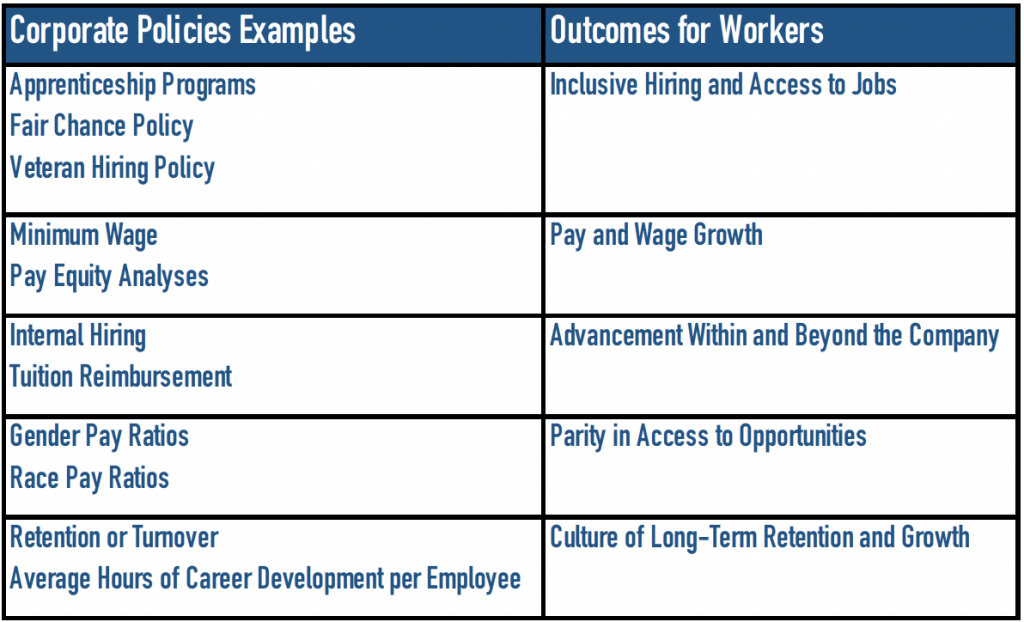
As we establish this connection, it becomes imperative to pinpoint key inputs, or policies, that companies should prioritize when shaping and investing in their workers to influence the outcomes tracked by the Index. Companies can view these inputs as potential actions to adopt, in turn creating the conducive conditions necessary to foster more opportunity for their workers. By strategically implementing and emphasizing these policies, companies can shape a work environment that not only meets performance standards, but also enhances overall job quality and opens up avenues for professional growth and development.
As we delve into upcoming leadership spotlights, there is a valuable opportunity for companies to glean insights and enhance their performance in terms of job quality, influencing the real-world experiences of countless workers. We encourage companies to actively engage with the Index, understanding their own strengths and growth areas, while keeping an eye out for the JUST Jobs Scorecard in early 2024 to delve into specific data details around policies and practices.
For more information on the American Opportunity Index, JUST Jobs Scorecard, our partnership, or more, please reach out to corpengage@justcapital.com.
