In a slowing job market and signs of rising unemployment, understanding how companies invest in their workforce has never been more critical. Workers are increasingly asking for meaningful employee benefits and are vocal about their needs for better support, whether it’s for financial wellbeing and the ability to cover their living costs, assistance with caregiving responsibilities, or clear paths for career progression.
JUST Capital’s polling continuously shows how consistent Americans are when it comes to what they want the nation’s largest public companies to prioritize – their workers. Year over year, worker issues including living wage, benefits, career development, worker health and safety, and diversity and inclusion get the highest prioritization and in 2024 comprise 42% of a company’s score in our Rankings of America’s Most JUST Companies.
Investing in workers was a recurring theme in JUST Capital focus groups that will inform the 2025 Rankings. Full findings will be published later this year. Related to how companies can create value for all their stakeholders, one participant shared:
“I feel like a happy employee makes a happy company.” – Male, 40-44, Moderate
And in fact, JUST Capital’s research shows exactly that: investing in workers pays off. Our Workers Leaders Index Concept – which tracks the top 20% of companies in our Rankings that perform best across all five worker-related issues – has outperformed the Russell 1000 Equal Weighted index by 16.46% from December 31, 2021 to July 31, 2024.
As we approach Labor Day, JUST Capital is highlighting the companies leading the way in fostering environments where workers feel valued, supported, and empowered to thrive by actively implementing comprehensive workplace policies that address their workers’ needs head-on. Our analysis found that the top 10 companies for worker issues are outpacing the rest of the Russell 1000 in a number of ways:
JUST Capital is proud to present the list below of Top 10 Companies for Workers with details on how they are leading on the issues that matter most to the American public. The following list is based on performance on Worker Issues from JUST Capital’s 2024 Rankings of America’s Most JUST Companies.
Ranked 2nd in Overall Rankings and 1st for Banks
Bank based in Charlotte, North Carolina
Bank of America invests in its employees’ financial and physical well-being by focusing on competitive wages and comprehensive benefits. The company demonstrates a commitment to paying living wages, with a minimum hourly wage of $23 – one of the highest disclosed among the Top 10 Companies for Workers and well above both the Russell 1000 average of $16.73 and the bank industry average of $18.22. In its commitment to supporting working families, Bank of America offers 16 weeks of paid leave for both primary and secondary caregivers and provides emergency backup care and subsidies for routine day care services. In addition, Bank of America embraces transparency on topics like pay equity and workforce demographics: it’s among the 12.5% of companies that publicly report the results of both their gender and race/ethnicity pay equity analyses and part of the 47% who disclose highly disaggregated workforce demographic data.
Ranked 5th in Overall Rankings and 2nd for Banks
Bank based in New York, New York
Citi demonstrates a strong commitment to fairness and family support through a range of initiatives focused on equity and employee-wellbeing. The company’s dedication to equity is reflected in its pay analysis results, which show that women globally earn over 99% of what men earn. Citi also provides highly disaggregated workforce demographic data by gender, race/ethnicity, and standardized job categories, underscoring its transparency and commitment to an inclusive environment. Supporting its workforce further, Citi offers up to 16 weeks of paid leave to primary caregivers and benefits like preferred access and up to 10% tuition discounts at Bright Horizons child care centers, along with emergency backup dependent care. The company also invests in professional development, providing an average of 38 training hours per employee and offering tuition reimbursement to support employees’ continuous learning.

Ranked 18th in Overall Rankings and 4th for Semiconductors & Equipment
Semiconductors & Equipment company based in Santa Clara, California
NVIDIA’s approach to fostering an equitable and supportive work environment is evident in its commitment to both pay equity and comprehensive employee benefits. Notably, the company offers robust parental leave benefits, including 22 weeks of fully paid leave for birth parents, 12 weeks of paid leave for non-birth parents, including fathers and adoptive parents, and support in offsetting childcare costs by providing a 10% discount on childcare at KinderCare centers. Additionally, NVIDIA stands out for its robust pay equity disclosure, as it is one of only 12.5% of companies overall and 23.5% among industry peers to disclose both their gender and race/ethnicity adjusted pay ratios. The company is also one of very few among the Russell 1000 companies we assess to disclose disaggregated pay equity data by different race/ethnicity categories, showcasing a high level of transparency.
Ranked 16th in Overall Rankings and 4th for Banks
Bank based in New York, New York
JPMorgan Chase invests in its employees’ financial well-being by offering a minimum hourly wage of $20, which exceeds the Russell 1000 average and represents the third highest minimum wage among banks. The company also supports new parents with 16 weeks of paid parental leave for both primary and secondary caregivers and families with various caregiving services. JPMorgan Chase’s equity practices are also reflected in its pay gap analysis results, which show nearly equal compensation across gender and racial lines. Additionally, the company maintains transparency in its diversity efforts by disclosing detailed demographic data by gender, race/ethnicity, and job category.
Ranked 6th in Overall Rankings and 1st for Health Care Providers
Health Care Provider based in Bloomfield, Connecticut
Cigna demonstrates its commitment to workplace equity through pay equity analysis, showing near-parity in compensation for female and underrepresented minority employees. The company also prioritizes transparency by sharing highly detailed workforce demographic data by gender, race/ethnicity, and job category, reinforcing its focus on fostering an inclusive environment. Additionally, Cigna supports its employees’ work-life balance with key benefits including 18 days of paid time off and seven days of paid sick leave annually, paid parental leave, flexible scheduling opportunities, and emergency backup dependent care support.
Ranked 51st in Overall Rankings and 6th for Software
Software company based in Minneapolis, Minnesota
Dayforce sets a high standard in the Software industry with its generous and inclusive parental leave policy, offering 17 weeks of paid leave to all caregivers. This is the highest offering at parity among the Top 10 companies and far surpasses the Russell 1000 average of 11 and 8 weeks of paid parental leave for primary and secondary caregivers, respectively. Additionally, Dayforce invests in its employees by providing unlimited paid time off, 10 days of paid sick leave annually, and both backup and subsidized dependent care benefits. Flexible scheduling opportunities further reflect Dayforce’s dedication to fostering a work environment that truly supports its employees’ diverse needs.
Ranked 90th in Overall Rankings and 1st for Consumer & Diversified Finance
Consumer & Diversified Finance company based in Detroit, Michigan
Ally Financial is among the Top 10 companies with the highest minimum wage of $23 per hour. This wage exceeds the Russell 1000 average of $16.73 and the Consumer & Diversified Finance industry average of $19.00, demonstrating a sustained commitment to competitive compensation for hourly employees. The company also supports working parents by offering equal parental leave to both primary and secondary caregivers and providing discounts on childcare to help ease caregiving costs. This combination of competitive wages and comprehensive family support underscores the company’s ongoing investment in its employees’ well-being and stability.
Ranked 9th in Overall Rankings and 2nd for Semiconductors & Equipment
Semiconductors & Equipment company based in Santa Clara, California
Advanced Micro Devices (AMD) demonstrates a strong commitment to employee well-being through a comprehensive range of benefits, supporting their work-life balance and professional development. AMD offers 12 weeks of fully-paid parental leave for the birth, adoption, or foster placement of a child, ensuring equitable support for all parents and new families alike. Also, the company provides up to 20 days of subsidized backup care annually to help employees with their caregiving expenses. In addition to its family-friendly policies, AMD supports employees’ work-life balance with a minimum of 15 days of paid time off, 20 days of paid sick and family time off, and workplace flexibility, enabling employees to choose what best fits their needs. AMD also supports employees’ professional development and encourages continuous learning through its education assistance program which offsets the cost of education.
Ranked 10th in Overall Rankings and 3rd for Semiconductors & Equipment
Semiconductors & Equipment company based in Boise, Idaho
Micron offers a range of robust benefits to support its employees, including 12 weeks of fully-paid parental leave for all expectant parents and at least 17 days of paid time off annually for rest and recovery. Additionally, the company supports career development and skill enhancement through its academic advancement program which provides financial assistance and resources for employees to pursue higher education and professional certifications. What’s more, Micron provides an average of 62 hours of career training per team member annually, significantly exceeding the industry average of 21 hours. Micron also performs regular pay equity analyses to foster a culture of fairness, ensuring sustained pay equity globally for women and people with disabilities, as well as across race/ethnicity and veteran status in the U.S.
Ranked 26th in Overall Rankings and 2nd for Transaction Processing
Transaction Processing company based in San Jose, California
Paypal demonstrates a strong commitment to employee support through its equitable compensation practices, robust professional development opportunities, and comprehensive benefits package. The company regularly conducts pay equity analyses by gender and race/ethnicity, and its latest assessment reveals that it has maintained 100% global gender and U.S. ethnic pay equity, reflecting its ongoing commitment to fairness and inclusivity. In addition to its focus on equitable compensation, PayPal supports employees’ professional development by offering tuition reimbursement to help cover educational costs and an average of 48 hours of training per employee annually, which is 2.4 times more than the industry average. The company also provides a comprehensive benefits package which includes unlimited paid time off, five days of paid sick leave, equal paid parental leave for all parents, and both subsidized and backup dependent care. To further promote work-life balance, Paypal also offers flexible working arrangements like hybrid work to accommodate diverse needs.
To learn more about our methodology, unpack your company’s performance on worker issues in the 2024 Rankings, and gain insights into how to improve on the issues that matter most to the American public, please reach out to corpengage@justcapital.com.

The business case to support parents is overwhelming. Policies supporting parents are critical to recruiting new – and retaining existing – workers, especially in a tight labor market, not to mention boosted worker productivity. A recent report from Moms First and BCG suggests that companies that strategically allocate resources to childcare benefits are seeing a return on investment of 90% to 425%.
Year after year the Just Capital polling highlights that the American public wants companies to prioritize their workers, specifically by providing benefits and work-life balance among the top five issues. In fact, a survey of working mothers further connects the dots between receiving more parental leave and being more satisfied at their workplace.
As a result, we see leading business executives prioritize these policies. In a Just Capital interview with Morgan Stanley Chief Medical Officer Dr. David Stark, he said paid parental leave “has low direct costs” and “a significant impact in terms of improving productivity, retention, and employee morale.”
We are also seeing companies realize the benefit of more publicly offering benefits geared towards families and caregivers. From 2023 to 2024, disclosure of paid parental leave for both primary and secondary caregivers increased by seven and eight percentage points, respectively.
So what employers lead the pack with their policies in 2024? Just Capital analyzed the policies and practices of the Russell 1000 and five came to the forefront.
You can find more information about corporate practices and policies like those elevated here in the latest version of our Just Jobs Scorecard, a data-driven interactive tool companies can use to assess their performance and transparency on key job quality practices and worker policies.
In the meantime, check out the full list, as well as NBC News’ coverage of it, below.
If you’re a corporate leader, we invite you to unpack your company’s performance in the 2024 Rankings and/or the Just Jobs Scorecard, gain insights into how to improve on the issues that matter most to the American public, and/or learn how to engage with Just to take action to support worker well-being though the Corporate Impact Lab. Please reach out to corpengage@justcapital.com.
Ranked 2nd in the Commercial Support Services industry in the annual Rankings of America’s Most Just Companies
The Benefits:
Ranked 1st in the Transaction Processing industry in the annual Rankings of America’s Most Just Companies
Ranked 2nd in the Clothing & Accessories industry in the annual Rankings of America’s Most Just Companies
The Benefits:
Ranked 5th in the Capital Markets industry in the annual Rankings of America’s Most Just Companies
The Benefits:
Ranked 14th in the Software industry in the annual Rankings of America’s Most Just Companies
The Benefits:
Methodology note: All of these companies exemplify leading practice by offering inclusive paid parental leave for 20 or more weeks to both primary and secondary caregivers, in addition to offering emergency backup and subsidized routine dependent care policies.

In our 2024 Rankings of America’s Most JUST Companies, we remain committed to capturing companies’ commitment to all of their stakeholders. We also recognize the importance of addressing the whole of each stakeholder, which in a practical application can mean the entirety of a company’s workforce – including workers who aren’t legally or technically considered employees.
Prior to last year’s 2023 Rankings, we employed an “Under Review” designation for companies that meet two criteria: business models that center gig workers and self-identification as members of the Flex Association. This amounted to three companies in our Russell 1000 universe: Uber, Lyft, and Doordash.
Beginning with last year’s 2023 Rankings, we reached out to the same qualifying companies to more accurately capture the experience for gig workers and to ensure that these companies’ scores are more reflective of their entire workforce. In our outreach to Uber, Lyft, and DoorDash, we requested public company sources with information about the share of gig workers in their workforce population and the benefits/policies that are accessible to them. Using the information provided, we proportionately discounted the scores of these companies across our Workers stakeholder data points when there was no evidence that gig workers are covered by the benefits or workplace policies that are tracked in our model.
We recognize that our work in capturing the workplace experience of the many Americans who work in the gig economy, or more broadly as contractors, remains in progress, but we believe that continuing this approach is a step in the right direction. Our team will work to further refine our methodology to ensure that we best capture companies’ commitment to all their workers.
JUST Capital’s annual Rankings of America’s Most JUST Companies score corporate performance of the Russell 1000 against the priorities of the American public. Throughout the year, we monitor any unique events not captured by our current metrics that should theoretically have an effect on a company’s score and rank. Our analysts identify those events as instances resulting from a company’s actions or inactions that are: (1) considered material to just business behavior as defined by the public, (2) have the potential to affect a company’s standing outside the normal architecture of our ranking process, and (3) are sudden, extreme, or unusual in nature. This year, ten companies received a unique event treatment.
Our team screens possible events that fit the above criteria. The methodology involves a formal process of monitoring media coverage related to companies under consideration through platforms such as RepRisk, as well as consultation with the public, independent specialists, and other neutral third parties.
The details of each event, and how a company has or hasn’t responded to it, determine the type of treatment given to the company’s Ranking performance. These treatments, in order of increasing severity, are Serious (I), Severe (II), and Most Severe (III). Each step of the process, including the final results, are reviewed by independent specialists and other neutral third parties.
This year, the screening process identified 36 incidents, which were cross referenced along geographical and legal considerations among the full Russell 1000. Independent specialists evaluated the incidents to identify events that meet JUST Capital’s definition of a unique event. From there, 10 incidents and their related companies qualified for unique event treatments and assigned one of the three treatments listed above. Further details on the screening process and evaluation criteria can be found in our 2024 Rankings Methodology.
The ten cases JUST executed the unique events protocol in the 2024 Rankings are as follows:
Hawaiian Electric Industries Inc
Hawaiian Electric is a holding company with its principal subsidiaries engaged in electric utility and banking businesses operating mainly in the State of Hawaii. In 2023, the island of Maui experienced a deadly wildfire that resulted in destroyed towns, burned homes, and killed many residents. Three lawsuits allege that power lines owned by Hawaiian Electric, the main energy provider for the state, should have shut down to avoid this outcome. Due to the alleged negligence of the company with respect to this event and the company’s response and offerings of aid to the communities affected, they received a Severe (II) treatment resulting in the lowest score for the Community Development Issue.
Norfolk Southern
Through its freight railroad subsidiary, Norfolk Southern is engaged in rail transportation and transport of overseas freight in the United States. Norfolk Southern’s train equipment in Ohio experienced a major derailment that affected the local community’s health and safety due to the hazardous contents spilled in the derailment. Upon further investigation, it was found that a pattern of negligence and disregard of safety warnings led to the derailment, according to reports by theNational Transportation Safety Board. Norfolk Southern agreed to take responsibility for the cleanup, which affected the community’s soil, air, and water. This event resulted in the implementation of a Severe (II) treatment, yielding the lowest score in the Pollution Reduction Issue in the Environment Stakeholder.
Fox Corp
Fox Corporation is a media and entertainment company that produces and distributes news, sports, and entertainment content. At least one lawsuit alleged that coverage of the 2020 Election by Fox Corporation included misleading and false information. Some shareholders allege that by not monitoring the defamation risk of these broadcasts, it opened up the company to great risk with respect to its profits and stock prices. The alleged spread of misinformation and its negative impact on shareholders of the company has resulted in a Severe (II) treatment resulting in the lowest score for the Ethical Leadership Issue.
3M Co
3M is a global technology and materials company with products in industrial, health care, electronics, energy, and consumer industries. A subsidiary of 3M, Aearo, manufactured military earplugs that did not meet the standards for protection required by the government. 3M had tried placing Aearo into Chapter 11 bankruptcy, but a federal judge rejected that attempt in June, per reports.The company’s actions resulted in a Severe (II) treatment resulting in the lowest score for the Ethical Leadership Issue.
Tesla Inc
Tesla designs, develops, manufactures, and sells electric vehicles and energy storage systems along with installation, operation, and maintenance of solar and energy storage products. Tesla’s vehicle technology, specifically its driver-assistance system, has been involved in a number of crashes. This year it was found that the amount of crashes and fatalities related to the system is far higher than previously reported, which resulted in an investigation into possible fraudulent marketing, per reports Tesla recently recalled 2 million vehicles to address this technology specifically. Tesla will receive the Most Severe (III) treatment resulting in the lowest score in the Shareholders Stakeholder due to the role of company leadership in this issue.
Johnson & Johnson
Johnson & Johnson makes a range of health and well-being products in three business segments: Consumer, Pharmaceutical, and Medical Devices. Johnson & Johnson has been subject to lawsuits since their talc baby powder was linked to various forms of cancer. A subsidiary of Johnson & Johnson, LTL Management, was formed for the express purpose of holding legal liabilities, filed for bankruptcy. A court dismissed this filing. Johnson & Johnson halted the global sale of talc powder in 2023. They received the Most Severe (III) treatment, resulting in the lowest score for the Shareholders Stakeholder.
Wells Fargo
Wells Fargo is a financial services company that provides retail, commercial, and corporate banking services through branches, the internet, and other channels to individuals, businesses, and institutions across the U.S. and in other countries. Wells Fargo was found to have opened up millions of accounts without the authorization of the customers. A Wells Fargo executive pleaded guilty in 2023 to obstructing the investigation of the remediation of this fraudulent activity. The Bank’s history of labor and banking violations extended into recent findings on employee usage of personal messaging for legal matters. The Most Severe (III) treatment will be reflected by giving Wells Fargo the lowest score in the Shareholders & Governance stakeholder.
The final three cases are carried over from the unique rankings treatment in our 2023 Rankings. Altria, Meta, PG&E all received a Most Severe (III) treatment last year in our Rankings.
Altria is a manufacturer and seller of cigarettes, machine-made large cigars and pipe tobacco, smokeless tobacco products, and wine in the U.S. We assigned a substantial penalty to companies in the Industry Classification Benchmark (ICB) Tobacco Subsector, following results from our 2016-2019 survey research. Our survey research has consistently revealed that most Americans believe that companies that make and market tobacco products are extremely harmful, less just, and should be in the bottom quartile of JUST Capital’s Rankings. Altria receives the lowest score in the Customers stakeholder.
Meta is a social media conglomerate with billions of active users worldwide and owns Facebook, Instagram, WhatsApp, and Oculus, among other products. The company has faced growing reports of its involvement in the spread of misinformation, hate speech, and other discriminatory and incendiary content on its platforms. This event is reflected in the Customers stakeholder. Meta receives the lowest score in the Customers stakeholder.
PG&E is the holding company for Pacific Gas and Electric Company, a public utility involved in the sale and delivery of electricity and natural gas in California. They became notorious nationwide in 2019 for the bankruptcy connected to its wildfire liabilities in California. In 2021, the state determined that PG&E’s alleged negligence sparked or contributed to regional wildfires that resulted in human deaths, widespread destruction of property, and endangerment of local communities. PG&E receives the lowest score in the Communities stakeholder.
Since our initial unique event treatment, there have been no substantial changes in business practices by any of the above companies that would result in the removal of this treatment. Barring any significant changes in business practices specifically related to these events, this treatment will remain in effect for a maximum of three years. If another event or development occurs after the three-year period, the event can be evaluated and, in appropriate cases, treatment can be reinstated.
We are proud to release our JUST 100 list, in partnership with CNBC, today as part of the 2024 Rankings of America’s Most JUST Companies. Each year, we take our polling of what the American public most prioritizes when it comes to just business behavior – including paying a fair, living wage, creating jobs in the U.S., and supporting workforce retention and training – and see how the largest public corporations in the United States stack up.
This year, out of the 937 companies we ranked based on their performance across stakeholders, Hewlett Packard Enterprise (HPE) tops the list for the first time, with Bank of America, Accenture, Intel, Citigroup, Cigna Group, Ecolab, Elevance Health, Advanced Micro Devices (AMD), and Micron Technology rounding out the top 10.
We believe that business can play a role in creating an economy that works for all Americans, and that the evidence shows the best way to build and run a great business comes through a stakeholder-focused approach. Here are some ways that all stakeholders – workers, communities, customers, the environment, and shareholders and governance – are linked, as shown through outperformance of JUST 100 companies.
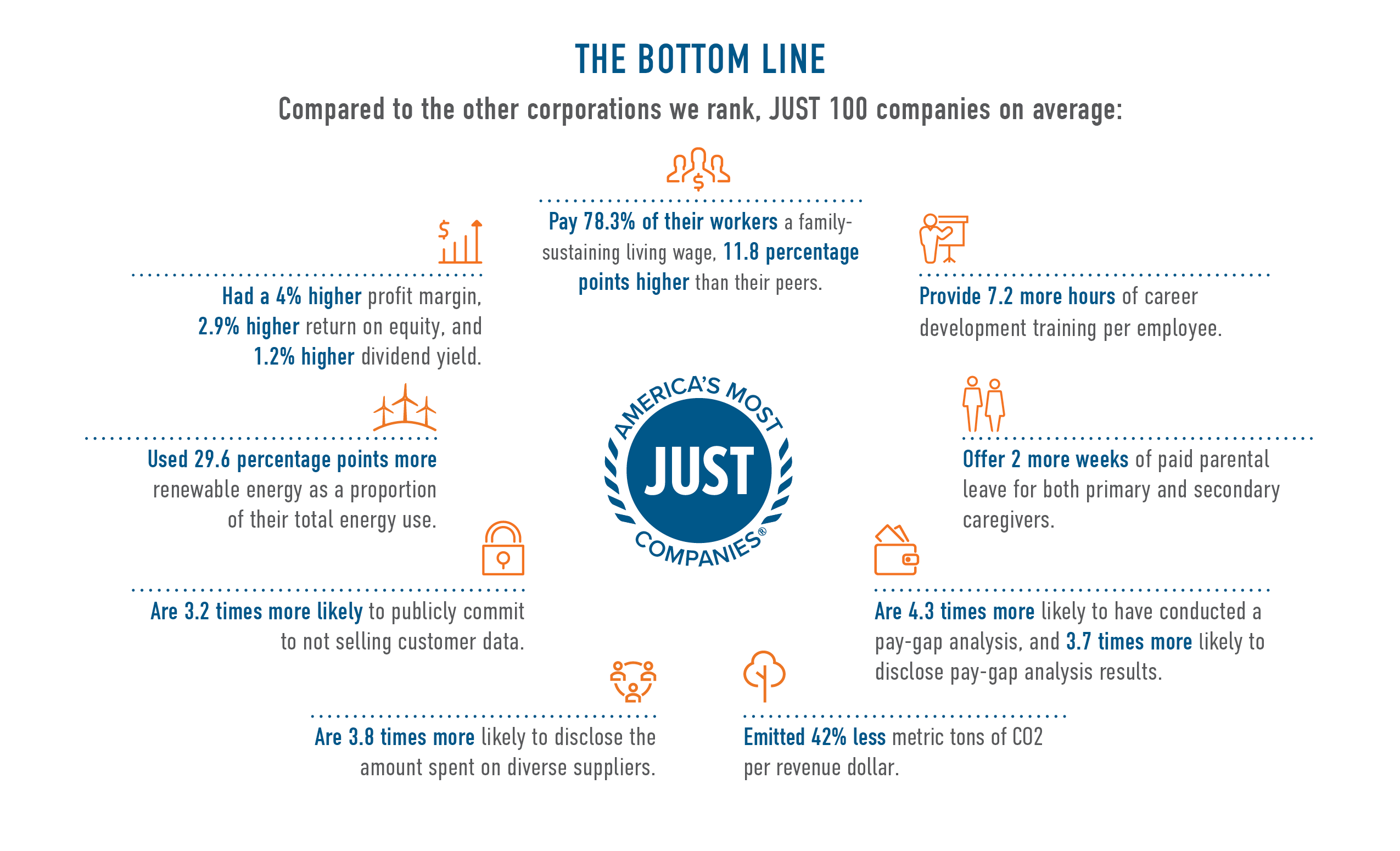
As of January 25, 2024, The JUST 100 Index (JUONE) that tracks the top 100 ranked companies outperformed the R1000 Equal Weighted Index by 38.4% since inception.
For this year’s Rankings, our survey research team asked a representative sample of 3,001 Americans to prioritize which Issues matter most. The following chart, pulled from our 2023 Issues Report, shows the probability that an individual would choose an Issue as most important to defining a just company, and serves as the weighting for this year’s Rankings.
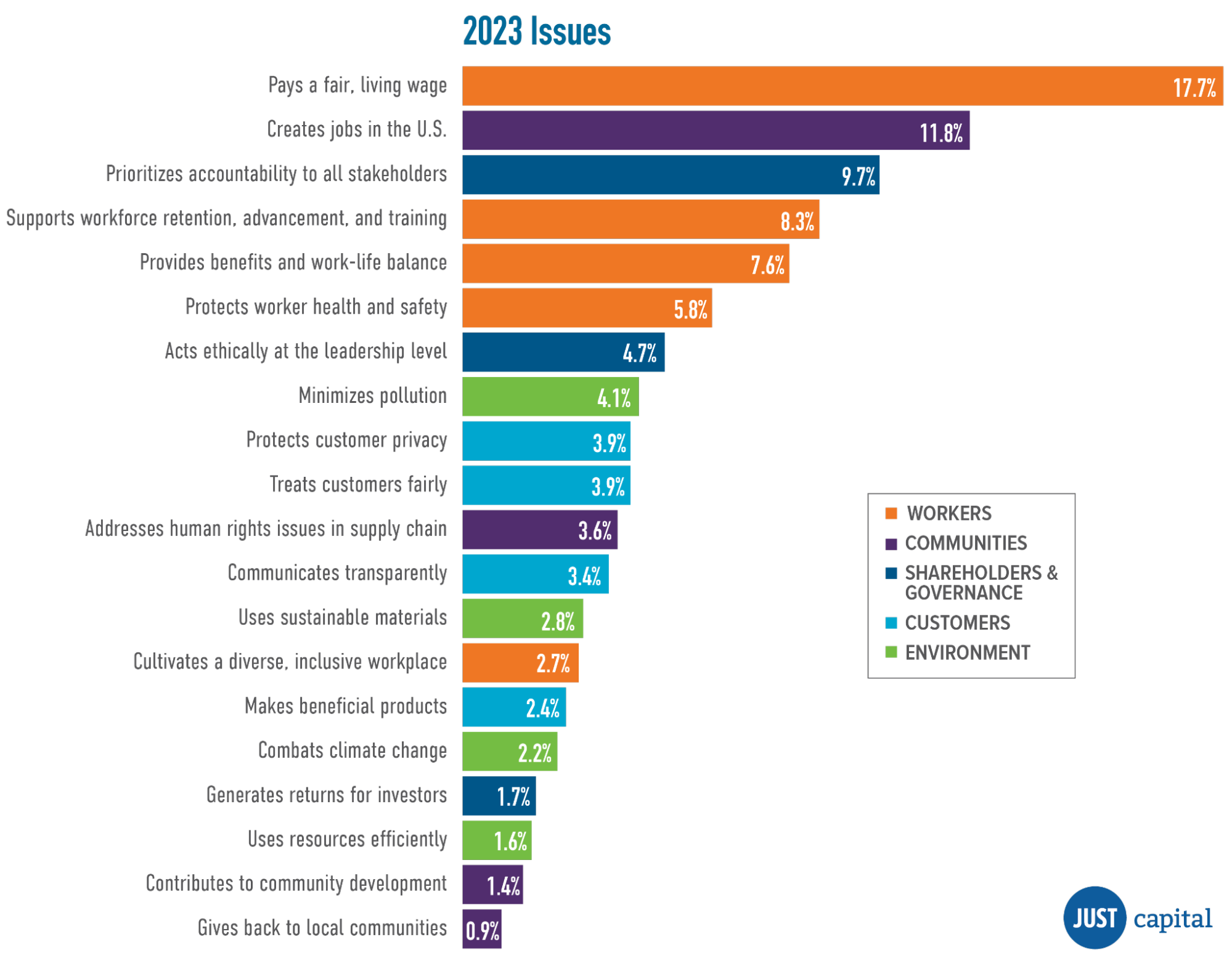
Over the last seven years, Worker Issues have consistently commanded the highest share of priority among the 20 stakeholder-related issues we measure, and this year is no different. As you can see, four of the five Worker Issues – including paying a fair, living wage, supporting workforce training, protecting worker health and safety, and providing benefits and work-life balance – are among the top six priorities of the public, and the collective prioritization of all five worker issues comprise 42% of a company’s score this year.
And despite the ongoing political polarization in the U.S., Americans are united when it comes to just business behavior. Among every demographic group – liberal, conservative, high-income, low-income, men, women, young generations, older generations, and white, Black, and Hispanic Americans – the Workers stakeholder is the top priority. And for nearly all of these demographic groups, the most important Issue is “Pays workers fairly and offers a living wage that covers the cost of basic needs at the local level,” which comprises a significant 17.7% of companies’ scores in this year’s Rankings.
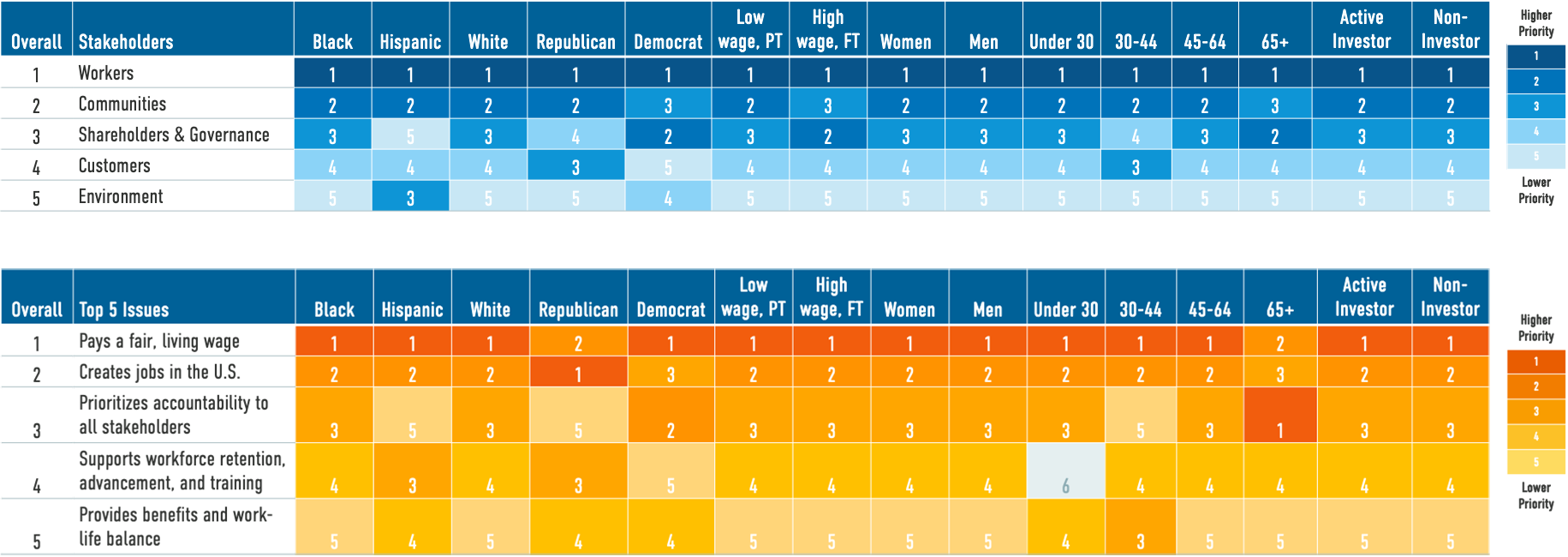
The second-highest ranked Worker issue, “Focuses on workforce retention and employee advancement by providing training, education, and career development opportunities,” now comprises 8.3% of a company’s score. In the past two years, we’ve seen the issue of retention and advancement steadily increase in importance among the public. It’s important to note that this increase occurs alongside the rapid evolution and adoption of AI by many employers, bringing fears of how his technology could replace, or diminish, certain jobs.
This year is HPE’s first time in the top spot, after being recognized as a JUST 100 leader every year from 2018 through 2024. HPE’s standout leadership on issues like having verified SBTi 1.5-degree Net Zero commitment, providing apprenticeship programs for caregivers and the formerly incarcerated, and ensuring both women and people of color earn 100% of what similarly situated peers earn, helped propel its performance.
CNBC will delve into the data, highlighting trends and spotlighting corporate performance stories about this year’s JUST 100 leaders across the network’s broadcast and digital platforms at cnbc.com/just100. Tune into Squawk Box at 8:15am EST on Feb. 5 to see our co-founder and chairman, Paul Tudor Jones join HPE CEO Antonio Neri, interviewed by Andrew Ross Sorkin.
The past year has put workers squarely in the spotlight for corporate America. Whether it was return-to-office plans, strikes, or the impacts of AI, corporate leaders have needed to turn their attention to their workforce in 2023. JUST Capital’s own polling reflects that, with worker issues once again topping the American public’s priorities when it comes to just business behavior.
As the year winds down, we turned to the leader on the Workers stakeholder in our 2023 Rankings – Bank of America – for insight into its workforce investment strategy, which includes the industry-leading move to recently raise its minimum wage.
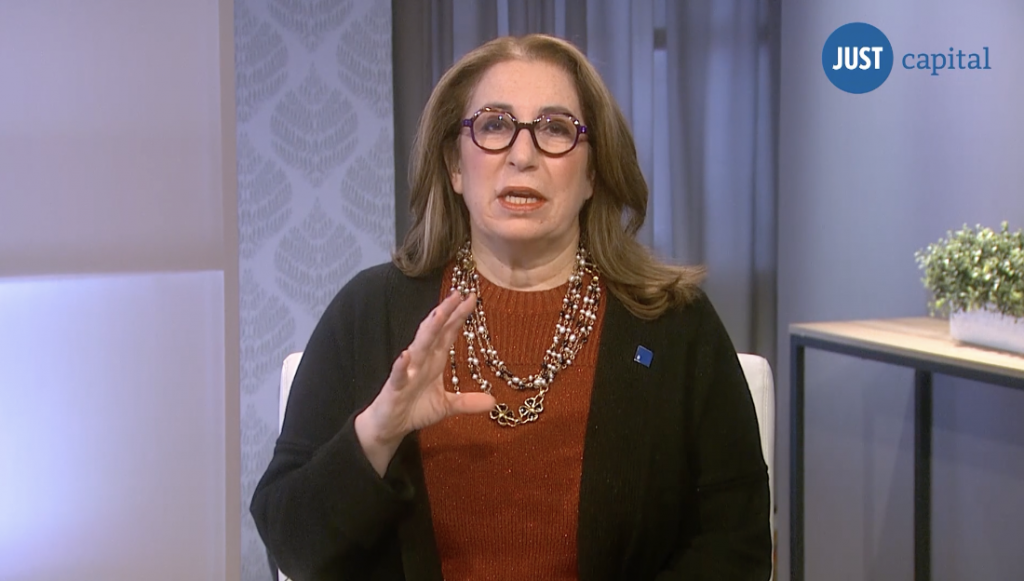
In a recent episode of our ongoing LinkedIn Live interview series, “JUST Better Business,” Bank of America Chief Human Resources Officer Sheri Bronstein spoke with JUST Capital CEO Martin Whittaker about how the company approaches its people strategy and why it’s been a boon for business. To Bank of America, the number-one overall company in our 2023 Rankings, prioritizing workers is part of operating sustainably, Bronstein said. Watch the full interview below and read on for our key takeaways from the conversation.
Bronstein emphasized that data is the foundation for all of Bank of America’s HR decisions, from raising wages to expanding mental health support to investing in diversity, equity, and inclusion (DEI) practices. “I have an incredible data and analytics team that really sits behind all of our HR processes and services and products and helps us analyze and make sure that we’re using every dollar of that investment in the best way possible,” she said.
When it comes to DEI, Bank of America has disclosed its EEO-1 data since 2013 and uses it to guide practices and policies. “Here in the U.S., we really look like the communities and the customers that we serve,” she said of the bank’s 18% Hispanic and 13% Black employees. Data also grounds its work to advance women’s leadership in the company. Women make up over 50% of employees at Bank of America, with women comprising almost 40% of its management team and over 40% of those at the top levels of the company, she said. Bronstein also pointed to Bank of America’s own research that found that S&P 500 companies with at least 25% women executives saw higher returns on equity than the overall index.
Data from employee feedback also plays a role, Bronstein said using the company’s investments in mental health resources and support as another example. Following company-wide surveys conducted a few years ago, Bank of America began enhancing its benefits around mental health care and working to break down stigmas around mental health using the voice and influence of its leadership. It’s something that Bronstein said she’s grateful the company prioritized before the pandemic hit, because of the input of its employees.
While Bank of America employs over 210,000 individuals, Bronstein often considers the impact of the company’s decisions beyond its immediate workforce. “We help our customers live their financial lives every day and so it’s so important to us that our teammates, especially as you mentioned those in the lower compensation categories, that they have more than a living wage. We want them to make sure that they feel comfortable and that they can take care of their families,” she said of the company’s decision to raise its minimum wage to $25 per hour by 2025.
Since 2010, Bank of America has raised its minimum wage by 121%, and for over a decade hasn’t raised healthcare costs for employees earning under $50,000 per year. It’s employees’ families that motivate Bank of America to do right by their workers, Bronstein said.
“Every day we come in and we think about our 210,000 plus employees, but we also take care of their families. It’s almost a million people that I have the honor every day to think about – ‘how do we help them live their personal lives, their professional lives?’” she said.
This mindset has also played a role in the company’s DEI work. As part of Bank of America’s $1.25 billion commitment to advancing racial equity, the company has invested in low-moderate income communities in the 90 markets it operates in across the country. In partnership with nonprofits and Bank of America’s market leadership, the company ensures that whether it’s investing in private equity, jobs programs, or health care systems, that these investments serve the needs of low-moderate income communities and embrace diversity, Bronstein said.
For Bank of America, investing in its workforce has led to higher employee satisfaction and lower turnover, Bronstein said, noting that she believes 2023 will see record-low turnover for the company. Part of that stems from its commitment to providing training and re-skilling programs that promote long-term growth at the company. Bank of America tries to bring in talent at the entry level, Bronstein said, and help them build skills and learn over time.
The company does this through Pathways – its community hiring and development program – The Academy – its internal learning and development platform – and its college recruiting process. “Helping people build skills and be able to choose many different careers over the course of a lifetime, that is something that we think has really helped us continue to invest in women and our diverse talent in particular, but all of our employees,” she said.
Bronstein sees Bank of America as a company that’s always valued its teammates, a mindset that has become increasingly valuable through the labor market shifts of the last few years and will surely continue to be through 2023 and beyond.
