
A recent executive survey from global consulting firm Protiviti found that the ability to attract, develop, and retain top talent, and talent and labor availability were two of the top five perceived risks for business in the next two to three years. Investing in people, providing the right incentives, and creating conditions where all workers can flourish is a growing business imperative. JUST Capital’s polling of the American public offers a guide to what those investments, incentives, and conditions are: fair pay, benefits that support well-being, and policies that enable all employees to participate fully in the workplace.
Our Americans’ Views on Business Survey, which – along with the People’s Priorities – underpinned JUST’s 2025 Rankings of America’s Most JUST Companies, found that providing equal pay for equal work and expanded child care benefits are of especially high importance to the American public, with 94% and 86% overall support, respectively. Notably, these issues saw strong alignment across political affiliations.
Additional research suggests that these workforce policies, which benefit all employees, can also play a critical role in breaking down barriers to workforce participation. That’s especially true for primary caregivers, the majority of whom are women. According to Gallup, women who believe they can effectively balance work and personal responsibilities are more than twice as likely to be engaged at work and are 38% less likely to be actively looking for a new job. While not specifically designed to address gender disparities, worker-focused policies like fair pay and caregiving support can provide uniquely beneficial support for women in the workforce and mitigate barriers that often impact their full participation.
Addressing these workforce concerns isn’t just about meeting public expectations — it also contributes to organizational success, as employees can engage more fully and productively at work. Investments in policies supporting work-life balance and financial security are linked to higher retention rates and reduced turnover costs; improved employee engagement, productivity, and attendance; increased morale and job satisfaction; and reputational benefits. In a competitive talent market, these investments are not just beneficial, they are essential for attracting and retaining the committed and productive workforce necessary for operational success.
So how can companies unlock a competitive advantage through strategic investments in worker well-being? JUST Capital analyzed key metrics from our 2025 Rankings to identify companies disclosing policies and practices designed to support all workers and help mitigate barriers to workforce participation, which often have a greater impact on women. The following policies were identified as those that companies can consider to meet the public’s expectations around work-life balance and fair pay:
Read below to learn more about the workforce policies and disclosures that foster the work-life balance that support employees, especially women.
Adobe has maintained gender pay parity across its global operations since 2018. All new parents, regardless of gender, receive 16 weeks of paid parental leave as part of a comprehensive worker well-being program that also offers subsidized child care and backup child and adult companion care, fertility benefits, and paid time off.
American Express provides employees with benefits that support workers in balancing personal responsibilities while working full time. All new parents receive 20 weeks of paid parental leave, while flexible work arrangements and subsidized child and elder care assistance help employees manage caregiving responsibilities throughout their careers. The company also conducts regular audits to ensure equal pay for equal work, and has maintained 100% pay parity across genders globally and other demographic groups in the U.S.

Bank of America maintains policies and practices that support equal pay for equal work, including regular pay reviews with oversight from its board and senior leaders. Over 17 years of pay analyses, compensation for women across its global operations has remained largely on par with that for men. Bank of America also provides 16 weeks of paid parental leave for all new parents, 50 days of back-up child and elder care when regular care arrangements fall through, and flexible work arrangements to support ongoing caregiving responsibilities.
Bristol-Myers Squibb offers a suite of health and well-being benefits, including 12 weeks of paid leave for new parents, on-site child care at select locations, and access to a national network of discounted child and family care providers. The company also conducts regular pay reviews to uphold its commitment to fair compensation, with results demonstrating parity in pay across its workforce.
In 2024, Citigroup announced an Enhanced Parental Leave and New Caregiver Leave policy for U.S. employees, providing 16 weeks of paid leave for all new parents and caregivers, with birthing parents receiving an additional 8 weeks. The policy also provides two weeks of paid leave for employees caring for an immediate family member. This expansion reinforces Citigroup’s broader efforts to support employees through child and family care benefits and initiatives that support equal pay for equal work.

Gilead Sciences conducts annual pay reviews in the U.S. to uphold its commitment to equal pay and a pay-for-performance approach, with a recent analysis confirming compensation parity across genders. The company also supports employees with caregiving responsibilities by providing 12 weeks of paid leave for new parents or those caring for a family member, along with flexible work schedules to promote work-life balance.
The meaningful impact we have made as a company is only possible because of the exceptional talents and dedication of our people, and all they do to champion a culture where innovation and inclusivity thrives. Thanks to our employees, we are delivering transformative therapies and advancing health equity to build a healthier world for all people.
Jyoti Mehra Executive Vice President of Human Resources at Gilead Sciences.
Merck offers flexible work arrangements, including flexwork, summer hours, and job-sharing, to support employees in balancing work and personal responsibilities. The company also maintains a Pay Equity Council that conducts annual pay audits, with recent results pointing to pay parity across genders.
Organon conducts regular pay analyses to ensure fair compensation practices, and its pay audit found 100% pay parity between men and women in similar roles. The company also supports all parents with 12 weeks of paid parental leave and a range of child care support benefits, including support in setting up early childhood care, assistance in finding backup child and family care when regular arrangements fall through, and discounted tutoring and college counseling services.
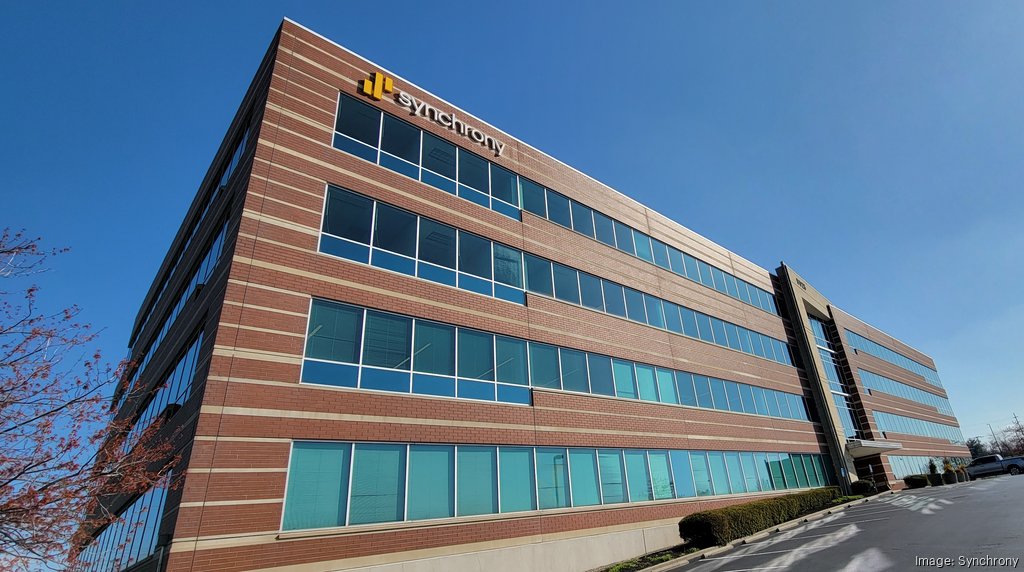
Synchrony expanded its childcare benefits in 2023, increasing its childcare reimbursement policy to 60 days, simplifying the reimbursement process, and adding new lactation rooms at its physical hubs. The company also removed location requirements for new roles, allowing applicants to work from any Synchrony site, and maintained hybrid and virtual work arrangements to support flexibility. These policies reinforce Synchrony’s commitment to work-life balance for parenting employees, begining with 12 weeks of paid parental leave for all parents and an additional 10 weeks for birthing parents. The company also conducts regular pay analyses and has closed identified gaps, achieving pay parity between male and female employees.
In a slowing job market and signs of rising unemployment, understanding how companies invest in their workforce has never been more critical. Workers are increasingly asking for meaningful employee benefits and are vocal about their needs for better support, whether it’s for financial wellbeing and the ability to cover their living costs, assistance with caregiving responsibilities, or clear paths for career progression.
JUST Capital’s polling continuously shows how consistent Americans are when it comes to what they want the nation’s largest public companies to prioritize – their workers. Year over year, worker issues including living wage, benefits, career development, worker health and safety, and diversity and inclusion get the highest prioritization and in 2024 comprise 42% of a company’s score in our Rankings of America’s Most JUST Companies.
Investing in workers was a recurring theme in JUST Capital focus groups that will inform the 2025 Rankings. Full findings will be published later this year. Related to how companies can create value for all their stakeholders, one participant shared:
“I feel like a happy employee makes a happy company.” – Male, 40-44, Moderate
And in fact, JUST Capital’s research shows exactly that: investing in workers pays off. Our Workers Leaders Index Concept – which tracks the top 20% of companies in our Rankings that perform best across all five worker-related issues – has outperformed the Russell 1000 Equal Weighted index by 16.46% from December 31, 2021 to July 31, 2024.
As we approach Labor Day, JUST Capital is highlighting the companies leading the way in fostering environments where workers feel valued, supported, and empowered to thrive by actively implementing comprehensive workplace policies that address their workers’ needs head-on. Our analysis found that the top 10 companies for worker issues are outpacing the rest of the Russell 1000 in a number of ways:
JUST Capital is proud to present the list below of Top 10 Companies for Workers with details on how they are leading on the issues that matter most to the American public. The following list is based on performance on Worker Issues from JUST Capital’s 2024 Rankings of America’s Most JUST Companies.
Ranked 2nd in Overall Rankings and 1st for Banks
Bank based in Charlotte, North Carolina
Bank of America invests in its employees’ financial and physical well-being by focusing on competitive wages and comprehensive benefits. The company demonstrates a commitment to paying living wages, with a minimum hourly wage of $23 – one of the highest disclosed among the Top 10 Companies for Workers and well above both the Russell 1000 average of $16.73 and the bank industry average of $18.22. In its commitment to supporting working families, Bank of America offers 16 weeks of paid leave for both primary and secondary caregivers and provides emergency backup care and subsidies for routine day care services. In addition, Bank of America embraces transparency on topics like pay equity and workforce demographics: it’s among the 12.5% of companies that publicly report the results of both their gender and race/ethnicity pay equity analyses and part of the 47% who disclose highly disaggregated workforce demographic data.
Ranked 5th in Overall Rankings and 2nd for Banks
Bank based in New York, New York
Citi demonstrates a strong commitment to fairness and family support through a range of initiatives focused on equity and employee-wellbeing. The company’s dedication to equity is reflected in its pay analysis results, which show that women globally earn over 99% of what men earn. Citi also provides highly disaggregated workforce demographic data by gender, race/ethnicity, and standardized job categories, underscoring its transparency and commitment to an inclusive environment. Supporting its workforce further, Citi offers up to 16 weeks of paid leave to primary caregivers and benefits like preferred access and up to 10% tuition discounts at Bright Horizons child care centers, along with emergency backup dependent care. The company also invests in professional development, providing an average of 38 training hours per employee and offering tuition reimbursement to support employees’ continuous learning.

Ranked 18th in Overall Rankings and 4th for Semiconductors & Equipment
Semiconductors & Equipment company based in Santa Clara, California
NVIDIA’s approach to fostering an equitable and supportive work environment is evident in its commitment to both pay equity and comprehensive employee benefits. Notably, the company offers robust parental leave benefits, including 22 weeks of fully paid leave for birth parents, 12 weeks of paid leave for non-birth parents, including fathers and adoptive parents, and support in offsetting childcare costs by providing a 10% discount on childcare at KinderCare centers. Additionally, NVIDIA stands out for its robust pay equity disclosure, as it is one of only 12.5% of companies overall and 23.5% among industry peers to disclose both their gender and race/ethnicity adjusted pay ratios. The company is also one of very few among the Russell 1000 companies we assess to disclose disaggregated pay equity data by different race/ethnicity categories, showcasing a high level of transparency.
Ranked 16th in Overall Rankings and 4th for Banks
Bank based in New York, New York
JPMorgan Chase invests in its employees’ financial well-being by offering a minimum hourly wage of $20, which exceeds the Russell 1000 average and represents the third highest minimum wage among banks. The company also supports new parents with 16 weeks of paid parental leave for both primary and secondary caregivers and families with various caregiving services. JPMorgan Chase’s equity practices are also reflected in its pay gap analysis results, which show nearly equal compensation across gender and racial lines. Additionally, the company maintains transparency in its diversity efforts by disclosing detailed demographic data by gender, race/ethnicity, and job category.
Ranked 6th in Overall Rankings and 1st for Health Care Providers
Health Care Provider based in Bloomfield, Connecticut
Cigna demonstrates its commitment to workplace equity through pay equity analysis, showing near-parity in compensation for female and underrepresented minority employees. The company also prioritizes transparency by sharing highly detailed workforce demographic data by gender, race/ethnicity, and job category, reinforcing its focus on fostering an inclusive environment. Additionally, Cigna supports its employees’ work-life balance with key benefits including 18 days of paid time off and seven days of paid sick leave annually, paid parental leave, flexible scheduling opportunities, and emergency backup dependent care support.
Ranked 51st in Overall Rankings and 6th for Software
Software company based in Minneapolis, Minnesota
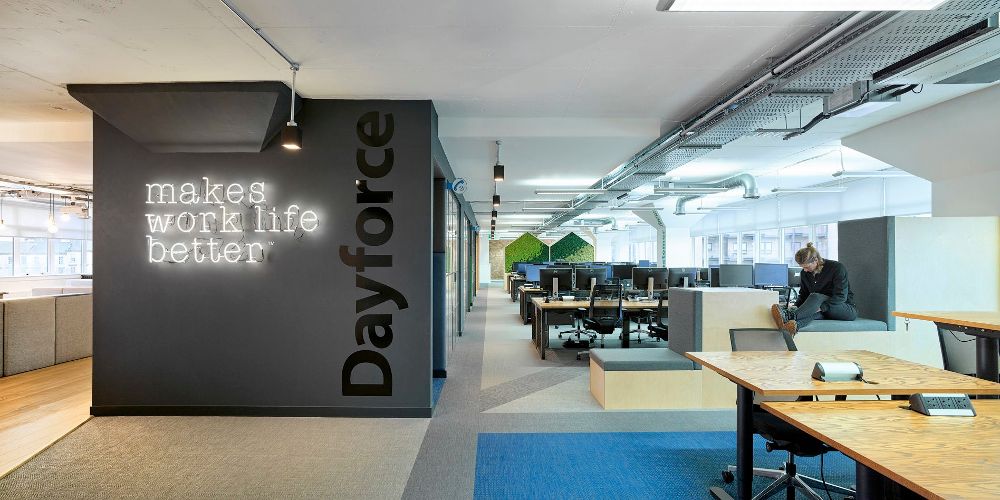
Dayforce sets a high standard in the Software industry with its generous and inclusive parental leave policy, offering 17 weeks of paid leave to all caregivers. This is the highest offering at parity among the Top 10 companies and far surpasses the Russell 1000 average of 11 and 8 weeks of paid parental leave for primary and secondary caregivers, respectively. Additionally, Dayforce invests in its employees by providing unlimited paid time off, 10 days of paid sick leave annually, and both backup and subsidized dependent care benefits. Flexible scheduling opportunities further reflect Dayforce’s dedication to fostering a work environment that truly supports its employees’ diverse needs.
Ranked 90th in Overall Rankings and 1st for Consumer & Diversified Finance
Consumer & Diversified Finance company based in Detroit, Michigan
Ally Financial is among the Top 10 companies with the highest minimum wage of $23 per hour. This wage exceeds the Russell 1000 average of $16.73 and the Consumer & Diversified Finance industry average of $19.00, demonstrating a sustained commitment to competitive compensation for hourly employees. The company also supports working parents by offering equal parental leave to both primary and secondary caregivers and providing discounts on childcare to help ease caregiving costs. This combination of competitive wages and comprehensive family support underscores the company’s ongoing investment in its employees’ well-being and stability.
Ranked 9th in Overall Rankings and 2nd for Semiconductors & Equipment
Semiconductors & Equipment company based in Santa Clara, California
Advanced Micro Devices (AMD) demonstrates a strong commitment to employee well-being through a comprehensive range of benefits, supporting their work-life balance and professional development. AMD offers 12 weeks of fully-paid parental leave for the birth, adoption, or foster placement of a child, ensuring equitable support for all parents and new families alike. Also, the company provides up to 20 days of subsidized backup care annually to help employees with their caregiving expenses. In addition to its family-friendly policies, AMD supports employees’ work-life balance with a minimum of 15 days of paid time off, 20 days of paid sick and family time off, and workplace flexibility, enabling employees to choose what best fits their needs. AMD also supports employees’ professional development and encourages continuous learning through its education assistance program which offsets the cost of education.
Ranked 10th in Overall Rankings and 3rd for Semiconductors & Equipment
Semiconductors & Equipment company based in Boise, Idaho
Micron offers a range of robust benefits to support its employees, including 12 weeks of fully-paid parental leave for all expectant parents and at least 17 days of paid time off annually for rest and recovery. Additionally, the company supports career development and skill enhancement through its academic advancement program which provides financial assistance and resources for employees to pursue higher education and professional certifications. What’s more, Micron provides an average of 62 hours of career training per team member annually, significantly exceeding the industry average of 21 hours. Micron also performs regular pay equity analyses to foster a culture of fairness, ensuring sustained pay equity globally for women and people with disabilities, as well as across race/ethnicity and veteran status in the U.S.
Ranked 26th in Overall Rankings and 2nd for Transaction Processing
Transaction Processing company based in San Jose, California
Paypal demonstrates a strong commitment to employee support through its equitable compensation practices, robust professional development opportunities, and comprehensive benefits package. The company regularly conducts pay equity analyses by gender and race/ethnicity, and its latest assessment reveals that it has maintained 100% global gender and U.S. ethnic pay equity, reflecting its ongoing commitment to fairness and inclusivity. In addition to its focus on equitable compensation, PayPal supports employees’ professional development by offering tuition reimbursement to help cover educational costs and an average of 48 hours of training per employee annually, which is 2.4 times more than the industry average. The company also provides a comprehensive benefits package which includes unlimited paid time off, five days of paid sick leave, equal paid parental leave for all parents, and both subsidized and backup dependent care. To further promote work-life balance, Paypal also offers flexible working arrangements like hybrid work to accommodate diverse needs.
To learn more about our methodology, unpack your company’s performance on worker issues in the 2024 Rankings, and gain insights into how to improve on the issues that matter most to the American public, please reach out to corpengage@justcapital.com.
By Aleksandra Radeva, Lisa Simon (Revelio Labs), Zanele Munyikwa (Economist at Revelio Labs)
In today’s economic landscape – with looming uncertainty about the role of generative AI on the workforce and the pocketbook pinch of ongoing inflation – where and how can workers and their families find financial security and the stability it offers? When companies pay their employees a wage rate that meets local living expenses, they’re not only investing in operational success but also demonstrating leadership on one issue on which Americans across political affiliations agree, a seeming rarity in this election season.
To better understand the financial security of employees across America’s largest publicly traded companies, the Russell 1000, JUST Capital and Revelio Labs analyzed the amount by which employees’ wages exceed the local living wage necessary to cover basic budgetary needs. And while a living wage covers the basics, including housing, food, healthcare, and other essentials, the excess amount provides additional income that allows for the savings, discretionary spending, and improved quality of life necessary for true economic stability. The results – which indicate the financial viability of Russell 1000 employment, including among some entry-level positions, in some of America’s highest cost-of-living cities – may initially seem confounding. To learn more about how we made these calculations, click here.
When considering where workers can achieve financial stability, it’s surprising to find that some of the highest cost-of-living areas in the U.S. – like Seattle, cities in the Northeast, Silicon Valley, and Austin – also top the list for areas where a family of two working adults with two children can earn above a basic needs-based living wage. This finding indicates that the companies represented in these regions, as well as the wages offered in certain roles, can offset the high living costs.
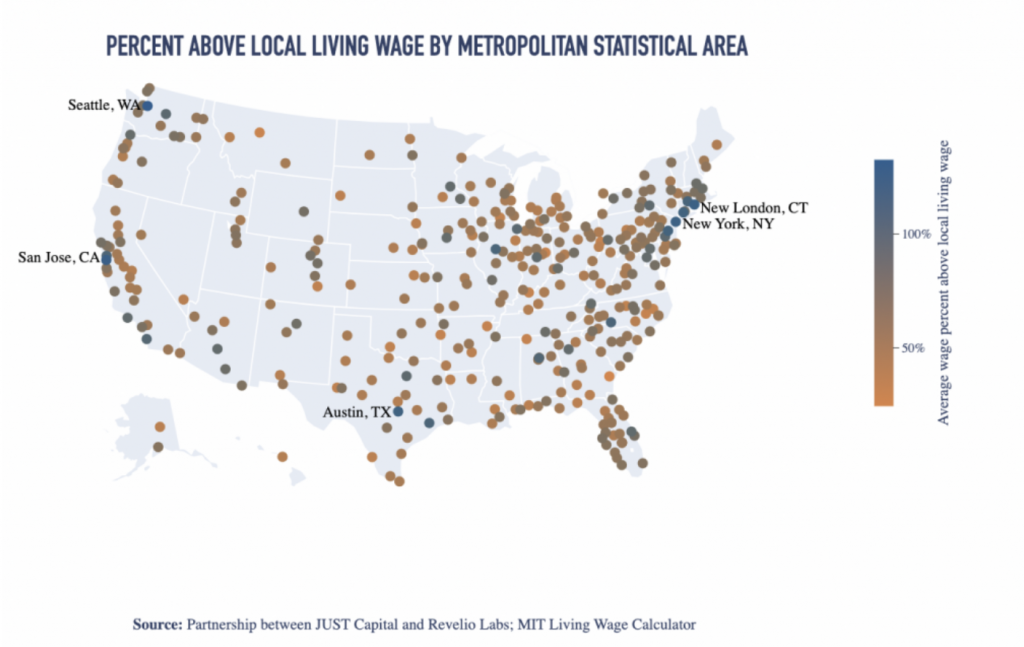
The map above shows where Russell 1000 company employees are paid a rate that, on average, exceeds the local living wage. For example, the living wage estimate, or amount needed to meet basic budgetary needs, for a family of two adults and two children in Austin, Texas is $52,800 per worker (assuming both adults work). Our data shows that on average, a Russell 1000 worker in Austin makes $114,000, which is 160% above the local living wage estimate for a family of four. This finding is certainly driven by the fact that Austin has a high concentration of high-paying companies with highly paid roles. But it also tells us that if one could be any worker with any role in a Russell 1000 company, a job in Austin would be more likely to ensure financial security.
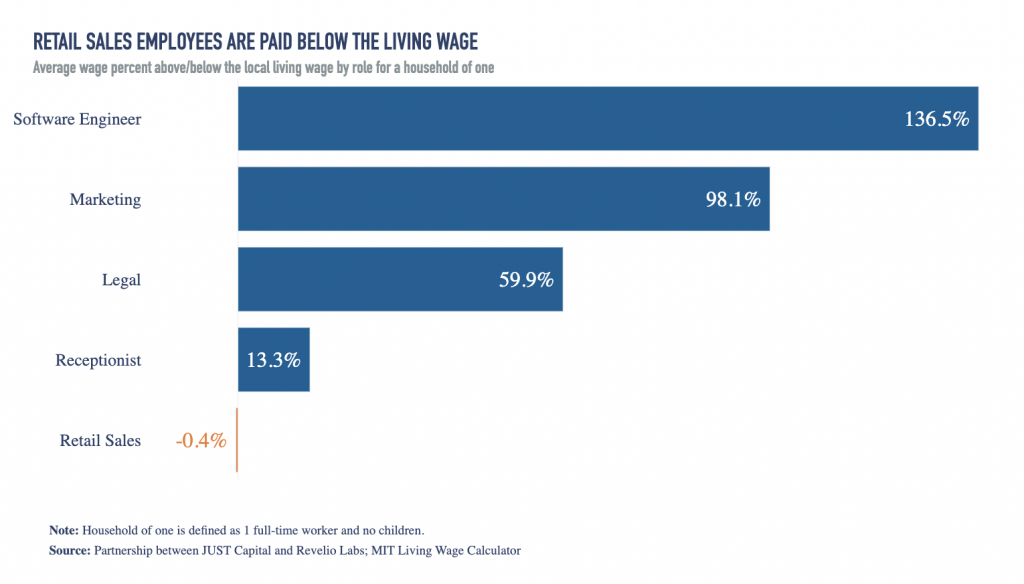
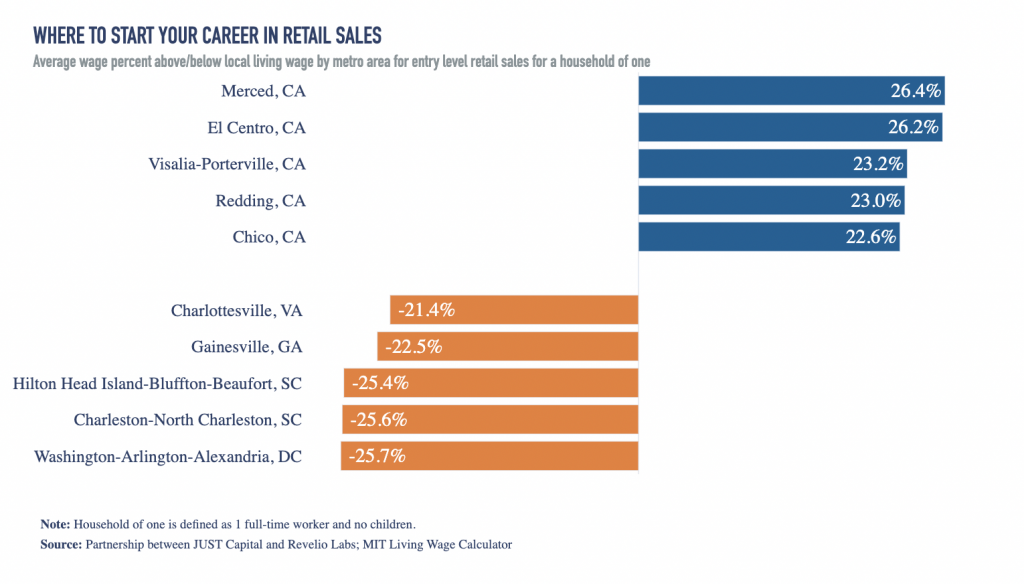
But when looking across different roles at Russell 1000 companies, not all tend to pay a living wage, let alone above it. The industry with some of the largest location-based variation in employees earning more than a local living wage is retail sales. That variation is driven by the industry’s large, diverse workforce and extensive presence across different regions. For those starting their careers in retail, the location of a given store plays a crucial role in determining financial viability. California, although a high cost-of-living state, not only provides a higher likelihood of achieving a wage exceeding the local living wage in retail roles but also maintains this advantage in entry-level positions.
For example, an entry-level retail sales employee working at a Russell 1000 company can make on average 26.4% more than the living wage for a household of one in Merced, California. In Charlottesville, Virginia, on the other hand, employees will make 21.4% percent less on average than their local living wage.
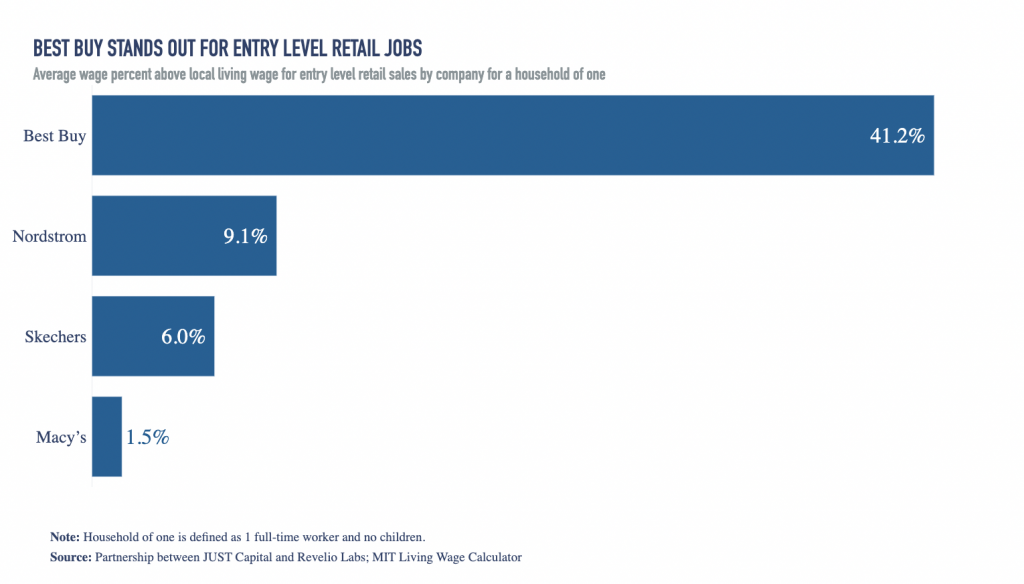
Besides location, the employer also plays a role in determining an entry-level role’s financial viability. Certain companies – including Best Buy – stand out for their higher pay for entry-level retail jobs. Best Buy, Nordstrom, Skechers, and Macy’s are notable for offering wages that exceed the local living wage estimates for a single adult working full-time, making them attractive options for those entering the retail sector. On average, entry-level sales employees at Nordstrom make 9.1% more than their local living wage for a household of one.
*The best companies for entry level retail positions are determined based on the percentage average wages fall above the local living wage for those positions.
And while some locations and employers offer a good starting point in retail, can such jobs support a family? A more detailed examination of retail roles reveals a sobering reality: supporting a family on a retail salary remains difficult in most areas. This finding is particularly true for entry-level positions, where wages often fail to meet the local living wage estimates. However, there are exceptions. California emerges as a state where retail sales roles can offer wages exceeding the local living wage, suggesting a more favorable economic environment for retail workers.
*For the purposes of this analysis, a family is defined as two full-time working adults with two children, and the living wage is what each of the adults needs to make to meet an estimated basic needs budget in their location.
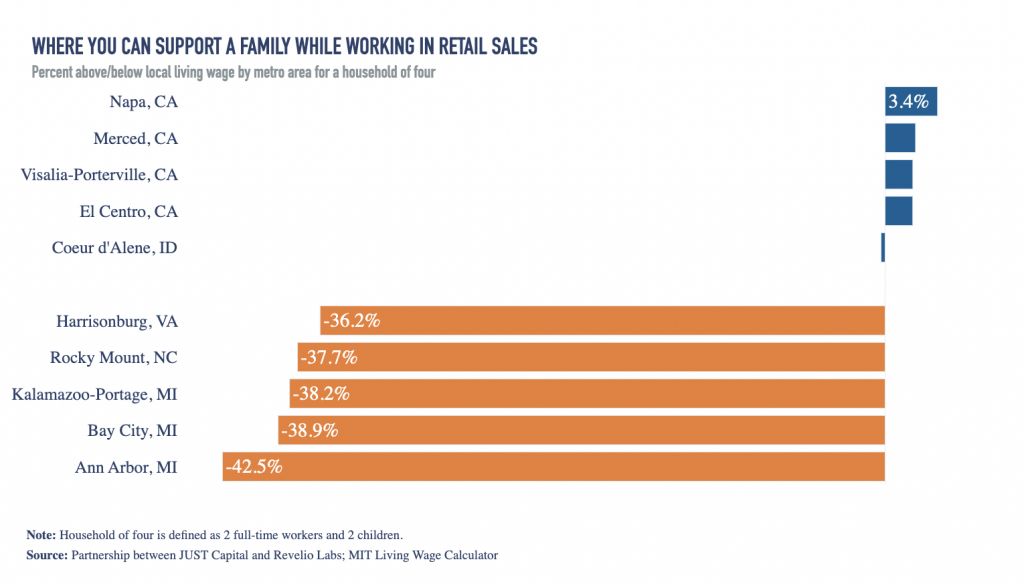
*The above graph represents the top and bottom five locations for relative wages earned by employees in retail sales roles compared to the local living wage .
These insights underscore the complex landscape of wages and living costs across the U.S., where variation exists even across Russell 1000 companies in the same industry. They highlight the importance of considering both geographic and role-specific factors when evaluating economic stability and opportunities for families.
JUST Capital and Revelio Labs are committed to identifying the corporate leaders on key workforce trends, particularly when it comes to companies investing in their workforce by paying a fair, living wage – a top priority of the American public for just business behavior. Learn more about leveraging the research insights, cabinet of experts, and peer-to-peer engagement available to corporate leaders through JUST Capital’s programming by reaching out at corpengage@justcapital.com.
Lisa Simon is the Chief Economist and Zanele Munyikwa is an Economist at Revelio Labs.
What is a living wage? A living wage is the amount of money needed for a given worker to cover the cost of their family’s minimum or basic needs where they live. Learn more about living wage as an important business benchmark here.
How do we calculate the percent that average wages fall below or above the local living wage in this analysis? To calculate the percentage average wages fall above or below the local living wage, we look at the average wage earned by employees working at Russell 1000 companies in a given metropolitan area, and compare that average to the local living wage. We then use the following formula to calculate the percentage above or below the local living wage:
(Average wages earned in MSA by Russell 1000 employees﹣Local living wage) / Local living wage
Why is a pay rate that exceeds the living wage important? For workers across incomes, knowing where your earnings are most likely to exceed the local, basic needs-based cost of living provides an indication of where your wages might be “worth” the most in terms of purchasing power. What’s more, the basic needs budget used to estimate living wage typically assumes the lowest-cost version of necessities, and does not include significant elements of financial security such as retirement savings. A worker earning a living wage would remain only one unexpected expense away from financial precarity. Learn more about how local living wage estimates are calculated here.

Year over year, JUST Capital’s polling of the public shows that Americans are looking to companies to put their workers first. And, today, the country’s labor market is seeing the effects of their frustration at how employers have responded to this. The Great Resignation is wearing on, with workers quitting at rates that continue to break records. At the same time, companies are staring down proxy season with shareholders setting out voting priorities that put extra emphasis on the “S” in ESG.
It’s not just the public and investors that are looking for greater transparency from companies on how they treat their workers. The SEC has noted that standardizing disclosure of human capital metrics – workforce-related data, policies, and practices – is a key area of focus alongside other ESG topics. Chair Gary Gensler recently confirmed that the SEC is working out the details of mandatory disclosure standards on climate, and human capital standards are expected to follow in the coming months. JUST analysis has shown that the current state of human capital disclosure among the 100 largest U.S. employers is minimal – not a single metric we’ve tracked is reported by a majority of companies.
As investors push for more data and the SEC considers imposing new requirements, the bulk of companies will have their work cut out for them to accelerate reporting.
A new survey from JUST Capital, conducted in partnership with SRSS, Ceres, and Public Citizen, also found that the American public overwhelmingly supports greater disclosure from companies and federal standards. Of Americans polled, an average of 87% support the federal government requiring corporate disclosure on human capital and environmental impact data. JUST Chief Strategy Officer Alison Omens discussed the broad support for these standards across demographics on CNBC’s Squawk Box.
At JUST Capital, we’ve been tracking both if and how Russell 1000 companies have been reporting human capital performance metrics, releasing a report on the state of disclosure in October 2021. Our analysis sought to help define what “S” actions are for companies and, in turn, what disclosure should include. It also highlighted the challenges that, in the absence of standards, the current methods of disclosure present for shareholders and others interested in this data.
Companies often use different terminology to represent identical human capital metrics, report on aggregated or disaggregated versions of metrics, and place disclosure on these issues in different sources. To provide a clearer picture of how this affects investors and other stakeholders interested in human capital, we analyzed the data collection time behind our report and what it means for the wider debate on disclosure standards.
Between July and August 2021, JUST analyzed the 100 largest U.S. employers on how they disclose 28 metrics across six key human capital themes: Employment and Labor Type; Job Stability; Wages, Compensation, and Benefits; Workforce Diversity, Equity, and Inclusion; Occupational Health and Safety; and Training and Education. From this analysis, we discovered that:
JUST collected all data for this analysis manually. In other words, our team read through various publicly available company sources and recorded the information exactly as it was disclosed by companies, noting details about the link, source type, date, calculation methods, and other important metadata to better understand the context of disclosure.
Each year, JUST Capital spends over 5,250 hours collecting over 200 data points for our annual Rankings of America’s Most JUST Companies. It takes a team of between 20 and 30 analysts and interns, wading through different public corporate reports and disclosures, to find data for the over 950 companies we rank from the Russell 1000 index.
By comparison, we found that it took a team of two over 130 hours to collect data for 100 companies on the 28 human capital metrics featured in JUST Capital’s report. The figure below breaks down this time by theme. Likely due to the number of metrics included in the Employment and Labor Type; Job Stability; and Wages, Compensation, and Benefits themes, they took the most time to collect at 36, 30, and 35 hours, respectively. It’s important to note nonetheless that these numbers show how challenging it is to find and aggregate data on ESG metrics overall.
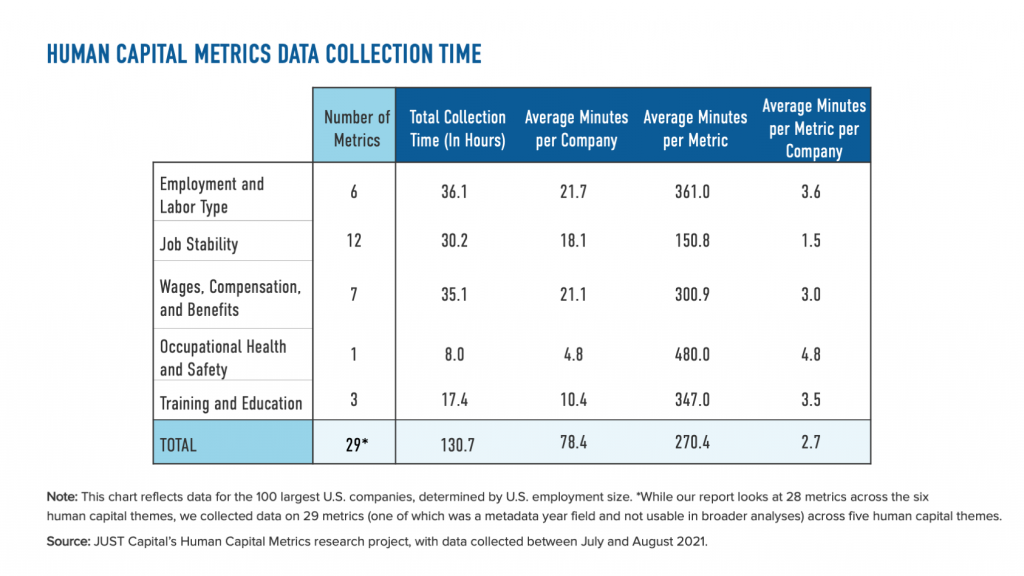
To get a better sense of how long it takes to collect this data while accounting for the difference in the number of metrics within each theme, we looked at the average minutes of collection time per metric per company. Interestingly, while metrics in the Job Stability theme took some of the longest total time to collect, the time we spent per metric per company is in fact the lowest at just above a minute and a half. In contrast, the theme with the shortest overall collection time – Occupational Health and Safety – yielded the longest collection time per metric per company at almost five minutes on average despite the fact it only included one metric for collection.
At first glance, the average time to collect any one metric for a single company may appear relatively small and the difference in time across themes insignificant. However, the cumulative effect of collection time variability becomes noticeable when collecting data for 100 companies – and even more so if we were to expand data collection to the full Russell 1000.
To answer this question, we looked at the two themes with the highest overall data collection time: Employment and Labor Type (36 hours); and Wages, Compensation, and Benefits (35 hours). Analyzing the collection time per source type for these themes revealed an interesting finding: annual reports and 10-K Filings are the most time-consuming source type. In instances where companies disclosed data on these themes, our analysts spent 64% and 81% of their time, respectively, locating it through Annual Reports and 10-K Filings.
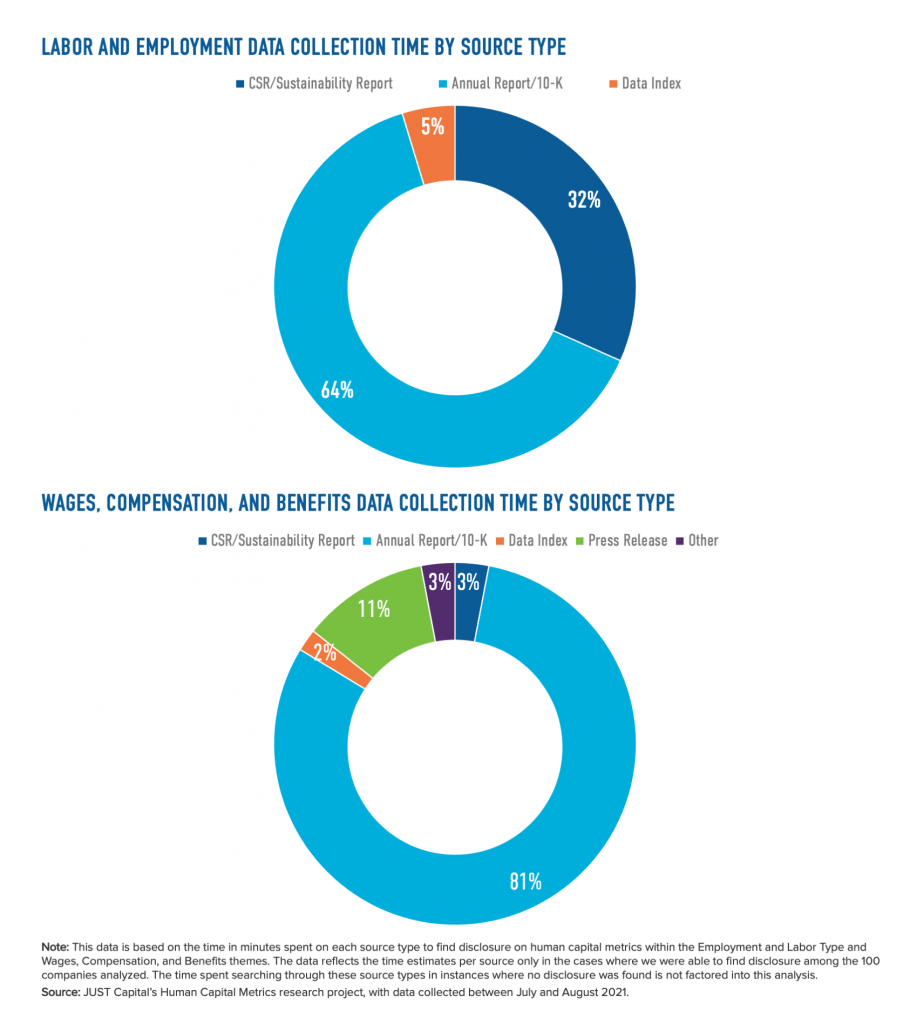
While Annual Reports and 10-K Filings tend to number at over 100 pages (including technical language, tables, and footnotes), the absence of standardization remains a key factor in making finding human capital data in this source time consuming for investors, researchers, and other stakeholders.
It is important to note that the longer length of the time spent on 10-K Filings may have been unintentionally affected by our data collection approach as well. We knew from previous experience with data collection that human capital data was rarely found in the 10-K, meaning that Annual Reports and 10-K Filings were not always the first source that we referenced. Instead, we typically looked at CSR and similar reports first because, from our previous data collection experience, companies are more likely to disclose human capital metrics there.
Due to the nature of manual data collection it is also possible that some data gets overlooked, especially when it is concealed in company sources that may not be easily accessible. To reduce the risk of omission, JUST Capital carries out a thorough review of companies’ publicly available materials and employs different search methods to ensure that information is in fact not available. Such a meticulous approach, however, is time consuming. This was certainly the case with human capital metric data collection, as JUST Capital’s research found exceptionally low disclosure across the board. In fact, the majority of the time that our analysts spent searching through company resources resulted in finding no disclosure.
For instance, we spent approximately 53% of data collection time (19 hours) looking for data on the Employment and Labor Type metrics without finding any disclosure. Similarly, we spent over 83% of data collection time (29 hours) going through company sources without finding a single disclosure on any metric under the Wages, Compensation, and Benefits theme. While finding human capital data is a long process, not finding it, and ensuring that it is in fact not public, takes significantly longer.
The length of time that human capital data collection requires serves as a proxy to how complicated it is to find this information. Disclosing data is only the first step toward increased understanding of how companies are performing on various human capital metrics – and, on its own, it’s not enough. The next step is adopting standardized disclosure practices that ensure the data is easily accessible and unambiguous.
This is the crux of the current debates on human capital and broader ESG disclosure. The exploration of data accessibility, comparability, and, finally, performance are the key questions policymakers, investors, and others are asking. While these questions shape standards, in the meantime, corporate leaders will need to take the first step of disclosure.
The importance of paid sick leave became even more apparent when the coronavirus pandemic hit, but while businesses across the country remain open, fewer than half of companies in the retail sector have publicly announced a new or expanded paid sick leave policy for their frontline workers – many of whom already had limited access to policies that prioritized their health and well-being.
In a recent survey in partnership with The Harris Poll, we found that 74% of Americans believe that companies should prioritize providing at least 14 days of paid sick leave to all workers during COVID-19, and we’ve continued to track this critical issue throughout the pandemic. Access to paid sick leave not only protects workers against employment insecurity, it also reduces the urgency to come into work while sick. An Accountemps study conducted prior to the COVID-19 crisis, for example, found that nine out of 10 employees admit to reporting to work with flu-like symptoms, which, especially during a pandemic, could exacerbate the health hazards faced by frontline workers.
Among the most vulnerable industries is the retail sector, whose employees find themselves at the frontlines of the pandemic. Researchers for the Harvard Kennedy School’s Shift Project found that nationwide, only 45% of retail workers are estimated to have access to any paid sick leave. Out of the 68 retailers* in JUST Capital’s COVID-19 Corporate Response Tracker – which tracks 300 of America’s largest public companies – only 27 (40%) disclose implementing a supplemental paid sick leave policy in response to the coronavirus pandemic. As of June 9, the largest retailers in America offered an average of 13 days of paid sick leave, which falls short of the 14-day quarantine recommendation by the Centers for Disease Control and Prevention. Home Depot stands out among its industry peers as the retailer with the maximum amount of leave – a generous 24 days, which far exceeds the CDC guidelines.
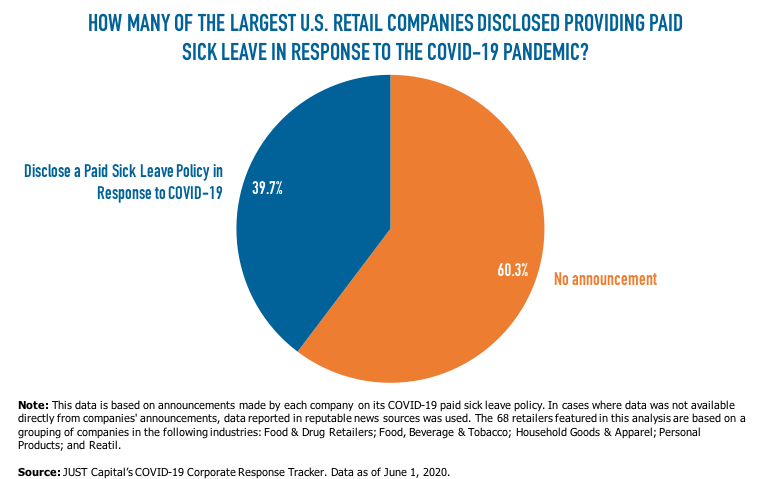
Many companies – like Home Depot – have stepped up to provide this critical protection, but more is urgently needed from corporate leaders, thanks to the lack of federal and state policies and mandates. The United States is one of only three among 22 countries with advanced economies that does not mandate paid sick leave for employees with the flu, which necessitated the introduction of emergency worker protections at the onset of the coronavirus crisis. The legislation included a temporary paid sick leave requirement but exempted companies with 500 or more employees, making many frontline workers reliant on their employers to provide the needed protections.
This lack of a nationwide paid sick leave policy has become increasingly problematic in light of the coronavirus outbreak, which requires quarantine and isolation to contain the spread of the virus. Even though some states and localities have taken it upon themselves to offer employee protection by compelling employers to provide paid sick leave, the majority have not. To date, only 14 states (Arizona, California, Connecticut, Maryland, Massachusetts, Michigan, Nevada, New Jersey, Oregon, Rhode Island, Vermont, and Washington, as well as Colorado and Maine starting next year) and the District of Columbia have paid sick leave laws, putting the responsibility on companies to protect employee’s health and safety.
As businesses continue to reopen and COVID-19 cases rise in parts of the country, it is critical for retail companies to provide paid sick leave to their employees. And although businesses have moved past the initial response phase of the pandemic, 70% of the Americans we’ve surveyed believe that companies should continue to offer at least 14 days of paid sick leave to all employees for at least another year, which signals that Americans are putting workers issues at the forefront of the economic reset.

The pandemic has certainly altered the public perception of acceptable corporate behavior, which is why companies must continue doing right by their employees even beyond this crisis. One way that retailers, whose workers interact with customers every day, can do so is an action the public strongly supports: by instituting permanent paid sick leave policies.
*Note: The 68 retailers featured in this analysis are based on a grouping of companies in the following industries: Food & Drug Retailers; Food, Beverage & Tobacco; Household Goods & Apparel; Personal Products; and Retail.
Aleksandra Radeva is a JUST Capital Research Assistant, focusing on workers and wages, as well as ESG data collection.
