
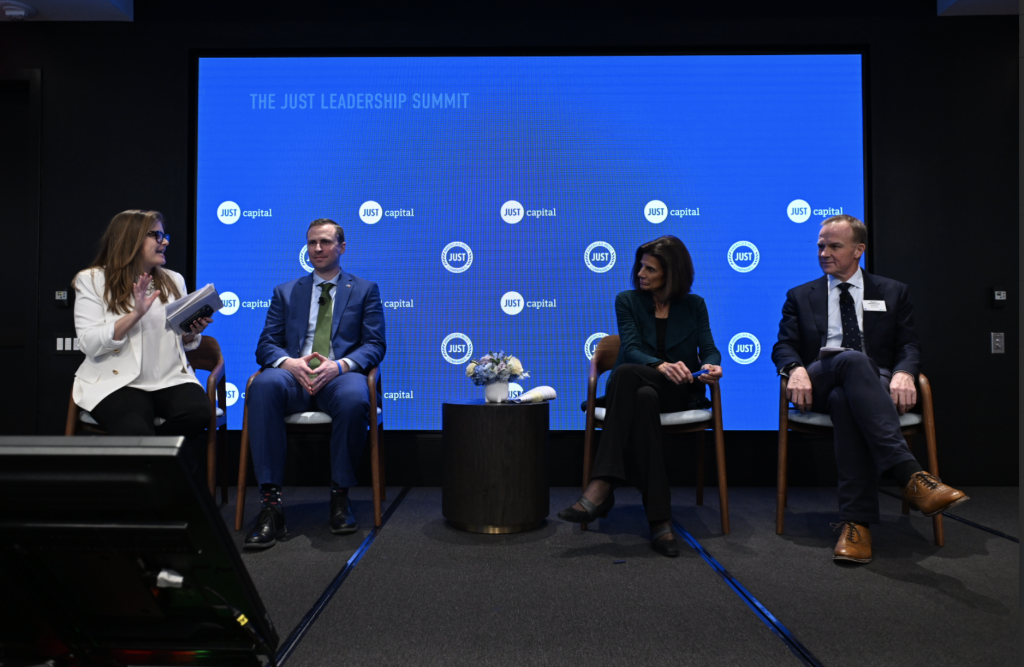
On Monday, February 5, JUST Capital and CNBC unveiled the 2024 JUST 100. The comprehensive list spotlights America’s Most JUST Companies by analyzing how companies comprising the Russell 1000 perform across the 20 Issues the American public believes corporations should prioritize in their business practices.
The event, which took place at the NASDAQ MarketSite and was sponsored by the Stakeholder Impact Foundation and BCG, opened with introductory remarks from JUST Capital CEO Martin Whittaker and a speech from Sushmita Banerjee, Senior Partner and Managing Director at Boston Consulting Group (BCG). Two panel discussions followed. The first featured a macro-level conversation between JUST Capital co-founder Paul Tudor Jones II alongside Hewlett Packard Enterprise (HPE) CEO Antonio Neri, moderated by CNBC’s Andrew Ross Sorkin. JUST Capital’s President Alison Omens then moderated the second panel with HPE Board Chairman Patricia Russo, Avangrid CFO Justin Lagasse and Accenture’s Northeast Market Unit Lead Stuart Henderson where they discussed in further detail what just business behavior actually looks like, what are the challenges and tradeoffs that companies face.
Banerjee set the tone for evening speaking about what she has seen working with some of the most successful companies in the world. “Just companies – in my experience – have leaders who exercise their responsible, ethical muscles every day, versus waiting for their grand moment where they could prove to the world they are doing something great,” she said.
Just actions, Banerjee said, lead to something every business needs to thrive: trust. She highlighted BCG’s Trust Index as an example of how companies can measure and decode trust among stakeholders by focusing on four dimensions: competency, fairness, transparency and resilience.
The companies that top JUST’s rankings prioritize building trust across stakeholders and their business performance benefits. ”When we look at the top 100 companies in JUST’s database, what we see is that they generate 2.5x more value than comparable businesses—their valuation multiples are also up to 47% higher,” Bannerjee said.
Sorkin kicked-off the first panel conversation by prompting Jones to reflect on how far the conversation around stakeholders in American business has come over the last decade.
“If you rewind to 2014, no one would even know what stakeholder business meant,” Jones told the panel. “There was nothing but shareholder governance at that point in time. Of course that was why business was very narrowly focused on nothing but profits. That is one of the reasons why we started JUST Capital.”
Turning to Neri, Sorkin gave the HPE CEO an opportunity to speak on why his company was able to secure the number-one spot in JUST’s 2024 rankings. This year is HPE’s first time at the top of the list after being recognized as a JUST 100 leader every year from 2018 through 2024.
“Our job is to create value and my measure of value is not just shareholder value,” Neri said at JUST’s 2024 Leadership Summit on Monday. “It’s about value for the people who participate in the ecosystem where we deliver business results or other types of outcomes for our customers and employees. Ultimately, stock price is a reflection of how you do things and what you deliver. One of the sayings we have at the company is ‘you have to win the right way.’”
The discussion delved into the correlation between this inclusive approach, business success, and positive societal impact. Additionally, Jones emphasized the need for other companies to adopt a similar mindset, underlining the significance of leadership in today’s dynamic economic and social landscape.
The second panel focused on the strategic investments C-suite leaders have undertaken that have led to top-ranking performances. HPE Board Chairman Patricia Russo, Avangrid CFO Justin Lagasse and Accenture’s Northeast Market Unit Lead Stuart Henderson gave practical examples to illustrate how they approach prioritizing stakeholder value to achieve business success.
“It’s really important that boards have clarity around what a reasonable timeframe is and I want to use an example from Merck,” Russo said. “There was a time when Merk’s TCR was not competitive with other pharma companies, because Merck had decided–as a company committed to science–that they were not going to cut back on R&D in order to get their profits up, they were going to continue to invest in medicines. And today, Merck has the largest cancer drugs on the planet as a result of what they invested in and their stock is now trading at $126 a share. So there is a time-horizon around when value creation for shareholders is the natural follow-on to all the other good things you’re doing for people, customers and communities.”
By aligning their strategies with the values prioritized by all of their stakeholders, these leaders exemplify the potential for businesses to thrive while making meaningful contributions to society. The emphasis on stakeholder value creation showcased the alignment between business success and ethical decision-making, reinforcing that a just approach is morally sound and strategically advantageous in the long run.
When asked what their advice would be to other companies, the panelists each provided their own poignant perspective. Henderson encouraged leaders to steer clear of politics and lean into the business case for transparency, diversity and sustainability, which would deliver good outcomes for shareholders and stakeholders. Lagasse rounded out the panel with a reminder to keep it simple—over-complicating how to empower and enable stakeholders to thrive is where the disconnect comes from. Russo emphasized the importance of focusing on managing human capital just as well as financial capital.
“I don’t get into debates about DEI,” Russo said. “I think the pushback is based on a myth of what it is. If you have a conversation with someone who is rational and intelligent, and you say, ‘Do you believe that different perspectives lead to better discussions?’ the answer will be yes. ‘Do you believe in a work environment where people feel like they can come to work and they can be their best selves because they are part of a team and valued?’ Absolutely. ‘Do you believe we should pay people fairly and the same for the same work?’ Oh, absolutely. Okay, well that’s DEI.”

Sixty-four percent of Americans agree that companies should offer a minimum of 12 weeks of paid parental leave as a way to foster gender equity, and research also suggests that paid parental leave helps companies attract talent, increase retention rates, and improve employee performance.
But the Bureau of Labor Statistics estimates only 23% of workers receive paid family leave, and a mere 9% of the largest U.S. companies currently offer parity of 12 weeks or more to both caregivers, according to a recent JUST Capital report.
Hewlett Packard Enterprise (HPE) emerged as one company that demonstrated a commitment to workers – especially working parents – through its paid parental leave policy. The policy offers 26 weeks of paid parental leave for all parents for any birthing or adoption event with the option to return part time for three years following the leave.
We recently spoke with Samanntha DuBridge, HPE’s Vice President of Global Benefits, Culture, & Engagement, to learn more about how HPE implemented its paid parental leave policy and the resulting impact on workers and the enterprise as a whole. Below are key takeaways from that conversation.
Expanding benefits, inclusively
“When Antonio Neri became CEO, he talked a lot about wanting culture to be a legacy feature for him,” DuBridge said. “He made it very clear early on. He had a strong commitment to what he referred to as a ‘world class culture that was inclusive,’ and that really was built around the lives of our people.”
As the HPE team considered how to address the needs of their workforce, the “star feature” of their cultural vision was enhanced parental leave for all parents. To make the policy as equitable and inclusive as possible, “executives all the way through to our hourly workers” can access all 26 weeks of the paid parental leave benefit. A report from the Urban Institute finds that those most likely to lack access to these paid leave benefits include part-time or hourly workers, people with lower family incomes, workers who are not U.S. citizens, have less formal education, are younger or Hispanic.
Dubridge highlighted HPE’s efforts to ensure that parents received support on their return to work by offering the option to work part time for up to three years. “When we benchmarked and talked to other organizations, part of the feedback we were hearing is, there were a couple of companies that were offering two or three months parental leave, and their employees appreciated it. But then they would come back and they would go from zero to 150 in terms of the amount of work that they had.”
Driving retention, engagement, and loyalty
DuBridge shared that the returns of offering expanded care benefits outweigh the short term costs. (Researchers also recently made the business case for paid leave.)
“There is certainly a reality that in a tighter economy, economic times, some of the programs that companies put in place are harder to hold to, but you’re also making an investment,” DuBridge said. “So you need to determine sort of where you’re making those investments and investing in your people, to me is a really critical component to being a successful company.”
In a JUST Capital interview in 2020, Neri remarked on the early successes of the paid parental program. ”When we looked at the business case, this was the way to retain the best talent,” she said. For us, it was an incredible return on investment. Our attrition rate declined dramatically. And our employee engagement scores improved by 20 points.”.
After conducting research on what policies might most help their employees, HPE’s leaders drafted and announced the plan within several months. To drive buy-in from shareholders and other stakeholders, DuBridge said HPE positioned the policy change as a business opportunity.
“What we found is what we hypothesized initially when we were pitching it, which is that there’s a significant amount of loyalty with people who feel like their company has gone way out of their way during a time that was very important to them,” she said.
HPE was already offering parental leave and had systems in place, “so it was just a matter of being clear about who was eligible and the rules around it and then making some adjustments in the system and training vendors,” DuBridge said. “It wasn’t like we were starting from scratch or that we never were offering anything. If you sort of step back and walk through a process, sometimes it feels a little less daunting than when you first think about the huge variation in the program that you’re going to be offering.”
DuBridge encouraged other companies to start small. “You can always take it step by step. It doesn’t mean that you have to go from offering nothing to what we’ve done at offering six months. People can start to make some progress in that space,” DuBridge said.
For leaders considering proposing or adopting similar policies, she suggests that employers get creative with policies they could offer. “I think there’s a way for employers to offer something that gives people a little more balance and flexibility. Even if it’s just short term, like three months, for example. It could make a significant difference for someone to be able to kind of get their life back in balance.”
Prioritizing family-friendly culture
DuBridge said HPE’s paid parental leave benefits for both primary and secondary caregivers has translated into a happier and more productive workforce.
“It means that you’ve got people that are focused and dedicated. They feel like they’ve had the time that they need to make adjustments so that when they are back at work, they can really be productive,” she said.
The paid leave benefits at HPE have also drummed up significant interest from prospective employees, both those who do plan to have children and those who don’t.
“It’s a signal to all workers that this is a family-friendly environment. It signals to them that we have the right type of culture, which I think has been very helpful for us,” she said.
JUST Capital, in collaboration with partners, established the Corporate Care Network to advance the well-being of workers and demonstrate the long-term value of investment in workers. The Network is committed to driving increased access to care benefits, including paid leave and flexible work policies, and highlighting leaders in the space.
If you’re interested in gaining insights into how to improve on the issues that matter most to the American public, and learning how your company can get involved in the Network, please reach out to JUST Capital impact@justcapital.com.
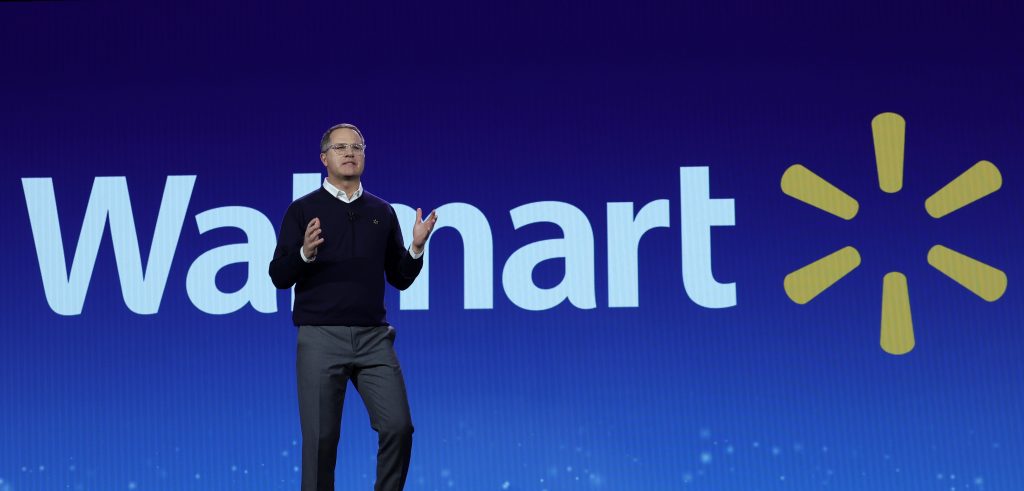
With confidence in the economy still feeling elusive for many people and layoffs dominating the headlines – particularly in the tech and banking sectors – it was a nice surprise to see prominent workforce investments by multiple large employers this week.
After raising starting wages for store employees in 2023, Walmart announced that store managers will see annual base pay and bonuses increases this year. Walmart’s leaders specifically note how vital frontline managers are when it comes to winning over their store employees and customers alike.
Chipotle also announced this week that it is seeking to recruit 19,000 new employees in the spring – a target up about 27% from a year ago. The effort will launch alongside multiple benefits incentivizing financial health and savings for employees – including a match of up to 4% of a worker’s salary through contributions to a worker 401(k) if they make student loan payments. It also dovetails with the company’s focus on prioritizing employee advancement from within – over 90% of restaurant managers at Chipotle were promoted internally, per 2023 data – and helping workers go from hourly to salaried jobs.
Regular followers of JUST will know such moves are very much in keeping with the goals of our Worker Financial Wellness Initiative (of which Chipotle is a founding member) not to mention American public opinion on just business behavior. At a time of increasing pushback on ESG and so-called “woke” business practices, investing in American workers is surely something we can all agree on.
Be well,
Martin

“I’m a full-throated, red-blooded, patriotic, unwoke, capitalist CEO … I’m not woke anything.”
Fortune reports on an MIT study that finds that AI is too expensive to replace most human jobs, at least right now. Meanwhile, employees are increasingly looking to their employers to help in AI upskilling.
Nasdaq reports that Walmart will raise the annual average salary and bonus for its U.S. store managers beginning Feb.1, with the average salary for store managers increasing from $117,000 to $128,000 a year.
Layoffs continue. This week, Macy’s announced they would be eliminating 2300 jobs, Ebay announced they were slashing nearly 9% of their workforce, Microsoft cuts 1,900 jobs in their gaming division only a few weeks after their historic merger with Activision-Blizzard. Media outlet Business Insider is cutting 8% of its newsroom, and the Los Angeles Times is laying off 115 reporters.
Safety issues remain in the news as well. Johnson & Johnson will pay $700 million to settle its talcum-based baby powder investigation, and problems escalate for Boeing as more incidents of faulty aircrafts continue to be reported.
Fortune takes a deep look at the country’s seemingly intractable inflation, revealing that nearly half of price increases over the past year were a result of excess profits–driving 53% of inflation during the second and third quarters of 2023.
The New York Times examines the contrasting approaches companies are taking to the challenges against corporate DEI programs – from reportedly eliminating, hiding, or conversely, doubling down on them.
The US Sustainable Investment Forum explores the impact of the anti-ESG legislation that was drummed up in 2023, finding that much of it was “all talk, no walk.” More inside.
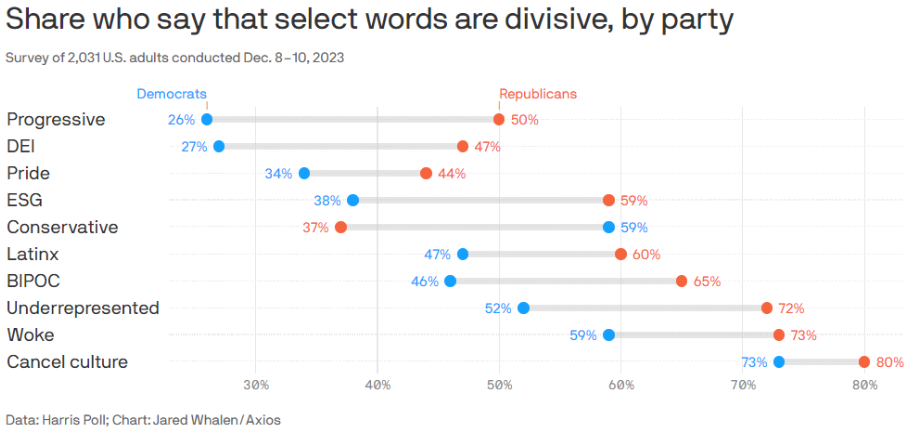
This chart from The Harris Poll and Axios shows that, in the wake of DEI pushback, the level of divisiveness certain terms holds across Republicans and Democrats, and between generations. The point? Companies need to define what DEI is to them, as well as the messaging they have around them, before others do it for them. Learn more here.

Amid the fiery debate around “woke capitalism” and pressure from 13 Republican Attorneys General to Fortune 500 companies following the Supreme Court’s decision on race-based college admissions, some experts worried that CEOs would back down from diversity, equity, and inclusion commitments around things like pay equity.
But in actuality, the opposite is true – at least that’s according to Maria Colacurcio, CEO of Syndio, a software tech company that helps Fortune 500 companies and others advance policies promoting pay equity and career equity, or policies that promote fair pay and fair promotion, respectively. Prior to joining Syndio, Colacurcio co-founded Smartsheet, a workplace management platform, and held leadership roles at Starbucks and Microsoft.
According to Colacurcio – who works with clients like Salesforce, Walmart, American Airlines, and General Mills – many C-suite leaders are pursuing pay equity and fair promotion policies more aggressively than before. In fact, some are “ignoring” the letters from Republican Attorney Generals altogether, she noted.
Business leaders aren’t backing down from the issue of pay equity because it continues to be an issue of interest for employees, which plays into the war for talent, and because of new state-level pay transparency laws, which are forcing companies to disclose salary ranges, she said. In addition, she noted, there’s mounting regulatory pressure – amid growing interest from the the Equal Employment Opportunity Commission (EEOC), whose chair recently declared pay equity a top focus, and the European Union, which passed a directive requiring pay transparency.
In a recent Q+A with JUST Capital, the Syndio CEO discussed the financial case for pay equity, what she learned from serving as a director at Starbucks during the company’s pay equity analysis, how to begin conducting an internal pay equity audit, artificial intelligence, and more.
Editor’s note: The following has been lightly edited for length and clarity.
There’s growing political debate around issues like pay equity. Have you seen a scaling back of CEOs on these issues?
We work with primarily Fortune 2000 companies, and we’re actually seeing quite the opposite. So in the wake of salary transparency laws, and a competitive talent market, which continues even amidst all the news of layoffs, we’re seeing a lot of companies doubling down on this work, including bellwethers across tech like Microsoft, Walmart in retail, Moderna in healthcare, and so on.
I think part of that is because folks realize there’s no going back to the old way. This generation of employees expects companies to pay equitably.

So what I’m hearing is that companies are not scaling back.
Absolutely. I think a lot of folks started immediately presuming that the Supreme Court’s recent ruling would cause a big rollback in diversity practices. And I think what it’s doing is more so bringing to light, what is the right way to measure this? What is the right way to think about analytics and measurement to ensure that we’re tracking in the right way toward our goals? I think that’s the really important part of this conversation that we need to continue to focus on.
Walk me through the bottom-line case for advancing pay equity.
This is about not only attracting the right type of talent, the type of talent that’s going to drive business performance, but also retaining that talent, because retaining your way to some kind of aspirational goal is much more efficient and cost effective than hiring your way to that goal. Gartner research found that 58% of workers would consider switching jobs for more transparency. For Gen Z employees, that number jumps to 70%.
Studies have shown that businesses with more diverse teams and leadership have better financial performance. According to McKinsey & Company, companies in the top quartile for gender diversity were 25% more likely to have above-average profitability than those in the bottom quartile. Additionally, companies with more racial and ethnic diversity were 36% more likely to have above-average profitability.
You served as a director at Starbucks, where you played a role in the company becoming one of the first Fortune 50 companies to go public with its pay equity results. What did you learn from that? I imagine that it’s scary for a company to do that for the first time.
It is scary. And kudos to Starbucks for being so progressive and being first to really take transparency and want to take it to that level, because no one was really doing that at the time. And, you know, they continue to be just an absolute powerhouse in what they’re doing.
That experience – in addition to co-founding Smartsheet [a software as a service offering for collaboration and work management] – was the impetus for Syndio, for figuring out how to solve these issues through technology.
Rob Porcarelli was the VP Assistant General Counsel at Starbucks – he now works as Syndio’s Chief Legal Officer. Through him, I learned how pay equity initiatives worked. They’re usually done through an outside consulting firm or law firm – it’s just very cumbersome, it’s archaic. It’s a long process. And more importantly, the recipient of the information doesn’t learn much, they just get a big stack of paper back, which tells them who to pay and how much, but they don’t learn anything about the root cause of the policies and behaviors that are driving those disparities. So we started talking. It was really this idea of like, how do we fix starting pay?

Why are you passionate about pay equity and career equity on a personal level?
So when I left Smartsheet, I had taken a couple years off to stay at home with my young kids, and I went through a divorce as I was transitioning back into the workforce. The motherhood penalty was a very real thing for me, even with the experience I’d had having worked at Microsoft and having been in tech for a long time. My experience with the motherhood penalty was very much a gut punch.
So I think that, combined with what Rob taught me in the process of going through that effort for Starbucks, is what opened my eyes to the fact that there’s so many different facets to this problem. It’s not just the fact that companies don’t have their fingertips on this data and analysis, it’s that they can’t do analysis quickly and efficiently. It’s about perception. How are folks perceived when they move into that role of motherhood? How does that show up in pay? How do we begin to combat that?
If I was a company contemplating taking on a pay equity or an opportunity analysis, can you walk me through some of the steps involved? Who should I talk to?
So I think the folks to get in the room are your HR team, your CHRO, your head of compensation or whoever’s handling that, and then I think the legal perspective is another really great perspective to have in the room, so your chief legal officer.
Now I’m the CEO of Syndio, so I’m gonna highly recommend our platform – we have clients who are best in class in their industries. I’m also going to recommend some free resources we have like our guide titled “The New Way to Fair Pay,” and our helpful communications playbook.
Then start the conversation: How can we make pay and opportunity equity a strategic business priority?
The best time to address pay equity is now. For every minute you wait, it actually compounds on itself and gets worse. There’s remediation that you’re going to have to pay if you’re living in a place where you have disparities because of gender, race, ethnicity – not to mention the potential brand catastrophic risk, if that comes out, in addition to lawyers, fees, settlement costs, other things like that, if you are entangled in some sort of litigation.
On the opportunity equity side, or ensuring all employees have the same shot at promotion, I think the real selling point here is that without precise metrics, a broad-based DEI effort can spend a lot of time and money trying to fix the wrong thing. There’s tech out there to help companies tackle DEI efficiently, in a really modern and specific way, using analytics to drive the measurement. It will show you where progress has been made and where there’s still opportunities for progress.
Artificial intelligence has generated a lot of interest in how it will impact the way people work. What impact do you see AI having on the work you do?
While AI isn’t new, the sophistication of AI is growing, and that will inevitably have an impact on how HR understands and interacts with information, including workplace equity. Natural language capabilities will empower companies to democratize insights and infuse fairness into decision-making at a larger scale. AI’s speed and efficiency can streamline data preparation for analysis, facilitating faster and more frequent assessments. With caution and understanding around the use of inputs, AI’s predictive capabilities can drive companies from reactive to proactive equity management.
However, these potent tools are built upon existing language and data and can therefore amplify biases ingrained in the status quo. To address this, we must focus on developing generative AI, large language models, and natural language processing tools that actively counteract biases in pay and opportunity-related decisions.
Members of JUST Capital’s Corporate Impact Initiatives engage with Syndio, among other impact partners, to help them navigate workforce investments and deliver on their equity commitments.
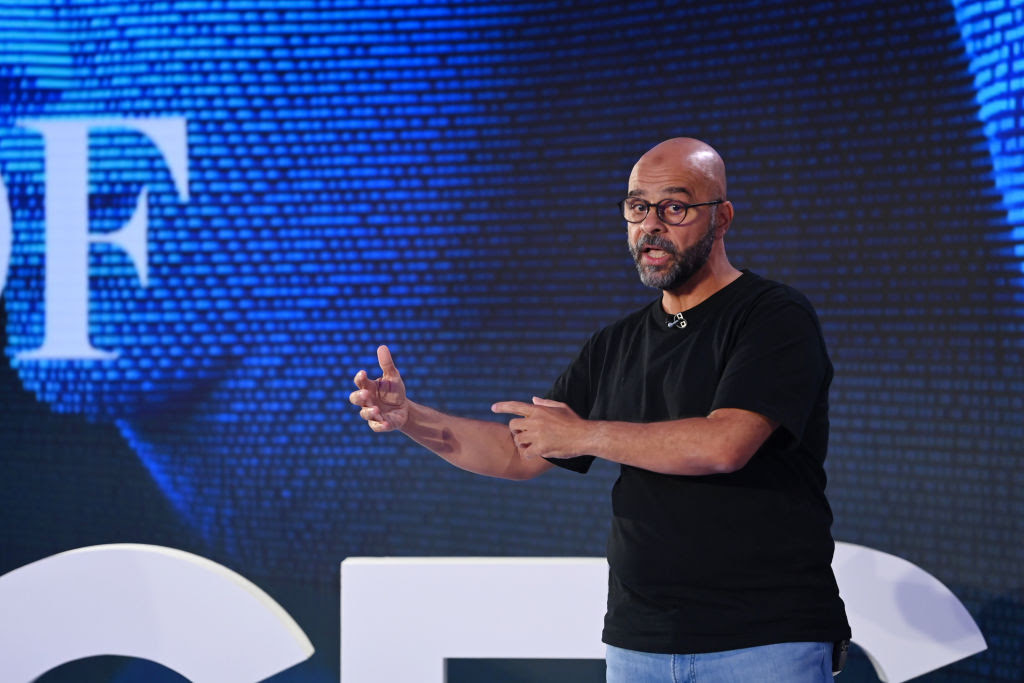
Are you happy? It may seem like an odd question in times like these. But according to Mo Gawdat, former Chief Business Officer at Google X, and renowned happiness expert, it’s a question more and more employers should be asking of their people.
Gawdat’s journey from successful tech executive to AI authority and happiness specialist – motivated by the tragic death of his son Ali – is a fascinating one I’d urge you to check out. He writes prolifically about the science of happiness but also about the practical ways companies and organizations can go from employee satisfaction to employee engagement to employee happiness, and foster “happier, healthier, more ethical, and more innovative workplaces.”
There’s also a strong AI component at work, with Gawdat both signaling the social dangers of unregulated AI, but also seeing AI as a way to advance individual happiness.
A close cousin of happiness – optimism – is getting a lot of attention this week. “The Techno-Optimist Manifesto,” published by Silicon Valley venture capitalist Marc Andreessen, lays out a vision (presumably shared by many tech elites) for a free-market, technology-led path to a better world. For anyone pondering the future of democratic capitalism, and regardless of your ideological persuasions, it’s well worth a read.
One thing to note is that I think he either fundamentally misunderstands or misrepresents ESG and sustainability as being part of “a mass demoralization campaign” that is “anti-technology and anti-life.” That’s certainly not been my experience, nor what I witnessed at the FT Moral Money conference on ESG in New York this week, where business leadership on major societal problems was on full display.
Be well,
Martin
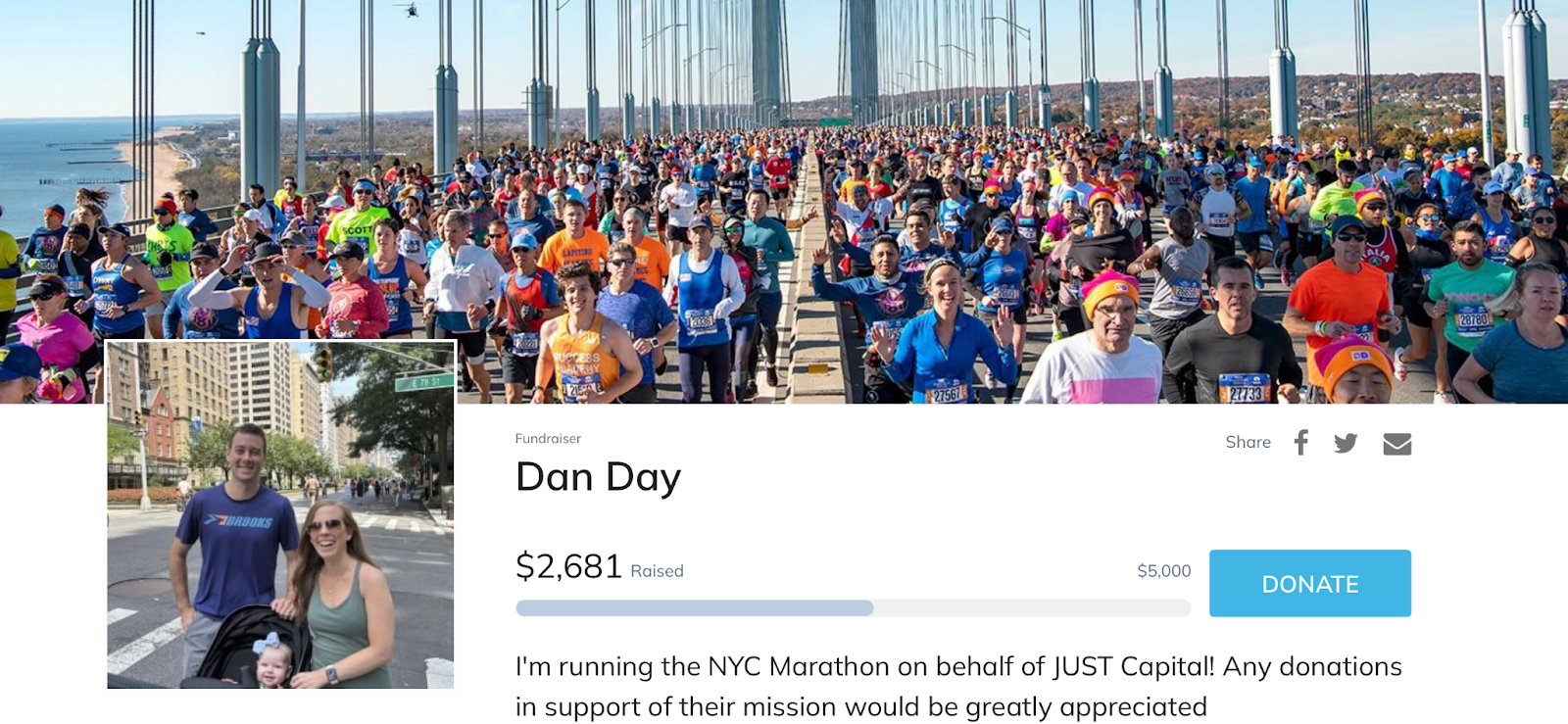
Team JUST Capital is once again running the New York City Marathon! We have five supporters running the marathon on our behalf with the goal of raising $25,000 between them. One of those supporters is Dan Day. You can learn more about why he’s running and donate to his page here. We appreciate your support!
JUST Capital publishes our latest review of quarterly stakeholder performance. In Q3 2023, four of the five stakeholders we track delivered positive performance, and the Workers stakeholder delivered the strongest performance with a long-short spread of 7.24%. Over the longer term – from January 2018 to September 2023 – leading companies outperformed their lower-ranked peers by 56.5% as measured by JUST Overall Score.
JUST Capital Chief Information Officer Robert Marsh pens a thought-provoking post about Just AI, our latest initiative to help companies implement AI in ways that reflect Americans’ values around fairness, privacy, inclusivity, and shared prosperity.

“The idea of a clean energy transition is woefully insufficient. We have a global emergency …. The deck is stacked against a successful outcome of COP28 … We need to remove the political obstacles and opposition being put in place by the fossil fuel companies.”
“Competition today and successful performance today requires business to perform well across a range of environmental, social, and governance related issues. These issues are material to business performance, they are related to what workforces, customers, and shareholders think about value and value creation. If the market doesn’t believe that you’re a leader on DEI or climate, or whatever issue is most important to them, you’re not going to get the benefit of that. It’s a combination of action and communication. You do need both and one can’t outstrip the other.”
Researchers at Stanford, MIT, and Princeton release an assessment of AI developers’ transparency practices giving them a failing mean score of 37 out of 100. All of the models contained major disclosure issues, leaving critics asking questions about the merits of self-regulation. Axios has the story.
Pew Research Center has a new report out on data privacy and AI. Of Americans Pew polled, 70% say they do not trust companies to make responsible decisions about how they’ll use AI and 81% believe the data collected by companies will not be used in ways originally intended.
Venture capitalist Marc Andreessen, publishes a “Techno-Optimist Manifesto” arguing that the risk of slowing AI outweighs the risk of speedy innovation. Several outlets including The New York Times, Axios, and VentureBeat discuss how his pronouncement of “enemies” to progress including “trust and safety,” “tech ethics,” “and “stakeholder capitalism” hurt his case.
A new study on healthcare and AI led by the Stanford School of Medicine found that while chatbots could help alleviate busywork for healthcare providers, they are perpetuating racist debunked medical theories.
CNBC reports that Ford is the first automaker to reach a tentative agreement with the UAW, which includes a 25% pay increase over the terms of the agreement bringing the top wage to more than $40 an hour and an increase of 68% for starting wages to over $28 an hour. The deal also features cost-of-living wage adjustments, and major gains on pensions and job security.
New York Times columnist David Leonhardt and author of the new book “Ours Was The Shining Future,” explores the ways progress for American workers has drastically slowed since the 1980s and how the idea of the American dream can be revived. One key takeaway he took from his research was the strong role labor unions have played in combating inequality.
The Financial Times highlights the difficulties companies face communicating about the Israel-Hamas War. Some have been criticized for “picking a side” while others have been called out for remaining silent. Many have made the emotional well-being of their workforce the top priority. ABC News discusses how statements from Starbucks, McDonald’s, and Google have sparked controversy.
The Washington Post reports Meta faces a lawsuit from 41 states and DC, making the case that the tech giant is harming children by programming addictive features into Instagram and Facebook. The legal action stems from a 2021 investigation on young people and mental health.
Millions of consumers may be losing access to their local pharmacy as a large number of CVS, Rite Aid, and Walgreens locations plan to close. Health experts worry the shift could create healthcare deserts in underserved, low-income neighborhoods. The Washington Post has the story.
Investment News shares that asset managers are ignoring anti-ESG rhetoric and pushing forward with sustainable strategies. A new report from Cerulli Associates found that no one surveyed plans on ending ESG considerations although they were more cautious around messaging.
Harvard Business Review focuses on the unsung heroes of sustainability at companies, middle management. While CEOs can set the tone, mid-level leaders are the ones propelling initiatives forward, exploring customer demand, and embedding sustainability into core processes.
Axios showcases new data from Third Way and the U.S. Bureau of Labor Statistics, underlining the likelihood job losses in the tech sector will be at the expense of women. Two thirds of the roles at risk are currently held by women without college degrees.
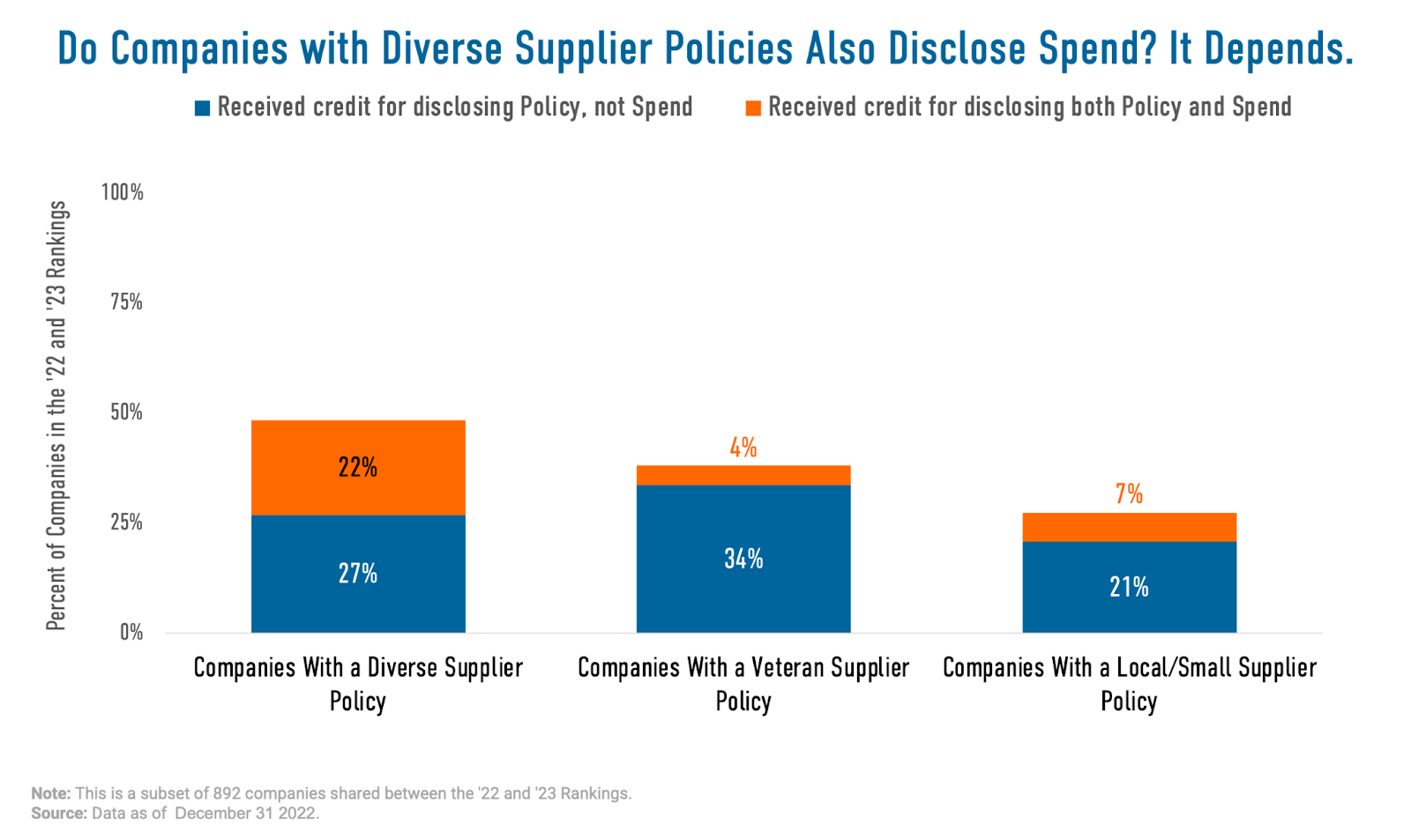
In our latest analysis of corporate supplier diversity data, we found that having a policy did not necessarily translate into a clear and actionable spend disclosure. Of the 892 companies in our Rankings in both 2022 and 2023: 49% had a general supplier diversity policy, but just 22% disclosed spend; 38% had a veteran supplier policy, but just 4% disclosed spend; and 28% had a local business supplier policy, but only 7% disclosed spend.

AI’s importance in the business world is quickly growing – especially when it comes to workers.
Just this week, Google unveiled an AI tool for healthcare workers and doctors. Walmart said it expects 65% of its stores to be serviced by AI within the next five years. New reports show that while some workers are excited for the technology’s ability to help them with tasks, others, especially in customer service, fear imminent job loss. And as more companies adopt generative AI, a new Deloitte survey found that development of ethical standards hasn’t kept pace. While 74% of respondents say their companies are testing generative AI, 56% don’t know or are unsure if their organizations have ethical standards guiding its use.
Leaders of the country’s most historic companies say the technology will revolutionize their workforces and operations – case in point, TIAA, the retirement and financial services company founded by Andrew Carnegie over 100 years ago and now with $1.3 trillion in assets under management.
This week, I sat down with TIAA Chief Information and Client Services Officer Sastry Durvasula to discuss how artificial intelligence will impact financial services in a recent episode of our Linkedin Live series, JUST Better Business. Read the key takeaways from our conversation here.
AI, he said, is impacting “every segment” of TIAA’s portfolio and all of the stakeholders it serves – from employees to consumers to communities. He underscored how the technology will help TIAA on its mission to “retire inequality.” TIAA’s leadership is something other executives will want to take a much closer look at.
Be well,
Martin
Team JUST Capital is once again running the New York City Marathon! We have five supporters running the marathon on our behalf with the goal of raising $25,000. Your support would mean so much to us and them! Please help us cross the finish line with a donation toward building an economy that works for all Americans.
Bloomberg Law features a JUST Capital survey on the importance of corporate transparency when it comes to the environment in a story on California’s new climate disclosure law. Of the Americans we polled, 94% said it is important for companies to be transparent about their environmental impact, and 97% of Democrats and 74% of Republicans supported federal requirements on climate disclosures. .
JUST Capital interviews TIAA Chief Information and Client Services Officer Sastry Durvasula on how the company is approaching AI. The C-suite leader detailed how AI is impacting its clients, employees, and the communities it serves.

“Women make 30% less in retirement income and minorities, especially Black and Hispanic Americans, have various issues when it comes to retirement savings. So if you’re solving for these types of complex problems that are societal, we need a workforce that actually has a level of diversity in designing solutions. We want to retire inequality … I’m quite optimistic about the future.”
AI’s role in election disinformation comes under further scrutiny. Axios reports on new initiatives researchers and activists are forming to help social media platforms curb AI-generated election disinformation and users better spot it. The Washington Post finds that, when asked, Amazon’s Alexa claims the 2020 election was stolen, highlighting how widespread disinformation may become in the lead-up to the 2024 presidential race.
The New York Times unpacks an increase of videos containing AIgenerated voices as misinformation peddlers adopt new AI tools to produce content for TikTok and other platforms.
PwC looks into the relationship between emerging AI technologies and trust. In a preview of its 2023 Emerging Technology Survey, the firm finds that 93% of executives agree that emerging technologies are helping build trust with stakeholders, yet fewer than half of them are taking steps – such as building control frameworks and training staff – to actually harness the trust value of new tech.
Quartz reports on how Walmart workers use AI to more efficiently restock shelves and answer customers’ questions. The company estimates that in the next five years or so, 65% of its stores will be serviced by automation.
As details from the Hamas terrorist attack in Israel continue to emerge, Insider and Wired delve into the changes Elon Musk made to X (formerly Twitter) that have resulted in a flood of misinformation.
Fortune asks a range of communication experts to provide guidance to corporate leaders on how to talk about the war in the workplace. Fortune’s RaceAhead newsletter spotlights actions Uber took in response to escalating violence between Israel and Palestine in 2021 that provide a framework for companies today, including opening the floor to employees to share their concerns, holding listening sessions, and sourcing guidance from external experts.
Axios covers new polling from the Public Affairs Council signaling that there is less support for companies taking a public stance on hot button political issues like abortion, while also demonstrating broad bipartisan support for corporate involvement in environmental issues as well as working to end gender and racial discrimination.
The Wall Street Journal unpacks similar insights from a new Gallup/Bentley University survey exploring that Americans are less likely now than they were in 2022 to say businesses should take a public stance on current events. The findings also underscore that respondents want to see companies make a positive impact not with public statements, but by paying fair wages, providing good benefits, and addressing climate change – all findings that echo our own survey research.
The New York Times asks amid intensifying labor disputes if employers have underestimated the resolve of the post-pandemic workforce and rising public sentiment for collective bargaining while using an outdated playbook for negotiations.
Claudia Goldin wins a Nobel Prize in Economics for her work to better understand women’s role in the workforce throughout history. Still today, women make 80 cents to every dollar a man earns. “We see a residue of history around us,” she said, adding “we’re never going to have gender equality until we also have couple equity.” Fortune’s CHRO Daily reports that more than half of workers with children are seeking out a new job for better childcare benefits.
New regulations from the European Union’s Corporate Sustainability Reporting Directive and the U.S. Securities and Exchange Commission will require corporations to work with a third party to sign off on ESG-related disclosures. According to a KPMG survey, 75% of companies believe they won’t be able to meet ESG assurance standards. GreenBiz has the story. The Financial Times digs into the current state of ESG, positing things might not be as bad as they seem.
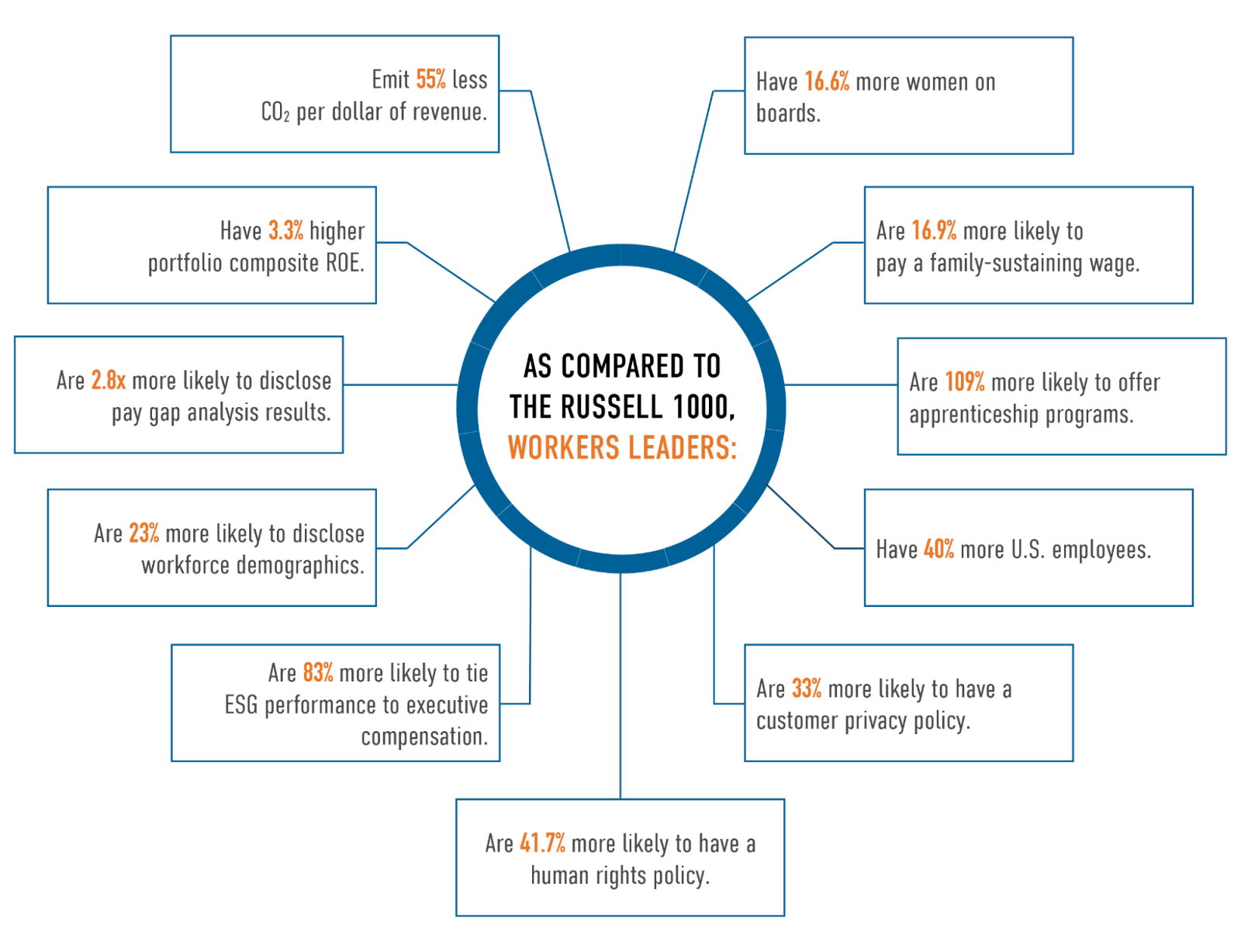
JUST’s latest index concept – Workers & Environment Leaders – which tracks the top 20% of companies that perform best across all the Environment- and Worker-related Issues in our 2023 Ranking – outperforms the Russell 1000 by 20%. The companies in this index also outperform their peers on many of the issues we track, including being 16.9% more likely to pay a family-sustaining wage and emitting 55% less CO2 per dollar of revenue.
