
The past year has put workers squarely in the spotlight for corporate America. Whether it was return-to-office plans, strikes, or the impacts of AI, corporate leaders have needed to turn their attention to their workforce in 2023. JUST Capital’s own polling reflects that, with worker issues once again topping the American public’s priorities when it comes to just business behavior.
As the year winds down, we turned to the leader on the Workers stakeholder in our 2023 Rankings – Bank of America – for insight into its workforce investment strategy, which includes the industry-leading move to recently raise its minimum wage.
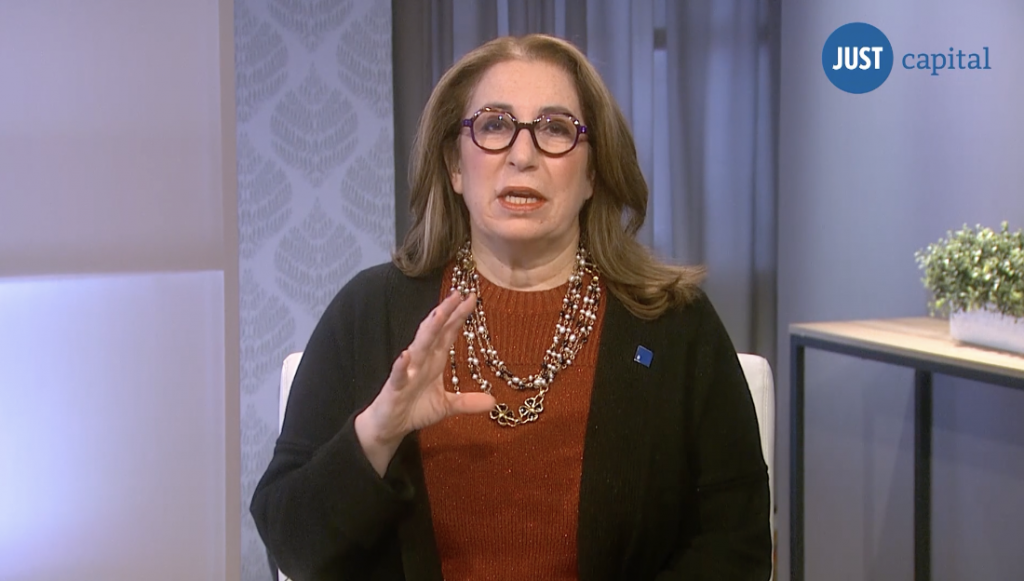
In a recent episode of our ongoing LinkedIn Live interview series, “JUST Better Business,” Bank of America Chief Human Resources Officer Sheri Bronstein spoke with JUST Capital CEO Martin Whittaker about how the company approaches its people strategy and why it’s been a boon for business. To Bank of America, the number-one overall company in our 2023 Rankings, prioritizing workers is part of operating sustainably, Bronstein said. Watch the full interview below and read on for our key takeaways from the conversation.
Bronstein emphasized that data is the foundation for all of Bank of America’s HR decisions, from raising wages to expanding mental health support to investing in diversity, equity, and inclusion (DEI) practices. “I have an incredible data and analytics team that really sits behind all of our HR processes and services and products and helps us analyze and make sure that we’re using every dollar of that investment in the best way possible,” she said.
When it comes to DEI, Bank of America has disclosed its EEO-1 data since 2013 and uses it to guide practices and policies. “Here in the U.S., we really look like the communities and the customers that we serve,” she said of the bank’s 18% Hispanic and 13% Black employees. Data also grounds its work to advance women’s leadership in the company. Women make up over 50% of employees at Bank of America, with women comprising almost 40% of its management team and over 40% of those at the top levels of the company, she said. Bronstein also pointed to Bank of America’s own research that found that S&P 500 companies with at least 25% women executives saw higher returns on equity than the overall index.
Data from employee feedback also plays a role, Bronstein said using the company’s investments in mental health resources and support as another example. Following company-wide surveys conducted a few years ago, Bank of America began enhancing its benefits around mental health care and working to break down stigmas around mental health using the voice and influence of its leadership. It’s something that Bronstein said she’s grateful the company prioritized before the pandemic hit, because of the input of its employees.
While Bank of America employs over 210,000 individuals, Bronstein often considers the impact of the company’s decisions beyond its immediate workforce. “We help our customers live their financial lives every day and so it’s so important to us that our teammates, especially as you mentioned those in the lower compensation categories, that they have more than a living wage. We want them to make sure that they feel comfortable and that they can take care of their families,” she said of the company’s decision to raise its minimum wage to $25 per hour by 2025.
Since 2010, Bank of America has raised its minimum wage by 121%, and for over a decade hasn’t raised healthcare costs for employees earning under $50,000 per year. It’s employees’ families that motivate Bank of America to do right by their workers, Bronstein said.
“Every day we come in and we think about our 210,000 plus employees, but we also take care of their families. It’s almost a million people that I have the honor every day to think about – ‘how do we help them live their personal lives, their professional lives?’” she said.
This mindset has also played a role in the company’s DEI work. As part of Bank of America’s $1.25 billion commitment to advancing racial equity, the company has invested in low-moderate income communities in the 90 markets it operates in across the country. In partnership with nonprofits and Bank of America’s market leadership, the company ensures that whether it’s investing in private equity, jobs programs, or health care systems, that these investments serve the needs of low-moderate income communities and embrace diversity, Bronstein said.
For Bank of America, investing in its workforce has led to higher employee satisfaction and lower turnover, Bronstein said, noting that she believes 2023 will see record-low turnover for the company. Part of that stems from its commitment to providing training and re-skilling programs that promote long-term growth at the company. Bank of America tries to bring in talent at the entry level, Bronstein said, and help them build skills and learn over time.
The company does this through Pathways – its community hiring and development program – The Academy – its internal learning and development platform – and its college recruiting process. “Helping people build skills and be able to choose many different careers over the course of a lifetime, that is something that we think has really helped us continue to invest in women and our diverse talent in particular, but all of our employees,” she said.
Bronstein sees Bank of America as a company that’s always valued its teammates, a mindset that has become increasingly valuable through the labor market shifts of the last few years and will surely continue to be through 2023 and beyond.
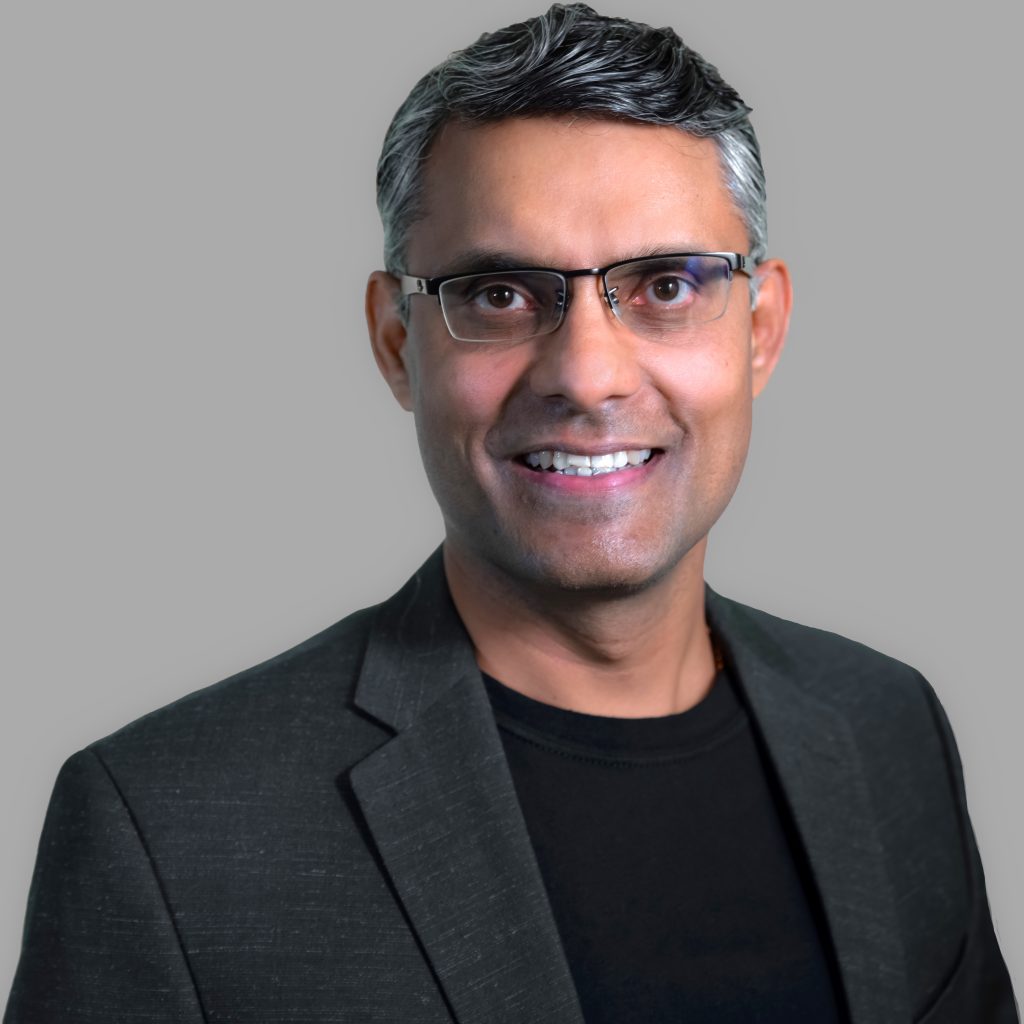
Artificial intelligence is influencing “every segment” of TIAA’s portfolio, according to the company’s chief information and client services officer, Sastry Durvasula. “I think AI will have a profound impact on our business.”
Considering the context, that’s no small statement. Durvasula is responsible for the global technology and client services operations at one of America’s largest retirement and investment solutions providers. TIAA, founded over 100 years ago by Andrew Carnegie, currently has $1.3 trillion in assets under management.
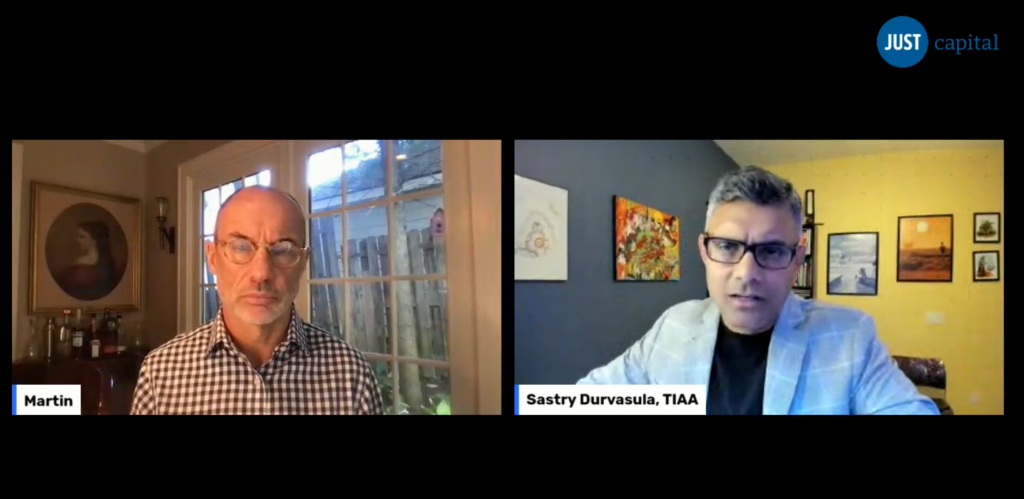
In a recent episode of our ongoing LinkedIn Live interview series, “JUST Better Business,” Durvasula spoke with JUST Capital CEO Martin Whittaker about AI’s “spectrum of impact,” which includes everything from changing research operations to better protecting customers to helping create new products and services. In the wide-ranging interview, the executive explained why he’s optimistic about the technology’s potential to help customers, employees, and the economy more broadly.
The TIAA leader explained that the company is deploying AI for customers in numerous, different ways. For younger workers who are accumulating wealth, it’s about convincing them to invest and grow their retirement funds. From a marketing and a product-offerings perspective, he explained, it’s about deploying AI to improve their retirement accumulation experience – from personalizing financial products, to providing better insights, to making customer experiences easier to navigate, he said.
For retirees who are “de-cummulating” their wealth, he said, AI’s impact is both about offering more personalized services and products, but also about consumer protection and privacy. “Retirees are the most vulnerable population from a fraud cyber point of view. So we have been deploying AI solutions to protect them from cyber fraud and attacks,” Durvasula said.
Artificial intelligence will offer incredible opportunities to boost efficiency for workers in financial services, Durvasula told Whittaker.
“We need to create insights and we have a gazillion financial documents that we need to surf through to get those insights. There’s a lot of operational inefficiencies that do exist in the current financial services industry. I think AI will give us a big lift from an operational efficiency standpoint,” he said.
By linking the company’s data and AI policies in a coherent strategy, TIAA can help create new products to help support the company’s goal of being the leader in lifetime retirement solutions, he said.
In addition to helping TIAA achieve more with less time and energy, AI will provide an increasing amount of opportunities for employees to upskill and advance.
“I think anybody who has business acumen or technical acumen or both can actually, you know, be part of this revolution,” Durvasula said.
“We’ve created different what we call guilds. Obviously the most prominent one is the data and AI guild, the next one actually, that’s quite popular is Cyber. And we’ve given access to the entire company to these guilds,” he explained. “So say I have a call center employee servicing representative who deals with fraud transactions. If she wants to join the AI guild to learn how AI will be employed in fraud solutions, she’s able to join and, and she can go through the training which is structural training with access to various industry certifications as well.”
Of course, the potential for unjust business behavior is big, the TIAA acknowledged. “There is a lot of potential damage,” he said, citing bias and misinformation. But the executive explained that the company is taking a proactive approach to mitigating unwanted outcomes.
“We have taken a proactive stance on this. We released our first internal responsible AI policy. And we are beginning to codify that as we implement some of these new cases, both client facing as well as colleague facing,” he said.
But Durvasula sees AI’s impact being more positive, especially in reducing economic inequality and increasing diversity.
“Women make 30% less in retirement income and minorities, especially Black and Hispanic Americans, have various issues when it comes to retirement savings,” he said. “So if you’re solving for these types of complex problems that are societal, we need a workforce that actually has a level of diversity in designing solutions.”
Durvasula explained TIAA is partnering with a number of universities, nonprofits, and groups to boost diversity in its workforce, including initiatives with the Society of Hispanic Professional Engineers, the Society of Women Engineers, the Blacks In Technology Foundation and others.
“We want to retire inequality,” the TIAA exec said. “It is important to have a positive impact. I’m quite optimistic about the future.”
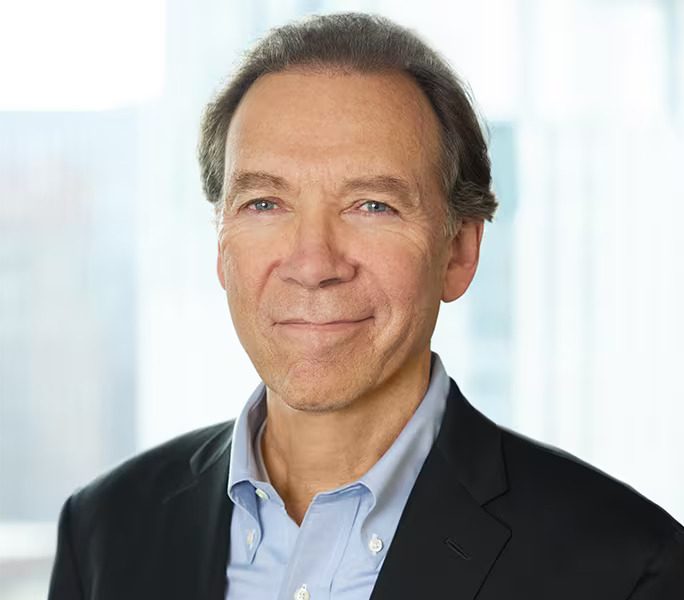
When Dan Hesse became Sprint’s President and CEO in 2007, the company’s business plan had it filing for bankruptcy in six months. Over his seven years in the position, however, things took a turn. Sprint went “from hugely negative total shareholder return to the best total shareholder return of any company in the S&P 500.” The key to the company’s success, he said, came down to investing in its culture.
Hesse – now the Chairman of Akamai Technologies and board member of PNC – recently joined a group of executives from JUST Capital’s Partners and Corporate Supporters for a JUST Insights discussion on how best to build a purpose-driven culture that will, ultimately, set up a business for long-term growth. A JUST Capital board member since 2016, he has decades of leadership experience having spent over 20 years at AT&T and serving as the company’s President and CEO before joining Sprint.
Hesse has always seen purpose-driven culture and leadership as important to business throughout his career, but he recognizes that it’s now elevated and in the spotlight for C-suite leaders. “If you serve all stakeholders, your reputation improves, your customer base improves, employee productivity and retention improve,” he said. “People talk about shareholder capitalism vs. stakeholder capitalism. But the CEOs who think in stakeholder terms achieve the highest shareholder results.”
Hesse joined Sprint nearly three years after the company merged with Nextel. He recalled meeting with people who would, right away, tell him whether they were legacy Sprint or Nextel employees. To build a unified, Sprint-Nextel culture, he knew that he would have to take responsibility as CEO for creating a sense of unity. Hesse asked for the company’s input on ten elements that would make up the company’s culture.
“One of the ten…is going to be accountability. And I as CEO am accountable for culture,” he recalled saying. “I am going to have to walk the talk as CEO or we’re going to have the wrong culture.”
Hesse’s accountability for Sprint’s culture led to one that contained three elements – it was first focused on employees, second on customers, and third on a greater sense of purpose leveraging Sprint’s business model for positive impact. His role in advancing this culture became synonymous with his leadership. Hesse noted that when he retired from Sprint, employees had handouts with the company’s culture elements on them that they asked him to sign. To him, that signaled that culture was the “MVP” of the company’s transformation under his leadership.
“If a CEO is not on board, it’s going to be very, very difficult,” he said. Everybody’s always looking to him or her for all their signals, Hesse noted, emphasizing the tone-setting that comes from the top. When a CEO is not bought into this work, it’s not going to have much impact, he said. “Whether you’re the Chief People Officer or the Chief Sustainability Officer or what have you, you have to convince your CEO to focus on it.”
Once a company has the CEO’s buy-in, leadership needs to treat culture in the same way it would other business priorities, Hesse explained. He’d often hear from corporate leaders that their companies have really strong cultures, but they couldn’t define it. To Hesse, fixing a company’s culture deficit starts with measurement.
“You have to be able to measure it, just like your financial performance, your customer metrics,” he said. At Sprint, employees would complete a survey every quarter rating the company on each of the culture elements they’d previously identified. It was an easy way to gauge performance, Hesse noted, and also to signal that this work was important to the company.
A key way to solidify this importance is to tie it to how time and money is spent in an organization, Hesse added. “People will work on what you spend time on and what you pay for,” he said. A major aspect of Sprint’s culture was customer experience and Hesse noted that in a recurring meeting with his direct reports, customer experience was the first item on the agenda “no matter what.” That, in turn, helped colleagues in levels below theirs prioritize it.
When it comes to pay, Hesse emphasized that getting “cultural and purpose measurements” included at the senior levels is key. At Sprint, he shared that all employees had pay tied to those metrics. The percentages varied – for frontline employees it was a bonus of around $10,000 and for Hesse it was 90% of his compensation. “Everybody has to be involved…in our case, 60,000 employees needed to feel bought into these because if it’s just the job of the Chief Human Resources Officer or just the job of the sustainability office, nothing’s going to happen,” he said.
He noted that this has come up in his board service at Akamai as well, and the company now has metrics related to sustainability and DEI tied to senior leaders’ pay. “Monetarily, they’re not going to make or break someone. But if it’s in the plan, it says this is really important. It sends a message and you’ll get the focus of the entire organization,” Hesse said.
During Hesse’s time as Sprint CEO, the board could see the clear benefit to investing in culture when it came to brand building, he said. Sprint’s focus on culture led to it winning an award from the Reputation Institute as the most improved company in the world, among 1,500 global companies the firm rates. The 2014 American Customer Satisfaction Index recognized Sprint as the most improved U.S. company in customer satisfaction across all industries it evaluates over the previous six years. And that had a clear impact on share price, with Sprint coming in at number one for shareholder return among the S&P 500 in his last two calendar years as CEO, he said.
Hesse recognized that there’s still challenges to getting shareholders on board with this approach. “Shareholders don’t always know what’s in their best interests,” he said. But turning to the long term, instead of quarterly profits, has made the difference in his career.
This conversation occurred at a JUST Insights virtual event – a series of exclusive conversations hosted for JUST Capital’s Partners and Corporate Supporters that feature case studies, unique research and analysis, and engaging, private discussions on critical stakeholder issues with senior leaders from JUST and across our network. The series is just one of a number of benefits available to our Partners and Corporate Supporters. Learn more on how to join this group here or reach out to us at corpengage@justcapital.com.
The events of the last few years — from the pandemic to the overturn of Roe v. Wade — have eroded the lines between corporate and public affairs, and CEOs are feeling the pressure. They’re being asked by internal and external stakeholders to weigh in and take action on social and political issues, from LGBTQ rights to climate change.
At the same time, they are hearing from others who believe corporate social responsibility has gone too far, a topic JUST recently discussed with Edelman’s U.S. Head of Social Impact and Sustainability, and who think it’s distracting them from the business of making money. With the 2024 presidential run right around the corner, CEOs aren’t likely to find reprieve.
JUST Capital is continuing our occasional interviews with experts on hot-button, in-the-news topics that CEOs and market leaders must navigate.
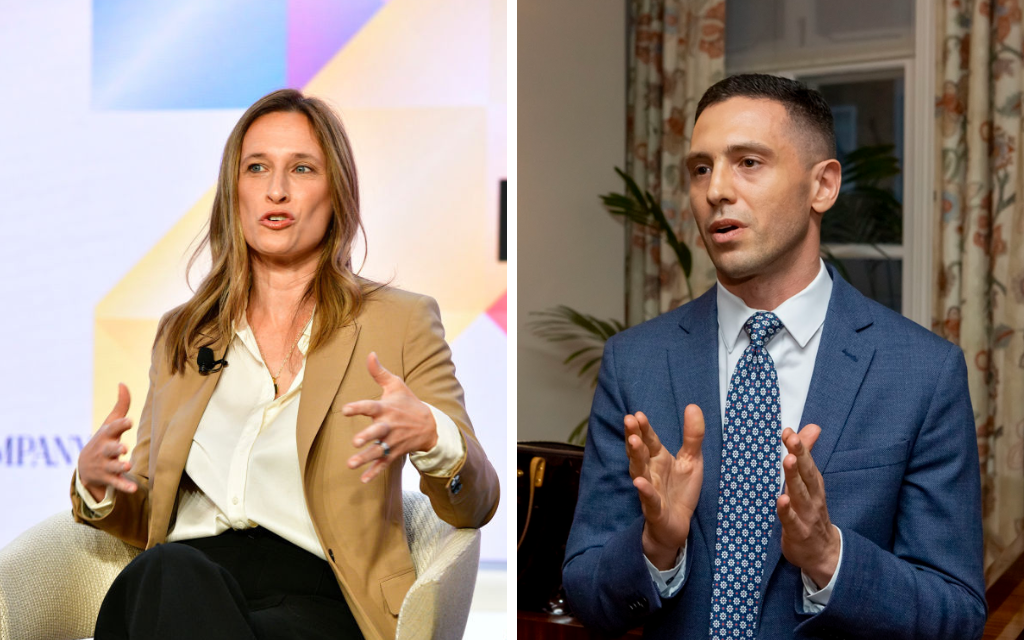
So to get a sense of how business leaders can navigate the debate around America’s democratic values, we turned to Rhett Buttle, Founder and Principal of Public Private Strategies, and Daniella Ballou-Aares, Founder and CEO of the Leadership Now Project. Both Buttle and Ballou-Aares’ organizations are founding partners of the Business and Democracy Initiative, a coalition that works to mobilize business to help restore trust in democratic institutions, recognizing the close ties between healthy democracies and healthy economies.
In his annual letter to shareholders, JPMorgan CEO Jamie Dimon reiterated that protecting democracy should be a priority across the political aisle. And JUST’s polling of the American public reinforces that.
We found that 72% of Americans say corporate America has a responsibility to protect the democratic process by promoting free and fair elections. Whether this sizable majority is in agreement with what exactly this means is not clear, however, regardless of politics we have also found that 81% of Americans think it is very or somewhat important for companies to disclose their political donations and lobbying efforts.
In other words, be more transparent about who and what you’re supporting with your corporate dollars. Notwithstanding, recent JUST analysis finds that only 31% of Russell 1000 companies are disclosing spending on political contributions and lobbying.
Buttle and Ballou-Aares explained the importance CEOs play in making change and why business leaders should continue to take meaningful action on issues that are important to them.
As trust in the government, media, and other institutions remains low worldwide, business leaders have emerged as relatively more trusted to be transparent and put the interests of their stakeholders first.
The 2022 Edelman Trust Barometer showed that business is the world’s most trusted institution. And the firm’s 2023 report found that business was the only institution seen as competent and ethical.
“People don’t feel that the government is responsive to their interests and needs and are looking for leadership elsewhere,” Buttle and Ballou-Aares said. “That’s part of why CEOs are in the hot seat.”
CEOs can exercise their power without getting deep into political quarrels, the experts explained. We heard similar sentiments from the American public in our recent focus groups. The public wants to see companies take action in a way that’s above the partisan fray, and relates to the core interests of their business and stakeholders.
“The reality is that companies have a lot of power politically, including to undertake efforts that make the political system more representative and accountable,” they said.
Buttle and Ballou-Aares pointed to recent historical examples of how CEOs have spoken out on issues that are important to their constituents, like the broad coalition of business leaders last year advocating for Electoral Count Act reforms that passed with bipartisan support.
“Business leaders have a legacy of supporting critical and lasting change. The trouble is that the conversation around this topic has been warped,” Buttle and Ballou-Aares said.
There is evidence that some business leaders are resorting to “greenhushing,” the act of refraining from speaking publicly on climate policy (and anything that could broadly be called “ESG”), in response to business getting sucked into polarizing political battles. And this, ultimately, could be more harmful than helpful to their relationships with their stakeholders, Edelman’s U.S. Head of Social Impact and Sustainability Alex Heath recently told JUST.
But Buttle and Ballou-Aares said CEOs should weigh the risks of speaking up with the costs of staying silent.
“Freedom of speech is fundamental to our democracy and our economic stability. Rather than standing down in the face of retaliation, companies have a vested interest in working together to uphold our democratic values,” they said. Ballou-Aares pointed to recent comments Disney CEO Bob Iger made at a shareholder meeting to illustrate her point.
Media bias, cancel culture, and managing different stakeholders make speaking out a difficult decision for CEOs. But Buttle and Ballou-Aares underscored that the American public wants to hear from its business leaders. “Business leaders should be confident that their voices matter and that the people they interact with – from employees to customers to communities – want to hear from them on critical issues.”
Buttle and Ballou-Aares draw explicit connections between democratic stability and economic strength, “Unstable governments are considered likely to interfere in free markets and to be generally unsafe global investments. Healthy democracies, meanwhile, are known to enable strong business environments.” This is true regardless of partisan politics, and it’s why business leaders must be ready to act on to protect our democracy, the cornerstone of a dynamic and inclusive economy.
Learn more about the Business and Democracy Initiative and explore additional steps the Leadership Now Project recommends business leaders take to protect democracy.
Note: Rhett Buttle and Daniella Ballou-Aares answered questions for this interview in writing and and both on behalf of the Business & Democracy Initiative.
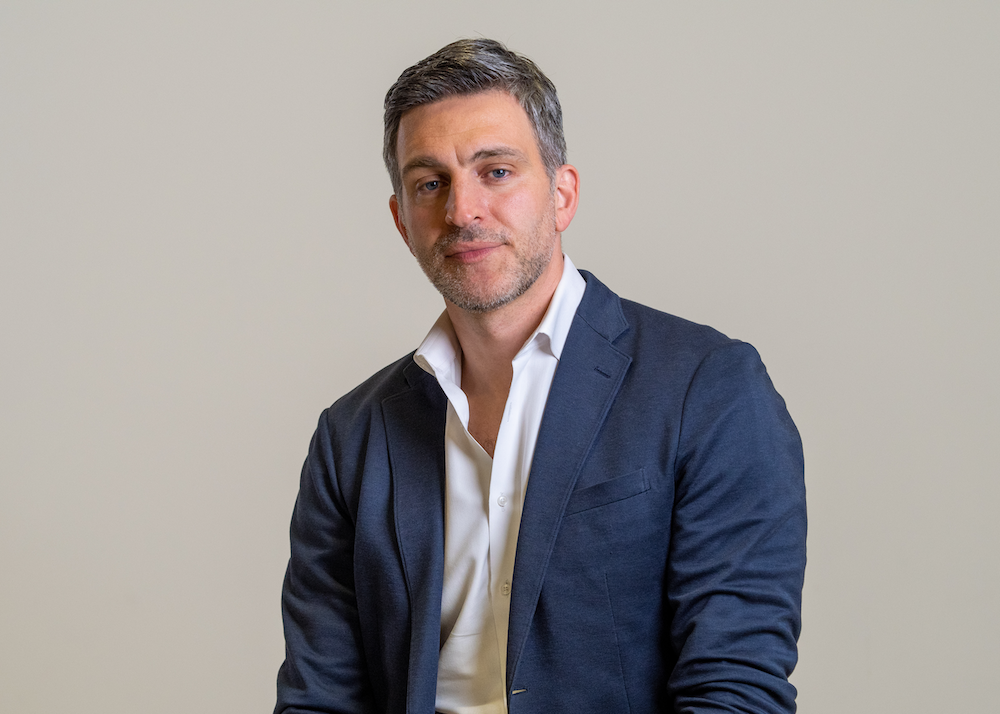
Alex Heath, Edelman’s U.S. Head of Social Impact & Sustainability, had a conversation with one of his firm’s clients recently that captured what CEOs and their leadership teams are struggling with across the country. And while he couldn’t share specific details of that discussion due to client privacy, its basics are familiar with anyone who has been even casually following business news for the past couple years.
This client personally cared about a social issue affecting the United States, and had to decide if they would speak to it on behalf of the company. After all, Edelman’s Trust Barometer found this year that business was the only trusted institution around the world, and as both Edelman and JUST Capital have found in their polling, majorities expect CEOs to respond to such issues writ large.
But, as the client explained to Heath, they ultimately decided to say nothing. “One, the company didn’t have a big reason to take a stand on it,” Heath told us. “And two, their workforce is politically polarized. It’s about 50-50. And so they knew that if they took a stance on this, which wasn’t totally material to their business, they would then alienate half of their employee base, perhaps. That’s not worth it.” The client did, however, decide to continue sharing data and updates on its sustainable supply chain initiatives because while they recognized the polarity of climate politics, sustainability was crucial to their company’s success, and they wanted their stakeholders to understand this.
For Heath, this was a healthy and wise approach to dealing with a term that’s been popular with the Davos set the past few months – ”greenhushing.” Related to its cousin “greenwashing,” which has long referred to the practice of using the guise of sustainability and “going green” as a marketing ploy and not actual policy affecting the practitioner’s business, it refers to the approach of staying mum publicly when it comes to any sustainability initiatives for fear of being labeled “woke” on the right and disingenuous on the left.
Regardless of whether “greenhushing” as a term is fleeting or here to stay, it refers to a problem that’s been front of mind for Heath because of how often it’s come up lately. A report from the climate NGO South Pole last fall found that among 1,200 global companies, “one in four businesses do not plan to talk about their science-aligned climate targets.” And, as Heath explained, in the same way that greenwashing came to casually be used to represent companies using deceptive practices for social issues in addition to environmental ones, greenhushing has applied to anything executives believe may be tied to the attack on what has been painted with a broad brush as ESG (environmental, social, governance).
Heath told JUST that he and Edelman are trying to prevent companies from giving into the temptation to drop all positioning that became the norm over the past few years, while also recognizing that this moment is the perfect time to bring focus to messaging that, in many instances, probably became too far-reaching for many companies. The most effective path, he said, is somewhere in the middle. “I think greenhushing can force a course correction in the space.”
He offered an alternative approach that he’s based on his many conversations with Edelman’s clients across American corporations.
Listen to your stakeholders and act accordingly
JUST identifies five stakeholders – workers, customers, communities, the environment, and shareholders. And while we ask the public how they prioritize them, we recognize that the stakeholder model (which Edelman aligns itself with, along with the Business Roundtable coalition of CEOs) means that all are linked; when, for example, a company is investing in its workforce or expanding sustainability policies, they should be in service to all other stakeholders, including investors.
Heath recognized that seeing where stakeholders stand on any given issue is difficult, and he also acknowledged the nuance that, for large public corporations especially, politicians are also stakeholders. For example, 17 states now have “anti-ESG” laws enacted or being considered, barring investments in companies they have deemed working for progressive political ideals at the cost of profits, and as we have seen repeatedly, this can lead to financial and PR disasters for companies like, famously, Disney in Florida. And that’s just the U.S.
But Heath also pointed out that in the same way JUST has found many stakeholder issues to be very popular among Americans, majorities around the world are reaching the same conclusions. “People are expecting business to take on climate, economic inequality, skills training, etc. That may be different in North Dakota versus Texas versus France versus Bangladesh – but broadly,” he said. “Not everyone can do everything, but everyone must do something – what’s right for you.”
Share why your actions are creating value – and stay focused on those issues
In 2020, a year marked by both the worst days of the COVID pandemic and the most passionate days of a racial equity movement, companies began scrambling to embed themselves in the zeitgeist, with mixed results.
“The last few years, companies saw that people wanted companies to act more on impact,” Heath said. “And so they jumped into these opportunities to communicate and engage audiences on impact without doing the hard work to build internally the policies, programs, and partnerships that they needed to actually stand up that impact. They wanted to rush to communication without actually building the work.”
In other words, customers and other stakeholders can see right through what boils down to marketing detached from either progress on the issue, or a policy that is wildly unrelated to a company’s purpose. And that’s how companies can alienate stakeholders regardless of their political ideology.
So actual work to purpose is critical before any posturing. But if you take the greenhushing route (again, using this in the casual application for environmental and social issues alike), “nobody will know about it, and you’ll lose out on trust. If you communicate without the action, then you’re rightfully at risk of being called out for greenwashing. And so the challenge is to a place where business is communicating commensurate with the action.”
Regularly and transparently communicate updates on progress
Heath guides his clients through the stakeholders model when guiding them. “What is good for their people? What is good for their supply chain? And how does that build multi-stakeholder value? And as you do that, rather than screaming from the mountaintops, ‘We are an ESG leader,’ it’s more about – and I think you’re starting to see this – it’s let’s talk about where we’re good, where we’re making progress, and be transparent about that work.”
He told us about another recent client discussion, in which this business leader explained the challenges their organization was facing around a project. The progress wasn’t ideal, and they were telling Heath that their business probably wasn’t going to release an update on where the project stands. That’s not the feedback Heath wants to hear!
“It’s about progress and not perfection,” he said. Edelman is especially focused on its corporate trust-building work, and has found that transparency – even around failures and setbacks – is better than ignoring problems for building trust among stakeholders. And there’s an added brand positioning benefit that comes with it.
“That requires a little bit more openness, and some companies are not willing to share their learnings or their failures, but others can learn from it,” Heath said. “You move forward and you move the space forward. You have a chance to actually lead.”
If your company wold like to learn more about how to put JUST Capital’s polling and corporate stakeholder performance insights into action, visit our company resources page.
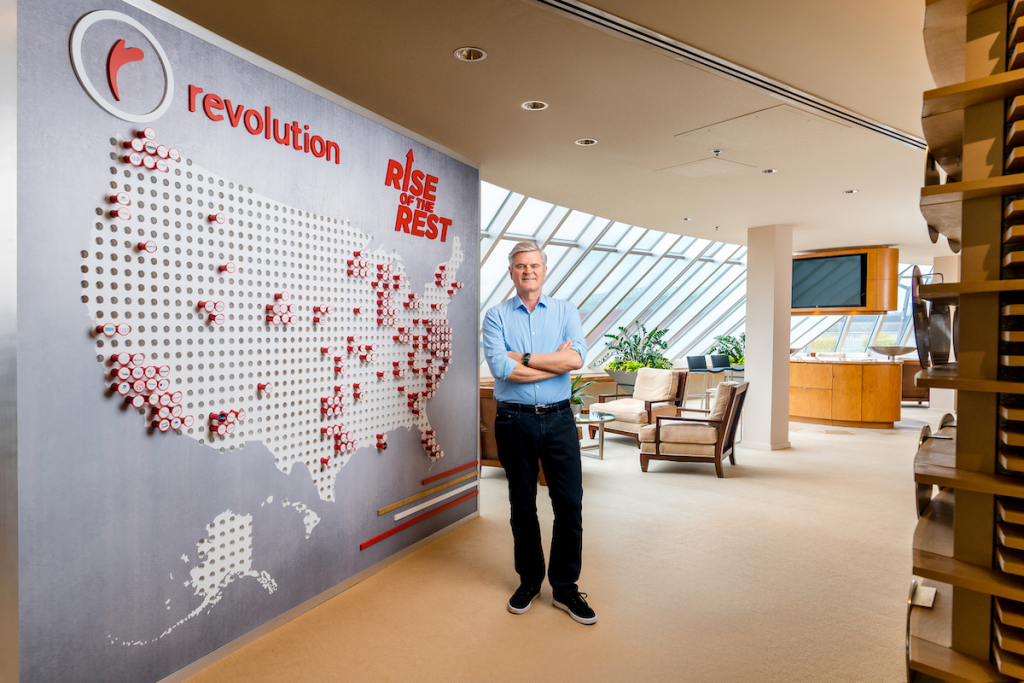

Inflation, a potential recession on the horizon, the lingering effects of a pandemic, a war with global impact, and bitterly divisive politics – it can be easy to be pessimistic about the direction of the United States. But Steve Case won’t indulge that.
For the past eight years, the AOL cofounder and founding CEO of the venture capital firm Revolution has been touring the United States in a big, bright bus, for the “Rise of the Rest” initiative, which shares its name with Case’s new book. The book is an exploration of his vision for an America boosted by startup economies tied to their communities – namely the ones not in Silicon Valley, New York City, or Boston, where 75% of venture capital in the U.S. goes. And it’s an expression of optimism that can feel exceedingly rare these days, but is one complementary to what we’ve found at JUST.
In the same way that we have found through our polling research that Americans across all the demographics we track agree that worker issues, especially providing a living wage, should be the number-one priority of American businesses, Case is driven by the idea that people across the country ultimately want the chance at a fulfilling career regardless of where they live. And, he says, we’re at the beginning of an era in technology that can help make this happen. Case believes that AOL represented the First Wave of the internet, followed by social media marking the Second Wave, and now we’re at the forefront of the Third Wave, where “internet of things” becomes the internet of everything and opens up transformative opportunities across all industries.
So far, Case and his team have been to 43 cities across the country and made 200 investments through two $150 million funds. They made eight bus tours before COVID forced them to temporarily go virtual, leading to one virtual tour focused on Black founders and another connecting talent from the coasts to opportunities at startups beyond the three primary hubs.
The new book is the next step in introducing his mission to a wider audience. We recently spoke with Case about what he wants to accomplish with it, and explored the overlap of Rise of the Rest with JUST’s own work.
The following transcript has been edited for length and clarity.
How has your perspective on Rise of the Rest – the fund, the tour, the idea – evolved over time?
We’ve seen steady progress each year in terms of interest in these cities, new companies starting and scaling, big exits that get attention, people shifting where they’re living, and people starting to think about investing in other places.
It was steady progress and then COVID has been a tipping point on multiple levels. For some people it was a moment to take a step back and rethink how and where you want to live, and how and where you want to work.
We stressed even when we got started that one of the things we needed to do was shift the talent discussion from being about bemoaning a “brain drain” of people leaving to celebrating a boomerang of people returning. So the pandemic has been helpful on that front.
It’s also been helpful on the venture investing side. Investors who were intrigued with some of what’s happening in rising cities but not necessarily intrigued enough to jump on a plane could now jump on Zoom and then talk to people in those cities. That led to a lot of pitch meetings on Zoom.
On the policy side of things, at the state and local level, a lot more governors and mayors are focusing on startups, and at the federal level, there’s been legislation passed like the Inflation Reduction Act and the CHIPS and Science Act, which includes authorization for investment in regional hubs.
A few weeks ago President Biden was in Columbus talking about regional entrepreneurship at the Intel plant. And then Treasury Secretary Yellen was talking about the idea of leveling the playing field and creating more opportunity for more people and places. So they’re mostly in sync with the arguments we’ve been making.
I’d say that it went from steady progress to an acceleration, which I think bodes well for the next chapter.
It sounds like there was, maybe this is the wrong phrase for it, but a silver lining of the pandemic.
It was such a terrible pandemic and I’d hate to say, “But oh, isn’t this great!” But yes, it was a silver lining, if you are looking for something positive in a difficult two-and-a-half years.
You included in the book some numbers that appear to be backing the Rise of the Rest thesis, in terms of where the money is starting to flow.
You’re referencing the Beyond Silicon Valley report we did with Pitchbook. There’s one data point particularly that was of surprise even to me, which is that in the last decade there have been 1,400 new regional venture firms outside of San Francisco, New York, and Boston. So basically you’ve got our Rise of the Rest footprint.
That’s super interesting and super encouraging because we’ve long said that the entrepreneurs in most parts of the country need more access to that initial capital as a seed stage, and having capital available locally is really important.

Business and community are inextricably linked
With a lot of the companies you highlight from the Rise of the Rest portfolio, it seems like these startups are baking in purpose-driven values and stakeholder issues JUST tracks for corporations. Are you seeing that?
A lot of these Rise of the Rest entrepreneurs are passionate about fixing or addressing some problem in society and opt to do that through the prism of starting a company. That leads to companies like AppHarvest in Kentucky with sustainable agriculture or TemperPack in Richmond, Virginia with sustainable packaging, and I could give you a couple of dozen others.
They are also quite intentional about how their companies also can lift up their community. For example, Jonathan Webb of AppHarvest was deliberately focusing on this and had a strategic reason to do it. Eastern Kentucky, outside of Lexington, is within a 24-hour drive of 70% of the U.S. population. But Jonathan also had a desire to create jobs and bring opportunity to coal country Appalachia, which for several decades had been struggling. So there was that broader societal impact.
On the DEI side, many of these cities are diverse, and we have been intentional about diversity for building our own team and backing entrepreneurs. Right now the Rise of the Rest portfolio, which is about 200 companies, is 41-42% female founders or founders of color, which is still not what it should be, but a lot better than you see in most venture firms.
The corporate and startup worlds of are often linked in ecosystems. One of the examples that you point to is Atlanta, where you have corporations like Delta, Home Depot, and UPS actively engaging their communities, including entrepreneurs there. Why should corporate leaders be paying attention to Rise of the Rest, regardless of where they are in the country?
Because their own success could be accentuated by focusing on Rise of the Rest. If they’re staying close to entrepreneurs who are doing innovative, disruptive things, they’re more likely to see the future as opposed to being overwhelmed by it, and might, if they’re agile, actually be able to partner with or, in some cases, acquire some of these companies to strengthen their competitive position.
Second, every company is ultimately about its people, and part of what JUST has done is highlight that and the benefits of investing and properly rewarding people. How do you attract great people who want to work at your company? Part of that is attracting people that want to live in your community.
Personally I remember my own experience in Cincinnati, where my first job out of college was at Procter & Gamble. At the time there were a few big companies there, but there were really no startups. The downtown area was occupied nine-to-five, was basically dead on evenings and weekends, and there wasn’t a real vibrancy to it. Some of the big companies eventually noticed that, too, and they got together and funded some programs like Cintrifuse, the Hatchery, and others to basically create a more fertile environment for startups. That paid off, and the city is now more interesting to live and work in. It makes it easier for those big companies to attract and keep the people they want to take their companies to the next level.
What Dan Gilbert’s done in Detroit comes to mind.
That’s obviously a great example. I’ll be there on Monday. He helped get the Forbes 30 Under 30 Summit to Detroit, and that’s exact thing we’re talking about. Dan made an effort to get more young people to understand what Detroit is now, with the idea that some people visiting for a conference would see it and some of them would end up deciding to move to Detroit. That’s happened. So it’s an example of this idea of trying to use your position as a corporate leader to have a broader impact in the community.
A mission to unite behind
You’ve got access to a lot of politicians and big influential players across the political spectrum. You’ve been all over the country, talked to people from every corner of America. Given your perspective and optimism, what are you seeing that could better unite the country when it’s so divided?
Well, part of the reason why I wrote the book is I think it’s an optimistic story of an America that’s not something that most people are aware of. There are a lot of things that are negative with inflation, Ukraine, the pandemic, all kind of things. But there’s a more positive, inspirational story that’s not just about certain people or certain places. I felt there’s a reason to be more hopeful, but we have to continue to build on some of the initial foundational efforts over the last decade.
I start and end the book with the idea that it’s not our God-given right as a country to remain the most innovative, entrepreneurial nation in the world. We can’t be complacent about that. We’ve got to lean into the future and I don’t think we can do that successfully if we’re only putting our eggs in a few baskets like Silicon Valley, New York, and Boston. We need to have a more diversified and decentralized approach to innovation.
But my hope is that this book will lead everybody in America to maybe feel a little bit better about our country’s potential future.
So this is based on the idea of economic opportunity for Americans regardless of where they are in the country, whether they want to create something or even just work within their own community with a good paying job?
Yes, one of the big problems is the opportunity gap where some people in some places are doing really well, and a lot of people in a lot of places are struggling and feeling left behind because they have been.
So the idea is that fertile startup ecosystems in more places brings more capital, which creates more jobs, which drives more economic growth, and which will then create more opportunity and more reasons for people to be more optimistic about the future. I think it’s critical that we do that if we are going to have a country that continues to lead the world. Now is the time to get it done.
I think it’s safe to say, then, that you’re bullish in America.
I believe in America! I believe in America, as long as we’re celebrating the next generation of entrepreneurs, how we’re doing it everywhere, not just in a few places.
