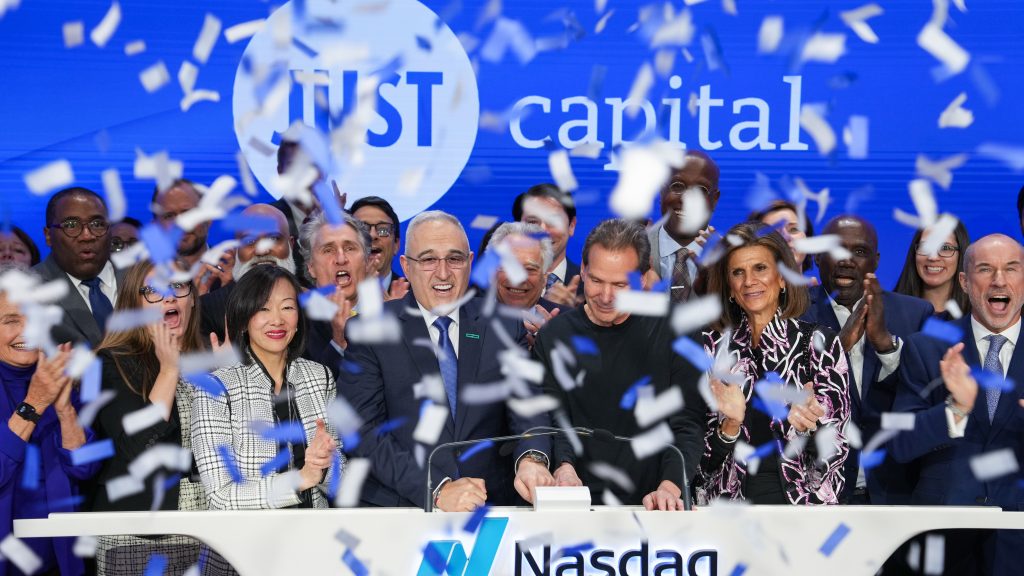
We celebrated our 10-year anniversary this week by hosting a fantastic celebration and fundraising gala at Nasdaq Marketsite in Times Square. Coming almost a decade to the day after our co-founder and former chair Paul Tudor Jones’ TED Talk in Vancouver, it was a great event that brought together some of the most influential voices in corporate leadership to mark a decade of progress by JUST, discuss current market conditions and inspire action.
JUST chair Dan Schulman and HPE president and CEO Antonio Neri, representing this year’s #1 Most JUST Company, got us underway by ringing the closing bell of the Nasdaq. The program that followed featured a lively panel discussion with Paul, former SEC chair Jay Clayton, and JUST board member and chairperson of HPE Pat Russo moderated by MSNBC’s Stephanie Ruhle; remarks from board members Sushmita Banerjee and Roosevelt Giles; a welcome from Nasdaq’s Jack Cassel; and a very moving presentation of the JUST inaugural Lifetime Achievement Award to Enrique Lores, president and CEO of HP, Inc., who personifies all that we represent.
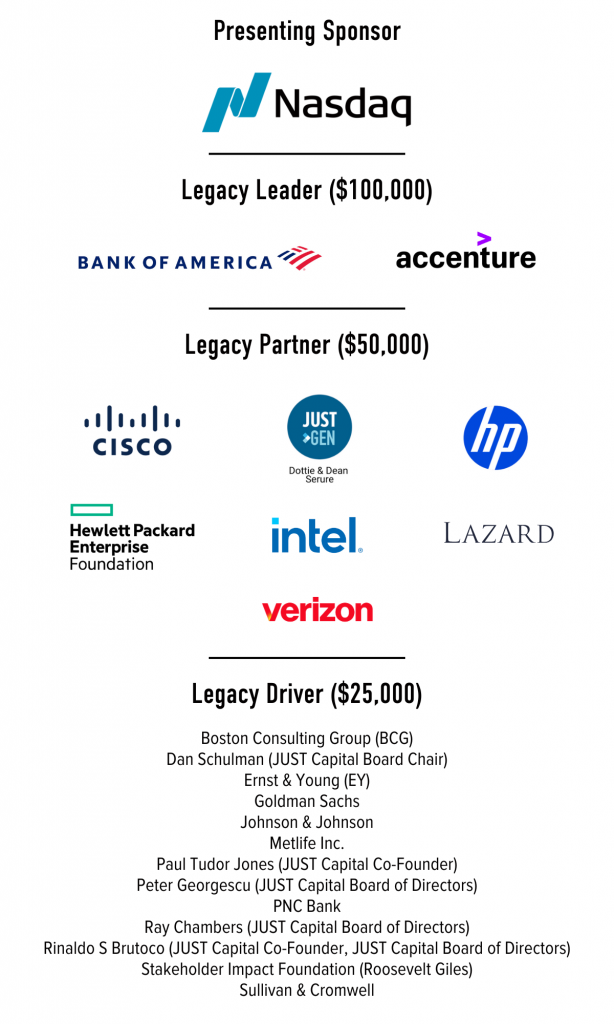
We were joined by so many friends, donors and partners, including our incredible sponsors below. I’m still processing the key takeaways but one thing is clear; in an era of profound change, just business leadership is more important than ever. We will be stepping up our efforts, and if, like me, you believe that the private sector has a critical role to play in building a better future for everyone, we’d welcome your partnership and support.
Be well,
Martin

“For nearly 85 years, HP has been guided by a simple but powerful principle: doing the right thing by our customers, employees, and communities isn’t just a responsibility—it’s how we succeed.”
The Wall Street Journal takes a look at the dot com bubble and reveals the parallels and potential lessons for our current moment in AI.
Fortune reveals that companies are hoping that AI agents can teach people how to be better managers.
In Fortune, professor Jane Hoffman argues that corporate social responsibility is a flawed concept, when what we really need is corporate accountability. Read her full thoughts here.
The Last Vegas Sun reveals that, despite a disastrous 2024, Boeing executives received millions in bonuses.
The Washington Post reports that companies are warning investors that governmental uncertainty from DOGE cuts may impact revenue this year. Meanwhile, Fortune reports that Goldman Sachs’ chief economist just downgraded the entire U.S. economy.
The Wall Street Journal’s CEO Brief speaks to anti-DEI activist Robby Starbuck, and lays out a three-point plan to help your company build resilience to backlash.

Chief Executive reveals that CEO optimism for the year has plummeted in March due to uncertainty around tariffs and growing stock market concerns. Look at all the research here.

Reports from CNBC, Axios, Politico and others regarding recent government cuts, including 1,400 employees at the VA per Fox News, have indicated that one group in particular appears to have been particularly affected by the downsizing: veterans.
One one hand it makes sense: last year veterans made up 28% of the federal workforce, per federal data, compared to just 5% in the private sector. Cuts to federal jobs would therefore naturally affect veterans on a disproportionate basis.
But it caught my eye for another reason, namely, that in the 2025 Rankings, company attention to veterans hiring was a growing area of activity.
For example, we saw a 4.5% increase from last year in the disclosure of a veterans hiring policy (39.8% of ranked companies disclosing vs. 35.3% in 2024). This was one of the highest net increases in a corporate workforce disclosure issue across the board. At an industry level, the Utilities sector leads the way, with 81% of the industry disclosing specific actions or initiatives geared to veterans. Aerospace & Defense, with 71%, was the next most active sector. In terms of specific programs, industries performing well on hiring veterans also had higher-than-average disclosure on related opportunity-generating policies like fair chance programs, restart programs, and apprenticeships.
This year’s top company, HPE, discloses a robust veterans hiring program, alongside major initiatives in the related areas. Other standouts include Walmart, and top 10 companies Accenture and HP, Inc. Wintrust Financial Corporation has a particularly strong veterans hiring policy, highlighting recruitment programs, as well as tailored banking services and community engagements. Other banks and financial services leaders include M&T Bank and Bank of New York (BNY).
Overall, it’s a good example of an issue where private sector leadership can make a big difference.
Be well,
Martin

“I think that right now people are underestimating just how much the world of work is about to change. In just three or four or five years, I could be talking to agents as much, if not more than I’m talking to my human colleagues today.”
In the wake of Meta authorizing 200% exec bonus increases after laying off 5% of their workforce, Benzinga cites our 2022 polling of American workers that found 87% of Americans believe the growing difference between CEO and worker pay is a problem.
The latest episode of Planet Money, “The controversy over Tyson Foods’ hiring of asylum seekers”, utilizes the wage data we collect to tell its story.
Apple is going to be hiring 20,000 new workers to produce AI servers in Texas to avoid increased costs from Trump’s China tariffs.
The Wall Street Journal takes aim at the claim that AI data centers will be a bedrock of new jobs, showing that while government and tech leaders say they will be an “employment bonanza”, data centers need “very few workers for very large spaces”.
Fortune posits that despite all the claims of productivity boosting, one major thing is missing from the debates on AI’s workforce impact – actual worker productivity stats.
CNBC has revealed its 2025 CNBC Changemakers – the list of women transforming the world of business, featuring several execs from JUST 100 companies.
Fortune reports that Apple shareholders have rejected a proposal to end the company’s DEI program. Meanwhile, John Deere pulls a similar move, with shareholders refusing an anti-DEI proposal that would reveal worker demographic data.
Per the New York Times, Starbucks is laying off 1,000 corporate employees.
The CEO of Alcoa has warned that President Trump’s threatened tariffs on aluminum could put almost 100,00 U.S. jobs at risk. The Wall Street Journal has the story.
Bloomberg reveals that New York fathers are much less likely to take their state-available paid parental leave, leaving $1.6 billion on the table every year.
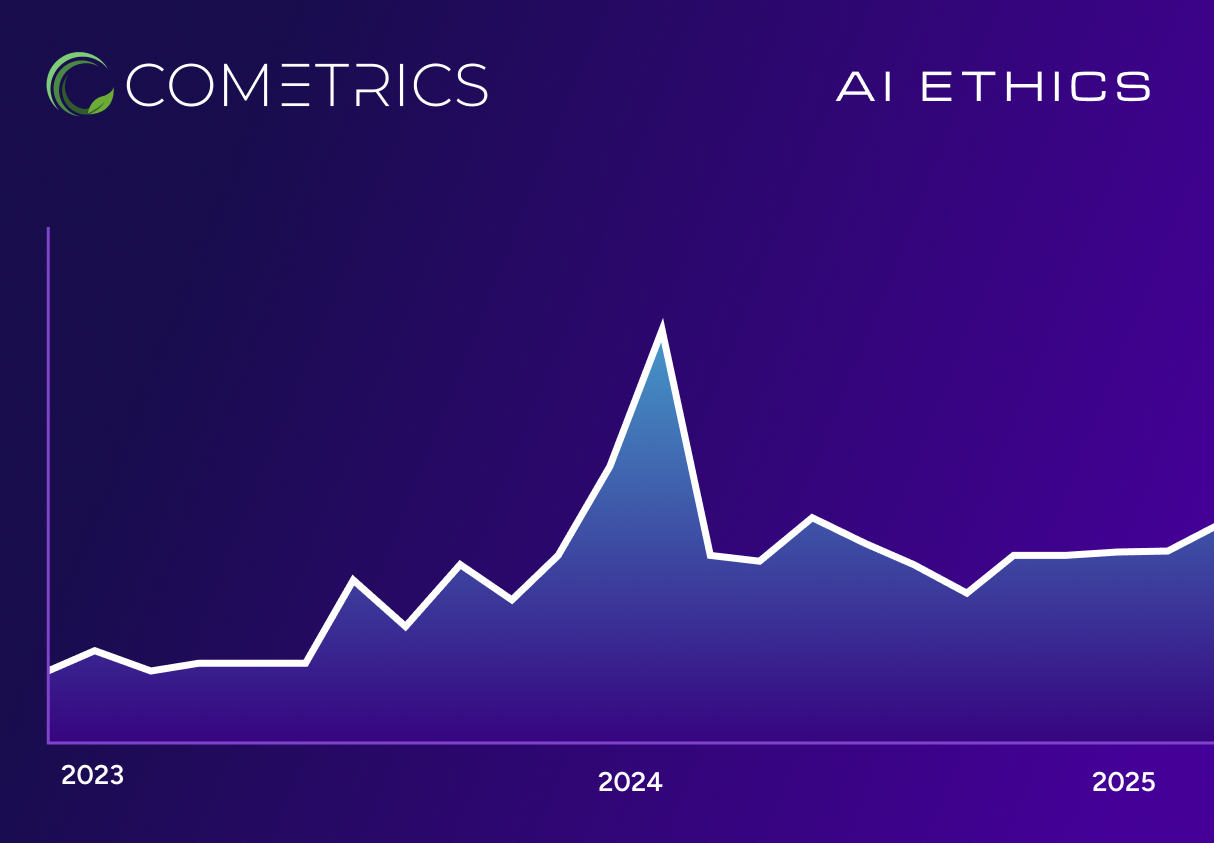
Cometrics crunches the data on LinkedIn to see which companies are actually concerned about ethics in AI and which just appear to be following a trend.

The importance of talent has been a recurring theme in the last few weeks. Antonio Neri, CEO of HPE, highlighted it in his recent CNBC interview celebrating his company’s top spot in the 2025 Just Capital Rankings. Surveying over 1,200 global business leaders for its new 2025 Risk Report, global consulting firm Protiviti identified the ability to attract, develop, and retain top talent, and talent and labor availability, as the #3 and #4 issues. And in the discussions I’ve had with CEOs since our Rankings launched earlier this month, it’s come up time and again.
Hiring the best talent is only the start of the journey. As Goethe noted, great talent finds its happiness in execution. This means investing in people, providing the right incentives, creating conditions for workers to flourish, nurturing a sense of purpose – all things Just Capital’s benchmarking and scorecards help companies measure. The business case isn’t just intuitive. As of February 18, companies that perform well on our Workers stakeholder have outperformed their Russell 1000 equal-weighted benchmark by 17.03% since inception in January 2022.
The talent area is also one ripe with opportunities for innovation. Indeed, our current rankings highlight many creative approaches companies are pursuing. Constellation Energy Corp offers an impressive 94 hours of training or career development per employee. By investing in a growth-driven culture, aerospace company RTX boasts of a turnover rate of just 5%. CoStar Group Inc, which leads their industry in the Workers category, has committed that no full-time U.S. based employee will make less than $60k per year. There are myriad other examples.
If you’re interested to learn more about our services for companies in this area, please reach out.
Be well,
Martin

“This is a massive change in America, and there are other major changes also happening in other countries around the world. We have a choice: Do we want to take a pessimistic, dark view and think that it’s all going to be horrible? Do we want to be optimists and say, in change is opportunity?”
Cisco takes a survey of how CEOs are implementing AI at their companies, and the obstacles that are getting in their way. Explore the whole study here.
CNBC reports that Southwest Airlines is planning to eliminate nearly 1,750 jobs in an unprecedented move to cut costs, and the New York Times reports that Chevron is planning to eliminate nearly 9,000 jobs worldwide.
One bright spot? Chipotle plans to hire an additional 20,000 workers from March – May, which the company dubs “burrito season”. Reuters has the story.
Proctor & Gamble and Kroger join companies like Costco in pushing back against the attacks on their DEI programs, while at the same time, the Wall Street Journal reports on how big banks are trying to scrub public mentions of their DEI efforts.
Speaking of big banks, JP Morgan Chase is officially starting a round of layoffs. Yahoo Finance has the story.
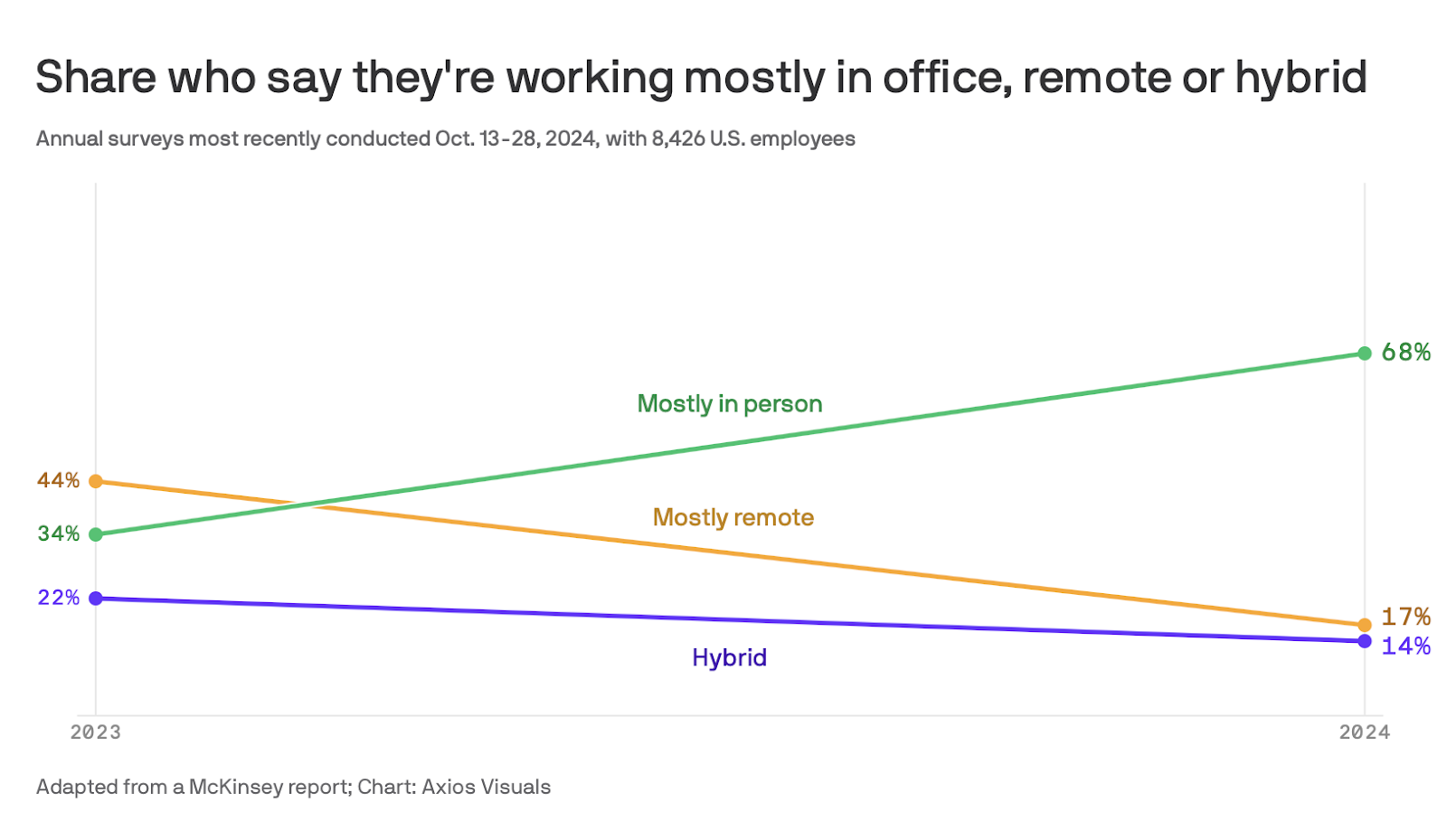
Axios reports that the amount of in-person work doubled this year as many employers start to enforce return-to-office mandates. Explore the data here.
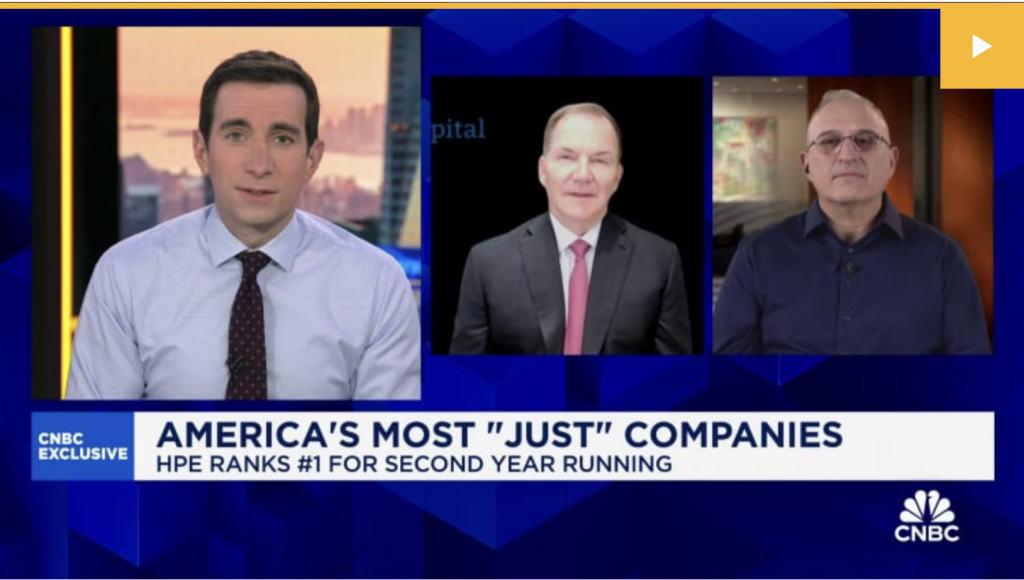
Paul Tudor Jones, Just Capital co-founder and chairman and Tudor Investments founder and CIO, and Hewlett Packard Enterprise CEO Antonio Neri join ‘Squawk Box’ to discuss Just Capital’s 2025 list of America’s most ‘Just’ companies, Americans’ top priorities for companies, President Trump’s tariff proposals, impact on the economy and markets, and more. Watch the full video here:
Today, Just Capital, in partnership with CNBC, is proud to announce the Just 100 list as part of the 2025 Rankings of America’s Most JUST Companies. Each year, JUST Capital begins by polling the American public on a fully representative basis on their priorities for business behavior. It then evaluates how the largest corporations in the country perform against those criteria. Leading companies are recognized for their performance on top priority issues such as: paying fair, living wages; supporting worker well-being; career advancement, training, and work-life balance; treating customers fairly; creating value for shareholders; communicating transparently; strengthening communities; and ethical leadership.
“Hewlett Packard Enterprise is honored to be recognized as #1 by Just Capital in their 2025 Rankings for the second year in a row,” says HPE President & CEO Antonio Neri. “This recognition validates the work we have been doing to understand and serve all our stakeholders in order to drive marketing-leading performance.”
In a year marked by significant geopolitical, cultural, and economic change, business leaders are under pressure with high performance expectations and intense scrutiny. The central message from the public, as detailed in Just Capital’s Americans Views on Business Report and Polling released in 2024, is clear: focus on the basics, do right by your customers, look after your workers, create value for your shareholders, and lead with integrity.
Despite being highly polarized on political issues, Americans are generally united in their expectations for corporations – particularly in areas where positive corporate conduct dovetails with positive business performance – and concerned about kitchen table issues like their economic well-being, how they are treated as consumers, and being able to support their families. Many appear to be distrustful of institutions as they call for increased transparency, corporate accountability, and ethical leadership.
The Just Capital 2025 Rankings of America’s Most Just Companies and Just 100 list celebrate top-performing Russell 1000 companies that are demonstrating leadership in meeting these concerns and responding to the needs of the American people. By tapping into public sentiment, these Rankings offer corporate leaders an objective, empirical roadmap across stakeholder issues that helps businesses navigate a changing socio-political and economic landscape in order to unlock enduring business value.
This promise of value creation is not mere conjecture. As of December 31, 2024 the JULCD (212.2%) – which tracks the top 50% of Russell 1000 companies ranked by Just Capital by industry, and is constructed to match its industry weights – has out-performed Russell 1000 Cap-Weighted Benchmark ( 202.04%) by 10.11% since inception. The Just 100 (116.7%) – which includes the top 100 Russell 1000 companies ranked by Just Capital – has out-performed Russell 1000 Equally Weighted Benchmark (70.8%) by 45.8% since inception.
“Just Capital Rankings stand apart because they measure companies against what matters most: the priorities set by the American public,” says Just Capital CEO Martin Whittaker. “When companies – like those featured in this year’s Rankings – actively deliver on stakeholder expectations, namely those of American workers, consumers, and shareholders, they create enduring business value while advancing solutions to our nation’s most pressing economic challenges. It’s a powerful win-win.”
Today’s corporate leadership demands data-driven insights that align with stakeholder interests and drive lasting value. Just Capital is excited to introduce Just Intelligence – a cutting-edge analytics tool that empowers companies to navigate complex stakeholder issues and fuels their competitive advantage.
This year, all ranked companies will have access to standard Just Intelligence features including an interactive explorer of their performance in the 2025 Rankings and highlights of their highest and lowest performing data points. Just Intelligence subscribers can dive deeper on critical data points, benchmark against peers, and identify best practices of top-performing companies.
“In a rapidly evolving and high-pressure landscape, today’s corporate leaders need a strategic insider to support their competitive edge. Just Intelligence is that strategic insider,” says Whittaker. “We are extremely proud to bring empirical evidence to corporate leaders that allows them to cut through the noise, benchmark their performance, make smarter decisions, and ultimately be more successful in the marketplace.”
As part of its 2025 Rankings, Just Capital is proud to present its list of Industry leaders, or companies that receive the highest overall rank within each of our 36 industries.
Of this year’s 36 industry leaders, 21 companies remained the leaders of their industry while 15 companies dropped out of the industry leader spot this year. Below is the full list of industry leaders for 2025. Industry leader shifts can be explained by both improved year-over-year performance of individual companies as well as shifting industry compositions.

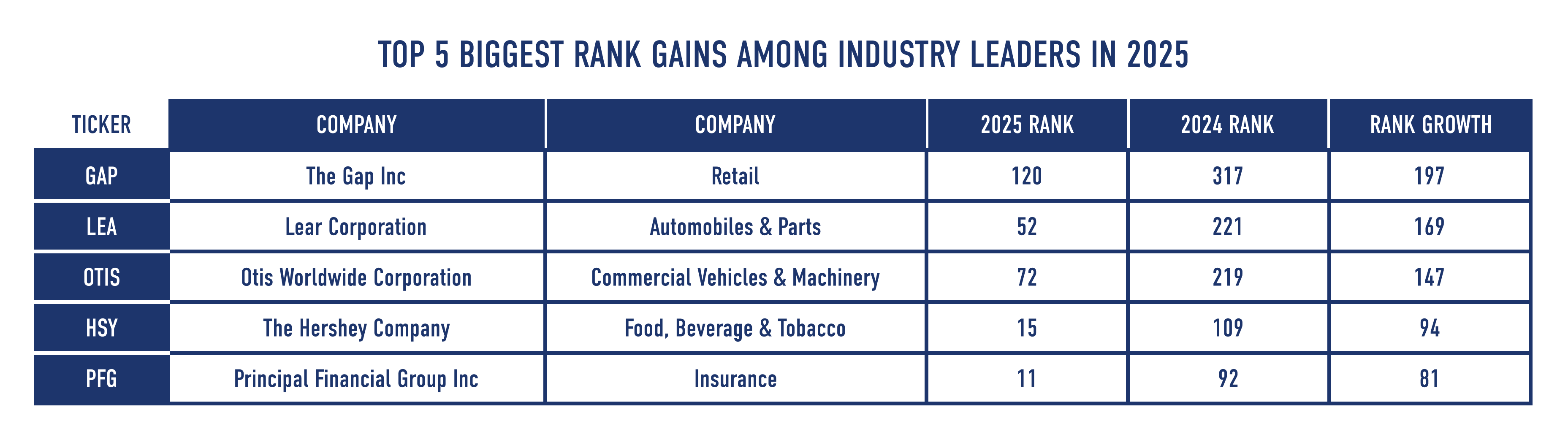
Among the industry leaders, the following saw the biggest increases in their rank (and are not influenced by treatments, such as Unique Event Treatment, applied to the model). Three of these five companies (The Hershey Company, Lear Corporation, and Otis Worldwide Corporation) also moved into the Just 100.
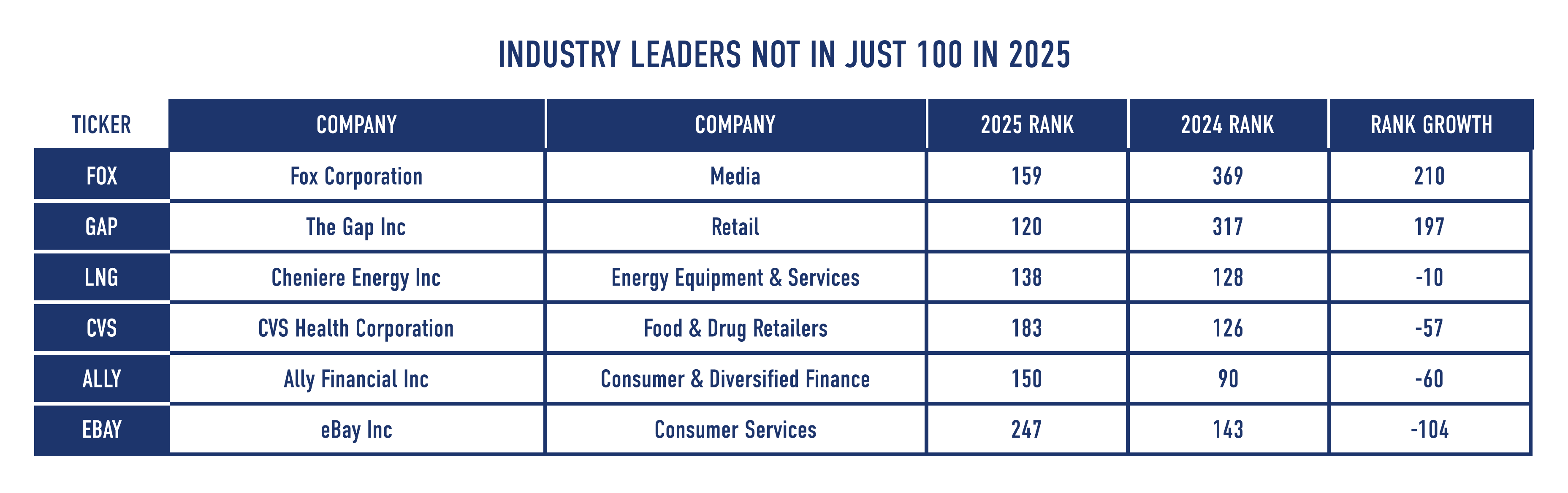
This year, 30 out of the 36 industries were represented in the JUST 100: In other words, six industry leaders are not part of the JUST 100 this year. These industry leaders are listed below.
Industry Trends in 2025
Though there are 30 industries represented in the JUST 100, some industries make up a higher share of the JUST 100 than others. There are:
Certain industries tend to perform better than others, on average. Companies in the Utilities and Chemicals industries rank, on average, the highest at 275 and 317, respectively. When breaking industry average rank down by the five Stakeholders, we find that:
Companies in the Internet and Commercial Vehicles & Machinery industries saw some of the largest average gains in rank, rising 118 and 103 ranks, respectively. Companies in the Telecommunications and Clothing & Accessories industries saw the biggest average declines, dropping 91 and 75 ranks, respectively.
For more information on our Rankings, to engage with us on our corporate initiatives, please reach out to us.
