On Monday, February 5, JUST Capital and CNBC unveiled the 2024 JUST 100. The comprehensive list spotlights America’s Most JUST Companies by analyzing how companies comprising the Russell 1000 perform across the 20 Issues the American public believes corporations should prioritize in their business practices.
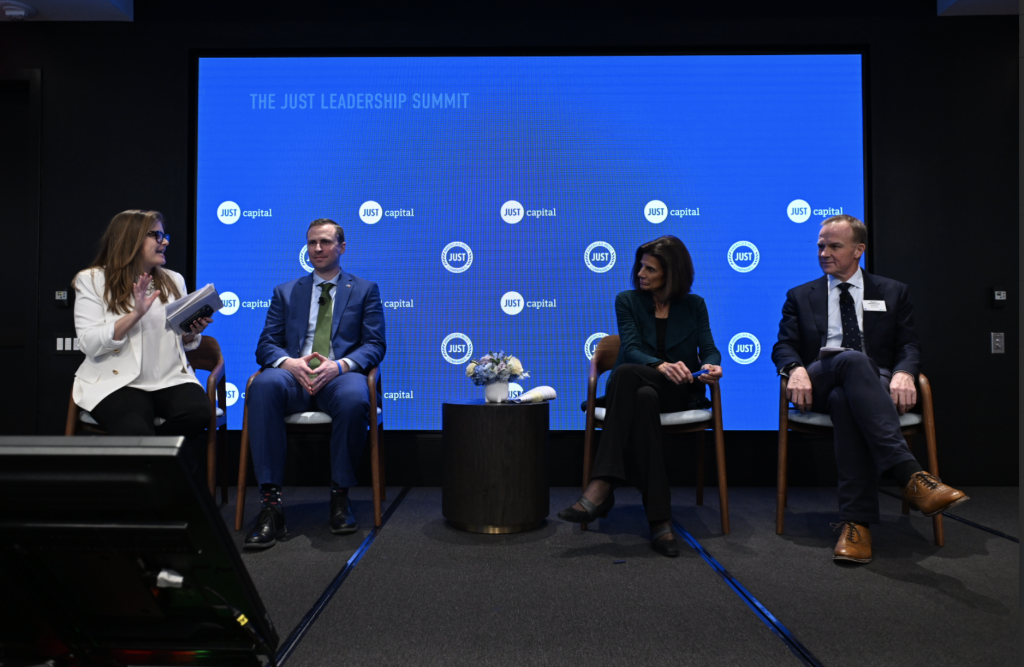
The event, which took place at the NASDAQ MarketSite and was sponsored by the Stakeholder Impact Foundation and BCG, opened with introductory remarks from JUST Capital CEO Martin Whittaker and a speech from Sushmita Banerjee, Senior Partner and Managing Director at Boston Consulting Group (BCG). Two panel discussions followed. The first featured a macro-level conversation between JUST Capital co-founder Paul Tudor Jones II alongside Hewlett Packard Enterprise (HPE) CEO Antonio Neri, moderated by CNBC’s Andrew Ross Sorkin. JUST Capital’s President Alison Omens then moderated the second panel with HPE Board Chairman Patricia Russo, Avangrid CFO Justin Lagasse and Accenture’s Northeast Market Unit Lead Stuart Henderson where they discussed in further detail what just business behavior actually looks like, what are the challenges and tradeoffs that companies face.
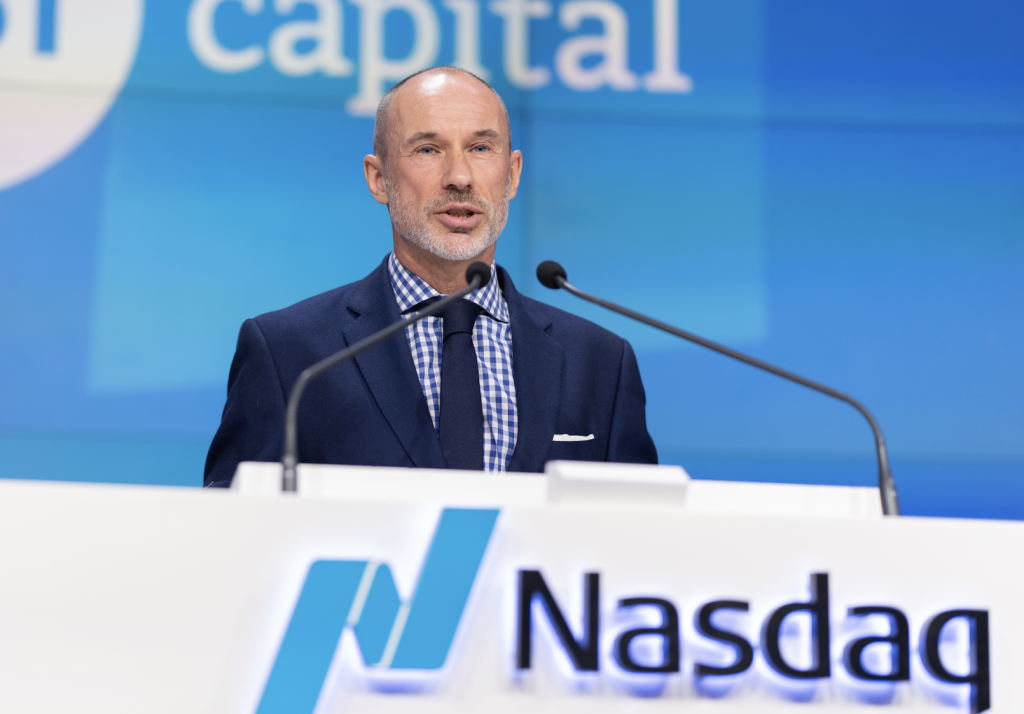
Banerjee set the tone for evening speaking about what she has seen working with some of the most successful companies in the world. “Just companies – in my experience – have leaders who exercise their responsible, ethical muscles every day, versus waiting for their grand moment where they could prove to the world they are doing something great,” she said.
Just actions, Banerjee said, lead to something every business needs to thrive: trust. She highlighted BCG’s Trust Index as an example of how companies can measure and decode trust among stakeholders by focusing on four dimensions: competency, fairness, transparency and resilience.
The companies that top JUST’s rankings prioritize building trust across stakeholders and their business performance benefits. ”When we look at the top 100 companies in JUST’s database, what we see is that they generate 2.5x more value than comparable businesses—their valuation multiples are also up to 47% higher,” Bannerjee said.
Sorkin kicked-off the first panel conversation by prompting Jones to reflect on how far the conversation around stakeholders in American business has come over the last decade.
“If you rewind to 2014, no one would even know what stakeholder business meant,” Jones told the panel. “There was nothing but shareholder governance at that point in time. Of course that was why business was very narrowly focused on nothing but profits. That is one of the reasons why we started JUST Capital.”
Turning to Neri, Sorkin gave the HPE CEO an opportunity to speak on why his company was able to secure the number-one spot in JUST’s 2024 rankings. This year is HPE’s first time at the top of the list after being recognized as a JUST 100 leader every year from 2018 through 2024.
“Our job is to create value and my measure of value is not just shareholder value,” Neri said at JUST’s 2024 Leadership Summit on Monday. “It’s about value for the people who participate in the ecosystem where we deliver business results or other types of outcomes for our customers and employees. Ultimately, stock price is a reflection of how you do things and what you deliver. One of the sayings we have at the company is ‘you have to win the right way.’”
The discussion delved into the correlation between this inclusive approach, business success, and positive societal impact. Additionally, Jones emphasized the need for other companies to adopt a similar mindset, underlining the significance of leadership in today’s dynamic economic and social landscape.
The second panel focused on the strategic investments C-suite leaders have undertaken that have led to top-ranking performances. HPE Board Chairman Patricia Russo, Avangrid CFO Justin Lagasse and Accenture’s Northeast Market Unit Lead Stuart Henderson gave practical examples to illustrate how they approach prioritizing stakeholder value to achieve business success.
“It’s really important that boards have clarity around what a reasonable timeframe is and I want to use an example from Merck,” Russo said. “There was a time when Merk’s TCR was not competitive with other pharma companies, because Merck had decided–as a company committed to science–that they were not going to cut back on R&D in order to get their profits up, they were going to continue to invest in medicines. And today, Merck has the largest cancer drugs on the planet as a result of what they invested in and their stock is now trading at $126 a share. So there is a time-horizon around when value creation for shareholders is the natural follow-on to all the other good things you’re doing for people, customers and communities.”
By aligning their strategies with the values prioritized by all of their stakeholders, these leaders exemplify the potential for businesses to thrive while making meaningful contributions to society. The emphasis on stakeholder value creation showcased the alignment between business success and ethical decision-making, reinforcing that a just approach is morally sound and strategically advantageous in the long run.
When asked what their advice would be to other companies, the panelists each provided their own poignant perspective. Henderson encouraged leaders to steer clear of politics and lean into the business case for transparency, diversity and sustainability, which would deliver good outcomes for shareholders and stakeholders. Lagasse rounded out the panel with a reminder to keep it simple—over-complicating how to empower and enable stakeholders to thrive is where the disconnect comes from. Russo emphasized the importance of focusing on managing human capital just as well as financial capital.
“I don’t get into debates about DEI,” Russo said. “I think the pushback is based on a myth of what it is. If you have a conversation with someone who is rational and intelligent, and you say, ‘Do you believe that different perspectives lead to better discussions?’ the answer will be yes. ‘Do you believe in a work environment where people feel like they can come to work and they can be their best selves because they are part of a team and valued?’ Absolutely. ‘Do you believe we should pay people fairly and the same for the same work?’ Oh, absolutely. Okay, well that’s DEI.”
‘Business!’ cried the Ghost. ‘Mankind was my business’”
For me, the festive period is a time for family and celebration, but also a time for reflection. A moment to take stock – of our lives, our careers, our hopes and dreams. One thing I’ll be thinking about a lot is where we are at JUST Capital, and the state of our mission. Capitalism, it seems to me, is undergoing a transformation, not unlike Charles Dickens’s famed Christmas creation, Ebenezer Scrooge. The question is whether its future will be different from its present and its past. This was Dickens’ intention of course – to influence the national discourse on poverty and inequality by examining the true spirit of humanity. “A Christmas Carol” went viral – first published on December 19, 1843, it had sold out by Christmas Eve. It resonated with audiences and captured an essential ethos of the time. In that sense, and perhaps even to that scale, we hope to emulate its outsized impact.
In a way, our Rankings of America’s Most JUST Companies are a stocktake of sorts on how companies are doing on the defining characteristics of just business behavior today. They capture the reality of how companies are taking action on key stakeholder issues. Unlike Dickens’ novella, they are not a morality tale. They’re all about business. And to us, they represent the start of the conversation, not the end.
Our Rankings drive the kind of programmatic work with companies – such as our Worker Financial Wellness Initiative including Chipotle, Verizon, PayPal, and Prudential – that advances positive outcomes for thousands of employees in multiple industries (this video series tells the human stories behind the data). They help us set up innovative initiatives such as our Corporate Care Network, which is advancing the well-being of workers and demonstrating the long-term value of increasing access to care benefits (we announced it at the annual Global Citizen Festival in April). They also pave the way for critical direct work with companies, of which there is no better example than the workshop we hosted in October in partnership with The Rockefeller Foundation and PayPal at the Bellagio Center. Here, we brought together executives from global corporations collectively employing almost five million American workers to engage in peer learning and develop tangible action plans that benefit workers.
The stories behind the data are also becoming increasingly critical to our work. It’s why the conversations we had with TIAA’s Chief Information Officer on AI, with HPE’s leadership on paid care benefits, and Bank of America’s CHRO on human capital management and worker pay are so important. Connecting directly with business leaders – as we did in Atlanta with our Board member Roosevelt Giles, at the NEST Summit in New York City during Climate Week, and at the New York Stock Exchange to celebrate the fifth anniversary of the JUST ETF – is also becoming ever more important.
You’ll be hearing more about JUST’s own transformation in 2024 very soon, but for now, suffice to say that as we approach our 10-year anniversary, it is clear that JUST business leadership – that creates value for all stakeholders and gives more people access to a better future – is expected and needed more than ever. We’ve elevated key internal leaders, namely Alison Omens to President and Tolu Lawrence to our first-ever Chief Impact Officer. And thanks to our partnerships with Empower Media and CNBC, you’ll be seeing and hearing a lot more about us from January on.
If you’d like to support our essential work, please hit the donate button below and know that everyone at JUST is grateful. I’m going to take a break from my usual correspondence next week and return with an exciting update on what to expect from JUST Capital in 2024.
Meantime, Seasons Greetings, and Happy Holidays to you all!
Martin
JUST Capital brought together many industry leading executives, experts, and business changemakers over this past year. Here’s a look at some highlights:
JUST Capital sparked many engaging conversations this year. Here are several highlights:
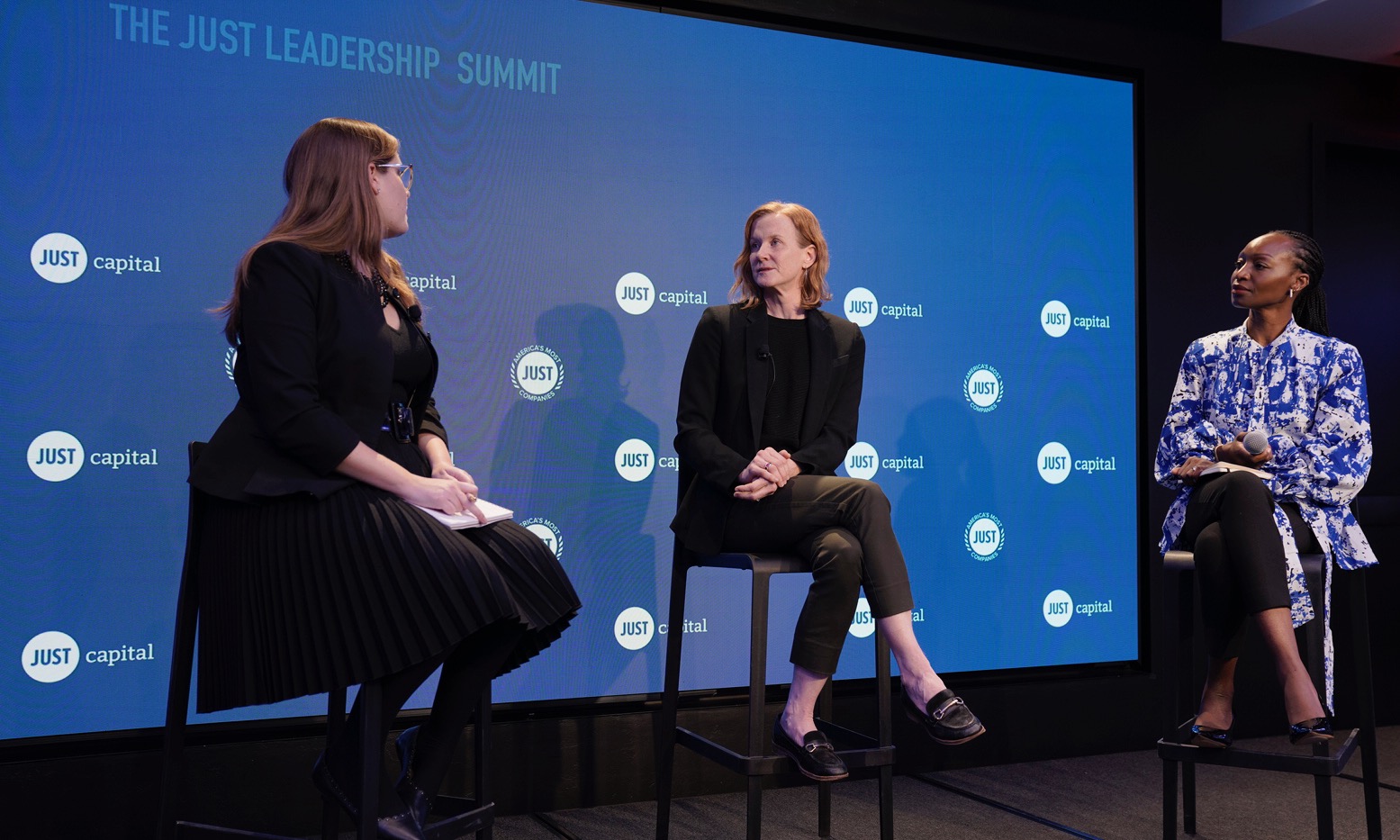
In March top corporate, investment, and sustainability leaders gathered for the 8th JUST Leadership Summit – a place to celebrate corporate leadership and spotlight action from investors and American companies to help build a more just economy. We discussed the broad state of play with Deloitte, why employee stock ownership is a winning strategy with KKR, how JUST jobs build better companies with Two Sigma, and recognized the achievements of this year’s JUST 100, the leaders topping our 2023 Rankings of America’s Most JUST Companies.
In April, Tolu Lawrence joined Global Citizen NOW to announce the creation of the Corporate Care Network, which connects and supports companies committed to advancing the well-being of workers through access to and awareness of inclusive care benefits, like paid leave, flexible work, and child care support.
In June, we celebrated the five-year anniversary of the JUST ETF at NYSE. The celebration included “The Value of Investing in Just Business,” a conversation featuring Priscilla Sims Brown, CEO of Amalgamated Bank, the financial institution self-described as “America’s socially responsible bank”, as well as Roy Swan, Director of Mission Investments at the Ford Foundation.
Back in September, Martin led a panel at The Nest Summit with three executives making real headway on environmental issues at Ecolab, Trane, and Workday. What does it actually take to drive major environmental action within a company or industry? What moves a company from making public commitments to executing scalable plans? Watch the full discussion here.
In November, Martin joined the New York Times’ DealBook Summit, to discuss the U.S. economy, stating: “We need more people to believe American capitalism is working for them, not against them. With politics bereft of long-term vision and serving only to divide, the private sector must lead. An economy in which companies compete by creating value for all their stakeholders is a powerful uniting force.”
Paying a fair, living wage was once again the No.1 issue for the American public when it came to just business behavior. We created our Living Wage Explainer to help explain the concept and why businesses should use it, and released a series of videos with our Worker Financial Wellness Initiative highlighting how investing in wages and career development dramatically impacts workers.
On a similar note, we released our annual list of the Top 10 Companies that Treat Employees the Best, providing business leaders insight into best practices on supporting their employees. Indeed, paid parental leave and pay equity both rose to the forefront of our research this year. The Top 4 Companies Leading for Women in 2023 and the Top Six Companies Leading on Paid Parental Leave in 2023 both highlighted companies implementing policies that help uplift working women and mothers.
ESG investing continued to face pushback on the national stage. Amid much debate, we gathered insights from focus groups with the American public and rounded up our five key takeaways for companies and investors to lead through increasingly difficult conversations.
Lastly, our yearly coverage of America’s 36 Industry Leaders on Environmental Performance in 2023 is a perfect snapshot of the progress being made across industries.
COP28, the UN Global convening hosted by the United Arab Emirates, concluded Wednesday. Success was in the eye of the beholder.
For some, the first explicit mention of reducing use of fossil fuels in any official UN climate talks text (a fact I find quite astonishing) was a major breakthrough. For others, the shift in language from a “phasing out” of said hydrocarbons to a “transition” away fell short of what’s needed. A tripling of renewable energy capacity and a doubling of energy efficiency measures, together with funds to address the impact of climate change in poorer countries, were universal positives.
Judging by my news feeds, business leaders and countries still economically tied to coal, oil, and gas revenues – this COP also saw a significant increase in the presence of fossil fuel lobbyists – will generally like the outcome. Activists, scientists and anyone living in vulnerable areas will not. I see that small island nations most at risk from climate change were reportedly not in the room when the final text was approved.
Will it keep temperatures under 1.5 degrees? If corporate pledges are anything to go by, unlikely. Since we started tracking corporate climate commitments in the Russell 1000, Net-Zero pledges have tripled and science-based commitments have doubled, but emissions have not fallen.
I don’t pretend there’s an easy or obvious path here. To me, this is a global stakeholder balancing act of the highest order. How does the world address climate change while safeguarding economies, acknowledging disparities, protecting worker well-being and jobs, meeting consumer needs, and supporting communities? How do we advance a just transition? These are questions that JUST’s work is grounded in. I’ll close with this – according to our data, companies doing the best job of both prioritizing workers and mitigating environmental impacts outperform their peers by over 20%. Perhaps a win-win is achievable after all.
Be well,
Martin
This week we hosted our latest “JUST Better Business” conversation with Sheri Bronstein, the Chief Human Resources Officer of Bank of America, our 2023 Most JUST Company and No. 1 when it comes to Workers. We discussed the bank’s standout employee practices – from offering an industry leading minimum wage and global sabbatical programs to its robust mental health and wellness offerings to how it’s boosting opportunity across its workforce. See the full video and summary here.
“The market operates as a massive system, and like all systems, there are drivers that influence the direction in which they move and how they operate. We truly believe that as we merge into the natural flow of the system – instead of fighting the current – while partnering with market leaders to introduce factors and incentives that shift the targets, we can ultimately and incrementally reorient the flow of that system to deliver the kind of positive outcomes we know are possible.”
ChatGPT has reached an agreement with Axel Springer, owners of Politico and Business Insider, to pay for using content from those sites within its algorithm. It’s a first-of-its-kind contract as media companies push for compensation when their writing is utilized on AI platforms.
Last Friday, the EU agreed on The Artificial Intelligence Act, the world’s first comprehensive set of AI rules. AP breaks down how the legislation will regulate uses of AI based on risk factors. The Financial Times reports that French President Emmanuel Macron believes that the AI Act will hamper innovation from European tech companies, and place the continent behind the U.S., UK, and China.
Following up on last week’s story, Sports Illustrated has officially fired its CEO after it was discovered that many articles on the site were generated by fake AI writers. Futurism has the story.
Fortune reports that many employers are receiving pushback from harsh return-to-work mandates from an unlikely group – investors – who have seen companies with hybrid work models deliver better returns over the past few years.
The New York Times covers the discouraging trend of companies intentionally changing and raising product prices to see at what point, if any, American consumers are scared off.
CVS Health is planning to upend how much drugs cost across its pharmacies. The Wall Street Journal reports that, rather than relying on complex formulas typically used to set the price of prescription drugs, the company is planning to shift prices to just include the cost for them to buy the drug, plus a small markup and fee.
The Verge covers the ruling in the lawsuit between Epic and Google, with a jury finding Google guilty of maintaining an illegal monopoly with its app store. While the changes Google will have to make to its policies have not been revealed yet, it’s bound to lead to a sea change in app and game development for all Google platforms.
U.S. construction worker wages have hit $35 an hour on average, and with record job openings and significantly fewer workers to fill them, wages in the field are expected to rise even higher.
In the absence of a global price on carbon, Reuters looks into the rise in companies setting their own. An analysis from CDP found an increase in companies using an internal carbon price or planning to do so in the next two years, though some experts worry this trend lends itself to greenwashing.
In a year marked by strikes across industries, Microsoft states that it plans to remain neutral should its U.S. workforce seek to unionize. The New York Times reports on the unprecedented announcement.
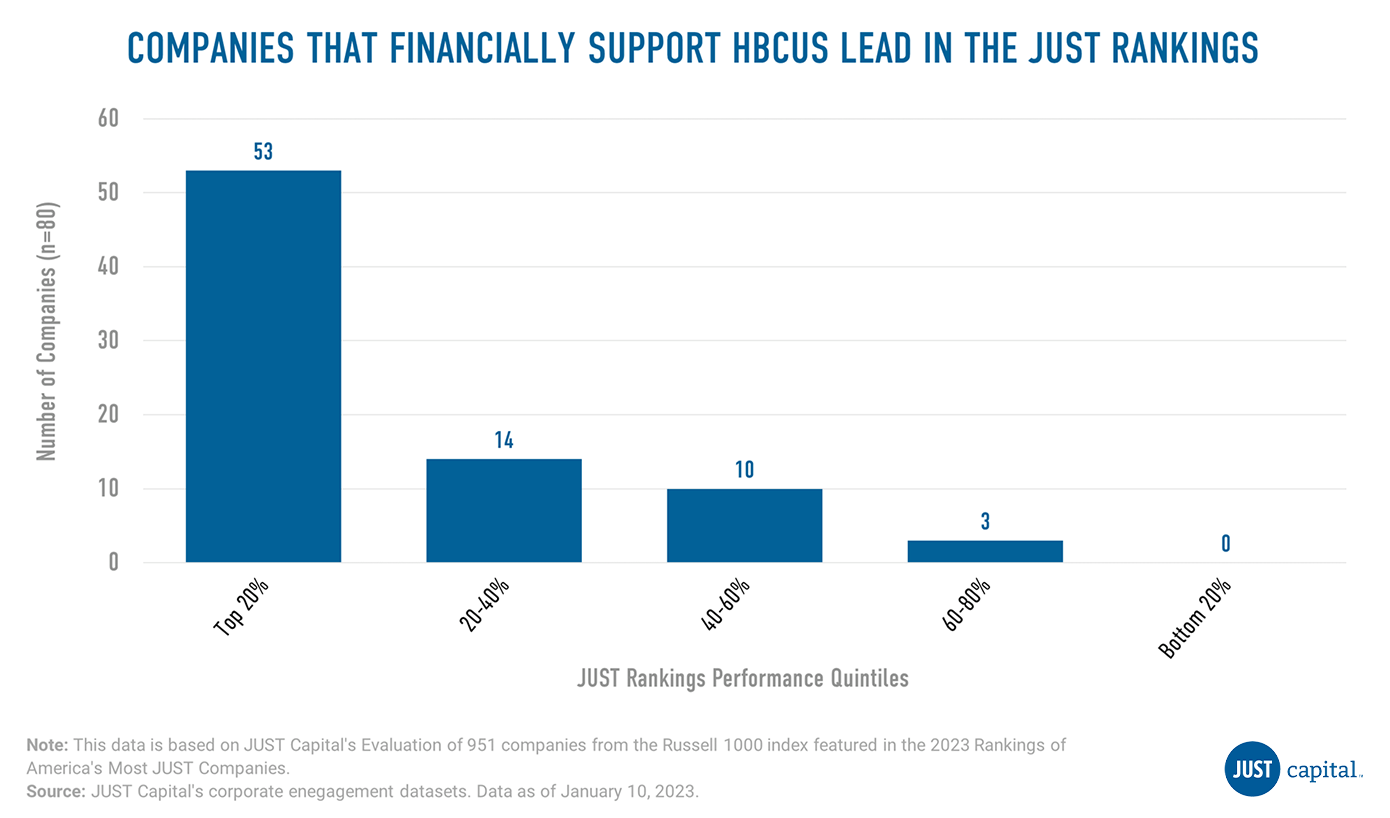
This chart comes from our latest report, How Corporate America Can Work With HBCUs to Boost Economic Mobility and Build Diverse Talent Pipelines. Our analysis found that 66% of companies that support HBCUs sit in the top 20% of our Rankings, and 44% sit in the top 10% of companies – the JUST 100. Learn more about what this means in the full piece here.
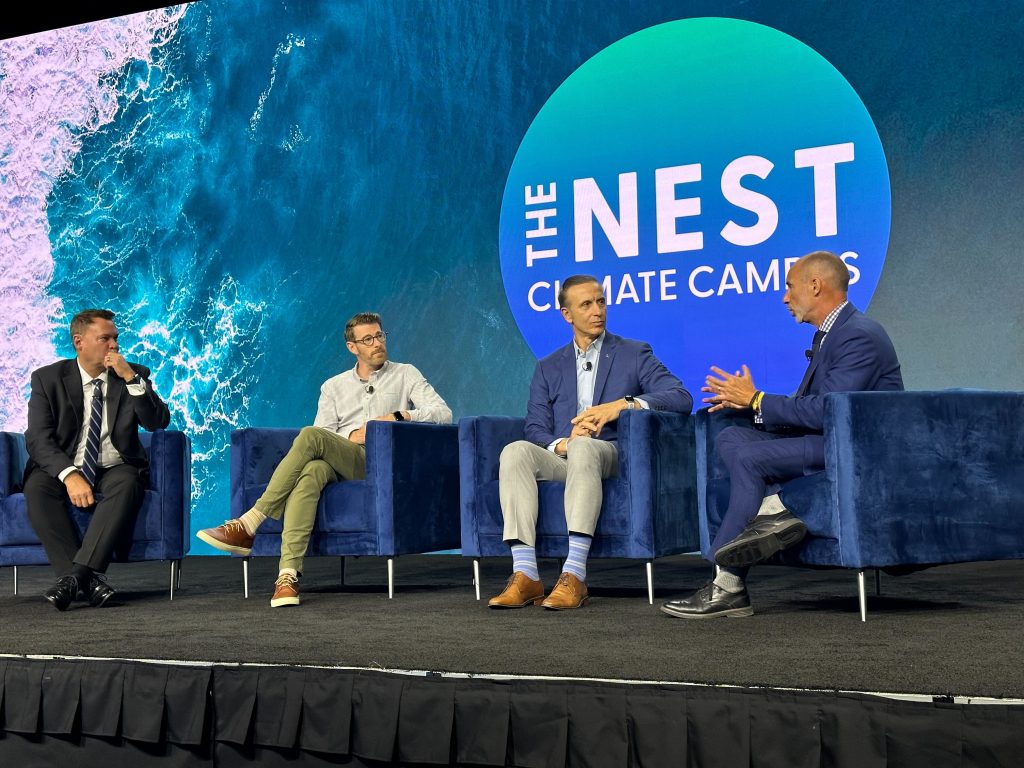
What does it actually take to drive major environmental action within a company or industry? What moves a company from making public commitments to executing scalable plans?
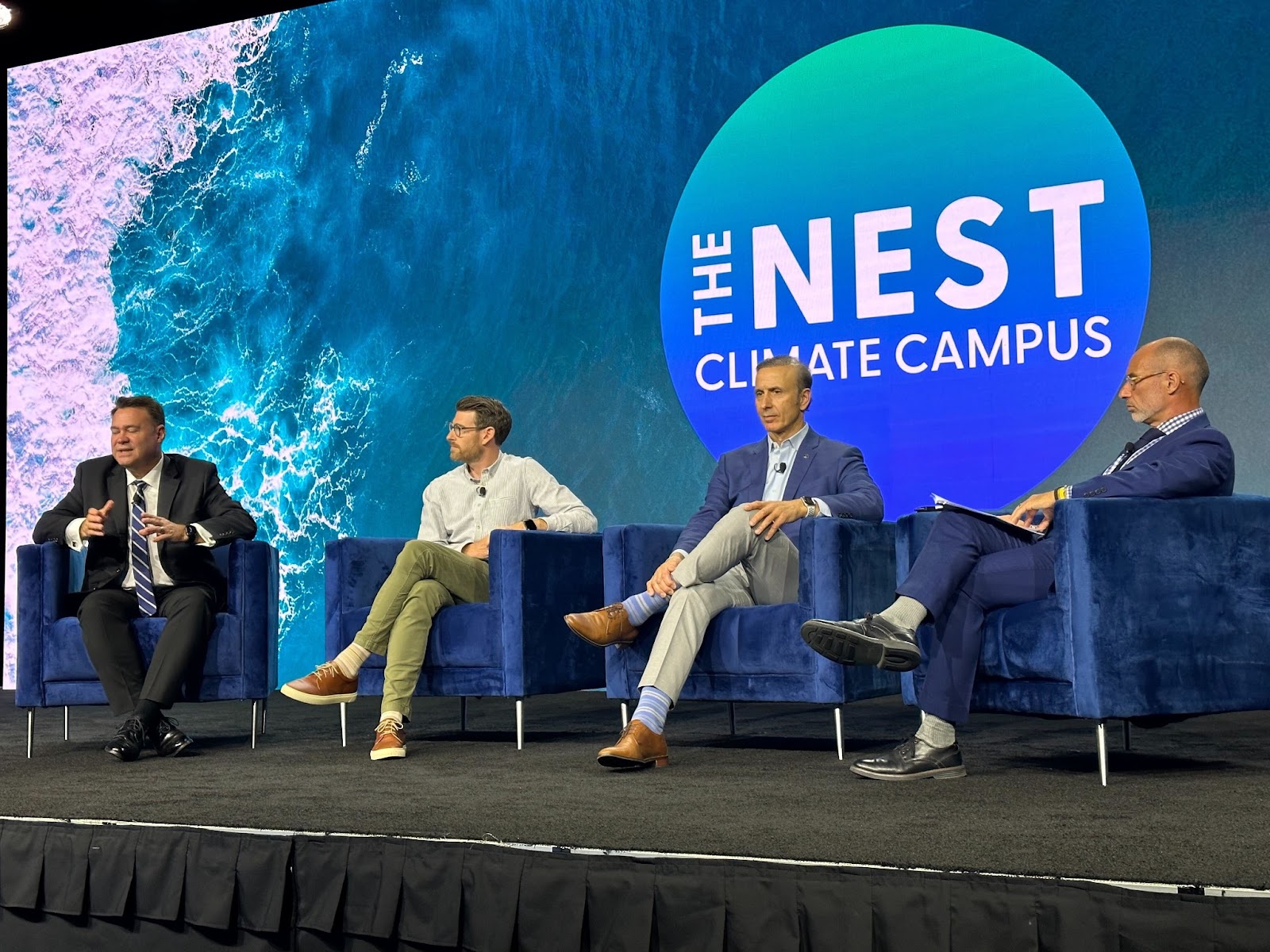
Those were key questions posited by JUST Capital CEO Martin Whittaker in a panel event at The Nest Climate Campus during Climate Week alongside three executives making real headway on environmental issues: namely, leaders from food safety and chemicals company Ecolab, building technology and energy solutions company Trane Technologies, and enterprise cloud applications provider Workday.
Workday ranks No. 1 in JUST Capital’s Rankings of Russell 1000 companies leading on Environment. The company has achieved a Net-Zero carbon footprint and is committed to sticking to that by mitigating the company’s entire carbon legacy and making progress on its verified 1.5-degree Net-Zero commitment. Workday’s also enacting change in its supply chain by having 70% of its suppliers make science-based targets by 2026.
Trane Technologies ranks 2nd overall in its industry for its environmental action, including having a 2030 Net Positive Water commitment and pioneering the Gigaton Challenge, an initiative to reduce one billion metric tons of greenhouse gas emissions from its customer’s carbon footprints by 2030.
And EcoLab ranks first in its industry as a leader driving climate innovation with a verified 1.5-Degree Science-Based Target that aims to halve the company’s emissions by 2030 and achieve Net-Zero by 2050, among other environmental strategies.
The executives discussed a range of learnings from their work, including how to drive buy-in with different stakeholders like consumers and shareholders, aligning internally as a company on common goals, and ensuring your plans incorporate important factors like equity.
Emilio Tenuta, senior vice president and chief sustainability officer at Ecolab, kicked off the conversation by addressing the elephant in the room – the anti-ESG political rhetoric that’s been seeping into boardrooms and investor meetings around the country.
“Climate action has become a polarizing topic with ESG and so on, which is unfortunate,” he said. Tentua explained why there’s so much polarizing rhetoric around environmental issues, and offered a clear strategy to address it.
“Part of the challenge is that when we hear organizations talking about their ESG leadership, they focus on ‘it’s the right thing to do,’ which I think falls flat. I’ll just throw it out there,” he said. “I think we need to build on that. If it’s not aligned with your business strategy, and will drive customer growth, and opportunities to drive innovation, and the ability to really demonstrate how this is the right thing to do, but more importantly, it drives results and performance in terms of your business, then I think we’re going to continue to have this conversation.”
In other words, companies only leading with the moral case will never be as effective as those leading with the business case.
“That’s a big part of ‘the why’ really for us on climate action – it’s core to our business strategy,” the Ecolab exec said. “And we have a leadership commitment, that this is not only the right thing to do, but it’s also good business for us, in terms of driving our business results.”
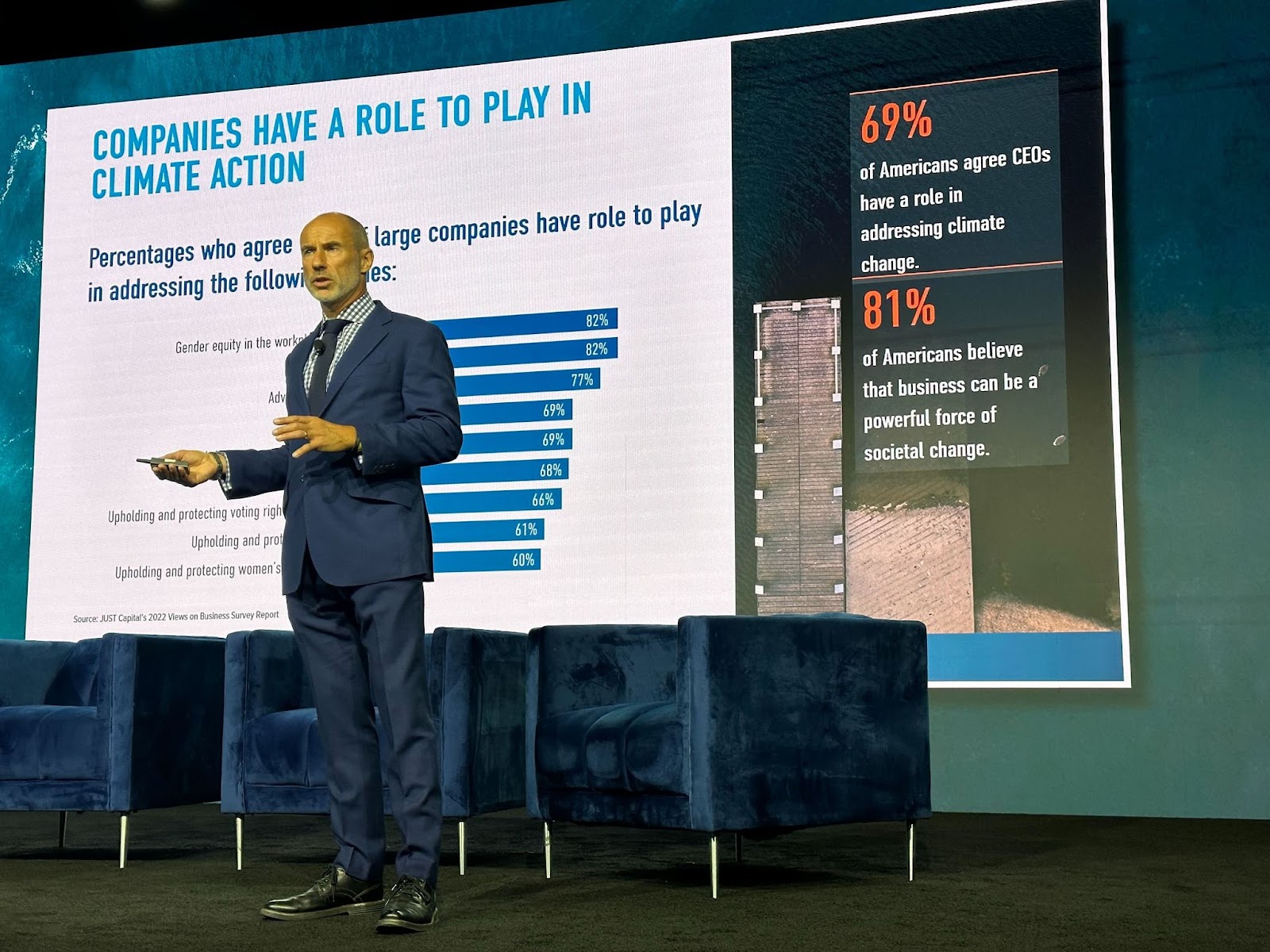
Scott Tew, vice president and sustainability and managing director at Trane Technologies, agreed that having support from a company’s top echelons is critical to making progress on environmental issues.
“Our leadership team heard that 40% of the world’s spent energy is related to heating and cooling buildings. It’s a tremendous opportunity and a concern for our sector. Our leadership team began to grapple with what’s our world here. If we believe the science, if we believe a company has to step forward, why not us?” Tew said.
After realizing the moral, and business opportunity, Tew said that Trane’s leadership asked, “What would it take to move the needle?”
“In 2019, the leadership team made a bold commitment of a gigaton challenge, to reduce emissions of our products that we sell to customers by a billion metric tons by 2030. It was an all-in moment for the company,” he said.
Having full commitment from the company’s leadership around specific, measurable goals, was key. And investors loved the news, The Trane Technologies vice president said.
“Shareholders love it,” Tew said. “We’re linking emissions and revenue growth.”
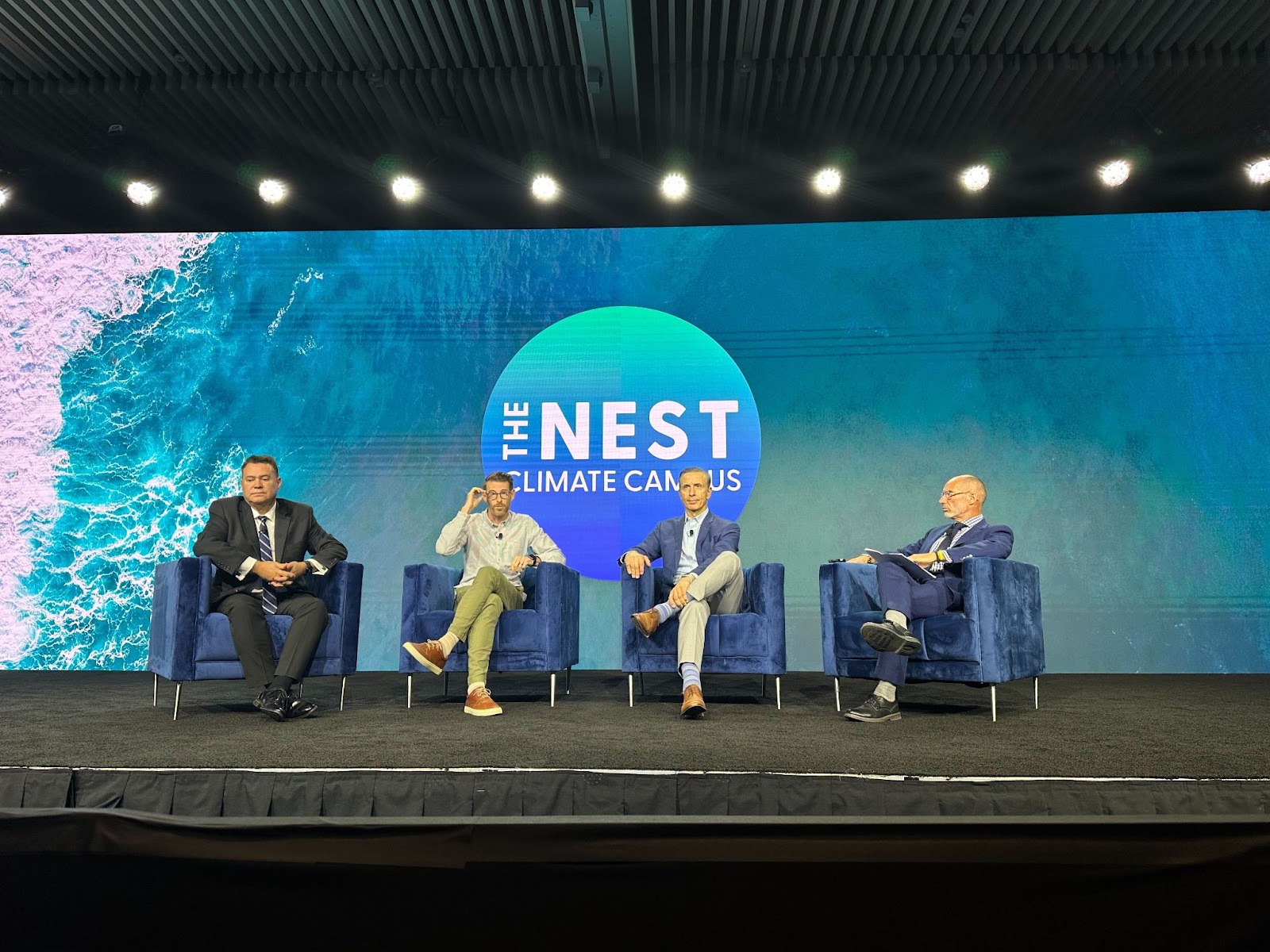
Erik Hansen, senior director of environmental sustainability at Workday, said that in driving buy-in from colleagues, executives, and shareholders, it’s important to highlight the consumer demand for environmental action.
“Customers increasingly care about climate change, their footprint, their supply chain footprint. This is moving – from several years ago where this was sort of, like ‘a nice to have’ – to table stakes. Over the past 12 months or so, we’re really seeing that ramp up,” Hansen said.
The Workday senior director suggested that in addition to the market opportunity, there’s significant benefit to avoiding reputational or regulatory damage.
“This conversation is only accelerating. Don’t wait five years to get a temperature check on your emissions or your footprint. Start right now,” he added.
In addition to setting specific goals, Hansen added that CEOs and leaders should incorporate equity into their environmental plans.
“We have to acknowledge that underrepresented communities are often the hardest hit with the effects of climate change – pollution, climate disasters. And so we can apply that lens of equity to the decisions that we’re making, in terms of climate strategy? How do you do that with the lens of resiliency, climate equity, climate justice, other environmental outcomes beyond just carbon? Every company should be considering this lens,” he said.
To unpack your company’s environmental performance in the JUST’s Rankings and gain insights into how to improve on core climate issues, please reach out to corpengage@justcapital.com.
This report was authored by JUST Senior Director of Quantitative Research & Analytics Mona Patni and Senior Research Manager Laura Thornton.
As we continue to experience global heat waves, wildfires, and extreme weather, it is increasingly important that companies consider the ways in which climate impacts all their key stakeholders – including workers, customers, communities, shareholders, and the environment in which they operate.
In particular, workers stand to be keenly affected by climate change, which looms large over the well-being of their communities as well as the security of certain jobs and industries. Calls for transitioning to greener energy sources represent not only a vital step in addressing climate change; they also carry significant implications for workers and communities that have traditionally relied on the fossil fuel industry for jobs.
With Climate Week and Labor Day not far behind us – we were interested to analyze the companies that lead on investing in the needs of their workforces and reducing their environmental impact. Building upon the collection of index concepts that JUST Capital launched earlier this year, we’ve constructed a new concept: the Workers & Environment Leaders, which tracks the top 20% of companies that perform best across all the Environment- and Worker-related Issues in our 2023 Rankings.
What we found is that the Workers & Environment Leaders has outperformed the Russell 1000 by a significant 21.73% from January 2018 to July 2023.
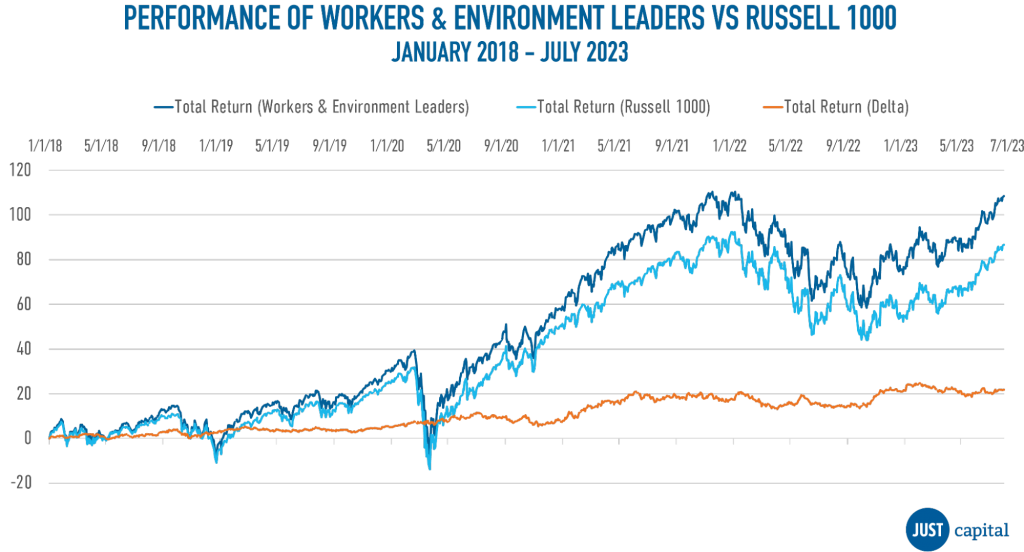
The companies that are investing in both their workers and the environment are clearly seeing strong returns in the market, signaling that investors benefit when the transition to green energy is conducted with workers central to the conversation.
Amongst the companies included in the Workers & Environment Leaders, several stand out for their efforts to prioritize the health of both their workforce and the environment.
All of these companies have also set climate commitments through the Council for Inclusive Capitalism, which houses resources for companies on the journey to enabling a just transition.
The importance of this “just transition” cannot be understated. As we continue to face uncertainty for the workforce and climate alike, an integrated approach is essential in fulfilling the priorities of the public, which drive corporate performance in our Rankings as well as inclusion in the Workers & Environment Leaders index concept. Companies working toward a just transition are able to:
Companies in the Workers & Environment Leaders not only outperform in the market, they outperform their Russell 1000 peers on many of the issues we track. As compared to the Russell 1000, Workers & Environment Leaders:
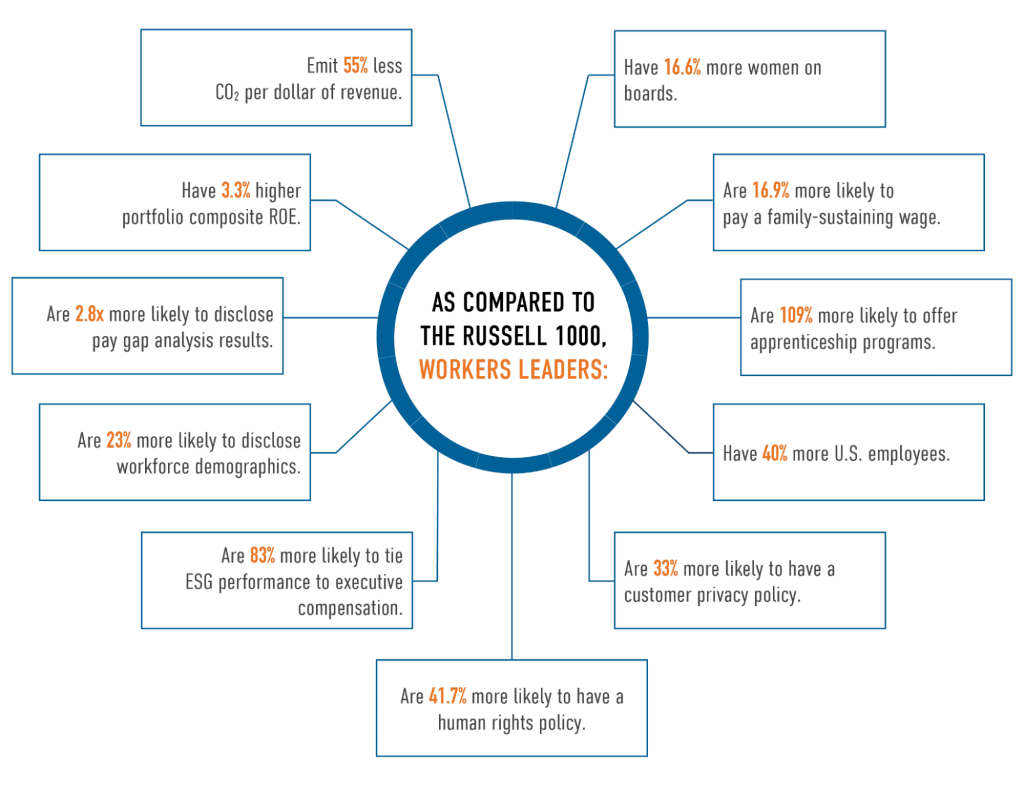
The Workers & Environment index concept – along with the others we launched earlier this year – are a powerful tool in our helping us continue to build the business and investor case for why just business is better business. They can be leveraged and licensed as is, or spark a conversation for how we might work together to craft a custom index or product. If you are interested in learning more, please contact us.
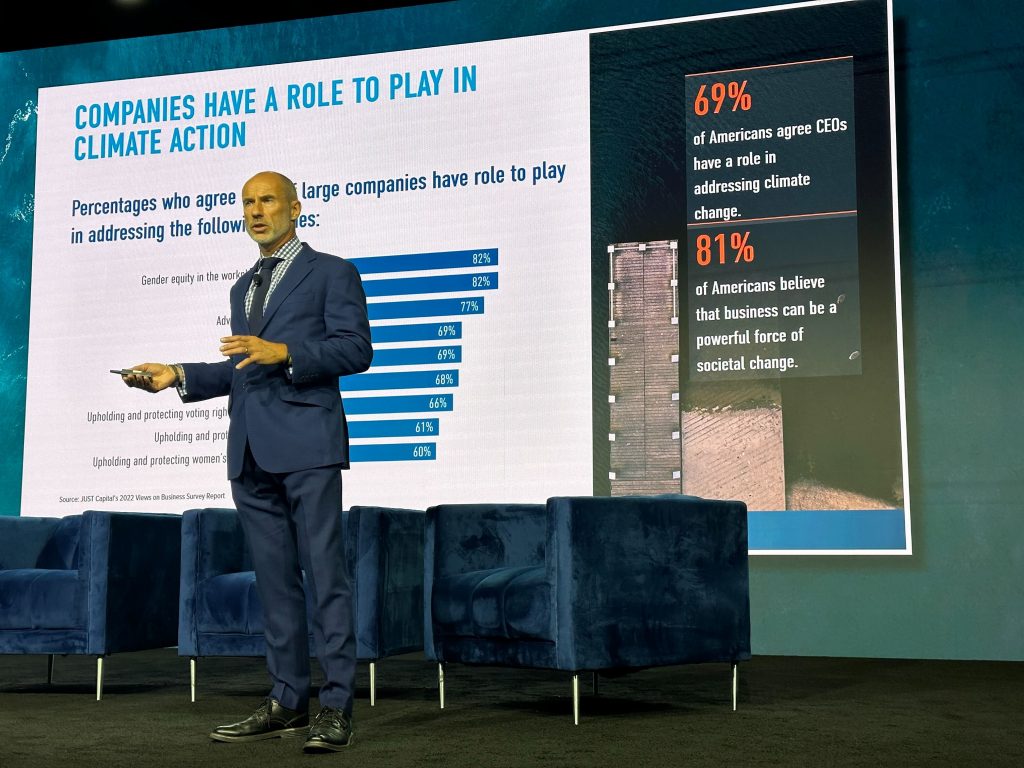
It’s been a hectic but energizing few days. Conversations I’ve been part of ranged from how international companies should talk about sustainability and inequality in the U.S., to the ESG backlash, the rise of populism and the post-truth society, to climate politics and justice, innovation and AI, even how music can inspire people to action. Indeed, the breadth of intersecting issues discussed has been remarkable. Climate Week is not only about climate.
My sense overall is that as far as the business and finance worlds are concerned, it’s all systems go. The world needs solutions to our greatest societal challenges, and those who provide them will be well rewarded. Sure, there are still a lot of groups out there trying to tell companies what they should or shouldn’t be doing, but mostly it’s to the business case that all conversations inevitably return. Politics, if anything, is a sideshow. One interesting observation – since so much of what happens during climate week and UNGA is shaped by an international contingent – is that the current social and political environment in America is at once bewildering, bemusing, and impenetrable to anyone not thoroughly immersed in it.
At JUST’s panel at The Nest Climate Campus, I presented our latest data on the state of U.S. corporate climate commitments and performance – it was featured on CNBC the same day – and led a lively discussion with three executives at companies that are genuine leaders in the space, namely, Emilio Tenuta of Ecolab, Erik Hansen of Workday, and Scott Tew of Trane Technologies. Representing the chemicals, software, and building materials/construction industries, they gave their unique perspectives on everything from what drives them, to major innovations they’re seeing in their sector, to how they think about politics and the “anti-ESG” movement.
All three agreed that the conversation has drastically changed in the last 12 months, that their work has never been more vital, that the business stakes have never been higher.
Be well,
Martin
In honor of Climate Week, we’re shining a light on the Top 5 Companies for the Climate Change Issue in our 2023 Rankings:
On CNBC’s “Squawk on the Street,” senior correspondent Diana Olick discusses JUST’s latest analysis of corporate climate commitments and emissions data, highlighting the biggest emissions reductions were disclosed by Avangrid, Owens Corning, and Johnson Controls International. The analysis – written by JUST’s Senior Manager of Environment Laura Thornton and Research Analyst Shannon Cabral – finds that while commitments of all ambitions are increasing, actual emissions reductions are lagging. Fortune Impact’s Peter Vanham digs into what’s “interesting and odd” about the latest round of climate insights.
JUST worked with Alexis Ohanian’s 776 Foundation to spotlight the next generation of climate leaders. Hear from Pranav Myana on his motivation for founding AmarraTech, which uses microgrids to increase access to renewable energy for communities around the world and Joshua Ichor about his journey to launching GeoTek, a startup tackling water infrastructure issues, after contracting typhoid fever himself.
At Fast Company’s Innovation Festival, JUST CEO Martin Whittaker speaks on a panel titled “How the Culture Wars Are Shaping the Future of ESG,” and encourages a new way of talking about ESG that emphasizes the issues most important to the public.
Fortune’s CHRO Daily newsletter features our recent analysis of paid sick leave policies among America’s largest employers, highlighting that just 28% of the Russell 1000 disclose a paid sick leave policy and only 9% disclose the number of paid sick days provided.
In a report on Hispanic Americans’ economic progress, CNBC’s Brandon Gomez points to JUST polling finding that 26% of Hispanic Americans believe capitalism is working for the average American – compared to 32% overall.
“Customers increasingly care about climate change, their footprint, their supply chain footprint. This is moving – from several years ago where this was sort of, like ‘a nice to have’ – to table stakes. Over the past 12 months or so, we’re really seeing that ramp up.”
“We know from your data that more companies are making commitments. But the big thing, the cynicism out there by consumers, is that business is setting bold, ambitious targets, but we’re not showing enough action.”
In an interview at the Milken Institute Asia Summit last week, philanthropist and Bridgewater Associates founder Ray Dalio forecasts how AI could interact with the other key issues of our time – like climate change and political conflict – suggesting that the workplace and job market could be radically disrupted. Fortune digs into the interview, which underscores why investors and policymakers alike must prepare for the changes to come.
CBS News considers the ways in which AI could be a tool to help combat the effects of climate change – optimizing electricity grids and better modeling shifting climate patterns, or even fighting wildfires – as well as the ways it could create further harm, with AI models consuming large amounts of energy and contributing additional greenhouse gas emissions.
This week Google announced that its AI Chatbot Bard would begin to integrate with several other apps, retrieving information from YouTube, Maps, and Google’s Flights and Shopping search features, and if granted permission, from users’ Gmail, Docs, and Drive. Insider has the details. Microsoft also announced that a new version of Windows shipping on September 26 will have Microsoft’s AI companion Copilot baked right into the operating system.
As Climate Week wraps up, there’s much to think about. In a Politico opinion piece, Former New York City Mayor Michael Bloomberg discusses why this year’s COP28 underscores a newfound urgency to climate action, recommending a concerted effort across public, private, and philanthropic sectors to accelerate critical emissions targets. Climate activists agree – Quartz covers the March to End Fossil Fuels, estimating that 75,000 protested the use of coal, oil, and natural gas in New York City on Sunday.
Financial Times reports on new recommendations from the Task Force on Nature-Related Financial Disclosures (TNFD), offering a framework for companies to report on nature-related risks like species loss and deforestation – signaling growing focus from investors and corporate executives on these issues.
A new report from the Department of Energy shows that U.S. energy and industrial sectors have been slow to advance the Biden administration’s climate goals – EE News reports on the findings, echoing our own analysis of lagging emissions reduction in the Russell 1000.
The Washington Post reports on a new study estimating that fully remote workers produce less than half the carbon footprint of those who work onsite, shedding light on the potential environmental benefits of working from home.
The New York Times covers California’s climate lawsuit against Exxon Mobil, Shell, BP, ConocoPhillips, and Chevron, claiming that the five oil giants misled the public by downplaying the risks of fossil fuels. According to Forbes, the lawsuit – filed by the state of California last week – alleges tens of billions of dollars in damages.
Meanwhile, the UAW remains at the picket lines. CNN and Politico highlight ballooning CEO pay as a core frustration for striking workers, while NYU Professor Scott Galloway proposed in a CNN Business interview that “There should be one union. The head of that union is Biden,” and that the most effective path forward will be the establishment of a $25 federal minimum wage. And in a New York Times op-ed, investor Steve Rattner warns that, while change is needed, the UAW’s demands – which include a 36% pay raise, a 32-hour work week, company-paid medical benefits for retirees, and more – may be overly ambitious.
CNBC shares the good news that Bank of America – the #1 Most JUST Company in our Rankings and one of the top 10 companies that treat employees best – will boost its minimum hourly wage to $23 in October, on the way toward its goal of raising hourly pay to $25 by 2025.
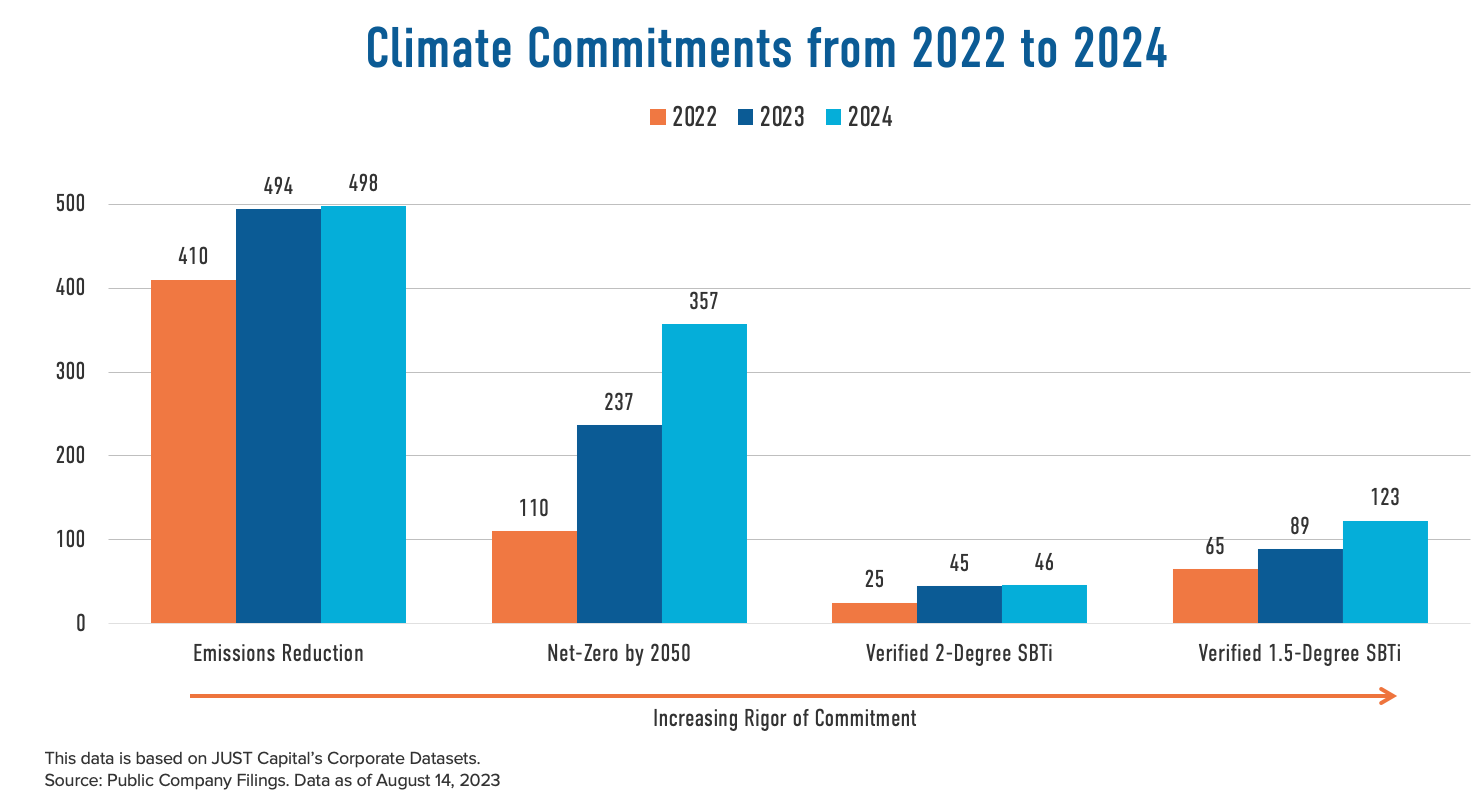
Over three years of analysis across four levels of climate commitments made by Russell 1000 companies, we have seen an increase in every category of commitment. Net Zero commitments have tripled, and our most rigorous category, Verified 1.5-Degree SBTi, has doubled since the start of our measurement. Despite the promising growth across these categories, however, our analysis also shows that corporate action on reducing actual emissions is lagging overall. In fact, companies with a general commitment to reducing emissions (e.g. reduce 50% by 2045) or Net Zero climate commitments have, on average, increased their emissions. Explore the insights.
