
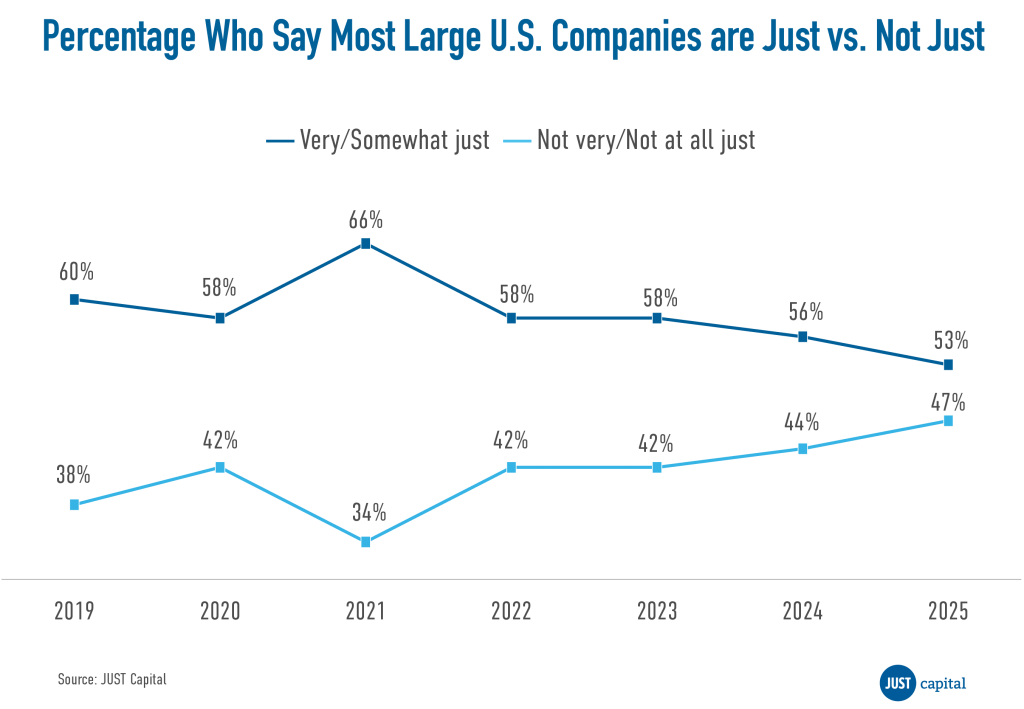
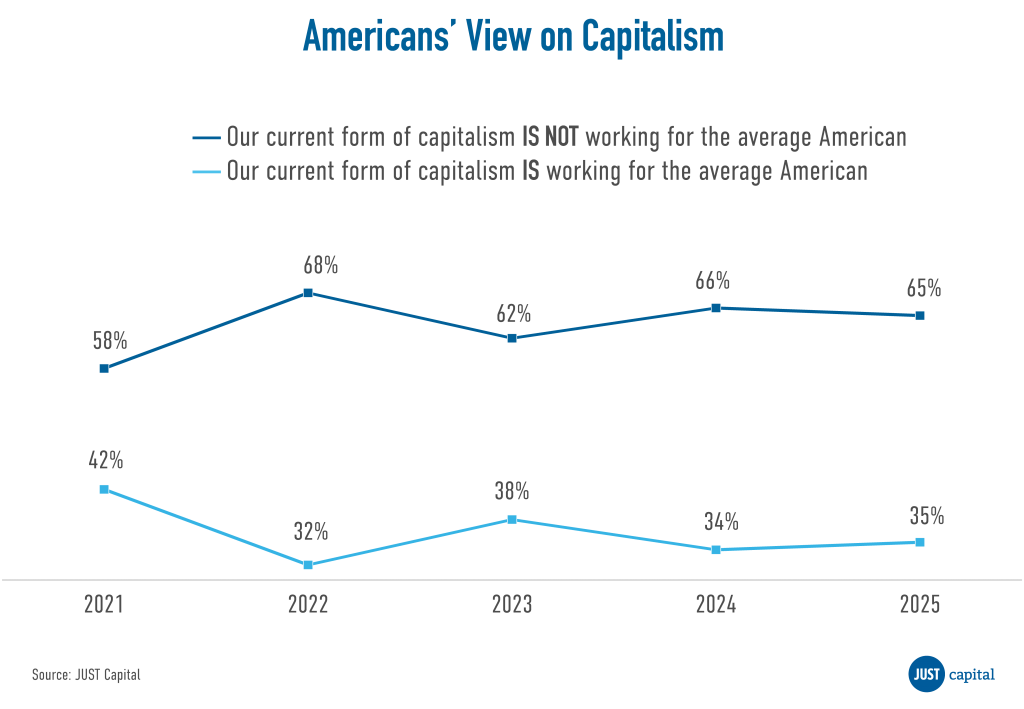
1. Only 53% of Americans believe large U.S. companies are very or somewhat just, the lowest percentage since we began this polling in 2019. Only 35% believe our current form of capitalism is working for the average American.
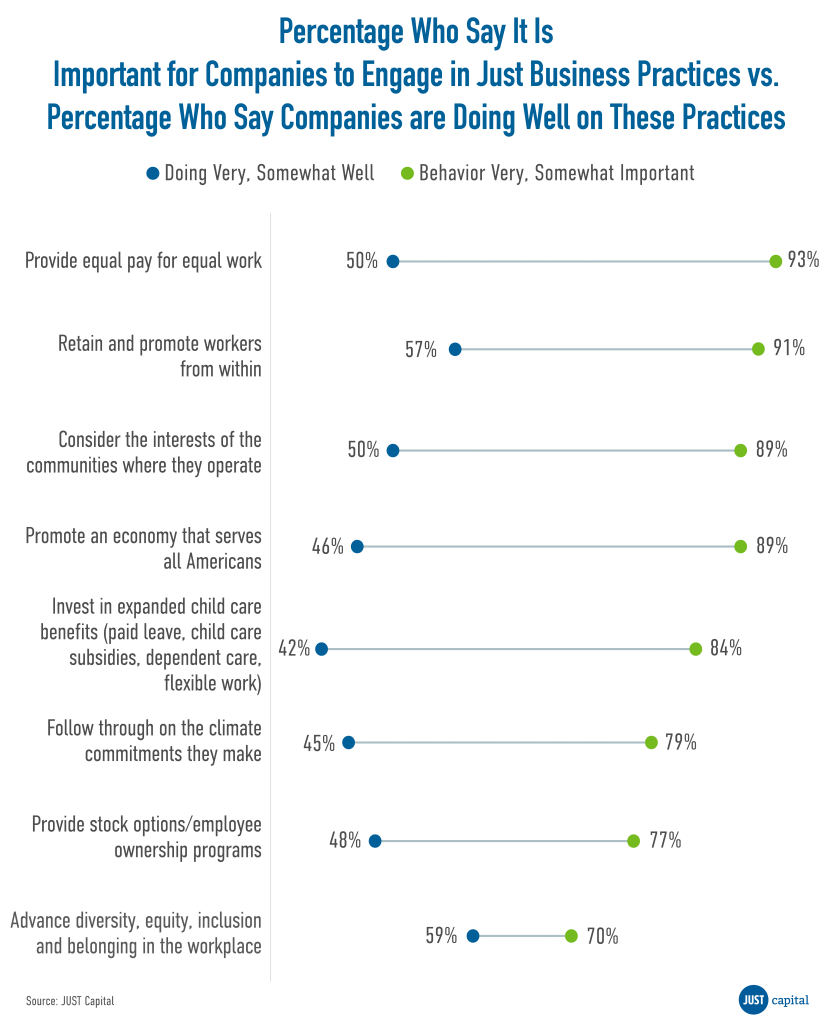
2. This is at odds with the expectations of the public. 80% believe business can be a force for positive social change and 89% agree it’s important that companies promote an economy that serves all Americans.
3. When we dig deeper, Americans care most about worker-related issues such as providing a fair and living wage, supporting worker well-being, and offering advancement and training opportunities, alongside employee benefits.
4. As AI and automation become even more dominant in 2026, leaders have a significant challenge ahead to innovate and grow their business while continuing to invest in and cultivate their workforce. Our recently released research on perceptions of AI amongst corporate leaders, investors, and the American public aims to help them identify key considerations for responsible AI deployment at scale.
Perceptions of performance on just business behavior peaked during the height of the Covid-19 pandemic in 2021. Since then, the gap between those who view companies as just versus unjust has narrowed to its smallest margin in seven years, suggesting declining confidence in corporate behavior.
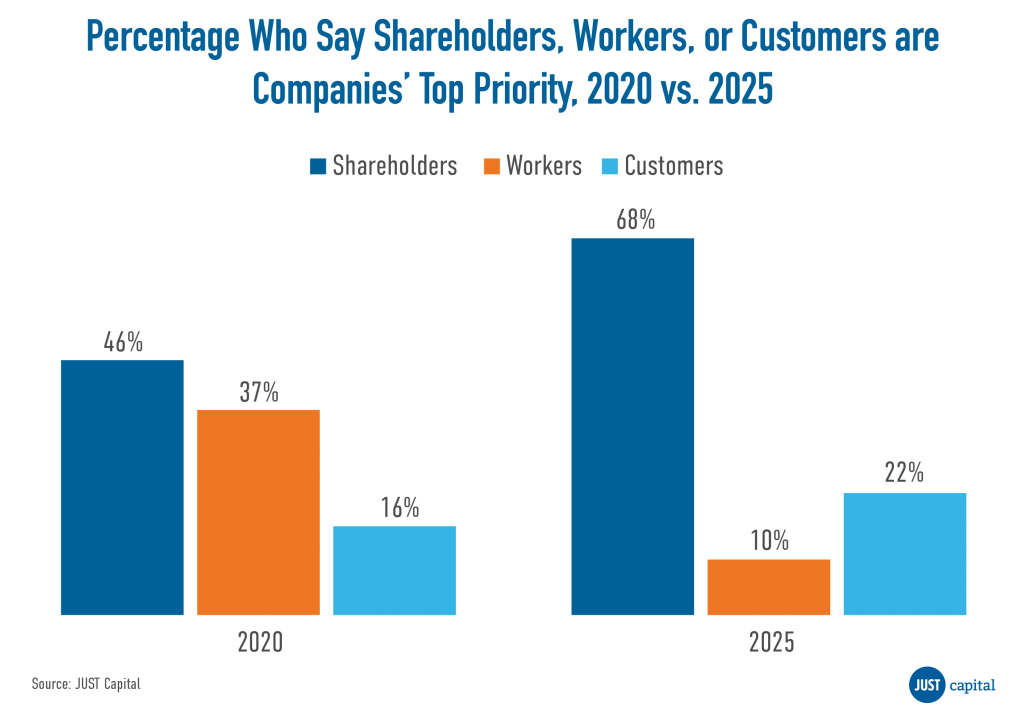
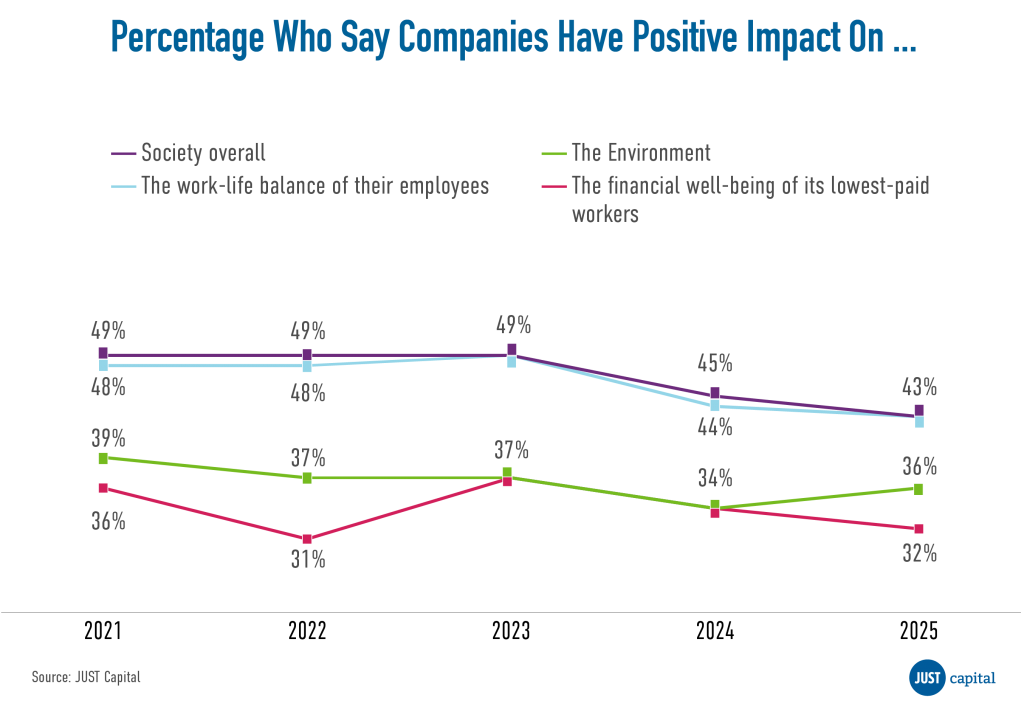
The public indicates belief that companies are overwhelmingly focused on shareholders at the expense of their workers and customers. The shift since 2020 is stark: while shareholder prioritization has remained constant or even intensified in the public’s view, they believe attention to workers and customers has languished.
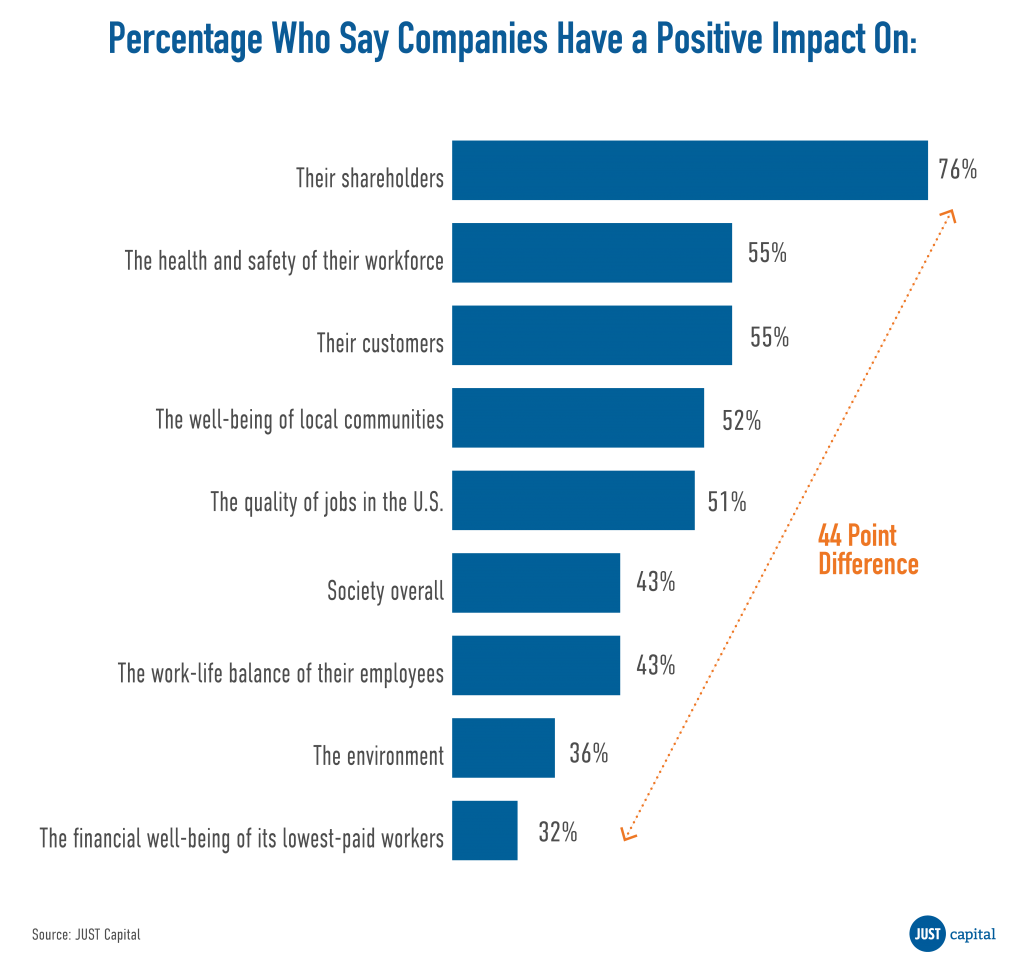
76% of Americans say companies positively impact shareholders compared to other stakeholders, to society, and even compared to quality jobs. The starkest gap appears in perceptions of impact on the financial well-being of a companies’ lowest-paid workers.
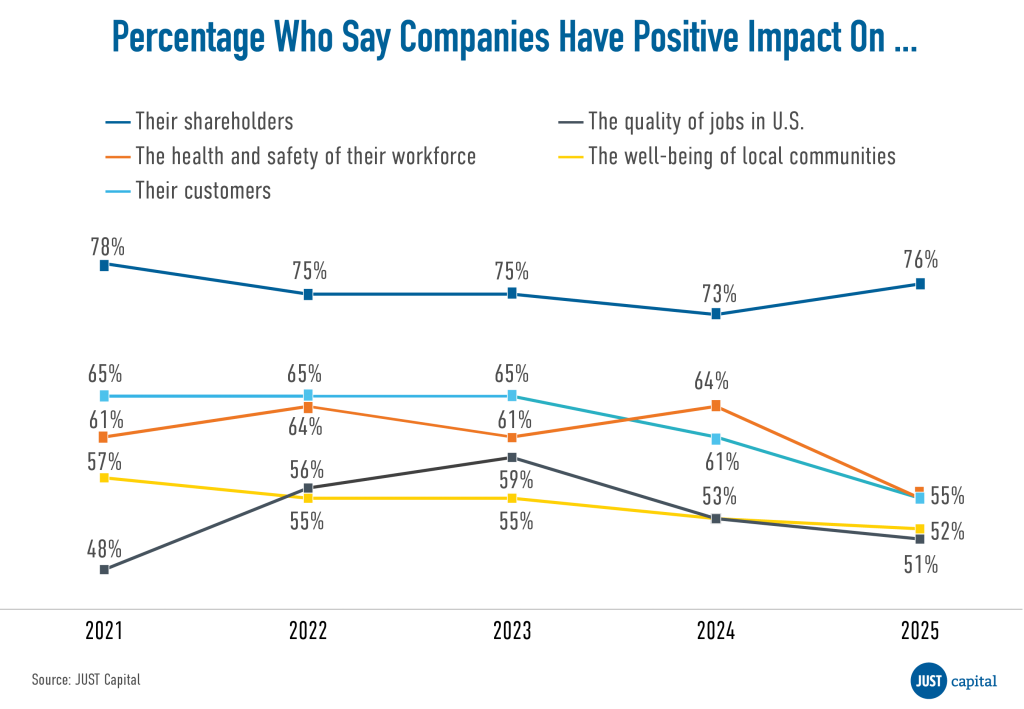
Over time, the erosion of public confidence has accelerated, with Americans increasingly convinced that companies prioritize investors to the exclusion of all other stakeholders.
When asked whether capitalism is working for the average American, the majority of respondents say no. This negative sentiment has persisted for four years, with 2021 marking the narrowest gap between those who agree and disagree that the system is working.
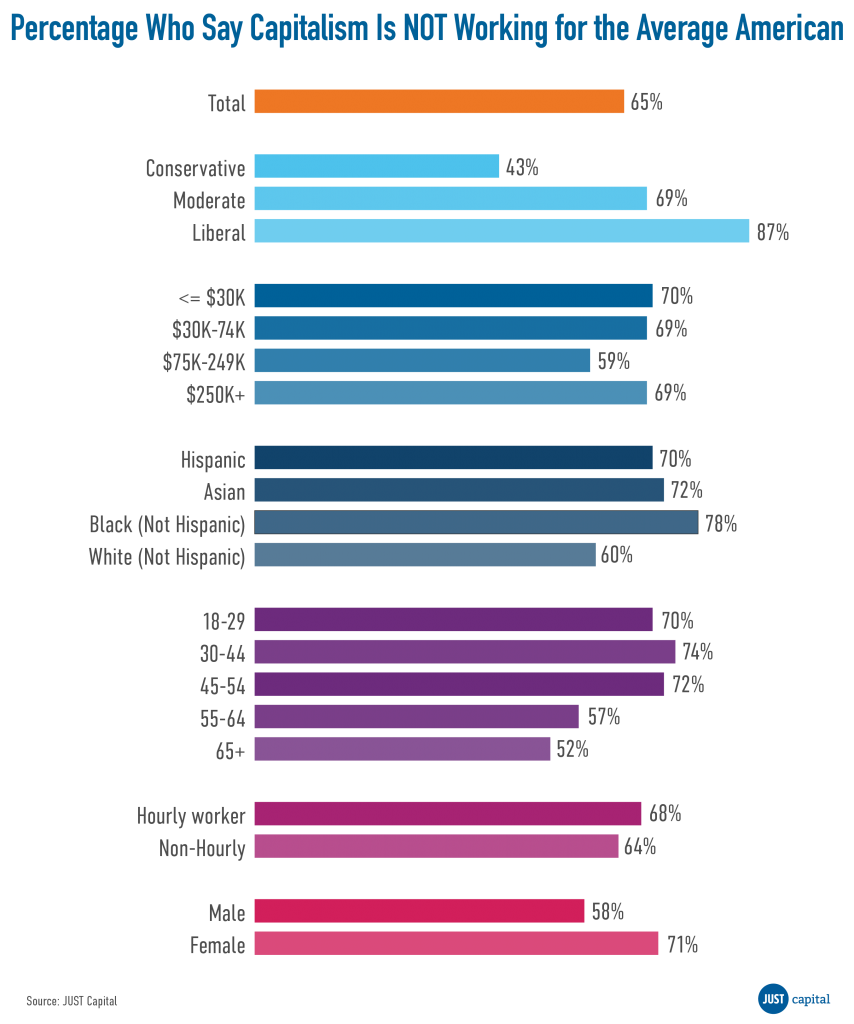
This sentiment is remarkably consistent across demographics. In nearly every group — regardless of age, income, race, or political affiliation — the majority believe capitalism is NOT working for the average American. The exception is Conservatives, who have a lower, yet still substantial share who express doubts about capitalism’s effectiveness to generate shared prosperity.
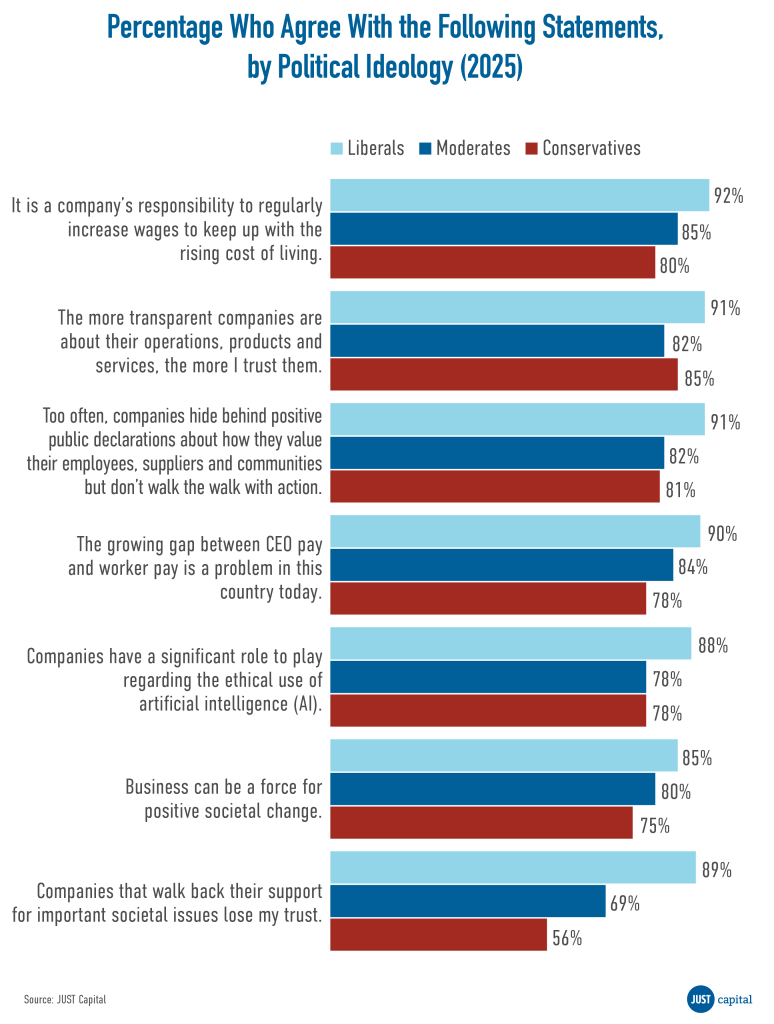
Eighty percent of Americans think that business can be a force for positive change. The public also has high expectations of corporate America across a variety of factors, such as the ethical use of AI in business operations, the relationship between transparency and trust, and the desire for companies to operationalize value creation rather than simply making public commitments. What is additionally striking is the consistent level of agreement on these sentiments across political ideologies.
Although the public is looking for action over verbal commitment, there is an opportunity for leaders to better communicate how they are positively serving their workers, customers, and communities.
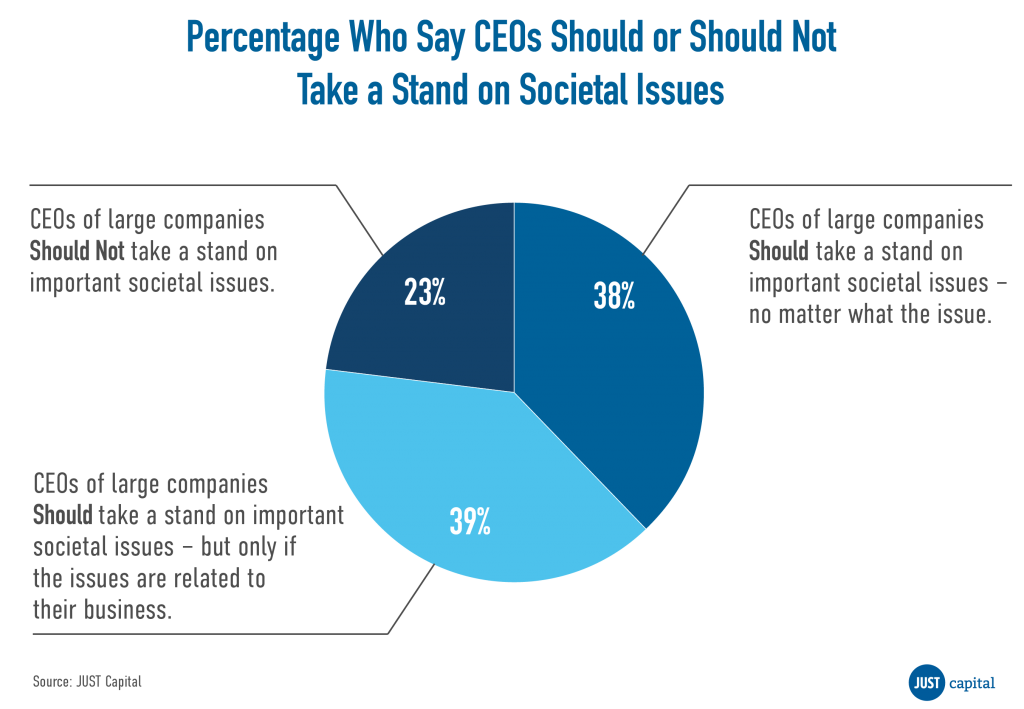
While a quarter of Americans say that CEOs should stay away from taking a stand on any societal issues, three-quarters say that they do have a role to play in societal issues, especially when they concern issues related to their business.
While 70 to 93 percent of Americans say it’s important for companies to engage in various responsible business practices, their evaluations of actual corporate performance indicate skepticism that expectations are being met. The largest gaps between expectation and perceived performance emerge in two critical areas: ensuring equal pay for equal work and contributing to an economy that serves all Americans.
Overall, Americans continue to prioritize worker-related issues, with four of the five worker issues ranking in the top six out of 17 total issues. Customer-related issues are also prioritized in the top 10.
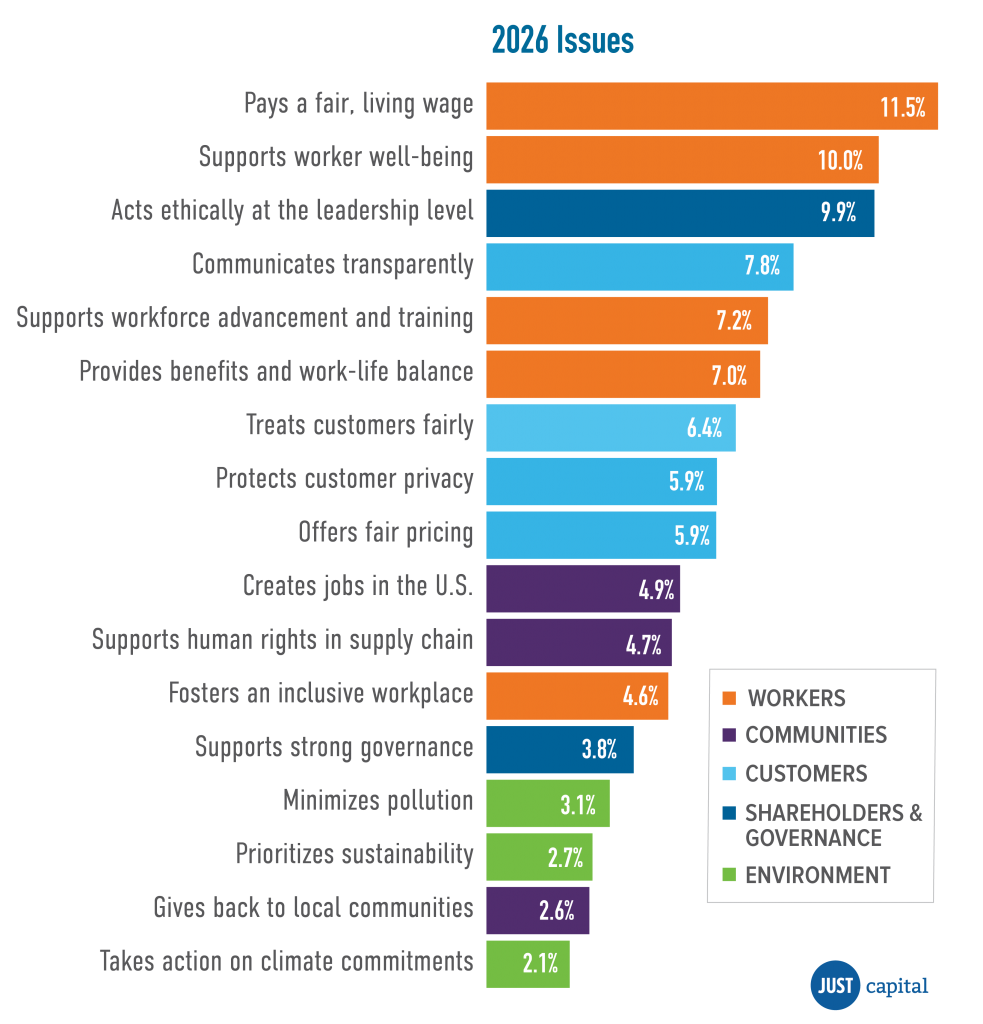
When we dig deeper, we find a remarkable consistency across demographic groups in the three highest-ranked Issues: Pays a fair, living wage, supports worker well-being, and acts ethically at the leadership level. These findings signal that the public continues to be united around the issues they want companies to prioritize.
Over the past seven years, “Pays workers fairly and offers a living wage that covers the cost of basic needs at the local level” has consistently ranked 1st across nearly every demographic cohort. At 11.5%, this issue’s weight remains relatively stable from last year, but is lower than at its peak of 21% in 2023, suggesting that while a fair, living wage continues to be fundamental to public perceptions of just corporate behavior, its degree of importance has declined in favor of other worker issues.
“Supports worker well-being and provides safe and healthy working conditions,” which rises to the second-highest ranked issue. This elevation likely reflects heightened concern about maintaining positive, supportive work environments that prioritize workers’ humanity.
Likewise, “Invests in its workforce by providing training, education, and career development opportunities” takes the #5 spot, and comprises 7.2% of the model, up from 6.9% the year before. The rise in worker training priorities likely reflects the growing desire among workers for upskilling in an AI-driven economy — a trend corroborated by findings in our AI survey.
“Conducts business ethically and honestly, and takes responsibility for wrongdoings” ranks #3 overall, followed by “Honest and transparent in communications with customers about its products, services, and operations,” at #4. Both issues made the top 4 last year, and their sustained prominence takes on new significance in the age of AI. As systems become more opaque and complex, the public’s insistence on ethical conduct and transparency suggests a fundamental demand: companies must demystify their AI practices and be accountable for decisions that affect their stakeholders’ lives.
Finally, the biggest mover this year is “Protects the privacy of customers, including their data,” which moved to #8 from #10 last year. As we found in our AI survey, the public fears that rushed AI adoption, combined with weak security protocols, could expose personal information to breaches, misuse, or unauthorized access.
The results of the survey reflect an ongoing call from the American people for a “back to basics” business approach. The public clearly defines just business behavior as companies paying fair wages, providing good benefits and training, creating safe and fulfilling workplaces, offering opportunities to advance, treating customers fairly, and supporting the communities in which they operate.
As AI and automation become even more dominant in 2026, leaders have a significant challenge ahead to innovate and grow their business while continuing to invest in and cultivate their workforce. Our recently released research on perceptions of AI amongst corporate leaders, investors, and the American public aims to help them identify key considerations for responsible AI deployment at scale.
Americans’ Views on Business Survey
Since 2015, JUST Capital has surveyed close to 200,000 Americans to assess how well they think companies are doing when it comes to creating value for all their stakeholders and building a more just economy that truly works for all. The 2025 Americans’ Views on Business Survey was fielded among 2,004 Americans – a sample representative of the U.S. adult population – between August 18 through September 2, 2025. Our quantitative research partner is SSRS, an objective, nonpartisan research institution that provides scientifically rigorous statistical surveys of the U.S. population.
The People’s Priorities Survey
Just Capital’s definition of just business behavior begins by hearing from a diverse, representative sample of Americans through small-group qualitative discussions to understand what they expect from a “just” business. This year, the major themes we translated into issues came from open-ended responses to the following question:
Q1. Think now about the largest companies in the U.S., with hundreds or thousands of employees. We would like to know what you would consider to be “just” business behavior for these companies as it relates to various groups of people. By “just” we mean “fair or good” behavior.
Before answering this question, however, we provide respondents a clear definition of the concept: A just company demonstrates a commitment to doing right by its workers, its customers, the environment, the community, its shareholders, and the business itself.
Respondents were prompted to answer this question from the point of view of one of five stakeholders (Workers, Customers, Communities, The Environment, or Shareholders).
Q1.1 For example, actions you would expect a just company to take related to its Workers
Our polling team then distills the major themes from these discussions into discrete statements, which we define as “Issues.” Subsequently, we conduct a quantitative survey of 2,000 U.S. adults in which they rank the relative importance of these 17 Issues.
We conducted the survey online with a probability-based sample attained through the statistical sampling methods employed by SSRS. The SSRS Opinion Panel is a nationally representative probability-based web panel, and findings are generalizable to the general adult population.
The survey is drawn from a probability sample, ensuring we capture diverse perspectives from a cross-section of Americans. This includes representation across demographic dimensions (race/ethnicity, gender, income, and age), as well as other characteristics such as political ideology.
The full survey was conducted from August 18 through September 2, 2025 among a general population sample of 2,004 English- and Spanish-speaking U.S. adults ages 18 and older, with an oversample of 470 Hispanic and 253 non-Hispanic Black respondents. Panelists were sent an email invitation to take the survey online as well as up to eight reminder emails throughout the field period. The survey program was optimized so that respondents could complete it using a desktop or laptop computer as well as a mobile device. In total, 610 respondents completed the survey on a computer and 1,394 completed it on a mobile device.
The margin of error is +/- 2.0% at the 95% confidence level. Results were weighted to U.S. census parameters for age, gender, education, race/Hispanic ethnicity, and census division to ensure representativeness of the U.S. population. All margins of error include “design effects” to adjust for the effects of weighting.
AI deployment has become a defining strategic priority for the private sector, promising to enhance productivity, innovation, and competitiveness. Ensuring the technology drives prosperity and progress for every American is a top national priority. As companies race to adopt AI, significant questions are emerging about what it means to pursue these new business imperatives in ways that empower American workers, strengthen local communities, create good jobs, protect consumers, and build trust in business and capitalism.
Today, Just Capital released new findings from a survey of corporate leaders and a combined report of these corporate perspectives alongside previously released surveys of investors and the American public. The inaugural American Public, Investor, and Executive Perspectives on Responsible AI Deployment report and the organization’s ongoing research initiative aim to identify key considerations for responsible AI deployment at scale.
Just Capital will conduct quarterly pulse surveys through 2026 and beyond, providing ongoing insight for corporate leaders, investors, and policy makers as perspectives continue to evolve on what exactly responsible AI deployment means and how to pursue it.
The research identified key areas of agreement between the three audiences:
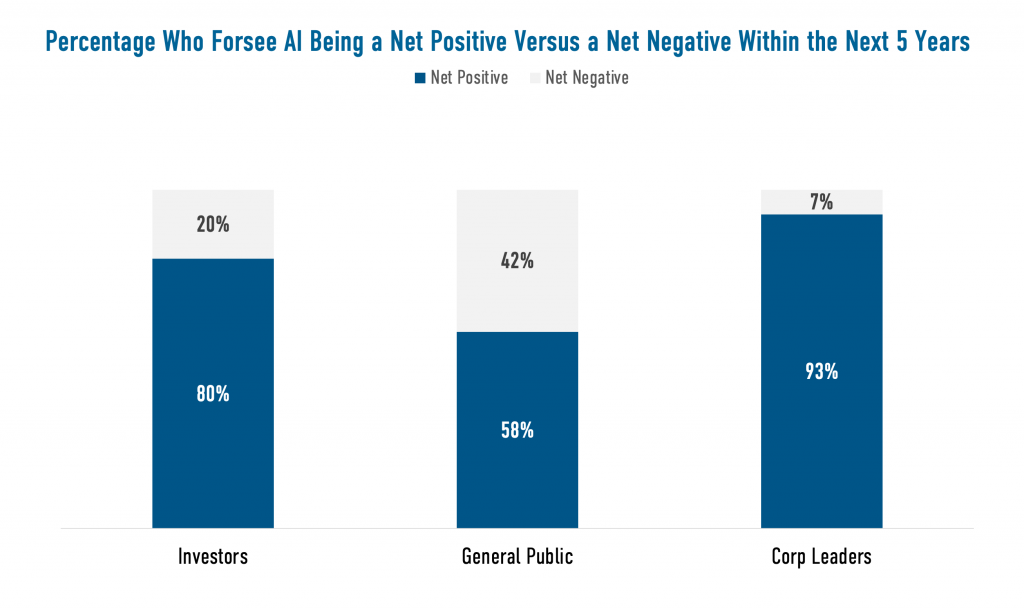
Majorities of all three groups believe AI will be a net positive for society within the next five years. Corporate leaders’ enthusiasm (93%) outpaces the general public (58%) and investors (80%).
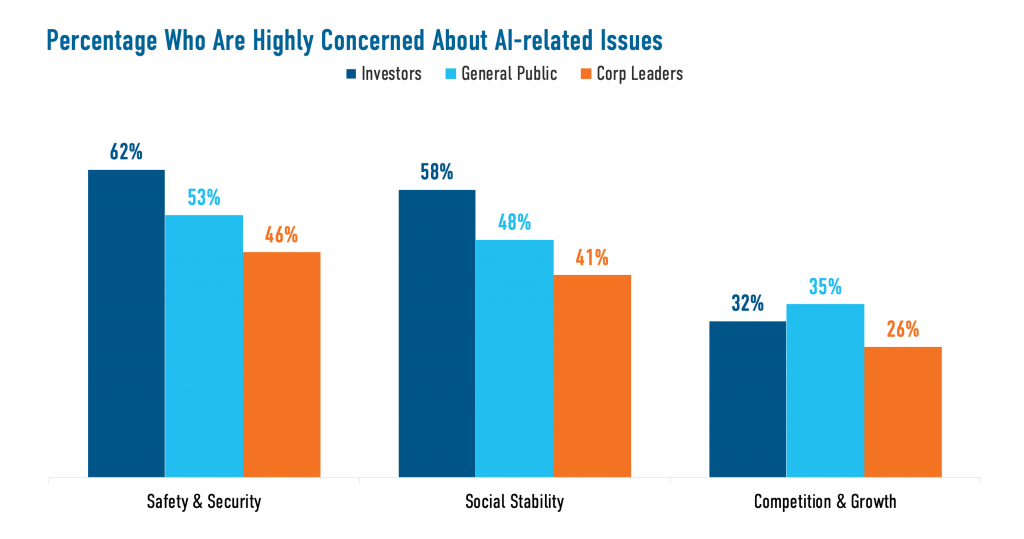
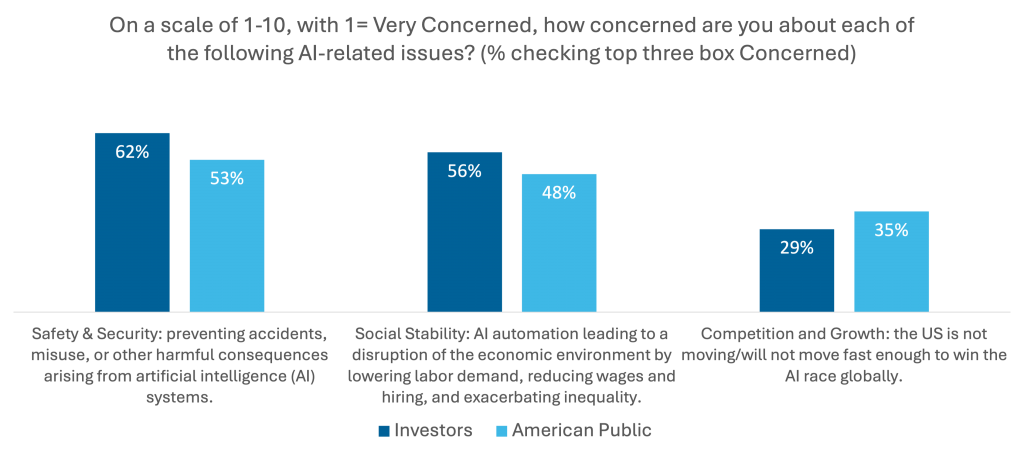
Majorities or pluralities of each group rate AI safety and security a top concern (general public: 53%, investors: 62%, corporate leaders: 46%).
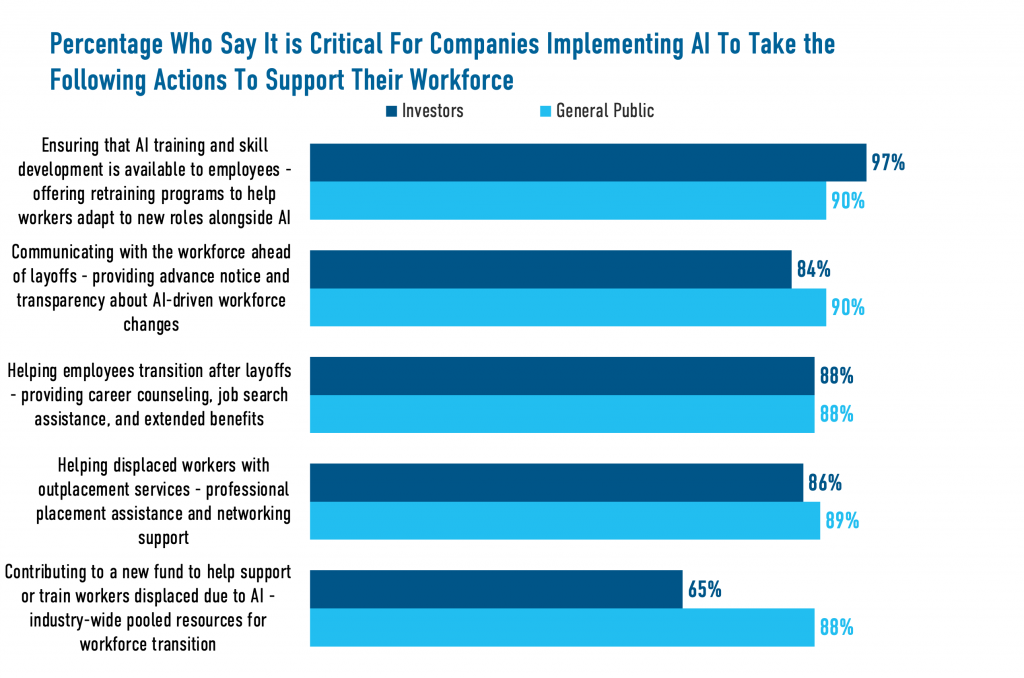
Significant majorities of the general public (90%) and investors (97%) say it is critical that companies ensure that AI training and development is available to employees, and roughly three-quarters of corporate leaders say they are planning to implement AI training to support their workers.
Some diverging views also emerged including:
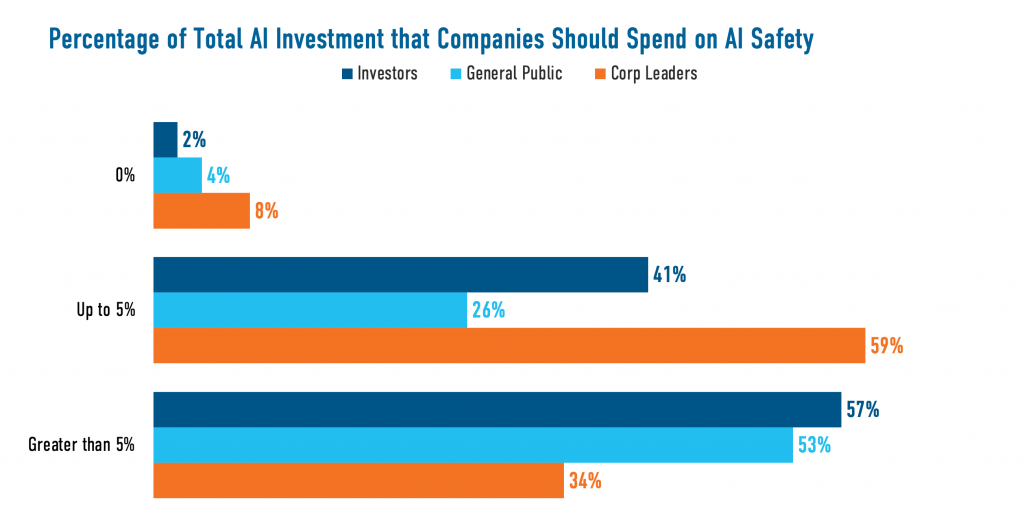
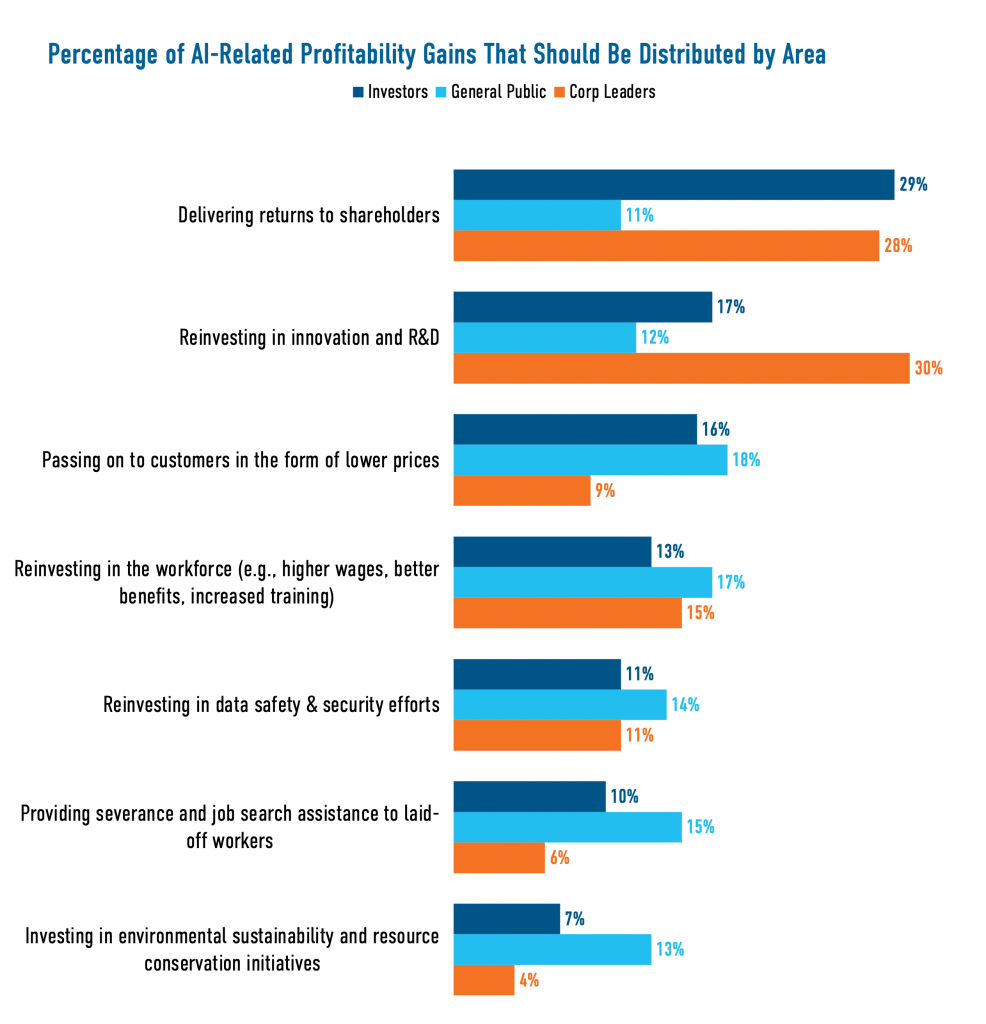
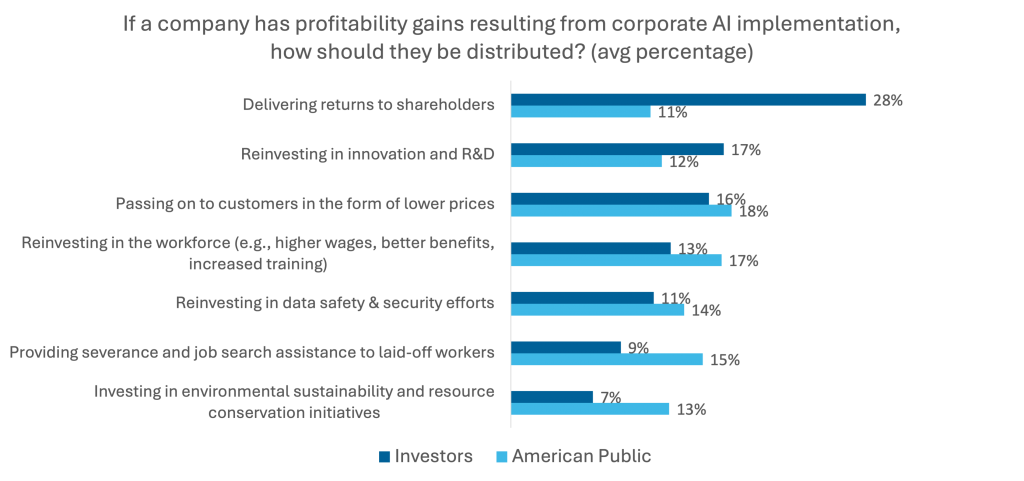
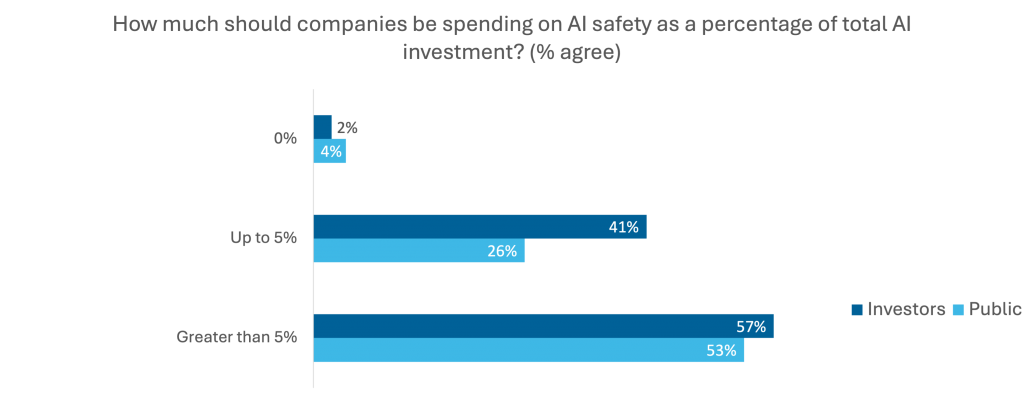
The Degree of Expected Investment in Safety and Workforce Support: Investors and the public expect companies to spend more than 5% of total AI investment on safety, while corporate leaders say they plan to allocate between 1 and 5%. When asked about how they plan to redistribute AI-related profitability gains, executives evince less emphasis on worker training efforts (17%) than on delivering gains to shareholders (28%) and reinvesting in R&D (30%).
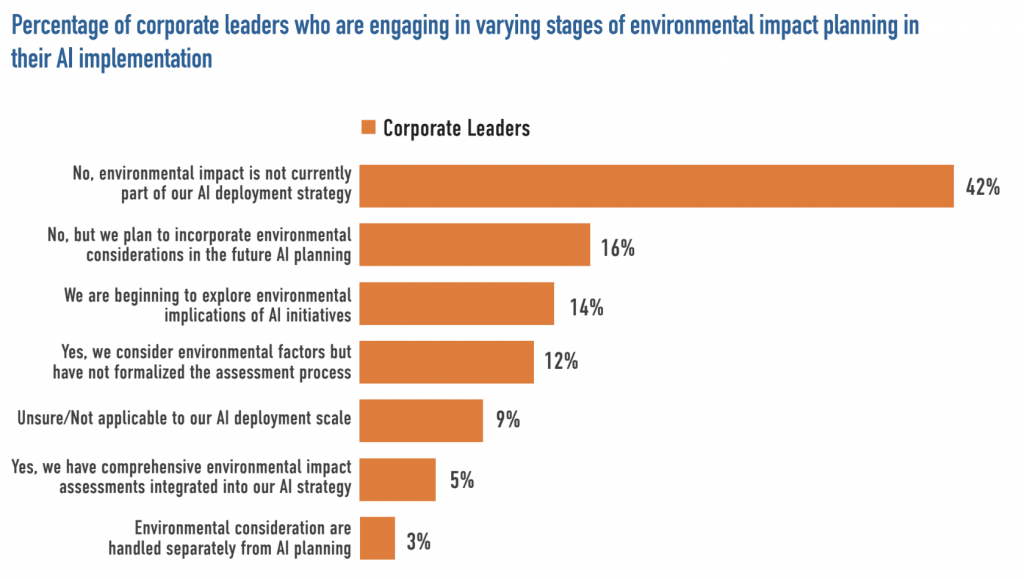
Environmental planning: Roughly a third of both the public and corporate leaders say increased corporate AI usage will have negative impacts on the environment. Currently, only 17% of leaders are including environmental impact planning in their AI roadmap, and 42% say it is not a part of their strategy.
“This is a defining period for every business leader. How to deploy AI the right way in order to create value for their companies, their shareholders, and all their major stakeholders – not to mention for society at large – is the strategic question of the moment,” says Just Capital CEO Martin Whittaker. “The insights in this initial report and the quarterly tracking we will do moving forward are designed to help leaders navigate this transformation, make responsible decisions, and ultimately win in an AI-powered economy.”
The surveys were conducted in partnership with The Harris Poll, Robinhood Foundation, and Gerson Lehrman Group. The complete report, including detailed findings and methodology, is available here.
NEW YORK, NY November 10, 2025 – Just Capital, the leading independent nonprofit on corporate stakeholder performance, today announced the appointment of six new members to its board of directors: Mehdi Ansari (Partner, Sullivan & Cromwell LLP), Jonathan Auerbach (Former EVP and Chief Strategy, Growth & Data Officer, PayPal Holdings Inc.), Laxman Narasimhan (Former CEO, Starbucks Corporation; Reckitt; PepsiCo LatAm, Europe, and SS Africa); Franz Paasche (EVP, Corporate Affairs, Verizon Communications Inc.), Stephanie Stahl (Senior Advisor & Executive Coach, Boston Consulting Group), and Charles C.Y. Wang (Professor of Business Administration, Harvard Business School).
The additions bring deep leadership experience and expertise across technology, research, communications, and corporate strategy and governance, positioning the organization to accelerate its transformation into an AI-powered corporate intelligence platform that helps business leaders optimize both business and stakeholder performance.
The new board members join under the leadership of Board Chair Dan Schulman (CEO of Verizon Communications Inc.), alongside Co-Founder Paul Tudor Jones II, whose vision launched JUST Capital in 2014.
“At a time when executives are transforming their businesses to win in an AI-powered economy and deliver long-term sustainable growth, Just Capital’s work has never been more critical,” said Dan Schulman. “These six exceptional leaders bring precisely the expertise we need to help America’s companies navigate complexity, deploy AI responsibly, and generate value for business, stakeholders, and society. I’m thrilled to welcome them to the board.”
The appointments come as Just Capital prepares to fully launch its Just Intelligence platform in 2026, following a successful beta period. The platform provides C-suites and boards with interactive insights on stakeholder performance, competitive benchmarking and scenario planning capabilities, and strategic guidance on critical issues including worker engagement, customer treatment, responsible AI deployment, and environmental and community impacts.
“These board additions accelerate our ability to deliver against our mission and drive impact at scale,” said Martin Whittaker, Chief Executive Officer of Just Capital. “Each brings a unique lens that will help us deliver even greater value to the companies and communities we serve. Together with Dan’s leadership and Paul’s founding vision, this board is equipped to guide Just Capital through its most ambitious chapter yet.”
Full bios for new board members can be found below.
For media inquiries, please contact:
Tyler Spalding: tspalding@justcapital.com
Mehdi Ansari is a partner and Co-Head of Sullivan & Cromwell’s Intellectual Property and Technology Group and the Firm’s Artificial Intelligence Practice. Mehdi’s practice focuses on advising clients on a wide range of transactions involving intellectual property and technology, including mergers and acquisitions, joint ventures, licenses, collaborations, research and development agreements, settlements and strategic advice.
Mehdi is widely recognized as a leader in his field, known for “deftly handling major transactions” for industry icons (IAM Patent 1000). He is ranked Band 1 by Chambers USA, was named an “MVP in Technology” by Law360, an “IP Trailblazer” by The National Law Journal, one of the world’s leading patent professionals by IAM Patent 1000 seven years in a row, and a “Rising Star in Sports & Betting” by Law360.
Jonathan Auerbach is a globally respected executive and strategic advisor with over 30 years of leadership experience spanning technology, telecommunications, and financial services. Throughout his career, he has counseled CEOs, Executive teams, and Boards and led growth and transformative initiatives at some of the world’s most prominent companies.
Most recently, Jonathan spent nearly a decade at PayPal, serving as Chief Strategy and Growth Officer and a member of PayPal’s Executive Leadership Team. In this role, he was instrumental in defining and driving the company’s global strategy, platform expansion, and customer engagement, as well as leading PayPal’s M&A and Ventures Teams. He also served as Chairman of PayPal’s Operating Group for four years, where he led cross-functional coordination and enterprise execution. Among his most notable accomplishments, Jonathan incubated PayPal’s blockchain and digital currency business and launched the PayPal USD, the company’s stablecoin — placing PayPal at the forefront of the emerging digital asset ecosystem.
Prior to PayPal, Jonathan was Chief Executive Offer of Digital Life at SingTel, Asia’s leading communications group. As CEO of Digital Life, he was responsible for shaping and scaling a portfolio of digital businesses across video, data analytics/machine learning and mobile commerce. He also served as a member of SingTel’s top executive leadership team, playing a central role in the company’s strategic transformation from a traditional telecom provider to a forward-looking digital technology enterprise.
Jonathan spent 27 years at McKinsey & Company, advising global clients on strategy, innovation, and large-scale transformation. As a Senior Partner of McKinsey, he held multiple leadership roles. He led the Firm’s technology Practice in the United States, working with top-tier technology companies through periods of major disruption and growth. He later relocated to Singapore to lead the Southeast Asian Region for 5 years, and he later led the Firm’s Telecommunications, Media & Technology (TMT) Practice in Asia.
Jonathan serves on the Board of Directors of the Principal Financial group and has served on the Board of the National Committee on US-China Relations. He is a life member of the Council on Foreign Relations. He is an active venture investor and strategic Advisor
Jonathan graduated Phi Beta Kappa, Magna Cum Laude from Dartmouth College, where he was a National Harry S. Truman Scholar, and received a BA and an MA from Oxford University in England, where he was a Keasbey Memorial Foundation Scholar.
Laxman is a transformational, people-driven operator with over 30 years of experience leading and advising global brands. He brings demonstrated strategic skills, operational grit, and commercial acumen to deliver world-class outcomes and exceptional results. Laxman is focused on leading, advising and investing in an era of deglobalization, shifting consumer dynamics, and the rise of AI.
At PepsiCo, Laxman rallied talent to fundamentally transform the Latin American Sector through consumer-centric and digital innovation, operational excellence and execution, while positioning the European and Sub-Saharan business for long-term growth. At Reckitt, he reinvigorated the company’s ownership culture to better deliver on its purpose to protect, heal and nurture in the relentless pursuit of a cleaner and healthier world. Laxman led the team through an immediate strategy reset, courageous portfolio reshaping, and digital transformation; invested in science and innovation as well as commercial excellence; and stepped up productivity and talent focus to deliver very strong performance amid a global pandemic. At Starbucks, after working in stores for six months to deeply learn the business, he led a reinvention program to fundamentally improve the partner experience while implementing the strategic roadmap for customer experience and connection over coffee-navigating headwinds and positioning the company for its next phase of growth.
Prior to PepsiCo, his global career at McKinsey over 19 years straddled consumer, retail, consumer health, consumer tech, industrial, and private capital. He is a trustee of Brookings Institution, a member of the Council on Foreign Relations, and a member of Verizon’s Board of Directors. He was previously a member of the UK Prime Minister’s Build Back Better Council.
Laxman speaks six languages. He and his family have lived around the world, as he has worked across the private, public, and social sectors throughout the U.S., Canada, Latin America, Europe, Asia and Africa. He holds a degree in Mechanical Engineering from the College of Engineering, University of Pune, India. He also has an MA in German and International Studies from The Lauder Institute at The University of Pennsylvania, and an MBA in Finance from The Wharton School of the University of Pennsylvania.
Franz brings more than 30 years of experience leading public affairs, communications, government relations, and social impact across both private and public sectors. In his newly-created leadership role at Verizon, Franz is establishing a Corporate Affairs function that includes the company’s Global Communications, Responsible Business, and Public Policy and Government Affairs teams.
Before joining Verizon, Franz served as EVP of Public Affairs and Communications at Columbia University and Chief Corporate Affairs Officer at PayPal. Under his leadership, he played a pivotal role in defining PayPal’s mission and values and building its reputation, which contributed to the company’s consistent recognition by Fortune as one of the World’s Most Admired Companies every year from 2017 to 2023.
Prior to his time at PayPal, Franz held key leadership roles in communications, reputation risk management and law, including serving as the Head of External Relations for North America at McKinsey & Company, Senior Partner at Fleishman Hillard, Managing Director of Clark & Weinstock, General Counsel of Market Data Corporation and litigator at Paul, Weiss, Rifkind and Garrison.
Franz earned his JD from the Columbia University School of Law, where he was a Harlan Fiske Stone Scholar, and graduated with high honors from Swarthmore College.
Stephanie Stahl is a consumer driven and value-creation focused business leader, brand builder, board member, executive coach, and advisor with extensive marketing and strategy experience in high growth, turnaround, and early-stage operating environments. She has significant business transformation, post-merger integration and public board leadership experience – including M&A, sustainability, and activist expertise.
Stephanie is an active public and private company board director and was formerly Chief Marketing & Strategy Officer at both Coach, Inc. and Revlon, Inc., and a Managing Director & Partner at Boston Consulting Group. She is the Co-Founder and former CEO of Ace of Air – a B Corp Certified circular beauty and wellness brand.
Stephanie serves on four public company boards: Carter’s, Inc., where she chairs the Business Transformation Committee; Dollar Tree, Inc., where she chairs the Sustainability and Corporate Social Responsibility Committee; Edgewell Personal Care Company; and Newell Brands Inc. She previously served on the boards of Knoll, Inc., where she chaired the Nominating, Governance & ESG Committee, and Founders Table, an L Catterton portfolio company. Stephanie also serves on the board of Kibo, a Vista Equity portfolio company. She is an early-stage venture advisor and angel investor through her company Studio Pegasus LLC and serves as an Executive Coach and Senior Advisor to BCG.
Stephanie previously served as a board member for the Susan G. Komen Breast Cancer Foundation. Stephanie holds a bachelor’s degree in quantitative economics from Stanford University, and an MBA, with distinction, and a master’s degree in sustainability, Dean’s List, from Harvard University.
Charles C.Y. Wang is the Tandon Family Professor of Business Administration at Harvard Business School and a Research Member of the European Corporate Governance Institute (ECGI). His research focuses on corporate governance and valuation, examining how information, incentives, and institutional design shape corporate behavior and value creation. His research on these topics has been published in leading academic journals such as the Journal of Financial Economics, Review of Financial Studies, Journal of Accounting and Economics, and The Accounting Review, as well as practitioner outlets including Harvard Business Review, The Wall Street Journal, and The Boston Globe.
Professor Wang’s academic leadership includes editorial positions in two leading management journals: Associate Editor of Management Science and Journal of Accounting Research. Within Harvard Business School, he serves as the Course Head of Financial Reporting and Control and a Faculty Coordinator of the school’s doctoral program. Beyond academia, Professor Wang serves on the board of Wanin International, a leading Taiwanese online video gaming and digital-entertainment group.
Professor Wang’s work has been cited by major media outlets such as The Economist, Financial Times, New York Times, Washington Post, Bloomberg, and Forbes as well as in legal proceedings and policy discussions, including the Council of Economic Advisers’ economic report to the President and congressional testimonies. His research has won several awards, including the Jensen Prize for the Best Paper in Corporate Finance (Journal of Financial Economics) and the Investor Responsibility Research Center Institute’s Annual Investor Research Award. He has taught MBA, doctoral, and executive education courses in corporate governance, valuation, and financial reporting. His teaching excellence has been recognized with several awards, including the Charles M. Williams Award for Excellence in Teaching and the Wyss Award for Excellence in Doctoral Mentoring.
NEW YORK, NY October 28, 2025 – As executives across industries race to deploy AI’s transformative potential, another urgent question looms: What do the people who determine a company’s success — employees, consumers, communities, and investors — actually expect from corporate AI implementation?
Today, Just Capital released new survey findings as part of a comprehensive effort to define responsible AI deployment through the eyes of the key population groups. Drawing on a decade of polling the American public, this research, conducted in partnership with The Harris Poll and Robin Hood Foundation, reveals areas of alignment and divergence across two core audiences: the American public and investors.
Just Capital will be tracking these perceptions quarterly as the technology evolves, offering leaders a real-time compass as they navigate a rapidly changing business landscape. The organization will also begin surveying business leaders this fall to compare stakeholder and corporate expectations.
“We’re at an inflection point. Every day, leaders are grappling with both the opportunities AI creates and the risks it poses at scale. What responsible AI leadership looks like is being defined in real time,” says JUST Capital CEO Martin Whittaker. “Our research aims to equip corporate leaders with additional insights to realize AI’s full promise including the business value it can unlock and the wider prosperity we all need it to deliver. If we can get this right, everyone wins.”
1. Expectations of productivity
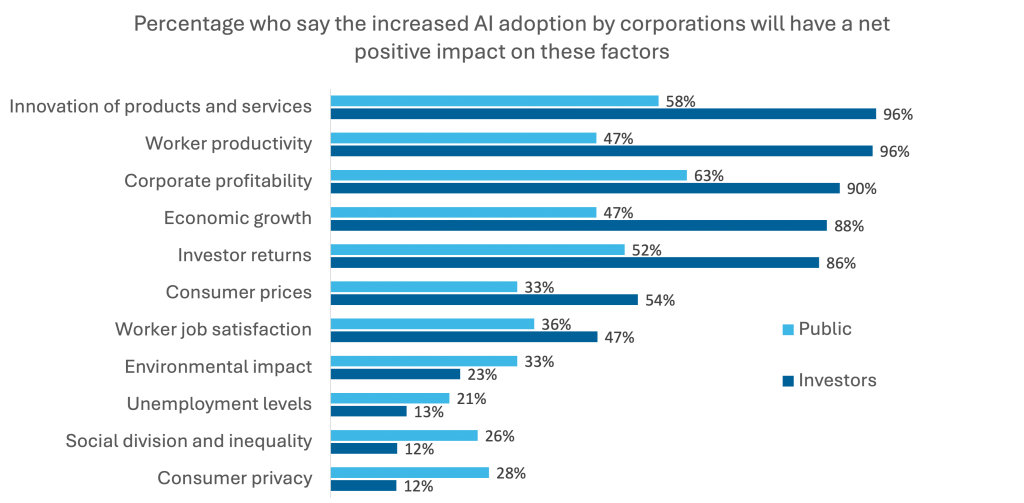
The vast majority (96%) of investors believe AI will have a net positive impact on worker productivity. However, only 47% of the public say AI will result in a net positive impact on productivity.
2. Distribution of AI-related gains
The public is in favor of distributing AI-driven corporate profits across several efforts, including lower prices for customers, workforce supports including for laid-off workers, and investments in safety and security. Investors believe the majority of gains should be allocated to shareholders, but do believe in gains going to other efforts including lower prices for customers.
1. AI safety as a top concern
Despite recent emphasis on an AI race between the United States and international rivals, both the American public and investors are more concerned about preventing accidents, misuse and other consequences of AI. Both groups also see impacts on social stability as a greater concern than U.S. competitiveness.
2. A significant amount of spend toward safety
The majority of the public and investors believe companies should be spending more than 5% of total AI spend on the safety of these tools and platforms. Given recent capital allocations to AI investments, 5% represents a dollar amount in the hundreds of billions. According to JUST Capital tracking to date, top AI developers and users have not publicly disclosed the amount spent on safety.
Are you a corporate executive? Please take our AI-focused survey here to inform how we continue to define and measure AI leadership.
