
Recent research from Sift, the AI-based fraud prevention platform, has revealed what it calls a “surprising generational divide”. It seems that Gen Zers – those born between 1997 and 2012 – express a significantly higher willingness to engage in online payment fraud compared to other generations. What’s more, some 33% of Gen Z respondents – much higher than other age groups – “either know someone who has participated in payment fraud or have done so themselves”.
As a father of four Gen Zers, I naturally found this to be somewhat unsettling. However, far more important is the analysis of why exactly this might be happening. First, it’s clear Gen Z is experiencing extremely high levels of economic distress and anxiety relative to other generations, brought about by student debt, exorbitant prices for houses, rental property and health insurance, a tough job market, and a general inability to afford even day-to-day necessities. What’s more, the research found that they feel much lower levels of corporate and brand loyalty. Indeed, Gen Z sees large corporations more as a cause of their broader economic problems than a pathway out of them.
Sift recommends companies build trust with Gen Z by “emphasizing their social responsibility”, helping them with payment management and flexibility, and prioritizing responsive customer service. These are all things we have heard in JUST Capital polling over the years in relation to just company behavior towards customers. According to our own surveys, Gen Zers also want to see CEOs advance climate solutions (70% vs 66% general population); uphold women’s reproductive rights (64% vs 57%); and protect LGBTQ rights (58% vs 51%). They are also more likely to say they would accept moderately less pay in order to work at a just company (23% vs 18%).
Gen Z makes up 20% of consumers in the U.S. and, in 2021, reportedly had a combined buying power of $360 billion. Undoubtedly it has grown since then as more of Gen Z join the workforce. They are the workers, the shareholders, the community leaders of tomorrow. Being just seems to be critical to winning their hearts and their support.
Be well,
Martin
August 6th 2024: Investing in Care: Proving the Payoff of Caregiving Benefits
Join us for a candid discussion about the challenges and opportunities of investing in caregiving benefits and potential positive outcomes for doing so. How are companies currently leading on caregiving benefits? What do you need to know about your workforce to create quality offerings? Learn first-hand from a company’s journey to significantly expanding their caregiving benefits.
Speakers:
Donnebra McClendon, Global Head of Culture and Inclusion, Dayforce
Joseph Fuller, Professor of Management Practice, Harvard Business School
Nicole De Santis, Partner, BCG
Ashley Marchand Orme, Director of Equity & Stakeholder Leadership, JUST Capital
Our friends over at The Conference Board are hosting a panel of expert economists on August 21 to discuss AI’s impact in the labor market, how it can cause or solve labor shortages, and more. Sign up here.
The Wall Street Journal reveals that many recent college graduates are heading to cities in the South due to better hiring prospects and lower cost of living, a job migration that hasn’t happened in several decades.
Are your company’s DEI efforts at a standstill? Fast Company speaks to twelve experts on why corporations need to move forward with their plans regardless of the political climate.
A Bloomberg opinion piece argues that the supposed gulf between rising productivity and flat wages is a “bi-partisan delusion”.
Following up on last week’s story, The Hollywood Reporter reveals that Disneyland workers have ratified their contracts with higher wages and sick leave.
Mashable reports that video game voice actors are following in the footsteps of the film industry, and are going on strike for protections against AI.
Bloomberg reveals that women now actually make up the majority of low-paid workers. Explore the implications here.
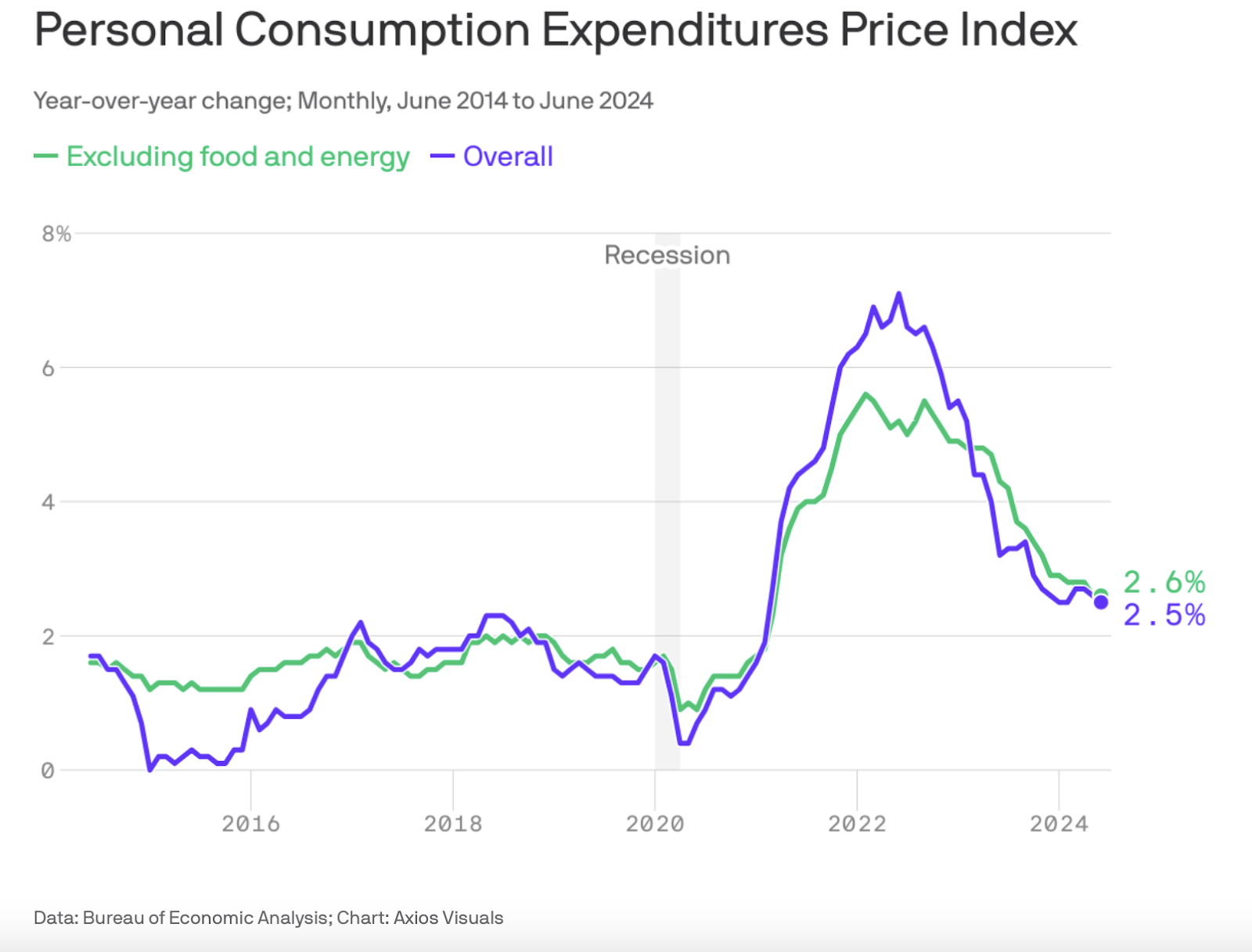
This chart comes courtesy of Axios, which shows that despite a blip in Q1, inflationary pressure is on the way down, with experts suspecting a rate cut may be coming in Q4. Explore the data.

One thing we know from our polling is that Republicans and Democrats agree that companies paying workers fairly and offering a living wage – meaning, enough to afford basic necessities at the local level – is essential to just business performance.
Some work we completed recently with Revelio Labs, our partner on corporate wage analysis, showed how geographically dependent this is. In retail work for example – which is reportedly tied for being the most common job in America – an entry-level sales employee working at a Russell 1000 company in Charlottesville, Virginia will make 21.4% percent less on average than their local living wage for a single adult working full-time. Conversely, they would make on average 26.4% more than the living wage for a household of one in Merced, California. Indeed, California stands out as a state in which retail sales roles can offer wages exceeding the local living wage. Of note, the top companies for entry-level retail positions include Best Buy, Nordstrom, Skechers, and Macy’s.
Coming back to politics, it was interesting to see how the locations in which retail workers earn significantly less than the living wage needed to support a family – such as Rocky Mount, NC; Kalamazoo-Portage, MI; and Bay City, MI – mapped to those counties where voting could decide the election this fall. With 36% of Americans identifying economic problems including high cost of living/inflation and wage issues as the most important issue facing the nation today, perhaps encouraging just corporate behavior – and specifically payment of a living wage – is the best way for politicians to earn the trust and the votes of those they serve.
Be well,
Martin
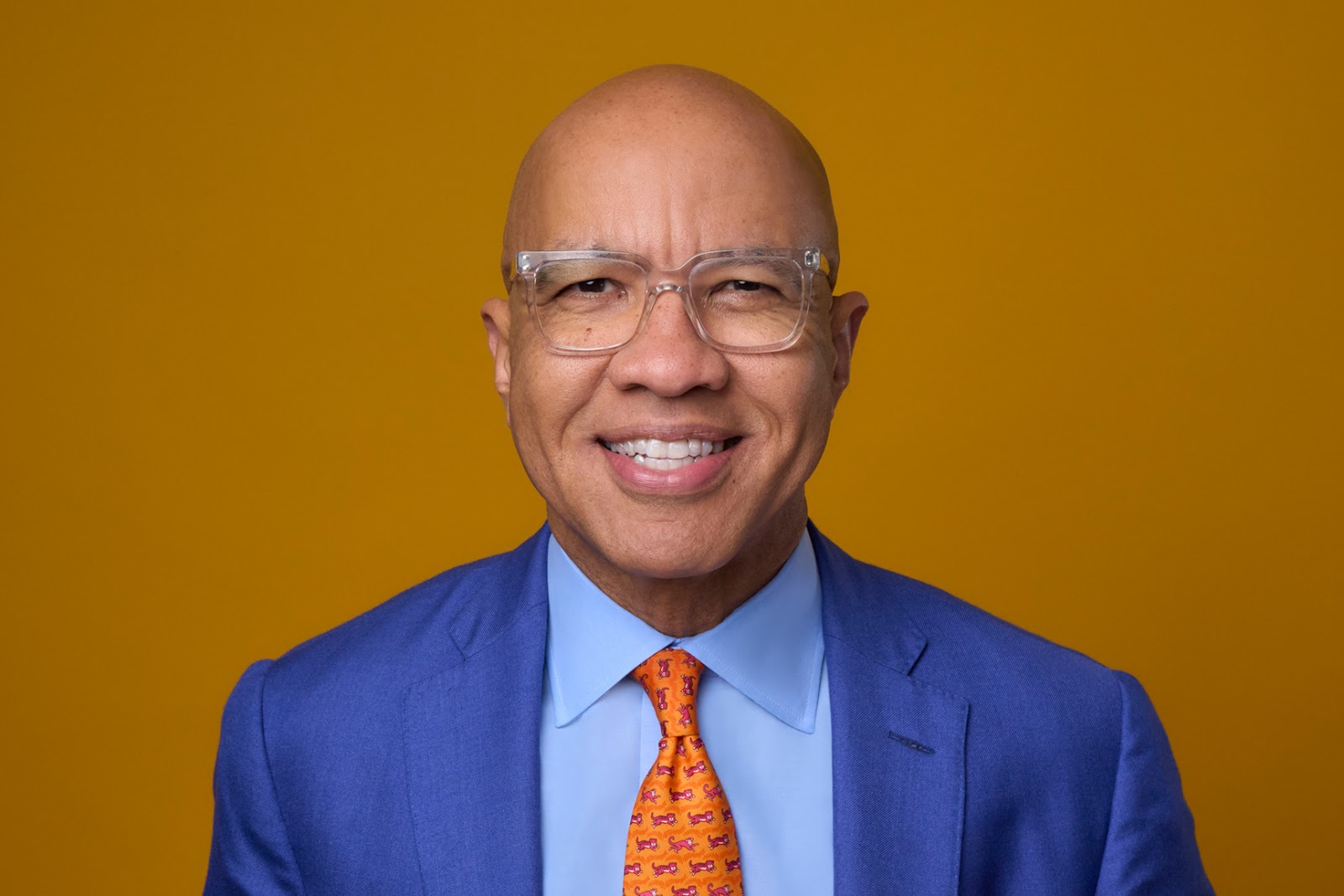
“I said that President Obama wants to meet with the president of the Ford Foundation — he isn’t interested in meeting with Darren Walker. It’s important to have that clarity so that when the day comes that you’re no longer president of the Ford Foundation, you can still find joy and happiness and satisfaction…philanthropy as a field needs new leaders and needs a constant refreshing because as a sector we can be self-satisfied and lose the edge to our work. There is no doubt that Henry Ford would be surprised that a Black gay man was president of his foundation, but I see that as a testament to this country’s ability to live up to its potential as a democracy and as a diverse community.”
August 6th 2024: Investing in Care: Proving the Payoff of Caregiving Benefits
Join us for a candid discussion about the challenges and opportunities of investing in caregiving benefits and potential positive outcomes for doing so. How are companies currently leading on caregiving benefits? What do you need to know about your workforce to create quality offerings? Learn first-hand from a company’s journey to significantly expanding their caregiving benefits.
Speakers:
Donnebra McClendon, Global Head of Culture and Inclusion, Dayforce
Joseph Fuller, Professor of Management Practice, Harvard Business School
Nicole De Santis, Partner, BCG
Ashley Marchand Orme, Director of Equity & Stakeholder Leadership, JUST Capital
Vox analyzes a study funded by Sam Altman, CEO of OpenAI, to see if universal basic income can offset AI job loss.
The federal minimum wage marks its 15-year anniversary at $7.25 as reported by Axios.
The CEO of Crowdstrike has been asked to testify in front of Congress over the global tech outage that occurred last week after a faulty software update. The Washington Post has the story.
Reuters reports that Disneyland narrowly avoided a strike of its 14,000 park employees, which would have been the first time the park shut down in over 40 years. Meanwhile, Bethesda Game Studios and Blizzard’s World of Warcraft team, both subsidiaries of Microsoft, have voted to unionize, making them the highest-profile game developers yet to do so.
Fortune releases its list of the Best Places to Live for Families. The one thing they all have in common? They are sustainable for both their youngest and oldest residents.

We’re halfway through 2024 already, if you can believe it. So as the Independence Day celebrations continue, I thought I’d take a moment to reflect on where things stand in the world of corporate justness.
Overall, I’d say that despite a wider sense of societal instability, the corporate stakeholder space feels relatively steady. Americans’ chief priorities remain firmly centered on pay, jobs, and economic security. The debates and discussions around corporations’ role in society continue, but have become markedly less heated and divisive, and more private, measured and–dare I say–meaningful. Corporations for the most part are focused on gathering data, developing strategy, and generally getting on with the business of understanding what their stakeholders want and working hard to give it to them.
This inevitably means different things to different companies. Some are doubling down on worker-related investments. Some are focused more on branding and communication issues. Others are shifting their priorities entirely. The announcement this week by Tennessee-based rural retailer Tractor Services that it is discontinuing or reorienting certain practices (including its DEI and carbon emission commitments) to focus more on things that “tie directly to business” is an interesting case in point that has attracted a lot of attention. Whichever way you look at it, corporate leaders are very sensitive to the shifting sands of stakeholder expectations and how they align with their core business interests.
I expect things to get more challenging in the second half of the year. The next generation of ChatGPT will undoubtedly shock, amaze and pose some existential questions about morality and business in the modern age. The Presidential election will likely bring varying measures of disharmony and disruption whichever side of the aisle you’re on. According to many commentators, this week’s SCOTUS “Chevron” ruling could up-end the entire regulatory status quo facing businesses in America.
In my view, all of this makes JUST’s role more important. When it’s at its best, American business is an incredibly powerful force for good that is essential to a more just and perfect Union. It helps support the freedoms, liberties and opportunities that define our collective future. Creating the incentives for that is where we will stay focused.
Wishing you and yours a wonderful weekend!
Be well,
Martin
To understand the financial security of employees across America’s largest publicly traded companies, JUST Capital and Revelio Labs analyzed the amount employees’ wages exceed the local living wage necessary to cover basic budgetary needs. Here’s what we found.
CNBC looks at how AI is eating up corporate tech budgets, but not on the customer side–a majority of the investment is going to training and outfitting their employees.
Must Reads
The Wall Street Journal highlights how Tractor Supply Co has walked back their DEI and environmental initiatives after weeks of criticism on social media.
Bloomberg wonders if “social media labels” would wind up being even worse than “cigarette labels”, examining how that industry used those warnings to escape liability and regulation.
The New York Times examines the pros and cons of the growing list of top employers covering egg freezing, which, while immensely helpful for many workers, points to a potentially growing schism in work/life balance and expectations.
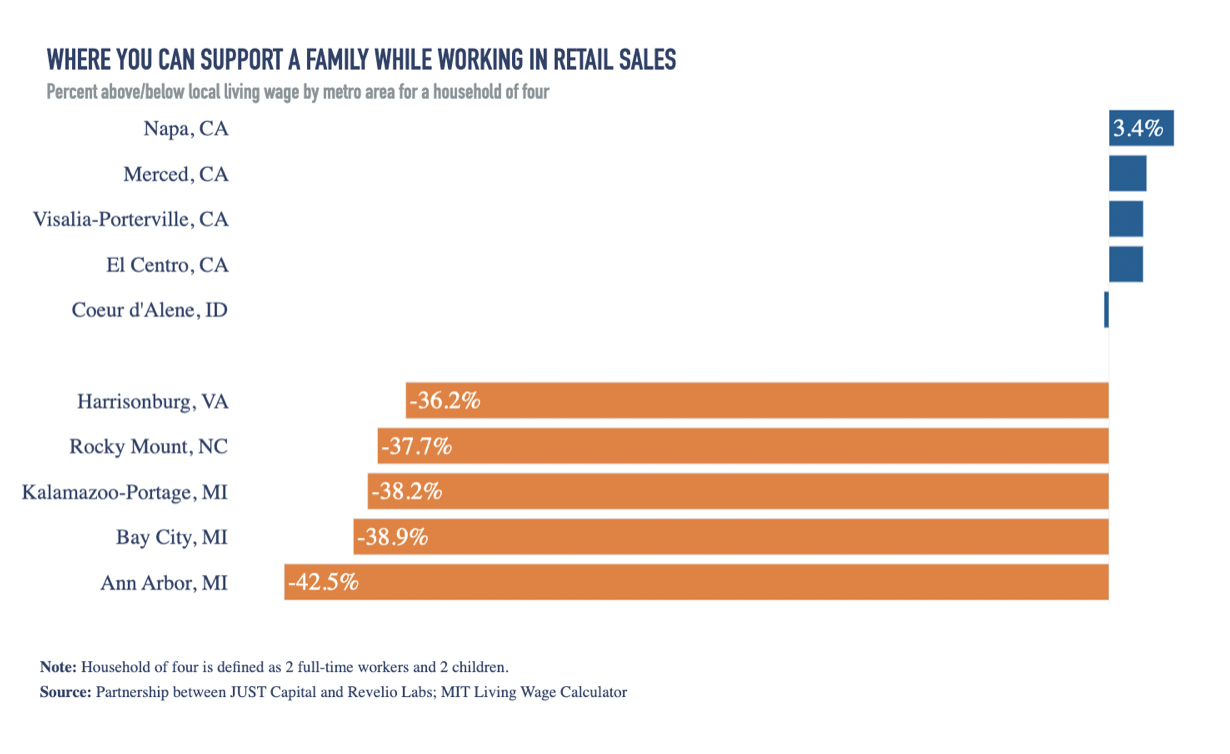
Our latest research partnership with Revelio Labs looks at the financial security of employees across America’s largest publicly traded companies, particularly when it comes to entry level and retail jobs. This chart shows the top 5 and worst 5 areas of the country when it comes to starting retail pay. Read more of our wage analysis here.

Amidst the current caregiving and mental health crises, employees are increasingly seeking paid leave benefits to safeguard their well-being, and that of their families. In response, some companies are strategically crafting policies that cater to diverse employee needs, fostering equity and inclusion within their organizations, and integrating more resiliency into their workforces.
Right now, the vast majority of companies fall short of meeting workers’ expectations on paid leave benefits. JUST Capital’s research suggests only 9% of companies offer 12 or more weeks of parental leave for both caregivers, while their 2022 polling found that 64% of Americans believe it is necessary for companies to provide 12 weeks of paid leave for all parents. Worse, just 23% of private industry workers had access to any paid family leave through their employer in 2021, according to the Bureau of Labor Statistics. While 77% of workers in private industry are able to access paid sick leave as of February 2023, low-wage workers are significantly less likely to have paid sick leave compared to high-wage workers (38% vs. 96%, respectively).
JUST Capital tracks companies’ practices around paid family leave, paid sick leave, and other core caregiving policies, and we have observed the emergence of cutting-edge benefits that support employees across various life stages as businesses discover that supporting their employees’ well-being is not only socially responsible, but a smart investment. Paid leave policies improve worker retention and productivity, while minimally increasing operating costs (sometimes producing cost savings). In studies of California’s paid leave program, about 90% of businesses reported either a positive or neutral effect on productivity and almost all businesses (99%) identified positive or neutral effects on employee morale.
Paid leave initiatives are also pivotal in advancing equity within the workforce. Women – particularly mothers – often bear the brunt of caregiving responsibilities, leading to detrimental career choices and perpetuating the gender earnings gap, sometimes known as the “motherhood penalty.” In an analysis of states with paid leave policies, the rate of women leaving their jobs after welcoming a child dropped by 20% in the first year, and up to 50% after 6 years.
Nine years of polling has shown that paid leave policies are a key way for companies to differentiate themselves as a JUST employer. Below, we examine companies leading on implementing paid leave policies to support their diverse workforces, and the results for their employees and their business.
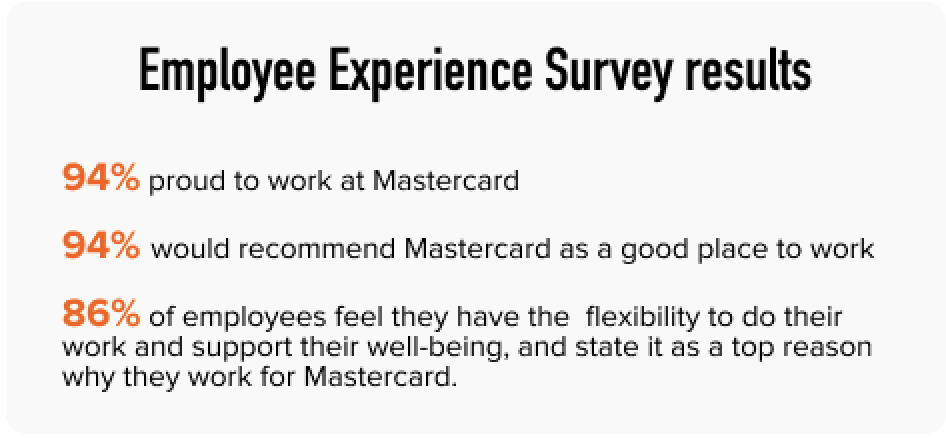
Mastercard offers a bereavement leave policy, acknowledging the need for employees to take the time to grieve and attend to personal matters without the added stress of work responsibilities. Mastercard considers bereavement leave as part of their holistic wellbeing and flexibility offerings, which they continuously revisit to ensure they best support employees and company. Over the years, bereavement leave has expanded and evolved, and in their current policy, employees can take up to 20 days paid time off, which applies to both full- and part-time employees. Recent updates to the policy include expanded time for death of a parent (including in-laws and step-parents) and in the event of a stillbirth or miscarriage.
We have received overwhelmingly positive feedback from employees, who attribute this benefit as a good example of our culture of decency. Feedback has also come in other forms, such as through the employee-led blog on the Mastercard homepage, called “Our Voices.” One employee reflected on their experience using the benefit to grieve the death of their grandparent and support their family, stating that Mastercard is a
Caring and inclusive workplace that values our lives and identities beyond our business hour deliverables.
Mastercard
Cisco has implemented a Critical Time Off policy that goes beyond traditional leave structures. This policy allows employees to take additional time off during significant life events such as the illness of a family member or personal emergencies. Cisco understands that certain situations require extra time and attention, and the Critical Time Off policy is designed to provide the necessary flexibility and support.
Three years ago, Adobe instituted Global Wellbeing Days, enabling their global community to collectively prioritize their wellbeing, disconnect, and recharge without worrying about work. In 2024, Adobe is offering six Global Wellbeing Days. These designated days serve as opportunities for employees to engage in activities and initiatives focused on improving their overall well-being.
At Adobe, we believe that taking time off is essential to the health and wellbeing of every employee. When our employees experience support both in and outside of the workplace, they are better equipped to unleash their creativity and innovate.
With Global Wellbeing Days, we’ve witnessed the profound impact of our community coming together for a collective day of rest. Employees use the time to reconnect with loved ones, focus on their health, or build community with other Adobe colleagues. For instance, the Adobe Golf network arranges golf outings on Global Wellbeing days, while some employees join fellow Adobe colleagues for activities like hikes, local pickleball games, and bike rides. Others choose to spend quality time with their family and pets.
Adobe
Medtronic, a leader in medical technology, understands the commitment of employees serving in the military reserves. To honor and support their dedication to national service, Medtronic provides paid time off for employees to fulfill their military reserve obligations. If reservists get deployed, Medtronic ventures far beyond what’s legally required. Medtronic holds reservists jobs for up to five years and provides differential compensation to cover the difference between their base pay and military pay. Benefits are covered for employees on military leave for up to 24 months. Their Family Care Leave policy includes up to six weeks paid leave for employees who are caregivers in a family where someone (such as a partner) is called to active military duty.
We’ve heard overwhelmingly positive feedback from workers who have utilized our military reserve leave. For them, it’s about more than just time off; it’s about peace of mind knowing that their service is valued and supported. We’ve had employees express deep gratitude for feeling recognized for their military commitments and the flexibility we offer.
Beyond military leave, we’re also proud to offer our employees caregiving support through Wellthy, a care concierge platform that works with families to ease their care burdens. Employees are matched with a dedicated Care Coordinator, who can help manage care in any capacity, big or small. This includes Wellthy’s deep expertise in veterans’ benefits, which can help veterans and their caregivers navigate benefits and coverage offered through the VA and other providers.
Our broader paid leave policies, including our military reserve leave, have significantly impacted our workforce in terms of retention, recruitment, and overall employee satisfaction. By prioritizing paid leave for military reservists, we demonstrate our commitment to supporting our employees’ diverse needs and honoring their service to the country. This approach not only strengthens our workforce by retaining experienced and dedicated individuals but also enhances our reputation as an employer of choice.
Our Family Care Leave, available globally — and expanded leave of up to 24 weeks paid for birthing parents in the U.S. — sets us apart in the marketplace. Combined with our Mission, which provides employees with a profound sense of purpose, our commitment to evolving benefits to meet employee needs is consistently highlighted as a top draw for candidates. …
Overall, our comprehensive approach to paid leave and talent development not only fosters a supportive and inclusive workplace culture but also positions us as a talent destination where diverse, top talent can come, grow, and thrive.
Denise King, Vice President, Global Benefits and Payroll, Medtronic
Pinterest recognizes the physical and emotional challenges that accompany miscarriage or stillbirth and is committed to supporting its employees during these difficult times. The company has a bereavement leave policy in place that covers Miscarriages and Stillbirth, acknowledging the need for employees to take the time they need to heal and cope with such personal losses.
Pinterest also provides a Family Care leave offering up to 12 weeks of full pay should employees need it to care for a seriously ill family member including a child under the care of a Neonatal Intensive Care Unit (NICU) post-birth. This is in addition to Pinterest’s 20 weeks of bonding leave for new parents.
At Pinterest, we’ve seen that people do their best work when they are most inspired, and feel seen and supported. We strive to create benefits that meet the real-world needs of our employees by supporting them through the different stages of family planning and child care, and by putting emotional wellbeing at the forefront. By listening to our employees, we’ve been able to shape our policies to support them when unexpected challenges arise. As our company continues to grow, we will keep working to create benefits that provide choices that are best for our employees’ careers and lives.
Adobe launched its U.S. sabbatical program to celebrate and honor employees’ innovation and contributions, recognizing them as the company’s greatest assets. Once employees reach five years of tenure, their initial sabbatical lasts four weeks. At 10 years, it extends to five weeks, and at 15 years, six weeks, remaining at this duration every five years thereafter. The Sabbatical Program is designed to provide employees with the time and space they need to rest and reflect, fostering creativity and innovation upon their return to work.
Adobe’s industry-leading paid leave policies foster a healthier, happier, and more engaged workforce by enabling employees to reinvigorate their creativity and return to work refreshed, primed to forge innovative ideas, and explore uncharted paths. In our annual employee survey, 87% of respondents expressed a willingness to recommend Adobe as an employer, while 89% stated they feel proud to work here. Upon returning from sabbatical, most employees shared in our sabbatical survey that they felt refreshed and welcomed as they transitioned back into their roles, noting that the time off fueled their motivation to do their best work upon return.
We are evaluating our wellbeing and benefits offerings each year by pulsing employee sentiment and benchmarking against the industry to remain competitive while providing optimal support to our global workforce.
Adobe
Understanding the unique challenges and health considerations that menopause can bring, Sanofi has implemented comprehensive menopause benefits to provide support and resources to its employees. These benefits may include access to menopause education and information, support groups, counseling services, flexible work arrangements, and healthcare coverage for treatments or therapies related to menopausal symptoms.
| “If you feel truly supported throughout your life cycle, whether it is maternity or menopause, you’ll be more engaged. I’m sure the new generation is more demanding on that.” Nathalie Grenache, SVP of People and Culture, Sanofi |

This interview was created in collaboration with the Financial Health Network.
Over the last few years, expectations of how employers treat their workers has undergone noticeable shifts. Employees from across sectors increasingly expect more holistic support from their employer. High-performing employers are taking note, recognizing that a holistic benefits strategy – one that focuses on the whole employee – results in a more stable, financially healthy workforce.
Part of a holistic benefits strategy includes recognizing individual workers as members of families and communities. Access to paid leave is estimated to increase mothers’ labor force participation by approximately 20 percent during the first year following their child’s birth. Furthermore, having access to paid medical leave has led workers to experience less stress from financial insecurity during a health shock. Recently, Levi Strauss & Co. (LS&Co) expanded its paid family leave plan to be more inclusive of its global workforce. Using data and feedback from employees, HR leaders designed a paid leave benefit that provided support to a wide range of employees.
In this interview produced by JUST Capital and Financial Health Network (two of the partners in the Worker Financial Wellness Initiative) we talk with Tracy Layney, Levi Strauss & Co.’s Chief Human Resources Officer, discussing the company’s decision to continue expanding their paid family leave plan.
One of the most important ways that LS&Co. stands up for our values is by standing up for our most important audience: our employees. We see it as our responsibility to create an environment that enables employees to be healthy, happy, and successful at work and at home.
We’ve seen the positive impact of paid leave in our employees’ lives since we introduced paid parental leave in 2016. Access to paid family and medical leave is not only the right thing to do for employees, but it’s the smart thing to do for business. So, in 2020 we expanded the benefit to include paid family leave. Then, at the beginning of this year, we enhanced the standard of our paid leave benefit around the globe to ensure our eligible employees have equitable access to time off work for maternity leave, parental bonding leave, and family care leave.
We had heard strong feedback on the need for paid family leave from our workforce. From a U.S. home office perspective, more than 50% of our population is made up of individuals between the ages of 36 and 55 – part of the so-called “sandwich generation” that is more likely to be caring for both a child and an elder at the same time. We realized that to truly support employee well-being, we must support employees’ ability to care for their closest family members, whether that person is a child, spouse, parent, or domestic partner, without worrying about their job or their paycheck.
Over the past few years, we’ve implemented and advocated for paid family leave and paid sick leave for our employees in certain locations and have seen firsthand the impact this has had on our employees’ lives. Our people make us who we are, and it’s our responsibility to create an environment that enables them to be healthy, happy, and successful, both at work and at home.
We wanted to ensure eligible employees receive the same paid leave benefit regardless of their geographic location, so we created a global core minimum standard. This allows us to provide eligible employees with up to:
Our goal with the enhancement was to create an equitable global core minimum standard, thus providing a stronger safety net for our employees wherever they are located. Our previous policy minimums were contingent on local laws and standards around the world — employees were in theory eligible for a variety of paid leave benefits depending on their region, but it didn’t always work out that way in practice. By raising the minimum standard across the board, many LS&Co. eligible employees will and are currently experiencing an enhancement in this benefit.
Our driving force and our motivation is our employees. At LS&Co., our people make us who we are and it’s our responsibility to create an environment that enables them to be healthy, happy, and successful at work and at home. Companies play a role in being the employer their employee needs in today’s landscape. This includes ensuring their people don’t have to choose between their careers and their health.
Companies should expand access to paid leave because this issue directly affects them, their workforces, and their ability to stay competitive in our modern U.S. economy. I would encourage everyone to foster conversations with their companies and dig deeper into the business rationale behind it.
Paid family leave is a relatively small investment with a very meaningful return, our actual expense is tracking under initial projected expense. Our paid family care policy globally costs us only 36% of what we’d projected, and since our global enhancement in January, we’ve had over 260 leaves across 20 countries.
During COVID, our company saw much lower attrition and impact on women than the average numbers across the U.S. and we believe it is because of our benefits and company culture (It is an expense to rehire and train people – paid leave boosts retention.) We realized that to truly support employee well-being, we must support employees’ ability to care for their closest family members, whether that person is a child, spouse, parent, or domestic partner, without worrying about their job or their paycheck.
Also, showing employees we have their backs cultivates loyalty, supports productivity, and fosters a culture where people do their best work. Comprehensive family and medical leave policies also help further equality and diversity goals, allowing more people to take advantage of professional opportunities that present themselves.
At Levi Strauss & Co., we are committed to offering a wide array of benefits and support for our employees in ways that are both tailored to their unique needs and can help them look after themselves and their loved ones, and one of those ways is through our ongoing mental health and well-being offerings. Most recently, we expanded access to Lyra Health’s emotional well-being support, available to all our employees around the world and their household family members.
Ongoing mental health resources are ingrained in the day-to-day culture and benefits of LS&Co. These include providing accessible, always-on resources that help our people prioritize mental and physical health and manage symptoms of stress, anxiety, and depression, should they arise. We train our managers to lead from the heart and with understanding. There is no one-size-fits-all leadership style, but by making small changes in the way we communicate with our people, we can foster a culture rooted in authenticity and empathy.

AI’s impact on the future of work continues to dominate the headlines in 2024, particularly when it comes to rapid adoption of generative and predictive AI algorithms.
Igor Tulchinsky is the Founder, Chairman, and CEO of WorldQuant, a global quantitative asset management firm with over $7 billion in assets under management. His 2023 book, The Age of Prediction: Algorithms, AI, and the Shifting Shadows of Risk, looks at how predictive AI technology is quietly reshaping our world in fundamental ways.
JUST Capital’s CEO Martin Whittaker sat down with him to discuss the benefits and dangers of this technology for America’s business leaders and workers.
Full interview below:
Martin:
You’ve discussed at length some examples of predictive technology being adopted right now – for example, the medical field tapping into the power of analyzing patterns in emerging infectious diseases. What are other ways AI’s predictive power can be used to help communities? What are some potential future uses that you envision?
Igor:
Over the next decade, I believe we can expect further disruption to economies and organizations, driven by increasingly sophisticated language models and the anticipated rise of artificial intelligence. This growth in intelligence is expected to enable the rapid analysis of vast amounts of information, enhancing productivity and innovation across various sectors.
Healthcare and medicine already seem to be benefitting from these tools, enabling advanced techniques that can provide better outcomes for people. The medical community appears to increasingly leverage predictive AI to understand patterns of emerging infectious diseases and to improve DNA and RNA sequencing from human patients.
Technology also holds the promise to revolutionize education by breaking down barriers to access and enabling rapid adaptation to evolving skills landscapes. From my perspective, we’ve only scratched the surface of predictive technology’s possibilities, yet these initial advancements present significant opportunities to utilize predictive AI in impactful ways in the future.
Martin:
There are technologies that radically transformed society – the wheel, gun powder, the printing press, the electrical conductor, the internet. Looking back at the adoption, spread, application, and regulation of these technologies – what’s one lesson from history that we can take to guide how we encourage just AI?
Igor:
As long as humans have been inventors, there have been positive and negative use cases of new technology. While the first axe could harm, it could also cut wood for the first fire. Over time, I believe we as a society have gotten better at instituting governance structures to help mitigate the problematic and harness the positive outputs and potential of technologies. While AI has the potential to both make our lives easier and more challenging, I view it as just a tool, driven by human-decision making that will determine the course of its use. Overall, I believe the most prolific and efficient use cases for AI will also be the ethical ones, many of which we already see happening across the medical and education fields.
Martin:
In your book, you discuss the challenges as much as you do the opportunities associated with predictive technologies. What are some examples of risks around AI and its predictive power that organizations and leaders should be aware of? What can be done to mitigate these risks and challenges? Is there a possibility that AI’s potential for harm outweighs its potential for good?
Igor:
Technological advancements, while improving daily life, can also present existential challenges. There are examples throughout history of new technologies that have had positive and negative impacts, and in many of these cases, humans have improved in implementing controls to focus on positive innovation. Take cars, for example – they revolutionized travel and productivity, but safety measures like maintenance, seatbelts, and airbags evolved to mitigate risks.
The adoption of predictive technologies also brings with it increased complexity that leaders will need to learn to manage. Importantly, what is underlying all this change and progress is how humans and machines will continue to have a symbiotic relationship. AI does not have the same intent or purpose that humans possess. Because of this, I believe that humans remain imperative in guiding and directing the technology in a way that ensures it is justly deployed. With AI, I think that it is critical that ethical considerations, guidelines, and potential regulatory frameworks are developed in tandem with technological progress as unforeseen outcomes make themselves known.
Martin:
How will AI impact our relationship with the future in terms of its effect on how we approach risk? With increased predictability, can we guarantee more certain outcomes?
Igor:
The proliferation of data is providing us with some clarity about what the future may look like, and AI is already helping us process data and use it to predict outcomes across a number of areas. With this transformation in the future – and partly because of it – may come a countervailing impulse: the desire to increasingly model a world that is confoundingly complex.
The range of potential outcomes is growing, particularly as we discover new use cases. Over time, it will become clear whether AI will make all risks quantifiable and comprehensible, or if our cognitive machines will merely generate new risks and anxieties. For now, the only certainty is that as this process plays out, we should adjust our conception of risk. Continuous testing and monitoring of evolving risks are crucial. The significant growth of data could allow us to create more predictive tools and increasingly strengthen our predictions, but I view it as critical that we refine our ability to process and utilize this information to both capitalize on untapped opportunities and mitigate potential risks.
Martin:
You’ve previously said that the nature of AI technology means a “variety of people have the potential to make an impact.” Talk to me about how we can drive diversity of thought and diversity of actors with AI. How can we ensure the technology is leveraged as a source of greater inclusion? What are you doing to help bring AI to a greater number of people?
Igor:
The commoditization of AI ultimately may mean the commoditization of intelligence. This could present an opportunity to enhance accessibility to education and in turn to the jobs that that education unlocks, therefore fostering a more inclusive workforce. I believe that by increasing accessibility to education through varied learning pathways and simplified interfaces, diverse groups of people can have access to quality educational opportunities that were previously unavailable. As an example, I founded WorldQuant University with the goal of expanding access to higher education. The organization utilizes technological capabilities to offer a comprehensive and accredited advanced education for free in fields like Financial Engineering and Data Science to diverse student groups worldwide. I have always held the belief that talent is globally distributed, opportunity is not. Through WorldQuant University’s online learning platform, we are able to bring these upskilling opportunities to talented individuals who might not have otherwise had access.
Martin:Who do you think will be the biggest winners and losers in the age of AI? As more and more actors enter the conversation around AI, what will be a key determinant for success?
Igor:
In the age of AI, I think the greatest beneficiaries will be those who actively embrace and collaborate with these emerging technologies. I believe intelligence will become commoditized and lead to increased mechanization across industries that rely on this kind of standardized intelligence. This evolution alone has the potential to revolutionize most sectors. Wherever people can find opportunities to scale, I believe that technology can be an effective propagator and provide tremendous power. To the extent that humans contribute beyond the components that can be commoditized, that will be our value.
