
Although the dust is still settling from this week’s historic election, two things are becoming apparent.
The first is that of all the factors that drove President Trump and the Republican party to such a decisive victory, the prioritization by Americans all around the country of their basic economic well-being was of overriding importance.
Our own survey work, reported here two weeks ago, hinted at this. Edison Research provides direct verification: voters who identified the economy as their primary concern chose Trump over Harris by 79% to 20%; 45% of voters said their family’s financial situation was worse today than four years ago, compared to 20% in 2020; and of these, 80% favored Trump.
The second is that if Americans’ faith in capitalism is to be restored, and a new “Golden Age of America” truly enters, the business community must play a larger role.
Not out of a sense of morality or political predilection. And not because of tightening regulatory or political risk – Republican control of the Senate and potentially the House makes this unlikely. But out of pure self-interest. Because the fact is that what we find most Americans want – investment in workers, good jobs, customer protections, stronger communities, a clean and safe environment, and pathways to prosperity that all people can access – serves as a template for business leadership that generates higher returns for shareholders, greater long-term value for companies, and enduring benefits for society overall.
This, in short, is the stakeholder capitalism model. Providing the incentives, the data, and the expertise to help companies along that path is what we do at Just. In the next few years it will be a – perhaps the – defining issue for the country. If you are interested to work with us, or learn more about what we do, please reach out.
Be well,
Martin
Rather than just one point of view, we’re sharing how business leaders have reacted to Trump’s victory and what it means for corporate America going forward as reported by CNBC and Business Insider.
Fortune reveals that, on average, employees feel that 60% of CEOs are “digitally illiterate”, especially when it comes to AI in the workplace.
Amazon CEO Andy Jassy had to reassure investors that the company’s AI push will pay off after expenditures increased by 81% in the third quarter.
The New York Times’ Wednesday edition of Dealbook breaks down what a Trump presidency may mean for business. Two toplines: businesses will likely face fewer regulatory pressures, and CEOs will likely be far more cautious when it comes to “speaking up” on social issues.
Reuters looks at how the stock market is reacting to the announcement, and what industries are seeing major boosts.
There was plenty more on the ballot across the nation besides the presidential race. NPR highlights which states chose to increase minimum wages or paid leave, and those whose voters rejected those measures. Related, WBUR reveals why Massachusetts voted against giving tipped workers a wage increase.
Just before the election, Boeing workers officially ended their strike, accepting a 38% pay increase.
Bloomberg analyzes a report by Bank of America examining the state of childcare in America. The good news? In some major cities, the average price is going down partially thanks to local investment, partially (unfortunately) from families seeking cheaper, lower-quality care.
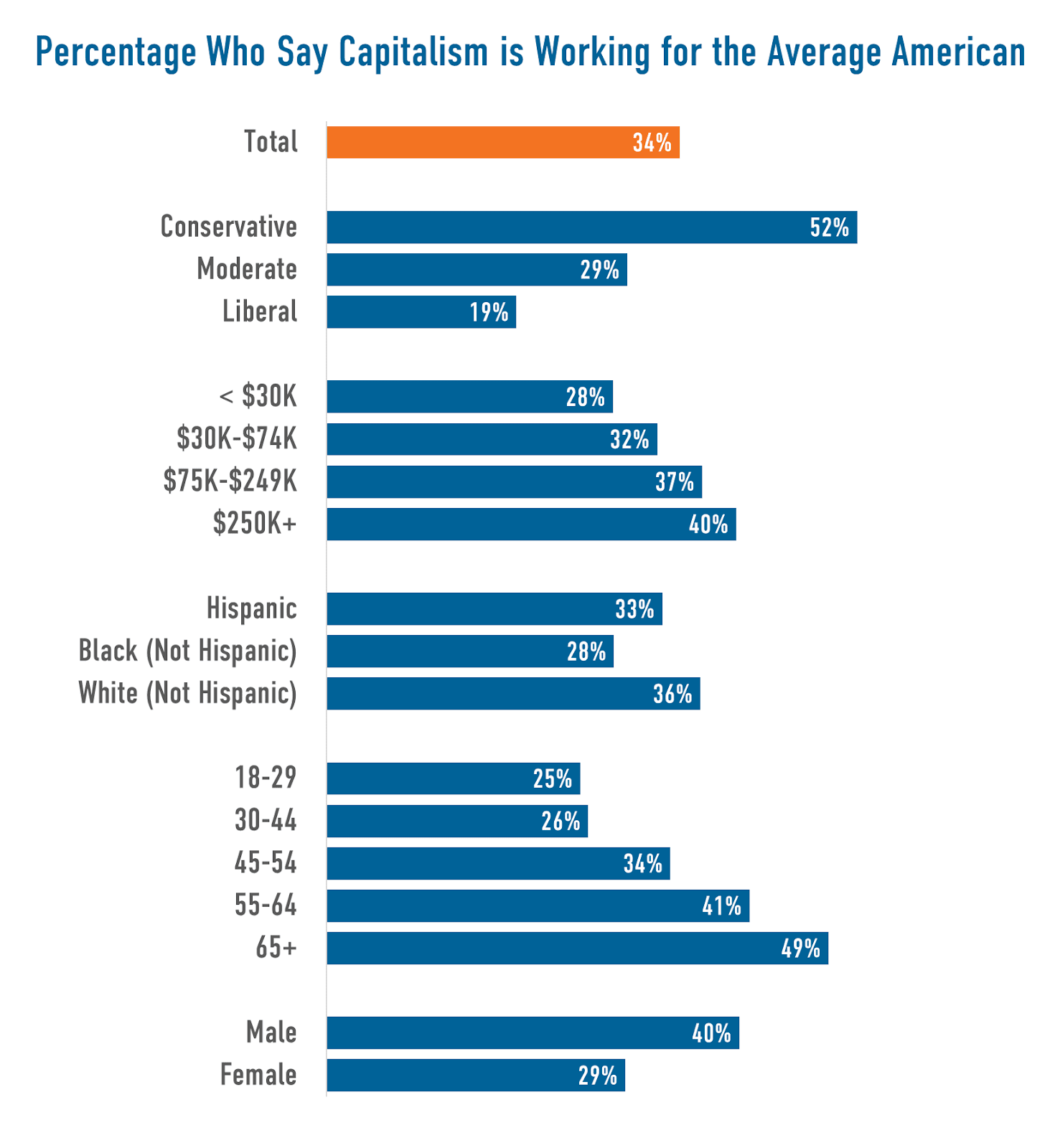
In the wake of the election and constant concerns about the economy, we wanted to re-up this chart from our 2024 Americans’ Views on Business report, which shows that across demographics, a majority of Americans do not feel that capitalism is working for them. Explore more of the insights here.
Corporate leadership today is a challenge of the highest order. CEOs must navigate a deeply divided political landscape, rapidly shifting stakeholder demands, ongoing economic uncertainties, and myriad technological, regulatory, and environmental forces that present risk and opportunity in equal measure. Performance expectations are sky-high, scrutiny is intense, and the margins for error are nonexistent.
Against this backdrop, there is one voice that – perhaps surprisingly – provides business leaders with both calm reassurance and clear direction: that of the American people. Just Capital’s Americans’ Views on Business Survey, our longest-running longitudinal survey, captures this voice in all its rich, diverse detail. And its central message this year is striking. Despite being highly polarized on political issues, Americans are generally united in their expectations for corporations – particularly in areas where positive societal impact dovetails with positive business performance.
Specifically, we find that the majority of Americans – regardless of political party, ideology, or other demographic differences – not only agree that business can and should be a force for good in the world but also are closely aligned on what precisely that means: paying people fairly, investing in their workforce, treating customers better, offering products or services at a fair price, minimizing harm to the environment, strengthening communities, and even making good on climate commitments.
In tracking the public’s views on business over the past decade, we have seen the contours of American opinion evolve considerably. Whereas in previous years we saw greater demand for CEOs to speak out on social issues, opinion is now much more divided. On transparency and disclosure, it is clear that in today’s low-trust environment, people hunger for more information on what companies are actually doing, not what they say they are doing. Despite the broad agreement that capitalism and the economy need to work for all Americans, opinions clearly diverge on whether this is actually happening.
Through it all, one message is constant: The American people want companies to create value for all their stakeholders as a path to creating more value for their shareholders, for themselves, and for society at large. As our investment work demonstrates, this “win-win-win” is not mere conjecture; it’s a fact. This report serves as a blueprint for any corporate leader, board member, or investor who aspires to this outcome.
Each year, we ask the American public to identify and prioritize what issues matter most when it comes to just business behavior. We always start the process by hosting a series of focus groups. This year, we began by asking participants a simple question: What do you think the chief responsibility of America’s largest companies is? Although many responded that it is to make and sustain profits, participants went on to explain that companies are also expected to balance profitability with practices that value society, and they should serve the interests of their workers, customers, communities, and the environment alongside those of their shareholders.
In assessing which stakeholder the public believes is, in fact, the top priority for companies, it is clear that (with 56% of the vote) shareholders come out on top. This is a significant increase compared to four years ago, when workers garnered a much higher share of the vote.
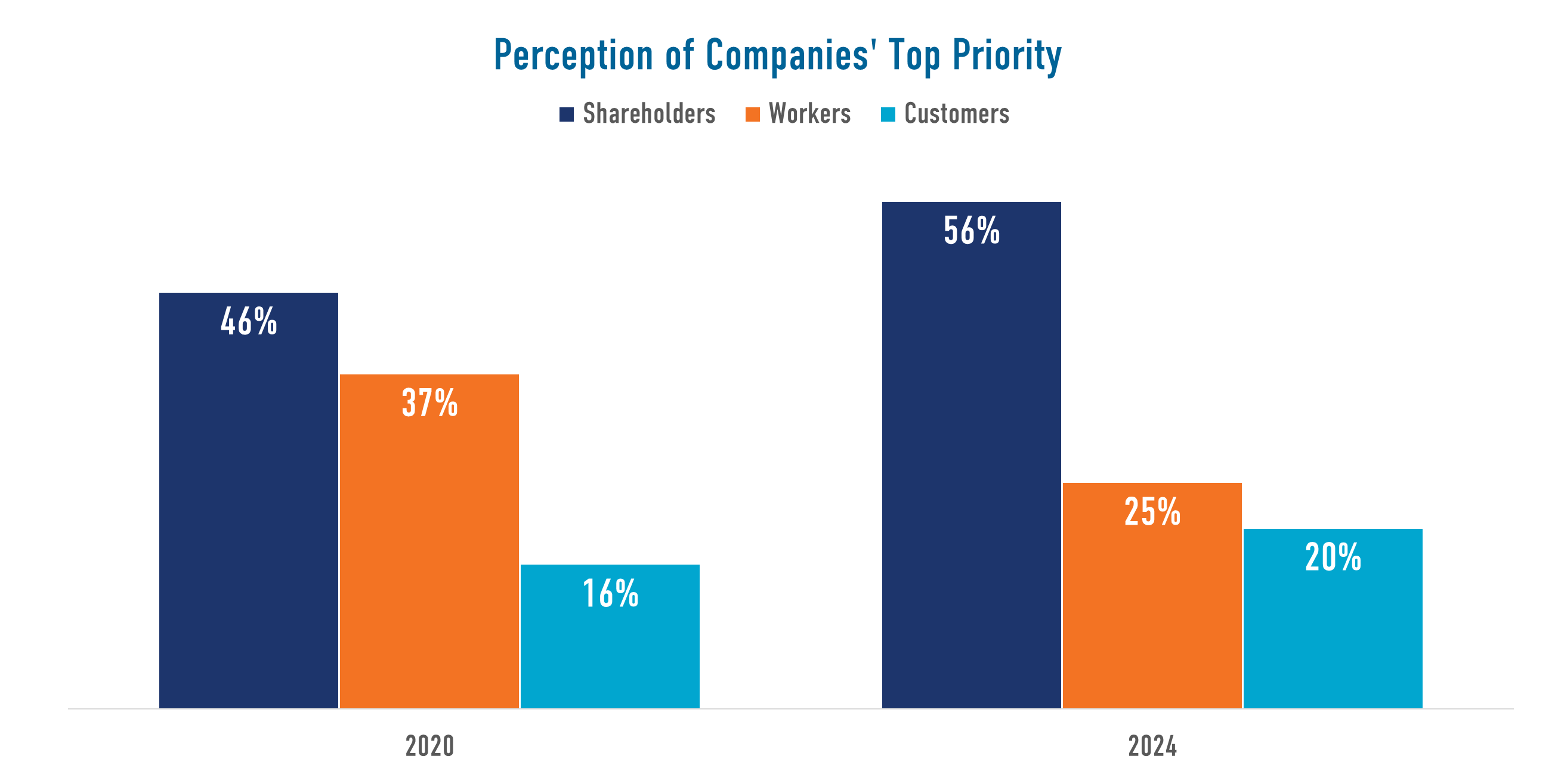
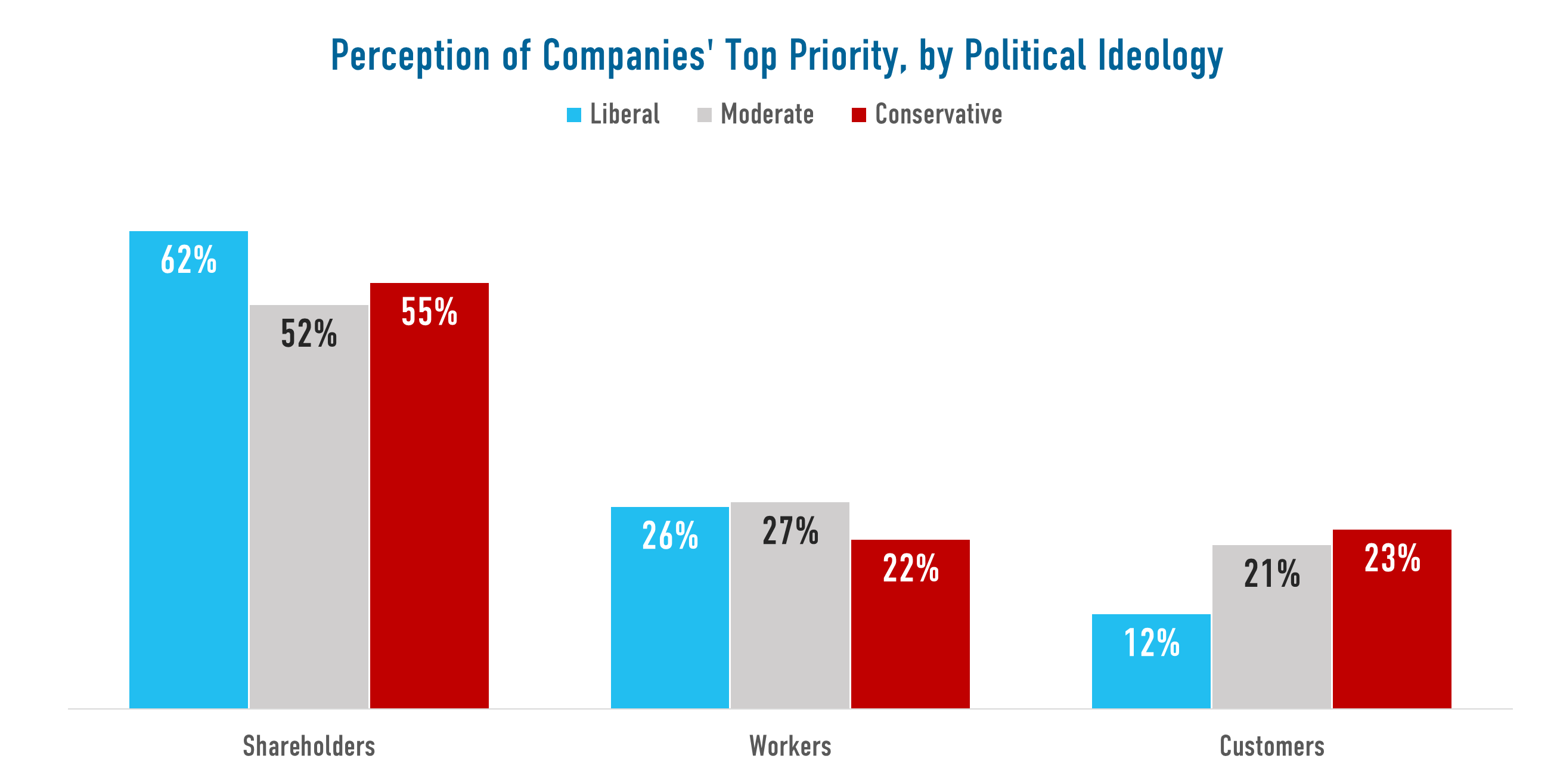
Perhaps surprisingly, these opinions are relatively consistent across political ideologies, as we see below.
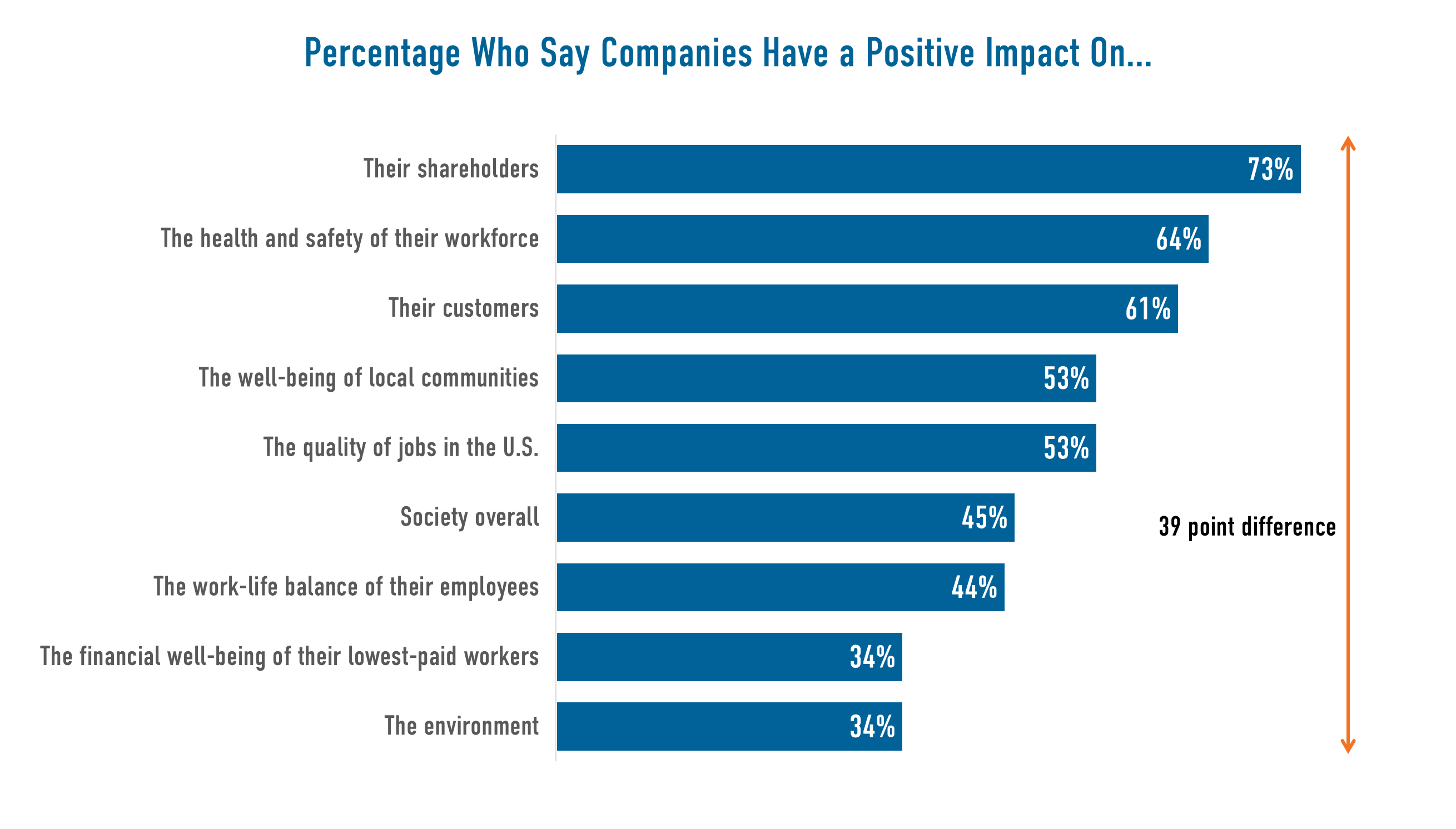
The next chart breaks this down even further. When asked which stakeholder companies are positively affecting, almost three-fourths identify a company’s shareholders. The health and safety of workers and the company’s customers also generate a lot of support. Only 34% of respondents believe that companies are having a positive impact on their lowest-paid workers and the environment, a proportion that has changed little in the four years since we started asking this question.
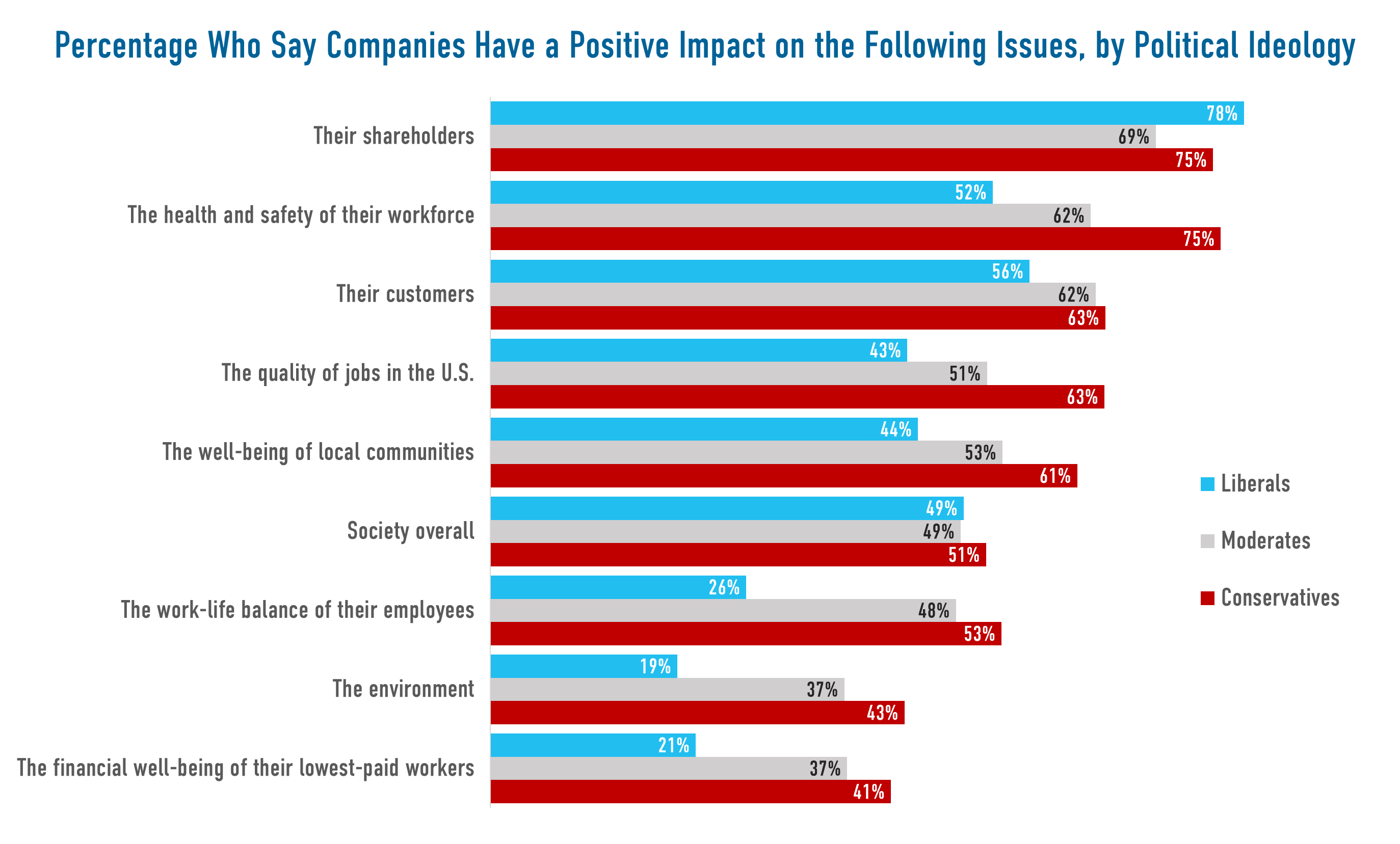
Though the percentages may be larger or smaller depending on one’s political ideology, the pattern of responses is very consistent. Liberal respondents tend to be more skeptical than conservatives that companies are having a positive effect across these stakeholder issues. Overall, though, Americans of all ideologies essentially agree that companies benefit their shareholders and are far less likely to feel companies have a positive impact on their lowest-paid workers.
Capitalism is the means by which the American Dream becomes reality. But according to recent polling from Pew Research, only about half of Americans (53%) say that dream is still possible. Our research findings support Pew’s: When our respondents were asked whether they believe capitalism is working for the average American, only about 1 in 3 agree.
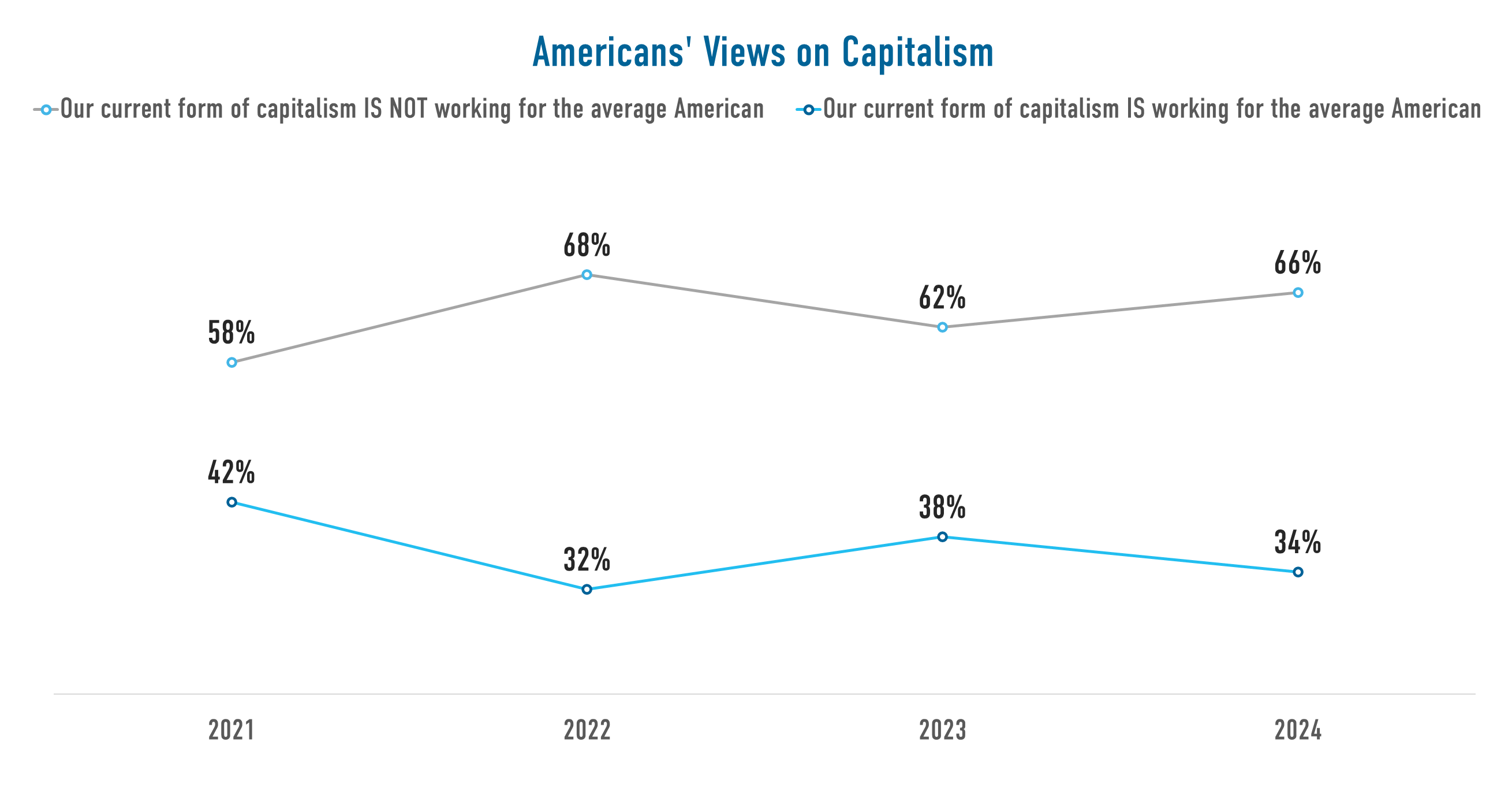
This number has stayed relatively consistent over the past three years after falling from a high of 42% in 2021, a year in which companies were redoubling efforts to respond to the needs of all their stakeholders amid unparalleled intersecting health, economic, and social crises.
Looking at this question from a demographic perspective, the high-level takeaway is intuitive: The older you get, the more money you make, the more you believe capitalism is working for the average American. Of those making under $30,000 a year, only 28% respond positively to this question versus 40% for those making more than $250,000 annually. Likewise, a mere 25% of Gen Z say capitalism is working for the average American versus 49% of Boomers.
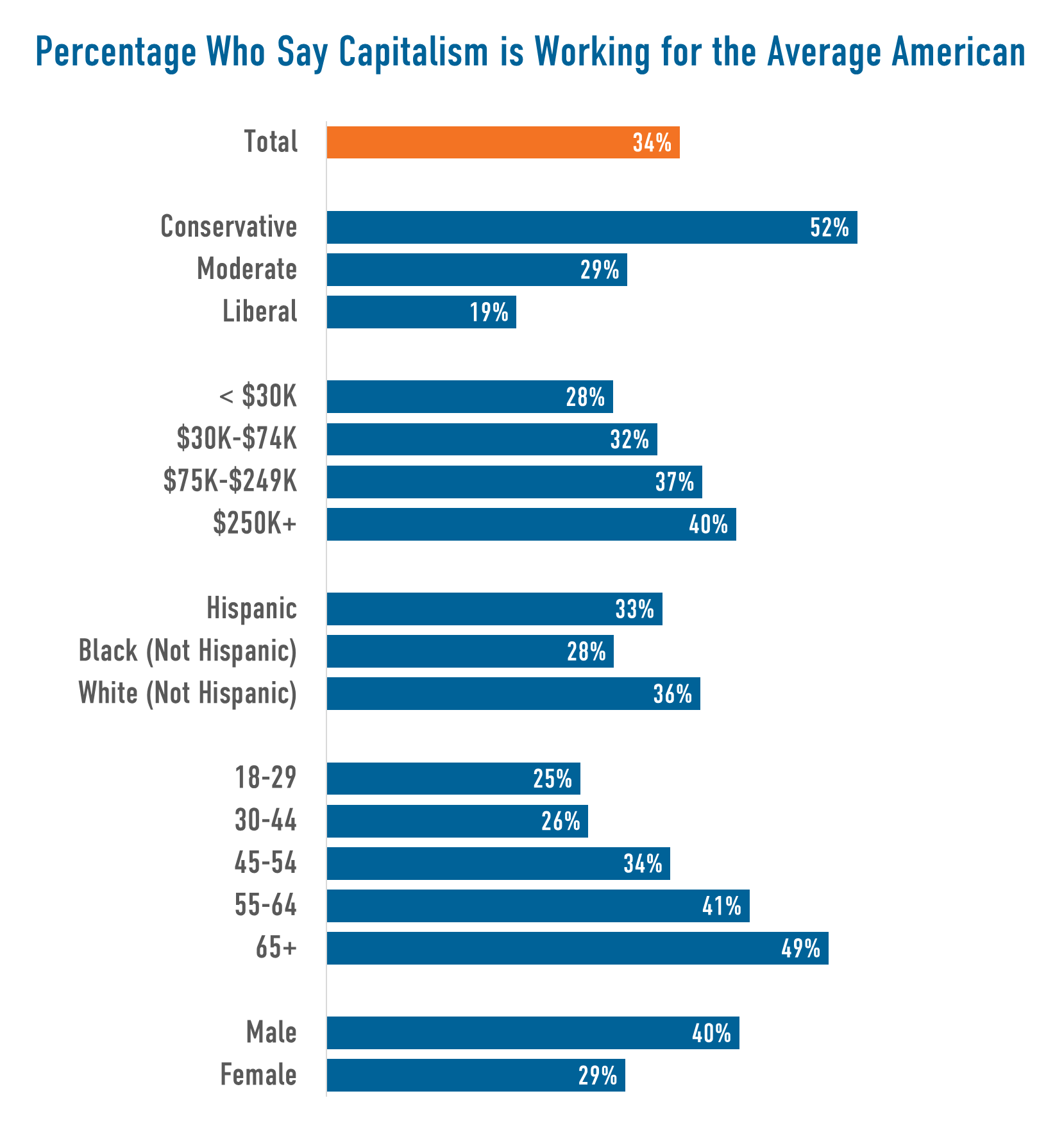
Across political ideology, however, the picture is very different, with more than half (52%) of conservatives saying capitalism is working versus only 19% of liberals.
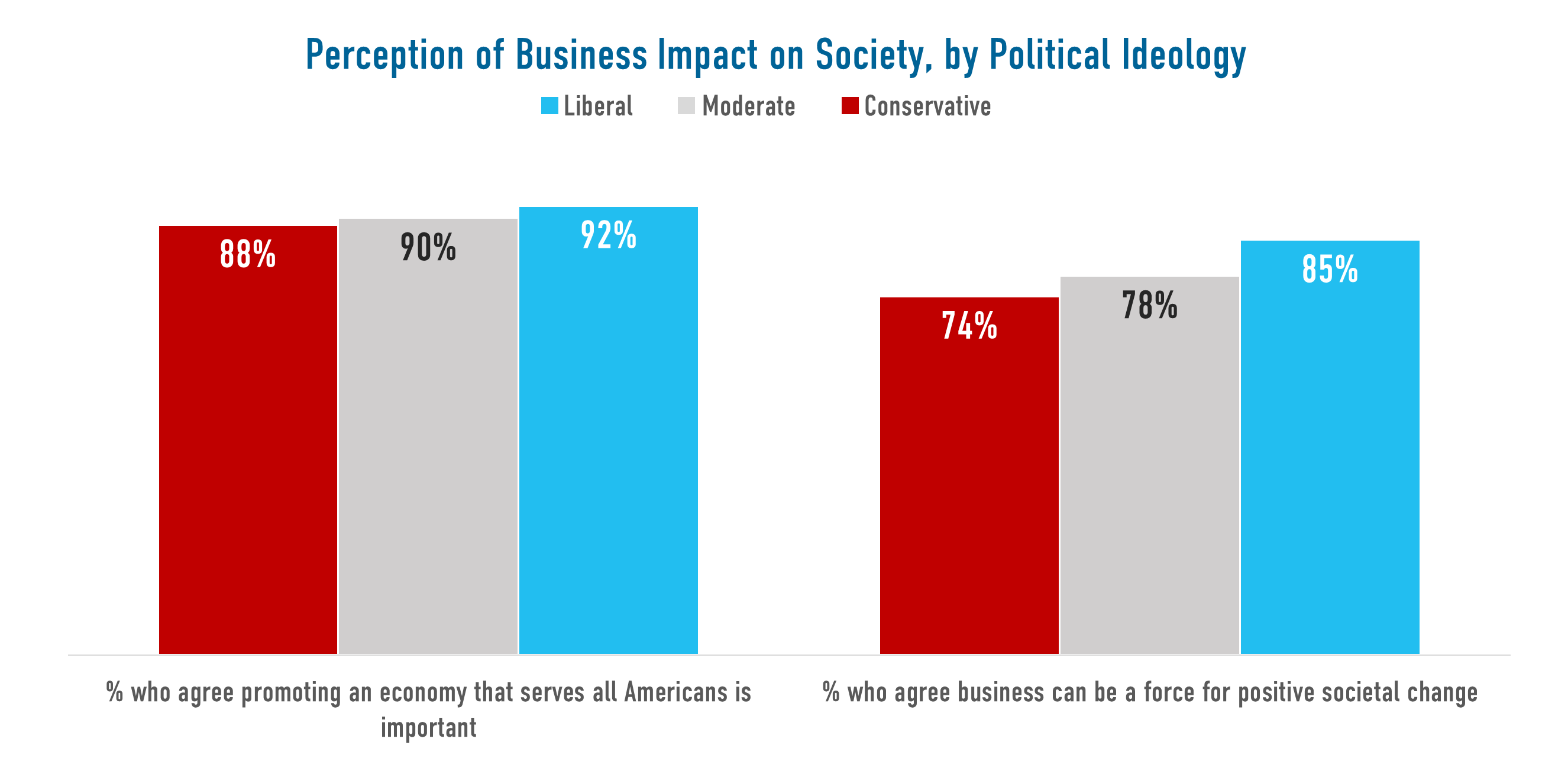
Despite their skepticism that capitalism is actually working for the average American, it is clear that a substantial majority of Americans do, in fact, believe that promoting an economy that serves all Americans is important and can be a force for positive societal change. These numbers are consistent across demographic groupings, generations, income levels, and especially, political outlooks.
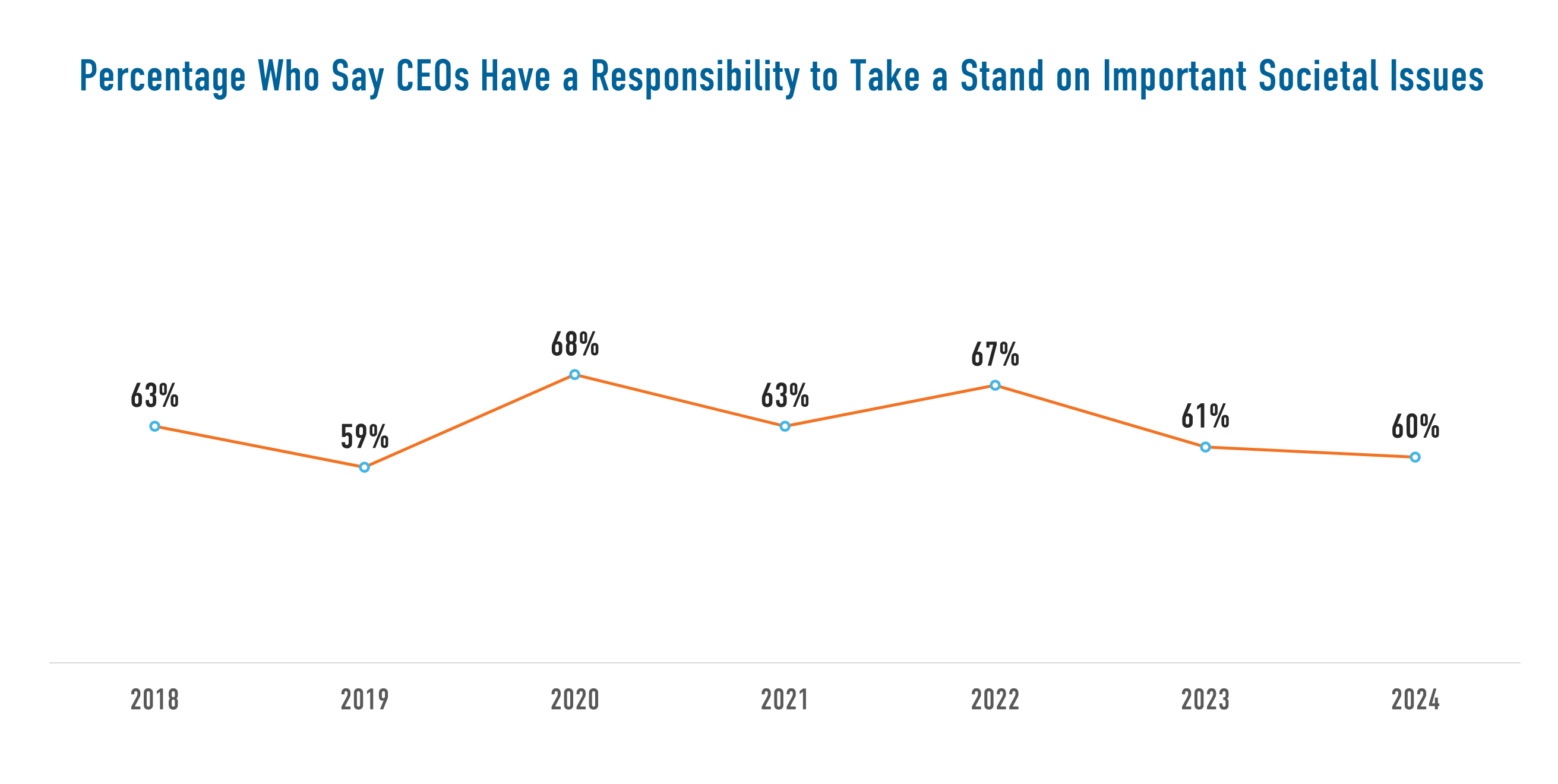
We see more variance when people are asked whether companies should take a stand on important societal issues. Overall, a majority (60%) agree that CEOs of large companies do have a responsibility to take a stand – a proportion that has stayed relatively consistent since 2018.
Our focus groups delved into this issue, with one participant saying: “I feel companies reaching out and speaking about social issues is not a bad thing because they do have a stronger platform than a group of people do.” Another participant echoed this sentiment, saying the largest U.S. companies have disproportionate size and, thus, a disproportionate impact on society.
Yet others felt speaking out on issues can be polarizing, and ultimately harmful, for many companies. As one participant noted, “If you take a side … then it continues to snowball where once you start, then you can’t stop because then you’re forced to speak on everything. And what if you don’t have the time to speak on everything? Then you’re balancing all this work in PR when that’s not really your business. Your business is something else.”
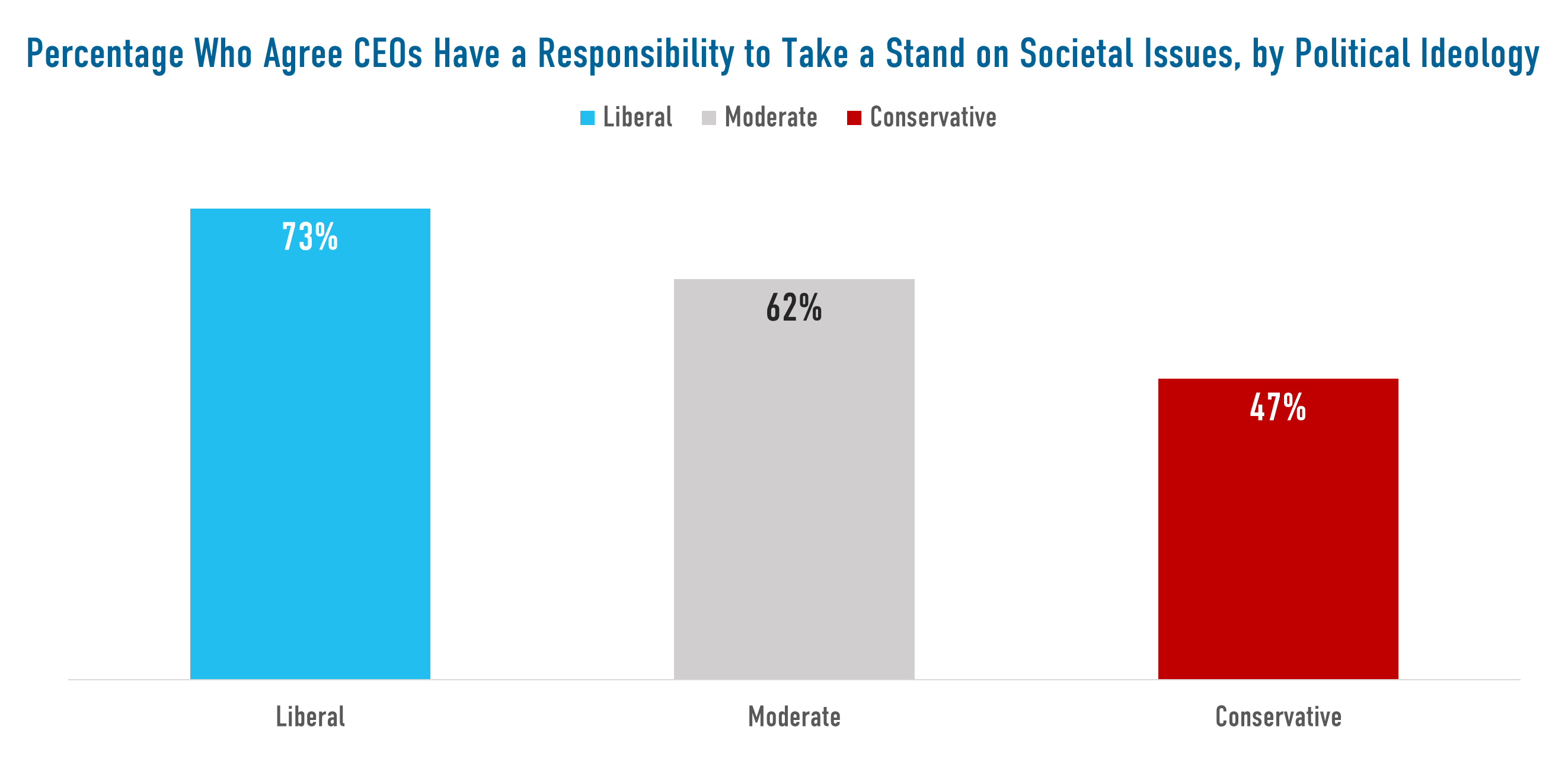
One look at how responses to this question differ by political ideology underscores this divergence. Liberals are significantly more likely to agree that CEOs should take a stand on societal issues (73%) versus moderates (62%) and conservatives (47%).
Crucially, when asked whether CEOs should take a stand about any issue versus only those issues that are related to their business operations, the public is much more likely to say “issues related to business” now than they were just four years ago.
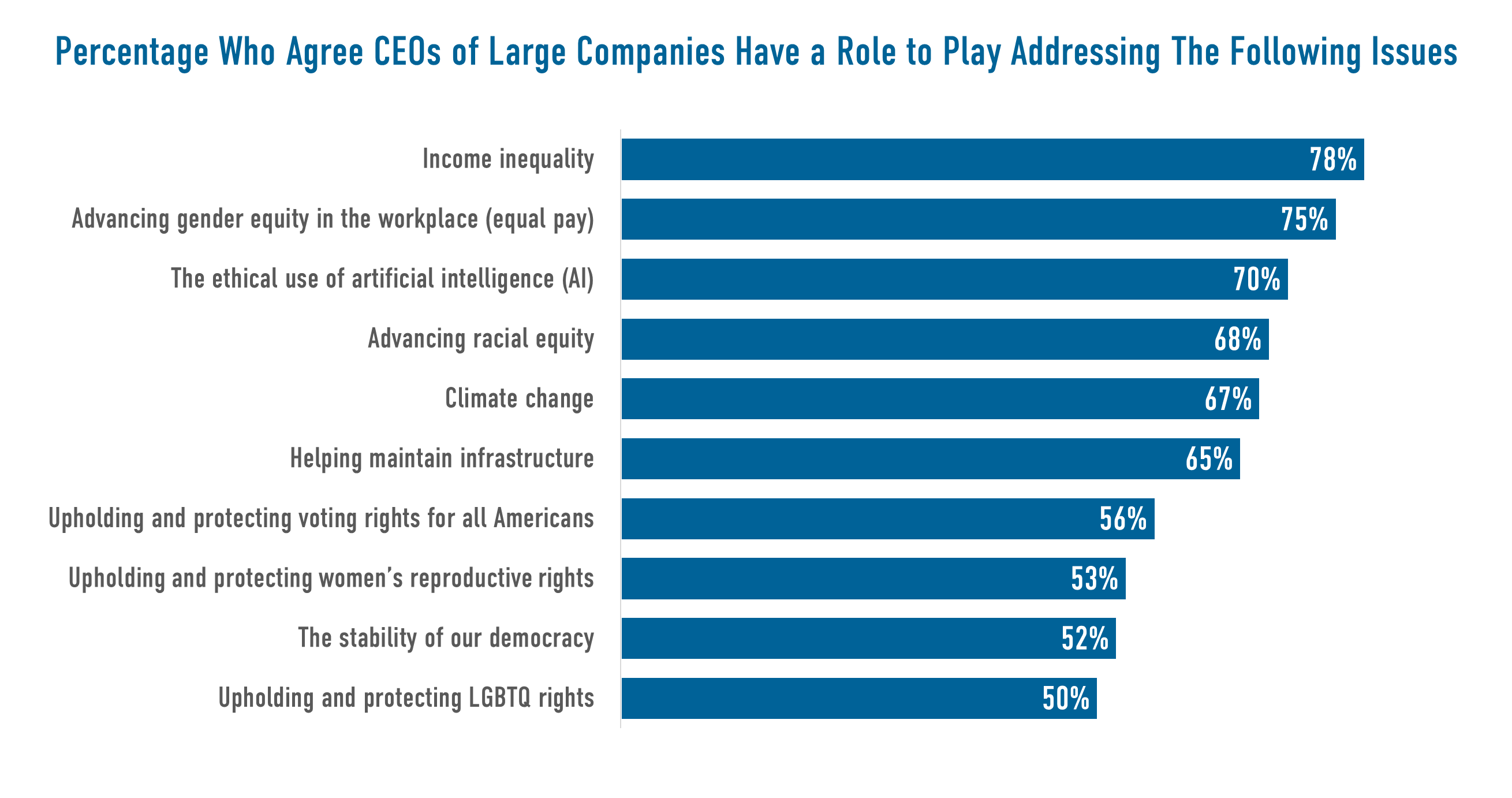
The survey results also provide guidance on which issues the public believes corporate leaders can play a role in addressing. Topping the list are tackling income inequality, advancing gender equity in the workplace (equal pay for equal work), and using artificial intelligence (AI) in an ethical way. Protecting voting rights, upholding women’s reproductive rights, supporting the stability of our democracy, and protecting LGBTQ rights garner less support.
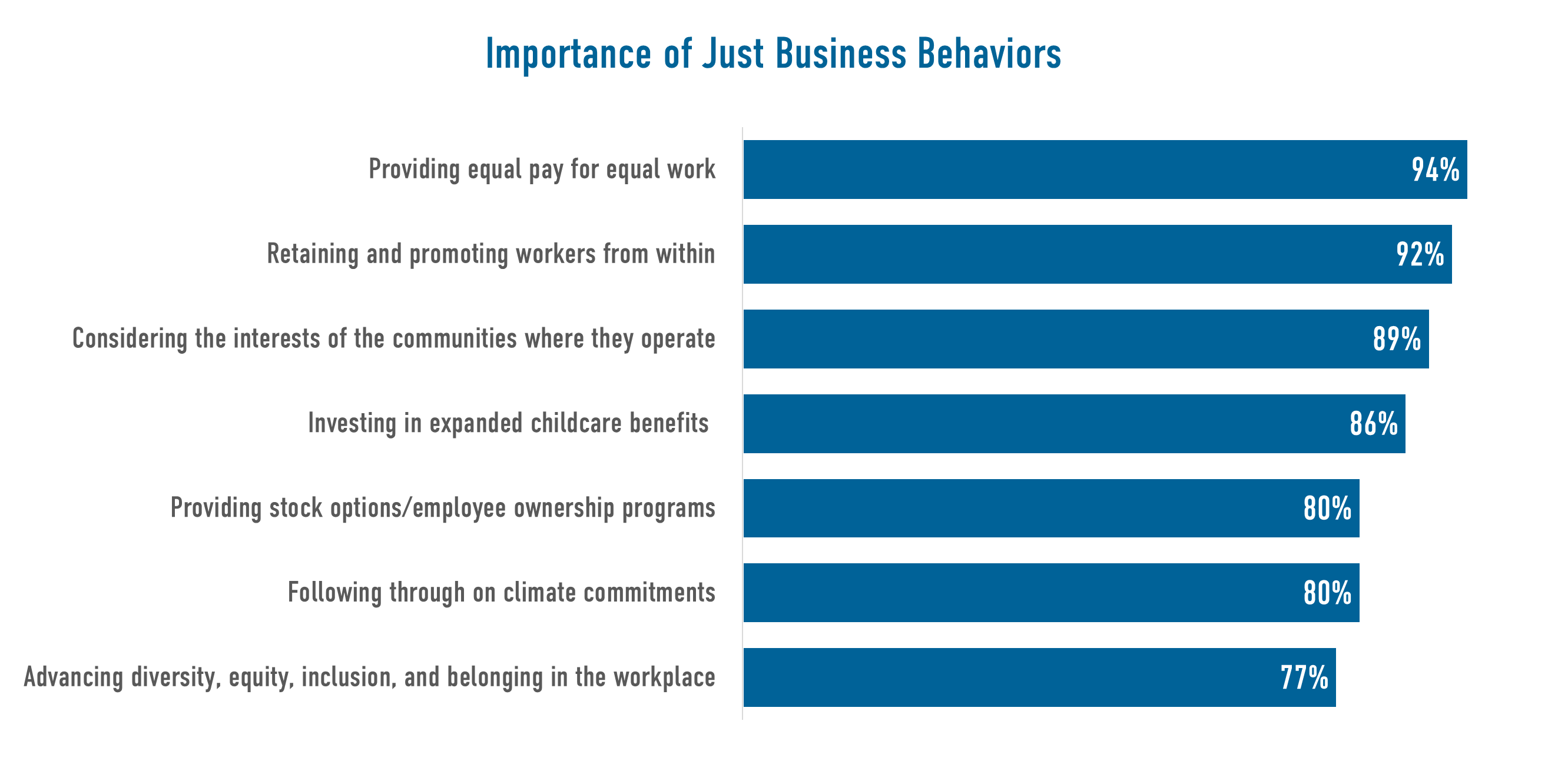
Building on the above, it is clear that in defining the idea of just business behavior, several actions enjoy near-universal support: providing equal pay for equal work, retaining and promoting workers from within, considering the best interests of local communities, and expanding childcare benefits.
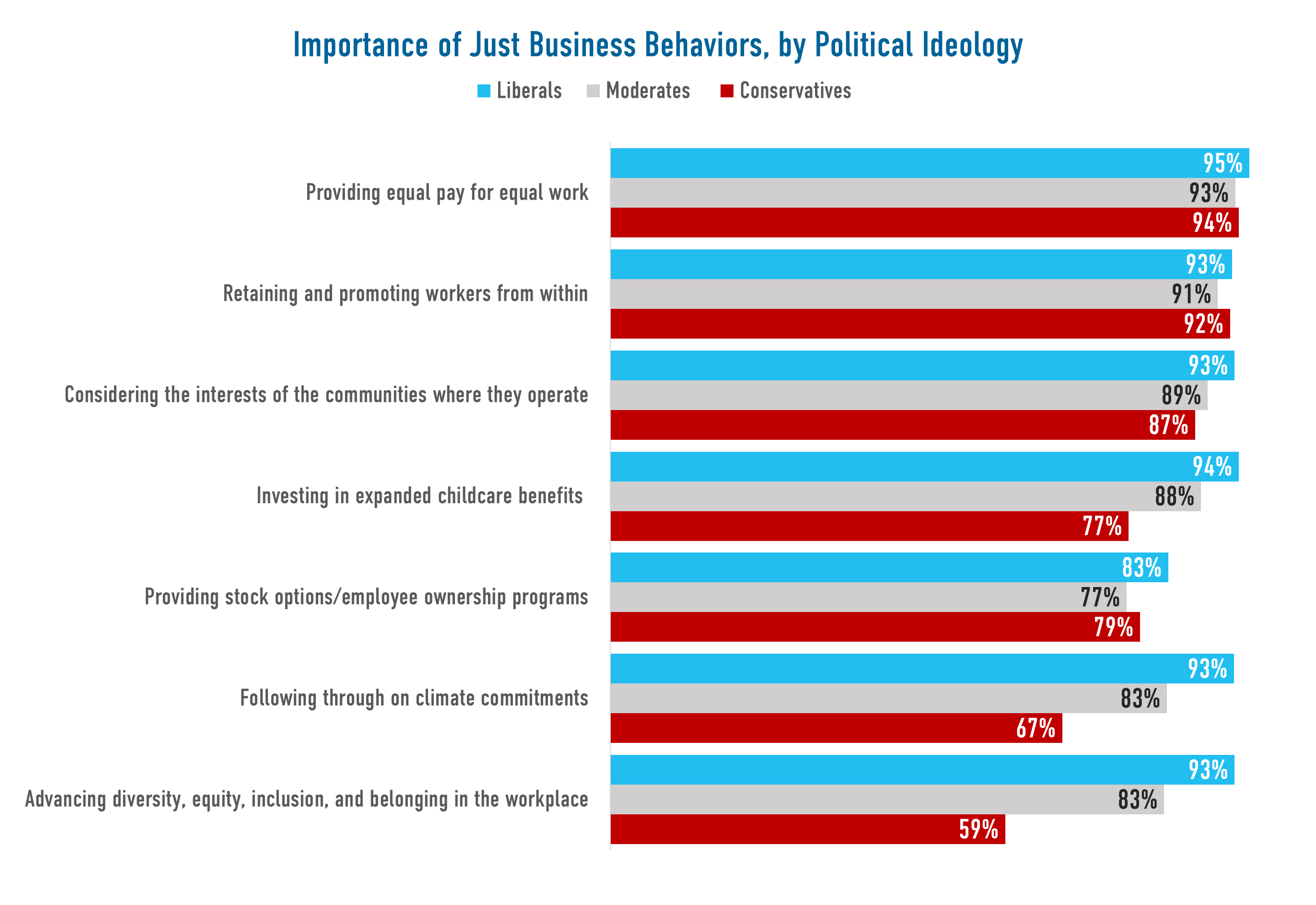
Examining this result through the lens of political ideology, we see a surprising amount of agreement. Liberals, moderates, and conservatives are seemingly in lockstep in believing that the issues of equal pay, investing in workers (including via ownership programs), and supporting communities are essential to just business behavior today.
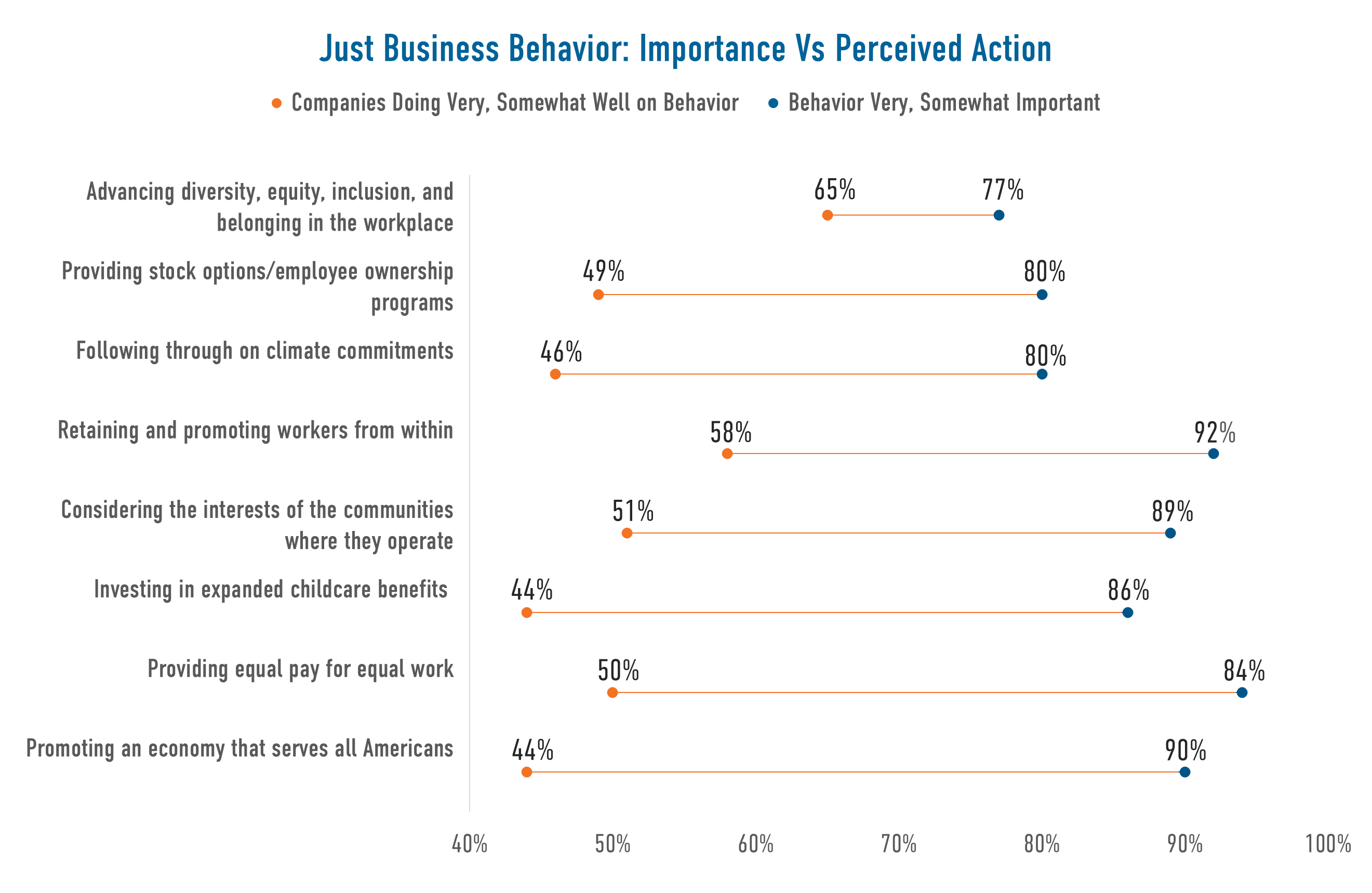
For business leaders, this identifies some clear common ground where actions can be taken with the least risk of backlash. Moreover, in mapping the disparities between the public’s perceived importance of an issue and their opinions on the level of corporate action on that issue, we also shed light on where there are the greatest opportunities to demonstrate authentic leadership. Notably, “promoting an economy that serves all Americans” is the issue with the greatest perceived distance between importance and action (46 percentage points).
Americans continue to want more information on the steps companies are taking on key business and societal issues. Here are a few illustrative quotes from this year’s focus groups:
“I tend to think favorably upon companies that are transparent and open and honest. And even if the data is lackluster or disappointing, I think being transparent and open and honest is a favorable trait. And the real kicker is when it’s combined with positive efforts and the reporting is that they’ve done some good things.”
“[Companies should] try to become transparent and more free with their information. Because at this point, I don’t see it, and that’s why there’s a lot of distrust for myself with a lot of big organizations.”
“I think we should be able to expect transparency. Whether we can, or whether we’ll get it or not, that’s to be debated, but I think we should be able to expect it.”
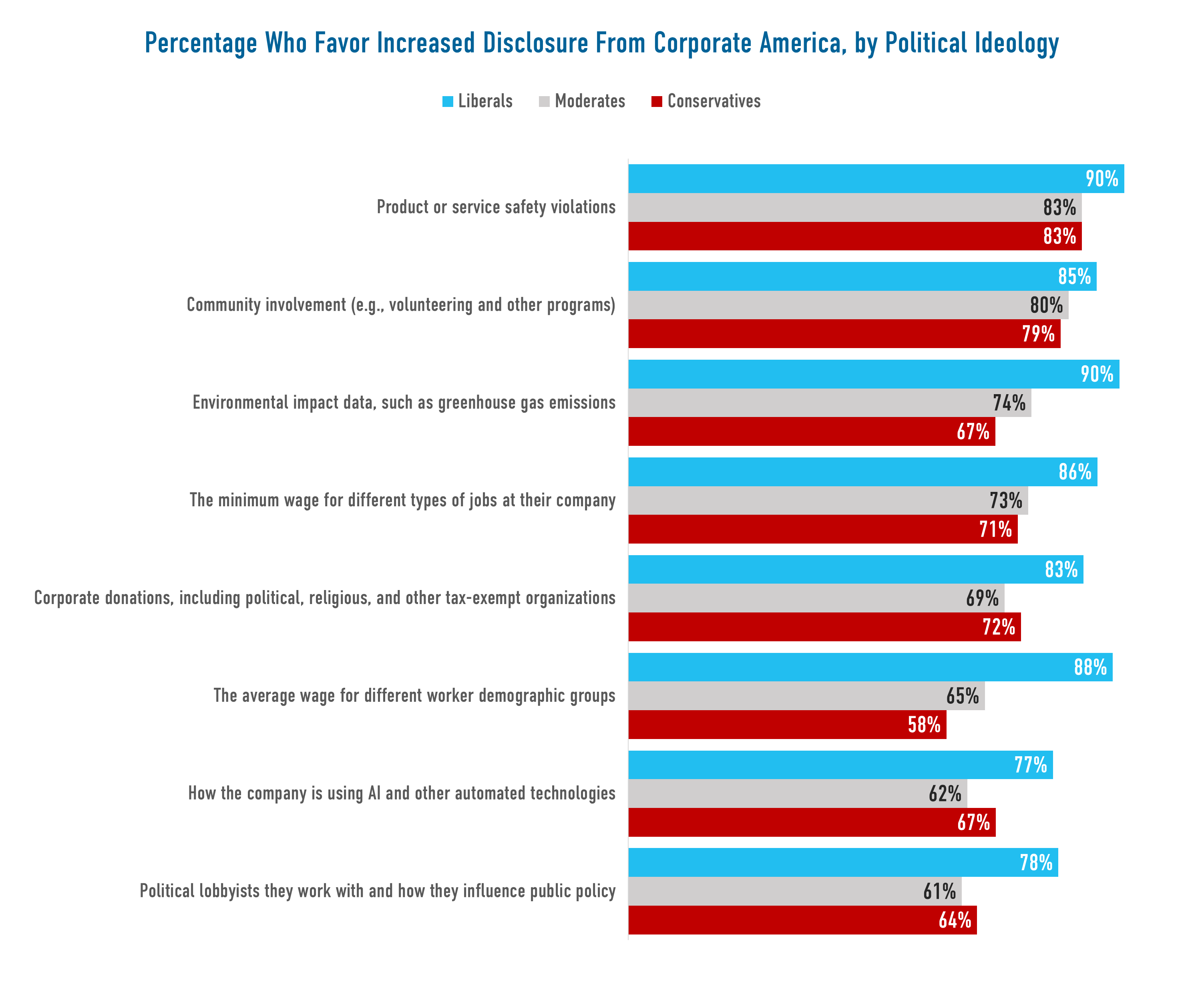
The chart below highlights that public demand for more corporate transparency increased across all disclosure categories from 2023 to 2024.
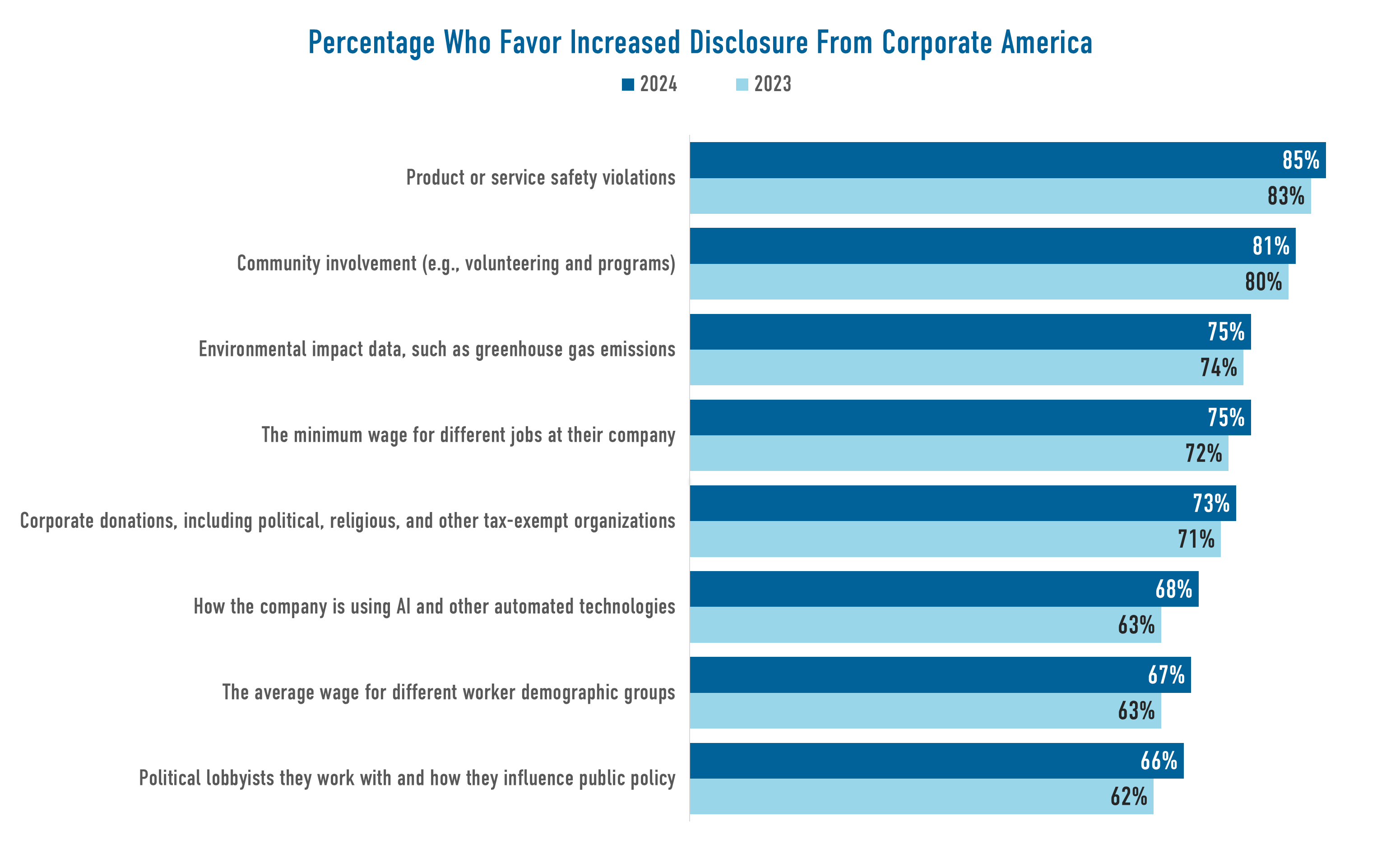
For many issues, the demand for greater disclosure also transcends political ideology. Specifically, product and safety violations, community involvement, corporate donations, deployment of AI, and (to a lesser extent) minimum wage and political involvement are all areas where we see cross-party alignment on the need for more transparency. Disclosure on environmental impacts and demographic wage information are the areas where political opinion is most divided.
This year’s Americans’ Views on Business Survey makes it clear that Americans want corporate leaders to get back to the basics of just business operations: focus on creating value for all stakeholders by concentrating on those areas where positive impact dovetails with positive business performance.
Later this year, we will be releasing The People’s Priorities, a companion report that details what Americans believe are the actions and behaviors of just companies. Together, the data and insights from these reports will support corporate leaders in understanding how they can take action on the public’s priorities and create more value for both shareholders and society at large.
Since 2015, Just Capital has surveyed more than 182,000 Americans on a fully representative basis to assess how well they think companies are doing when it comes to creating value for all their stakeholders and building a more just economy that truly works for all. The 2024 Americans’ Views on Business Survey was fielded among 3,008 Americans – a sample representative of the U.S. adult population – between July 10 and July 16, 2024. Our quantitative research partner is SSRS, an objective, nonpartisan research institution that provides scientifically rigorous statistical surveys of the U.S. population. Our full body of survey work for 2024 also included six focus groups conducted in partnership with The Harris Poll comprising a total of 35 participants who represented a mix of demographics (e.g., age, ethnicity/race, political ideology, household income, and education).

Just Board Member Xavier de Souza Briggs and his colleagues at Brookings Institution released a major new report on generative AI, the American worker and the future of work this week, alongside a TIME guest essay on how the AI revolution is poised to affect workers in the least unionized industries. Amongst other things, they find that more than 30% of all workers could see at least half of their occupation’s tasks disrupted by generative AI, and that the disruptions will be felt across “cognitive” and “nonroutine” tasks, especially in middle- to higher-paid professions.
What can business leaders do to prepare? The authors identify several options including fostering worker engagement in AI design and implementation, and elevating worker voice in mitigating harms such as job loss and inequality. It’s a thorough, insightful study that will help anyone trying to make sense of this increasingly complex and worrying issue.
Also this week, The U.S. Department of Labor released its AI best practices roadmap for developers and employers seeking to safeguard worker well-being. The wide-ranging guidance covers everything from the development of more responsible AI standards and governance structures to ensuring meaningful human oversight for significant employment decisions. Investing in employee training on AI and increasing transparency with workers about the use of AI at work are also important principles. For examples of how 3 JUST 100 companies – Accenture, ServiceNow and T-Mobile – are putting these principles into practice, see below.
Clearly, the scaffolding around which a just approach to deploying AI in the workplace is now being constructed. What’s also important, as noted at the WSJ’s recent CIO Network Summit, is the ROI for AI in business. Leveraging LLMs to boost productivity, grow revenue, improve the employee experience, create higher quality jobs, better serve customers, reduce waste and environmental impact, and improve transparency – things that also constitute just business behavior – are coming into sharper focus too.
Be well,
Martin
This week marks the release of The Competitive Advantage of the Win-Win Workplace, a collaboration between Future Forward Strategies, The Burning Glass Institute, and JUST Capital. The report introduces 9 key strategies for aligning employee well-being with business success, and includes real-world case studies from companies like Intel and Cigna. Get all the insights here.
JUST Board Member Xavier de Souza Briggs and his colleagues at The Brookings Institute released a new report on generative AI, the American worker and the future of work, with a TIME guest essay on how the AI revolution is poised to affect workers in the least unionized industries.
As Martin noted above, here are three examples of AI and worker well-being coming together at JUST 100 companies.
Fortune takes a look at why ESG assets continue to grow in investment despite recent pushback against them.
The Conversation examines the underpaid, overworked workforce supporting the AI explosion: data labellers who must review everything fed into an AI system to correctly define the type of information.
The Washington Post reports that Boeing is planning to layoff nearly 17,000 jobs (10% of its workforce) after losing nearly $25 billion in the last few years thanks to ongoing security and safety concerns, legal battles, and union strikes. Competitor Airbus also announced plans to lay off 2,500 jobs in its defense and space division.
The Times reports that BP has abandoned its target date to cut oil production after falling significantly behind.
Axios highlights an interesting piece of research – at the very top, the gender pay gap flips, and women CEOs actually make more than men. However, this is likely a matter of small sample size as women represent just 40 CEOs in the analyzed index.
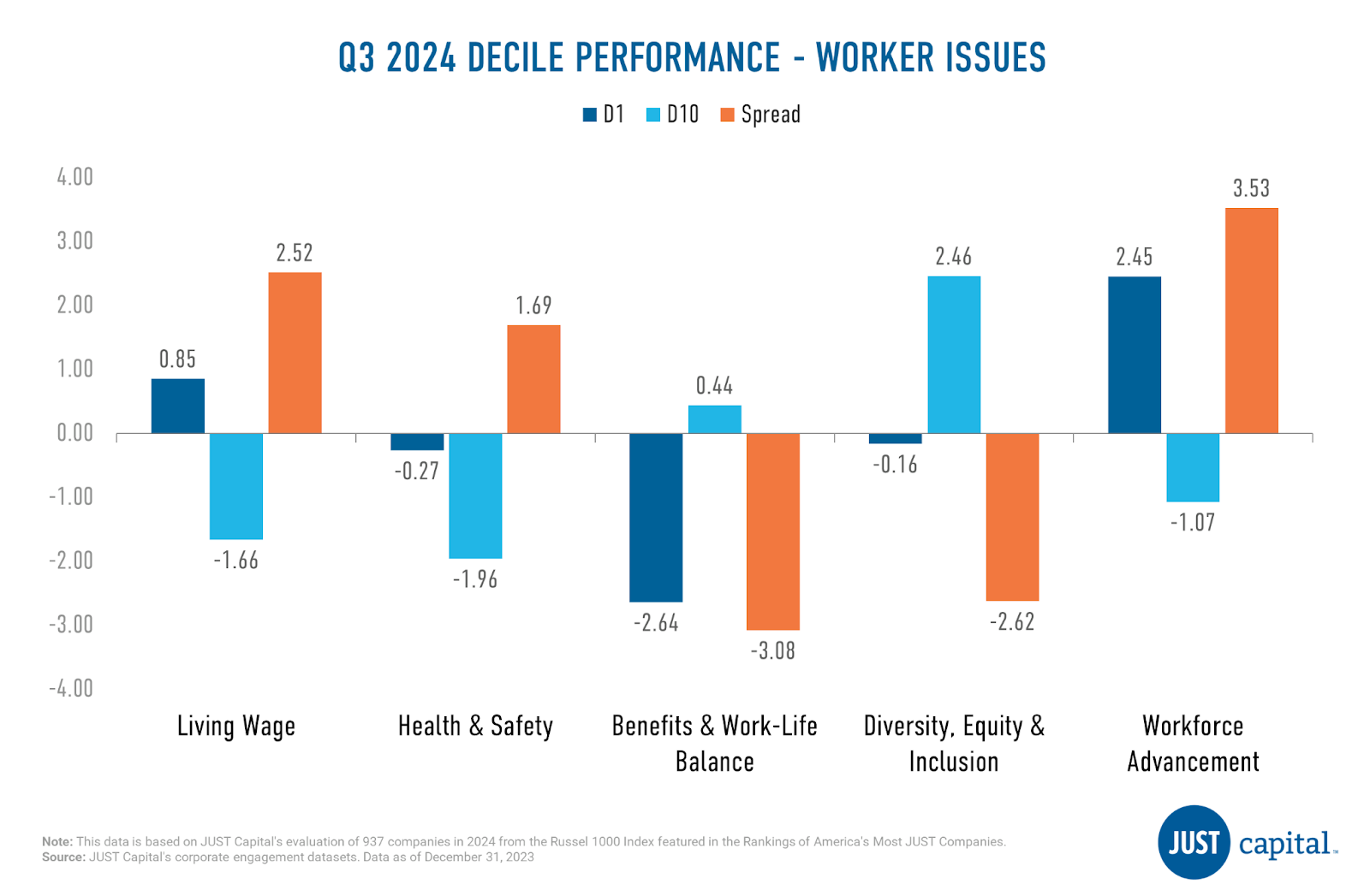
This chart comes from our review of Q3 Stakeholder Performance. Companies that lead in our Workers stakeholder delivered strong performance over this period (with a long-short spread of 1.17%). Year-to-date, our flagship JULCD index is outperforming its benchmark by 0.46% and the JUST 100 has significantly outperformed its benchmark by 7.38%. Explore the data here.

Another week, another devastating hurricane. Since we covered how certain companies are stepping up to help those affected last week, this week I thought we’d switch gears and highlight some important worker matters.
The new Employment Rights Bill in the UK places employee benefits firmly on the agenda in that country and, if passed into law, will presumably affect many of the companies we cover that do business there. The bill covers a range of issues – including sick pay, parental and bereavement leave, protections for pregnant women and new mothers, flexible scheduling, and more – that are increasingly embraced by corporations ranked highly in our worker category. Could it be a portent of things to come in the U.S.? Hard to say, but these are subjects that routinely show up in our polling as being important to the public.
An element of this that enjoys almost universal support is employee financial well-being. Here, we’re starting to see a lot of leadership. NiSource, Oneok, and M&T Bank are but three examples of companies taking explicit action on wealth building for their staff. One specific option being leveraged (albeit gradually) by certain large employers – including Walgreens, Chipotle, Verizon, and Abbott Labs – is the student loan 401(k) matching program made possible by the Secure Act 2.0. This Act enables employers to support their talent pipeline by helping young workers pay down their student debt by making retirement plan contributions, even if the employees themselves are not making contributions on their own. According to the Forbes Edge report, roughly 300,000 of Walgreens’ employees are being offered the program, including over half of the firm’s pharmacists.
Finally, our upcoming Q3 investor performance report underscores why all this should matter to investors. Companies that lead in our workers stakeholder delivered strong performance over this period (with a long-short spread of 1.17%), and year-to-date our flagship JULCD index is beating its benchmark by 0.46% and the JUST 100 is hammering its bogey by 7.38%.
Be well,
Martin

(Walmart)
“The first thing on our mind was, how do we secure the health and well-being of all of our associates? How do we safeguard the well-being of our associates? And then I will also say: How do we safeguard the well-being of any customer or member that’s coming in?”
The Washington Post reports that over a dozen states are suing TikTok, claiming that the app intentionally uses harmful, addictive features to hook young children onto the app.
McDonald’s is suing some of the America’s largest beef producers, claiming that companies like Tyson, JBS, and more colluded to fix prices, forcing companies to pay artificially high prices for meat. CNBC has the story.
NPR reveals that the U.S. had a stunningly high jobs report for the month of September. Examine the details here.
CNBC reports that the DOJ is considering breaking up Google as an antitrust remedy after they were found to be a monopoly.
Forbes examines the tangible benefits that good bosses to an organization and the productivity costs bad bosses incur on their companies.
The Deal looks at new research on executive ESG compensation to determine whether or not the fact that leadership nearly always hits ESG bonus goals is a product of focus or of setting easy hills to climb.
Bloomberg reports that Toyota is curbing its DEI policies after a coordinated social media campaign against the company.
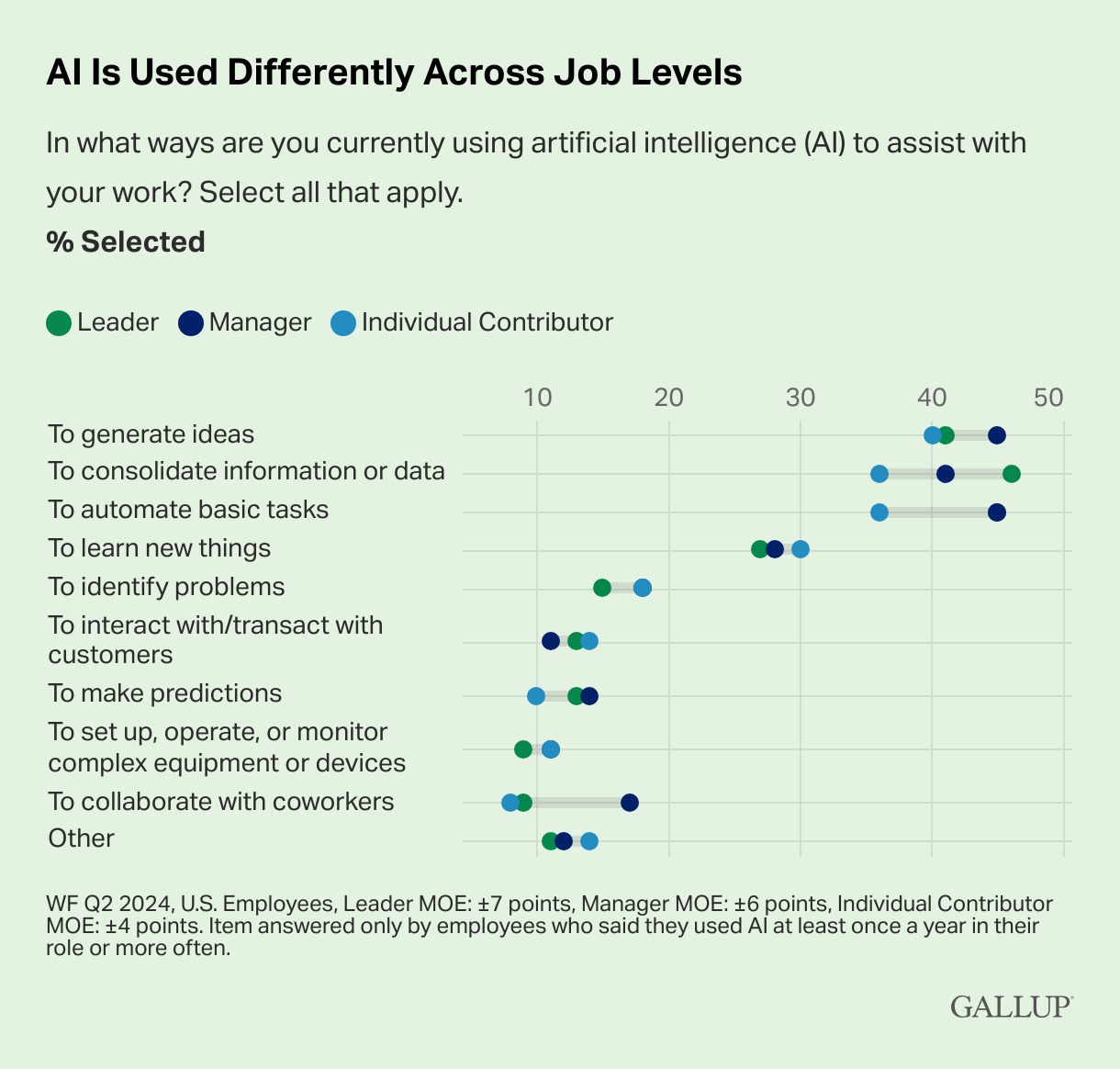
This chart comes from a recent Gallup deep-dive on corporate AI use, and shows what kinds of tasks employees at different levels are using the technology for, revealing that managers are adopting it at a much higher rate than their counterparts.
In a slowing job market and signs of rising unemployment, understanding how companies invest in their workforce has never been more critical. Workers are increasingly asking for meaningful employee benefits and are vocal about their needs for better support, whether it’s for financial wellbeing and the ability to cover their living costs, assistance with caregiving responsibilities, or clear paths for career progression.
JUST Capital’s polling continuously shows how consistent Americans are when it comes to what they want the nation’s largest public companies to prioritize – their workers. Year over year, worker issues including living wage, benefits, career development, worker health and safety, and diversity and inclusion get the highest prioritization and in 2024 comprise 42% of a company’s score in our Rankings of America’s Most JUST Companies.
Investing in workers was a recurring theme in JUST Capital focus groups that will inform the 2025 Rankings. Full findings will be published later this year. Related to how companies can create value for all their stakeholders, one participant shared:
“I feel like a happy employee makes a happy company.” – Male, 40-44, Moderate
And in fact, JUST Capital’s research shows exactly that: investing in workers pays off. Our Workers Leaders Index Concept – which tracks the top 20% of companies in our Rankings that perform best across all five worker-related issues – has outperformed the Russell 1000 Equal Weighted index by 16.46% from December 31, 2021 to July 31, 2024.
As we approach Labor Day, JUST Capital is highlighting the companies leading the way in fostering environments where workers feel valued, supported, and empowered to thrive by actively implementing comprehensive workplace policies that address their workers’ needs head-on. Our analysis found that the top 10 companies for worker issues are outpacing the rest of the Russell 1000 in a number of ways:
JUST Capital is proud to present the list below of Top 10 Companies for Workers with details on how they are leading on the issues that matter most to the American public. The following list is based on performance on Worker Issues from JUST Capital’s 2024 Rankings of America’s Most JUST Companies.
Ranked 2nd in Overall Rankings and 1st for Banks
Bank based in Charlotte, North Carolina
Bank of America invests in its employees’ financial and physical well-being by focusing on competitive wages and comprehensive benefits. The company demonstrates a commitment to paying living wages, with a minimum hourly wage of $23 – one of the highest disclosed among the Top 10 Companies for Workers and well above both the Russell 1000 average of $16.73 and the bank industry average of $18.22. In its commitment to supporting working families, Bank of America offers 16 weeks of paid leave for both primary and secondary caregivers and provides emergency backup care and subsidies for routine day care services. In addition, Bank of America embraces transparency on topics like pay equity and workforce demographics: it’s among the 12.5% of companies that publicly report the results of both their gender and race/ethnicity pay equity analyses and part of the 47% who disclose highly disaggregated workforce demographic data.
Ranked 5th in Overall Rankings and 2nd for Banks
Bank based in New York, New York
Citi demonstrates a strong commitment to fairness and family support through a range of initiatives focused on equity and employee-wellbeing. The company’s dedication to equity is reflected in its pay analysis results, which show that women globally earn over 99% of what men earn. Citi also provides highly disaggregated workforce demographic data by gender, race/ethnicity, and standardized job categories, underscoring its transparency and commitment to an inclusive environment. Supporting its workforce further, Citi offers up to 16 weeks of paid leave to primary caregivers and benefits like preferred access and up to 10% tuition discounts at Bright Horizons child care centers, along with emergency backup dependent care. The company also invests in professional development, providing an average of 38 training hours per employee and offering tuition reimbursement to support employees’ continuous learning.

Ranked 18th in Overall Rankings and 4th for Semiconductors & Equipment
Semiconductors & Equipment company based in Santa Clara, California
NVIDIA’s approach to fostering an equitable and supportive work environment is evident in its commitment to both pay equity and comprehensive employee benefits. Notably, the company offers robust parental leave benefits, including 22 weeks of fully paid leave for birth parents, 12 weeks of paid leave for non-birth parents, including fathers and adoptive parents, and support in offsetting childcare costs by providing a 10% discount on childcare at KinderCare centers. Additionally, NVIDIA stands out for its robust pay equity disclosure, as it is one of only 12.5% of companies overall and 23.5% among industry peers to disclose both their gender and race/ethnicity adjusted pay ratios. The company is also one of very few among the Russell 1000 companies we assess to disclose disaggregated pay equity data by different race/ethnicity categories, showcasing a high level of transparency.
Ranked 16th in Overall Rankings and 4th for Banks
Bank based in New York, New York
JPMorgan Chase invests in its employees’ financial well-being by offering a minimum hourly wage of $20, which exceeds the Russell 1000 average and represents the third highest minimum wage among banks. The company also supports new parents with 16 weeks of paid parental leave for both primary and secondary caregivers and families with various caregiving services. JPMorgan Chase’s equity practices are also reflected in its pay gap analysis results, which show nearly equal compensation across gender and racial lines. Additionally, the company maintains transparency in its diversity efforts by disclosing detailed demographic data by gender, race/ethnicity, and job category.
Ranked 6th in Overall Rankings and 1st for Health Care Providers
Health Care Provider based in Bloomfield, Connecticut
Cigna demonstrates its commitment to workplace equity through pay equity analysis, showing near-parity in compensation for female and underrepresented minority employees. The company also prioritizes transparency by sharing highly detailed workforce demographic data by gender, race/ethnicity, and job category, reinforcing its focus on fostering an inclusive environment. Additionally, Cigna supports its employees’ work-life balance with key benefits including 18 days of paid time off and seven days of paid sick leave annually, paid parental leave, flexible scheduling opportunities, and emergency backup dependent care support.
Ranked 51st in Overall Rankings and 6th for Software
Software company based in Minneapolis, Minnesota
Dayforce sets a high standard in the Software industry with its generous and inclusive parental leave policy, offering 17 weeks of paid leave to all caregivers. This is the highest offering at parity among the Top 10 companies and far surpasses the Russell 1000 average of 11 and 8 weeks of paid parental leave for primary and secondary caregivers, respectively. Additionally, Dayforce invests in its employees by providing unlimited paid time off, 10 days of paid sick leave annually, and both backup and subsidized dependent care benefits. Flexible scheduling opportunities further reflect Dayforce’s dedication to fostering a work environment that truly supports its employees’ diverse needs.
Ranked 90th in Overall Rankings and 1st for Consumer & Diversified Finance
Consumer & Diversified Finance company based in Detroit, Michigan
Ally Financial is among the Top 10 companies with the highest minimum wage of $23 per hour. This wage exceeds the Russell 1000 average of $16.73 and the Consumer & Diversified Finance industry average of $19.00, demonstrating a sustained commitment to competitive compensation for hourly employees. The company also supports working parents by offering equal parental leave to both primary and secondary caregivers and providing discounts on childcare to help ease caregiving costs. This combination of competitive wages and comprehensive family support underscores the company’s ongoing investment in its employees’ well-being and stability.
Ranked 9th in Overall Rankings and 2nd for Semiconductors & Equipment
Semiconductors & Equipment company based in Santa Clara, California
Advanced Micro Devices (AMD) demonstrates a strong commitment to employee well-being through a comprehensive range of benefits, supporting their work-life balance and professional development. AMD offers 12 weeks of fully-paid parental leave for the birth, adoption, or foster placement of a child, ensuring equitable support for all parents and new families alike. Also, the company provides up to 20 days of subsidized backup care annually to help employees with their caregiving expenses. In addition to its family-friendly policies, AMD supports employees’ work-life balance with a minimum of 15 days of paid time off, 20 days of paid sick and family time off, and workplace flexibility, enabling employees to choose what best fits their needs. AMD also supports employees’ professional development and encourages continuous learning through its education assistance program which offsets the cost of education.
Ranked 10th in Overall Rankings and 3rd for Semiconductors & Equipment
Semiconductors & Equipment company based in Boise, Idaho
Micron offers a range of robust benefits to support its employees, including 12 weeks of fully-paid parental leave for all expectant parents and at least 17 days of paid time off annually for rest and recovery. Additionally, the company supports career development and skill enhancement through its academic advancement program which provides financial assistance and resources for employees to pursue higher education and professional certifications. What’s more, Micron provides an average of 62 hours of career training per team member annually, significantly exceeding the industry average of 21 hours. Micron also performs regular pay equity analyses to foster a culture of fairness, ensuring sustained pay equity globally for women and people with disabilities, as well as across race/ethnicity and veteran status in the U.S.
Ranked 26th in Overall Rankings and 2nd for Transaction Processing
Transaction Processing company based in San Jose, California
Paypal demonstrates a strong commitment to employee support through its equitable compensation practices, robust professional development opportunities, and comprehensive benefits package. The company regularly conducts pay equity analyses by gender and race/ethnicity, and its latest assessment reveals that it has maintained 100% global gender and U.S. ethnic pay equity, reflecting its ongoing commitment to fairness and inclusivity. In addition to its focus on equitable compensation, PayPal supports employees’ professional development by offering tuition reimbursement to help cover educational costs and an average of 48 hours of training per employee annually, which is 2.4 times more than the industry average. The company also provides a comprehensive benefits package which includes unlimited paid time off, five days of paid sick leave, equal paid parental leave for all parents, and both subsidized and backup dependent care. To further promote work-life balance, Paypal also offers flexible working arrangements like hybrid work to accommodate diverse needs.
To learn more about our methodology, unpack your company’s performance on worker issues in the 2024 Rankings, and gain insights into how to improve on the issues that matter most to the American public, please reach out to corpengage@justcapital.com.
By Aleksandra Radeva, Lisa Simon (Revelio Labs), Zanele Munyikwa (Economist at Revelio Labs)
In today’s economic landscape – with looming uncertainty about the role of generative AI on the workforce and the pocketbook pinch of ongoing inflation – where and how can workers and their families find financial security and the stability it offers? When companies pay their employees a wage rate that meets local living expenses, they’re not only investing in operational success but also demonstrating leadership on one issue on which Americans across political affiliations agree, a seeming rarity in this election season.
To better understand the financial security of employees across America’s largest publicly traded companies, the Russell 1000, JUST Capital and Revelio Labs analyzed the amount by which employees’ wages exceed the local living wage necessary to cover basic budgetary needs. And while a living wage covers the basics, including housing, food, healthcare, and other essentials, the excess amount provides additional income that allows for the savings, discretionary spending, and improved quality of life necessary for true economic stability. The results – which indicate the financial viability of Russell 1000 employment, including among some entry-level positions, in some of America’s highest cost-of-living cities – may initially seem confounding. To learn more about how we made these calculations, click here.
When considering where workers can achieve financial stability, it’s surprising to find that some of the highest cost-of-living areas in the U.S. – like Seattle, cities in the Northeast, Silicon Valley, and Austin – also top the list for areas where a family of two working adults with two children can earn above a basic needs-based living wage. This finding indicates that the companies represented in these regions, as well as the wages offered in certain roles, can offset the high living costs.
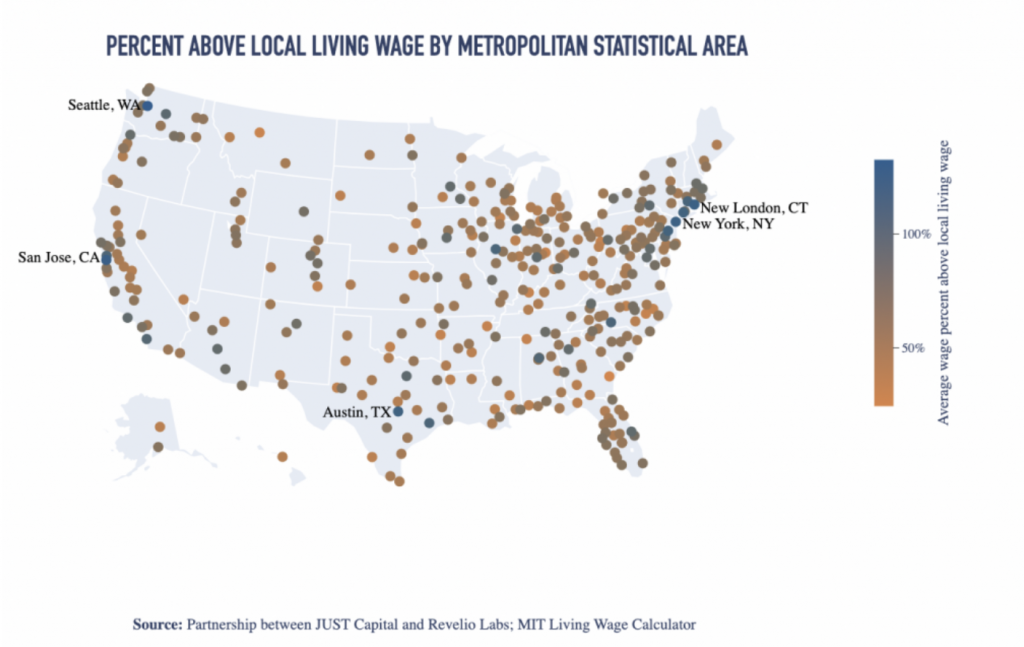
The map above shows where Russell 1000 company employees are paid a rate that, on average, exceeds the local living wage. For example, the living wage estimate, or amount needed to meet basic budgetary needs, for a family of two adults and two children in Austin, Texas is $52,800 per worker (assuming both adults work). Our data shows that on average, a Russell 1000 worker in Austin makes $114,000, which is 160% above the local living wage estimate for a family of four. This finding is certainly driven by the fact that Austin has a high concentration of high-paying companies with highly paid roles. But it also tells us that if one could be any worker with any role in a Russell 1000 company, a job in Austin would be more likely to ensure financial security.
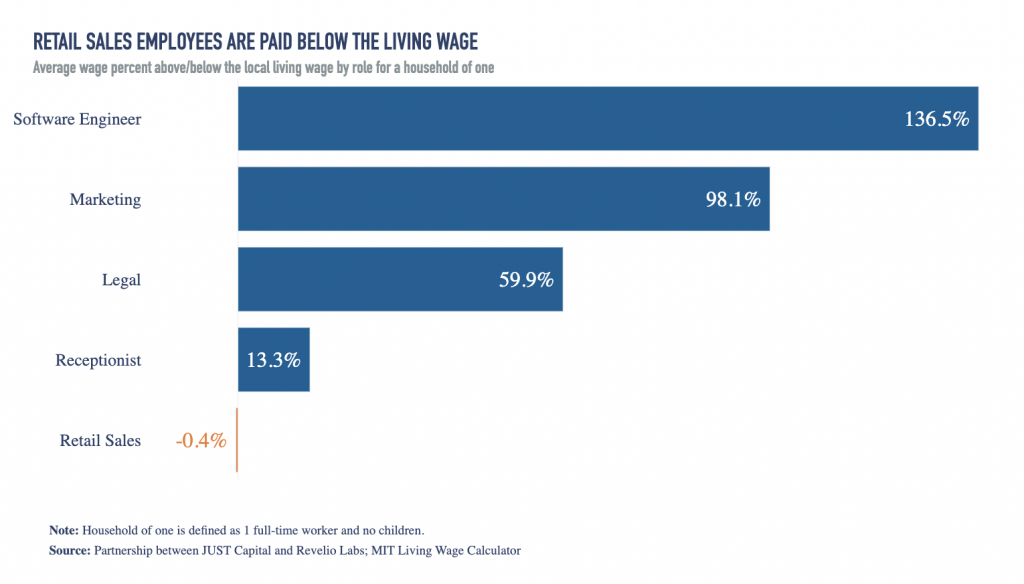
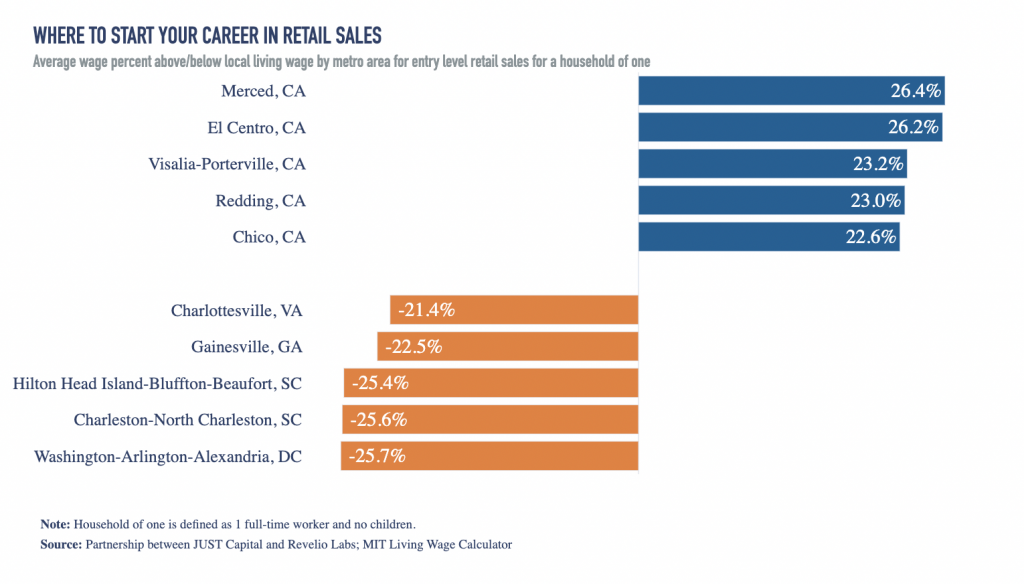
But when looking across different roles at Russell 1000 companies, not all tend to pay a living wage, let alone above it. The industry with some of the largest location-based variation in employees earning more than a local living wage is retail sales. That variation is driven by the industry’s large, diverse workforce and extensive presence across different regions. For those starting their careers in retail, the location of a given store plays a crucial role in determining financial viability. California, although a high cost-of-living state, not only provides a higher likelihood of achieving a wage exceeding the local living wage in retail roles but also maintains this advantage in entry-level positions.
For example, an entry-level retail sales employee working at a Russell 1000 company can make on average 26.4% more than the living wage for a household of one in Merced, California. In Charlottesville, Virginia, on the other hand, employees will make 21.4% percent less on average than their local living wage.
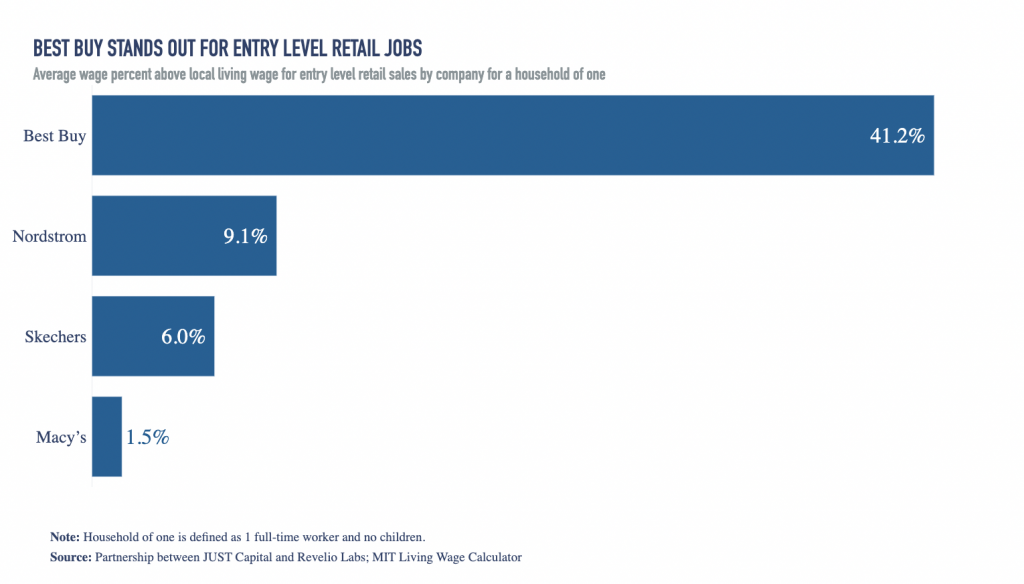
Besides location, the employer also plays a role in determining an entry-level role’s financial viability. Certain companies – including Best Buy – stand out for their higher pay for entry-level retail jobs. Best Buy, Nordstrom, Skechers, and Macy’s are notable for offering wages that exceed the local living wage estimates for a single adult working full-time, making them attractive options for those entering the retail sector. On average, entry-level sales employees at Nordstrom make 9.1% more than their local living wage for a household of one.
*The best companies for entry level retail positions are determined based on the percentage average wages fall above the local living wage for those positions.
And while some locations and employers offer a good starting point in retail, can such jobs support a family? A more detailed examination of retail roles reveals a sobering reality: supporting a family on a retail salary remains difficult in most areas. This finding is particularly true for entry-level positions, where wages often fail to meet the local living wage estimates. However, there are exceptions. California emerges as a state where retail sales roles can offer wages exceeding the local living wage, suggesting a more favorable economic environment for retail workers.
*For the purposes of this analysis, a family is defined as two full-time working adults with two children, and the living wage is what each of the adults needs to make to meet an estimated basic needs budget in their location.
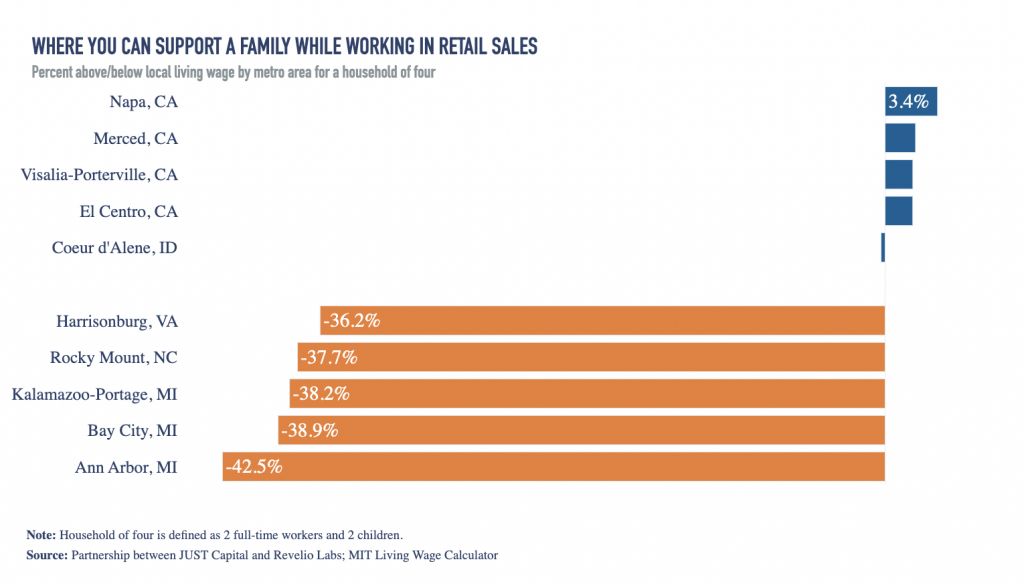
*The above graph represents the top and bottom five locations for relative wages earned by employees in retail sales roles compared to the local living wage .
These insights underscore the complex landscape of wages and living costs across the U.S., where variation exists even across Russell 1000 companies in the same industry. They highlight the importance of considering both geographic and role-specific factors when evaluating economic stability and opportunities for families.
JUST Capital and Revelio Labs are committed to identifying the corporate leaders on key workforce trends, particularly when it comes to companies investing in their workforce by paying a fair, living wage – a top priority of the American public for just business behavior. Learn more about leveraging the research insights, cabinet of experts, and peer-to-peer engagement available to corporate leaders through JUST Capital’s programming by reaching out at corpengage@justcapital.com.
Lisa Simon is the Chief Economist and Zanele Munyikwa is an Economist at Revelio Labs.
What is a living wage? A living wage is the amount of money needed for a given worker to cover the cost of their family’s minimum or basic needs where they live. Learn more about living wage as an important business benchmark here.
How do we calculate the percent that average wages fall below or above the local living wage in this analysis? To calculate the percentage average wages fall above or below the local living wage, we look at the average wage earned by employees working at Russell 1000 companies in a given metropolitan area, and compare that average to the local living wage. We then use the following formula to calculate the percentage above or below the local living wage:
(Average wages earned in MSA by Russell 1000 employees﹣Local living wage) / Local living wage
Why is a pay rate that exceeds the living wage important? For workers across incomes, knowing where your earnings are most likely to exceed the local, basic needs-based cost of living provides an indication of where your wages might be “worth” the most in terms of purchasing power. What’s more, the basic needs budget used to estimate living wage typically assumes the lowest-cost version of necessities, and does not include significant elements of financial security such as retirement savings. A worker earning a living wage would remain only one unexpected expense away from financial precarity. Learn more about how local living wage estimates are calculated here.
