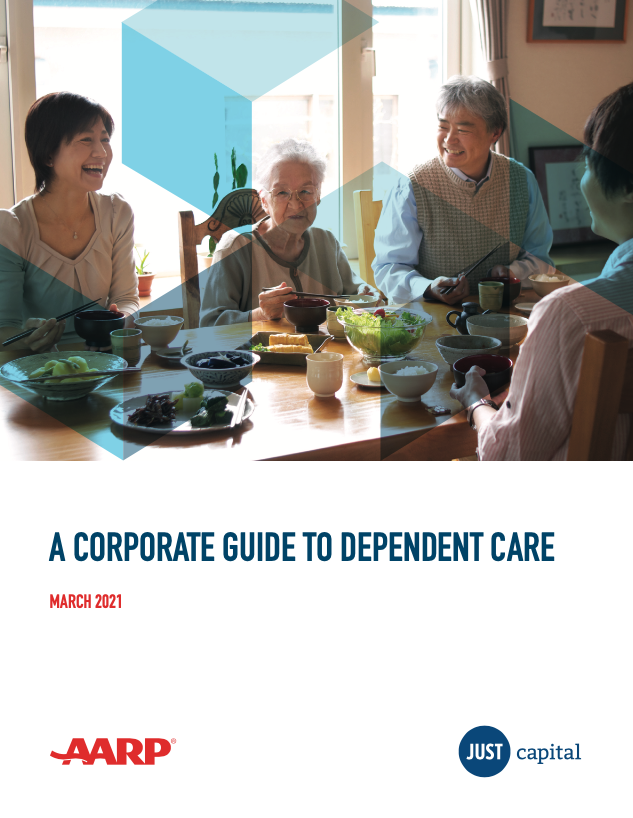
Even before roughly 40% of Americans began working from home to prevent the spread of COVID-19, millions of Americans were juggling the demands of work and caregiving, with more and more caregivers struggling to coordinate care. Current caregiving infrastructure in the United States does not meet the many needs of families, and most corporate policies are focused on filling short-term care gaps in lieu of broader systemic support with a strong focus on childcare, meaning that those caring for older adults, or a combination of older and younger family members, are often left behind in policy creation. Since the needs of caregivers vary so vastly, depending on the provision of care to older adults, children, or some combination of the two, any conversation about companies’ policies around dependent care must explore the need for a broader infrastructure of care to be developed to build community, increase employee engagement, and better engage stakeholders more broadly.
Workers are a primary value driver for companies, and employers can increase productivity as well as decrease absenteeism by providing resources to support employees who are also care providers. Most importantly, evidence suggests that offering dependent care will keep women within the workforce and provide critical support for fathers and secondary caregivers. AARP’s Caregiving in the U.S. Report highlights some of the sacrifices employees make at their jobs in order to accommodate for caregiving responsibilities at home, especially as it relates to caring for older adults. Workers may go in early to work or leave late, reduce their schedules to part-time hours, take leaves of absence, turn down promotions, retire early, and even quit working altogether. It is clear overall that the lack of support and resources for both child and elder care forces workers to take on increased responsibilities at home without help, and this prevents them from bringing their full capacity to the workplace. To help mitigate this disparity, companies can provide myriad flexible elder and childcare options for their employees.
Increasingly employers will need to offer this benefit to attract and retain talent. Employees look for companies that support both primary and secondary caregivers, and the millennial generation that makes up a large portion of the U.S. workforce is no exception – many of these employees factor their plans for family building and childcare into their job search, and providing these resources in benefits offerings can give companies an advantage as they look to distinguish themselves from competitors.
JUST Capital was proud to partner with AARP to make this guide available. Download the report below to read the full report detailing the following key findings:
We invite you to read the other two guides in this series offering additional insights on navigating key workplace issues in the wake of the coronavirus pandemic:
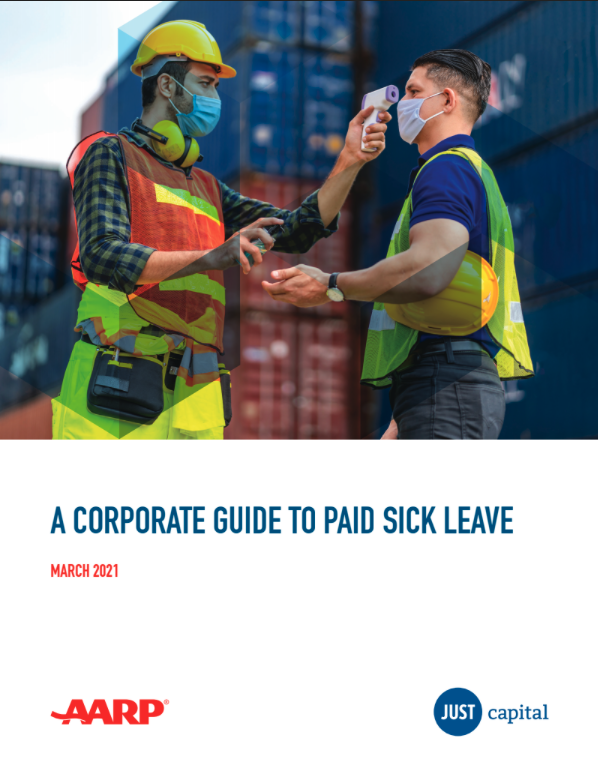
For years, there have been mounting calls from researchers, advocates, policy makers, and workers to increase Americans’ access to a range of paid leave benefits in the absence of government action. The COVID-19 health crisis has put a spotlight on these critical issues. It has never been clearer that all workers need access to a range of paid leave benefits to care for themselves or for an ill family member or young child. Paid leave benefits, whether provided voluntarily by a company or through a government program, are vital to protecting workers’ health and economic security. In the brief below, we focus on one of the most crucial and basic forms of paid leave – paid sick leave – and discuss the state of workers’ access to these benefits, how corporate policies have changed in response to COVID-19, and what actions business leaders can take moving forward.
As companies continue the process of re-opening, paid sick leave has become an important part of the puzzle. These policies serve to minimize continued spread of the virus, protect the financial security of workers, help companies retain employees, and protect against long-term shortages or reliability in the value chain. The consequences of not having a paid sick leave policy in this time of crisis have been serious in some instances. For example, several major meatpacking companies had to shut down plant operations following waves of COVID-19 cases on their factory floors.
The benefits of these policies include, but are not limited to, retention, recruitment, and employee well-being – which all can bolster the overall financial health of a company. In fact, research from JUST Capital shows that stakeholder-focused companies that prioritize their workforces have outperformed their peers by 7.3% so far in 2020. Since the pandemic began, investors have increasingly emphasized paid sick leave as well, with 286 institutional investors representing $8.2 trillion calling for companies to provide paid sick leave, prioritize health and safety measures, retain their workforces, maintain supplier and customer relationships, and remain financially prudent in response to coronavirus. Companies are facing a distinct choice to protect their employees at all levels, keep communities and families caring for dependents financially secure, and to build healthier communities, and can take a significant step in this process by implementing paid sick leave.
JUST Capital was proud to partner with AARP to make this guide available. Download the report below to read the full report detailing the following key findings:
We invite you to read the other two guides in this series offering additional insights on navigating key workplace issues in the wake of the coronavirus pandemic:
2020 will be a year that’s talked about for decades to come. And while the “annus horribilis” may be in the rear view mirror, its impact will still be felt through the better part of the coming year.
Over the course of 2020, we regularly surveyed the American public to take their pulse on the most critical issues of the year – from COVID-19 to racial inequity to the preservation of our democracy – and to learn what role they believe companies and corporate leaders must play in addressing those issues and supporting their stakeholders in the process. Our findings informed the focus of our research and initiatives throughout the year and provided the foundation by which we assessed corporate America in our 2021 Rankings of America’s Most Just Companies.
We’ve gathered some of these key findings below to provide not just an archive of the public’s views during this unprecedented year, but also a blueprint for corporate action in the year to come – one that is sure to be formative for stakeholder capitalism in America.
In a year roiled by so many challenges, one of the fall-outs is that Americans believe the pandemic has exposed underlying structural problems in our society. Our June 2020 report entitled “The Great Reset” uncovers this and myriad other insights, including the fact that a strong plurality of the public believes that we need a more evolved form of capitalism that will:
Findings from our Annual Survey reinforce these beliefs, and suggest that there is more work corporate America must do to support its stakeholders, specifically:
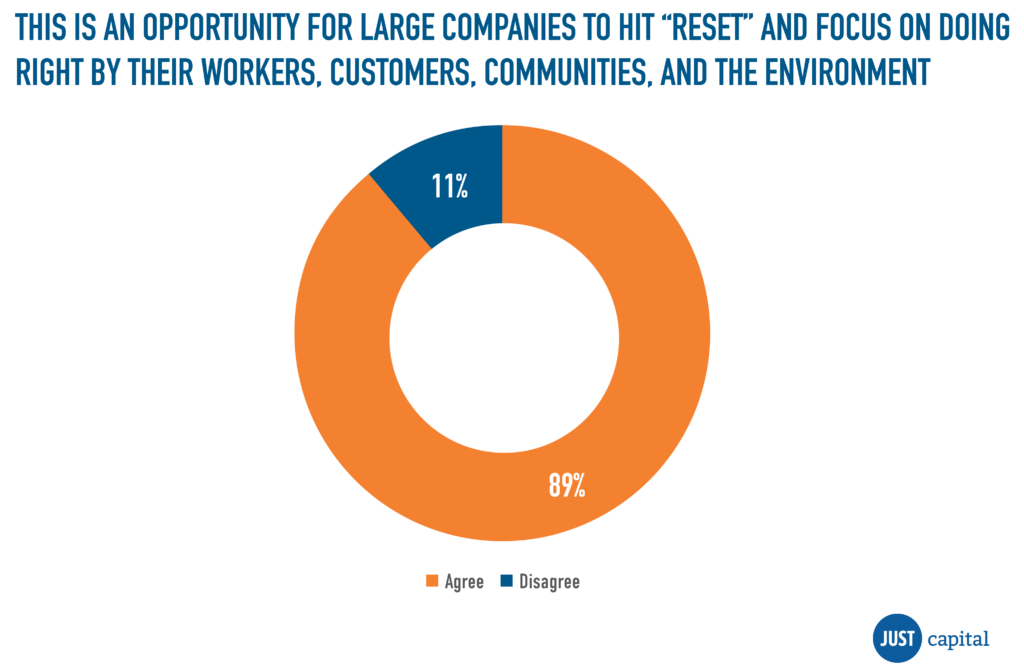
It’s clear that corporate America is not living up to society’s expectations – and Americans let us know that they see this moment as an opportunity for companies to hit “reset” and work to meet the needs of all their stakeholders.
Further, when we asked them which stakeholders they believe were top priority for companies in 2020, 37% of Americans responded that employees were a key focus in 2020, a significant 17 percentage point increase from the year prior. Yet the plurality (46%) says that shareholders are companies’ top priority – suggesting that, while we know from our other survey work that Americans want employees to be a company’s top priority, corporate America is not yet aligned with their views.
In the immediate aftermath of the pandemic, Just Capital set to work tracking corporate responses to COVID-19 – and also reached out to the public at regular intervals for their feedback on where they think corporations should focus their efforts. In a quick pulse survey fielded in April 2020, 89% of Americans agreed that protecting the personal safety of frontline workers (including providing PPE) should be at the top of the list:
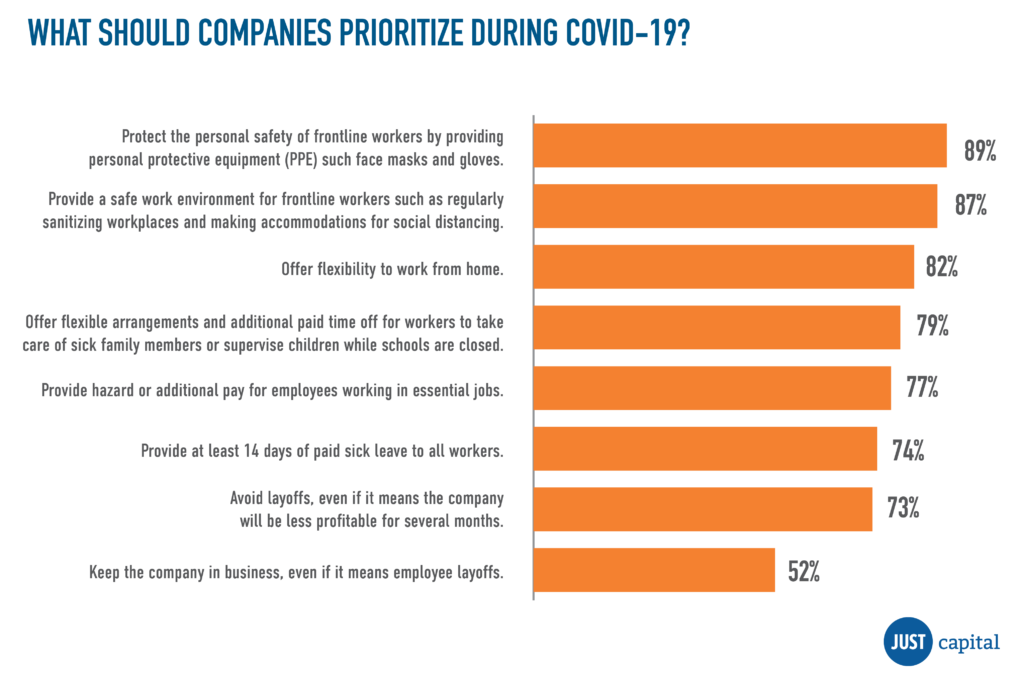
In June 2020, we reached out to Americans again as we approached the reopening phase of the pandemic. Three out of four Americans told us that large companies should continue to prioritize worker health and safety, even if it makes taking a more cautious approach to re-opening.
At the time of this survey, the future of the pandemic was highly uncertain – including whether and when there might be a vaccine, when businesses would be able to reopen, and what support Americans could expect from the government in the short and long term. In the face of this uncertainty, which we of course continue to experience today, Americans let us know that they believed a number of crucial corporate policies needed to be extended for at least another year to support our country’s workforce, and that companies should:
Looking ahead to the other side of the pandemic – the timeline for which remains uncertain, even today – 84% of Americans let us know they will remember the companies that did right by their workers, that worked to ensure workers’ health and safety and avoid layoffs. What is more, three-in-four (76%) agreed they will remember those that took missteps in their responses to COVID-19.
With the American people ready to hold corporate leaders to account for their responses to the COVID-19 crisis, we asked them how they expect corporate leaders to respond to other critical issues of our time.
Following the killing of George Floyd and too many other Black Americans – and the national reckoning with racial injustice that followed – we tracked and aggregated notable actions from corporate America, and provided actionable guidelines for how companies can combat systemic racism against Black colleagues in the workplace.
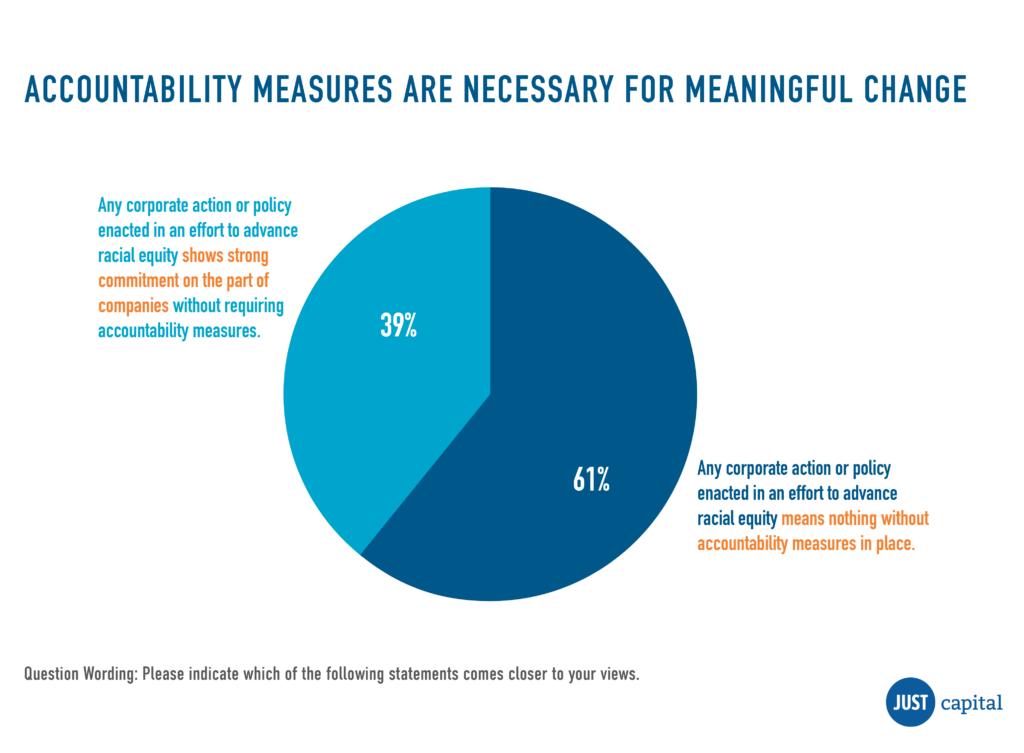
Turning to the public for their views on corporate responses – specifically, statements in support of Black Lives Matter and condemnations of white supremacy – we found that 75% of Americans want corporate leader to condemn racism, racial inequality, and racial injustice, but 61% agree that these commitments ring hollow without actions to back them up:
As the year progressed, we found the very foundations of American democracy under threat, and asked the public what they believed the role of companies should be in its preservation. 83% of Americans told us they believe that the health of our economy depends on the strength of our democracy, and in a survey fielded before the 2020 election, a majority (62% or more) shared that they believed companies could step up to help maintain democracy by:
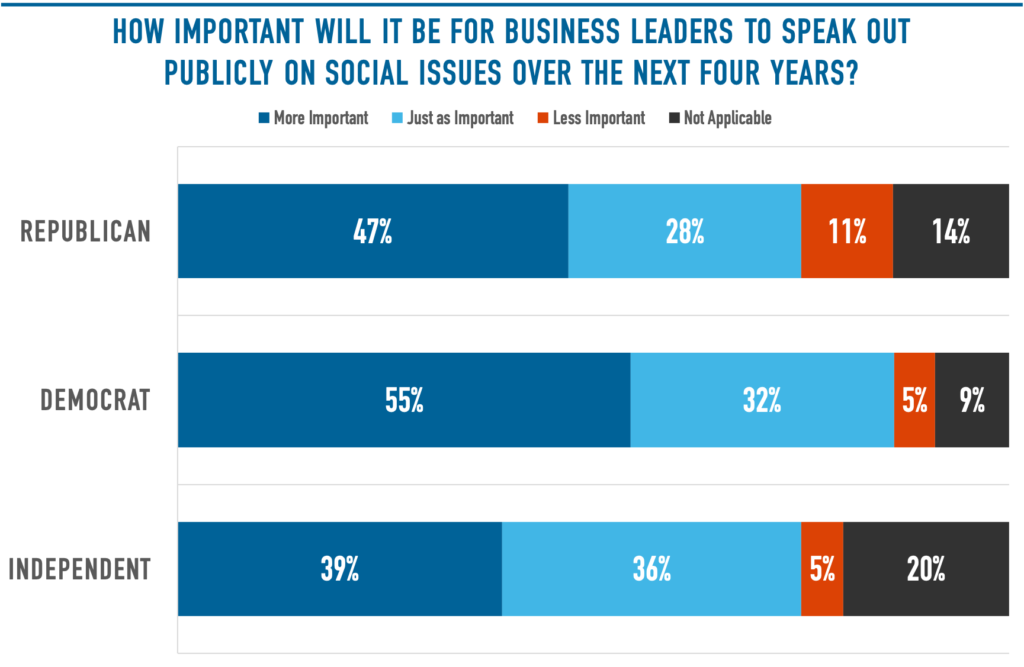
We returned to the public in December, following the election, to ask them how they viewed corporate responsibility under the incoming Biden administration. We found that nearly 80% of Americans expect corporate leaders to continue to speak out on social issues over the next four years – including 87% of Democrats and 75% of both Republicans and Independents.
The year to come will continue to test corporate leaders – with the pandemic still raging, democracy still fragile, and racial inequality still in the process of being dismantled. Americans clearly expect corporate America to take a stand, but not without clear actions to truly move the needle for their stakeholders.
Since we first began polling the public back in 2015, Americans let us know year after year that they believe a top priority for companies must be to pay their employees a fair and livable wage – and in the past three years, it was the most important issue in the public’s view. These priorities provide the foundation for our Rankings, and in 2021, paying a fair, livable wage accounted for 9.9% of a company’s score in our Rankings:

In our 2020 Survey – which determined the prioritization of each of the above issues – 80% of Americans let us know that they believe large, public companies have a responsibility to consider the impact they have on all their stakeholders. But only 35% of Americans believe companies are actually having a positive impact on their lowest-paid workers.
Finally – reflecting the critical and intersectional need for companies to take action in this area – 84% of Americans – and 89% of Black Americans – let us know that the most important action for promoting racial diversity, equity, and inclusion in the workplace is to commit to paying all employees a living wage.
In the year ahead – which we hope will yield progress and even a degree resolution – Americans continue to face an uphill battle in our collective efforts to end the pandemic, fight against systemic inequality, and preserve our democratic system. The voice of the public in 2020 is clear: Corporate America has an active role to play in addressing society’s key issues. We will continue to reach out to Americans to better understand what they believe that role should be – again, not only for a snapshot of their views in this unprecedented time, but most critically, to provide a playbook for corporate America as we continue along a road to recovery.
If there’s one thing that has emerged after the events of the last week, it’s the clear need for healing and leadership across society. It aligns with the priorities we continue to hear from the American people, who, in our latest poll conducted in late December, say that business and government have a collective responsibility in tackling the critical issues of our time.
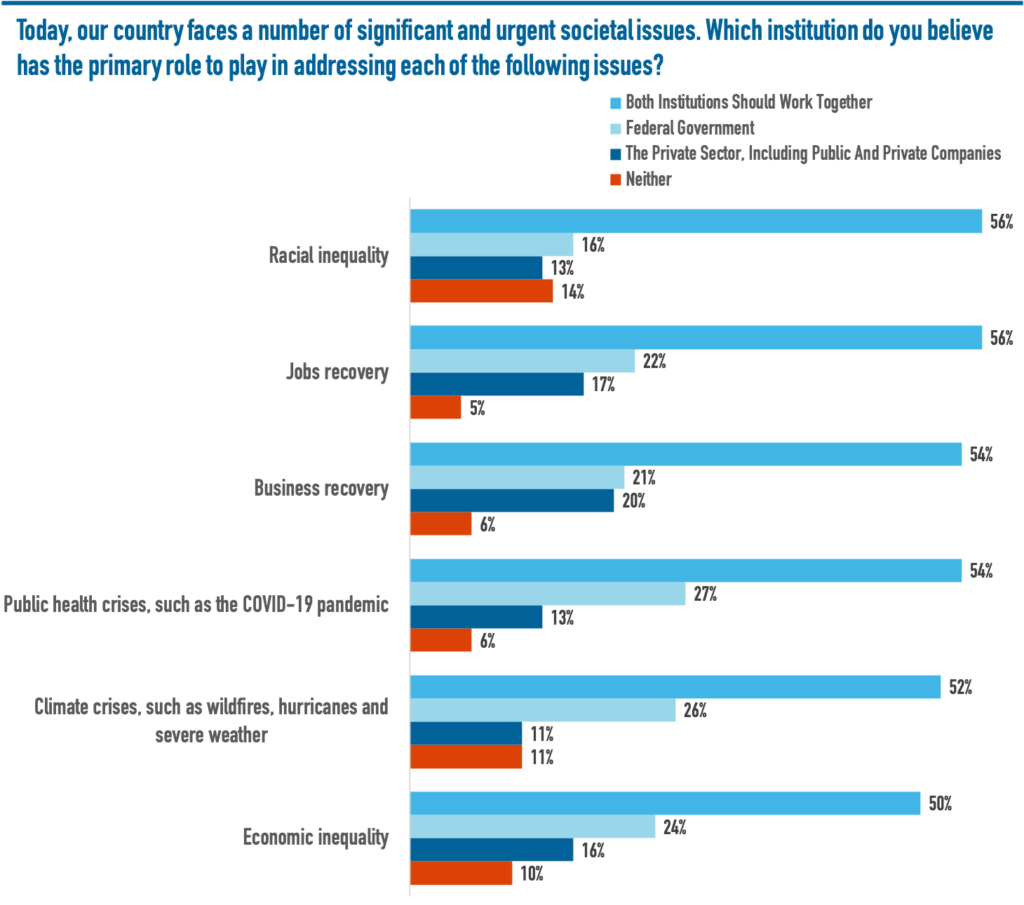
In an effort to understand whether there is bipartisan support for collaboration between business and government, we asked Americans whether they think the federal government or the private sector should play the primary role in addressing issues from racial inequality to public health to climate. Most respondents said they believe that they should work together. Specifically, 50% or more believe that business and government should join forces to address racial inequality, business/jobs recovery, climate crisis, economic inequality, and the public health crises, far outweighing those who think either the federal government or private sector are primarily responsible to drive change on the issues.
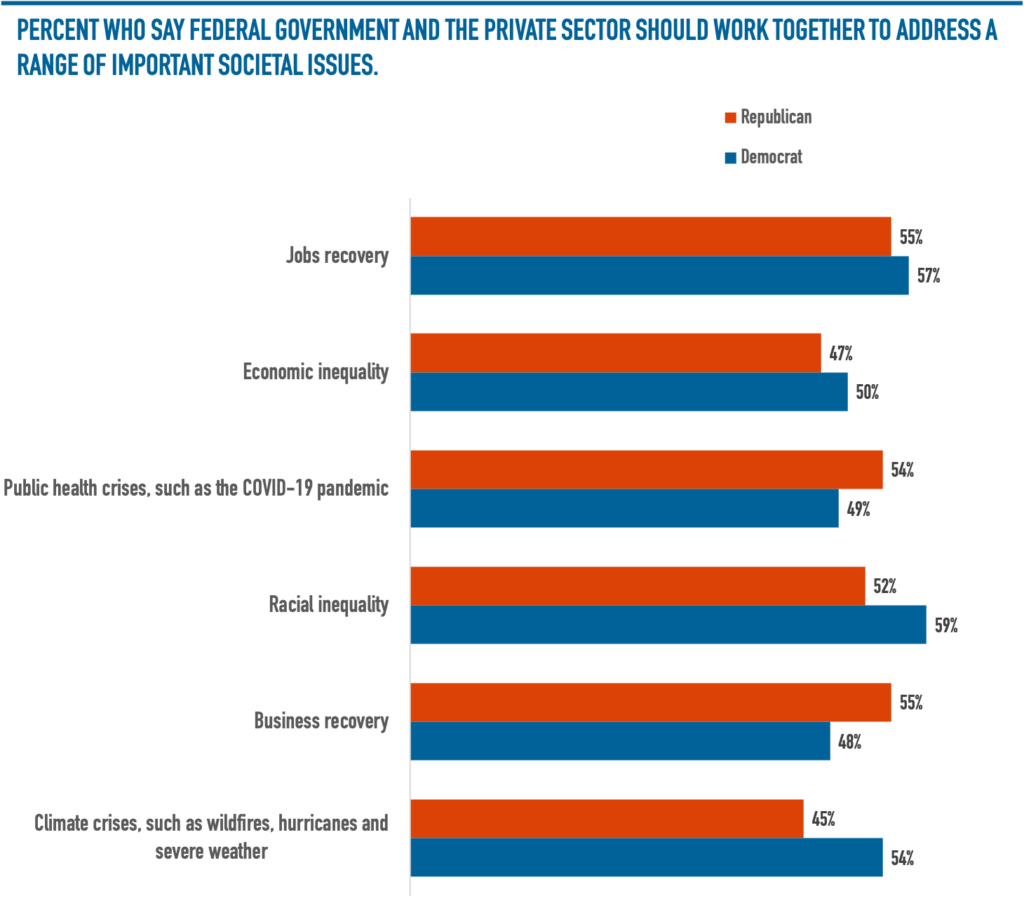
When looking at these issues, there is clear agreement across partisan lines that collaboration between business and government is needed, suggesting that there is rich opportunity to work together across the aisle in elevating shared values and identifying solutions. To wit: Majorities or pluralities of both Republicans and Democrats agree that the federal government and the private sector should work together to address society’s most pressing issues, including racial inequality (52% of Republicans and 59% of Democrats), jobs recovery (55% of Republicans and 57% of Democrats), and public health crises such as the COVID-19 pandemic (54% of Republicans and 49% of Democrats).
We see similar alignment on the issues we capture in our annual survey. In our 2020 Report, we found that liberal and conservative Americans align on the top eight priorities for stakeholder capitalism – in particular, Americans from different ideological backgrounds agree that companies must prioritize their workers. Overall, fair pay and livable wages for workers is the top priority – it sits at the top of the list for conservatives and at the #2 spot for liberals (who say that basic human rights across a company’s supply chain is their top priority) – and ethical leadership is #4 on the list for both conservatives and liberals. Among the top eight priorities, liberals put slightly more emphasis on issues of human rights and workplace diversity, while conservatives put slightly more emphasis on job creation and workforce investment.
America’s largest companies have a role to play in helping to heal the country’s divisions and to create an economy that works for all. The public agrees that businesses can do this by lifting up workers – providing a fair and living wage, job opportunity and stability, and an inclusive workplace – and want to see the private and public sectors work together to address the country’s most urgent social and economic challenges. 2021 can still be a year of great promise, and the business community can lead the way, starting with ensuring the financial wellness of all their workers, advancing racial equity in the workplace, and by actively engaging with government leaders to identify and implement solutions to some of the country’s greatest challenges.
Nearly 10 months into the COVID-19 crisis in America, workers across the country continue to face unthinkable hardships. More than 26 million workers are unemployed, out of the labor force, or have reduced hours and pay as a result of the pandemic. Over 25 million people report that their household is food insecure and more than half of all adults identify having difficulty paying for household expenses. Workers who have remained on the job or recently returned face unimaginable health risks, often with little to no hazard pay.
At the same time, as we know from our COVID-19 Corporate Response Tracker, a number of companies have stepped up to help provide much needed support to their workers. From expanding paid sick leave plans and providing free PPE to establishing backup dependent care programs and hazard pay, some – though not nearly enough – of America’s largest companies have prioritized doing right by their workers. However, even fewer companies have taken steps to protect one particularly vulnerable segment of the workforce – temporary, vendor, and contract (TVC) workers.
Over the last three or more decades, businesses have increasingly relied upon the use of TVC workers to support the development of their products and services. Despite ensuring the successful day-to-day operations of offices and contributing to the core development of products, these workers have largely been left behind by companies, often being paid less and having access to fewer benefits. The COVID-19 crisis has exacerbated the precarious nature of these jobs, leaving many workers with little support when they needed it most. We explore a short overview of this often overlooked segment of the labor force below, and explore what steps companies in the Russell 1000 have taken to support this population, highlighting companies that are leading the way.
With the advent of the gig economy, the nature of contract work has gained increased attention from the media, policy makers, and the public. While workers at many of these companies are largely misclassified as independent contractors and the public is understandably questioning the nature of their employment, they are not representative of the broader temporary, vendor, and contract workforce. So, who are these workers?
TVC workers are individuals who contribute (directly or indirectly) to the development of a company’s products or services but are not the direct employees of that firm. For example: a company may contract with an agency to fill temporary fluctuations in workforce needs (e.g. during the holiday or summer season); a company may contract with a vendor to perform a specific service for the company either on-site (e.g. janitorial services) or off-site (e.g. payroll); and finally, a company may contract (directly or indirectly) with workers to meet specific business needs either on- or off-site (e.g. graphic designer). Collectively, this group of workers is referred to as the temporary, vendor, and contract (TVC) workforce.
Over the last few decades, companies have increasingly relied upon these forms of employment relationships. Dr. David Weil describes the phenomenon as the fissuring of the workplace. The days of co-workers under the same roof being employed by the same company seem to be behind us. Consider the last time you visited someone’s office. The security guard you passed on the way to the elevator, the receptionist at the front desk, the cleaning staff, and cafeteria workers are all likely employed by different entities despite all providing services and supporting the same parent company you visited.
Companies have traditionally argued that by focusing on their core competencies they could improve business outcomes. That is, by not having to directly manage janitorial staff, a technology company could better focus on developing new software, for example. Increasingly, though, companies have used TVC workers to fill roles that strike at the core competencies of the business. In short, companies are filling jobs up and down the wage and skill ladder with TVC workers rather than directly hiring employees.
A growing body of research has found that TVC employment relationships can have a significant negative impact on outcomes for workers. For example, one study that examined the rise in the use of contract workers in janitorial and security services found that there was as much as a 7% and 24% wage penalty for contract workers in these occupations, respectively. Similarly, news reports about contract workers at large technology firms, like Google, have highlighted significant disparities in pay and benefits, including paid time off, between similarly situated employees and contract workers.
Since COVID-19 hit the United States, JUST Capital has been tracking what companies have done to support their workers, customers, and communities. In the early weeks and months of the pandemic a number of companies announced new policies and benefits to support their employees and particularly frontline workers.
For example, when many businesses temporarily shut down, 52 companies (or nearly 6% of all Russell 1000 companies) announced that they would temporarily continue to pay their employees when the pandemic first began. After the CDC recommended a 14 day quarantine period for anyone who may have contracted COVID-19, 21% of companies announced new or expanded paid sick leave policies. And as schools and daycare centers shut down, 9% of companies offered new or expanded backup dependent care benefits.
While JUST Capital and others have celebrated companies for doing right by their workers during COVID-19, the complex nature of TVC employment relationships means that many of these workers have fallen through the cracks. Specifically, the scope of new corporate policies during the pandemic have almost exclusively covered employees, not TVC workers.
Across a number of issues, JUST Capital has found that only a handful of companies took specific steps to protect the TVC workers who support their businesses.
The COVID-19 crisis has underscored the precarious nature of the TVC workforce and the consequences of seemingly arbitrary division between policies for employees and TVC workers. In short, the lack of corporate action to protect TVC workers during the COVID-19 crisis is a function of a long-run trend in corporate America: increasingly companies have relied upon TVC workers to support their businesses but for legal or other reasons failed to take responsibility for the economic outcomes of these workers. But it need not be this way.
JUST Capital’s polling shows that only 25% of people think the current form of capitalism is working for society. Importantly, 89% of Americans think this is a moment for large companies to “hit reset” and change how they are treating their stakeholders. As more companies begin answering the public’s call for change and focus on improving outcomes for their workers, they should take a close look at their contracting practices too and ask whether the treatment and outcomes of these workers align with their mission and values.
Over the next several months, Americans are expected to have access to a COVID-19 vaccine. For the first time, the end of the pandemic seems like it is within our reach. However, even after vaccines are distributed, workers and businesses across the country will continue to struggle to recover from the economic hardships of 2020. Temporary, vendor, and contract workers are no exception. In fact, as businesses reopen and rehire workers, some experts predict an increase in the prevalence of TVC employment relationships. This means that many workers may return to jobs that are less secure than those they held prior to the COVID-19 crisis. At the same time, though, we are seeing meaningful steps taken by some businesses to raise wages for low-wage and historically marginalized employees. The trajectory of the experience of employees and TVC workers should not continue to diverge.
As more companies embrace stakeholder capitalism and strive to create greater value for their workers – they should consider what they are doing for all of their workers, including the temporary, vendor, and contract workers who ensure the success of their operations and products.
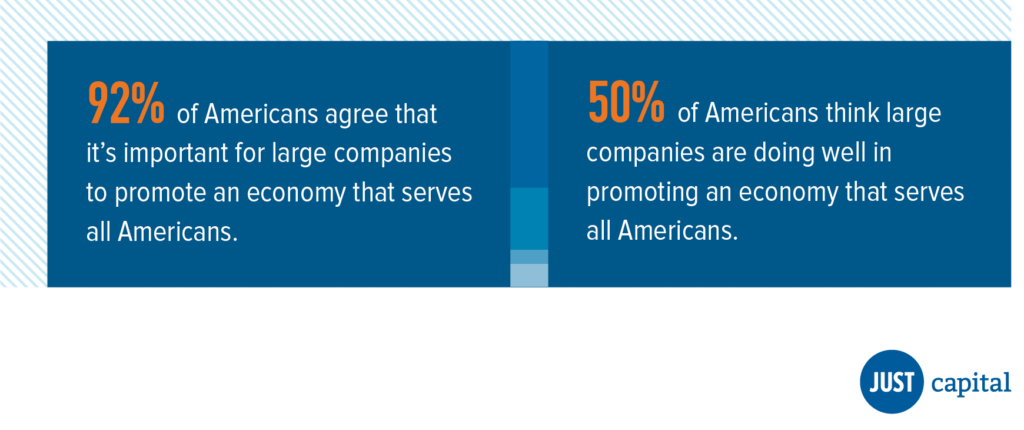
In our 2020 survey – which explores what the public wants from corporate America in this time of crisis – we found that vast majorities of Americans agree that large companies should (a) promote an economy that works for all Americans (92%), (b) build an economy that allows each person to succeed through creativity and hard work (94%) and (c) allow each person to lead a life of meaning and dignity (92%). From this research it is clear that the public thinks that companies have a critical role to play in society: that they can, and should, do their part to ensure that the country’s economic system upholds and reflects our shared values – that we are all in this together, that we each have the opportunity to contribute, and as a result, that all are able to live a life of dignity.
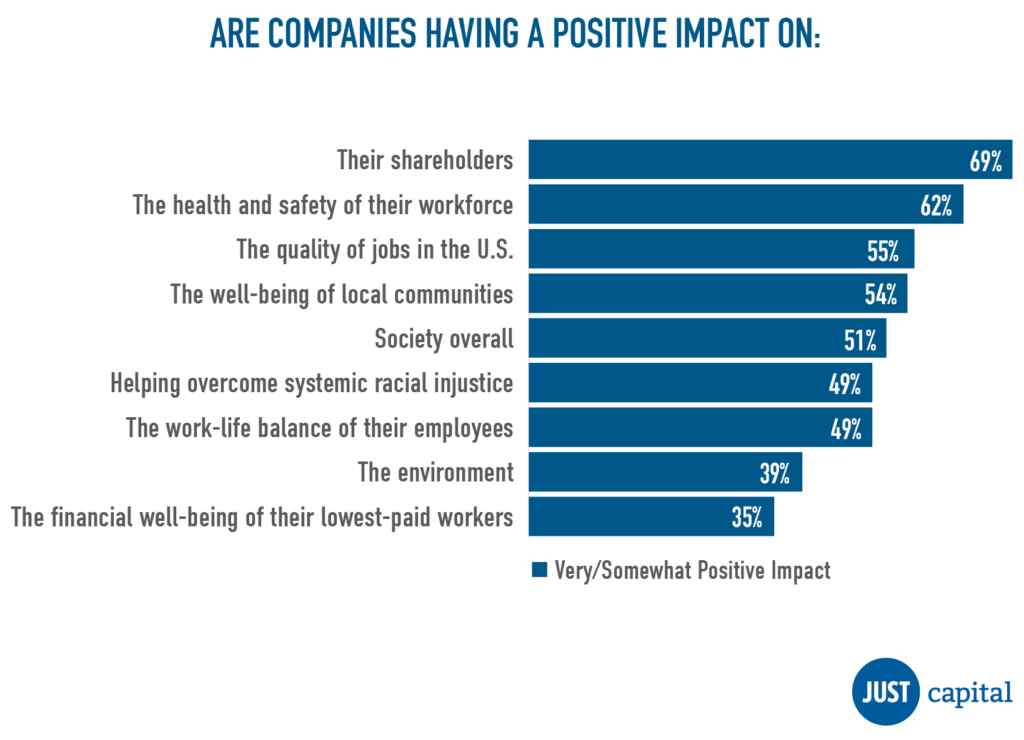
Yet while Americans acknowledge companies have an important role to play in contributing to the betterment of society, the country is split on how well companies are actually doing: 49% say companies are doing well promoting an economy that works for all Americans, vs. 50% who say companies are not doing well. And while the public gives corporate America good marks for how they’re serving their shareholders (69% believe large companies are having a positive impact on their shareholders), few believe companies are doing enough for their workers: around one in three say companies are having a positive impact on the financial well-being of their lowest paid employees (35%), and just half believe companies are having a positive impact on society overall (51%).
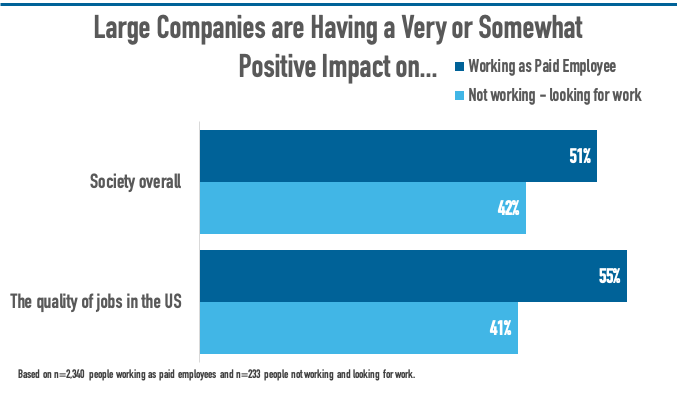
Complicating matters further is the economic consequence of navigating through nine months of a pandemic. According to Pew, roughly 15% of American adults lost their jobs due to the COVID-19 outbreak this spring, and half remain unemployed. When we look at what out-of-work Americans – those who are unemployed and seeking work – believe companies are having a positive impact on, we find that their degree of optimism precipitously decreases. This group shows significantly greater skepticism about whether companies are doing their best to promote a fair and inclusive economy:
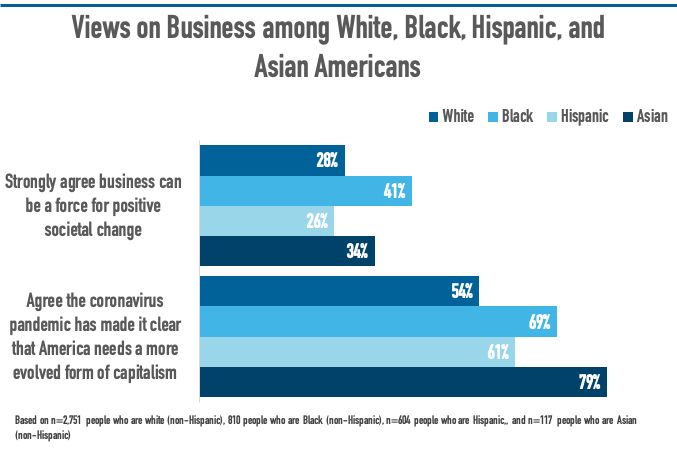
While a full economic recovery is still a ways off, data is showing the recovery is shaping up to be highly unequal. Unemployed Americans are disproportionately young, Black, and/or Hispanic, with many living in low-income households. While the overall unemployment rate eased down to 6.9% in October (from 7.9% in September and 8.4% in August), the jobless rate for Black Americans (10.8%) and Hispanic Americans (8.8%) remains high. Black, Hispanic, and Asian Americans are much more likely to agree that the COVID-19 pandemic has made it clear that the country needs a more evolved form of capitalism (69%, 61%, and 79% respectively) compared to white Americans (54%). And Black Americans are much more likely to strongly agree that business can be a force for positive social change (41% strongly agree, compared to 29% overall).
We have much work to do to ensure that our economic system reflects our shared American values of inclusion and opportunity. Large companies have a clear leadership role in promoting an economy that works for all, and have the resources, talent, and innovative mindset to succeed. Corporate America can start by taking action to improve the financial wellness of their workers. There is certainly a business case for doing so, but it’s also just the right thing to do – and what Americans increasingly expect from the business community.
