In our 2025 Rankings of America’s Most Just Companies, we remain dedicated to capturing companies’ commitment to all of their stakeholders. We also recognize the importance of addressing the whole of each stakeholder, which in a practical application can mean the entirety of a company’s workforce – including workers who aren’t legally or technically considered employees.
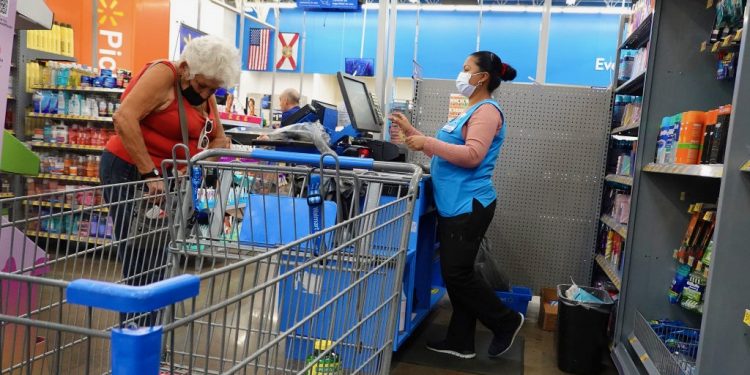
To that end, prior to the 2023 Rankings, we employed an “Under Review” designation for companies that meet two criteria: business models that center gig workers and self-identification as members of the Flex Association. This applied to three companies in our Russell 1000 universe at the time: Uber, Lyft, and DoorDash.
Beginning with the 2023 Rankings, we have been reaching out to these companies requesting additional data to help us more accurately capture the experience of gig workers and to ensure that these companies’ scores reflect the entirety of their workforce. In our outreach to Uber, Lyft, and DoorDash, we request public company sources with information about the share of gig workers in their workforce, as well as the offerings and policies accessible to them. Using the information provided, we proportionately discount the scores of these companies across our Workers stakeholder data points when there is no evidence that gig workers are covered by the offerings or workplace policies tracked in our model.
This year, in our review of companies meeting these criteria, we determined that Maplebear (Instacart), which joined our Russell 1000 universe, should also receive a similar treatment.
We recognize that our work in capturing the workplace experience of the many Americans who work in the gig economy, or more broadly as contractors, remains in progress, but we believe that continuing this approach is a step in the right direction. Our team will work to further refine our methodology to ensure that we best capture companies’ commitment to all their workers.

Just Capital’s annual Rankings of America’s Most Just Companies assess corporate performance of the Russell 1000 against the priorities that matter most to the American public. Throughout the year, we monitor any unique events that are not captured by our current metrics and should theoretically impact a company’s overall score and rank. We identify those events as instances which result from a company’s actions or inactions and satisfy the following criteria: (1) considered material to just business behavior as defined by the American public, (2) have the potential to affect a company’s standing outside the normal architecture of our ranking process, and (3) are sudden, extreme, or unusual in nature.
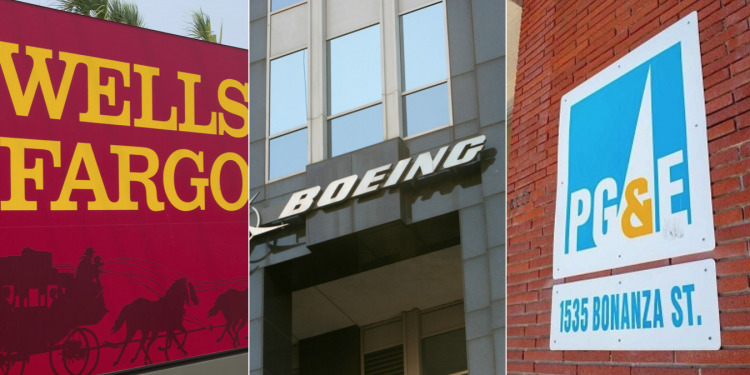
This year, the four companies which received a unique event treatment are: Wells Fargo, Tesla, Johnson & Johnson, and Boeing.
The process of determining a unique event involves monitoring media coverage of companies through an independent feed with minimized bias, as well as consultation with the public, independent specialists, and other neutral third parties.
The details of each event, and how a company has or hasn’t responded to it, will determine the type of treatment given to the company’s overall Ranking performance. These treatments, in order of increasing severity, are Serious (I), Severe (II), and Most Severe (III). Each step of the process, including the final results, are reviewed by independent specialists and other neutral third parties.
This year, Just Capital is applying the unique event treatments only to the Most Severe (III) category. Each event should fall into one of five stakeholders, with each company receiving the lowest score corresponding to that stakeholder that the event pertains to.
We identified 41 companies throughout the monitoring process, which were cross referenced along geographical and legal considerations amongst the full Russell 1000. From that, we evaluated 18 events which satisfied Just’s criteria for a unique event. We narrowed down to a further four incidents and the related companies which received the Most Severe (III) category qualified for a unique event treatment. Further details on the monitoring process and evaluation criteria can be found in our 2025 Rankings Methodology.
The four cases which Just evaluated as Most Severe (III) are as follows:
The first recurring unique event case applies to Wells Fargo, a financial services company that provides retail, commercial, and corporate banking services through branches, the internet, and other channels to individuals, businesses, and institutions across the U.S. and in other countries. Given the evidence of its history of labor and banking violations, such as creating fake accounts and retaliation against its employees who speak up about labor conditions, continued lack of meaningful remediation efforts, and more recently the controversies regarding unionization efforts, Just Capital has given Wells Fargo the lowest score for the Shareholder Stakeholder.
The second recurring unique event case applies to Tesla. Tesla designs, develops, manufactures, and sells electric vehicles and energy storage systems and also installs, operates, and maintains solar and energy storage products. One of its products, the autopilot vehicles, has resulted in hundreds of crashes and several fatalities. Since last year, there has been at least one additional fatality attributed to Tesla’s Full Self-Driving technology. In response to these events, Tesla’s communication regarding the safety of its products has also been misleading to its customers, and has doubled down on this technology with the unveiling of its new robotaxi, Cybercab, despite significant safety concerns from experts and regulators. For these events, we have given Tesla the lowest score for the Customers Stakeholder.
The third recurring unique event case applies to Johnson & Johnson, which makes a range of health and well-being products in three business segments: consumer, pharmaceutical, and medical devices. Johnson & Johnson continues to attempt to use bankruptcy filings to avoid paying the estimated $9 billion settlement to tens of thousands of people affected by the contamination of its talc products. Due to the continuation of these financial maneuvers, Johnson & Johnson has received the lowest score for the Customers Stakeholder.
Since our initial unique event treatment, there have been no substantial changes in business practices by any of the above companies that would result in the removal of this treatment. Barring any significant changes in business practices specifically related to these events, this treatment will remain in effect for a maximum of three years. If another event or development occurs after the three-year period, the event can be evaluated and, in appropriate cases, treatment can be reinstated.
The fourth and final unique event treatment was applied to Boeing, which is an aerospace and defense corporation that designs, manufactures, and sells commercial airplanes, defense systems, and space technology to customers worldwide. On January 5, 2024, a fuselage plug door blew off mid-flight, the latest in several safety-related incidents that have plagued the manufacturer in recent years. Several whistleblowers have come forward alleging a culture that promotes production speed and efficiency over product safety. As a result of these events, Boeing has received the lowest score for the Customer Stakeholder.

It’s been a busy week to say the least. MLK Day, the inauguration of President Trump, a flurry of executive orders and announcements, the World Economic Forum in Davos, not to mention the most snow in Houston, Charleston, and New Orleans in 130 years and more L.A. fires.
But let’s start with the newly-released 2025 Edelman Trust Barometer, which centers on a “crisis of grievance”. It’s disturbing reading. According to the report, optimism for the next generation is lacking, over half of young adults approve of hostile activism, and there’s been an “unprecedented global decline in employer trust”. Grievances against government, business, and particularly the rich are widespread, and with greater grievance comes more suspicion of AI and more belief in politics as a zero-sum game.
Interestingly, only business is seen as both ethical and competent. CEOs are considered justified for acting on social issues if they can have a major impact and improve business performance. Priority issues included providing good paying jobs, employee training and reskilling, and nurturing workplace civility. Tackling affordability, climate change, misinformation and discrimination were identified as areas where business should go further.
All of this dovetails neatly with Just’s own recent survey work. Though global in nature – as this week’s Davos agenda demonstrates (see below) – the themes in the Edelman report are especially resonant in the U.S. They will likely shape the second Trump Presidency. They also give U.S. corporations an incredible opportunity to step up and lead, not only in providing the pathways to economic security that Dr. King espoused, but to heal division and rebuild trust within society itself.
Be well,
Martin

With Davos in full swing, here are some of the biggest news stories coming from the conference:
CNBC has written an extensive summary of how CEOs are talking about the number one issue at Davos this year: AI. Coverage includes some of the biggest takeaways and quotes on which workforces the technology threatens, what regulation can help or hurt the industry, and more.
The other major theme of Davos? Growth. HP CEO Enrique Lores is optimistic about Trump administration deregulation policies and their capacity to drive growth, echoing similar comments from the CEOs of BNY, TCW Group, and more.
Coca-Cola CEO James Quincey believes global inflation will finally moderate in 2025.
The AP runs down a list of some of the largest companies announcing layoffs, including BP’s recent announcement that the company is eliminating nearly 4,700 jobs worldwide as a cost-cutting measure.
TikTok is back – for now. The Washington Posts writes on Trump’s executive order, which allows the app to function for another 70 days while searching for a U.S. buyer.
Fortune examines the trend of Gen Z creating companies and getting into self-employment at a higher rate – and earlier age – than previous generations, and what that means for the future of employment.
Reuters reports that Goldman Sachs CEO David Solomon is being offered an $80 million dollar stock bonus to stay on as the head of the company for another five years.
The FTC is suing PepsiCo for allegedly giving one big-box retailer more favorable pricing than others. CNBC has the story.
Nearly 18,000 Costco workers are preparing to strike on February 1st if their new union contract demands are not met, per CBS News.

This chart comes from the Edelman Trust Barometer, and shows that employees across the world are demanding more action from businesses on affordability, climate change, retraining to adapt to technological changes, and more. Explore all the details inside.
As a wise person once observed, it’s tough to make predictions, especially about the future. That said, our data, our breadth of relationships, and our vantage point over the corporate landscape does afford us a decent perspective on what might be coming around the corner. So here goes.
Happy New Year to you all!
Be well,
Martin
“One question that we ask everyone, regardless of if you’re a consultant or you’re working in technology…we say: ‘What have you learned in the last six months?’ A lot of the time people are asking me, ‘how do I know if someone’s a learner?’ And it’s a very simple way to know. If someone can’t answer that question, and by the way, we don’t care if it’s ‘I learned to bake a cake,’ if they can’t answer that question, then we know that they’re not a learner.”
Newsweek highlights our 2023 report on how only 9% of America’s largest companies provide paid parental leave parity in their article on why parental leave is starting to look up for Americans.
Martin joins the Purpose 360 podcast along with the CIO of IBM, CEO of Keep America Beautiful, and the Managing Director at Lion Tree to give their predictions on the year ahead around AI growth, DEI, corporate responsibility, and more.
NBC News reports that Meta is ending its fact-checking program and replacing it with a “Community Notes” style system alongside other changes after Zuckerberg said the “program intended to inform too often became a tool to censor.”
McDonald’s drops its employee and supplier diversity targets during the same week that Costco pushes back against anti-DEI board members.
Axios looks at which two industries would actually benefit if Trump implements his tariff plan, and Fortune hosts several opinion pieces debating their potential benefits and detriments.
The Washington Post reports that U.S Steel and Nippon Steel are suing the Biden administration for blocking their merger.
This chart comes from the latest research from Axios, and shows that anti-DEI shareholder proposals have continued to rise since 2020, with an increase over the last year. Explore more here.

The mission of Just Capital, an independent nonprofit, is to demonstrate how just business – defined by the priorities of the public – is better business. Our goal is to help companies create value for all their stakeholders – their workers, customers, communities, the environment, and shareholders – by focusing on the issues that matter most to Americans.
Over the last 10 years, we have helped to transform how business success is defined. We’ve supported catalytic changes at companies that have improved the lives of workers, enhanced customer protections, strengthened communities, reduced environmental impacts, and established a higher standard of integrity and accountability in leadership.
Independent, objective, and data-driven, our focus is to harness the power of the private sector to build an economy that works for all Americans.

We are committed to providing innovative tools and insights that help companies navigate the evolving landscape of stakeholder expectations. Building upon our trusted offerings like the Ranking Report, we are excited to introduce expanded offerings — Just Intelligence and the Corporate Impact Lab.
Access cutting-edge analytics to navigate complex stakeholder issues and fuel your competitive advantage. Explore Your Company’s Data
Drive your strategic priorities with top executives, curated closed-door convenings, responsive expert insights, guidance, and rich resources. Join the Impact Lab to quickly spot trends, test interventions, weather social shifts, and lead the market. Learn more. Join the Lab

Our rankings, investable indexes, and in-depth financial analysis demonstrate the business and investor case for just business behavior. Our goal is to drive investment capital toward more just companies, thereby incentivizing a more just and equitable marketplace.
As of December 31, 2024 our flagship index – the Just U.S. Large Cap Diversified Index (JULCD) – has beaten the Russell 1000 Cap-Weighted Benchmark by 10.1% since inception.
The JULCD –began live trading in November 2016 and tracks the top 50% of Russell 1000 companies ranked by Just Capital by industry, and is constructed to match its industry weights.

The Just 100 Index (JUONETR) is up 45.8% on the Russell 1000 Equal-Weighted Benchmark since inception.
The Just 100 Index (JUONETR) was constructed to track Just Capital’s top performing companies. It is an equal weighted Index that launched in March 2019, and includes the top 100 Russell 1000 companies ranked by Just Capital in its most recent annual Ranking.
Learn more about our indexes and index concepts here.
Over the past decade, Just Capital has been shifting the public dialogue about business success in America. We’ve proven that companies are successful when they put stakeholders first — creating better jobs, stronger communities, a healthier environment, and superior shareholder returns. Our data is clear: when companies prioritize what the American public wants, they create a win-win-win for shareholders, stakeholders, and society at large.

Interested in supporting our mission? Make a gift to Just Capital today.

In the last few days, massive LA wildfires have caused thousands of residents to flee their homes for safety. Accuweather is predicting that the total damage from the fire is already totaling nearly $57 billions, and is certain to grow. And while that sum is enormous, it says nothing about the lives and livelihoods lost in the destruction.
In the wake of such devastation, companies are stepping in to help out the affected communities. We’ll be updating this tracker daily over the next week as more businesses come forward to provide aid.
Here is what we have seen so far: (Updated 1/21/24)
Airbnb is working with the LA government to offer free housing to evacuees.
Amazon has pledged $10 million to disaster response groups dealing with the fires.
AT&T is offering free talk, text, and data to residents in affected billing zipcodes on Feb 6th.
Bank of America commits $1 million to the Red Cross to assist those impacted by the wildfires.
Disney is committing $15 million to immediate response and rebuilding efforts.
Fox Corporation is donating $1 million to the Red Cross for relief efforts.
Instacart is waiving delivery fees for all grocery and daily essential deliveries in affected areas.
Kroger is raising $1 million for people impacted by the fires.
Lockheed Martin is donating $1 million to Los Angeles relief and recovery efforts.
Planet Fitness gym has opened its facilities from now until Jan. 15, providing access to wi-fi, showers, facilities, and more.
Skechers gives $1 million to relief efforts.
Sweetgreen is delivering free meals to firefighters, first responders, and those displaced by the fire.
Verizon is waiving domestic call/data/text usage from until January 16th for those affected, and is deploying wi-fi and charging stations at shelters.
Uber is offering free rides of up to $40 for those evacuating, while Lyft will offer two rides up to $25 each ($50 total).
U-Haul is opening its facilities for 30-days of free self-storage to those who have to flee their homes.
Walmart is committing $2.5 million to relief efforts.
On a local level, many restaurants around LA are offering free meals to evacuees.